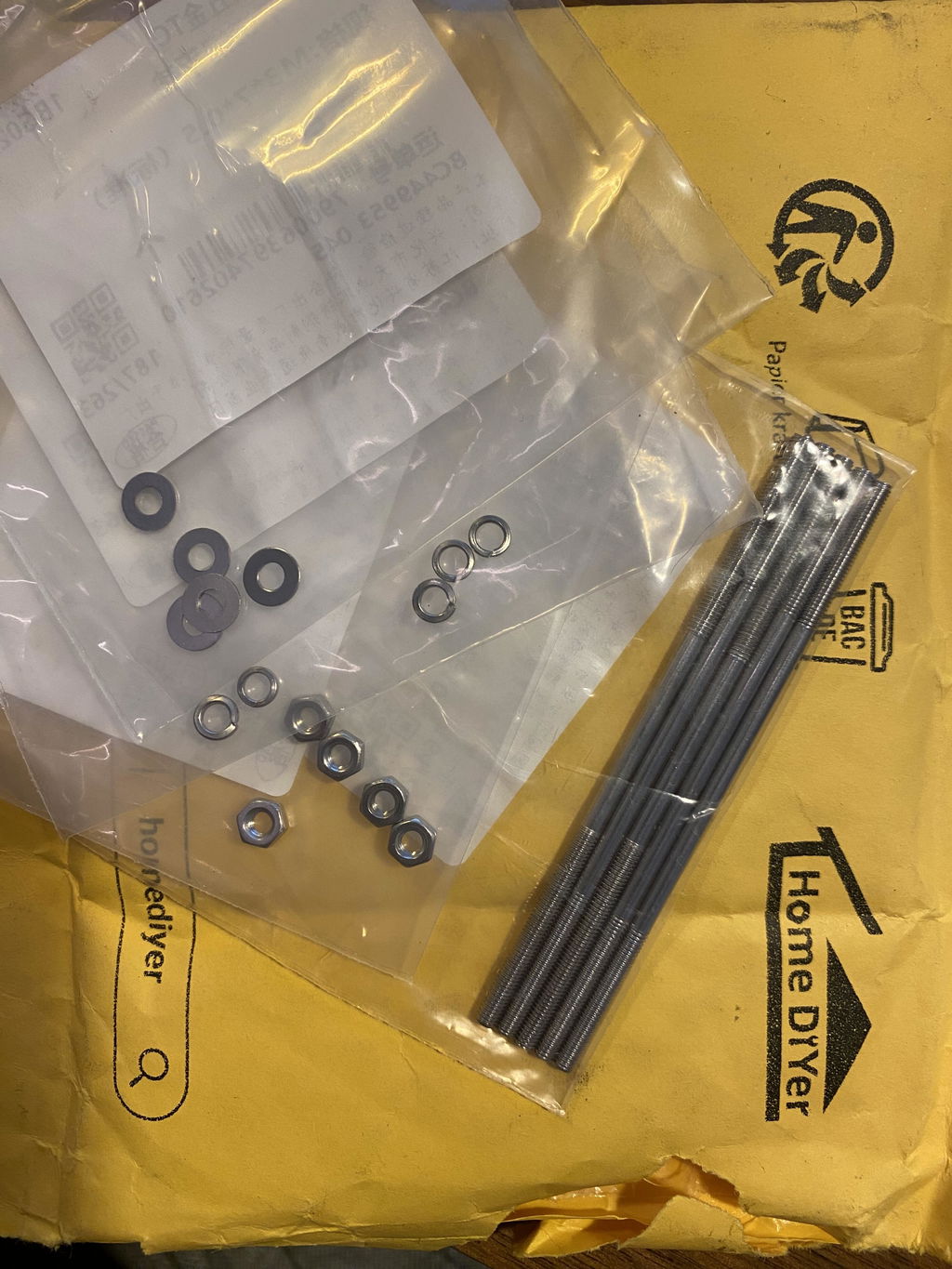
The chain is fine...but I ordered the wrong size. Nine links of the chain I ordered equals six of the size I wanted. My error...
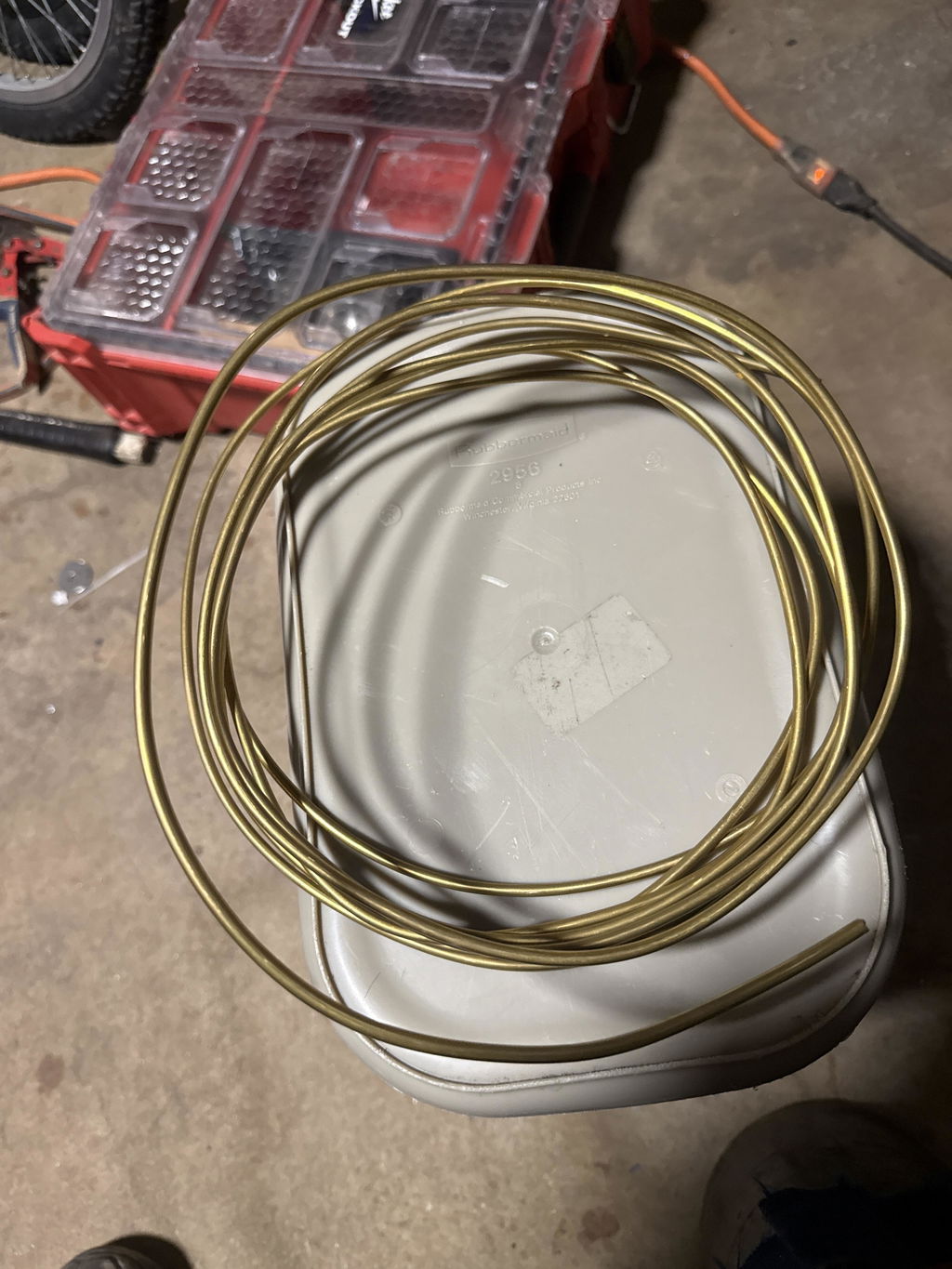
How can I straighten out the springs? I can't use them coil uo as is.
Your payment information is processed securely. We do not store credit card details nor have access to your credit card information.
Get fitment advice & recommendations
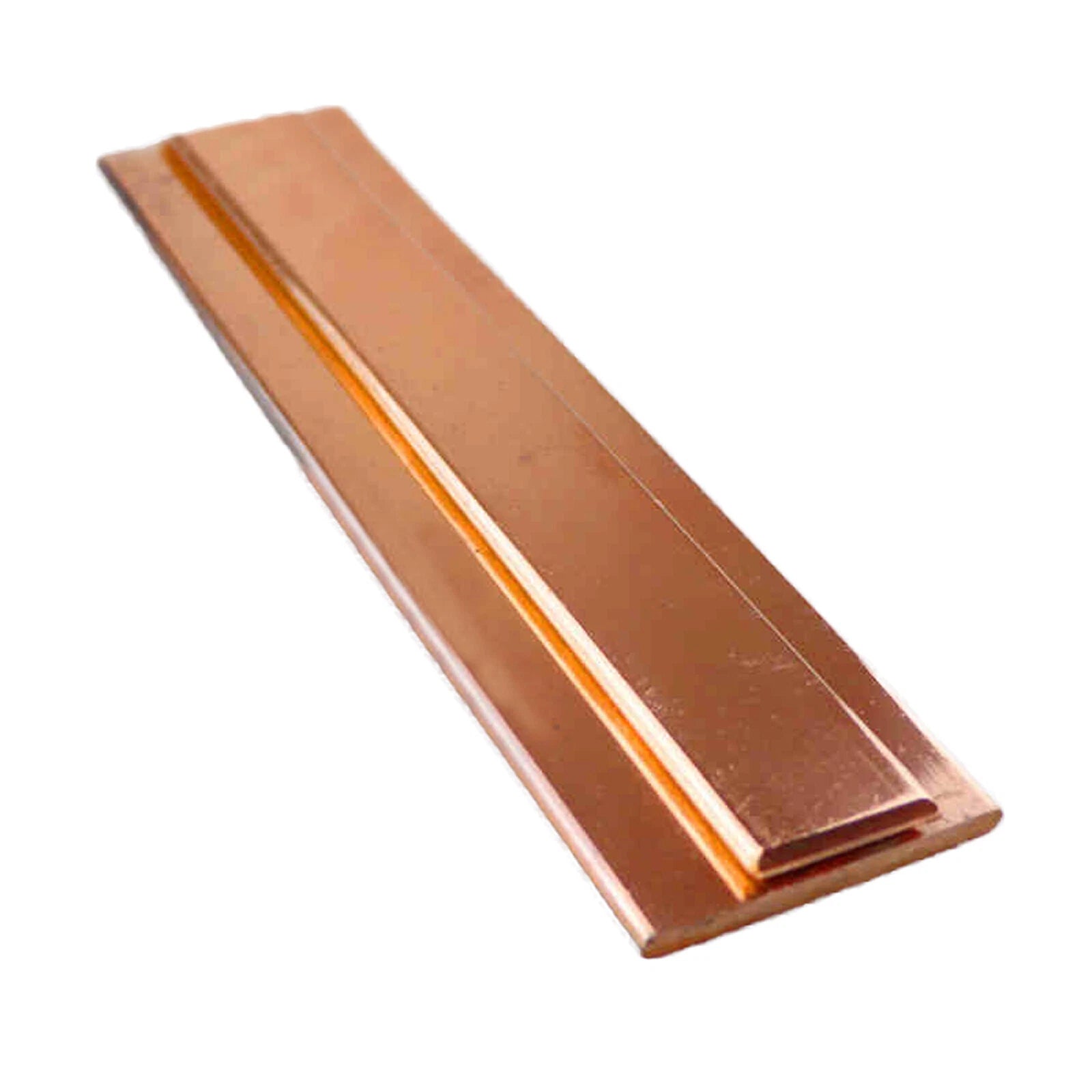
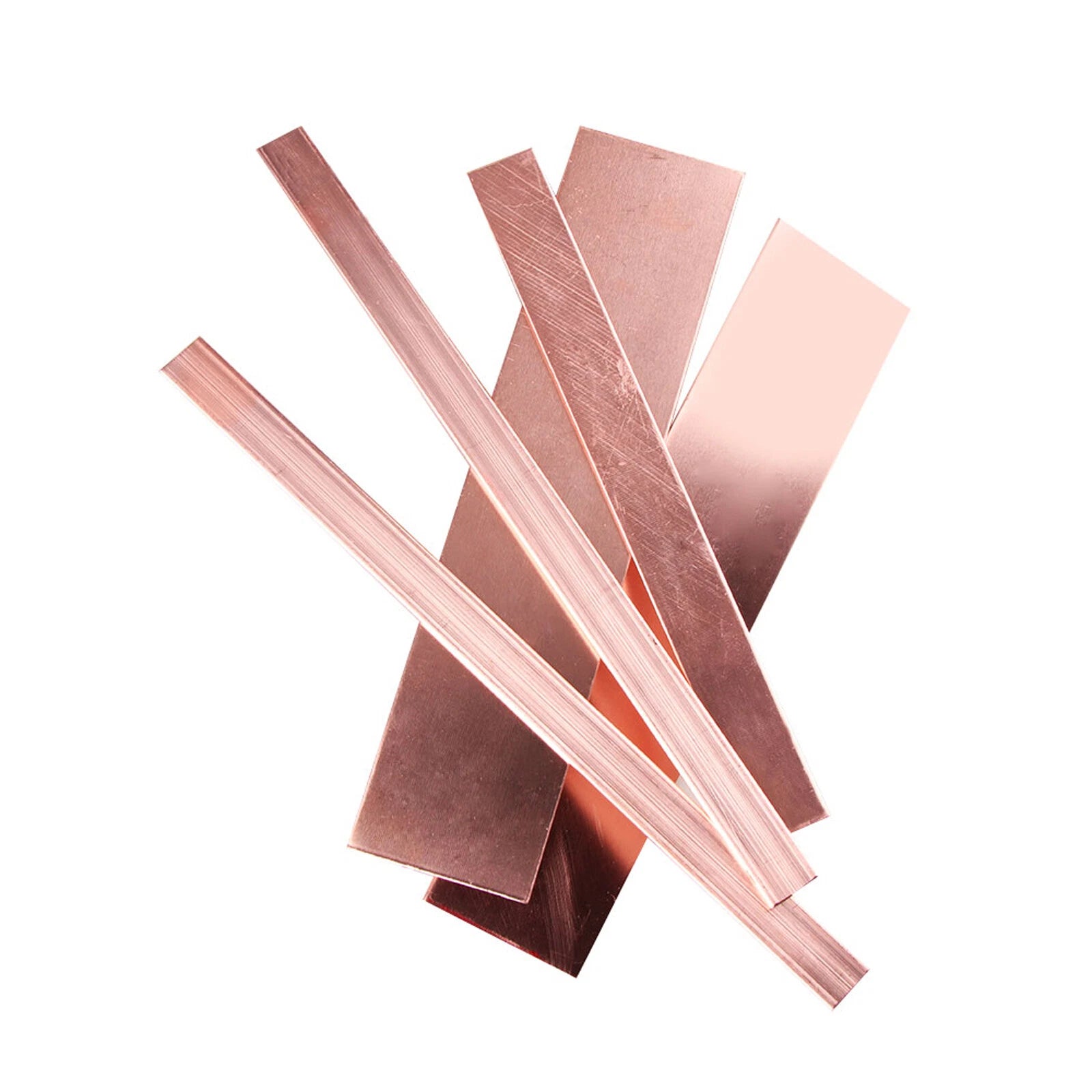
When your project demands reliable electrical conductivity or precise metalwork, using the wrong stock can cost you time and rework. Makers, electricians, hobbyists, and small-shop fabricators who need a consistent, machinable copper flat bar in exact dimensions will find this listing covers an unusually wide size range — all in a single, easy-to-navigate product.
These copper flat bars are made from T2-grade (C11000 equivalent) copper with 99.9% purity. The stock is supplied in flat bar / plate form with a thickness range of 0.5–60 mm (approx. 0.02–2.36 in) and a width range of 5–150 mm (approx. 0.20–5.91 in). Lengths are available in 100 mm, 200 mm, and 500 mm (approx. 3.94 in, 7.87 in, and 19.69 in) depending on the selected size combination.
Typical use cases include copper bus bar fabrication for electrical panels and switchgear, custom grounding straps and earthing conductors for DIY electrical work, and precision-cut blanks for jewelry making, art metalwork, and small-batch machining. Long-tail applications such as "copper flat bar for grounding", "pure copper bus bar stock", and "T2 copper plate for machining" are all well served by this range.
T2-grade copper (C11000 equivalent) delivers outstanding electrical conductivity (~58 MS/m) and thermal conductivity, making it the go-to choice for bus bars, grounding straps, and heat-transfer applications.
Thickness from 0.5 mm to 60 mm, width from 5 mm to 150 mm, and lengths of 100 mm, 200 mm, or 500 mm — one of the broadest size ranges available in a single listing, so you can order exactly what your project needs.
Annealed or half-hard temper (varies by thickness) allows straightforward cutting, drilling, bending, and soldering without cracking — ideal for custom fabrication and prototyping.
Copper's natural oxide layer provides inherent corrosion resistance in indoor and sheltered outdoor environments, reducing the need for additional coatings in most electrical and decorative applications.
Each bar is cut to stated dimensions with tight tolerances, ensuring reliable fit in panel slots, enclosures, and jigs without time-consuming hand-fitting.
Used in electrical engineering, HVAC heat exchangers, plumbing fittings, jewelry blanks, art metalwork, and maker/DIY projects — a single stock material that crosses multiple disciplines.
| Material | T2 Copper (99.9% Cu, C11000 equivalent) |
|---|---|
| Thickness Range | 0.5 mm – 60 mm (0.02 in – 2.36 in) |
| Width Range | 5 mm – 150 mm (0.20 in – 5.91 in) |
| Available Lengths | 100 mm / 200 mm / 500 mm |
| Exact Dimensions | See variant options |
| Temper / Hardness | See variant options |
| Surface Finish | Mill finish (natural copper) |
| Electrical Conductivity | Approx. 58 MS/m (100% IACS) |
| Thermal Conductivity | Approx. 385 W/(m·K) |
| Density | Approx. 8.96 g/cm³ |
| Melting Point | Approx. 1,083 °C (1,981 °F) |
| Quantity per Order | 1 piece (1 pcs) |
Start with your current-carrying requirement (for electrical use) or structural load (for fabrication). As a rough guide, bus bars for household panel work typically use 5–10 mm thick × 20–50 mm wide stock. For grounding straps, 2–5 mm thick × 15–25 mm wide is common. Use the variant selector above to pick the exact Thick × Width × Length combination that matches your design drawings or specifications.
T2 is a Chinese national standard designation for electrolytic tough-pitch (ETP) copper with a minimum purity of 99.9% Cu. It is functionally equivalent to ASTM C11000 (UNS C11000) used in North America and EN CW004A used in Europe. All three grades share the same high conductivity and are interchangeable for most electrical and thermal applications.
T2 copper has a tensile strength of approximately 200–250 MPa (annealed) to 250–350 MPa (half-hard), depending on temper. It is not a structural metal in the way steel is, but it is suitable for bus bar clamps, bracket fabrication, and light structural elements where its conductivity is also needed. For purely structural applications, consider whether a copper alloy (e.g., brass or bronze) might be more appropriate.
Copper naturally forms a patina (first brown, then green verdigris) when exposed to moisture and air. This patina is actually protective and slows further corrosion. For indoor electrical panels and sheltered installations, no coating is needed. For exposed outdoor use, consider applying a clear lacquer or anti-oxidant compound to maintain appearance and contact resistance over time.
Yes. T2 copper solders easily with standard electrical or plumbing solder and flux. It can also be brazed using silver-bearing brazing alloys. TIG welding with a copper filler rod is possible but requires careful heat management due to copper's high thermal conductivity. For most DIY and electrical applications, soldering or mechanical fastening is the most practical joining method.
Yes — 99.9% pure copper flat bar is the standard material for bus bars and grounding conductors in residential and light commercial electrical work. Select a thickness and width that meets your local electrical code's ampacity requirements for the intended current load. If you are unsure, consult a licensed electrician or refer to your local wiring regulations (e.g., NEC in the US, AS/NZS 3000 in Australia).
Weight varies significantly across the 168+ size combinations. You can estimate it using the formula: Weight (g) = Thickness (mm) × Width (mm) × Length (mm) × 0.00896. For example, a 5 mm × 30 mm × 500 mm bar weighs approximately 5 × 30 × 500 × 0.00896 ≈ 672 g. Exact weights per variant are not listed individually; use this formula for planning purposes.