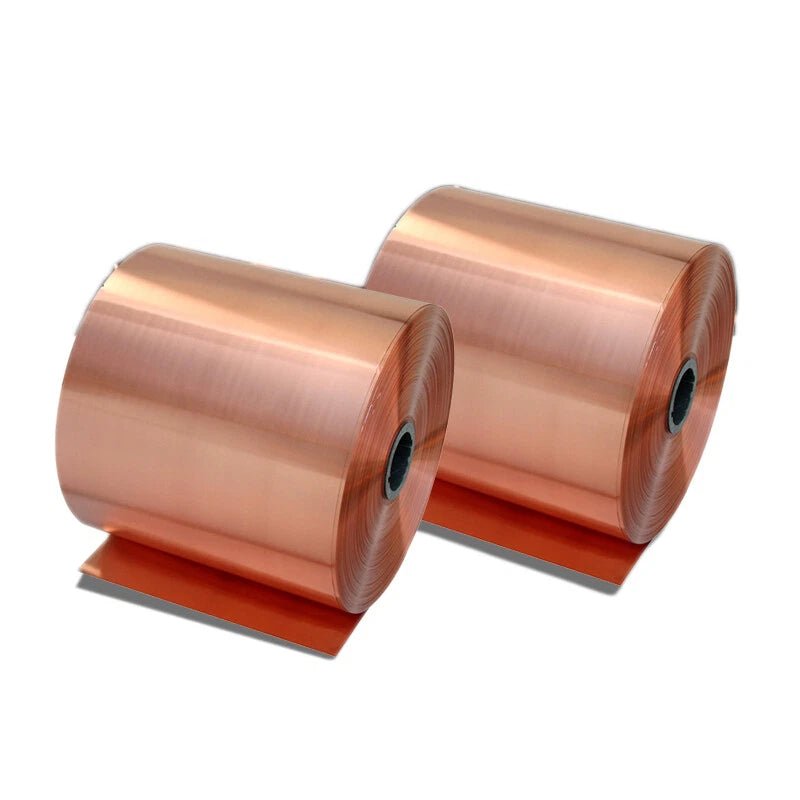
Copper Foil Tape Metal Strip Sheet 0.15mm-1.5mm Thick Pure Copper Plate Flexible

No reviews

Price:
Sale price$4.11 USD
Stock:
In stock (500 units), ready to be shipped

Payment & Security

Ach Direct Debit Amazon American Express Apple Pay Bancontact BLIK Diners Club Discover EPS Google Pay iDEAL Wero JCB Maestro Mastercard Multibanco MobilePay PayPal Przelewy24 Shop Pay Twint Union Pay USDC Visa

Your payment information is processed securely. We do not store credit card details nor have access to your credit card information.

Quantity Discount Promotion
🎯 BULK DISCOUNT: Buy More, Save More!
Buy 2 Items
5% OFF
Buy 4 Items
10% OFF
Buy 6 Items
15% OFF
Expert

DIY Expert Support

Get fitment advice & recommendations

Mon-Fri, 8:30AM-8PM
24-Hour Fast Ship
🚚
Arrives in 3-14 days
🌍
Global Reach
↩️
30-Day Returns
🌱 1 tree planted with every purchase

Description

Copper Foil Tape Strip — Precision-Cut Pure Copper Sheet for DIY, Electronics & Fabrication

When a project demands exact conductivity, shielding, or a clean metallic finish, generic aluminum tape or thin craft foil simply falls short. Makers, electronics hobbyists, PCB repair technicians, and small-shop fabricators need a copper strip they can trust to solder cleanly, bend without cracking, and hold its shape under real-world conditions. This copper foil tape strip delivers that reliability in a wide range of thicknesses and widths so you can match the material to the job rather than compromise.

Each strip is cut from 99.9% pure copper sheet stock. Thickness options run from 0.15 mm (approximately 0.006 in) up to 1.5 mm (approximately 0.059 in), and widths span 5 mm (0.20 in) to 120 mm (4.72 in). Every piece is supplied in a 1-meter (39.4 in) length, giving you a workable run for most bench projects while keeping waste to a minimum.

Typical applications include EMI/RFI shielding tape for enclosures and cables, bus bars and grounding straps in low-voltage electrical assemblies, decorative inlay work in woodworking and resin casting, and flexible conductive traces for wearable electronics or stained-glass soldering. The combination of thin-gauge flexibility and thicker structural options in one product line makes it a go-to copper foil strip for DIY electronics shielding, copper tape for stained glass, and precision metalwork alike.

Compatible with: Soldering irons, conductive adhesives, PCB repair workflows, EMI shielding enclosures, stained-glass flux, resin casting molds, and standard metal-cutting tools (scissors, shears, rotary cutters).

✅ Key Features of These Copper Foil Tape Strips

🔩 99.9% Pure Copper

Made from high-purity copper for consistent electrical conductivity, reliable solderability, and a clean, bright surface finish across every variant.

📐 Wide Size Matrix

Thickness from 0.15 mm to 1.5 mm; width from 5 mm to 120 mm — choose the exact cross-section your project requires without cutting down oversized sheet stock.

✂️ Flexible Yet Structurally Sound

Thinner gauges (0.15–0.3 mm) bend and conform around curves for shielding tape and stained-glass work; thicker gauges (0.5–1.5 mm) hold shape as bus bars or structural inlays.

🛡️ Natural Corrosion Resistance

Copper forms a stable oxide patina over time that slows further corrosion, making these strips suitable for both indoor electronics and light outdoor decorative applications.

⚙️ Ready to Solder or Bond

The clean, uncoated surface accepts solder, conductive epoxy, and flux without pre-treatment, saving prep time on PCB repair, grounding straps, and wearable circuit projects.

📏 1-Meter Cut Length

Each piece ships as a single 1-meter (39.4 in) strip — long enough for most bench runs, easy to store flat, and simple to cut down with standard shop scissors or metal shears.

📐 Technical Specifications — Copper Foil Strip

Material 99.9% Pure Copper (Cu)
Thickness Range 0.15 mm – 1.5 mm (0.006 in – 0.059 in)
Width Range 5 mm – 120 mm (0.20 in – 4.72 in)
Length per Piece 1 Meter (39.4 in)
Surface Finish Bare / Uncoated
Temper See variant options
Electrical Conductivity ~58 MS/m (typical for 99.9% Cu)
Solderability Yes — compatible with standard rosin and no-clean flux
Flexibility High (thin gauges); Moderate (gauges ≥ 0.8 mm)
Variant Options Thickness × Width (see dropdown above)

❓ Frequently Asked Questions

How do I choose the right thickness for my project?

For EMI/RFI shielding tape, stained-glass soldering, or flexible conductive traces, gauges between 0.15 mm and 0.3 mm offer the best conformability. For bus bars, grounding straps, or structural inlays where the strip needs to hold its shape, choose 0.5 mm and above. Thicknesses of 0.8 mm–1.5 mm are suited to applications requiring mechanical rigidity alongside conductivity.

How do I choose the right width?

Width determines the cross-sectional area available for current flow and the visual footprint of the strip. Narrow widths (5–15 mm) work well for PCB repair traces, stained-glass lead lines, and tight shielding runs. Wider strips (40–120 mm) are better for broad EMI shielding panels, decorative inlay work, or bus bar applications where lower resistance per unit length matters.

Can these copper strips be soldered?

Yes. The bare, uncoated copper surface accepts standard rosin-core and no-clean solder with a conventional soldering iron. For best results, apply flux before soldering and work quickly to avoid excessive heat spread. Thinner gauges (0.15–0.3 mm) heat up faster, so use a lower iron temperature or shorter dwell time.

Will the copper corrode or tarnish over time?

Copper naturally oxidizes and develops a patina (darkening or greenish verdigris) when exposed to air and moisture. This oxide layer actually slows further corrosion. For indoor electronics and shielding applications the tarnish does not significantly affect conductivity. If appearance is critical, apply a clear lacquer or store unused strips in a sealed bag with a desiccant.

Is this compatible with stained-glass copper foil tape work?

Yes. The thinner gauges (0.15–0.25 mm) in narrow widths (5–10 mm) are well-suited for wrapping glass edges before soldering in the Tiffany-style stained-glass technique. Note that traditional stained-glass foil tape typically has an adhesive backing — these strips are bare copper, so you would use flux and solder to bond them rather than a peel-and-stick method.

Can I cut these strips to a shorter length?

Absolutely. Thin gauges (up to about 0.3 mm) cut cleanly with heavy-duty scissors or a craft knife and steel ruler. Thicker gauges (0.5 mm and above) are best cut with metal shears, a rotary cutter, or a fine-tooth hacksaw. Always deburr cut edges with fine sandpaper or a file before handling or installing.

What is the difference between this and adhesive copper foil tape?

Adhesive copper foil tape has a pressure-sensitive adhesive on one side for quick application to surfaces without soldering. These strips are bare copper with no adhesive — they are intended for applications where you need a solderable, bondable, or mechanically fastened copper element with precise thickness and width control. They offer greater thickness range and structural integrity than typical adhesive foil tape.

How should I store unused copper strips?

Store flat in a sealed plastic bag or zip-lock pouch with a silica gel desiccant packet to minimize oxidation. Keep away from acidic environments (such as near batteries or chemical storage). Properly stored strips can remain in usable condition for extended periods without significant surface degradation.

🛒 Select your Thickness × Width above, then add to cart.

You may also like

Recently viewed