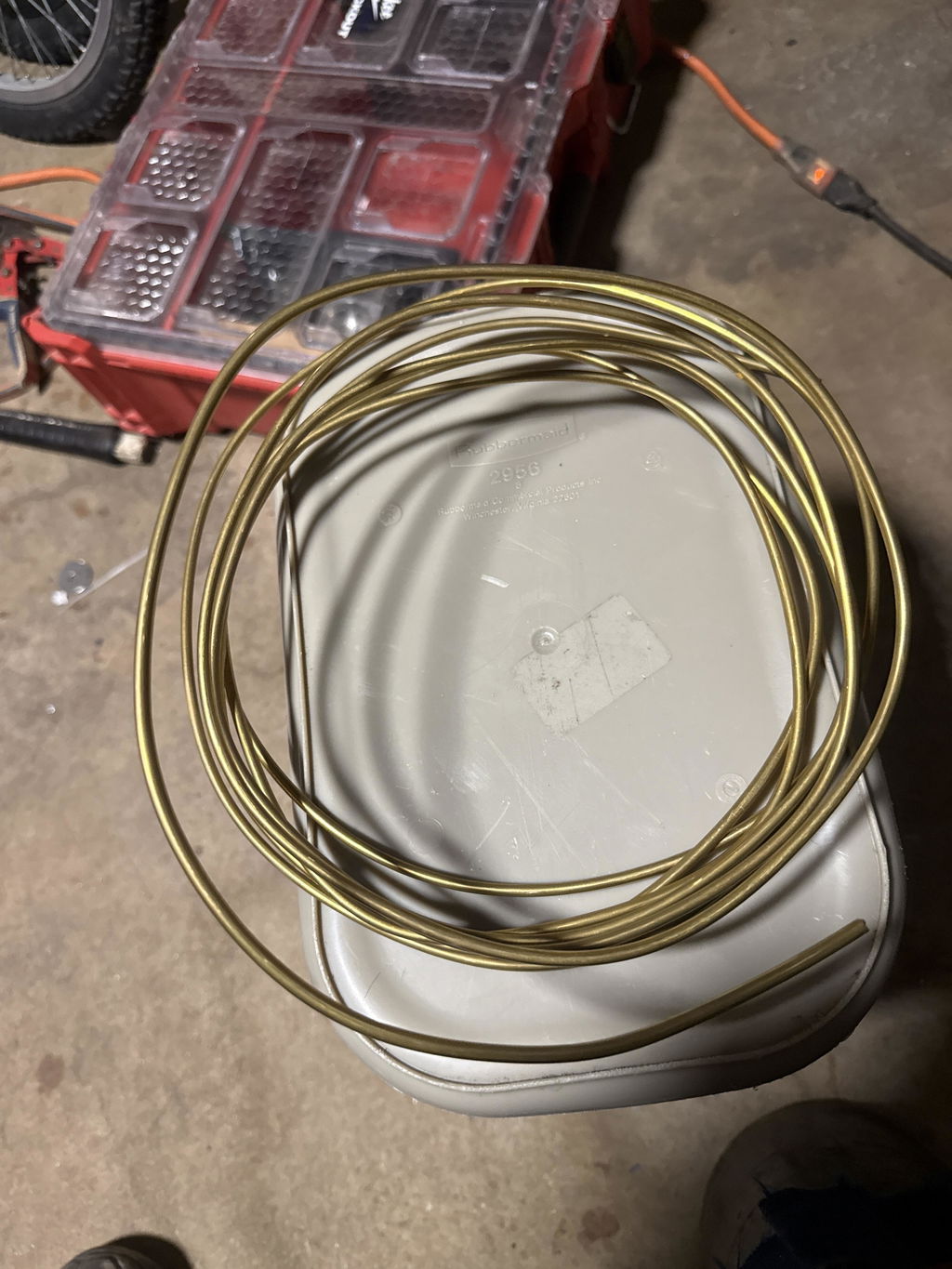
The chain is fine...but I ordered the wrong size. Nine links of the chain I ordered equals six of the size I wanted. My error...
How can I straighten out the springs? I can't use them coil uo as is.
Your payment information is processed securely. We do not store credit card details nor have access to your credit card information.
Get fitment advice & recommendations
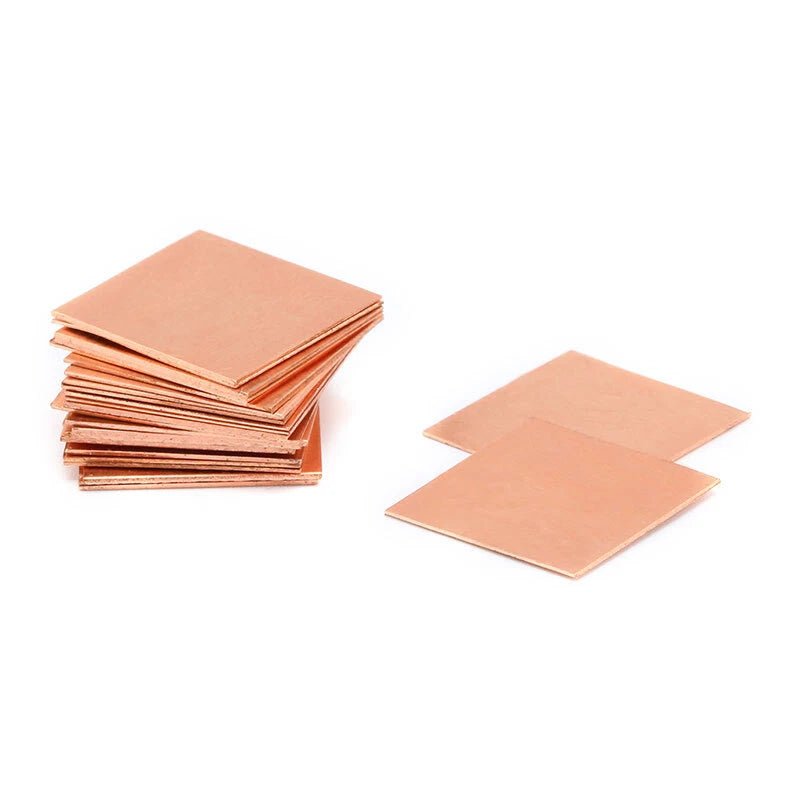
When your electronics run hot and thermal throttling starts costing you performance, the right thermal interface material makes all the difference. Whether you are a maker building custom PC cooling loops, an engineer prototyping power electronics, or a hobbyist repairing laptops and game consoles, these guillotine-cut copper sheets give you a clean, ready-to-use solution without the need for additional machining.
Each sheet is cut from solid copper stock using a guillotine shear, producing straight, burr-minimized edges. Available in two footprints — 15x15 mm (approx. 0.59x0.59 in) and 20x20 mm (approx. 0.79x0.79 in) — with thickness options ranging from 0.3 mm to 2.0 mm (approx. 0.012–0.079 in). Copper purity is consistent throughout, ensuring reliable thermal conductivity across the full surface area.
Typical use cases include CPU and GPU heatsink shims for laptop repasting, thermal spreader layers in custom power supply builds, conductive spacers in LED driver assemblies, and heat-spreading pads in DIY battery management systems. The square format and multiple thickness options make these copper heatsink shims a versatile stock item for any electronics workbench.
| Material | Copper (Cu) |
|---|---|
| Cut Method | Guillotine shear cut |
| Footprint Options | 15x15 mm / 20x20 mm |
| Thickness Options | 0.3 mm / 0.5 mm / 0.8 mm / 1.0 mm / 1.2 mm / 1.5 mm / 2.0 mm |
| Surface Finish | See variant options |
| Thermal Conductivity | ~385 W/(m·K) (typical for copper) |
| Pack Sizes Available | 5 pcs / 10 pcs / 20 pcs / 50 pcs |
| Edge Condition | Shear cut, burr-minimized |
| Application | Heatsink shim, thermal spreader, conductive spacer |
Measure the gap between your component's heat spreader and the heatsink base using a feeler gauge or calipers. For CPU/GPU repasting on laptops, 0.3–0.8 mm is most common; for power transistor mounting, 1.0–2.0 mm may be needed to fill larger gaps.
Copper has a thermal conductivity of approximately 385 W/(m·K), making it one of the most thermally efficient metals available — significantly higher than aluminum (~205 W/(m·K)) and far above most thermal pads.
The 15x15 mm size fits most laptop CPU and GPU dies directly. The 20x20 mm size suits slightly larger dies or power packages such as TO-247. For desktop CPUs, these sheets are typically used as supplemental thermal layers.
Yes. Copper sheets are rigid and will not conform to microscopic surface irregularities on their own. Apply a thin layer of thermal compound on both the component side and the heatsink side to eliminate air gaps and maximize thermal transfer efficiency.
Copper does form a thin oxide layer when exposed to air, but this process is slow and does not significantly impair thermal performance in enclosed electronics environments. Applying thermal compound to both surfaces before installation also acts as a moisture barrier.
Yes. Copper in these thicknesses (0.3–2.0 mm) can be cut with sharp metal shears, a hobby knife (for thinner variants), or a rotary tool with a cutting disc. Always deburr cut edges with fine sandpaper before installation.
For a single laptop repaste or one-off repair, the 5-piece pack is sufficient. If you run a repair shop or regularly work on electronics cooling projects, the 20-piece or 50-piece packs offer a lower per-unit cost and ensure you always have the right thickness on hand.