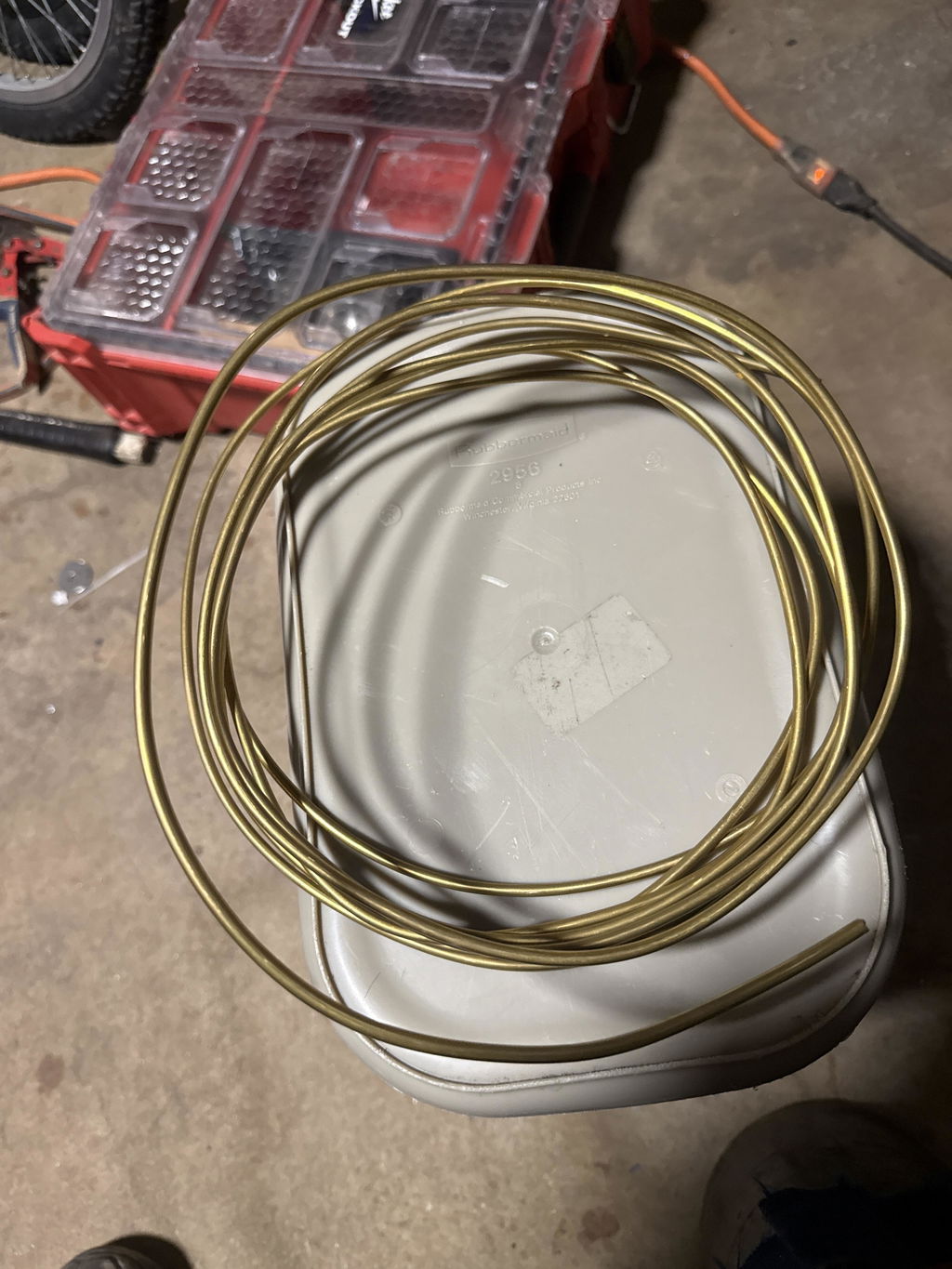
The chain is fine...but I ordered the wrong size. Nine links of the chain I ordered equals six of the size I wanted. My error...
How can I straighten out the springs? I can't use them coil uo as is.
Your payment information is processed securely. We do not store credit card details nor have access to your credit card information.
Get fitment advice & recommendations
When your project demands a metal that stands up to moisture, heat, and electrical stress without corroding or warping, standard copper sheet often falls short. Makers, hobbyists, marine builders, and small-workshop fabricators who need reliable flat stock turn to cupronickel — a copper-nickel alloy engineered for durability in demanding environments.
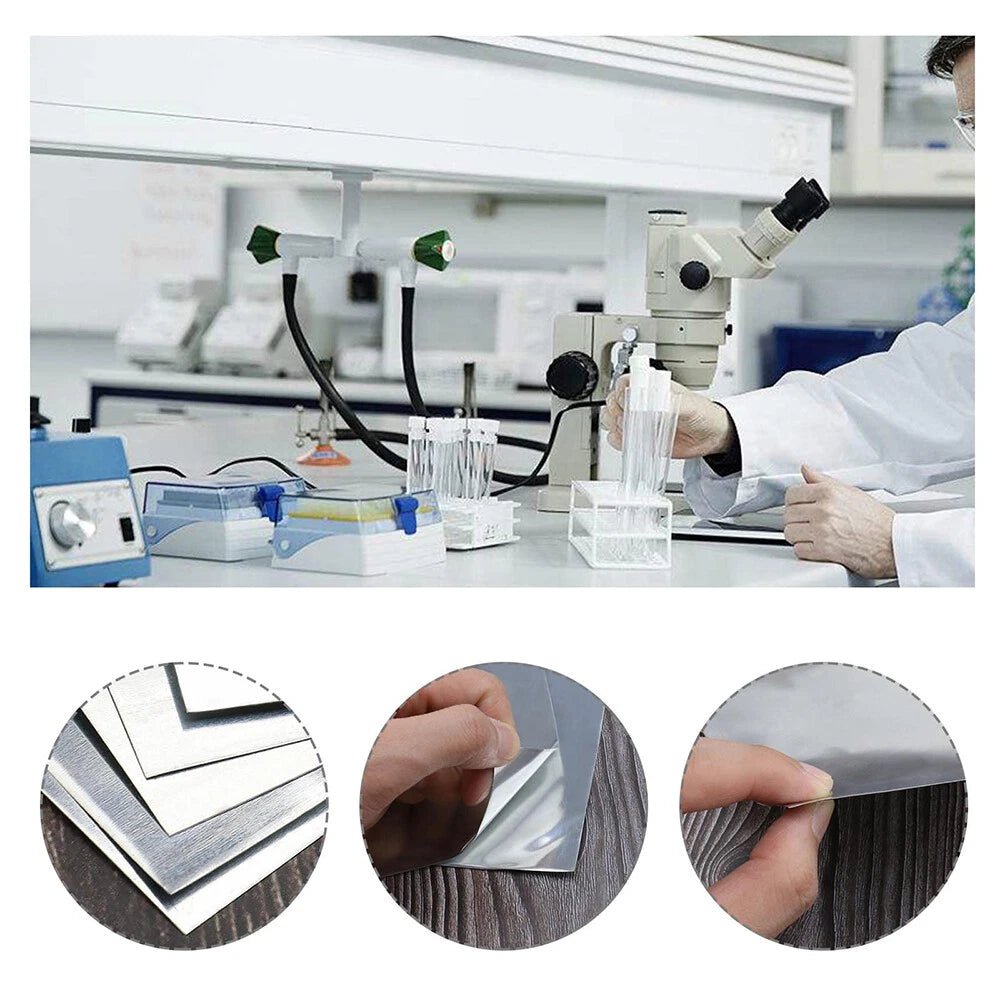
These cupronickel sheet panels are composed of a copper-nickel alloy (typically 70–90% Cu, 10–30% Ni), delivering a balance of electrical conductivity, thermal stability, and corrosion resistance. Available in flat panel sizes from 100×100mm (approx. 3.94×3.94 in) to 200×200mm (approx. 7.87×7.87 in), with thickness options ranging from 0.8mm to 3.0mm (approx. 0.031–0.118 in).
Typical applications include DIY electrical shielding panels, marine hardware fabrication, heat exchanger components for small-scale builds, decorative metalwork requiring a silver-toned finish, and custom gasket or spacer blanks for workshop machinery.
The copper-nickel composition resists oxidation and saltwater corrosion, making these panels suitable for marine, outdoor, and humid-environment applications.
Choose from 100×100mm, 100×200mm, or 200×200mm panel footprints to match your project's exact layout requirements without excess waste.
Available in 0.8mm, 1.0mm, 2.0mm, and 3.0mm thicknesses, covering lightweight shielding applications through structural spacer and gasket use.
Cupronickel retains meaningful electrical conductivity, making these sheets useful for grounding planes, EMI shielding, and custom bus bar blanks.
The alloy maintains dimensional stability across a wide temperature range, reducing warping risk during soldering or in heat-adjacent installations.
These panels can be cut with metal shears or a bench drill, filed to shape, and joined with standard silver solder or brazing rod for clean, strong bonds.
| Material | Copper-Nickel Alloy (Cupronickel) |
|---|---|
| Alloy Composition | Typically 70–90% Cu, 10–30% Ni |
| Available Sizes | 100×100mm, 100×200mm, 200×200mm |
| Available Thicknesses | 0.8mm, 1.0mm, 2.0mm, 3.0mm |
| Size in Inches | ~3.94×3.94 in to ~7.87×7.87 in |
| Thickness in Inches | ~0.031 in to ~0.118 in |
| Surface Finish | See variant options |
| Tolerance | See variant options |
| Packing Quantity | 1 piece per order (per variant) |
| Product Type | Flat Sheet / Panel |
| Typical Applications | Marine hardware, EMI shielding, heat exchangers, decorative metalwork, gaskets |
Start with your required panel footprint — 100×100mm suits small shielding or decorative inserts, 100×200mm works for rectangular blanks, and 200×200mm covers larger structural or shielding applications. For thickness: 0.8–1.0mm is ideal for flexible shielding or decorative use; 2.0–3.0mm suits load-bearing spacers, gaskets, or structural components.
Cupronickel is significantly stronger and harder than pure copper due to the nickel content. It offers better tensile strength and resistance to deformation under mechanical stress, making it more suitable for structural and load-bearing applications where pure copper would be too soft.
Yes. Copper-nickel alloys are well-known for their resistance to corrosion, including in saltwater and humid environments. Unlike ferrous metals, cupronickel does not rust. It may develop a natural patina over time, which can be polished off or left as a protective layer depending on your application.
Yes. Cupronickel is solderable and brazeable using standard silver solder or brazing rod with appropriate flux. Clean the surface with fine abrasive or flux before joining to ensure a strong bond. Avoid lead-free solders with very high tin content, as they may not wet the surface as effectively.
For thinner sheets (0.8–1.0mm), aviation snips or metal shears work well. For 2.0–3.0mm thickness, a jigsaw with a metal-cutting blade, angle grinder, or bench shear is recommended. Drilling is straightforward with standard HSS drill bits. Always deburr edges after cutting for safe handling.
Yes. Cupronickel is widely used in marine environments due to its resistance to biofouling and saltwater corrosion. These panels are a solid choice for boat hardware, underwater fittings, and outdoor decorative metalwork exposed to weather.
Yes. Cupronickel retains good electrical conductivity (lower than pure copper, but sufficient for shielding and grounding applications). These sheets are suitable for EMI/RFI shielding enclosures, grounding planes in custom electronics enclosures, and bus bar blanks in low-current applications.