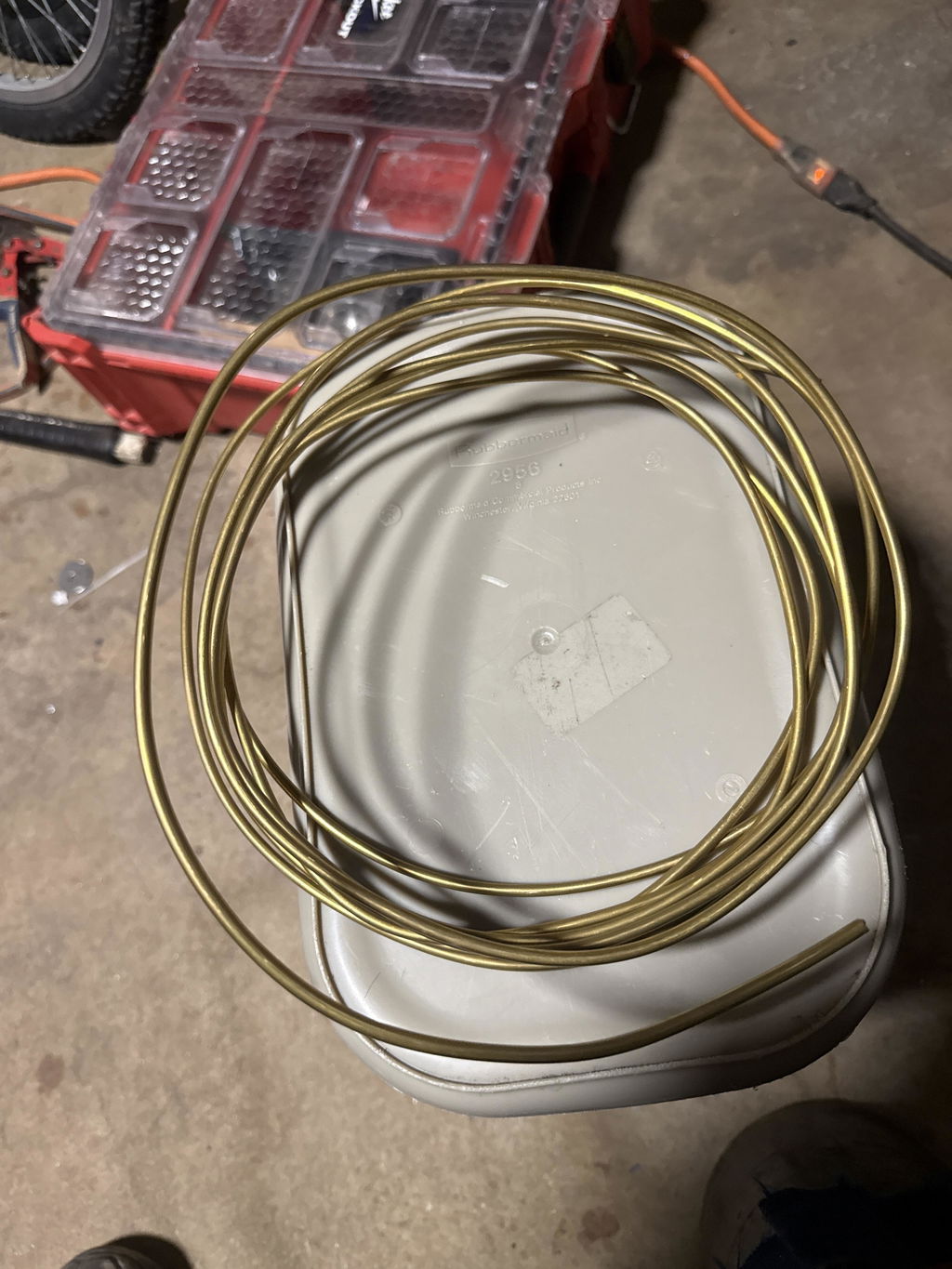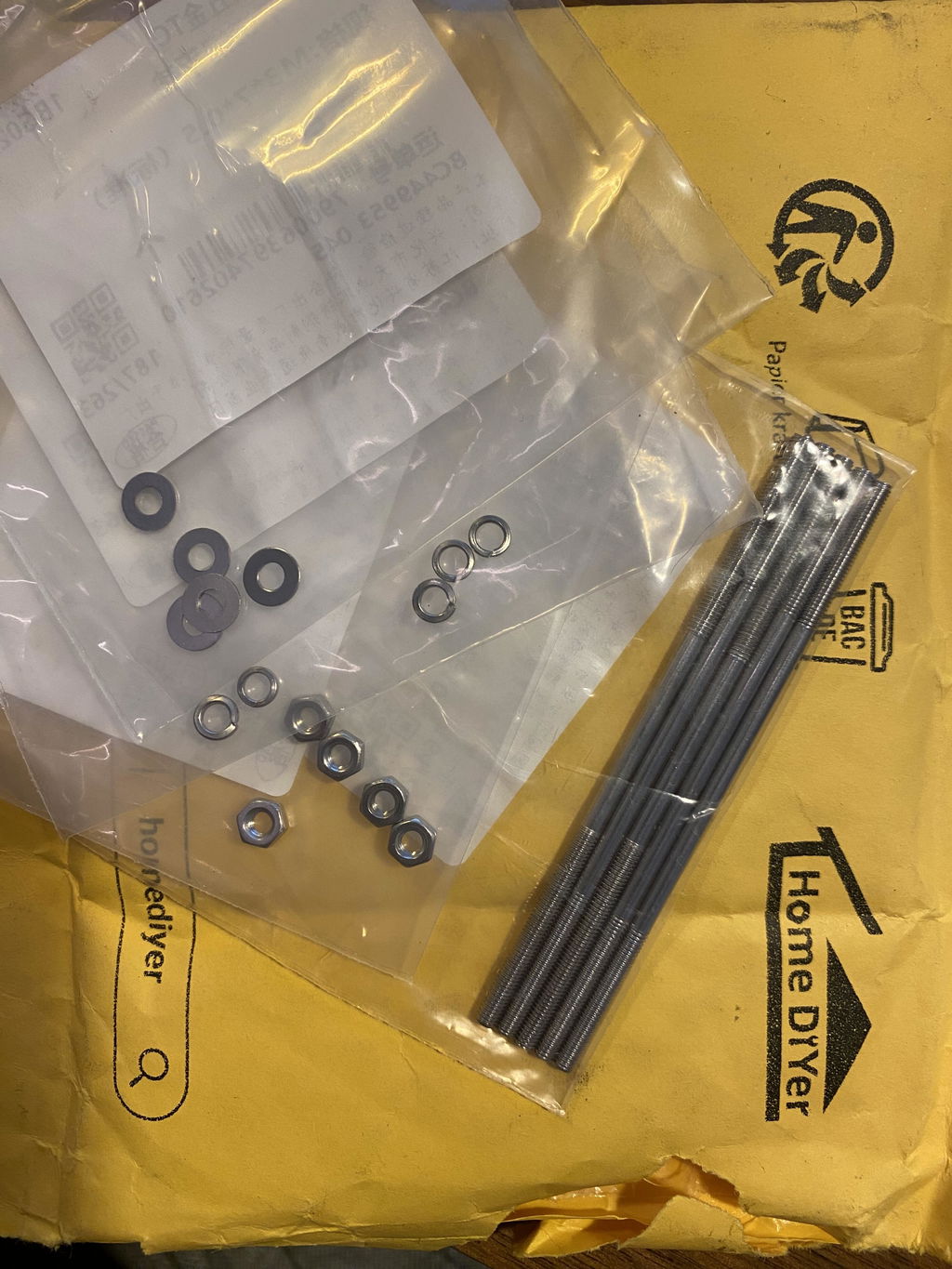
The chain is fine...but I ordered the wrong size. Nine links of the chain I ordered equals six of the size I wanted. My error...
How can I straighten out the springs? I can't use them coil uo as is.
Your payment information is processed securely. We do not store credit card details nor have access to your credit card information.
Get fitment advice & recommendations
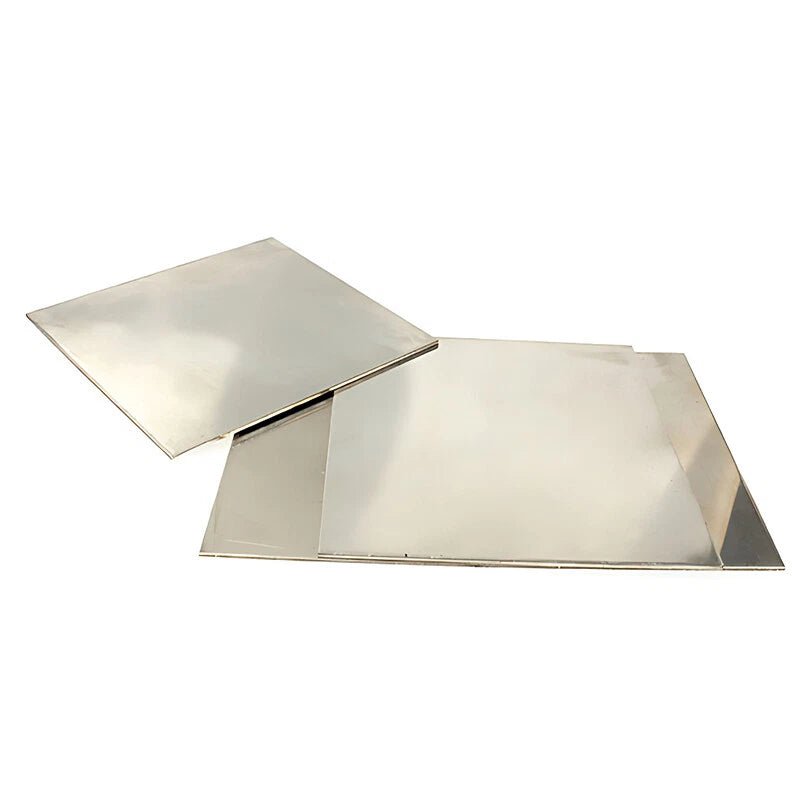
When your project demands a metal that resists corrosion, conducts reliably, and holds its shape under stress, standard copper sheet often falls short. Makers, hobbyists, engineers, and small workshop operators who work with marine hardware, electrical assemblies, or decorative metalwork need a material that performs in demanding environments without constant maintenance. These Copper-Nickel (Cupronickel 18 Ni) alloy sheet plates are engineered for exactly those applications.
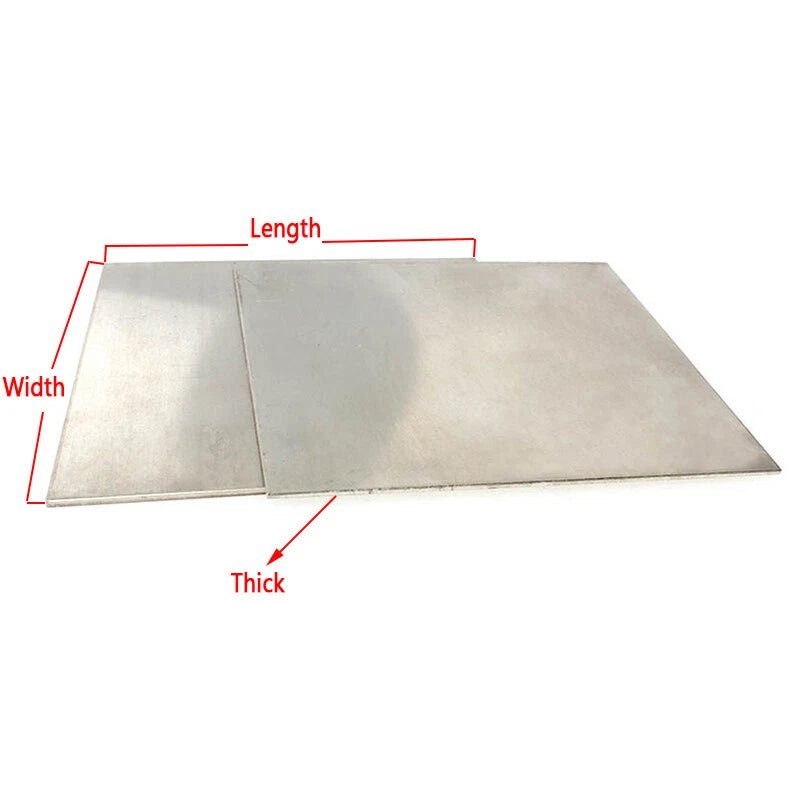
Each panel is composed of a copper-nickel alloy containing approximately 18% nickel, delivering a balanced combination of electrical conductivity, thermal stability, and corrosion resistance. Sheets are available in a range of sizes — from compact 100 × 100 mm (approx. 3.94 × 3.94 in) squares to larger 100 × 300 mm (approx. 3.94 × 11.81 in) and 150 × 150 mm (approx. 5.91 × 5.91 in) panels — with thicknesses spanning 0.2 mm to 3 mm (approx. 0.008 in to 0.118 in). Packing options of 1, 2, or 5 pieces allow you to order exactly what your build requires.
These cupronickel sheet plates are well-suited for marine-grade shielding and hull fittings, DIY electrical bus bars and grounding straps, decorative inlay work and jewelry fabrication, and heat exchanger or thermal interface applications in small workshop builds. Whether you are sourcing a single test piece or stocking up for a production run, the multi-quantity options make it straightforward to scale your order.
| Material | Copper-Nickel Alloy (Cupronickel, ~18% Ni) |
|---|---|
| Alloy Designation | Cupronickel 18 Ni (CuNi18) |
| Thickness Range | 0.2 mm – 3 mm (approx. 0.008 in – 0.118 in) |
| Sheet Sizes Available | 100×100 mm, 100×200 mm, 100×300 mm, 150×150 mm |
| Packing Quantity Options | 1 PCS, 2 PCS, 5 PCS |
| Surface Finish | See variant options |
| Tensile Strength | See variant options |
| Hardness | See variant options |
| Electrical Conductivity | Moderate (lower than pure copper; suitable for grounding and contact applications) |
| Corrosion Resistance | Good — resistant to oxidation, saltwater, and atmospheric corrosion |
| Machinability | Good — compatible with shearing, CNC, laser cutting, soldering, and brazing |
| Product Type | Copper Sheet / Metal Foil Panel |
For shielding, decorative inlay, or jewelry work, thinner gauges (0.2–0.5 mm) are easiest to cut and form by hand. For structural brackets, bus bars, or heat exchangers where rigidity matters, choose 1–3 mm. If you are unsure, 1 mm is a versatile starting point that balances workability and strength for most DIY applications.
Yes. The addition of nickel to copper increases tensile strength and hardness compared to pure copper, while also improving corrosion resistance. Cupronickel 18 Ni is noticeably stiffer than equivalent-gauge pure copper sheet, which is beneficial for structural and load-bearing applications but requires slightly more force when bending or forming.
Cupronickel alloys are well-regarded for their resistance to saltwater corrosion and atmospheric oxidation. While they will develop a natural patina over time (similar to copper), they do not rust like ferrous metals. For prolonged outdoor or submerged marine use, a light coating of lacquer or marine-grade sealant can further extend the surface appearance.
Yes. Cupronickel is compatible with standard copper-compatible fluxes and silver-bearing solders. For brazing, use a flux rated for copper-nickel alloys and a torch temperature appropriate for the alloy. Clean the surface with isopropyl alcohol or a light abrasive before joining to ensure a strong bond.
Sheets 0.2–0.5 mm thick can typically be cut with heavy-duty craft scissors, a utility knife and straightedge, or tin snips. Sheets 0.8–1.5 mm thick are best handled with aviation snips or a bench shear. For 2–3 mm thickness, a CNC router, angle grinder with a metal cutting disc, or a bandsaw with a metal-cutting blade is recommended. Always wear gloves and eye protection when cutting metal sheet.
Copper-nickel alloys can be laser cut, but they are reflective and thermally conductive, which means higher-powered fiber lasers (typically 500W+) perform better than CO₂ lasers on thinner gauges. For thicknesses above 1 mm, consult your laser cutter's material compatibility guide. CNC routing and waterjet cutting are reliable alternatives for all thicknesses in this range.
Choose the smallest sheet size that fully contains your required shape to minimize waste. For example, if your part is 80 × 90 mm, the 100 × 100 mm option is the most economical choice. If you need multiple identical parts, ordering the 5 PCS pack of a larger sheet often provides better value than multiple single-sheet orders.