
The chain is fine...but I ordered the wrong size. Nine links of the chain I ordered equals six of the size I wanted. My error...
How can I straighten out the springs? I can't use them coil uo as is.
Your payment information is processed securely. We do not store credit card details nor have access to your credit card information.
Get fitment advice & recommendations
When your project demands a metal that resists corrosion, conducts reliably, and holds its shape under stress, standard copper or plain steel simply fall short. Makers, hobbyists, marine enthusiasts, and small-workshop fabricators who work in humid, saltwater-adjacent, or chemically active environments need a material engineered for those conditions — and that's exactly where copper nickel (cupronickel) sheet plate delivers.
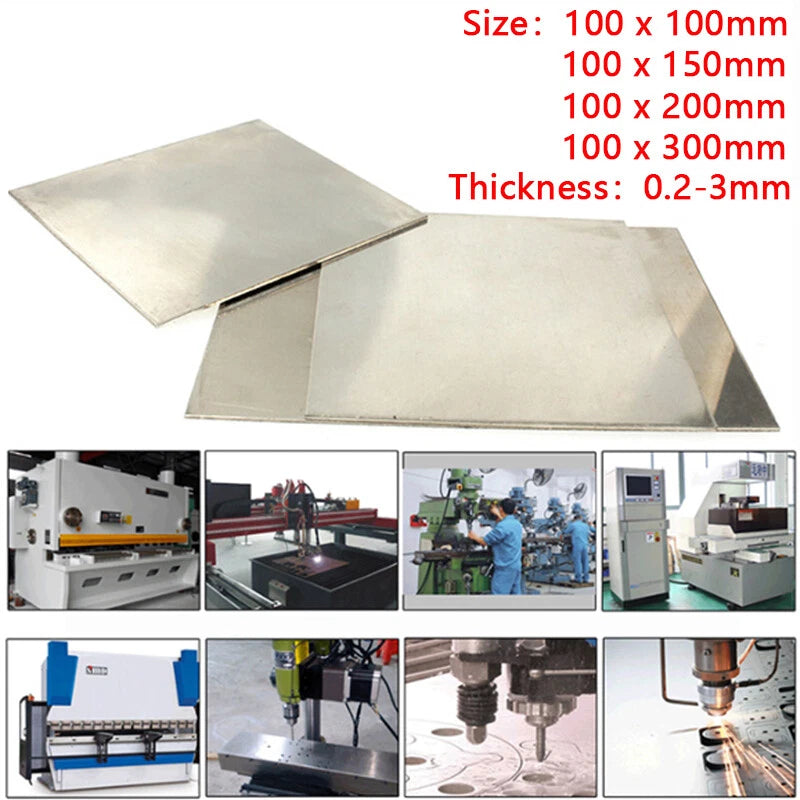
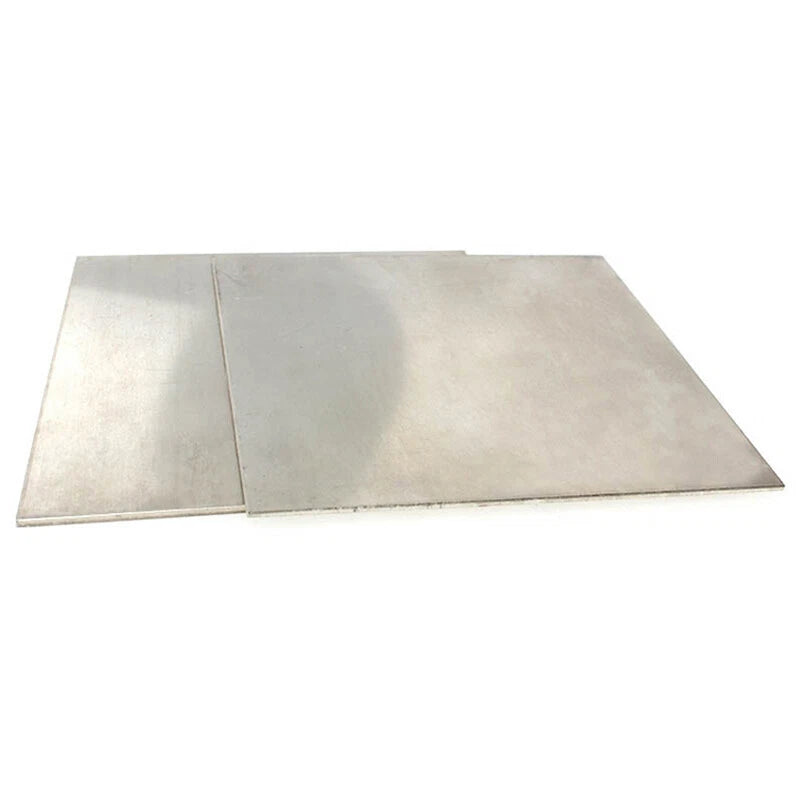
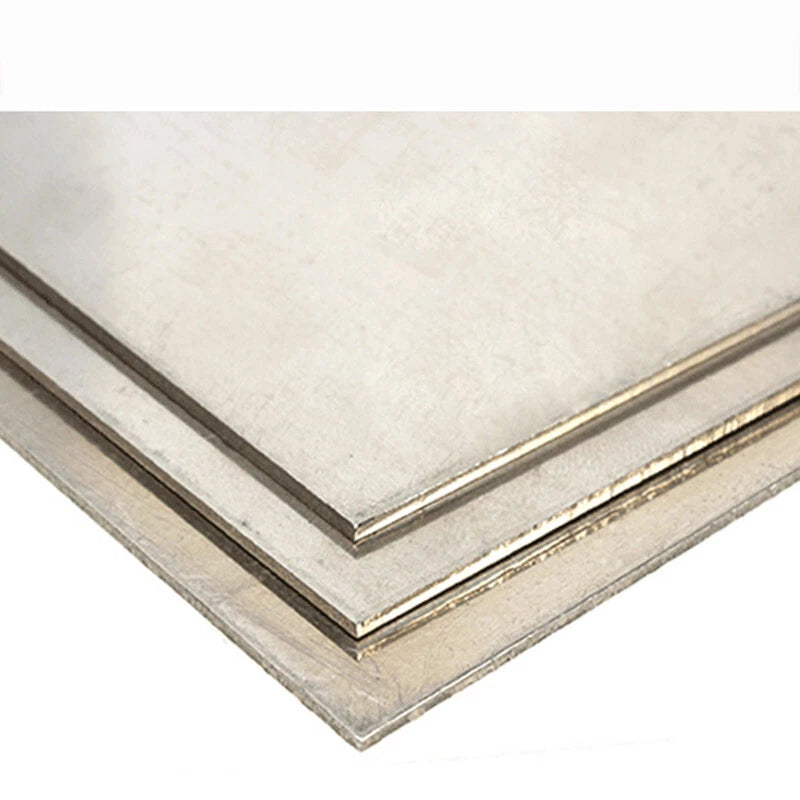
These cupronickel panels are composed of a copper-nickel alloy (typically CuNi 90/10 or CuNi 70/30 composition), combining copper's excellent electrical and thermal conductivity with nickel's superior corrosion resistance. Sheets are available in sizes ranging from 100mm × 100mm to 150mm × 300mm (approximately 3.9" × 3.9" to 5.9" × 11.8"), with thickness options spanning 0.2mm to 3mm (approximately 0.008" to 0.118"). Packs of 1 or 2 pieces are available depending on the selected variant.
Typical use cases include marine hardware shielding and hull patch repairs, DIY electrical bus bars and grounding straps, heat exchanger fabrication for small-scale cooling systems, decorative metalwork and artistic panel inlays, and RF shielding enclosures for electronics projects.
| Material | Copper-Nickel Alloy (Cupronickel) |
|---|---|
| Alloy Composition | See variant options |
| Available Sizes | 100×100mm, 100×200mm, 100×300mm, 150×150mm (approx. 3.9"×3.9" to 5.9"×11.8") |
| Thickness Range | 0.2mm, 0.3mm, 0.4mm, 0.5mm, 0.8mm, 1mm, 1.5mm, 2mm, 3mm |
| Pack Quantity | 1 pc or 2 pcs (see variant options) |
| Surface Finish | Mill finish (natural metallic) |
| Machinability | Suitable for cutting, drilling, soldering, brazing, and welding |
| Corrosion Resistance | Excellent — resistant to saltwater and mild chemical exposure |
| Electrical Conductivity | Moderate-to-good (lower than pure copper; higher than steel) |
| Weight | See variant options |
| Tolerance | See variant options |
For flexible shielding, decorative inlays, or thin gaskets, choose 0.2mm–0.5mm. For general-purpose panels, heat exchangers, or grounding straps, 0.8mm–1.5mm offers a good balance of rigidity and workability. For structural applications or load-bearing panels, select 2mm–3mm. If you are unsure, 1mm is the most versatile starting point for most DIY fabrication tasks.
Cupronickel alloy has moderate tensile strength — generally in the range of 300–450 MPa depending on alloy composition and temper. At 2mm–3mm thickness, these panels are suitable for light structural applications, brackets, and reinforcement plates. For heavy load-bearing structures, consult a materials engineer to confirm suitability for your specific load requirements.
Cupronickel is one of the most corrosion-resistant copper alloys available, particularly in seawater and brackish water environments. It is widely used in marine heat exchangers, ship hulls, and offshore hardware precisely because of its resistance to biofouling and chloride-induced corrosion. For marine DIY applications, cupronickel sheet is a reliable material choice.
Yes. Cupronickel can be soldered using standard silver-bearing or lead-free solders with appropriate flux. It can also be brazed or TIG/MIG welded using cupronickel-compatible filler rods (e.g., ERCuNi). Clean the surface with isopropyl alcohol or a mild acid flux before joining to ensure a strong bond. Avoid using zinc-based solders, which can cause stress corrosion cracking.
Yes. Thinner gauges (0.2mm–1mm) are well-suited to fiber laser cutting and CNC routing with appropriate tooling. Thicker sheets (1.5mm–3mm) can also be laser cut but may require higher power settings. Standard carbide-tipped CNC bits work effectively for routing. Always use cutting fluid or air assist to manage heat buildup during machining.
Some size and thickness combinations are offered in both single-piece (1 pcs) and two-piece (2 pcs) packs. The 2-piece option is ideal when you need a backup piece for prototyping, want to test a cut or finish before committing to the final piece, or are working on a project that requires two identical panels. The price per piece is consistent — select the pack that matches your project quantity.
Store cupronickel sheets in a dry, low-humidity environment away from direct contact with iron or steel surfaces, which can cause galvanic staining. Keep sheets in their original packaging or wrap in acid-free paper until use. If light surface oxidation occurs, it can be removed with a mild metal polish or a dilute citric acid solution followed by a clean water rinse and thorough drying.





