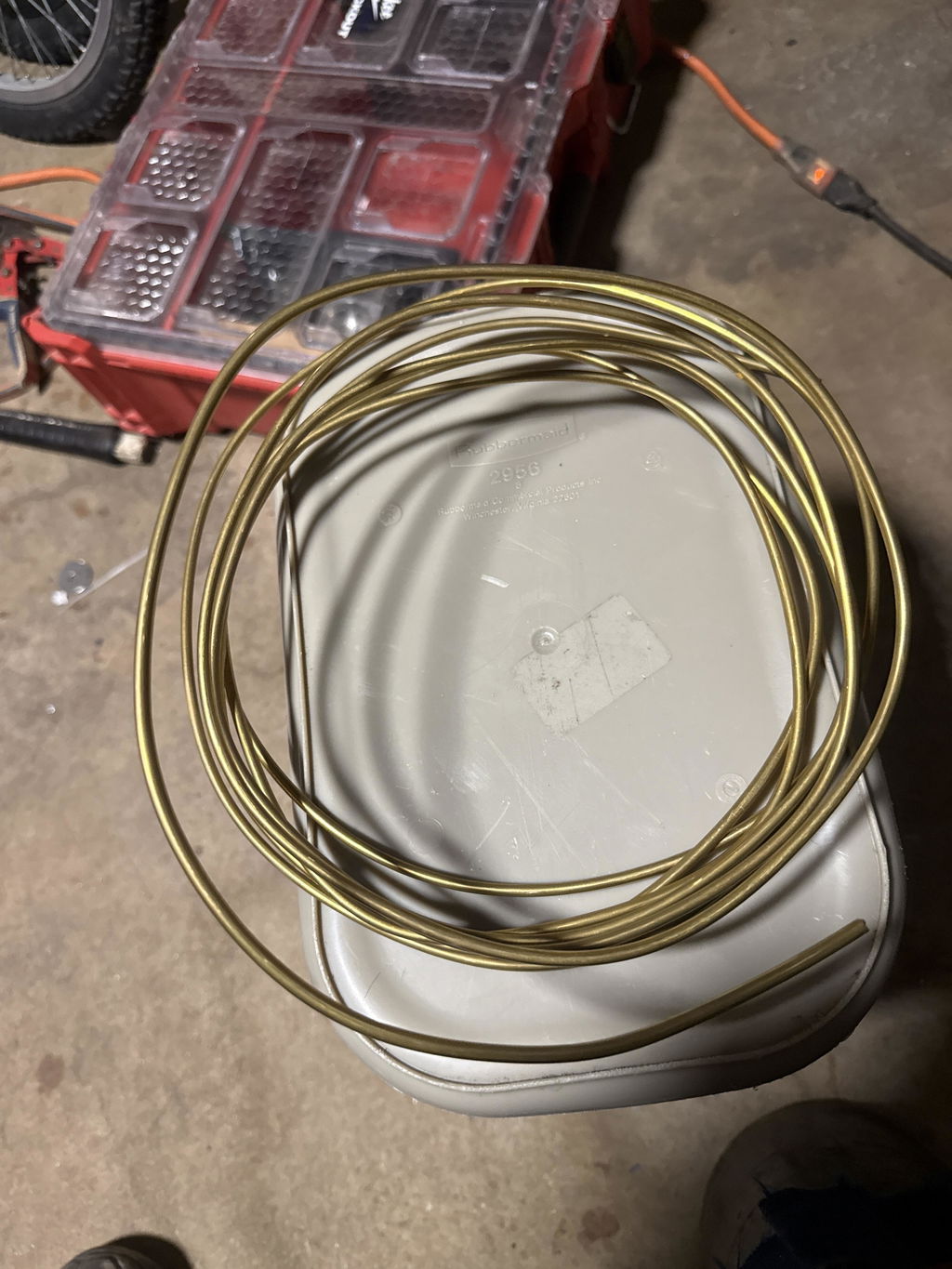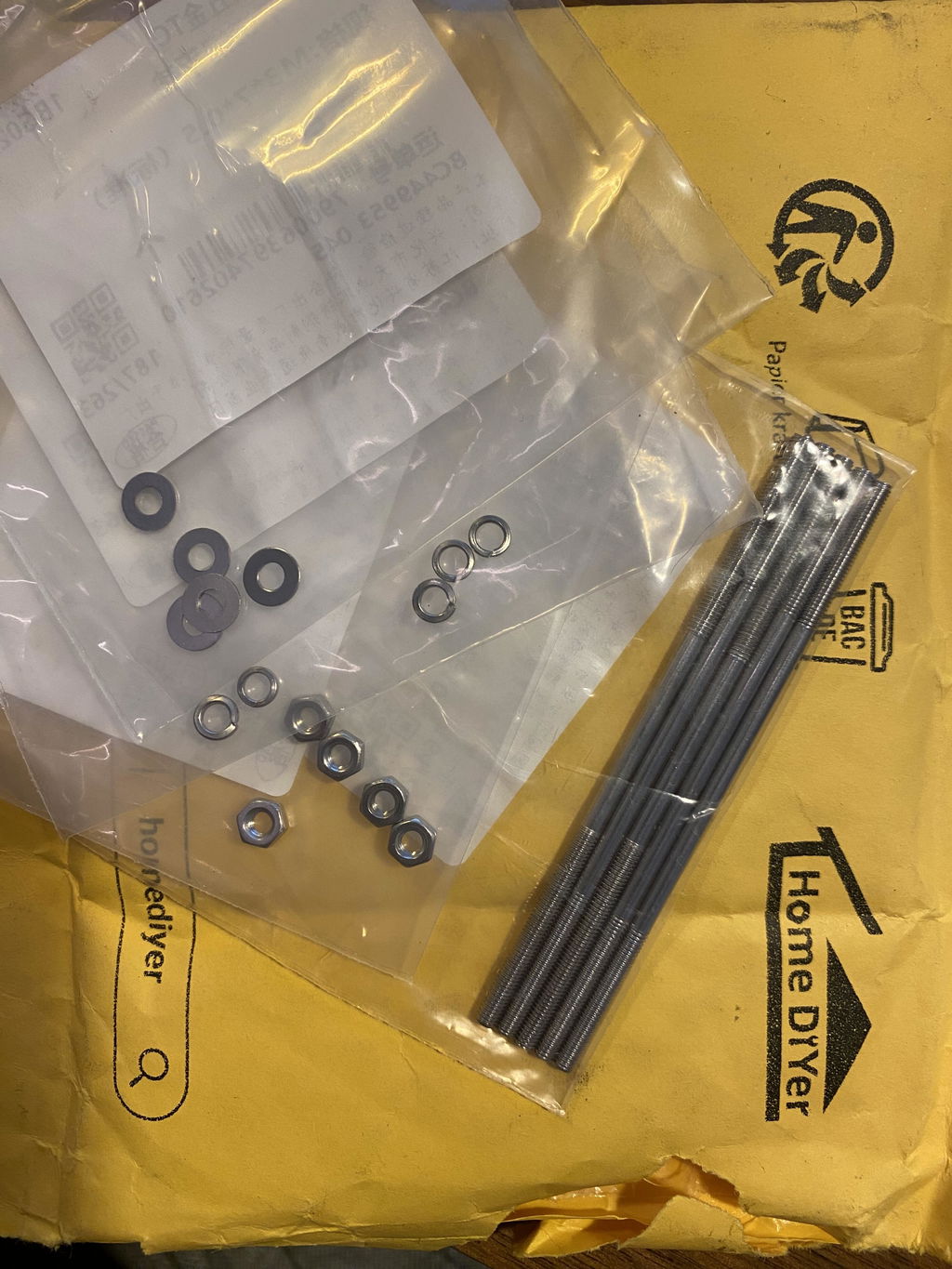
The chain is fine...but I ordered the wrong size. Nine links of the chain I ordered equals six of the size I wanted. My error...
How can I straighten out the springs? I can't use them coil uo as is.
Your payment information is processed securely. We do not store credit card details nor have access to your credit card information.
Get fitment advice & recommendations
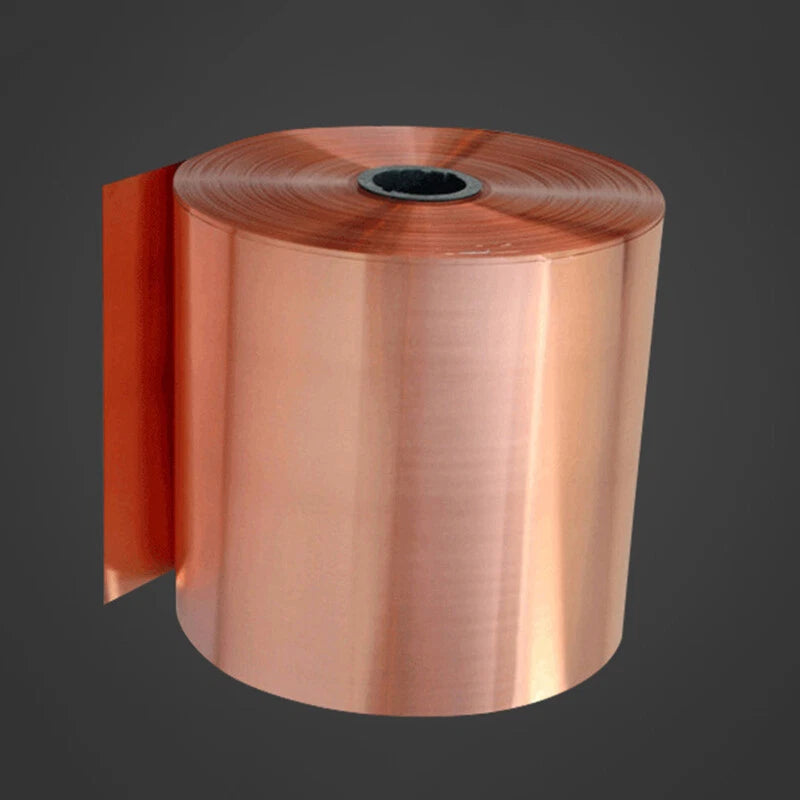
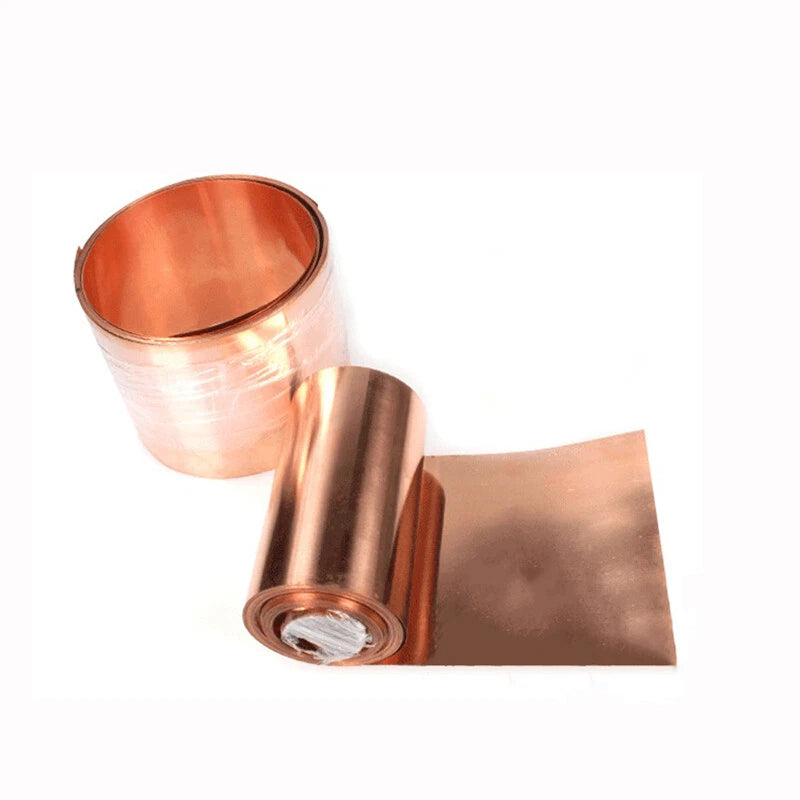
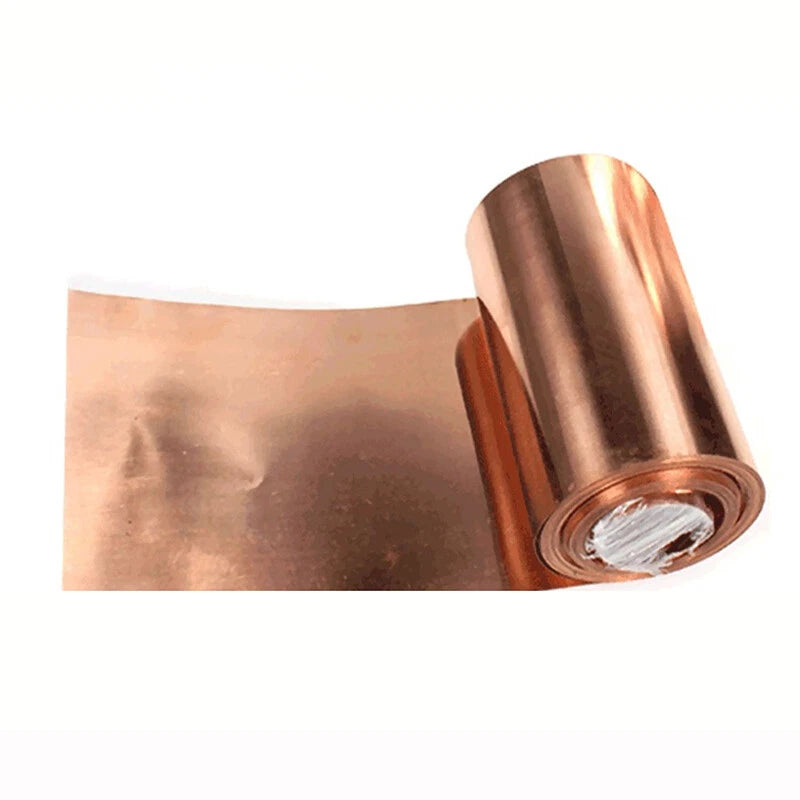
When your project demands reliable conductivity, corrosion resistance, and dimensional accuracy, off-the-shelf metal stock rarely fits the bill. Whether you're a hobbyist fabricating custom enclosures, an electrician sourcing bus bar blanks, or a craftsperson working on decorative metalwork, finding the right copper sheet thickness and width in one place is a constant challenge. This 99% pure copper sheet is stocked in an extensive range of thicknesses and widths so you can order exactly what your application requires — no over-buying, no waste.
Each copper sheet is composed of 99% pure Cu (electrolytic copper), delivering excellent electrical and thermal conductivity. Thickness options span from ultra-thin 0.01 mm (approximately 0.0004 in) foil-grade stock up to a robust 1 mm (approximately 0.039 in) plate, with widths ranging from 10 mm (0.39 in) to 300 mm (11.8 in). Roll-format pieces are cut to 1 m (39.4 in) lengths; flat sheet options are available in 200×300 mm and 305×305 mm panels. The surface is smooth-rolled with a bright metallic finish.
Typical use cases include DIY electrical bus bars and grounding straps, RF shielding and EMI gasket fabrication, jewelry and art metalsmithing, heat-sink shimming for PC and electronics thermal management, and custom flashing or roofing detail work. Long-tail search terms this product addresses: thin copper sheet for electronics projects, pure copper strip roll for grounding, copper foil sheet for crafts, copper plate for heat spreader DIY.
| Material | 99% Pure Electrolytic Copper (Cu) |
|---|---|
| Thickness Range | 0.01 mm – 1 mm (0.0004 in – 0.039 in) |
| Width Range | 10 mm – 300 mm (0.39 in – 11.8 in) |
| Length / Format | 1 m roll strips; flat panels 200×300 mm or 305×305 mm |
| Surface Finish | Smooth-rolled, bright metallic |
| Purity | ≥99% Cu (electrolytic grade) |
| Electrical Conductivity | Typically ≥58 MS/m (IACS ≥100%) |
| Thermal Conductivity | Typically ~385–400 W/(m·K) |
| Hardness | See variant options |
| Temper | See variant options |
| Pack Quantity | 1 Pcs or 2 Pcs (select above) |
| Product Type | Copper Sheet / Metal Plate / Strip Roll |
For electrical shielding foil and EMI gaskets, 0.01–0.05 mm is typically sufficient. For grounding straps and bus bar blanks, 0.1–0.3 mm offers a good balance of flexibility and current-carrying capacity. For structural or decorative applications such as roofing flashing or art metalwork, 0.4–1 mm provides rigidity. If you are unsure, contact us to confirm the best gauge for your load or forming requirements.
Select a width that matches or slightly exceeds your finished part dimension to minimise cutting waste. For narrow grounding straps or bus bars, 10–30 mm strips are common. For heat spreader shims, match the width to your component footprint. For sheet metalwork or decorative panels, the 200×300 mm or 305×305 mm flat options may be more convenient than cutting a roll strip.
Pure copper (99% Cu) is a relatively soft, ductile metal — it is not intended for structural load-bearing applications. It is well-suited for electrical conductors, thermal interface shims, decorative metalwork, and light-duty forming. For applications requiring higher strength, consider copper alloys such as brass or bronze instead.
Copper does not rust (rust is specific to iron-based metals). Over time, copper oxidises to form a greenish patina (verdigris) that actually slows further corrosion. For indoor electrical or electronic applications, the bright surface can be maintained with a light coat of lacquer or flux. For outdoor use, the natural patina provides long-term protection without additional treatment.
Yes. 99% pure copper is highly solderable and brazeable. Use a rosin-core or water-soluble flux with standard tin-lead or lead-free solder for electronics work. For higher-temperature brazing, silver-bearing brazing alloys work well. Clean the surface with isopropyl alcohol or fine abrasive before soldering to remove any surface oxide for best results.
Thin gauges (0.01–0.1 mm) can be cut cleanly with sharp scissors or a craft knife and straight edge. Gauges from 0.1–0.5 mm are easily handled with aviation tin snips or a guillotine shear. Thicker gauges (0.5–1 mm) may require metal shears, a nibbler, or a CNC router/laser cutter for precise cuts. Copper is also compatible with standard drill bits and punches.
Roll strips (1 m length) are ideal when you need a long, narrow piece — for example, a grounding strap, bus bar, or continuous shielding tape. Flat panels (200×300 mm or 305×305 mm) are better suited for applications where you need a wider, shorter piece that can be cut to shape, such as heat spreader blanks, decorative tiles, or RF shielding panels.
Yes. Pure copper's thermal conductivity of approximately 385–400 W/(m·K) makes it one of the most effective thermal interface shim materials available. Thin gauges (0.1–0.3 mm) are commonly used between CPU/GPU dies and heatsinks to fill microscopic gaps and improve heat transfer. Ensure the shim is cut to match the die size precisely and that both mating surfaces are flat and clean before assembly.