The chain is fine...but I ordered the wrong size. Nine links of the chain I ordered equals six of the size I wanted. My error...
How can I straighten out the springs? I can't use them coil uo as is.
Your payment information is processed securely. We do not store credit card details nor have access to your credit card information.
Get fitment advice & recommendations
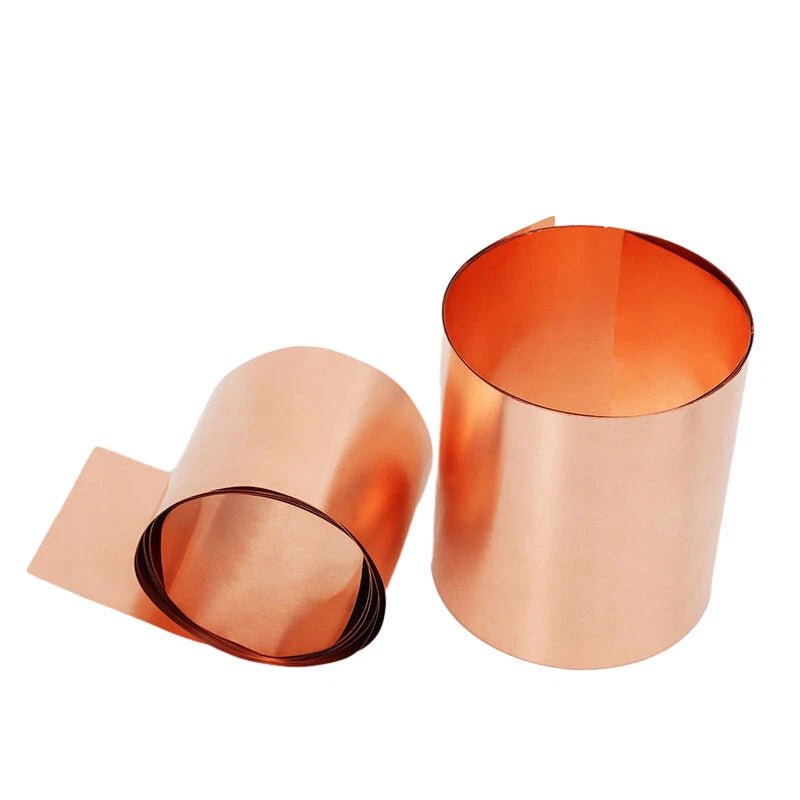
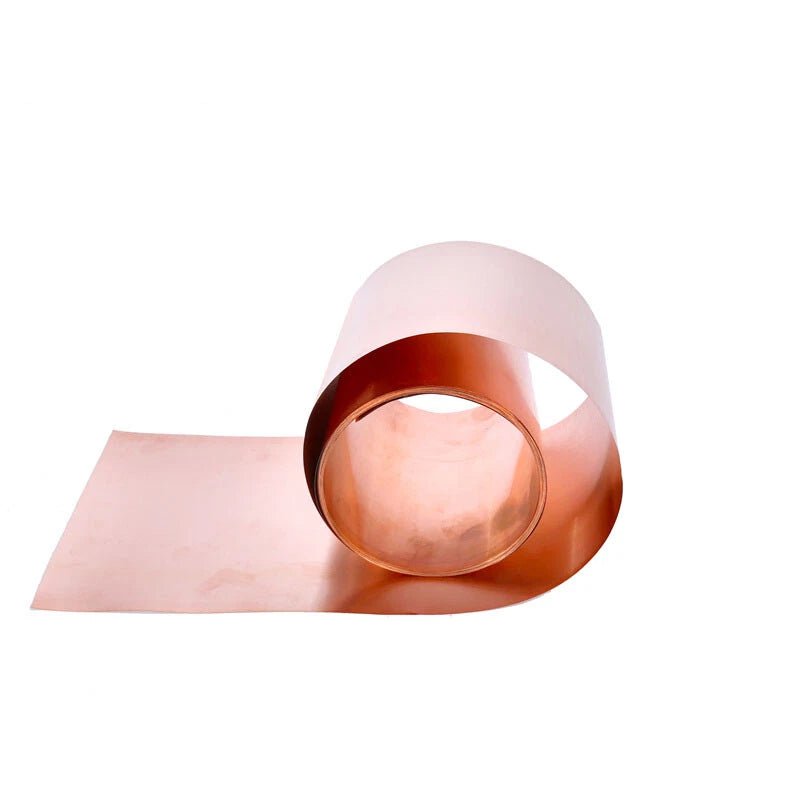
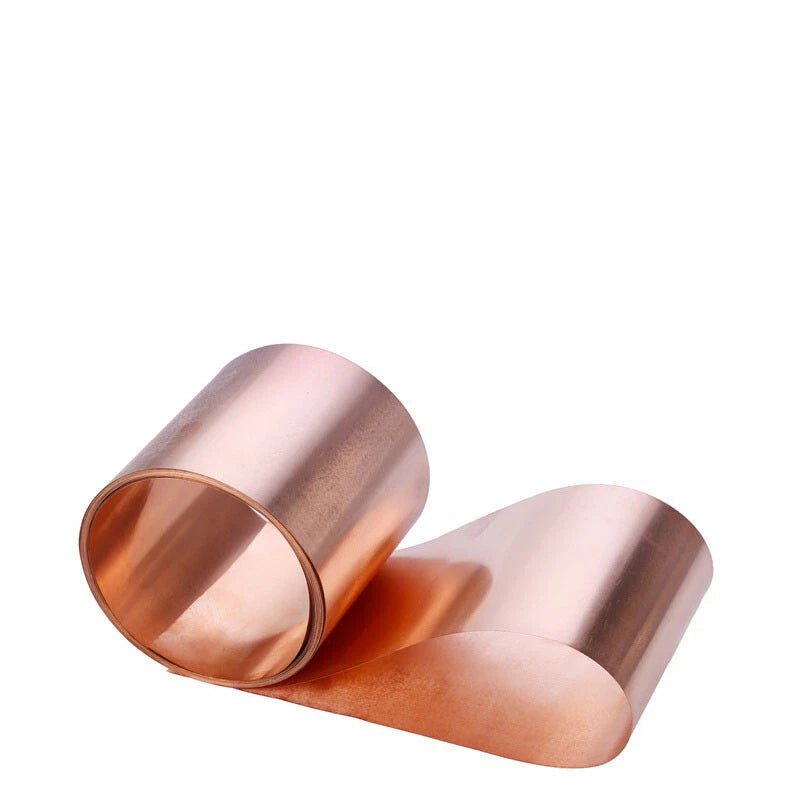
When your project demands a conductor that won't let you down — whether you're repairing circuit boards, building RF shielding enclosures, or crafting fine metalwork — finding a copper foil strip in exactly the right thickness and width is often the hardest part. This listing is designed for engineers, makers, hobbyists, and tradespeople who need a reliable, pure copper sheet foil strip available in a wide range of dimensions without ordering custom stock.
Each strip is made from 99.9% pure copper (Cu), offering excellent electrical conductivity, thermal transfer, and corrosion resistance. Thickness options range from 0.05 mm (approximately 0.002 in) up to 1 mm (approximately 0.039 in), and widths span from 10 mm (approx. 0.39 in) to 90 mm (approx. 3.54 in). Length options include 1 m, 2 m, 5 m, 10 m, and 25 m rolls or cuts, letting you order exactly what your job requires.
Typical applications include EMI/RFI shielding tape for electronics enclosures, grounding straps and bus bars in electrical panels, decorative inlay work and jewelry fabrication, heat spreader shims in PC modding and thermal management, and flexible connector strips in battery pack assembly. Whether you need a thin copper foil for delicate soldering or a thicker strip for structural conductivity, this listing covers the full spectrum.
| Material | 99.9% Pure Copper (Cu) |
|---|---|
| Thickness Range | 0.05 mm – 1 mm (approx. 0.002 in – 0.039 in) |
| Width Range | 10 mm – 90 mm (approx. 0.39 in – 3.54 in) |
| Available Lengths | 1 m, 2 m, 5 m, 10 m, 25 m (varies by variant) |
| Exact Thickness x Width | See variant options |
| Surface Finish | Mill finish (bare copper, uncoated) |
| Temper / Condition | Typically soft-annealed (flexible) |
| Electrical Conductivity | Typically ~58 MS/m (IACS ~100%) |
| Thermal Conductivity | Typically ~385 W/m·K |
| Density | Approx. 8.96 g/cm³ |
| Melting Point | Approx. 1085°C (1985°F) |
| Weight per Piece | See variant options |
| Product Type | Copper Sheet / Foil / Strip |
For EMI/RFI shielding tape and delicate craft inlay work, thinner foils (0.05 mm – 0.1 mm) are easiest to cut and conform to surfaces. For grounding straps, bus bars, or structural conductors where mechanical strength matters, choose 0.5 mm – 1 mm. For general-purpose soldering pads and heat spreaders, 0.2 mm – 0.3 mm is a common middle ground. If you are unsure, start with 0.1 mm or 0.2 mm for most electronics work.
Width selection depends on your channel, groove, or coverage area. Narrow widths (10 mm – 20 mm) suit wire-routing channels, small shielding patches, and jewelry inlay. Medium widths (25 mm – 50 mm) are common for grounding straps and heat spreader applications. Wider strips (60 mm – 90 mm) are used for large shielding panels, bus bars, and decorative metalwork. Measure your target area before ordering to avoid unnecessary trimming.
Copper is a relatively soft metal and is not intended for structural load-bearing applications. However, thicker strips (0.5 mm – 1 mm) provide adequate mechanical strength for bus bars, grounding connections, and flexible connector straps in electrical assemblies. For applications requiring higher tensile strength, consider brass or bronze alternatives. The thinner foils (0.05 mm – 0.2 mm) are best suited for non-structural uses such as shielding, thermal interface, and decorative work.
Copper naturally oxidizes when exposed to air and moisture, forming a brownish or greenish patina (verdigris). This patina actually slows further corrosion and is stable in most indoor environments. For applications where appearance matters or where the strip will be exposed to harsh outdoor conditions, you can apply a clear lacquer, tin-plate the surface, or use a flux-coated version. For electrical connections, ensure contact surfaces are clean and bright before soldering or crimping.
Yes. 99.9% pure copper solders and brazes readily with standard rosin-core or water-soluble flux solder for electronics, and with silver brazing alloys for higher-temperature joints. Clean the surface with isopropyl alcohol or fine abrasive before soldering to remove any oxidation. Thinner foils (under 0.2 mm) heat up very quickly, so use a temperature-controlled iron and work efficiently to avoid burning through the material.
Yes — electrical-grade copper wire is also 99.9% pure Cu (often designated C11000 or ETP copper). This strip shares the same purity and conductivity characteristics, making it suitable for electrical connections, grounding, and bus bar applications. The key difference is form factor: this product is a flat strip or foil rather than a round wire, which is advantageous for surface-mount connections, shielding, and applications where a low-profile conductor is needed.
For strips 0.5 mm and thicker, standard scissors will not cut cleanly. Use aviation tin snips or metal shears for straight cuts. A score-and-snap method (scribing a deep line with a carbide scriber and bending along the score) also works well for clean straight cuts. For curved cuts, a jeweler's saw or rotary tool with a cutting disc is recommended. Always deburr cut edges with a fine file or sandpaper to avoid sharp edges and to ensure good electrical contact.