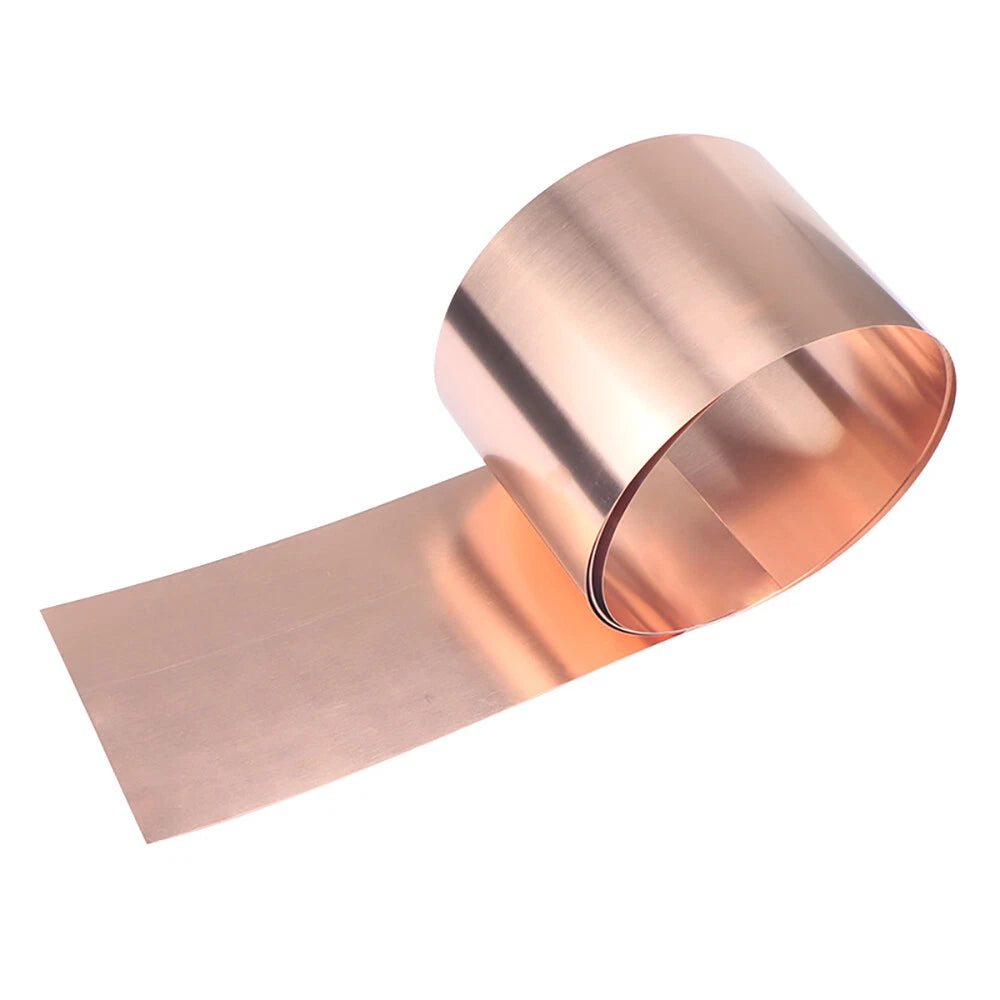
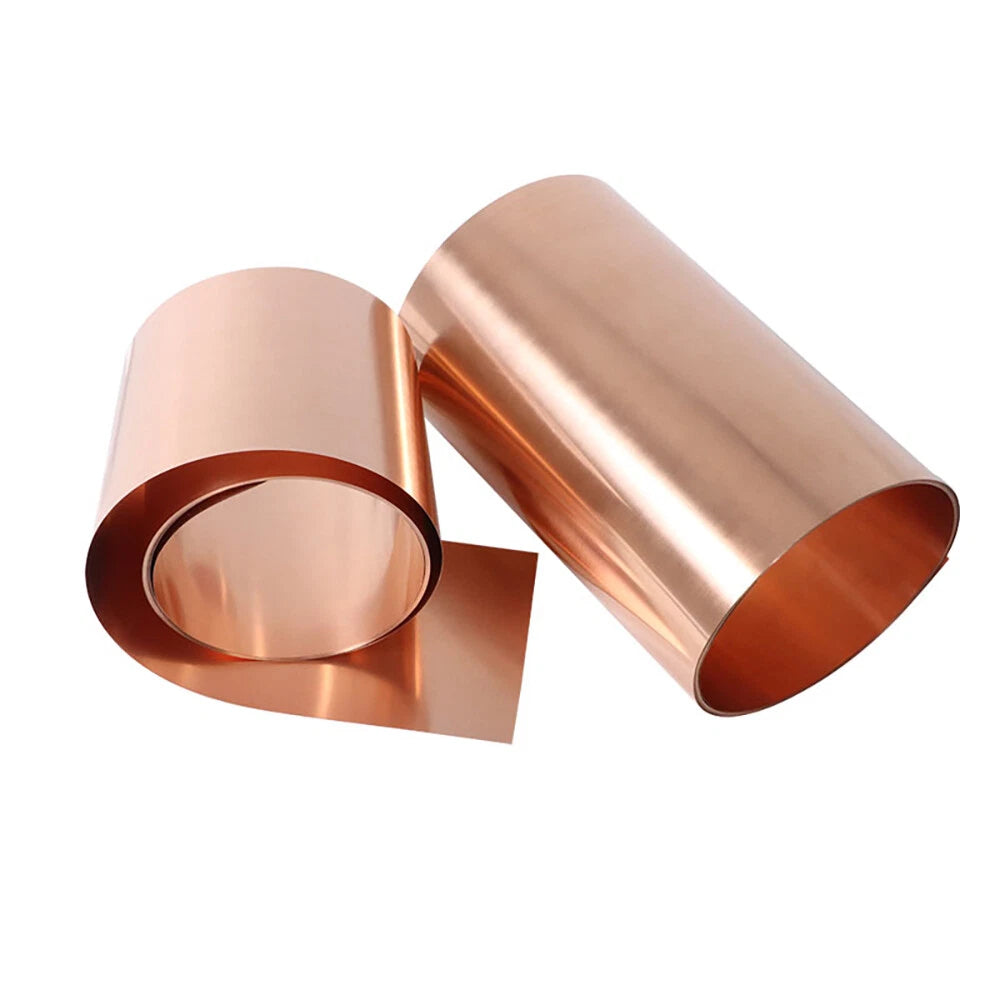
Copper Sheet Roll & Metal Foil Plate — Precision Thickness for Every DIY Application
When your project demands a conductive, corrosion-resistant metal that can be cut, shaped, and soldered with ease, finding the right copper foil in the exact thickness and width is rarely straightforward. Whether you are a maker building EMI shielding enclosures, an electronics hobbyist laying ground planes, or a craftsperson working with stained glass or decorative inlays, this copper sheet roll gives you the dimensional precision you need without ordering custom stock.
Each roll is pure copper flat stock, available in thicknesses from 0.05 mm to 1 mm (approximately 0.002 in to 0.039 in) and widths from 10 mm to 120 mm (approximately 0.39 in to 4.72 in). Length options of 1 m, 2 m, 5 m, 10 m, and 20 m let you order exactly what the job requires. The foil ships in a continuous roll, free of joints or splices within the selected length.
Typical use cases include RF and EMI shielding tape for electronics enclosures, copper inlay work in woodworking and resin casting, heat-spreading strips in DIY thermal management builds, grounding straps for audio equipment, and decorative metalwork in jewellery and stained-glass projects. Long-tail search terms that describe this product: thin copper strip roll, copper foil tape without adhesive, copper flat bar strip, copper shim stock roll, pure copper sheet by the meter.
✅ Key Features of These Copper Sheet Rolls
🔩Wide Thickness Range
Available from 0.05 mm to 1 mm, covering ultra-thin foil for EMI shielding up to heavier gauge strip for structural and thermal applications.
📏Multiple Width Options
Widths from 10 mm to 120 mm (0.39 in to 4.72 in) let you match the strip to your channel, groove, or panel without trimming waste.
🔄Continuous Roll Format
Each order is a single unjointed length — 1 m, 2 m, 5 m, 10 m, or 20 m — so you can cut to any sub-length on site without mid-run seams.
⚙️Pure Copper Material
High-conductivity copper construction delivers low electrical resistance, excellent thermal transfer, and reliable solderability across the full size range.
🛡️Corrosion-Resistant Surface
Copper naturally forms a protective patina over time. The bare metal surface is suitable for tinning, lacquering, or leaving exposed depending on your application.
✂️Easy to Cut and Form
Thin gauges cut cleanly with scissors or a craft knife; thicker gauges respond well to tin snips or a rotary tool. The foil can be bent, rolled, and shaped without cracking at room temperature.
🛒 Select your thickness, width, and length above, then add to cart.