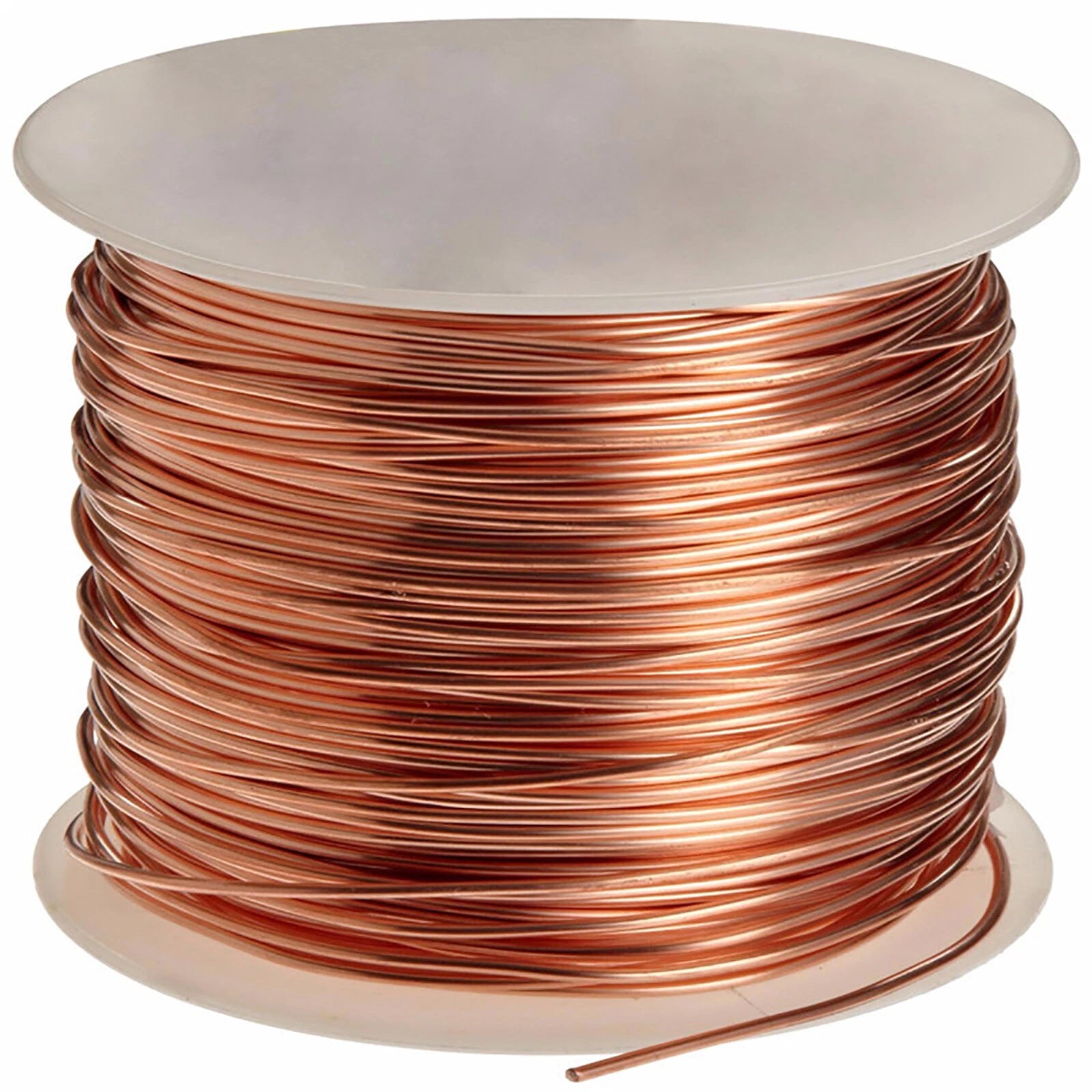
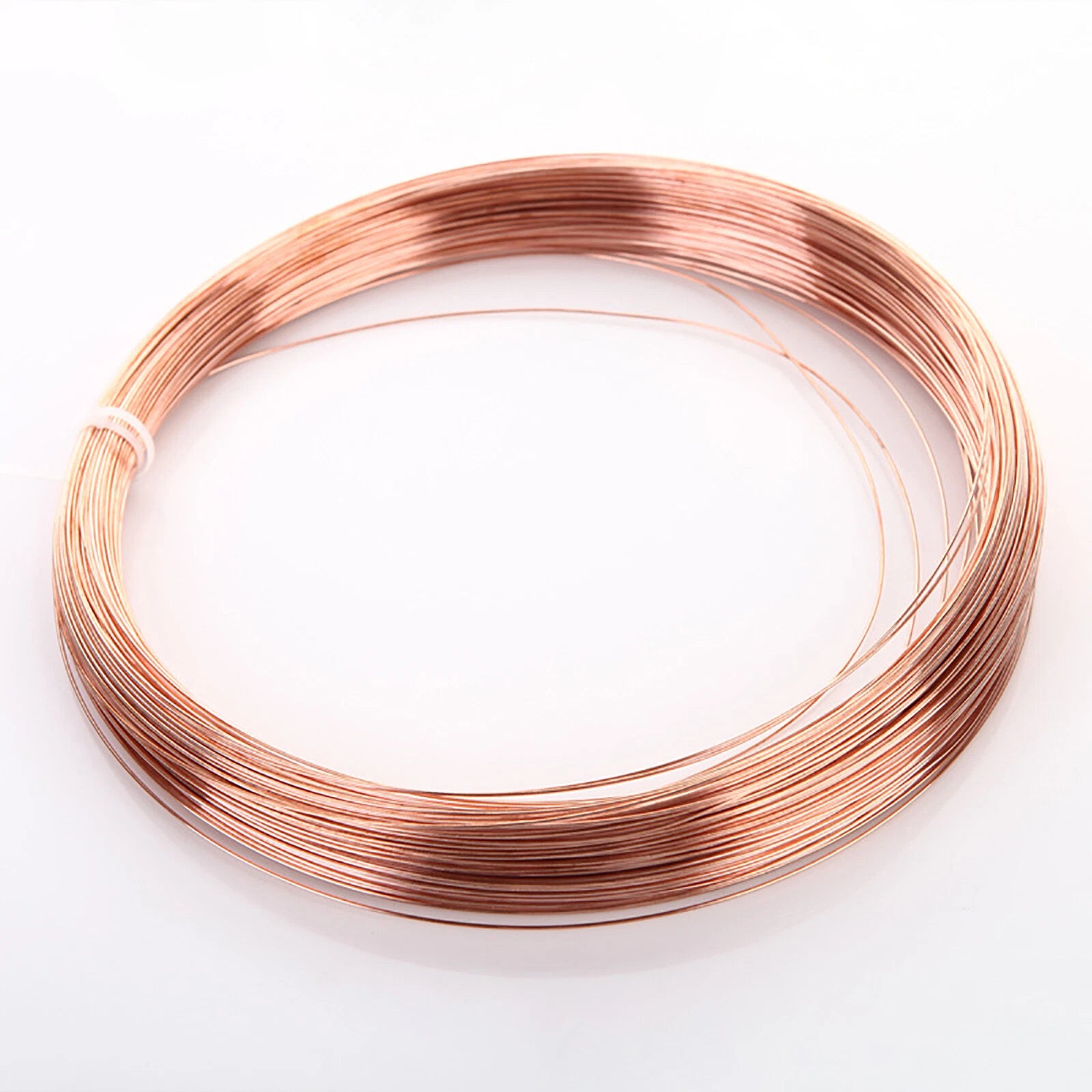
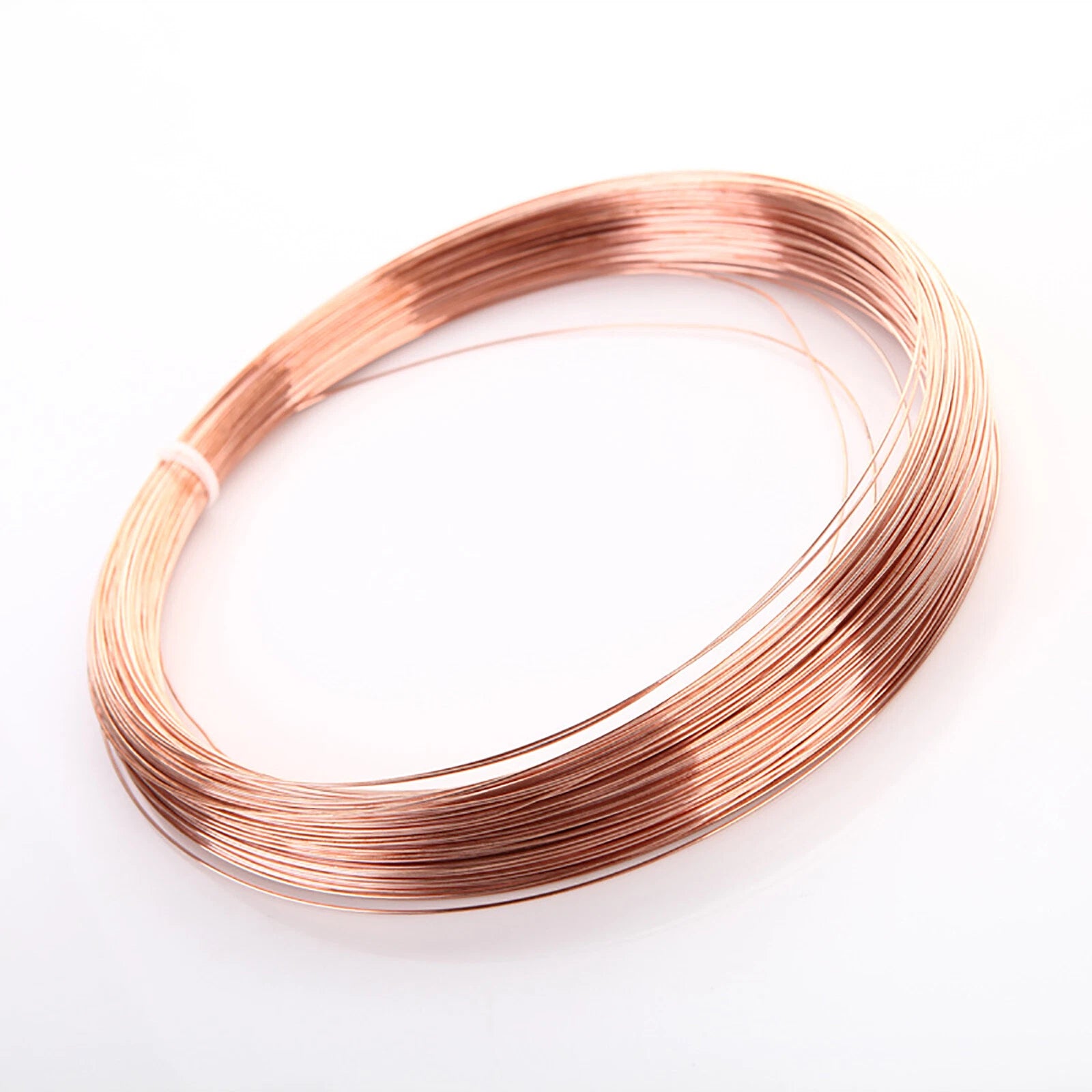
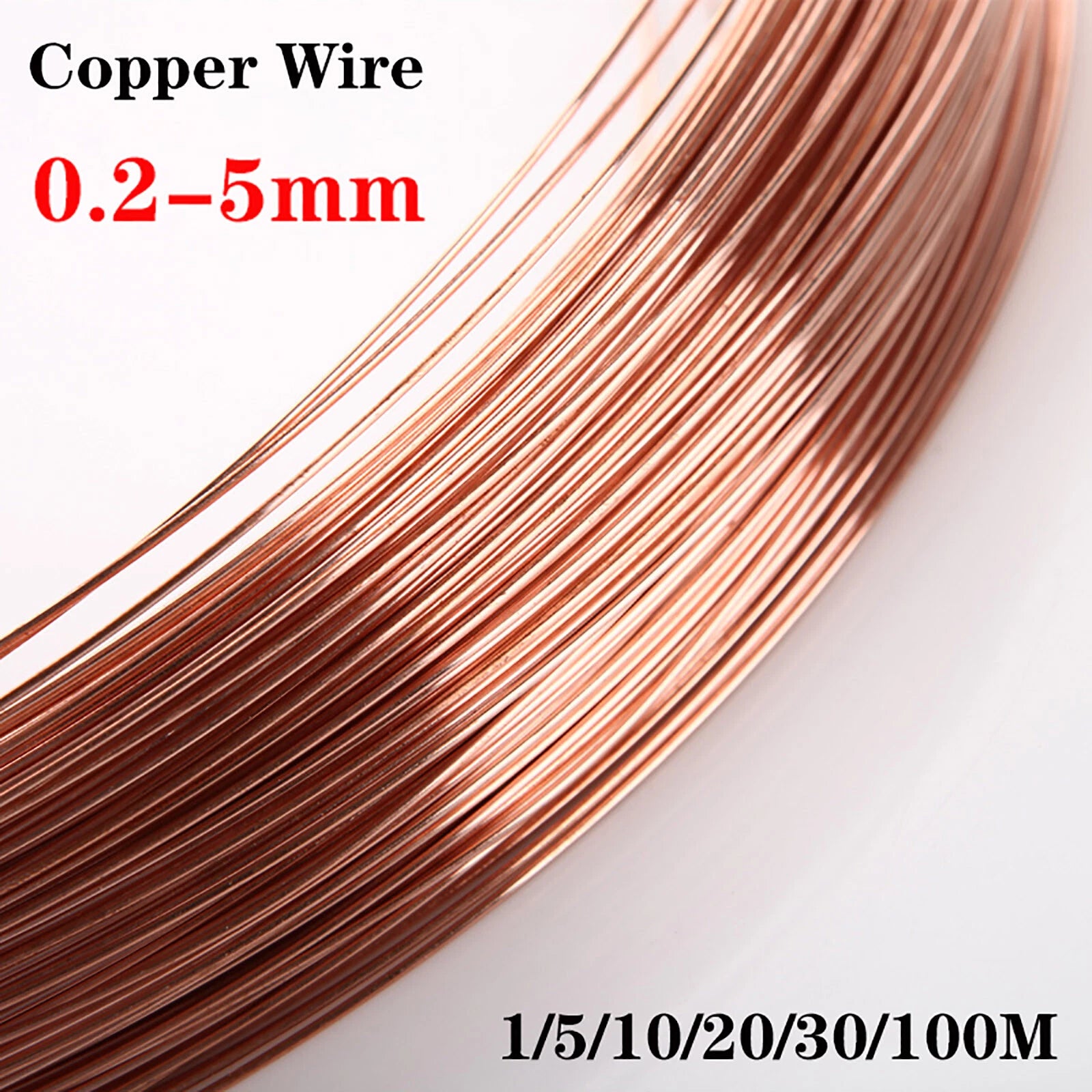
Copper Wire Round Solid Bare 0.2mm 0.3mm 0.4mm 0.5mm 0.6mm 0.8mm 1mm 2mm to 5mm

No reviews

Price:
Sale price$2.23 USD
Stock:
In stock (500 units), ready to be shipped

Payment & Security

Ach Direct Debit Amazon American Express Apple Pay Bancontact Diners Club Discover Google Pay iDEAL Wero Mastercard PayPal Shop Pay USDC Visa

Your payment information is processed securely. We do not store credit card details nor have access to your credit card information.

Quantity Discount Promotion
🎯 BULK DISCOUNT: Buy More, Save More!
Buy 2 Items
5% OFF
Buy 4 Items
10% OFF
Buy 6 Items
15% OFF
Expert

DIY Expert Support

Get fitment advice & recommendations

Mon-Fri, 8:30AM-8PM
24-Hour Fast Ship
🚚
Arrives in 3-14 days
🌍
Global Reach
↩️
30-Day Returns
🌱 1 tree planted with every purchase

Description

Bare Copper Wire Round Solid — Precision Diameters for Jewellery, Electrical & Craft Work

When a project demands consistent conductivity and a clean, uncoated finish, finding bare copper wire in the exact diameter you need — without ordering a full industrial spool — is harder than it should be. Whether you are a jewellery maker shaping intricate wire-wrapped pendants, an electronics hobbyist winding coils, or a craft artist building sculptural armatures, this bare copper wire round solid gives you the precise gauge and length you actually need.

Each coil is drawn from solid copper with a smooth, uncoated bare finish. Wire diameters span 0.2 mm (approx. 0.008 in) through 5 mm (approx. 0.197 in) across 15 gauge options, and lengths are available from 1 m up to 100 m per order, letting you match material to project without waste. The round cross-section maintains uniform diameter along the full length.

Typical applications include bare copper wire for jewellery making such as wire-wrapping, coiling, and bead framing; electrical bare copper wire for grounding leads, coil winding, and DIY circuit prototyping; and craft bare copper wire for sculptural armatures, floral wire work, and mixed-media art installations.

⚙️ Compatibility note: Uncoated bare copper is not suitable for applications requiring insulation. For insulated wiring, select an enamelled or PVC-coated variant. Confirm diameter tolerance requirements before ordering for precision electrical or mechanical use.

✅ Key Features of These Bare Copper Wire Coils

🔩 15 diameter options — 0.2 mm, 0.3 mm, 0.4 mm, 0.5 mm, 0.6 mm, 0.8 mm, 1 mm, 1.2 mm, 1.5 mm, 1.8 mm, 2 mm, 2.5 mm, 3 mm, 4 mm, and 5 mm, covering fine jewellery gauges through structural craft wire.
📏 Flexible length selection — choose 1 m, 3 m, 5 m, 10 m, 20 m, 30 m, 50 m, or 100 m to match project scale and reduce off-cut waste.
Solid copper conductor — single-strand solid construction delivers consistent electrical conductivity and predictable bend behaviour, unlike stranded alternatives.
Bare uncoated finish — no enamel, lacquer, or PVC jacket; the surface is ready for soldering, oxidising, patinating, or direct electrical contact without stripping.
🔄 Round cross-section — uniform circular profile maintains consistent diameter along the full length, important for wire-wrapping tension and coil winding accuracy.
🛠️ Work-hardens predictably — copper stiffens with repeated bending, allowing jewellers and sculptors to anneal and reshape as needed for complex forms.

📐 Technical Specifications — Bare Copper Wire

Material Solid copper, bare (uncoated)
Wire Shape Round
Construction Single-strand solid
Surface Finish Bare / uncoated
Available Diameters 0.2 mm, 0.3 mm, 0.4 mm, 0.5 mm, 0.6 mm, 0.8 mm, 1 mm, 1.2 mm, 1.5 mm, 1.8 mm, 2 mm, 2.5 mm, 3 mm, 4 mm, 5 mm
Available Lengths 1 m, 3 m, 5 m, 10 m, 20 m, 30 m, 50 m, 100 m
Diameter Tolerance See variant options
Tensile Strength See variant options
Colour Copper (natural)
Insulation None
Typical Use Jewellery making, coil winding, grounding, craft sculpture, electrical prototyping

❓ Frequently Asked Questions

Which diameter should I choose for jewellery wire-wrapping?

For delicate wire-wrapping around beads and cabochons, 0.2 mm–0.4 mm is typically used for binding and weaving. For structural frame work and loops, 0.6 mm–1 mm provides enough rigidity to hold shape after forming. Heavier structural elements such as bangles or cuffs generally use 1.5 mm–2 mm. Start with 0.4 mm or 0.6 mm if you are new to wire-wrapping.

Is this wire suitable for electrical grounding or coil winding?

Yes. Solid bare copper is a standard conductor material for grounding leads, earthing straps, and hand-wound coils (such as Tesla coils, inductors, and transformer primaries). Because it is uninsulated, ensure adequate clearance from adjacent conductors or apply your own sleeving where required by your application.

Will bare copper wire tarnish or corrode over time?

Bare copper oxidises naturally when exposed to air and moisture, developing a darkened patina over time. For jewellery applications, many makers intentionally accelerate this with liver of sulphur to create an antique finish. To slow oxidation, store unused wire in a sealed bag or apply a clear lacquer after forming. For electrical connections, oxidation at contact points can increase resistance — use appropriate connectors or solder joints.

Can I solder this wire directly?

Yes. The bare uncoated surface accepts solder readily with standard rosin-core or lead-free solder and a suitable flux. No stripping or pre-treatment is required. Lightly abrade the surface with fine sandpaper if the wire has developed surface oxidation before soldering to ensure a clean joint.

How do I choose between the available lengths?

For single jewellery pieces or small prototypes, 1 m–5 m is usually sufficient. Workshop or classroom use typically suits 10 m–30 m coils. For ongoing production, craft studios, or electrical projects requiring continuous runs, 50 m or 100 m coils offer the best value per metre. Note that larger diameters (4 mm–5 mm) are available in shorter maximum lengths due to coil weight.

Can I anneal this wire to make it softer and easier to shape?

Yes. Bare copper anneals easily by heating to a dull red glow with a torch and then quenching in water or allowing it to air-cool. Annealing restores softness after work-hardening from repeated bending or drawing. This is a standard technique in jewellery making and metalsmithing to maintain workability throughout a project.

Is the wire compatible with enamelling or resin coating?

Yes. The bare copper surface bonds well with vitreous enamel (kiln-fired), cold enamel, UV resin, and epoxy resin. Clean the surface with acetone or isopropyl alcohol before applying any coating to remove handling oils and ensure adhesion. Thinner gauges (0.2 mm–0.8 mm) are particularly popular for enamelled wire jewellery and resin-filled wire frames.

🛒 Select your Wire Diameter and Length above, then add to cart.

You may also like

Recently viewed