The chain is fine...but I ordered the wrong size. Nine links of the chain I ordered equals six of the size I wanted. My error...
How can I straighten out the springs? I can't use them coil uo as is.
Your payment information is processed securely. We do not store credit card details nor have access to your credit card information.
Get fitment advice & recommendations
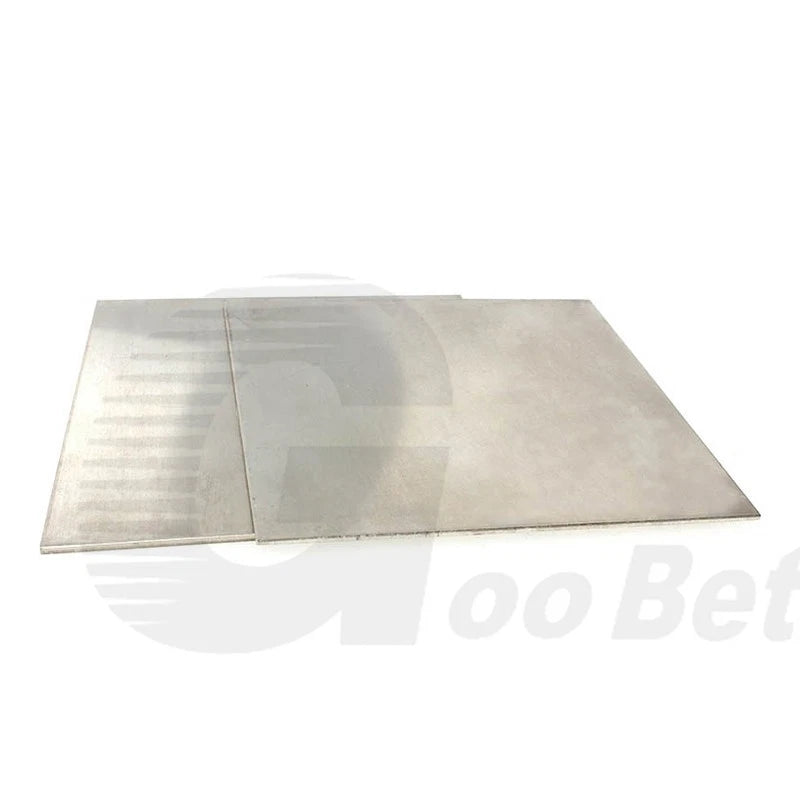
When your project demands a metal that holds up against moisture, mild chemicals, and repeated mechanical stress, standard copper or brass often falls short. Makers, hobbyists, and small-workshop fabricators working on marine fittings, electrical shielding, decorative metalwork, or precision shims need a material that combines workability with genuine durability — that's exactly where the B18 cupronickel sheet delivers.
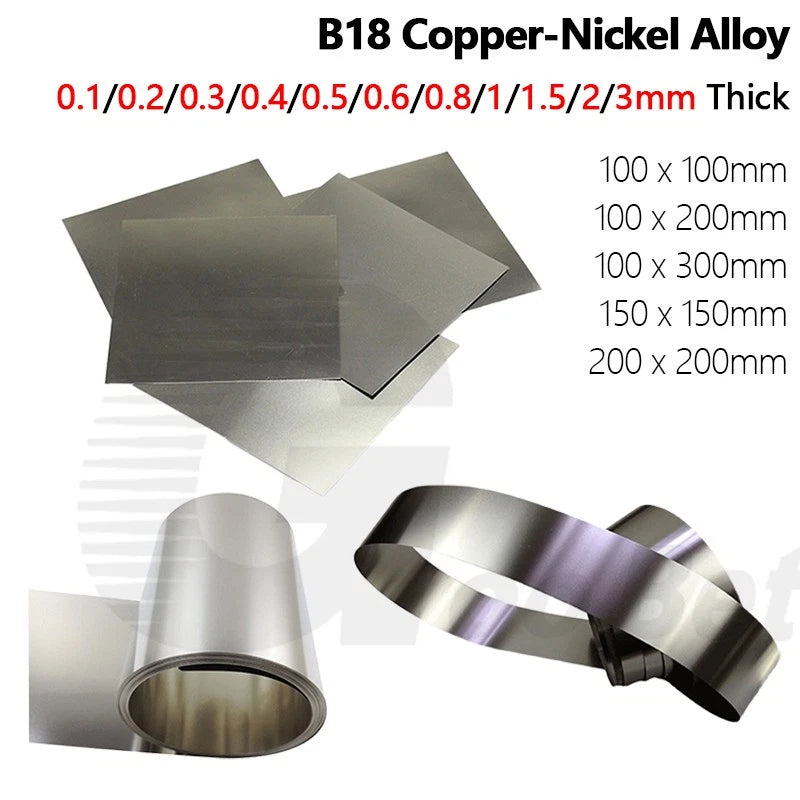
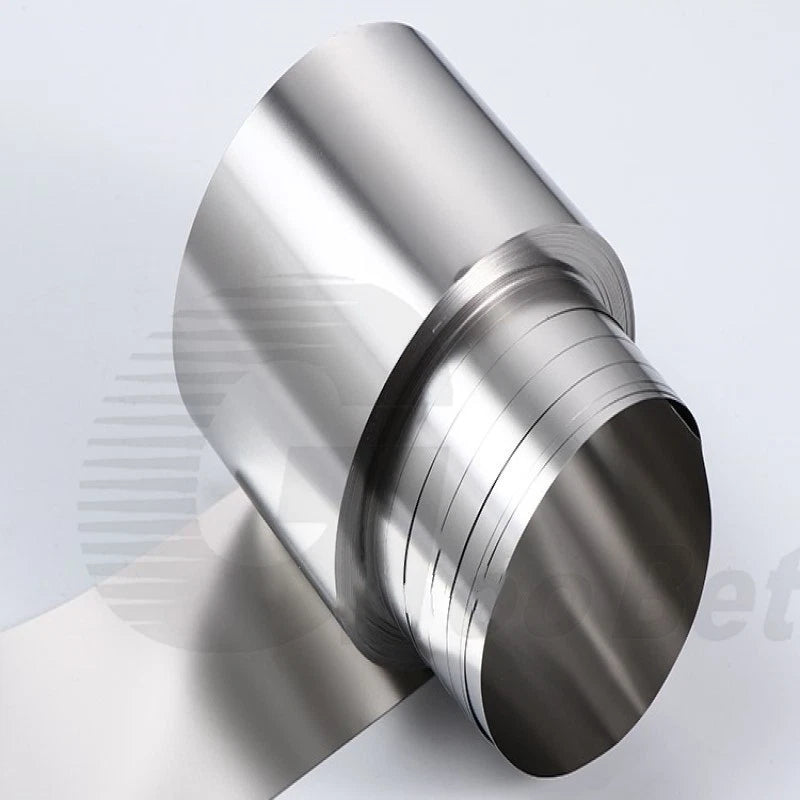
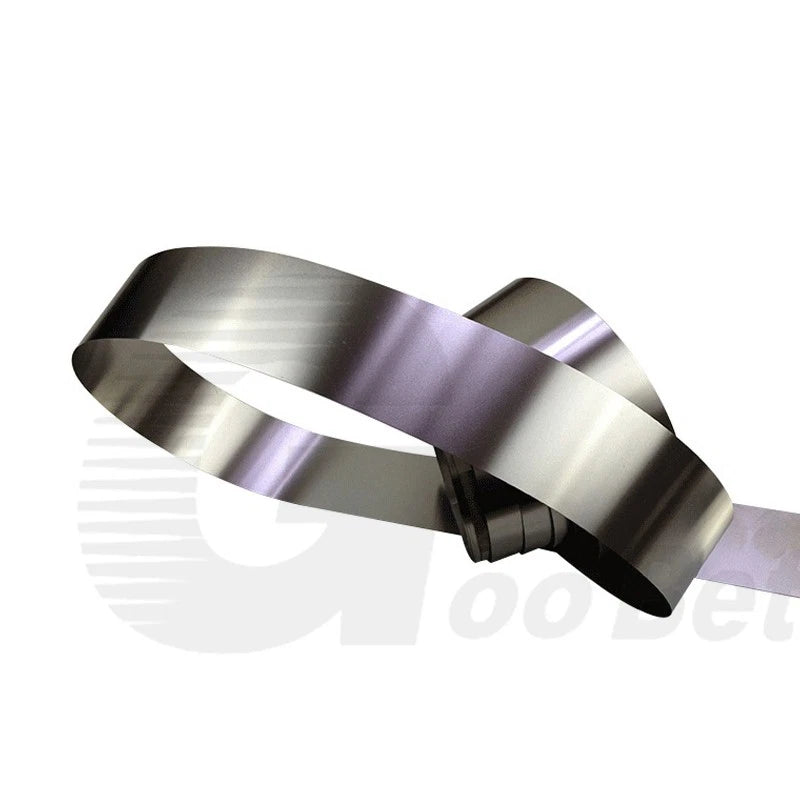
This cupronickel sheet is composed of a copper-nickel alloy (B18 grade, approximately 18% nickel content), giving it a distinctive silver-toned finish and excellent resistance to corrosion in humid or mildly saline environments. Sheets are available in thicknesses ranging from 0.1 mm to 3.0 mm (approximately 0.004 in to 0.118 in) and in cut sizes from 100 mm × 100 mm up to 100 mm × 300 mm (roughly 3.9 in × 3.9 in to 3.9 in × 11.8 in), with quantity options from 1 to 10 pieces per order.
Typical applications include DIY electrical shielding panels, marine hardware prototypes, decorative inlay strips for woodworking, thin shim stock for mechanical assemblies, and craft jewelry blanks requiring a silver-like appearance without precious-metal cost. The consistent rolled finish makes it suitable for etching, forming, and light machining in a home workshop or small production run.
Approximately 18% nickel content delivers a bright silver tone and superior corrosion resistance compared to pure copper or standard brass sheet.
Available from ultra-thin 0.1 mm foil up to a sturdy 3.0 mm plate, covering shim stock, shielding, forming, and structural inlay applications in one product line.
Choose from five sheet dimensions — 100×100 mm, 100×200 mm, 150×150 mm, 200×200 mm, and 100×300 mm — to minimize waste and match your project footprint.
The nickel content forms a stable passive layer that resists oxidation and mild salt exposure, making these sheets suitable for humid workshop environments and marine-adjacent applications.
Cupronickel retains meaningful electrical conductivity, making it a practical choice for EMI shielding panels, contact strips, and low-resistance electrical enclosures.
Order from 1 to 10 pieces per variant so you can prototype with a single sheet or stock up for a production run without committing to bulk minimums.
| Material | Cupronickel alloy (B18 grade, ~18% Ni, balance Cu) |
|---|---|
| Finish | Rolled, silver-toned matte surface |
| Thickness Range | 0.1 mm – 3.0 mm (0.004 in – 0.118 in) |
| Available Widths | 100 mm, 150 mm, 200 mm |
| Available Lengths | 100 mm, 150 mm, 200 mm, 300 mm |
| Sheet Dimensions | See variant options |
| Quantity per Order | 1 / 2 / 3 / 4 / 5 / 10 pcs (see variant options) |
| Tensile Strength | Typically 300–400 MPa (varies by thickness) |
| Hardness | Typically 60–90 HRB (varies by thickness) |
| Electrical Conductivity | Approximately 4–6% IACS |
| Corrosion Resistance | Good resistance to moisture and mild saline environments |
| Machinability | Suitable for shearing, bending, light milling, and soldering |
| Item Type | Metal Sheet / Flat Stock |
For shim stock, gaskets, or flexible foil applications, choose 0.1–0.3 mm. For EMI shielding panels or decorative inlay, 0.4–0.8 mm offers a good balance of rigidity and formability. For structural brackets, marine fittings, or parts that need to hold shape under load, 1.0–3.0 mm is recommended. If you are unsure, start with a thinner sheet and test before committing to a thicker variant.
They are related but not identical. Nickel silver (German silver) typically contains copper, nickel, and zinc, giving it a slightly different color and mechanical profile. B18 cupronickel is a binary copper-nickel alloy with no zinc, which generally provides better corrosion resistance in marine and humid environments. Both have a silver-like appearance, but cupronickel is the preferred choice where moisture resistance is a priority.
Yes. Cupronickel solders well with silver-bearing or lead-free solder using standard flux. For brazing or TIG welding, use filler metals compatible with copper-nickel alloys and ensure adequate ventilation. Thinner sheets (under 0.3 mm) require careful heat management to avoid warping — use a heat sink or work in short passes.
Cupronickel does not rust (it contains no iron), and its nickel content significantly slows tarnishing compared to pure copper. In dry indoor conditions, the surface remains stable for extended periods. In humid or mildly saline environments, a light patina may develop over time, which can be removed with a mild metal polish. For long-term outdoor exposure, a clear lacquer coating is recommended.
For sheets up to 0.5 mm, sharp tin snips or aviation shears work well. For 0.6–1.5 mm, a metal nibbler, jeweler's saw, or angle grinder with a thin cutting disc is effective. Sheets 2.0 mm and above are best cut with a bandsaw, jigsaw with a metal blade, or CNC router. Always deburr cut edges with a file or deburring tool before handling.
Cupronickel can be chemically etched using ferric chloride solution, similar to standard copper. For laser engraving, a fiber laser is required — CO₂ lasers are generally not effective on bare metal. Thinner sheets (0.1–0.3 mm) are particularly popular for etched decorative panels and jewelry blanks due to their fine surface finish.
First determine the maximum flat dimension your project requires, then select the next size up to allow for cutting margins. For prototyping, ordering 1–2 pieces is cost-effective. If you are running a small production batch or need spares, the 5- or 10-piece options offer better per-sheet value. Mix and match thickness and size variants to suit different stages of your build.