The chain is fine...but I ordered the wrong size. Nine links of the chain I ordered equals six of the size I wanted. My error...
How can I straighten out the springs? I can't use them coil uo as is.
Your payment information is processed securely. We do not store credit card details nor have access to your credit card information.
Get fitment advice & recommendations
When a worn or undersized bearing causes vibration, overheating, or unexpected downtime in rotating equipment, finding an exact-fit replacement quickly is critical. These deep groove ball bearings are designed for engineers, maintenance technicians, and serious DIYers who need a dimensionally accurate, drop-in solution across a wide range of shaft sizes.
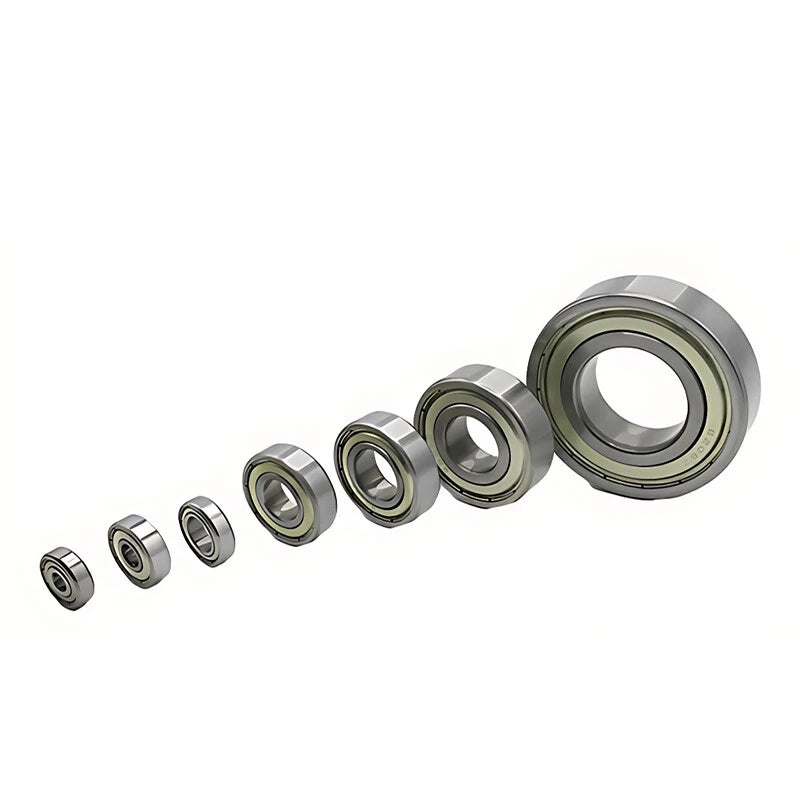
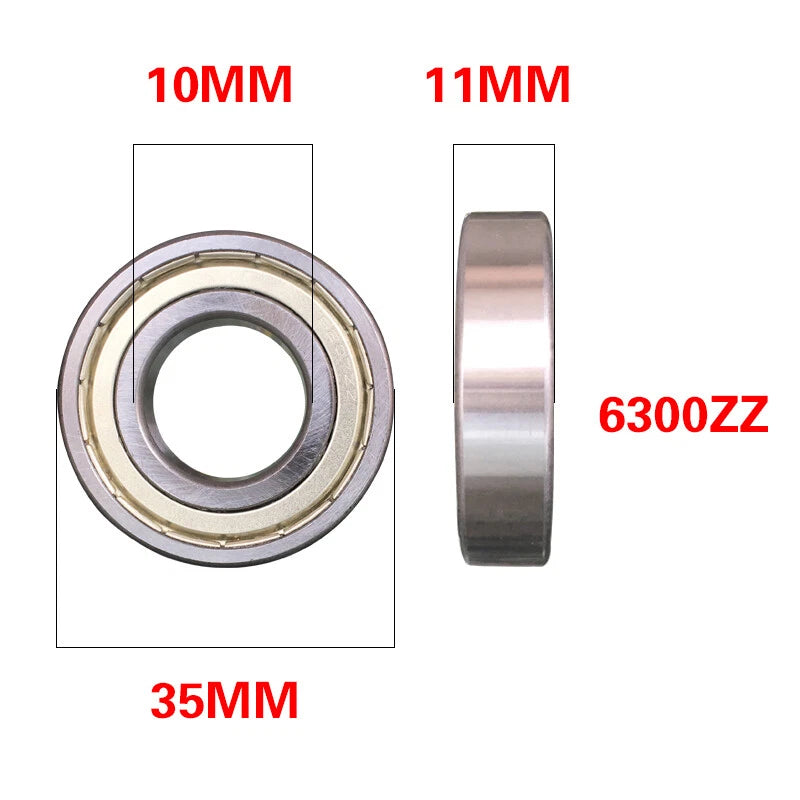
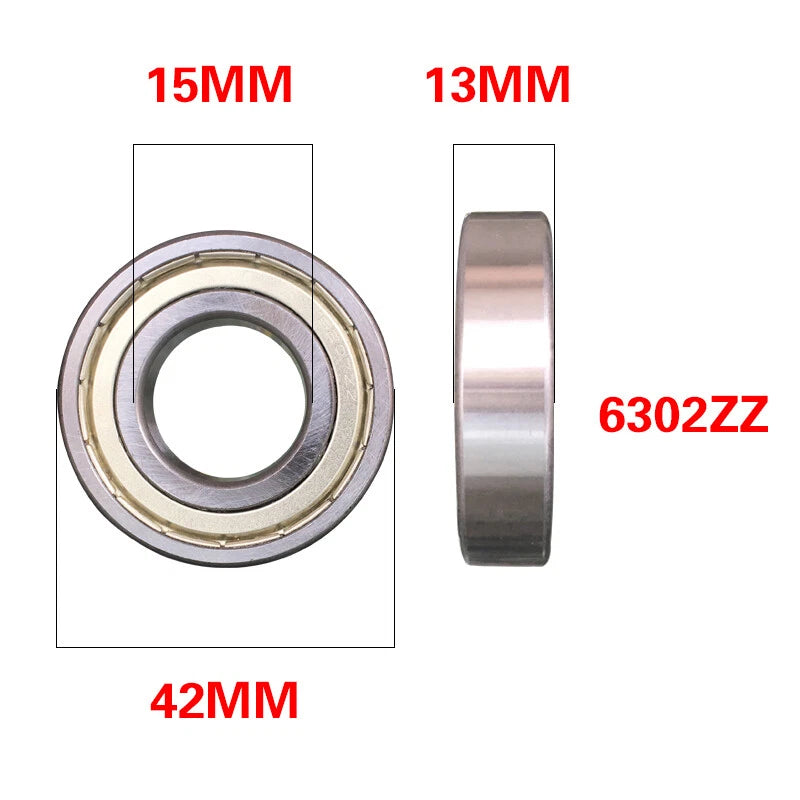
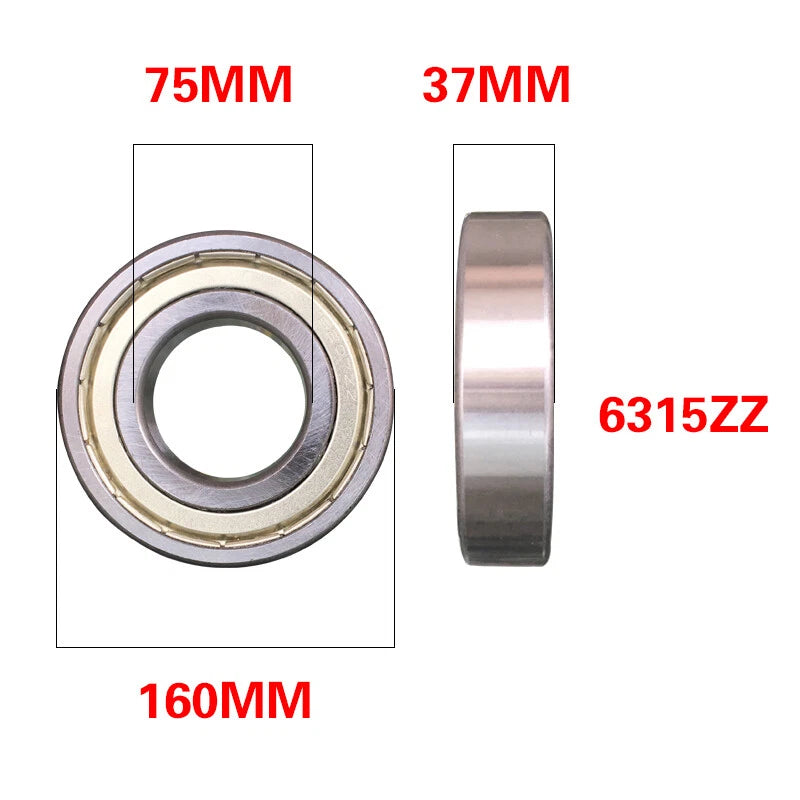
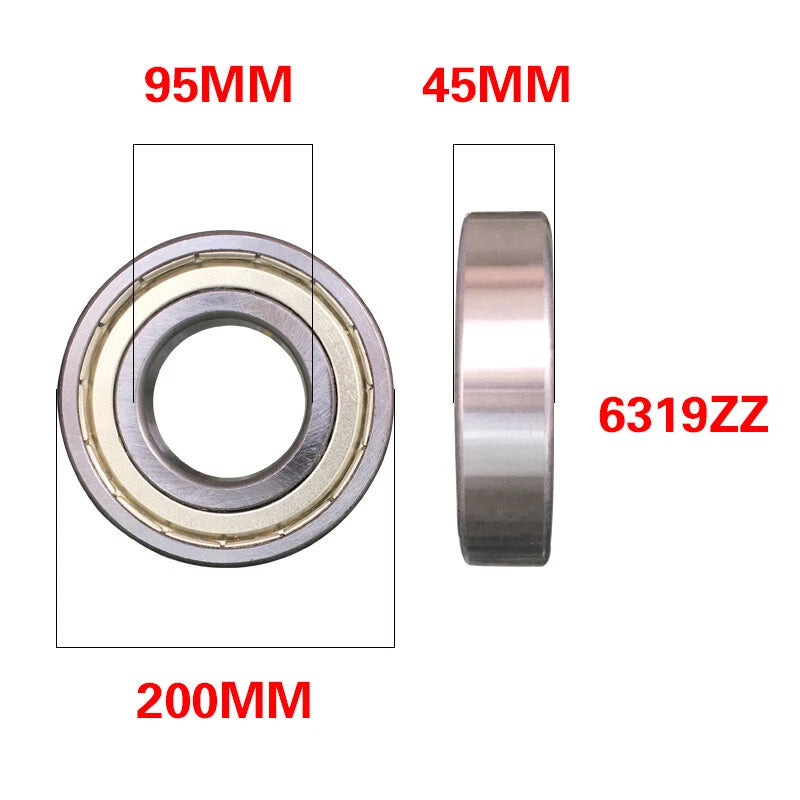
Each bearing is manufactured from bearing-grade steel with a ZZ (double metal shield) configuration. The series spans 21 models — from the compact 6300ZZ (10 × 35 × 11 mm / 0.39" × 1.38" × 0.43") up to the heavy-duty 6320ZZ (100 × 215 × 47 mm / 3.94" × 8.46" × 1.85") — covering inner diameters from 10 mm to 100 mm and outer diameters from 35 mm to 215 mm.
Typical applications include electric motor shaft support, conveyor roller assemblies, agricultural equipment gearboxes, pump and compressor housings, and general-purpose industrial machinery where consistent radial load capacity and low-friction rotation are required.
| Series | 6300ZZ – 6320ZZ |
|---|---|
| Bearing Type | Deep Groove Ball Bearing |
| Seal Type | ZZ (Double Metal Shield, both sides) |
| Material | Bearing Steel |
| Inner Diameter (ID) Range | 10 mm – 100 mm (0.39" – 3.94") |
| Outer Diameter (OD) Range | 35 mm – 215 mm (1.38" – 8.46") |
| Thickness Range | 11 mm – 47 mm (0.43" – 1.85") |
| Load Direction | Radial (with moderate axial capacity) |
| Lubrication | Pre-greased (grease retained by ZZ shields) |
| Dimensional Standard | ISO 15 / 6300 Series |
| Quantity per Order | 1 PCS |
| Exact Dimensions | See variant options |
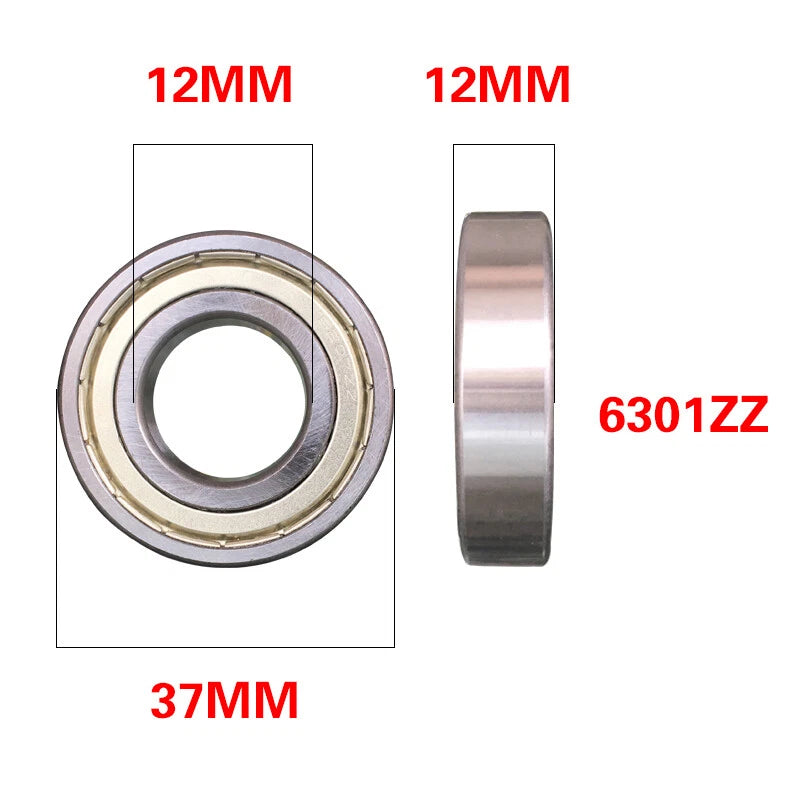
Match the bearing's inner diameter (ID) to your shaft diameter and the outer diameter (OD) to your housing bore. Each variant option lists the exact ID × OD × Thickness in millimeters. Measure your existing bearing with calipers or check your equipment's service manual for the bearing designation (e.g., 6305ZZ).
ZZ indicates that both sides of the bearing are fitted with pressed steel shields. These shields block dust and debris from entering the raceway and help retain the factory-applied grease. They are non-contact shields, so friction is lower than rubber-sealed (2RS) bearings, making ZZ bearings well-suited for higher-speed applications in cleaner environments.
Yes. These bearings are dimensioned to ISO 15 / 6300 series standards, which means they are interchangeable with OEM and aftermarket 6300ZZ–6320ZZ bearings from other manufacturers. Always verify the ID, OD, and width against your housing and shaft tolerances before installation.
No additional lubrication is required for most applications. The bearings are pre-greased at the factory, and the ZZ metal shields retain that grease during operation. If your application involves extreme temperatures or heavy contamination, consult your equipment's maintenance specifications for relubrication intervals.
Standard bearing steel offers moderate corrosion resistance suitable for dry or lightly oiled indoor environments. For applications exposed to moisture, chemicals, or outdoor conditions, consider stainless steel bearings (e.g., 6300-2RS stainless) instead. The ZZ shields provide mechanical protection but do not add significant corrosion resistance.
Deep groove ball bearings are primarily designed for radial loads but can accommodate moderate axial (thrust) loads in both directions. For applications with significant axial loading — such as helical gearboxes or vertical shaft pumps — verify that the selected bearing size's axial load rating meets your requirements, or consider angular contact bearings for those use cases.
Common indicators include unusual noise (grinding, squealing, or rumbling during rotation), excessive heat at the bearing location, visible pitting or spalling on the raceway when inspected, increased vibration levels, or play in the shaft that exceeds manufacturer tolerances. Regular inspection during scheduled maintenance helps catch wear before it causes equipment failure.