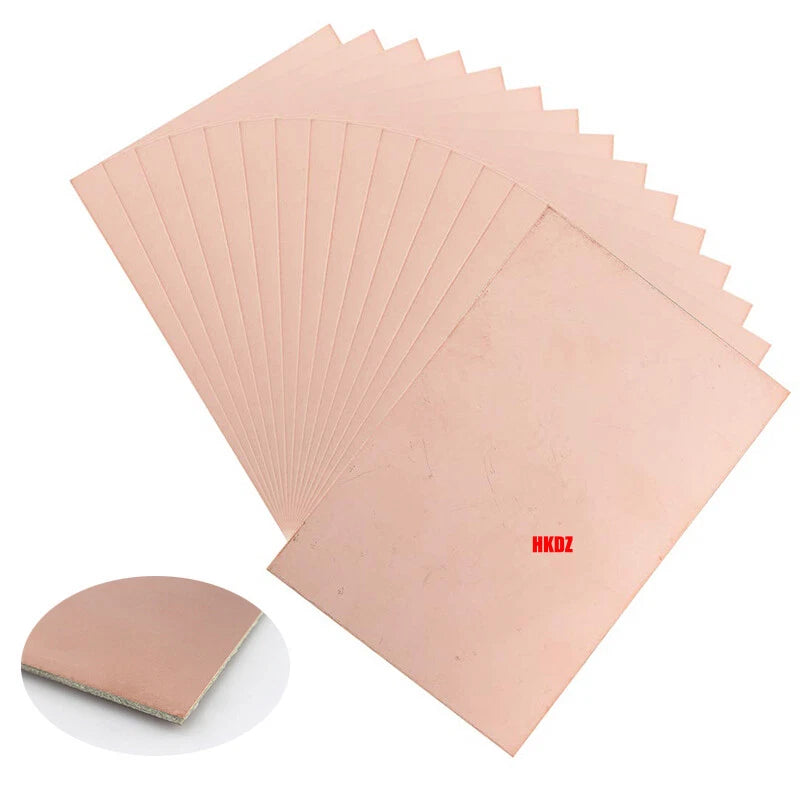
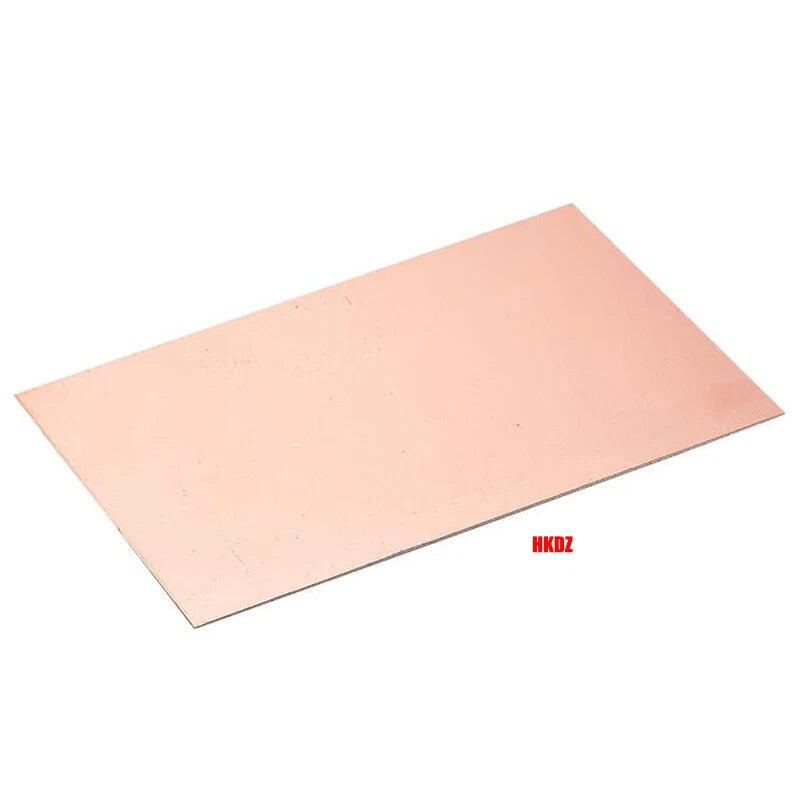
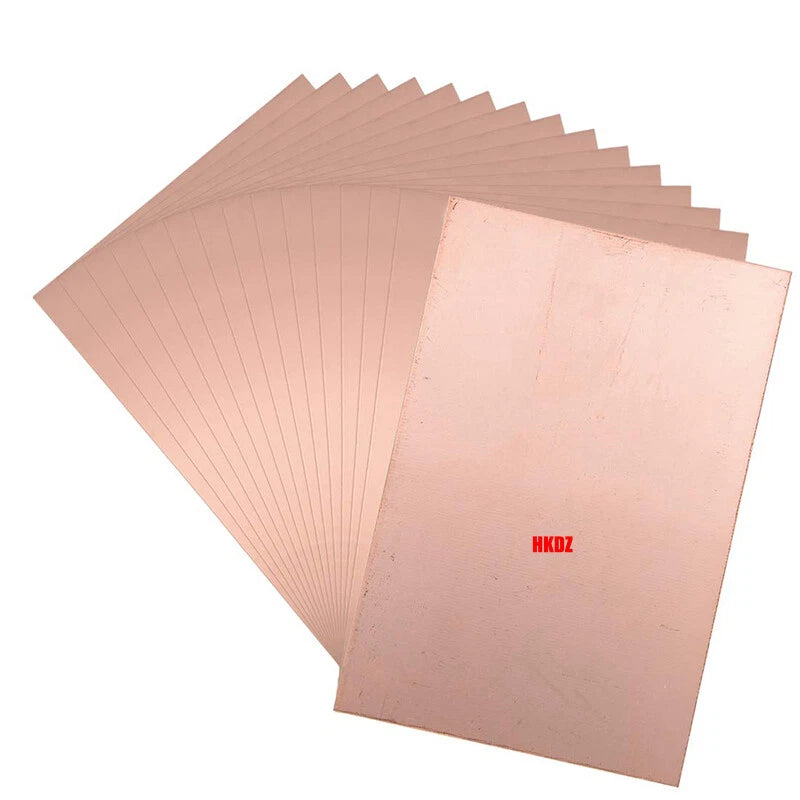
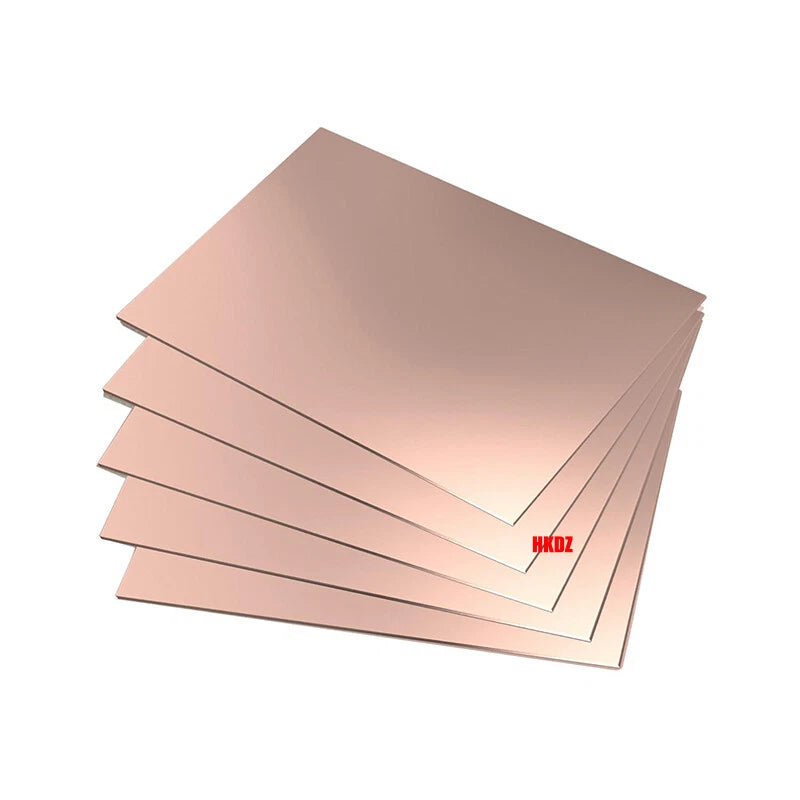
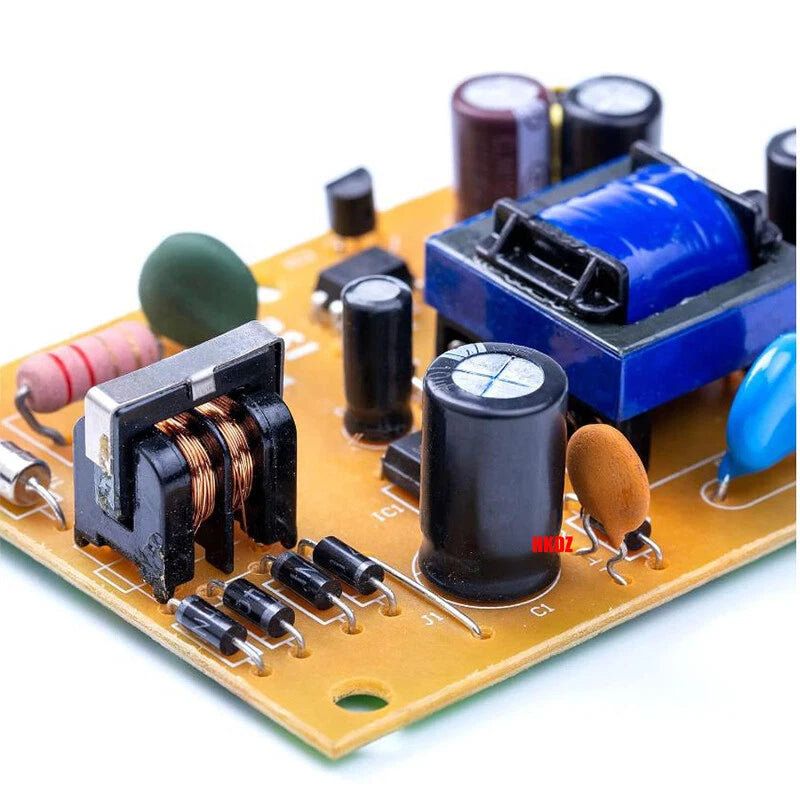
Double Sided Copper Clad Sheet PCB Circuit Board Photo Sensitive DIY Model Plate

No reviews

Price:
Sale price$29.38 USD
Stock:
In stock (500 units), ready to be shipped

Payment & Security

Ach Direct Debit Amazon American Express Apple Pay Bancontact BLIK Diners Club Discover EPS Google Pay iDEAL Wero JCB Maestro Mastercard Multibanco MobilePay PayPal Przelewy24 Shop Pay Twint Union Pay USDC Visa

Your payment information is processed securely. We do not store credit card details nor have access to your credit card information.

Limited Offer — Spend More, Save More
Spend $55+
Save $5
Spend $100+
Save $10
Spend $200+
Save $25
HomeDIYer DIY Expert Support

DIY Expert Support

Get fitment advice & recommendations

Mon–Fri  8:30 AM – 8:00 PM
24-Hour Fast Ship
Arrives in 3–14 Days
Worldwide Shipping
30-Day Returns
1 tree planted with every purchase

Description

Double Sided Copper Clad PCB Board — Reliable Substrate for DIY Circuit Projects

When your prototype layout demands copper on both sides and a clean photosensitive surface, sourcing the right substrate can derail an entire build. Makers, electronics hobbyists, and small-batch PCB fabricators who need a dependable double sided copper clad sheet will find this board ready to expose, etch, and drill without the guesswork of inconsistent raw stock.

Each piece is a double sided copper clad laminate with a photo-sensitive (pre-sensitized) coating applied to both copper faces. Boards are available in eight cut sizes ranging from 5×7 cm (approx. 2"×2.75") up to 20×30 cm (approx. 7.9"×11.8"), and can be ordered in quantities from 1 to 50 pieces per variant. The copper layer thickness is typically in the 35 µm (1 oz/ft²) range; substrate thickness is typically 1.0–1.6 mm depending on the size option selected.

Typical use cases include DIY single-run PCB fabrication using UV exposure and ferric chloride etching, rapid prototyping of analog or digital circuits for maker workshops, and educational electronics projects where students practice photolithography and circuit layout on a double sided copper clad board.

Compatible with standard UV exposure units, ferric chloride / sodium persulfate etchants, and common PCB CAD photo-plot outputs (Gerber RS-274X). Suitable for single-layer and double-layer through-hole and SMD prototype layouts.

✅ Key Features of These Double Sided Copper Clad PCB Boards

🔲 Double-Sided Copper Cladding — Copper foil bonded to both faces of the FR-4 / phenolic substrate, enabling two-layer circuit routing without additional lamination steps.
📸 Pre-Applied Photo-Sensitive Coating — UV-reactive resist layer pre-laminated on both copper surfaces, ready for direct film or transparency exposure — no separate resist application needed.
📐 Eight Cut Sizes Available — From compact 5×7 cm (2"×2.75") up to full-sheet 20×30 cm (7.9"×11.8"), covering small sensor boards to larger power-supply layouts.
📦 Flexible Quantity Options — Order 1 to 50 pieces per size, making it practical for one-off prototypes or small classroom and workshop batches.
✂️ Guillotine-Cut Edges — Boards are shear-cut to size, providing straight, burr-minimized edges that reduce prep time before drilling and etching.
🔩 Drillable Substrate — Substrate composition supports standard PCB drill bits (typically 0.8–3.2 mm) for through-hole component mounting and via creation.

📐 Technical Specifications — Double Sided Copper Clad PCB Board

Board Type Double Sided Copper Clad Laminate
Surface Treatment Photo-sensitive (pre-sensitized) resist on both sides
Available Sizes (cm) 5×7, 7×10, 8×12, 10×10, 10×15, 12×18, 15×20, 20×30
Available Sizes (inches, approx.) 2"×2.75" up to 7.9"×11.8"
Copper Layer Thickness Typically 35 µm (1 oz/ft²) — see variant options
Substrate Thickness Typically 1.0–1.6 mm — see variant options
Quantity per Order 1 / 2 / 3 / 5 / 8 / 10 / 15 / 20 / 25 / 30 / 40 / 50 PCS
Edge Finish Guillotine shear-cut
Compatible Etchants Ferric chloride, sodium persulfate
Exposure Method UV light source (exposure unit or sunlight)
Product Type Copper Sheet / PCB Substrate

❓ Frequently Asked Questions

Which size should I choose for a standard Arduino shield layout?

An Arduino Uno shield footprint is approximately 68×53 mm. The 7×10 cm (70×100 mm) or 8×12 cm (80×120 mm) boards both provide enough clearance for the shield outline plus a small border for handling. If you need extra routing space or plan to add peripheral circuitry, the 10×15 cm option gives more room without excessive waste.

How strong is the copper bond — will it peel during etching?

The copper foil is bonded to the substrate under heat and pressure during lamination, producing a peel strength typically consistent with standard FR-4 / phenolic copper clad laminates. When etching times and etchant concentrations are kept within normal ranges (ferric chloride at room temperature, agitated), delamination is not expected. Over-etching or excessive heat during soldering can weaken the bond over time, which is normal for any copper clad board.

Is the photo-sensitive coating resistant to moisture before exposure?

The pre-applied resist is sensitive to UV light and should be stored away from direct sunlight and fluorescent lighting. Keep boards in their original opaque packaging in a cool, dry location. Humidity can degrade the resist layer over time, so use boards within a reasonable period after opening. If the resist appears discolored or uneven before exposure, the board's sensitivity may be compromised.

Can I use these boards for SMD (surface-mount) component layouts?

Yes. The photo-sensitive process can resolve fine traces suitable for many SMD footprints, depending on the quality of your artwork film and UV exposure unit. For fine-pitch ICs (0.5 mm pitch and below), a high-resolution laser-printed transparency or professional film output and a collimated UV source will yield the best results. Through-hole and standard SMD prototyping (0805, SOT-23, SOIC) are well within the capability of this process.

Do I need special drill bits for these boards?

Standard PCB carbide drill bits in the 0.8–3.2 mm range work well with these substrates. HSS (high-speed steel) bits can be used for occasional drilling but wear faster than carbide on fiberglass-based laminates. Drill at moderate speed with light feed pressure to avoid delamination around the hole. A drill press or PCB drill stand is recommended over hand drilling for accurate hole placement.

How do I decide between ordering 1 piece versus a multi-pack?

If you are prototyping a new design for the first time, starting with 1–2 pieces lets you validate the layout before committing to more stock. For classroom use, workshop batches, or designs you plan to iterate on, ordering 5–15 pieces reduces per-unit cost and ensures you have spares if an exposure or etching step needs to be repeated. Larger packs (20–50 PCS) are suited for small production runs or group projects where multiple identical boards are needed.

What developer solution should I use after UV exposure?

A diluted sodium hydroxide (NaOH) solution — typically 5–10 g per liter of water — is the standard developer for most pre-sensitized photo-resist boards. Sodium carbonate (washing soda) solution is a milder alternative. Develop at room temperature, agitating gently until unexposed resist dissolves and the copper pattern is clearly visible. Rinse thoroughly with clean water before proceeding to etching.

🛒 Select your size (cm) and quantity (PCS) above, then add to cart.

You may also like

Recently viewed