Food Grade Silicone Tubing — Flexible, Odor-Free Hose for Brewing, Lab & Fluid Transfer
When a leaking or off-gassing hose contaminates a batch of homebrew, ruins an aquarium water change, or fails mid-transfer in a lab setting, the culprit is almost always the wrong tubing material. Food-grade silicone tubing is the go-to choice for homebrewers, aquarium hobbyists, laboratory technicians, and DIY fluid-system builders who need a hose that won't impart taste, odor, or harmful compounds to whatever flows through it.
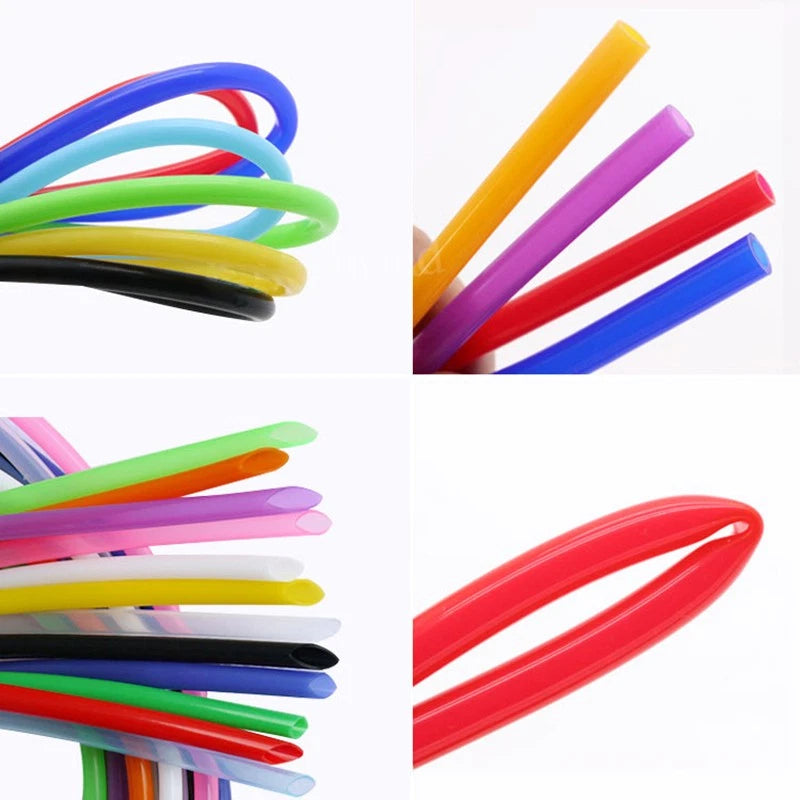
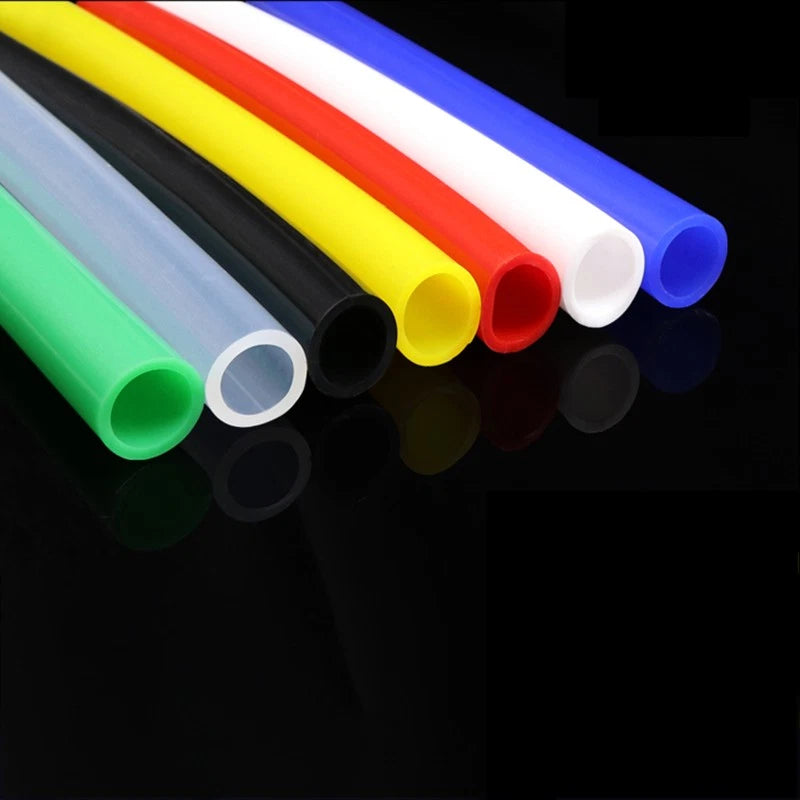
Each meter of this silicone tube is made from food-safe silicone rubber, available in inner diameter (ID) × outer diameter (OD) combinations ranging from 1×3 mm (approx. 0.04" × 0.12") up to 25×31 mm (approx. 0.98" × 1.22"), with wall thicknesses typically 1–3 mm depending on the size selected. Eighteen color options — including Black, Red, Orange, Blue, Green, Yellow, White, Purple, and more — make it easy to color-code lines in multi-channel systems.
Typical use cases include beer and wine siphon hoses for homebrewing, peristaltic pump tubing for aquarium dosing systems, vacuum and pressure lines in food processing equipment, and flexible connectors in DIY water cooling or laboratory fluid circuits. The silicone construction handles temperatures from approximately -60 °C to +200 °C (-76 °F to +392 °F), making it suitable for both cold-side and hot-side brewing transfers.
⚠️
Compatibility note: Verify your fitting or barb OD matches the tube ID before ordering. For a snug fit, the barb OD should equal or slightly exceed the tube ID. Check variant options for exact ID × OD dimensions.
✅ Key Features of These Food Grade Silicone Tubes
🧪
Food-Safe Silicone Material
Made from food-grade silicone rubber that is non-toxic, odorless, and tasteless — will not leach chemicals into beverages, food products, or laboratory samples.
🌡️
Wide Temperature Range
Rated for approximately -60 °C to +200 °C (-76 °F to +392 °F), suitable for both cold-side siphoning and hot-side wort transfers in brewing applications.
📐
Extensive Size Selection
ID × OD options from 1×3 mm up to 25×31 mm cover micro-dosing lines, standard beer hoses, and larger-diameter transfer applications in a single product listing.
🎨
18 Color Options for Line Identification
Choose from Black, Red, Orange, Pink, Blue, Green, Yellow, Purple, White, and more to color-code fluid lines and prevent cross-contamination in multi-channel setups.
🔄
Flexible & Kink-Resistant
Silicone rubber remains pliable at low temperatures and resists permanent kinking, maintaining consistent flow even when routed around tight bends or through confined spaces.
⚗️
Broad Chemical Compatibility
Resistant to dilute acids, alkalis, and alcohols commonly encountered in brewing, aquarium dosing, and laboratory fluid handling — check compatibility for concentrated solvents before use.
📐 Technical Specifications — Silicone Tubing
| Material |
Food-grade silicone rubber |
| Inner Diameter (ID) Range |
1 mm – 25 mm (approx. 0.04" – 0.98") |
| Outer Diameter (OD) Range |
3 mm – 31 mm (approx. 0.12" – 1.22") |
| Wall Thickness |
Typically 1–3 mm depending on size (see variant options) |
| Length per Unit |
1 Meter (approx. 39.4 inches) |
| Temperature Range |
Approx. -60 °C to +200 °C (-76 °F to +392 °F) |
| Color Options |
18 colors — see variant selector |
| Flexibility |
Flexible; kink-resistant under normal routing conditions |
| Odor / Taste |
Odorless and tasteless |
| Toxicity |
Non-toxic; food-safe grade |
| Pressure Rating |
See variant options / Contact us to confirm for specific sizes |
| Certifications |
See variant options / Contact us to confirm |
❓ Frequently Asked Questions
How do I choose the right ID × OD size for my application?
Match the tube's inner diameter (ID) to the outer diameter of the barb fitting or nozzle it will connect to. For a secure, leak-free fit, the barb OD should equal or slightly exceed the tube ID so the silicone stretches slightly over the fitting. For example, a 5×7 mm tube (5 mm ID, 7 mm OD, 1 mm wall) fits a 5 mm barb snugly. If you are routing fluid through a pump head, check the pump manufacturer's recommended tubing ID.
Is this tubing safe for direct contact with beer, wine, or drinking water?
Yes. The tubing is made from food-grade silicone rubber, which is non-toxic, odorless, and tasteless. It will not impart off-flavors or harmful compounds to beverages. It is widely used by homebrewers for siphoning wort and finished beer, and by aquarium hobbyists for water changes and dosing. For regulated commercial food production, verify the specific certification requirements for your jurisdiction.
Can I use this tubing for hot-side brewing transfers (e.g., moving hot wort)?
Yes. Silicone tubing is rated for approximately -60 °C to +200 °C (-76 °F to +392 °F), which covers typical hot-side wort temperatures (usually below 100 °C / 212 °F). It will not soften, deform, or release compounds at normal brewing temperatures. Allow the tubing to cool between uses and inspect periodically for any signs of wear or discoloration.
How does silicone tubing compare to vinyl (PVC) tubing for brewing?
Silicone tubing handles higher temperatures than standard vinyl/PVC tubing, which typically softens above 60 °C (140 °F). Silicone is also less likely to absorb odors or stain over time. PVC tubing is generally less expensive and stiffer, which can be useful for rigid runs, but silicone is the preferred choice for hot-side transfers, peristaltic pumps, and applications where taste neutrality is critical.
What chemicals is this silicone tubing resistant to?
Silicone rubber is resistant to dilute acids, dilute alkalis, alcohols (including ethanol at typical beverage concentrations), water, and many aqueous solutions. It is not recommended for use with concentrated solvents such as acetone, toluene, or concentrated acids, as these can degrade silicone over time. For laboratory applications involving aggressive chemicals, verify compatibility before use.
Will the tubing kink if I bend it around a tight corner?
Silicone tubing is significantly more flexible and kink-resistant than rigid plastic tubing. Smaller-diameter tubes (e.g., 2×4 mm, 3×5 mm) can be routed around tight bends with minimal risk of kinking. Larger-diameter tubes (e.g., 18×24 mm, 25×31 mm) have a larger minimum bend radius and may kink if forced into very tight curves. Use a tube support or elbow fitting for sharp directional changes on larger sizes.
Can I use this tubing with a peristaltic pump?
Yes — silicone tubing is the standard material for peristaltic pump heads because it recovers its shape quickly after each compression cycle. Select the ID that matches your pump head's specified tubing size. Common aquarium dosing pumps use 3×5 mm or 4×6 mm silicone tubing. Check your pump's manual for the recommended tubing ID and wall thickness.
🛒 Select your ID × OD size and color above, then add to cart.