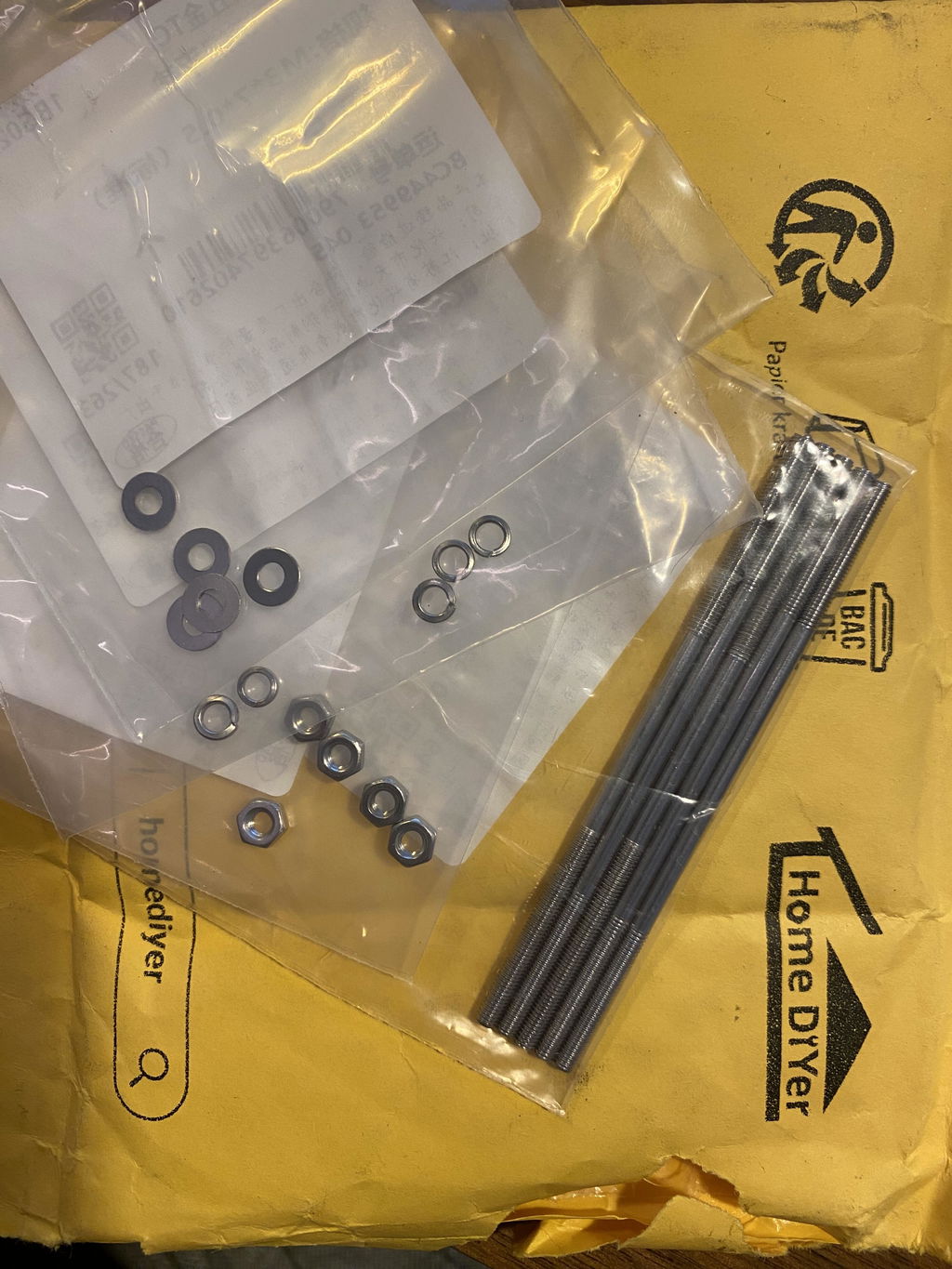
The chain is fine...but I ordered the wrong size. Nine links of the chain I ordered equals six of the size I wanted. My error...
How can I straighten out the springs? I can't use them coil uo as is.
Your payment information is processed securely. We do not store credit card details nor have access to your credit card information.
Get fitment advice & recommendations
When a worn cone or loose hub starts costing you ride quality or machine downtime, the root cause is almost always bearing balls that have drifted out of tolerance. Cyclists rebuilding wheel hubs, mechanics servicing bottom brackets, and engineers maintaining rotating assemblies all face the same challenge: finding G10 chrome steel bearing balls in the exact diameter they need — not the nearest standard size.
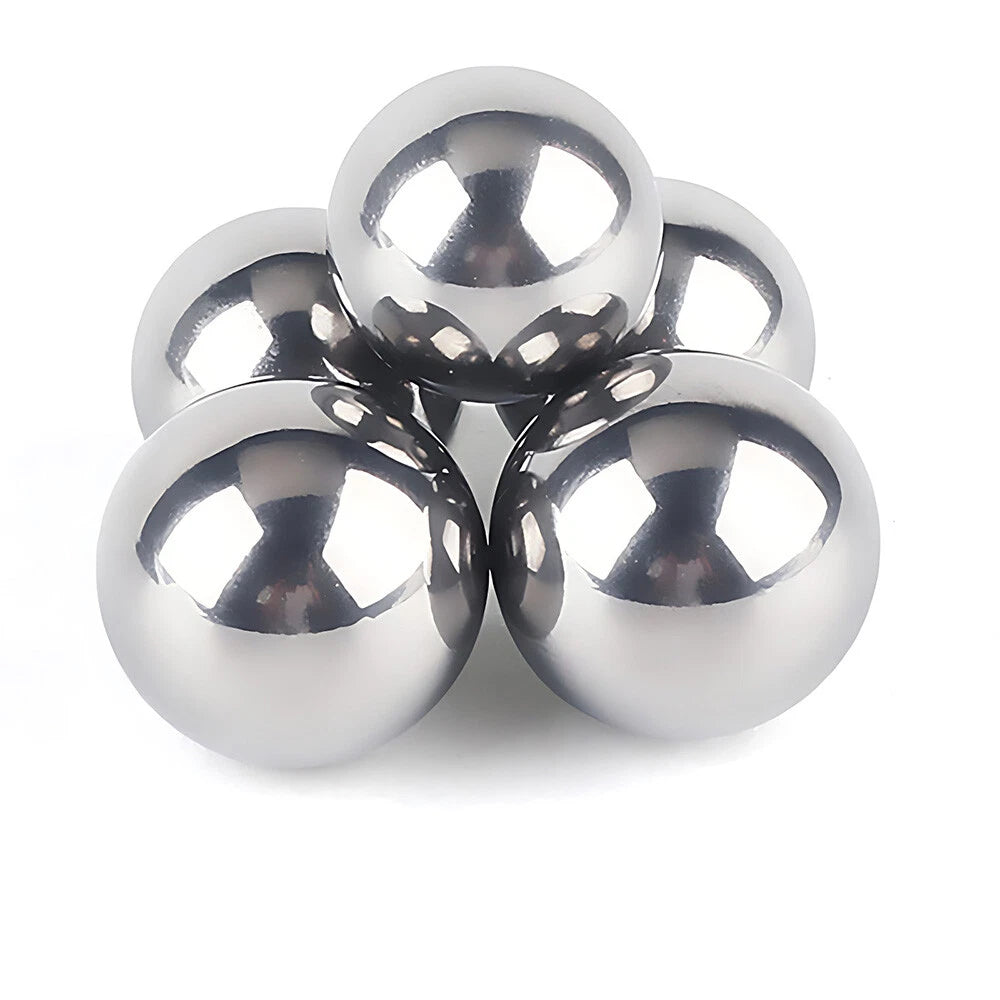
These G10 chrome steel bearing balls are manufactured to ABEC/ISO G10 precision grade, with diameters spanning 7.13 mm to 7.2 mm (approximately 0.281" to 0.283") in 0.002 mm increments. Each ball is ground and lapped from through-hardened chrome steel (typically equivalent to 52100 alloy), delivering a surface finish and roundness tolerance consistent with G10 classification. Available in packs of 100, 200, 300, or 500 pieces to suit both single-repair and workshop-volume needs.
Typical applications include bicycle rear hub cone replacement, front hub overhaul with loose-ball retainer systems, headset bearing refills, and light-to-medium industrial machinery bearing seats where a non-standard diameter is required. The fine diameter stepping makes these balls well-suited for precision shimming applications and for restoring clearance in worn bearing races without replacing the entire assembly.
| Material | Chrome Steel (52100-equivalent alloy) |
|---|---|
| Precision Grade | G10 (ISO 3290) |
| Diameter Range | 7.13 mm – 7.2 mm (approx. 0.281" – 0.283") |
| Diameter Increment | 0.002 mm per step (15 sizes available) |
| Surface Finish | See variant options |
| Hardness | See variant options |
| Pack Quantity | 100 / 200 / 300 / 500 pcs |
| Typical Application | Bicycle hubs, cones, headsets, open-race industrial bearings |
| Corrosion Resistance | Standard chrome steel; lubrication recommended for wet environments |
| Weight (per pack) | See variant options |
Use a digital micrometer or ball gauge to measure one of the existing balls removed from your hub. Measure across the widest point and record to 0.01 mm accuracy. If the existing balls show wear flats or pitting, measure the cone race groove width as a cross-reference. Select the variant that matches your measured diameter exactly — do not round up or down, as even 0.002 mm affects bearing preload in a cone-and-cup system.
G10 refers to the ISO 3290 grade classification for ball bearings. It specifies maximum allowable deviation in diameter (typically ±0.25 µm for balls in this size range), sphericity, and surface roughness. For bicycle hubs and precision machinery, G10 balls provide consistent rolling contact, reduced vibration, and predictable preload — compared to lower-grade balls (G25, G100) which have wider tolerances and shorter service life under repeated load cycles.
Chrome steel (52100-equivalent) offers moderate corrosion resistance but is not stainless. For hubs exposed to rain, mud, or salt, apply a quality bearing grease (lithium-complex or marine-grade) during installation and re-grease at regular service intervals. If your application requires inherent corrosion resistance without regreasing, consider stainless steel bearing balls instead — contact us to confirm availability.
Yes. These G10 chrome steel balls are suitable for light-to-medium duty open-race bearing seats in conveyors, spindles, rotary fixtures, and similar machinery where a non-standard diameter between 7.13 mm and 7.2 mm is required. For heavy-load or high-speed applications (above 3,000 RPM under significant radial load), verify the dynamic load rating of your bearing housing against the ball size and quantity before ordering.
Bicycle hub manufacturers and industrial bearing designers often specify non-standard ball diameters to achieve a specific preload or clearance in their cone-and-cup geometry. A 0.002 mm difference in ball diameter can shift a hub from loose (excess play) to correctly preloaded to over-tight — all of which affect rolling resistance and bearing life. The 15-step range from 7.13 mm to 7.2 mm lets you dial in the exact fit rather than settling for the nearest available size.
Most standard rear hubs use 9 balls per side (18 total), and front hubs typically use 10 balls per side (20 total). A 100-piece pack is sufficient for multiple hub overhauls. If you are servicing a fleet of bikes or running a workshop, the 300- or 500-piece packs offer a lower per-ball cost and ensure you have stock on hand for future rebuilds. Always replace all balls on both sides of a hub at the same time — mixing new and worn balls accelerates uneven wear.
These balls are supplied dry (ungreased). Apply your preferred bearing grease during installation. For bicycle hubs, a medium-viscosity lithium or synthetic grease works well. For industrial applications, match the grease specification to your operating temperature range and load conditions. Dry balls are easier to inspect for surface defects before installation and allow you to choose the grease best suited to your environment.