The chain is fine...but I ordered the wrong size. Nine links of the chain I ordered equals six of the size I wanted. My error...
How can I straighten out the springs? I can't use them coil uo as is.
Your payment information is processed securely. We do not store credit card details nor have access to your credit card information.
Get fitment advice & recommendations
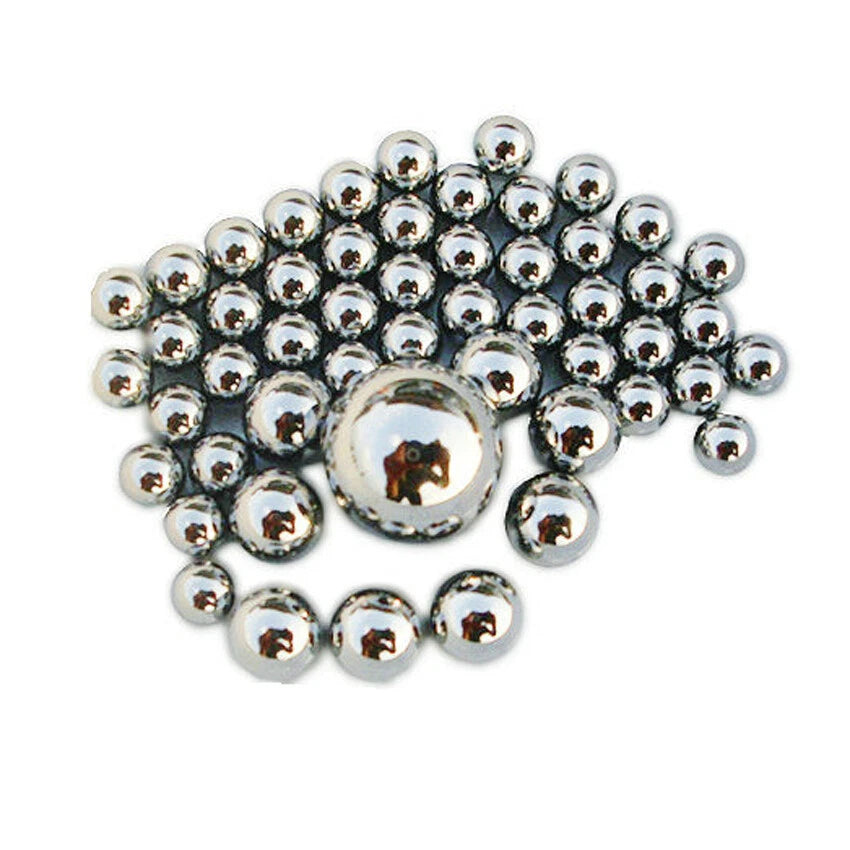
When a loose or undersized ball causes premature bearing failure, vibration, or binding in your linear rail or rotary assembly, the root cause is almost always dimensional inconsistency. Engineers, machinists, and serious DIY builders who need repeatable, drop-in replacements for 3mm–4mm bearing applications demand G10 grade accuracy — and that is exactly what these balls deliver.
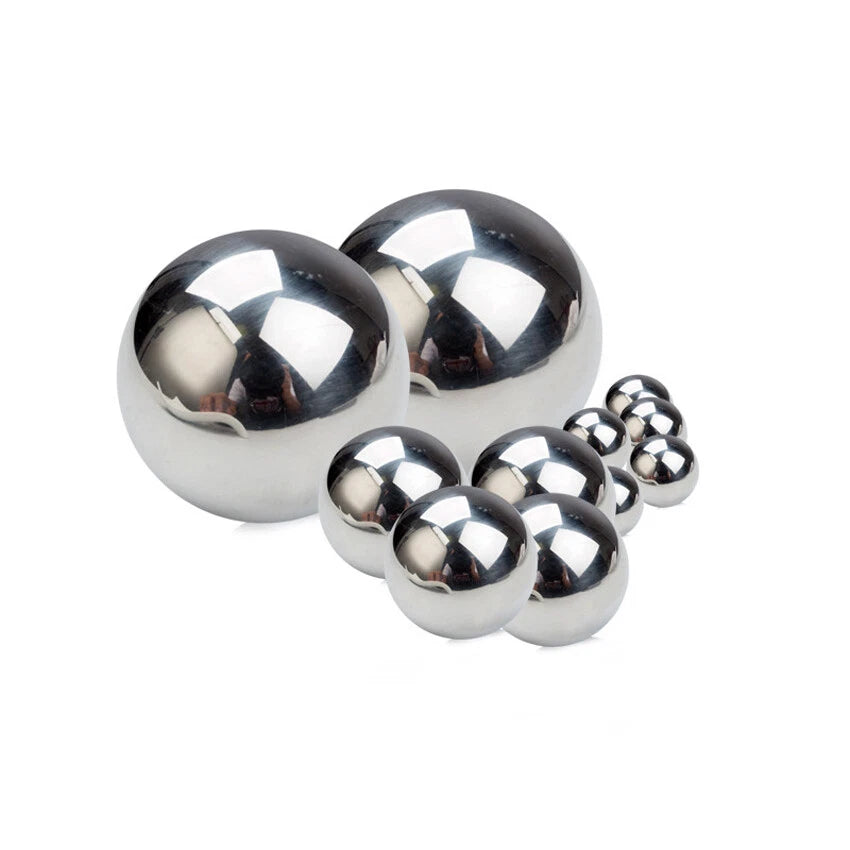
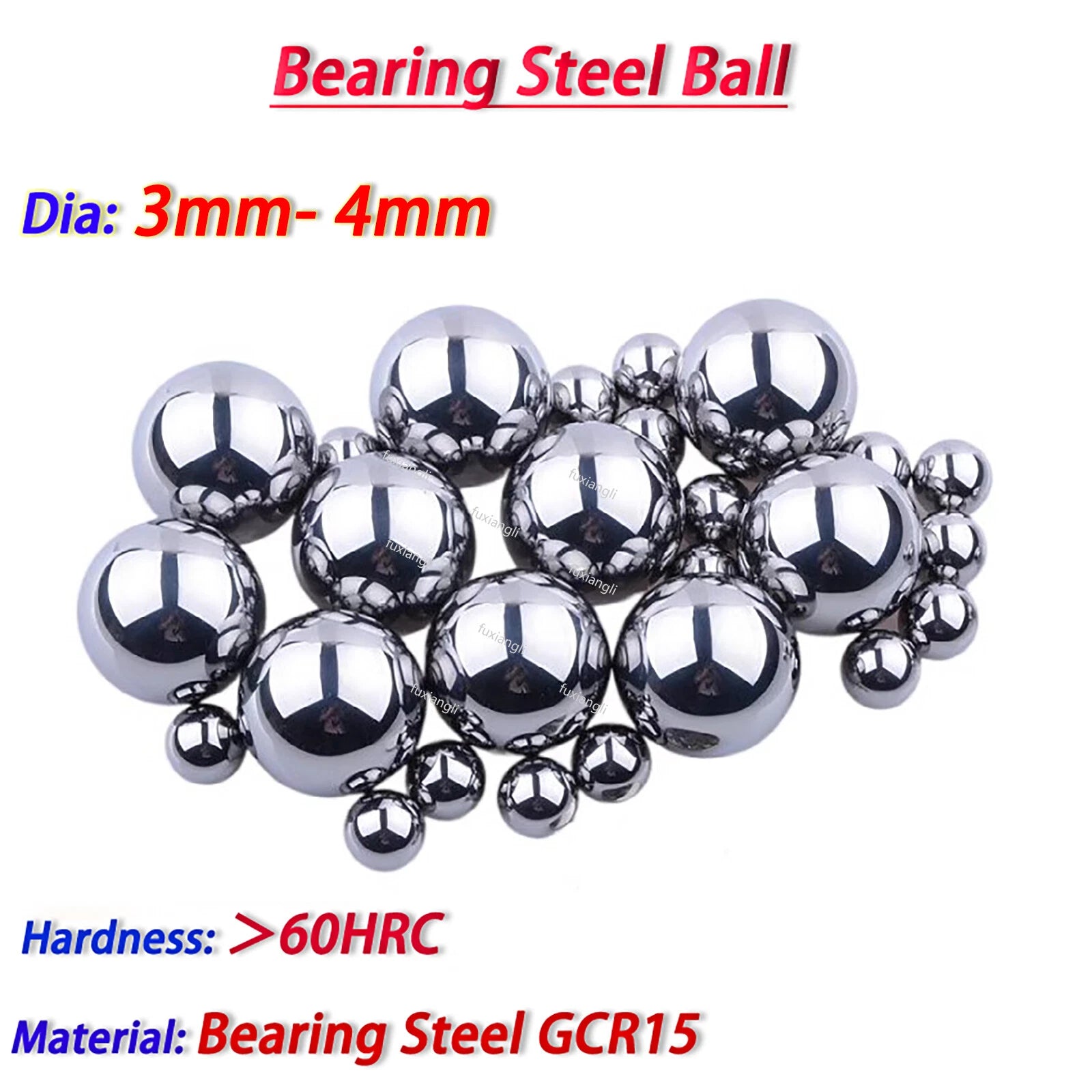
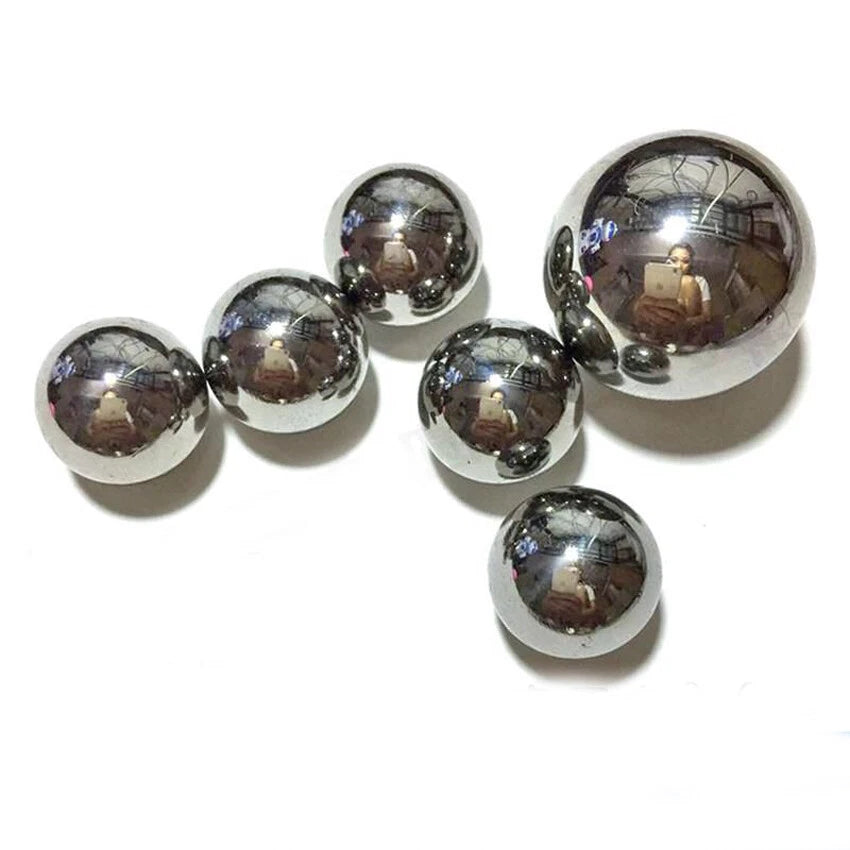
Each ball is manufactured from bearing-grade carbon steel (typically AISI 52100 equivalent) and finished to G10 tolerances, meaning diameter deviation is held within ±0.0025 mm and sphericity is controlled to the same standard. Available diameters span 3.0 mm through 3.98 mm (~0.118 in to ~0.157 in), covering a wide range of metric and near-imperial bore sizes. Packs are offered in 100 pcs, 200 pcs, and 500 pcs to suit both prototyping and production runs.
Typical use cases include replacement balls for deep-groove ball bearings and angular-contact bearings, load-distribution elements in linear guide carriages, precision tooling fixtures requiring smooth rolling contact, and DIY robotics or CNC axis assemblies where consistent ball diameter directly affects positional accuracy.
Diameter deviation ≤±0.0025 mm and sphericity ≤0.0025 mm ensure consistent rolling performance and minimal vibration in assembled bearings.
35 distinct sizes from 3.0 mm to 3.98 mm (~0.118"–0.157") let you match exact bore requirements without grinding or shimming.
Made from through-hardened carbon steel (typically 60–67 HRC surface hardness) for long service life under radial and axial loads.
Surface roughness Ra typically ≤0.025 µm, reducing friction and heat generation in high-speed or high-cycle applications.
Choose 100 pcs, 200 pcs, or 500 pcs — ideal for single-bearing rebuilds, small-batch production, or stocking a workshop supply.
Dimensionally consistent with standard bearing ball complements — no machining required for most 3mm–4mm bearing rebuild applications.
| Grade | G10 |
|---|---|
| Material | Bearing-grade carbon steel (AISI 52100 equivalent) |
| Diameter Range | 3.0 mm – 3.98 mm (approx. 0.118" – 0.157") |
| Diameter Tolerance | ±0.0025 mm (G10 standard) |
| Sphericity | ≤0.0025 mm |
| Surface Hardness | Typically 60–67 HRC |
| Surface Finish (Ra) | Typically ≤0.025 µm |
| Finish / Coating | Bright lapped, uncoated |
| Pack Quantities | 100 pcs / 200 pcs / 500 pcs |
| Application | Ball bearings, linear guides, tooling fixtures, robotics |
Check your bearing's datasheet or measure the existing balls with a micrometer. The ball complement diameter must match the race groove radius. For most standard deep-groove bearings, the ball diameter is specified to ±0.001 mm, so select the variant that matches your measured value exactly. If you are between sizes, contact us to confirm.
G10 is an ISO 3290 grade designation. It specifies that diameter deviation and sphericity are each held within 0.0025 mm (2.5 µm). This is suitable for the vast majority of industrial and precision DIY bearing rebuilds. For ultra-precision spindle bearings requiring G3 or G5, a tighter-grade ball would be needed.
These are carbon steel balls and will oxidize if exposed to moisture without lubrication. For corrosion-resistant applications (wet environments, outdoor use), consider stainless steel balls instead. When used with appropriate bearing grease or oil, carbon steel balls perform reliably in typical indoor mechanical environments.
Yes. G10 carbon steel balls are commonly used in linear guide carriages and recirculating ball screws. Verify the required ball diameter from your carriage manufacturer's specification sheet. The smooth lapped finish and tight sphericity tolerance make these suitable for recirculating applications.
Load capacity depends on the bearing assembly design, race material, and number of balls — not the ball alone. The through-hardened carbon steel construction (typically 60–67 HRC) provides good fatigue resistance under both radial and axial loads in standard bearing configurations. Refer to your bearing's rated dynamic and static load capacity for system-level guidance.
Store in a dry, sealed container. Apply a light coat of machine oil or VCI (vapor corrosion inhibitor) paper if storing for extended periods. Avoid direct contact with bare hands, as skin oils can accelerate surface oxidation on uncoated carbon steel.
Most standard small bearings (6000–6200 series) use 7–10 balls. The 100 pcs pack is ideal for a single rebuild with spares. The 200 pcs or 500 pcs packs offer better per-unit value for workshop stock or batch production of multiple assemblies.