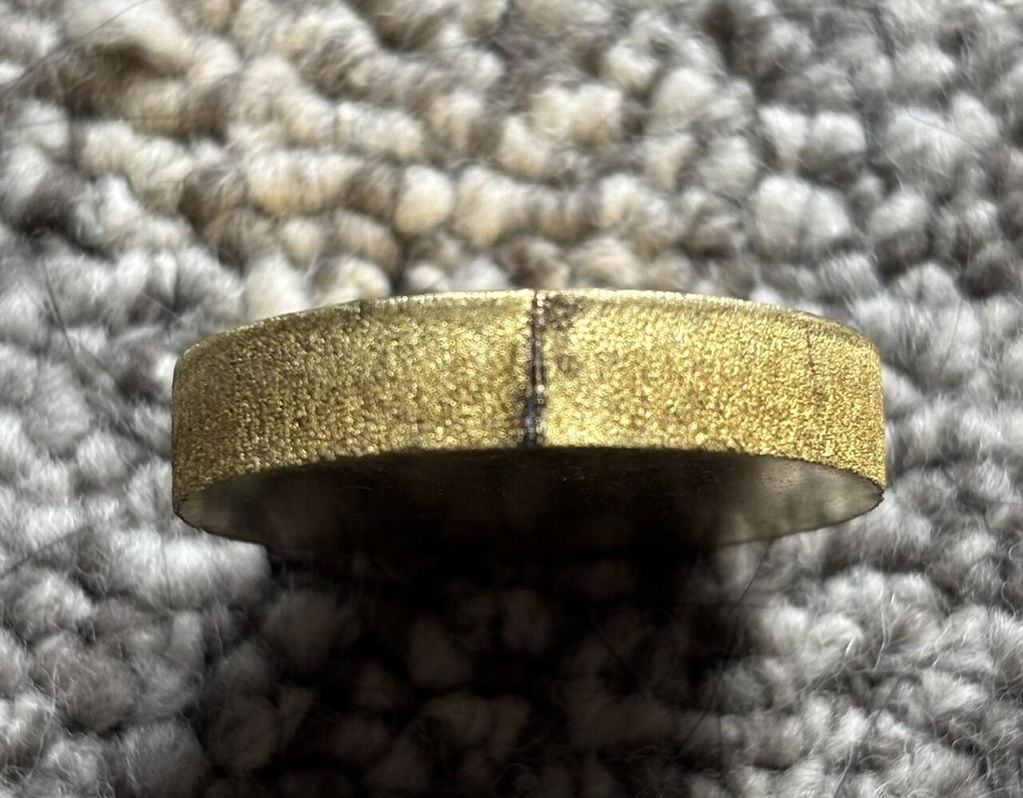
The chain is fine...but I ordered the wrong size. Nine links of the chain I ordered equals six of the size I wanted. My error...
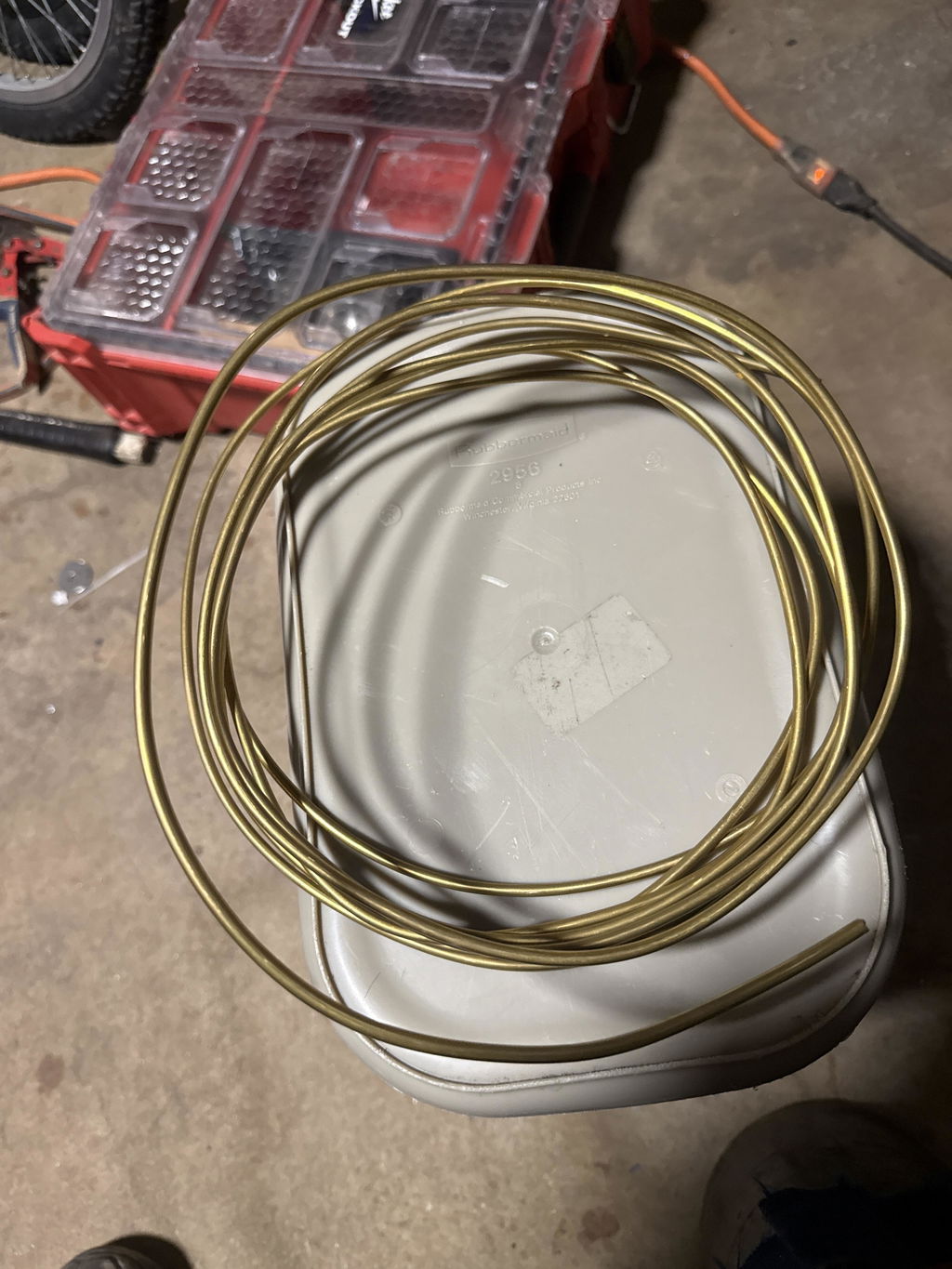
How can I straighten out the springs? I can't use them coil uo as is.
Your payment information is processed securely. We do not store credit card details nor have access to your credit card information.
Get fitment advice & recommendations
When a worn or pitted bearing ball causes your bicycle hub, bottom bracket, or headset to feel rough and imprecise, finding a replacement with the right diameter tolerance is critical. Mechanics, cyclists, and workshop technicians who need exact-size steel balls to restore smooth rotation rely on dimensionally consistent, hardened rolling elements — not generic loose balls that introduce play or noise.
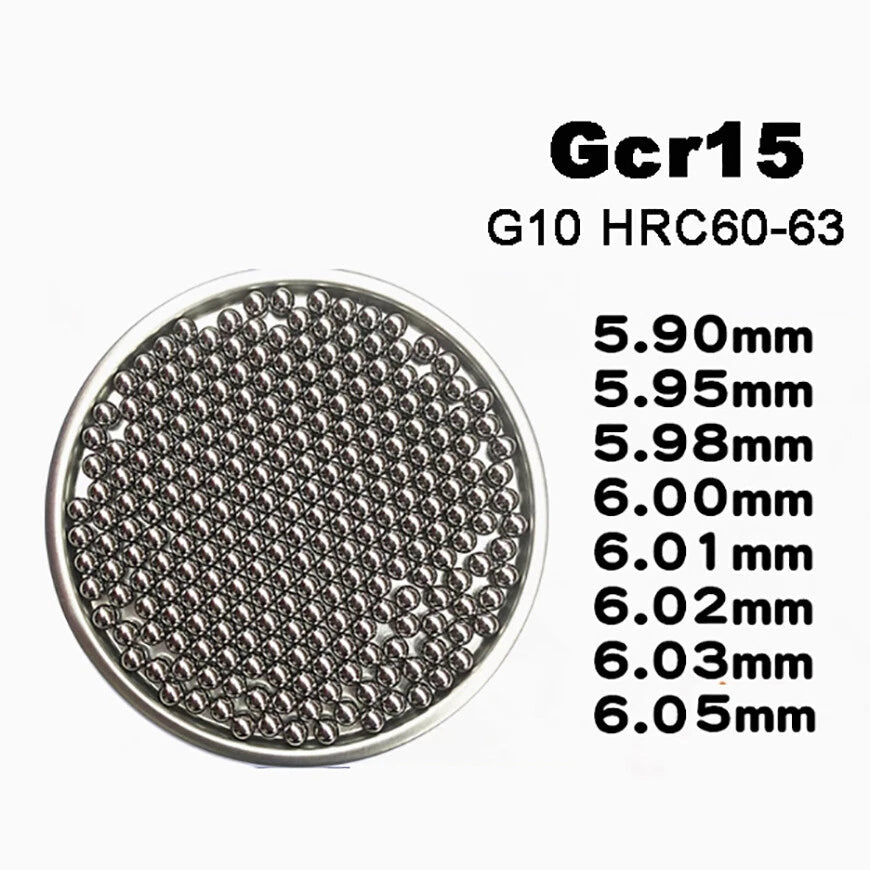
These GCR15 chrome steel ball bearings are manufactured to G10 grade, offering a surface roughness and roundness tolerance suitable for bicycle drivetrain and steering applications. Available in diameters from 5.90mm (~0.232") to 6.03mm (~0.237"), each size is sold separately so you can match the exact specification of your original bearing assembly. Packing options include 100-piece bags, 1 kg bulk, and 2.8 kg bulk for workshop or fleet use.
Typical applications include bicycle cup-and-cone hub bearings, threaded bottom bracket cartridges, loose-ball headsets, and pedal axle bearings — anywhere a GCR15 steel ball bearing in the 6mm nominal range is required. The tight diameter increments (0.01mm steps) make these GCR15 steel ball bearings especially useful when selecting an oversize replacement to compensate for worn bearing races.
| Material | GCR15 Chrome Steel |
|---|---|
| Grade | G10 |
| Diameter Range | 5.90mm – 6.03mm (approx. 0.232" – 0.237") |
| Diameter Increment | 0.01mm steps (see variant options) |
| Nominal Size | ~6mm |
| Surface Hardness | Typically 60–65 HRC (GCR15 heat-treated) |
| Surface Finish | Polished chrome steel |
| Ball Type | Loose (uncaged) |
| Packing Options | 100pcs / 1kg / 2.8kg |
| Typical Application | Bicycle hubs, headsets, bottom brackets, pedal axles |
| Weight (per pack) | See variant options |
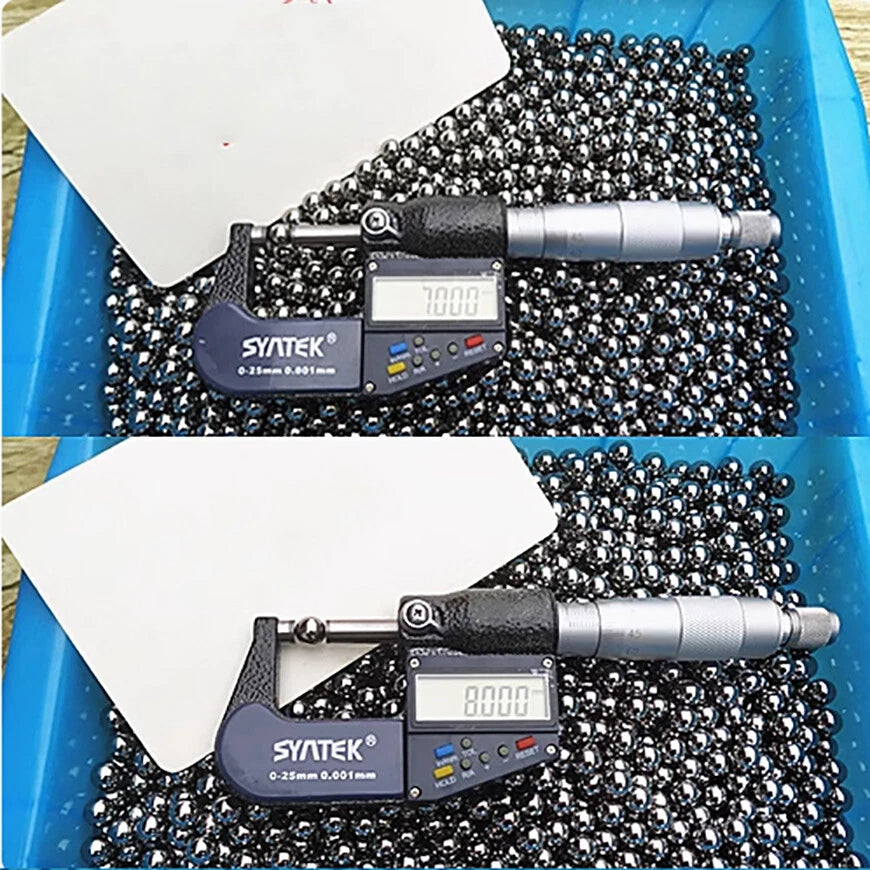
Remove one of the existing balls from your hub bearing race and measure it with a digital caliper. Match that measurement to the available diameter options. If your races show wear grooves, you may choose the next size up (e.g., 5.98mm instead of 5.95mm) to restore proper preload and eliminate play.
G10 is an ISO 3290 grade designation indicating that the ball's diameter deviation, spherical error, and surface roughness all fall within defined tolerances — specifically a maximum deviation of 0.25µm for roundness. G10 is suitable for bicycle drivetrain and steering applications where smooth, consistent rolling is required without the cost of precision instrument-grade balls.
GCR15 chrome steel offers moderate corrosion resistance due to its chromium content, but it is not stainless steel. For wet or muddy riding, apply a quality bearing grease (e.g., lithium-based or waterproof grease) and re-grease at regular service intervals. In highly corrosive environments, consider stainless steel balls as an alternative.
These are loose (uncaged) balls intended for cup-and-cone style assemblies — such as traditional bicycle hubs, threaded headsets, and loose-ball bottom brackets. Sealed cartridge bearings are factory-assembled units and are not serviceable with individual loose balls. If your bicycle uses cartridge bearings, you will need a replacement cartridge instead.
The count varies by component. A typical front hub uses 9–10 balls per side (18–20 total), a rear hub uses 9 balls per side (18 total), and a threaded headset uses 18–22 balls across both cups. Check your component's service manual or count the existing balls before ordering. The 100-piece pack is sufficient for a full hub service on most bikes.
Both bulk packs contain the same G10 GCR15 steel balls — the difference is quantity. A 1kg pack is suited for workshop stock covering multiple service jobs, while the 2.8kg pack offers a lower per-ball cost for bicycle shops, fleet maintenance operations, or resellers who service a high volume of bikes regularly.
No. All balls in a single bearing race must be the same diameter. Mixing sizes causes uneven load distribution, accelerated race wear, and rough rolling. Always replace all balls in a race with the same diameter variant, and use a fresh application of bearing grease during reassembly.