The chain is fine...but I ordered the wrong size. Nine links of the chain I ordered equals six of the size I wanted. My error...
How can I straighten out the springs? I can't use them coil uo as is.
Your payment information is processed securely. We do not store credit card details nor have access to your credit card information.
Get fitment advice & recommendations
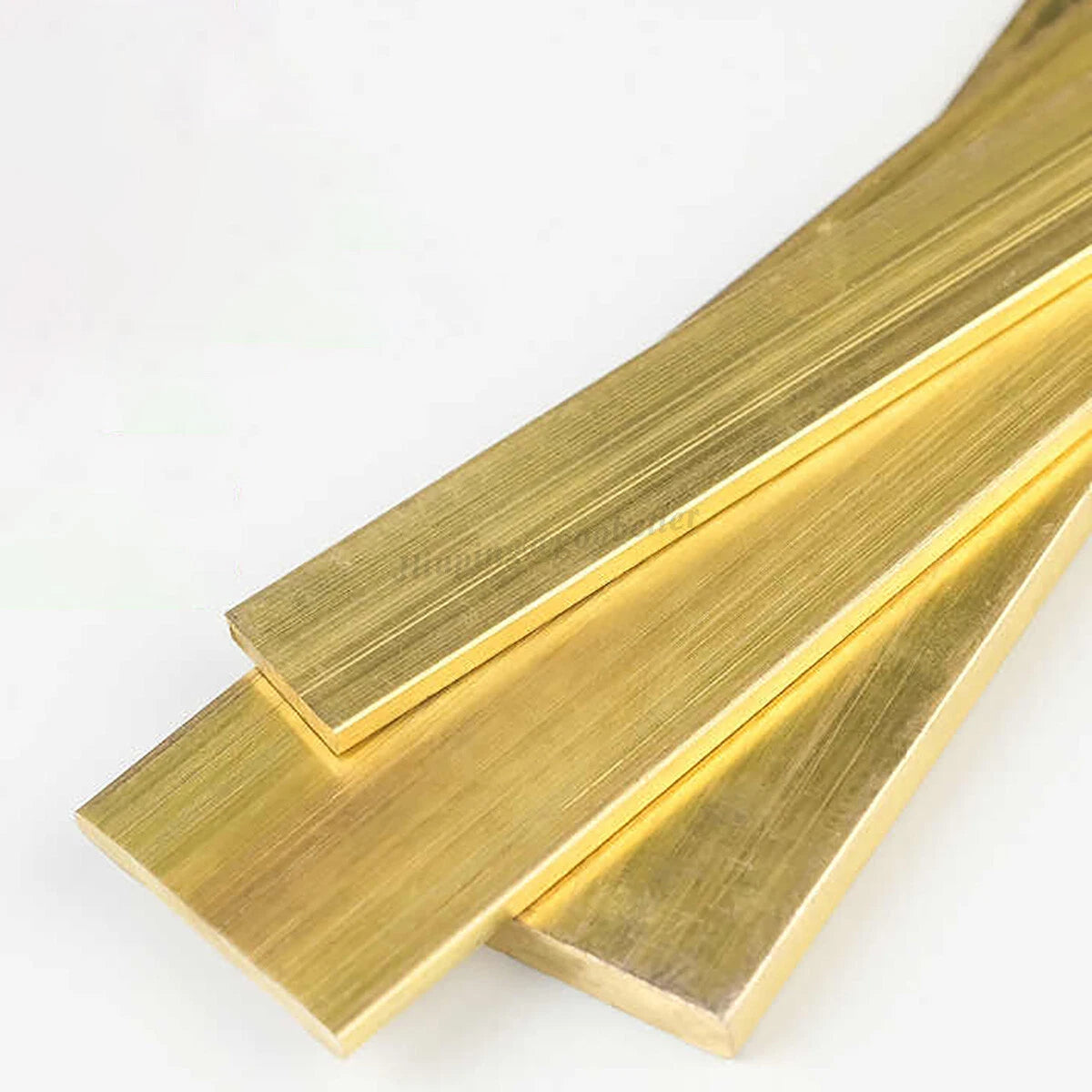
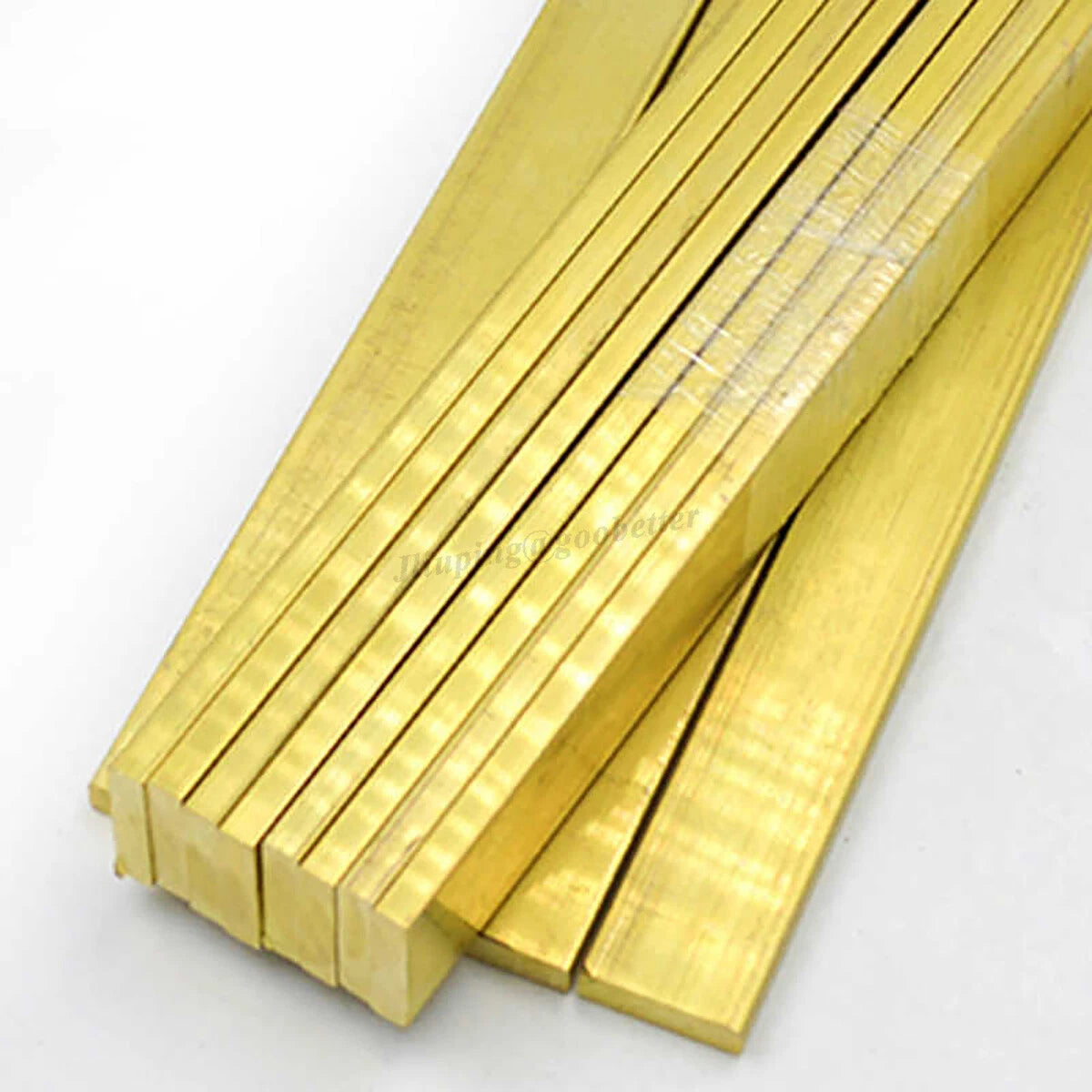
When a project demands a material that machines cleanly, solders reliably, and holds tight tolerances without warping, finding the right brass flat bar stock can be frustrating. Hobbyists, model engineers, and fabricators who need cut-to-size brass strip often face inconsistent sizing or soft alloys that deform under tooling. These H59 brass flat bar strips are stocked specifically for builders who need dimensional accuracy they can count on.
Each piece is cut from solid H59 brass — a copper-zinc alloy with approximately 59% copper content — and supplied in a fixed 500mm (19.7 in) length. Width options span 3mm to 100mm (0.12 in to 3.94 in), and thickness options range from 2mm to 19mm (0.08 in to 0.75 in), giving you precise cross-section control for your application. The flat surfaces are mill-finished, suitable for further machining, filing, or polishing.
Typical applications include electrical bus bar fabrication, decorative inlay and trim work, bearing spacers and shims, bracket and clamp stock for mechanical assemblies, and architectural hardware prototyping. The consistent alloy composition makes these strips well-suited for soldering, brazing, and light CNC milling where chip clearance and surface finish matter.
| Material | H59 Brass (Cu-Zn alloy, ~59% copper) |
|---|---|
| Form | Flat bar / solid strip / sheet plate |
| Length | 500mm (approx. 19.7 in) |
| Width | 3mm – 100mm (see variant options) |
| Thickness | 2mm – 19mm (see variant options) |
| Surface Finish | Mill finish (as-cut, suitable for further machining or polishing) |
| Cross-Section | Solid (not hollow) |
| Machinability | Good — suitable for drilling, tapping, milling, filing |
| Solderability | Good — compatible with silver solder and standard brazing alloys |
| Corrosion Resistance | Moderate — suitable for dry and mildly humid indoor environments |
| Packing | See variant options |
H59 is a Chinese national standard designation for a brass alloy containing approximately 59% copper and 41% zinc. Compared to higher-copper brasses like H62 or H65, H59 is slightly harder and more economical while still offering good machinability and adequate corrosion resistance for most indoor and light-duty applications. It is not recommended for prolonged exposure to salt spray or acidic environments without a protective coating.
Yes. H59 brass cuts cleanly with a hacksaw, angle grinder with a metal-cutting disc, or a bandsaw fitted with a bi-metal blade. For thinner strips (2–4mm thick), a sharp pair of metal snips or a guillotine shear can also work. Always deburr cut edges with a file or deburring tool before handling or assembly.
H59 brass has reasonable electrical conductivity — typically around 25–28% IACS — which is lower than pure copper but adequate for low-current bus bars, terminal strips, and grounding straps in hobby electronics and small panel builds. For high-current industrial bus bar work, pure copper or C110 copper bar is generally preferred. Always verify your current-carrying requirements against the cross-sectional area of the strip you select.
Start with the structural or clearance requirement of your application. For shims and spacers, match the thickness to the gap you need to fill. For brackets and clamps, choose a width that provides enough bearing surface and a thickness that resists bending under your expected load. If you are unsure, a thickness-to-width ratio of 1:3 to 1:5 is a common starting point for light structural brackets. Use the variant selector above to pick your exact cross-section.
H59 brass will naturally oxidise and develop a darker patina when exposed to air and humidity over time. This is a surface effect and does not affect structural integrity in most applications. To maintain a bright finish, apply a thin coat of clear lacquer or brass polish after cleaning. For outdoor or high-humidity environments, consider a protective coating or choose a more corrosion-resistant alloy such as naval brass or stainless steel.
Yes. H59 brass solders and brazes readily. For soft soldering, use a rosin-core or acid-core solder with a suitable flux and a soldering iron or torch. For brazing, silver brazing alloys (e.g., 45% silver) with a flux paste and a propane or MAPP torch work well. Clean the joint area thoroughly with fine abrasive paper before applying flux to ensure a strong, void-free bond.
The listings on this page are for 500mm fixed-length strips. If you require a different length, please contact us through the store's contact page and we will advise on availability. For longer runs, multiple strips can be joined by brazing or mechanical fastening.