
The chain is fine...but I ordered the wrong size. Nine links of the chain I ordered equals six of the size I wanted. My error...
How can I straighten out the springs? I can't use them coil uo as is.
Your payment information is processed securely. We do not store credit card details nor have access to your credit card information.
Get fitment advice & recommendations
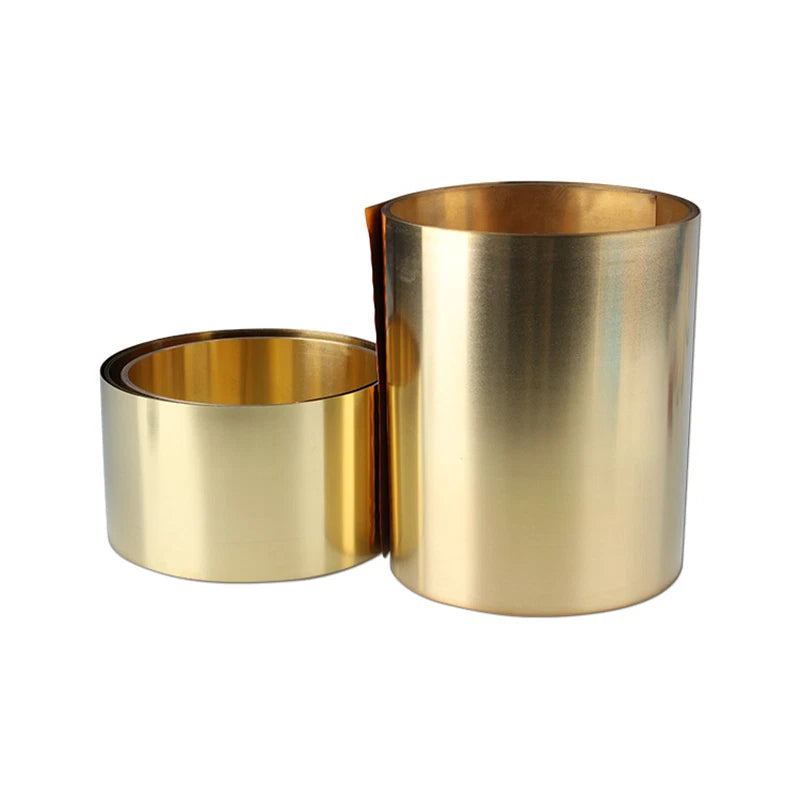
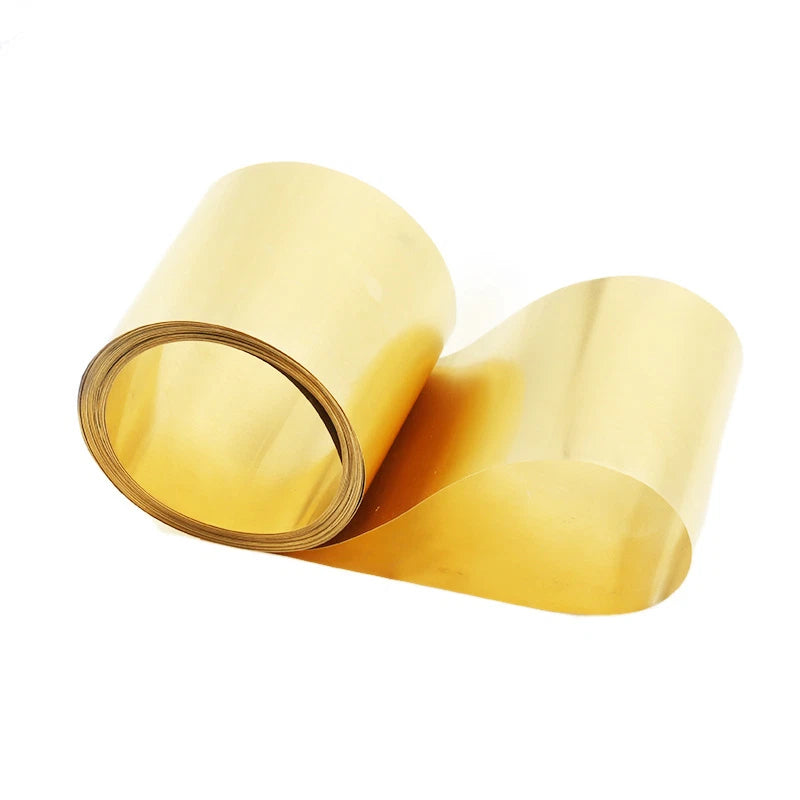
When a project demands exact thickness tolerances and reliable conductivity, generic sheet metal falls short. Machinists, electronics hobbyists, model makers, and precision DIYers need a material that holds its dimensions from the first cut to the final fit — and that is exactly where H59 brass sheet foil strip delivers.
This listing covers H59 brass sheet foil strip roll available in three sheet formats — 200×300mm (approx. 7.9"×11.8"), 100×1000mm (approx. 3.9"×39.4"), and 48×5000mm (approx. 1.9"×196.9") — with thickness options spanning 0.02mm to 0.5mm (approximately 0.0008" to 0.020"). H59 is a leaded brass alloy composed of approximately 59% copper and 41% zinc, offering a balance of machinability, moderate corrosion resistance, and good electrical conductivity.
Typical applications include precision shim stock for bearing and shaft alignment, flexible electrical contact strips and bus bar liners, decorative inlay and craft metalwork, gasket blanks for light-duty sealing, and scale model detailing where thin, formable metal is required.
| Material | H59 Brass (Copper-Zinc Alloy, ~59% Cu / ~41% Zn) |
|---|---|
| Form | Flat sheet / foil / strip / roll |
| Width × Length Options | 200×300mm | 100×1000mm | 48×5000mm |
| Thickness Range | 0.02mm / 0.03mm / 0.05mm / 0.1mm / 0.2mm / 0.3mm / 0.4mm / 0.5mm |
| Thickness Tolerance | See variant options |
| Surface Finish | Mill finish (smooth, bright brass) |
| Hardness | See variant options |
| Tensile Strength | Typically 300–450 MPa (varies by thickness and temper) |
| Electrical Conductivity | Approximately 26–28% IACS |
| Quantity per Order | 1 / 2 / 3 / 5 / 8 / 10 / 15 / 20 / 25 / 30 pcs |
| Weight per Piece | See variant options (varies by size and thickness) |
Measure the gap you need to fill with a feeler gauge, then select the thickness that matches or can be stacked to reach your target clearance. For bearing housing alignment, 0.05mm–0.2mm is common. For shaft end-play adjustment, 0.1mm–0.5mm is typical. Thinner foils (0.02mm–0.03mm) are suited to fine optical or electronic assembly shimming where sub-0.1mm precision is required.
Gauges of 0.02mm–0.1mm can be cut cleanly with sharp scissors or a craft knife and steel ruler. Thicknesses of 0.2mm–0.3mm are best handled with aviation tin snips or a guillotine shear for straight edges. At 0.4mm–0.5mm, a metal shear or angle grinder with a thin cutting disc will give the cleanest result. Always deburr cut edges with a fine file or sandpaper before handling.
H59 brass offers moderate atmospheric corrosion resistance and will develop a natural patina over time in humid air. It is suitable for indoor mechanical assemblies, light outdoor decorative use, and protected enclosures. Avoid prolonged exposure to ammonia, chlorine, or acidic environments, which can cause dezincification or stress corrosion cracking. For harsh outdoor or marine applications, consider C260 cartridge brass or stainless steel shim stock instead.
Yes. H59 brass accepts standard tin-lead and lead-free solders with a rosin-core or mild acid flux. Clean the surface with isopropyl alcohol or fine abrasive before soldering to remove any surface oxide. A soldering iron at 300–350°C works well for thinner gauges; thicker strips (0.3mm+) may benefit from a higher-wattage iron or brief pre-heating to avoid heat-sinking the joint.
The 200×300mm format is a flat sheet suited to cutting individual shims, gaskets, or decorative pieces. The 100×1000mm format provides a longer strip for blanking multiple parts in sequence. The 48×5000mm roll is designed for continuous-feed applications — such as winding into coils, feeding through a punch press, or cutting long strips for bus bar liners — where a single uninterrupted length is more practical than joining shorter pieces.
Order a single piece if you are prototyping or need to verify fit before committing to a larger quantity. Multi-piece quantities (5, 10, 20, 30 pcs) are cost-effective for production runs, repair kits, or when you anticipate needing replacement shims over time. The per-piece price decreases at higher quantities, so batch ordering is recommended if your application involves regular maintenance intervals or multiple assembly points.
H59 brass is suitable for low-to-medium current contact strips, terminal liners, and flexible bus connections. Its electrical conductivity is approximately 26–28% IACS — lower than pure copper but adequate for many contact and connector applications. For high-current bus bars or precision spring contacts, consider C110 copper or beryllium copper strip. Always verify current density and contact resistance requirements against your specific circuit design.





