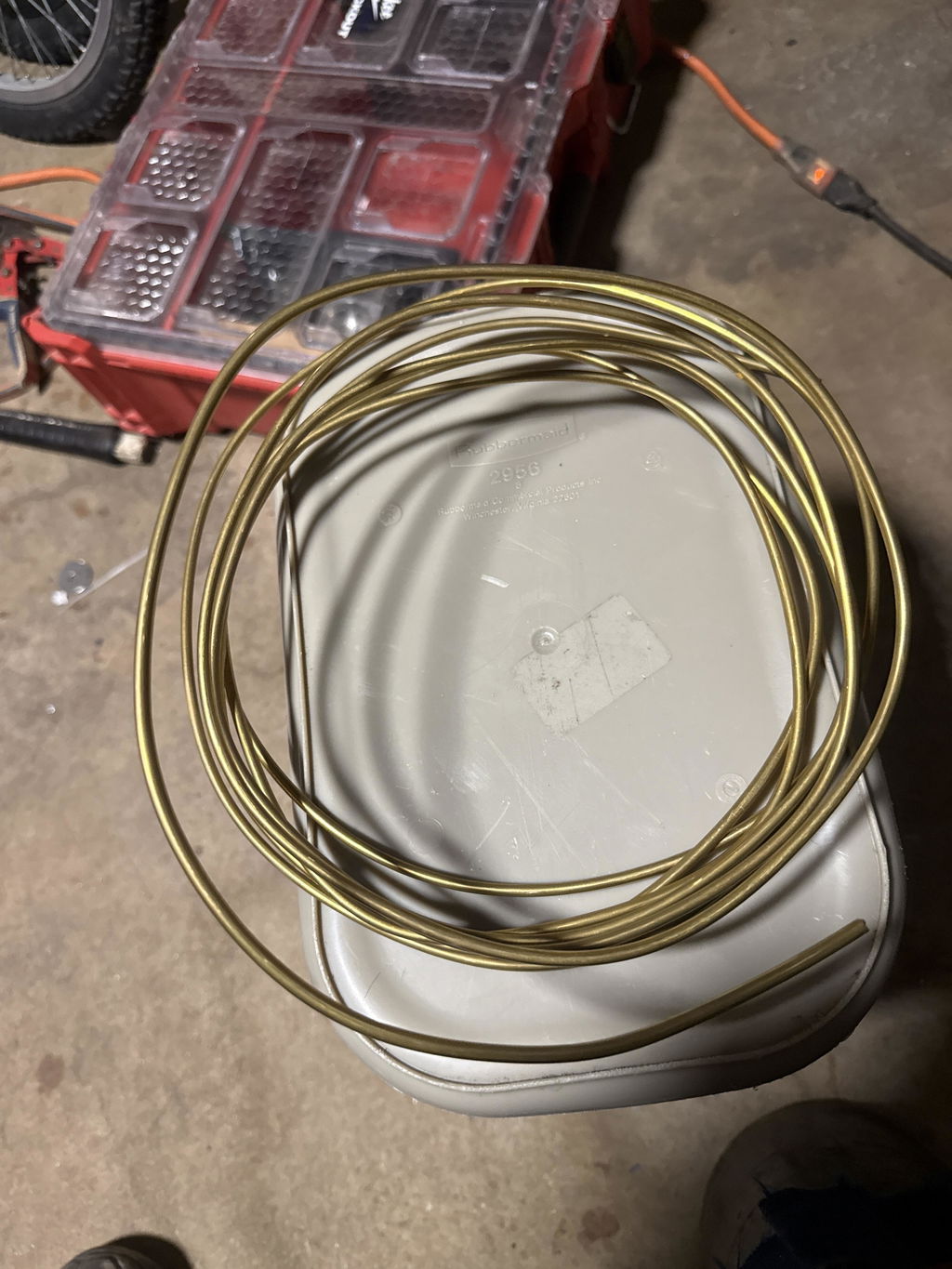
The chain is fine...but I ordered the wrong size. Nine links of the chain I ordered equals six of the size I wanted. My error...
How can I straighten out the springs? I can't use them coil uo as is.
Your payment information is processed securely. We do not store credit card details nor have access to your credit card information.
Get fitment advice & recommendations
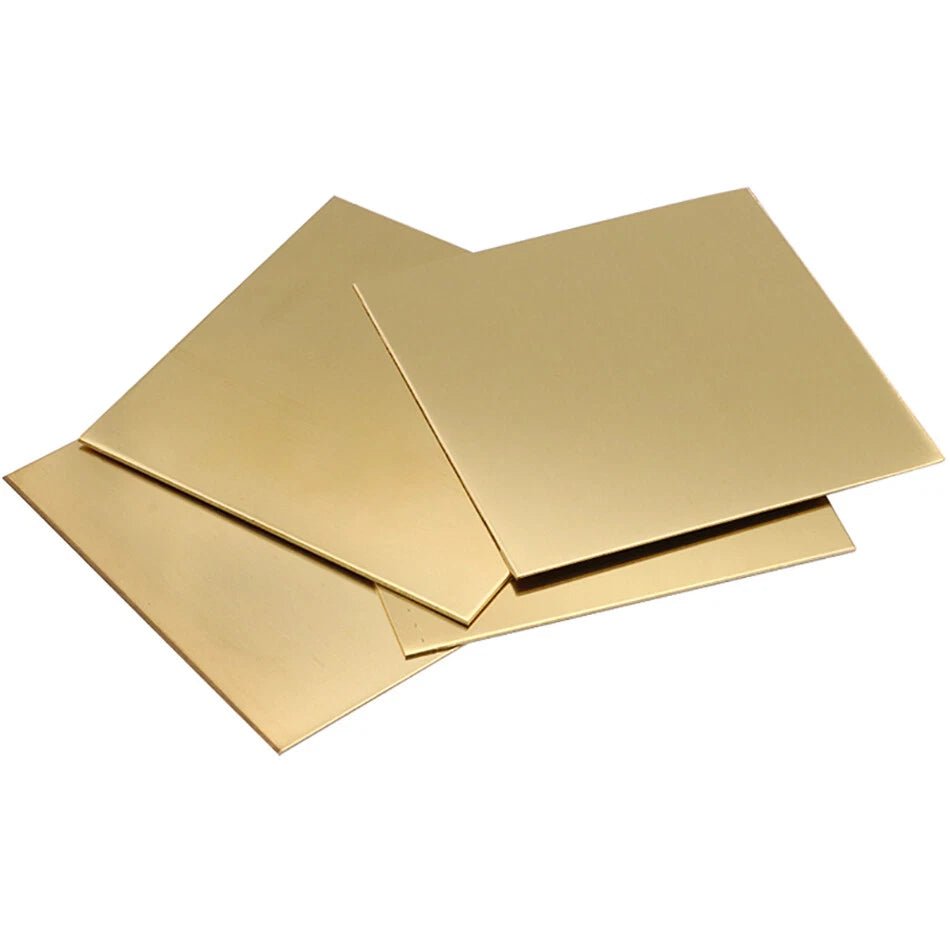
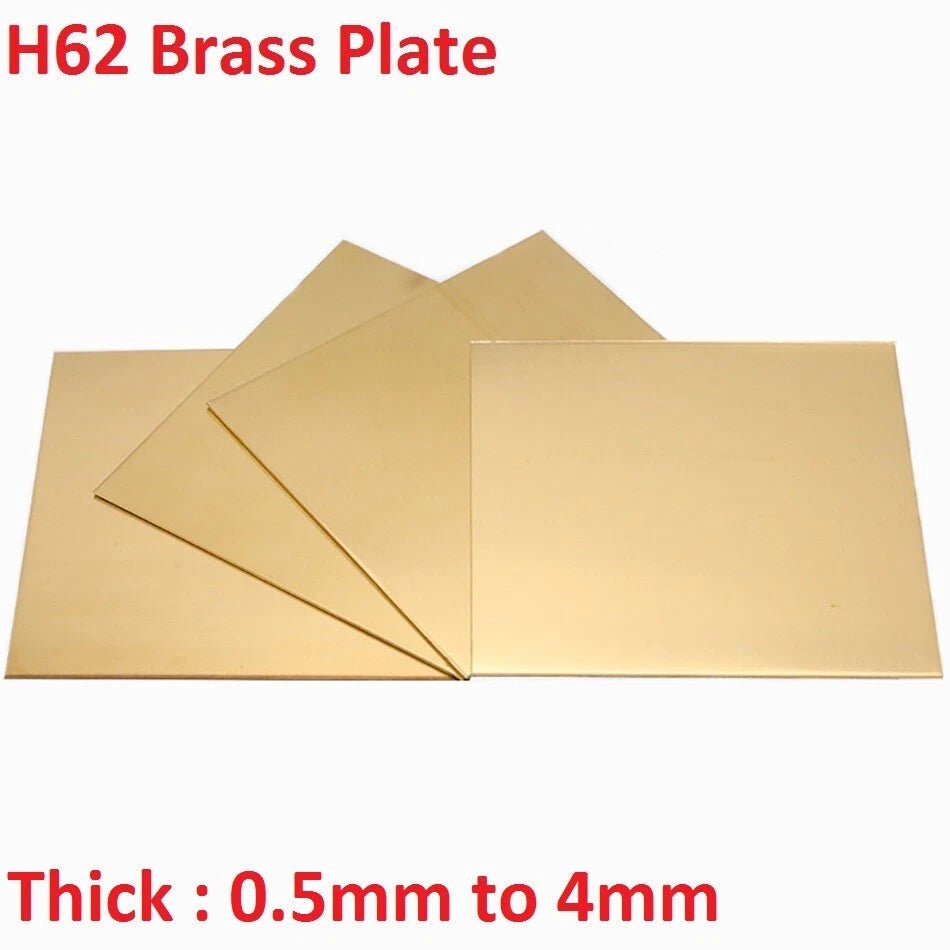
When your project demands a reliable, workable metal sheet that cuts cleanly, solders easily, and holds its shape under load, finding the right thickness and size in one place can be a real challenge. Whether you're a hobbyist machinist, a maker building custom enclosures, or a craftsperson needing precise metal blanks, these H62 brass copper sheet plates give you the exact dimensions you need without ordering oversized stock and wasting material.
Each sheet is made from H62 brass alloy — a copper-zinc alloy with approximately 62% copper content — offering a balance of machinability, corrosion resistance, and electrical conductivity. Thickness options range from 0.5 mm to 4 mm (approximately 0.020" to 0.157"), and sheet dimensions span from compact 100×100 mm (3.94"×3.94") squares up to larger 300×300 mm (11.81"×11.81") panels. Quantity options of 1, 2, 3, or 5 pieces per order let you stock exactly what you need.
Typical use cases include DIY electrical bus bars and grounding straps, custom shim stock and spacers for mechanical assemblies, decorative metalwork and jewelry blanks, heat spreader plates for electronics projects, and small-batch prototype enclosures or brackets.
| Material | H62 Brass (Copper-Zinc Alloy, ~62% Cu) |
|---|---|
| Thickness Range | 0.5 mm – 4 mm (0.020" – 0.157") |
| Width Options | 100 mm, 200 mm, 300 mm (3.94", 7.87", 11.81") |
| Length Options | 100 mm, 150 mm, 200 mm, 300 mm (3.94" – 11.81") |
| Quantity per Order | 1 PCS / 2 PCS / 3 PCS / 5 PCS (see variant options) |
| Surface Finish | See variant options |
| Hardness | See variant options |
| Tensile Strength | Typically 340–420 MPa (H62 standard range) |
| Electrical Conductivity | Approximately 26–28% IACS |
| Applicable Standards | GB/T 2040 (H62 Brass Plate) |
| Weight per Sheet | See variant options (varies by thickness and size) |
| Product Type | Copper Sheet / Brass Plate |
For thin shims, gaskets, or decorative overlays, 0.5 mm–1 mm is typically sufficient. For structural brackets, bus bars, or heat spreaders that need rigidity, 1.5 mm–3 mm is a common choice. For heavy-duty spacers or load-bearing plates, 3 mm–4 mm provides the most strength. If you are unsure, start with 1 mm or 1.5 mm as a versatile middle ground for most DIY applications.
H62 brass is a copper-zinc alloy containing approximately 62% copper and 38% zinc. It is not pure copper. Compared to pure copper, H62 brass is harder, more machinable, and more resistant to dezincification in mild environments. Pure copper has higher electrical and thermal conductivity. For most DIY electrical grounding, shim, and decorative applications, H62 brass performs well and is easier to work with than pure copper sheet.
Yes. Thinner sheets (0.5 mm–1.5 mm) can be cut with heavy-duty tin snips, a jeweler's saw, or a rotary tool with a cutting disc. Thicker sheets (2 mm–4 mm) are best cut with an angle grinder, a bandsaw with a metal-cutting blade, or a CNC router. Always wear appropriate PPE and use cutting fluid when drilling or machining to extend tool life and achieve cleaner edges.
H62 brass will naturally develop a patina (tarnish) when exposed to air and moisture over time, shifting from bright yellow to a darker golden-brown. This is a surface oxidation process and does not significantly affect structural integrity for most applications. For applications requiring a bright finish, apply a clear lacquer or metal sealant after cleaning. For outdoor or high-humidity environments, consider additional protective coating.
Yes. H62 brass solders well with standard rosin-core or acid-core solder and a suitable flux. For brazing, use a brass-compatible brazing rod and flux at appropriate temperatures. Clean the surface thoroughly with fine abrasive or flux before soldering to ensure a strong bond. Avoid overheating, as excessive heat can cause zinc fuming from the brass alloy.
Use the Size (Thickness × Width × Length) dropdown to select your required dimensions — for example, "1*100*200mm" means 1 mm thick, 100 mm wide, 200 mm long. Then select the Units dropdown (1 PCS, 2 PCS, 3 PCS, or 5 PCS) to match your project quantity. Buying multi-packs typically offers a lower per-piece cost. If you need a size not listed, contact us to confirm availability of custom cuts.
The weight depends on the thickness and sheet area. As a reference, H62 brass has a density of approximately 8.5 g/cm³. A 1 mm × 100 mm × 200 mm sheet weighs roughly 17 g (0.6 oz), while a 4 mm × 300 mm × 300 mm sheet weighs approximately 918 g (2.0 lb). For exact weights by variant, see variant options or contact us to confirm.