The chain is fine...but I ordered the wrong size. Nine links of the chain I ordered equals six of the size I wanted. My error...
How can I straighten out the springs? I can't use them coil uo as is.
Your payment information is processed securely. We do not store credit card details nor have access to your credit card information.
Get fitment advice & recommendations
When your project demands a flat, true-round metal blank that machines cleanly and holds a polished finish, finding the right stock can be frustrating. Whether you are a hobbyist engraver, a jewellery maker, or a small-shop fabricator, these H62 solid brass disc blanks give you a reliable starting point without the waste of cutting your own circles from sheet stock.
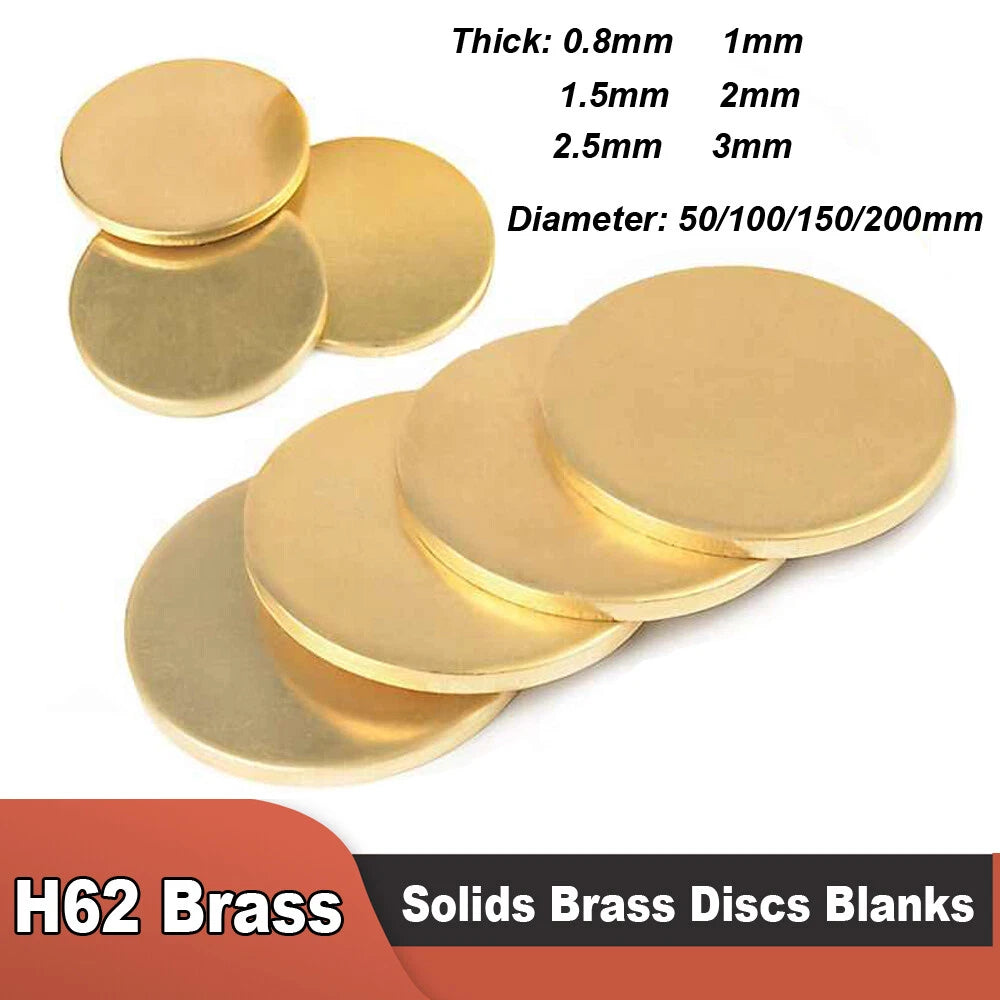
Each disc is cut from H62 brass alloy — a copper-zinc composition known for its machinability, moderate hardness, and warm golden appearance. Available diameters run from 50 mm (approx. 2 in) to 200 mm (approx. 7.9 in), with wall thicknesses spanning 0.8 mm (approx. 0.031 in) to 3 mm (approx. 0.118 in). Quantity options range from single pieces up to packs of 10, so you can order exactly what your build requires.
Typical applications include custom engraved medallions and name tags, clock face blanks for watchmaking and clock repair, gasket prototypes and spacer discs in light mechanical assemblies, and decorative inlay rounds for woodworking and furniture projects. Long-tail use cases such as DIY brass disc blanks for laser engraving and round metal sheet blanks for jewellery stamping are well served by this range.
Made from H62 copper-zinc brass, offering a balance of machinability, moderate tensile strength, and a naturally corrosion-resistant surface that develops a rich patina over time.
Diameters from 50 mm to 200 mm and thicknesses from 0.8 mm to 3 mm cover a broad spectrum of project requirements — from thin decorative discs to sturdy structural blanks.
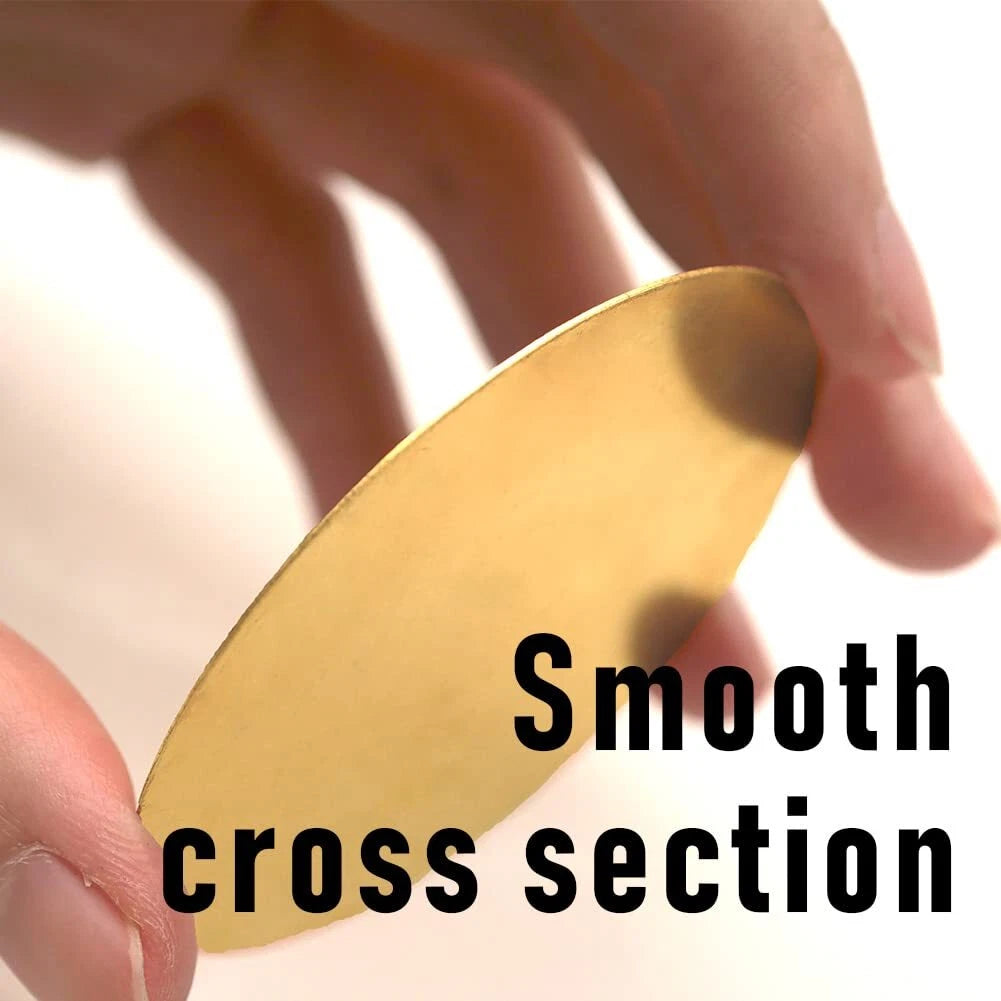
Each disc is cut to a consistent circular profile, reducing prep time and material waste compared to cutting your own rounds from flat sheet stock.
H62 brass machines cleanly with standard HSS or carbide tooling, accepts engraving, drilling, and tapping, and can be polished to a mirror finish or left with a natural satin surface.
The copper-zinc composition provides inherent resistance to atmospheric corrosion, making these discs suitable for both indoor decorative use and light outdoor applications when sealed.
Order 1, 2, 3, 5, or 10 pieces per listing to match your exact project needs — no minimum bulk commitment required for smaller builds or prototyping runs.
| Material | H62 Brass (Copper-Zinc Alloy) |
|---|---|
| Shape | Round / Disc |
| Diameter Range | 50 mm – 200 mm (approx. 2 in – 7.9 in) |
| Thickness Range | 0.8 mm – 3 mm (approx. 0.031 in – 0.118 in) |
| Available Diameters | 50 mm, 100 mm, 150 mm, 200 mm |
| Available Thicknesses | 0.8 mm, 1 mm, 1.5 mm, 2 mm, 2.5 mm, 3 mm |
| Surface Finish | See variant options |
| Tensile Strength | Typically 330–420 MPa (H62 alloy range) |
| Hardness | Typically 60–90 HB (H62 alloy range) |
| Pack Quantity | 1 Pcs / 2 Pcs / 3 Pcs / 5 Pcs / 10 Pcs (see variant options) |
| Weight per Piece | See variant options |
| Application | Engraving blanks, clock faces, gaskets, spacers, decorative inlays, jewellery stamping |
Start with your finished-part dimensions and add a small margin for machining or finishing. For engraving blanks and name tags, 50–100 mm diameters at 1–2 mm thickness are common. For clock faces or structural spacers, 150–200 mm diameters at 2–3 mm thickness provide more rigidity. If you are unsure, order a single piece in your target size to test fit before committing to a larger quantity.
H62 brass has a tensile strength typically in the 330–420 MPa range, making it suitable for light-to-moderate mechanical applications such as spacers, gaskets, and bearing plates. It is not recommended for high-stress structural load-bearing uses. For decorative, engraving, and light fabrication purposes it performs reliably.
Brass does not rust (rust is specific to iron-based metals). H62 brass is naturally resistant to atmospheric corrosion. Over time it may develop a patina — a darkening or greenish tinge — which can be prevented or reversed with a clear lacquer coating or regular polishing. For outdoor or humid environments, sealing the surface is recommended.
Yes. H62 brass is one of the more machinable brass alloys. It cuts cleanly with standard HSS drill bits, carbide end mills, and hand taps. For laser engraving, brass reflects CO₂ laser beams, so a fiber laser or a CO₂ laser with a marking spray is recommended. Rotary engravers and CNC routers with appropriate feeds and speeds work well.
Yes. H62 brass solders and brazes readily using standard silver solder, lead-free solder, or brass brazing rod with appropriate flux. Ensure the surface is clean and free of oxidation before joining. Avoid overheating, as excessive heat can cause zinc to volatilize from the alloy surface.
If you are prototyping or need a single part, the 1 Pcs option keeps costs low. For production runs, repetitive projects, or when you want spares in case of machining errors, the 2, 3, 5, or 10 Pcs packs offer better per-piece value. Check the price per piece across pack sizes before selecting your quantity.
The 0.8 mm discs are thin and flexible — suited for decorative overlays, thin gaskets, and lightweight engraving blanks where minimal material depth is needed. The 3 mm discs are substantially more rigid and are better suited for structural spacers, thick engraving stock, or applications requiring a pronounced edge profile. Thicknesses in between (1 mm, 1.5 mm, 2 mm, 2.5 mm) offer a graduated range for specific project requirements.