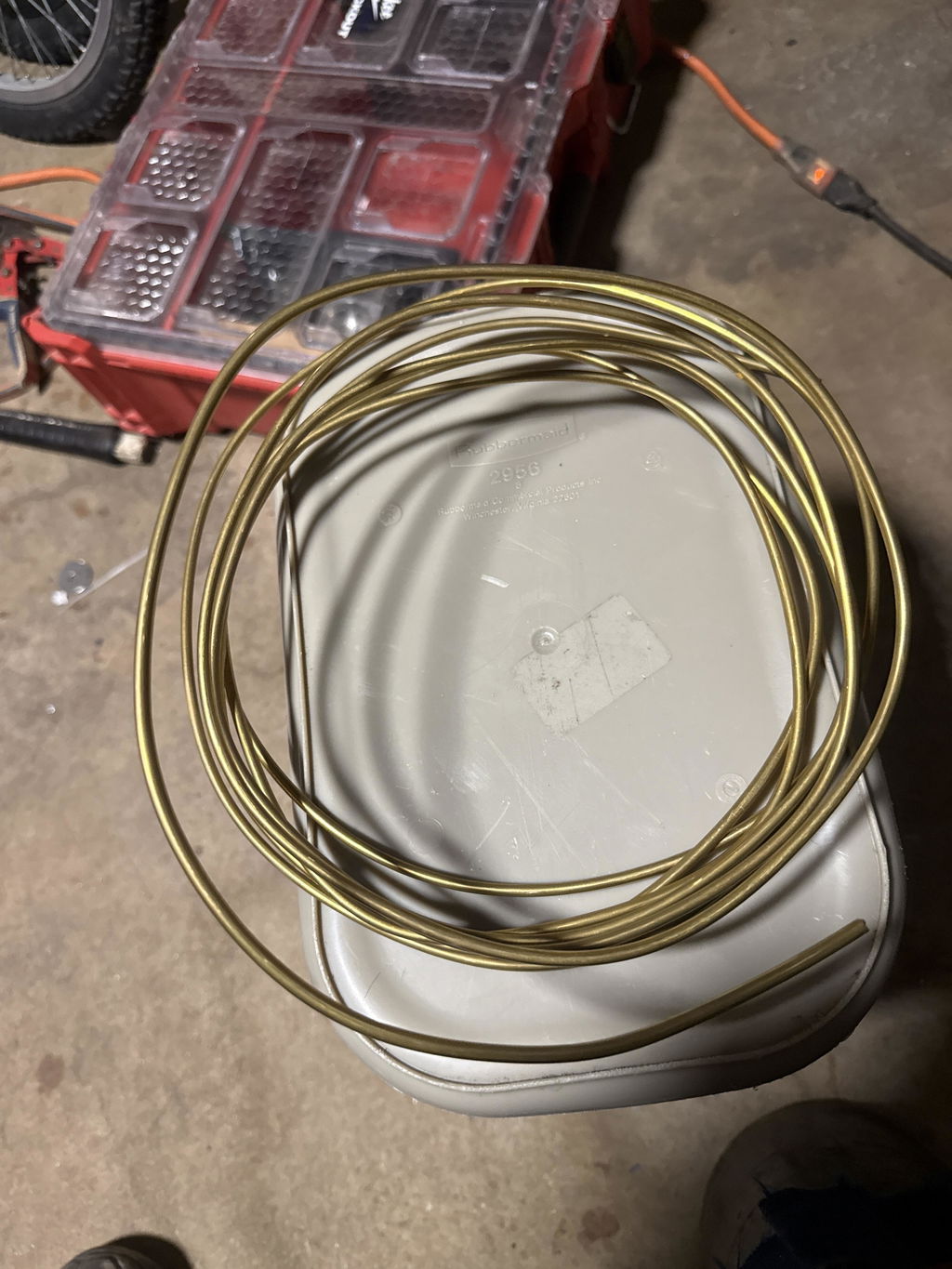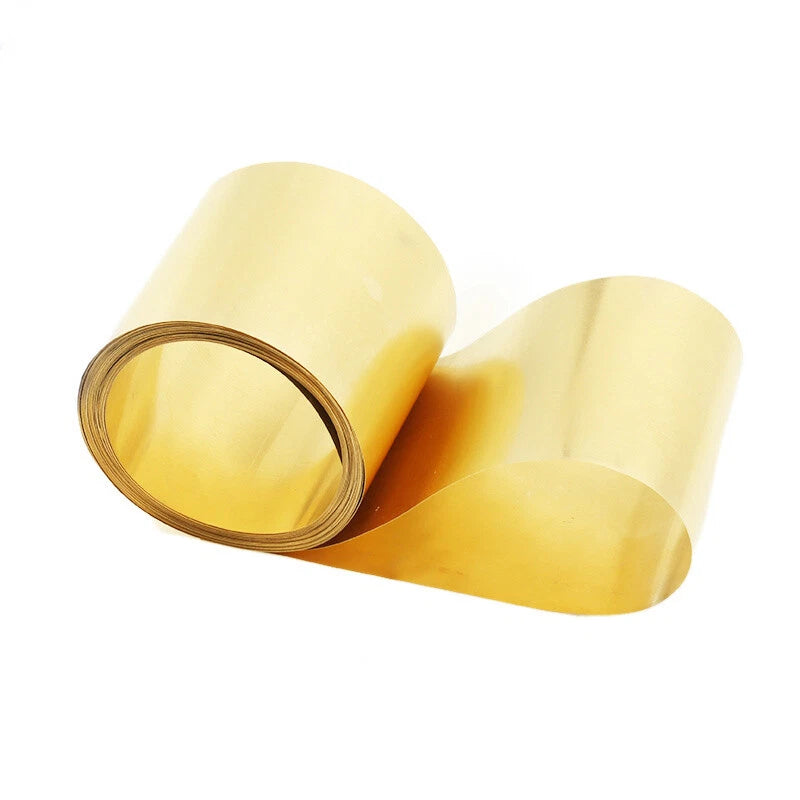
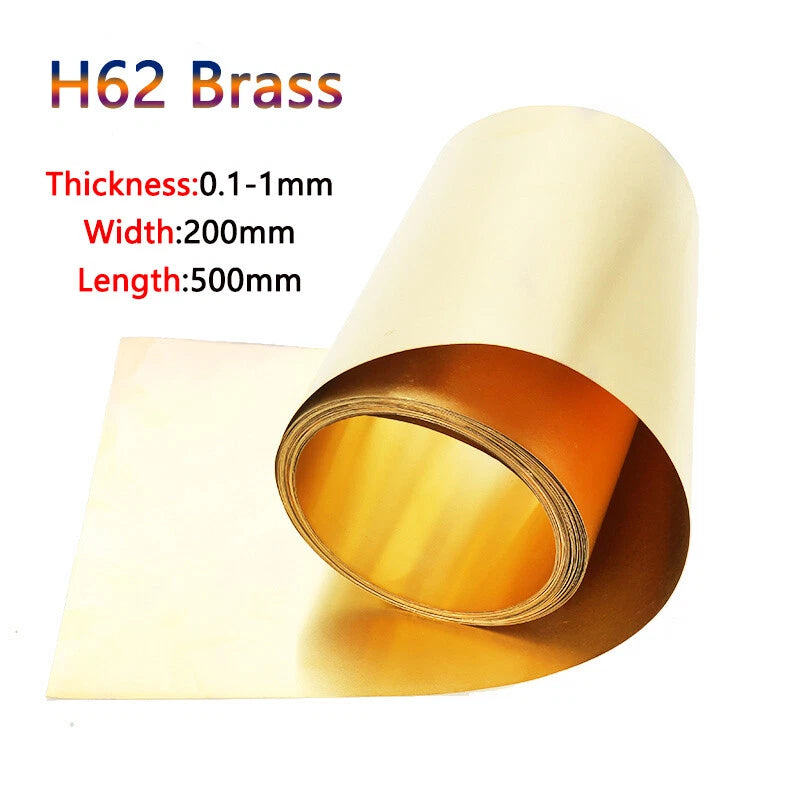
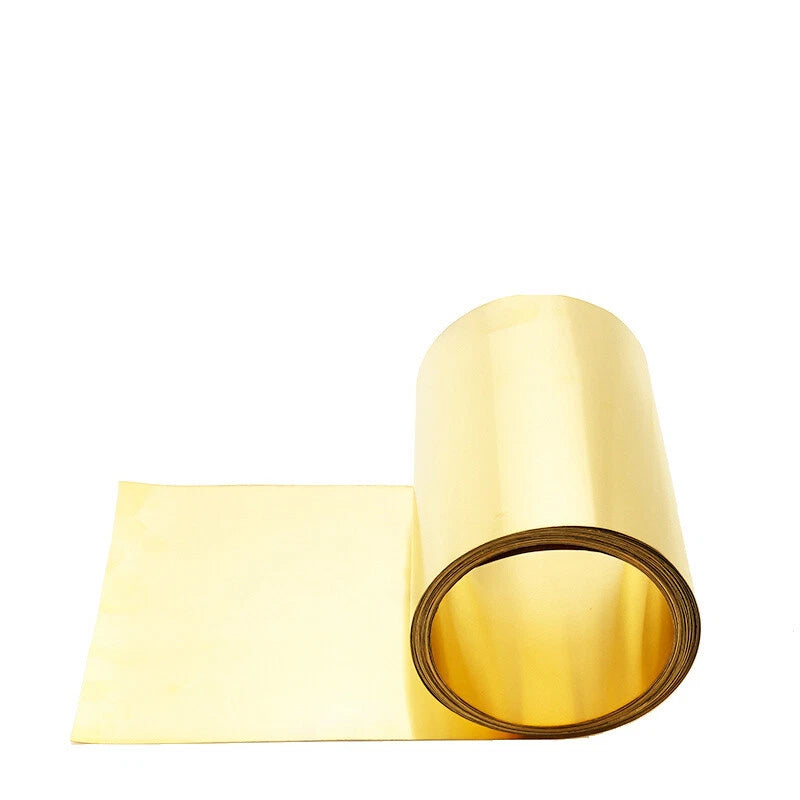
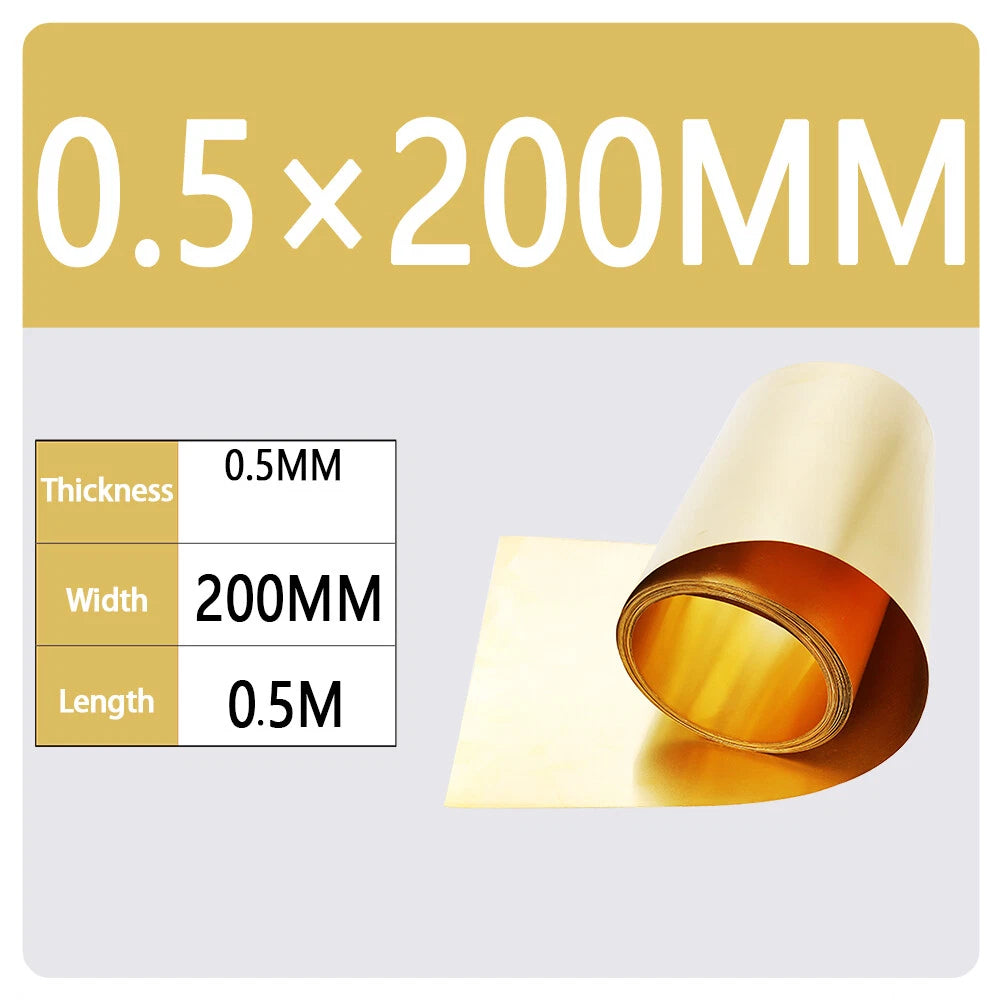
0.1-1mm x 200mm x 500mm,H62 Brass Metal Sheet Strip Yellow Copper Foil Plate

No reviews

Price:
Sale price$9.72 USD
Stock:
In stock (500 units), ready to be shipped

Payment & Security

Ach Direct Debit Amazon American Express Apple Pay Bancontact BLIK Diners Club Discover EPS Google Pay iDEAL Wero JCB Maestro Mastercard Multibanco MobilePay PayPal Przelewy24 Shop Pay Twint Union Pay USDC Visa

Your payment information is processed securely. We do not store credit card details nor have access to your credit card information.

Limited Offer — Spend More, Save More
Spend $55+
Save $5
Spend $100+
Save $10
Spend $200+
Save $25
HomeDIYer DIY Expert Support

DIY Expert Support

Get fitment advice & recommendations

Mon–Fri  8:30 AM – 8:00 PM
24-Hour Fast Ship
Arrives in 3–14 Days
Worldwide Shipping
30-Day Returns
1 tree planted with every purchase

Description

H62 Brass Metal Sheet Strip — Precision Copper Foil for DIY and Fabrication

When your project demands a material that combines workability with reliable corrosion resistance, finding the right brass sheet thickness can be a challenge. Whether you are a hobbyist building custom enclosures, a maker crafting decorative inlays, or a small workshop cutting shims and gaskets, inconsistent material quality wastes time and money. This H62 brass metal sheet strip is stocked in a range of thicknesses to match your exact application.

Each strip is made from H62 yellow copper alloy — a standard-grade brass composed of approximately 62% copper and 38% zinc — delivering a balance of strength, ductility, and machinability. Strips measure 200mm (7.87 in) wide and 500mm (19.69 in) long, with thickness options ranging from 0.1mm (0.004 in) to 1mm (0.039 in). The surface carries a natural brass finish with a smooth, consistent texture suitable for cutting, bending, soldering, and light forming.

Typical use cases include crafting brass shim stock for mechanical assemblies, cutting decorative inlay strips for woodworking and furniture, fabricating thin conductive foil for electronics shielding, and producing custom gaskets or spacers for precision DIY repairs. Long-tail applications such as "thin brass sheet for model making" and "copper foil strip for electrical grounding" are well served by this versatile stock.

🔧 Compatible with: Hand shears, guillotine cutters, CNC routers, laser cutters, bench shears, and standard metalworking tools. Suitable for soldering, brazing, and light forming operations.

✅ Key Features of These H62 Brass Metal Sheet Strips

  • 📏Wide Thickness Range
    Available from 0.1mm to 1mm (0.004–0.039 in) in a single 200mm × 500mm format, covering ultra-thin foil to structural shim stock.
  • 🟡H62 Yellow Copper Alloy
    Approximately 62% copper content delivers good ductility, easy machinability, and a warm golden appearance that polishes well.
  • 🛡️Corrosion-Resistant Surface
    Brass naturally resists oxidation in typical indoor and light outdoor environments, reducing maintenance needs for exposed components.
  • ✂️Clean-Cut Edges
    Strips are sheared to consistent 200mm × 500mm dimensions with smooth edges that minimize deburring time before use.
  • Electrically Conductive
    H62 brass offers moderate electrical conductivity, making these strips suitable for grounding straps, EMI shielding foil, and contact strips.
  • 🔩Solderable and Brazeable
    Bonds reliably with standard soft solder and silver brazing alloys, supporting electronics assembly, plumbing repairs, and decorative metalwork.

📐 Technical Specifications — H62 Brass Sheet Strip

Material H62 Brass (Yellow Copper Alloy, ~62% Cu / ~38% Zn)
Width 200mm (7.87 in)
Length 500mm (19.69 in)
Thickness 0.1mm / 0.2mm / 0.3mm / 0.4mm / 0.5mm / 0.6mm / 0.8mm / 1mm — See variant options
Surface Finish Natural brass, smooth rolled
Hardness See variant options
Tensile Strength Typically 300–420 MPa (varies by thickness)
Electrical Conductivity Moderate (approx. 26–28% IACS)
Corrosion Resistance Good in dry and mildly humid environments
Weight See variant options

❓ Frequently Asked Questions

How do I choose the right thickness for my project?

For ultra-thin shims, gaskets, or EMI foil applications, 0.1mm–0.3mm is typically sufficient. For decorative inlays or light structural brackets, 0.4mm–0.6mm offers a good balance of rigidity and formability. For load-bearing shims or spacers that need to hold shape under pressure, 0.8mm–1mm is recommended. If you are unsure, start with 0.5mm as a versatile mid-range option.

Is H62 brass strong enough for mechanical shim applications?

Yes. H62 brass has a tensile strength typically in the range of 300–420 MPa depending on temper and thickness. For light-duty shim and spacer applications — such as adjusting bearing clearances or leveling machinery — the 0.5mm–1mm variants provide adequate strength. For heavy-load or high-vibration environments, consult a materials engineer for confirmation.

Will this brass sheet rust or corrode over time?

H62 brass does not rust (it contains no iron), but it can develop a natural patina (oxidation) over time when exposed to air and moisture. In typical indoor environments this process is slow and does not affect structural integrity. For outdoor or high-humidity applications, applying a clear lacquer or wax coating will preserve the surface appearance. Avoid prolonged contact with ammonia-based cleaners, which can cause stress corrosion cracking in brass.

Can I cut this sheet with standard workshop tools?

Yes. Thinner variants (0.1mm–0.3mm) can be cut cleanly with heavy-duty scissors, a craft knife and straight edge, or a guillotine shear. Thicker variants (0.4mm–1mm) are best cut with bench shears, a CNC router, or a laser cutter. A fine-tooth hacksaw or jeweler's saw also works well for straight cuts. Always deburr cut edges with a file or fine sandpaper before handling.

Is this material compatible with soldering and brazing?

Yes. H62 brass solders readily with standard 60/40 or lead-free soft solder using a rosin flux. For brazing, silver-bearing alloys (e.g., 45% silver brazing rod) with a suitable flux work well. Clean the surface with fine abrasive or flux before joining to ensure a strong bond. This makes the strips suitable for electronics assembly, plumbing patch work, and decorative metalwork.

What is the difference between H62 brass and other brass grades like H65 or C260?

H62 brass contains approximately 62% copper and 38% zinc, making it slightly harder and more machinable than H65 (65% Cu), which is softer and more ductile. C260 (Cartridge Brass) is the closest Western equivalent to H65 and is known for excellent cold-working properties. H62 is a practical choice for general fabrication, shim stock, and decorative work where a balance of strength and workability is needed without the cost premium of higher-copper alloys.

Can I use these strips for electrical grounding or EMI shielding?

Yes, with some considerations. H62 brass has moderate electrical conductivity (approximately 26–28% IACS), which is adequate for grounding straps, bonding jumpers, and light EMI shielding foil in enclosures. For high-current or low-resistance applications, pure copper (C110) is a better choice. For decorative shielding or low-frequency EMI barriers, the 0.1mm–0.3mm brass foil variants work well.

🛒 Select your ThickxWidth above, then add to cart.

You may also like

Recently viewed