
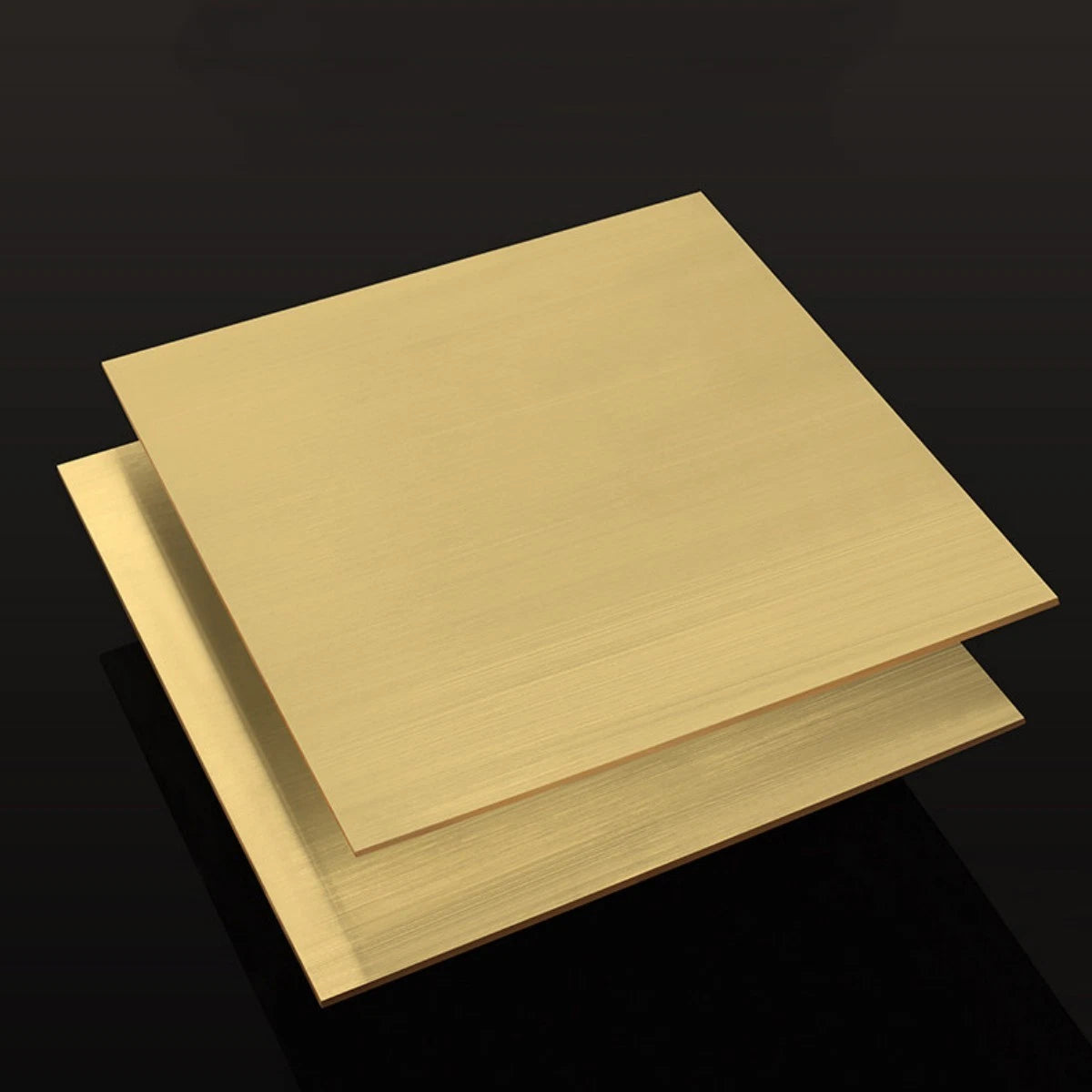
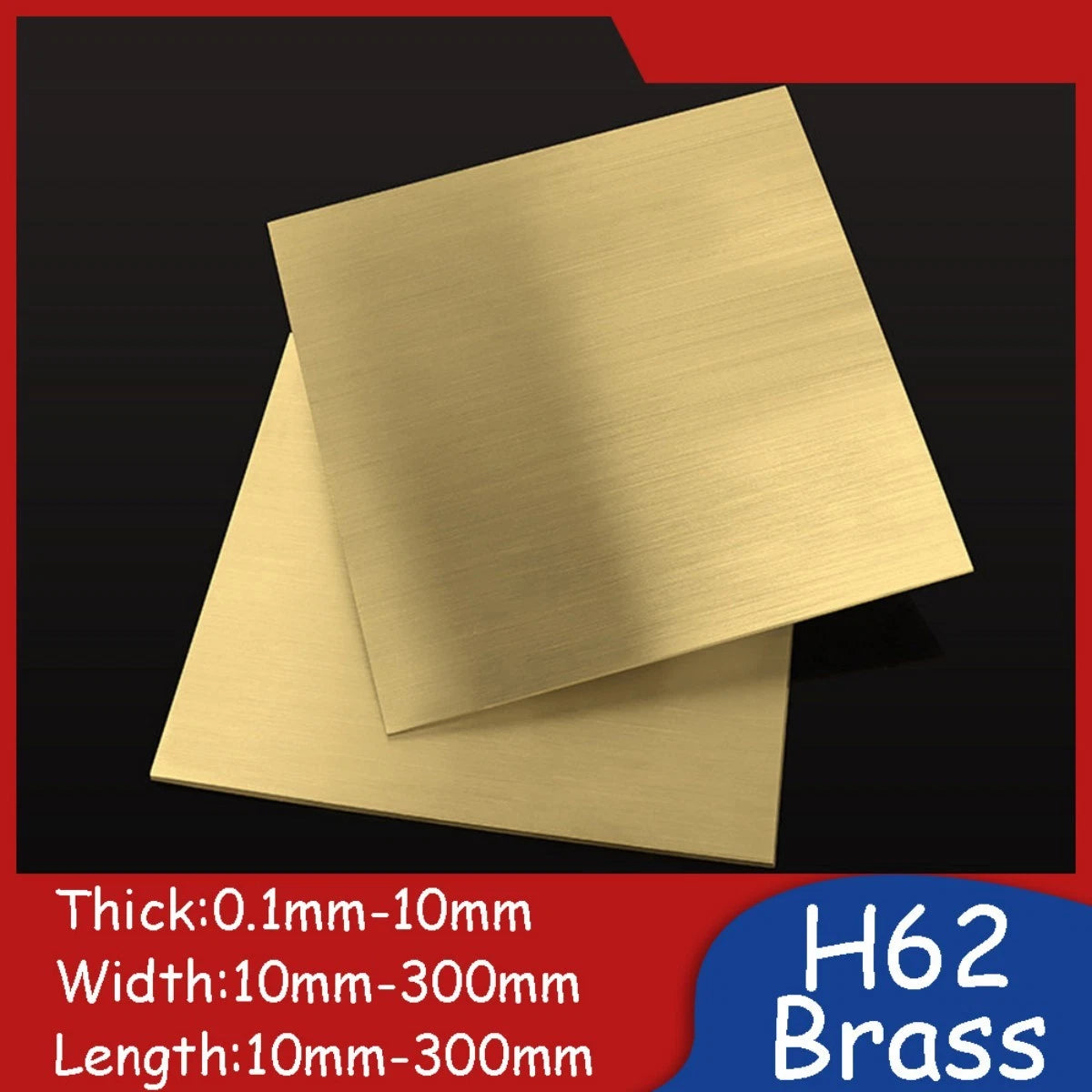
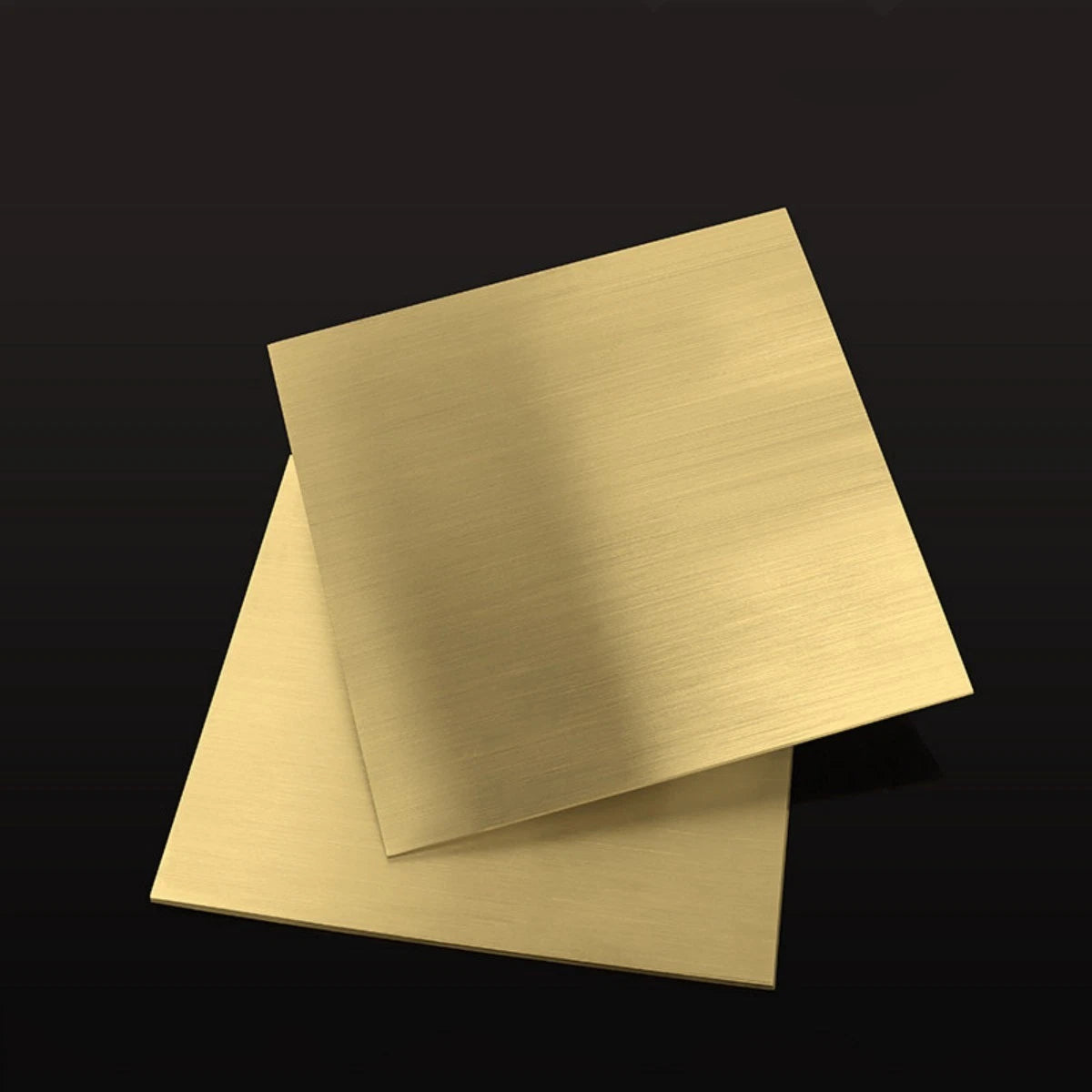
H62 Brass Plate High-Quality Conductive Metal Sheet Material 10-300mm Flat Panel

No reviews

Price:
Sale price$3.51 USD
Stock:
In stock (500 units), ready to be shipped

Payment & Security

Ach Direct Debit Amazon American Express Apple Pay Bancontact BLIK Diners Club Discover EPS Google Pay iDEAL Wero JCB Maestro Mastercard Multibanco MobilePay PayPal Przelewy24 Shop Pay Twint Union Pay USDC Visa

Your payment information is processed securely. We do not store credit card details nor have access to your credit card information.

Limited Offer — Spend More, Save More
Spend $55+
Save $5
Spend $100+
Save $10
Spend $200+
Save $25
HomeDIYer DIY Expert Support

DIY Expert Support

Get fitment advice & recommendations

Mon–Fri  8:30 AM – 8:00 PM
24-Hour Fast Ship
Arrives in 3–14 Days
Worldwide Shipping
30-Day Returns
1 tree planted with every purchase

Description

H62 Brass Plate — Conductive Metal Sheet for Precision DIY & Fabrication

When your project demands a flat, dimensionally accurate metal sheet with reliable electrical conductivity, generic stock simply falls short. Makers, hobbyists, and small-workshop fabricators who need a dependable H62 brass plate know the frustration of warped edges, inconsistent thickness, or alloys that corrode under light use. These flat brass panels are cut to precise square and rectangular dimensions so you can measure once and cut with confidence.

Each piece is made from H62 brass — a copper-zinc alloy (approximately 62% copper) valued for its balance of conductivity, machinability, and corrosion resistance. Sizes range from 10 mm × 10 mm up to 300 mm × 300 mm (roughly 0.39 in × 0.39 in to 11.8 in × 11.8 in), with thickness options spanning 0.1 mm to 10 mm (0.004 in to 0.39 in). Rectangular formats such as 50 mm × 100 mm and 100 mm × 200 mm are also available. Pieces are sold in packs of 1–10 depending on the selected size.

Typical applications include electrical contact shims and bus-bar blanks for DIY electronics, RF shielding inserts for enclosure builds, decorative inlay panels for woodworking and leathercraft, and precision spacer stock for mechanical assemblies. The flat, smooth surface also suits etching, engraving, and chemical-patina finishing for artistic metalwork.

⚙️ Compatibility: Suitable for soldering, brazing, and mechanical fastening. Compatible with standard metal-cutting tools (shears, jeweler's saw, CNC router with non-ferrous bit). Not recommended for high-temperature applications above 200 °C (392 °F) without engineering review.

✅ Key Features of These H62 Brass Flat Plates

  • 🔩H62 Brass Alloy — Approximately 62% copper content delivers solid electrical conductivity (typically 15–17 MS/m) and good thermal transfer for contact and shielding applications.
  • 📐Wide Size Range — Square formats from 10 mm to 300 mm and rectangular formats up to 200 mm × 300 mm let you select the exact blank you need without wasteful over-cutting.
  • 📏Precise Thickness Options — Thin foil variants (0.1–0.5 mm) for shims and shielding; mid-range (0.8–3 mm) for structural brackets; thick plate (4–10 mm) for heavy-duty spacers and machined parts.
  • 🛡️Corrosion-Resistant Surface — H62 brass forms a stable oxide layer that resists atmospheric corrosion in typical indoor and light-outdoor environments, reducing maintenance needs.
  • ✂️Machinable & Solderable — Cuts cleanly with standard non-ferrous tooling, accepts solder readily without flux-heavy preparation, and can be drilled, tapped, or bent to shape.
  • 📦Convenient Pack Quantities — Smaller sizes ship in packs of 10 for prototyping runs; larger plates are sold individually so you only pay for what your project requires.

📐 Technical Specifications — H62 Brass Flat Plate

Material H62 Brass (Cu-Zn alloy, ~62% copper)
Shape Rectangle / Square
Length Range 10 mm – 300 mm (0.39 in – 11.81 in)
Width Range 10 mm – 300 mm (0.39 in – 11.81 in)
Thickness Range 0.1 mm – 10 mm (0.004 in – 0.39 in)
Surface Finish See variant options
Electrical Conductivity Typically 15–17 MS/m (H62 alloy)
Tensile Strength Typically 340–420 MPa (annealed to half-hard)
Hardness See variant options
Pack Quantity 1–10 pcs (varies by size — see variant options)
System of Measurement Metric

❓ Frequently Asked Questions

How do I choose the right size and thickness?

Start with your finished part dimensions and add a small cutting allowance (typically 1–2 mm per edge). For shims and gaskets, match the thickness to your gap measurement. For structural brackets or spacers, choose a thickness that provides the required rigidity — 1–3 mm suits most light-duty brackets, while 4–10 mm is appropriate for load-bearing applications. Use the Size dropdown above to select the exact combination you need.

Is H62 brass strong enough for structural use?

H62 brass has a tensile strength of approximately 340–420 MPa in the annealed to half-hard condition, making it suitable for light-to-medium structural applications such as brackets, spacers, and mounting plates. For heavy-load or high-vibration environments, consider thicker stock (4 mm and above) or consult an engineer for your specific load case.

How corrosion-resistant is H62 brass?

H62 brass forms a stable copper-oxide patina that protects against atmospheric corrosion in typical indoor and sheltered outdoor environments. It is not recommended for continuous immersion in salt water or exposure to strong acids without a protective coating. For humid or mildly corrosive environments, a clear lacquer or wax finish will extend the appearance and service life.

Can I solder or braze these brass plates?

Yes. H62 brass solders readily with standard tin-lead or lead-free solder and a mild rosin flux. For brazing, use a brass-compatible brazing rod and ensure the surface is clean and oxide-free before heating. The alloy's copper content provides good wettability, making it a reliable choice for electrical joints and plumbing-style connections.

Are these plates compatible with CNC machining or laser cutting?

H62 brass machines cleanly on CNC routers and mills equipped with non-ferrous tooling. It can also be cut with a jeweler's saw, metal shears, or a waterjet cutter. Fiber laser cutting is effective for thicknesses up to approximately 3 mm; thicker plates are better suited to waterjet or mechanical cutting. Always use appropriate speeds and feeds for brass to avoid work-hardening.

What is the difference between the thin foil variants and the thicker plates?

Thin variants (0.1–0.5 mm) are flexible enough to be bent by hand and are ideal for shims, EMI shielding inserts, and decorative inlays. Mid-range thicknesses (0.8–3 mm) offer a balance of formability and rigidity, suitable for brackets, contact strips, and engraving blanks. Thick plates (4–10 mm) are rigid and intended for machined parts, heavy spacers, and structural components.

How many pieces are included per order?

Pack quantity varies by size. Smaller square formats (10–80 mm) typically include 10 pieces per pack, giving you extras for prototyping. Larger formats (100 mm and above) and rectangular pieces are generally sold as 1–5 pieces per pack. The exact quantity is shown in the variant name in the Size dropdown — for example, "50mm × 50mm × 0.1mm (10 Pcs)" includes 10 pieces.

🛒 Select your size and thickness above, then add to cart.

You may also like

Recently viewed





