
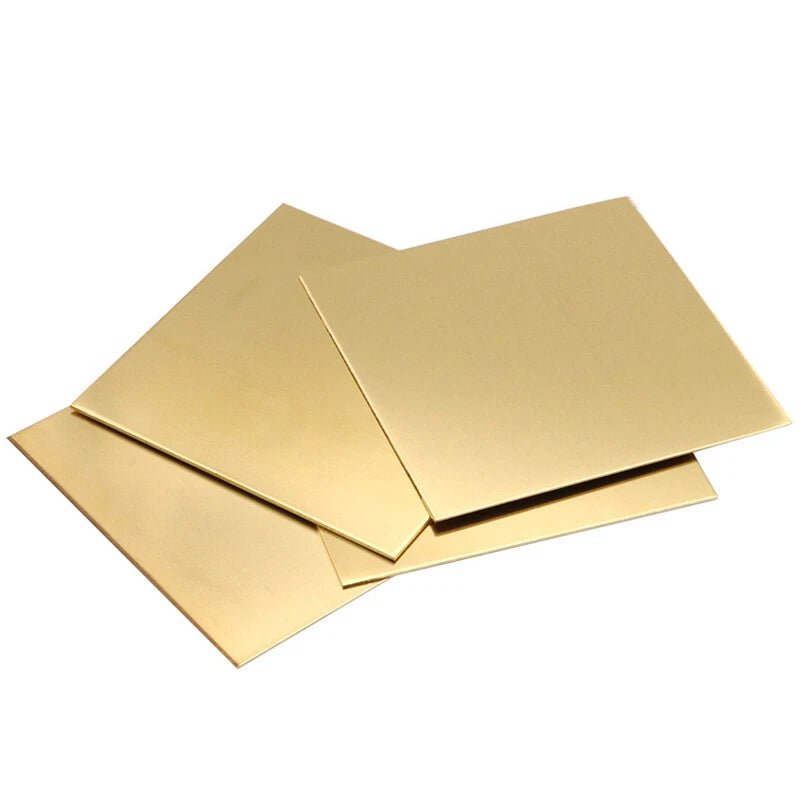
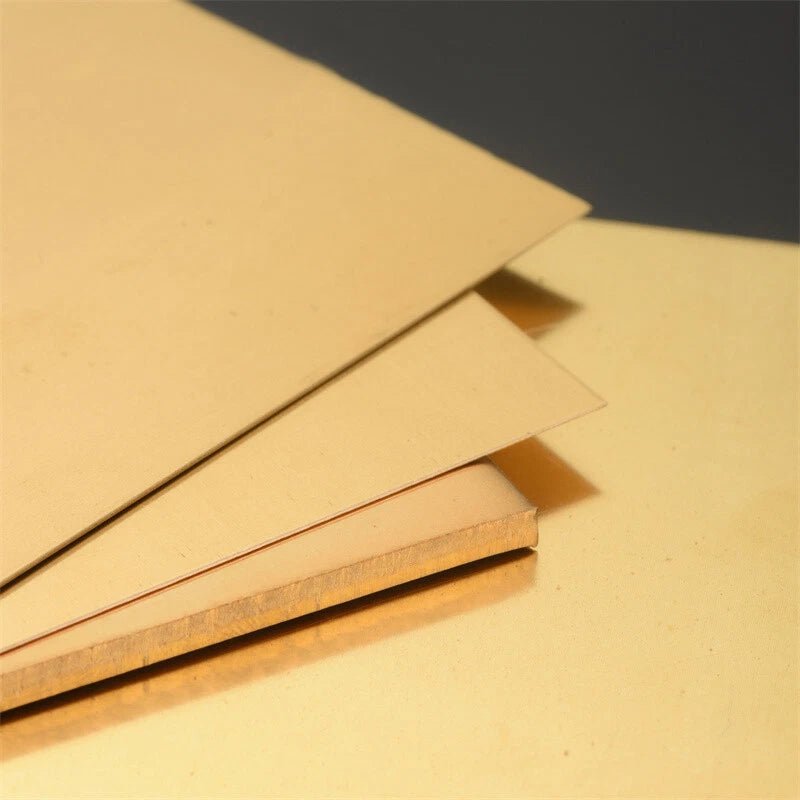
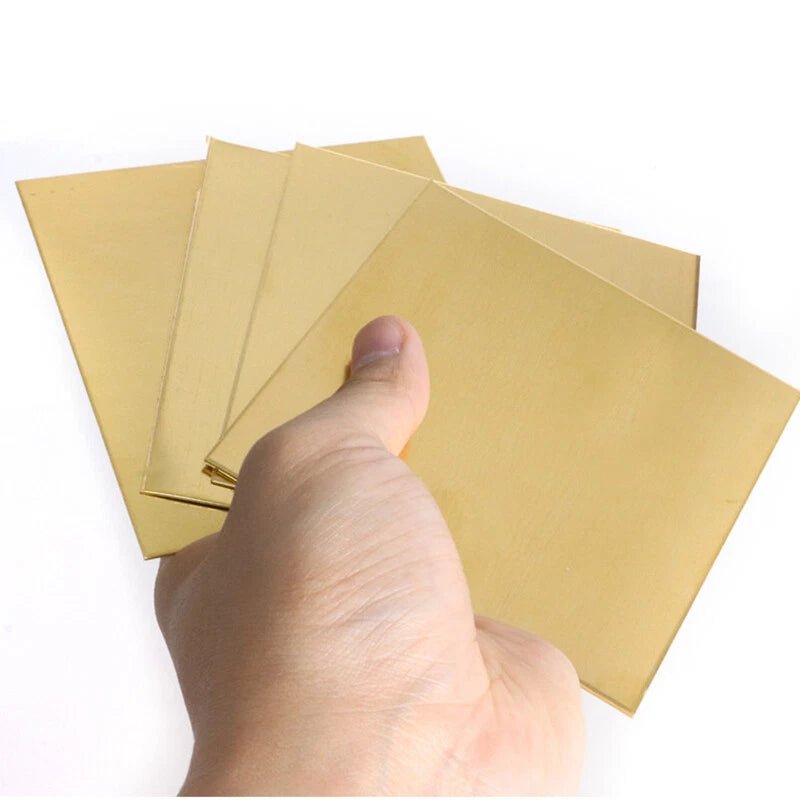
H62 Brass Sheet Plate Metal Foil Thick 0.5/0.8/1/1.2 to 6mm Guillotine Offcuts

No reviews

Price:
Sale price$7.96 USD
Stock:
In stock (500 units), ready to be shipped

Payment & Security

Ach Direct Debit Amazon American Express Apple Pay Bancontact BLIK Diners Club Discover EPS Google Pay iDEAL Wero JCB Maestro Mastercard Multibanco MobilePay PayPal Przelewy24 Shop Pay Twint Union Pay USDC Visa

Your payment information is processed securely. We do not store credit card details nor have access to your credit card information.

Limited Offer — Spend More, Save More
Spend $55+
Save $5
Spend $100+
Save $10
Spend $200+
Save $25
HomeDIYer DIY Expert Support

DIY Expert Support

Get fitment advice & recommendations

Mon–Fri  8:30 AM – 8:00 PM
24-Hour Fast Ship
Arrives in 3–14 Days
Worldwide Shipping
30-Day Returns
1 tree planted with every purchase

Description

H62 Brass Sheet Plate — Precision-Cut Metal Foil for DIY Metalwork & Fabrication

When your project demands a material that holds tight tolerances, resists corrosion, and machines cleanly, finding the right brass sheet in the exact thickness you need can be a real challenge. Whether you are a hobbyist building custom enclosures, a maker crafting decorative inlays, or a small workshop producing shims and gaskets, these H62 brass guillotine offcuts give you a reliable, ready-to-use starting point without ordering full commercial sheets.

Each piece is cut from H62 grade brass alloy — a copper-zinc composition (approximately 62% copper) known for its balance of strength, machinability, and corrosion resistance. Available in thicknesses ranging from 0.5 mm (0.020 in) to 6 mm (0.236 in), with flat dimensions spanning from 50×50 mm (approx. 2×2 in) up to 300×300 mm (approx. 11.8×11.8 in). Surfaces are mill-finished with a characteristic golden-yellow tone.

Typical applications include custom shim stock and precision spacers for mechanical assemblies, decorative brass inlay panels for woodworking and furniture making, electrical contact strips and grounding tabs for DIY electronics projects, and thin gasket blanks for fluid or pneumatic fittings in small-scale fabrication.

🔧 Compatible with standard metalworking tools — tin snips, bench shears, band saws, drill presses, and CNC routers. Suitable for soldering, brazing, and light forming operations.

✅ Key Features of These H62 Brass Sheet Plates

🟡 H62 Brass Alloy — Approximately 62% copper content delivers a reliable combination of tensile strength (typically 330–420 MPa), good ductility, and natural corrosion resistance in most indoor and light outdoor environments.
📐 Wide Thickness Range — Choose from 0.5 mm, 0.8 mm, 1 mm, 1.2 mm, 1.5 mm, 2 mm, 2.5 mm, 3 mm, 4 mm, 5 mm, and 6 mm to match your exact application requirement without over-engineering.
✂️ Guillotine-Cut Offcuts — Sheared on a guillotine press for straight, burr-minimal edges. Dimensions are consistent within typical sheet-metal tolerances (±0.1–0.3 mm depending on thickness).
🔩 Machinable & Formable — H62 brass responds well to drilling, tapping, milling, and light bending. Ideal for prototyping parts before committing to larger production runs.
🛡️ Corrosion-Resistant Surface — The natural oxide layer on brass provides adequate protection against humidity and mild chemical exposure, reducing the need for additional coating in most workshop applications.
📦 Multiple Size Options — Flat dimensions from 50×50 mm up to 300×300 mm let you select the closest match to your blank size, minimising waste and cutting time on your end.

📐 Technical Specifications — H62 Brass Sheet Plate

Material Grade H62 Brass (Cu-Zn alloy, ~62% Cu)
Thickness Range 0.5 mm – 6 mm (0.020 in – 0.236 in)
Flat Dimensions 50×50 mm to 300×300 mm (see variant options)
Surface Finish Mill finish, golden-yellow
Tensile Strength Typically 330–420 MPa
Hardness Typically 60–90 HB (varies by thickness)
Density ~8.5 g/cm³
Melting Point ~900–940 °C (1652–1724 °F)
Edge Condition Guillotine sheared, burr-minimal
Dimensional Tolerance ±0.1–0.3 mm (thickness-dependent)
Corrosion Resistance Good in indoor and mild outdoor environments
Machinability Good — suitable for drilling, tapping, milling
Weight See variant options

❓ Frequently Asked Questions

How do I choose the right thickness for my project?

For shims, gaskets, and thin decorative inlays, 0.5–1 mm is typically sufficient. For structural brackets, spacers, or parts that will be drilled and tapped, 2–4 mm provides better thread engagement and rigidity. For heavy-duty load-bearing plates or thick decorative panels, 5–6 mm is recommended. When in doubt, select one step thicker than your minimum requirement to allow for surface finishing.

Is H62 brass strong enough for mechanical parts?

H62 brass has a tensile strength of approximately 330–420 MPa, which is adequate for light-to-medium mechanical applications such as spacers, bushings, contact strips, and decorative hardware. It is not intended for high-stress structural applications where steel or aluminium alloy would be more appropriate. For prototyping and workshop fabrication, H62 performs reliably.

Will this brass sheet rust or corrode outdoors?

H62 brass does not rust (it contains no iron), but it will develop a natural patina — a darker golden-brown or greenish tint — when exposed to moisture, humidity, or atmospheric pollutants over time. For indoor applications this is generally not an issue. For outdoor or marine environments, applying a clear lacquer or wax coating will significantly extend the bright finish. Brass is inherently more corrosion-resistant than mild steel in most conditions.

Can I solder or braze these brass sheets?

Yes. H62 brass is well-suited to both soft soldering (using standard electronics or plumbing solder with appropriate flux) and silver brazing. Ensure the surface is clean and free of oils or oxidation before joining. Avoid overheating thin sheets (0.5–1 mm) as they can warp; use a heat sink or clamp to manage thermal spread.

What tools do I need to cut or shape these sheets?

Thin sheets (0.5–1.5 mm) can be cut with aviation tin snips, a bench shear, or a jigsaw fitted with a fine-tooth metal blade. Thicker sheets (2–6 mm) are best handled with a band saw, cold saw, or angle grinder with a metal cutting disc. For precise shapes, a CNC router or waterjet cutter works well. Always deburr edges after cutting using a file or deburring tool.

Are these guillotine offcuts flat and square?

Guillotine-sheared offcuts are cut straight and are generally flat within standard sheet-metal tolerances. Thinner gauges (0.5–1 mm) may exhibit minor bow or curl from the coil, which can be flattened by hand or with a rubber mallet on a flat surface. Dimensional tolerance is typically ±0.1–0.3 mm depending on thickness. If your application requires tighter flatness, light surface grinding or lapping may be needed.

Which size should I order if I need a custom shape?

Select the smallest variant whose flat dimensions are equal to or larger than your finished part. For example, if your part is 85×85 mm, order the 100×100 mm size to allow for layout lines and cutting margin. This minimises material waste while ensuring you have enough stock to work with. For rectangular parts, choose a variant where both width and length dimensions exceed your part dimensions.

🛒 Select your size (Thick × Width × Length) above, then add to cart.

You may also like

Recently viewed





