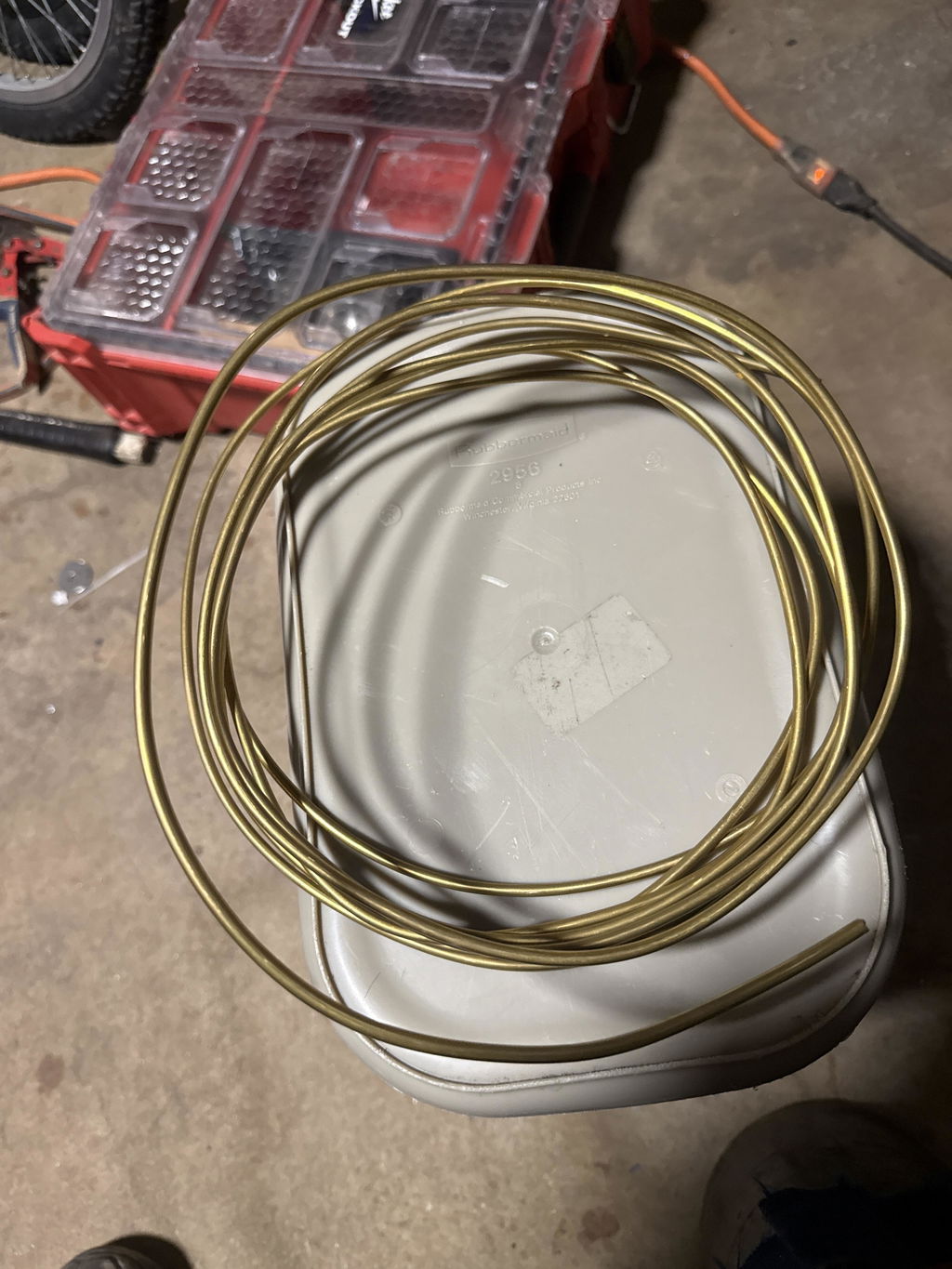
The chain is fine...but I ordered the wrong size. Nine links of the chain I ordered equals six of the size I wanted. My error...
How can I straighten out the springs? I can't use them coil uo as is.
Your payment information is processed securely. We do not store credit card details nor have access to your credit card information.
Get fitment advice & recommendations
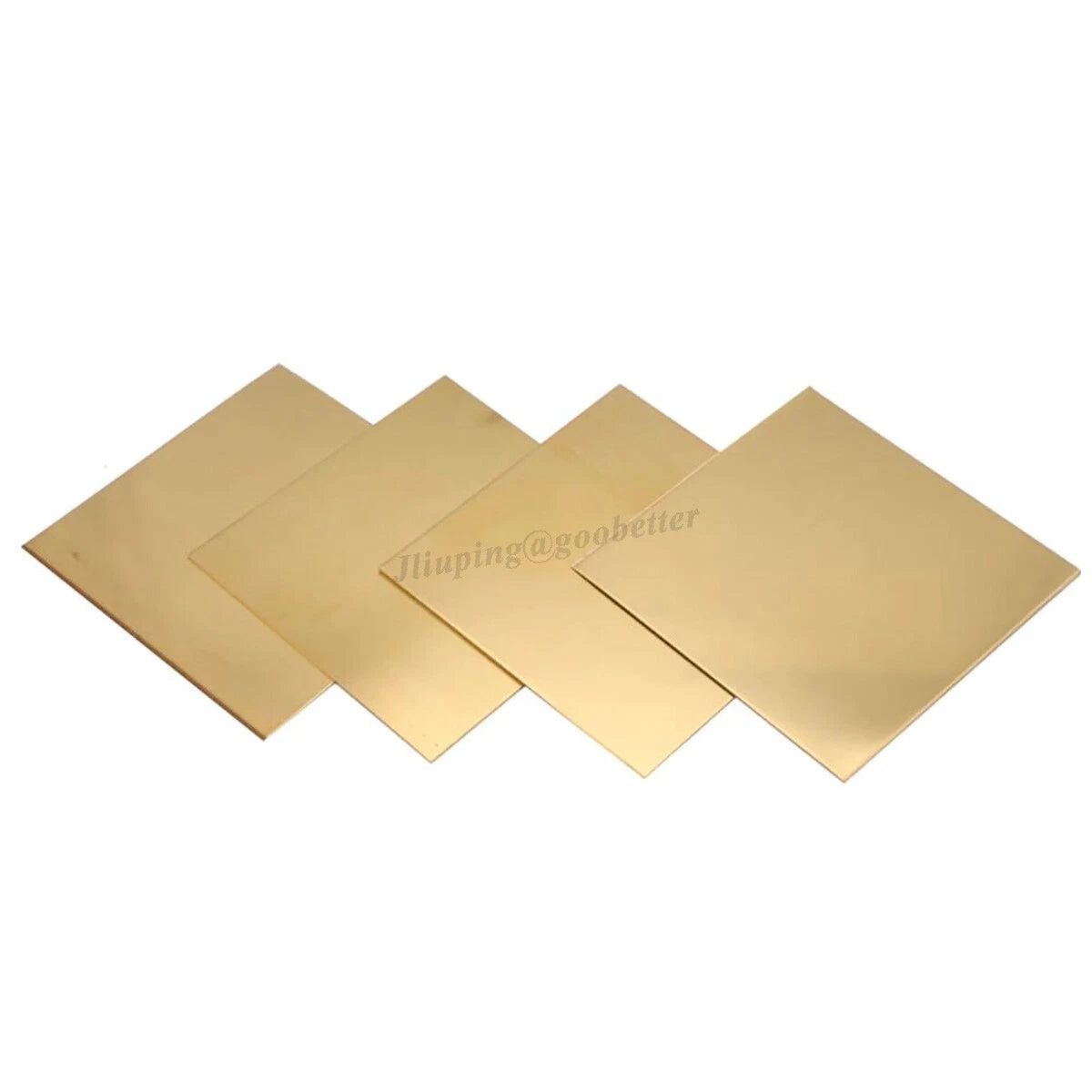
When your project demands a metal that balances machinability, corrosion resistance, and a clean finish right out of the package, standard steel or aluminum often falls short. H62 brass sheet plates are the go-to choice for hobbyists, model makers, electricians, and light fabricators who need a reliable, workable metal panel without the guesswork of sourcing raw stock.
Each H62 brass sheet plate is cut from solid H62-grade brass alloy — a copper-zinc composition (approximately 62% copper) known for its consistent density and smooth surface. Panels are available in three widths × lengths: 100×100mm (≈3.94×3.94 in), 100×150mm (≈3.94×5.91 in), and 100×200mm (≈3.94×7.87 in), with thickness options spanning 0.3mm to 6mm (≈0.012–0.236 in) to match everything from thin shim stock to structural spacer applications.
These brass sheet plates are well-suited for electrical contact fabrication, decorative inlay work on woodworking projects, custom gasket cutting, and precision shim applications in mechanical assemblies — anywhere a dimensionally stable, non-ferrous metal panel is required.
| Material | H62 Brass (Cu-Zn alloy, ~62% copper) |
|---|---|
| Available Width × Length | 100×100mm / 100×150mm / 100×200mm |
| Thickness Range | 0.3mm, 0.5mm, 0.6mm, 0.8mm, 1mm, 1.2mm, 1.5mm, 2mm, 2.5mm, 3mm, 4mm, 5mm, 6mm |
| Surface Finish | Mill finish (natural brass) |
| Hardness | See variant options |
| Tensile Strength | Typically 330–420 MPa (varies by thickness) |
| Corrosion Resistance | Good — suitable for indoor and sheltered outdoor environments |
| Machinability | Good — compatible with cutting, drilling, bending, soldering, and brazing |
| Packing Quantity | 1 PCS per order |
| Application | Shims, gaskets, electrical contacts, decorative inlays, model making, fabrication |
For shim and spacing applications, 0.3mm–1mm is typically sufficient. For structural brackets, spacers, or parts that will bear mechanical load, 2mm–6mm provides the rigidity needed. If you are cutting gaskets or decorative inlays, 0.5mm–1.5mm offers a good balance of workability and durability. When in doubt, select a slightly thicker option — it is easier to remove material than to add it.
H62 brass has a tensile strength typically in the range of 330–420 MPa, which is adequate for light to moderate mechanical loads. It is not intended to replace structural steel in high-stress applications, but it performs well as a spacer, bracket, or support plate in assemblies where forces are distributed across the panel surface.
H62 brass naturally develops a patina (surface oxidation) over time when exposed to air and moisture, which can shift the color from bright gold to a darker amber or brown tone. This patina is superficial and does not compromise structural integrity. For applications requiring a bright finish, the surface can be polished and sealed with a clear lacquer. For outdoor use in direct weather exposure, additional protective coating is recommended.
Yes. Thinner sheets (0.3mm–1mm) can be cut with sharp tin snips or a utility knife and straightedge. Thicker sheets (1.2mm–6mm) are best cut with a hacksaw, jeweler's saw, angle grinder with a metal-cutting disc, or a CNC router. Always deburr cut edges with a file or deburring tool for safe handling.
Yes. H62 brass solders readily with standard 60/40 or lead-free soft solder using a rosin-based flux. It also braze-bonds well with silver brazing alloys at higher temperatures. Ensure the surface is clean and free of oxidation before joining — a light sanding or acid flux application will improve bond quality.
Select the panel size that is equal to or larger than your finished part dimensions. For example, if your finished part is 80×130mm, the 100×150mm panel gives you enough material with minimal waste. If your design requires multiple pieces, consider ordering the 100×200mm panel to cut several parts from a single sheet. Contact us if you need guidance on selecting the most cost-effective size for your specific application.