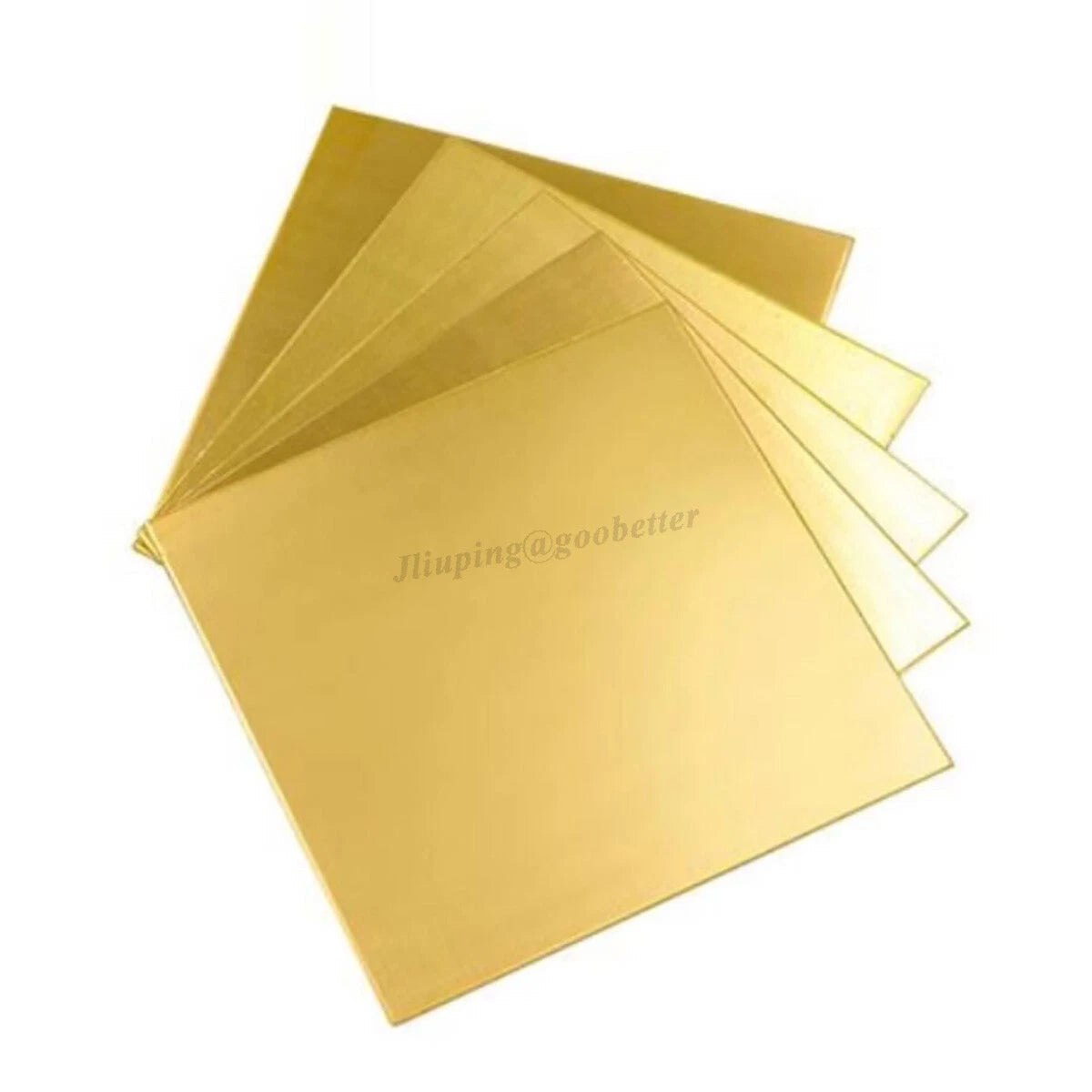
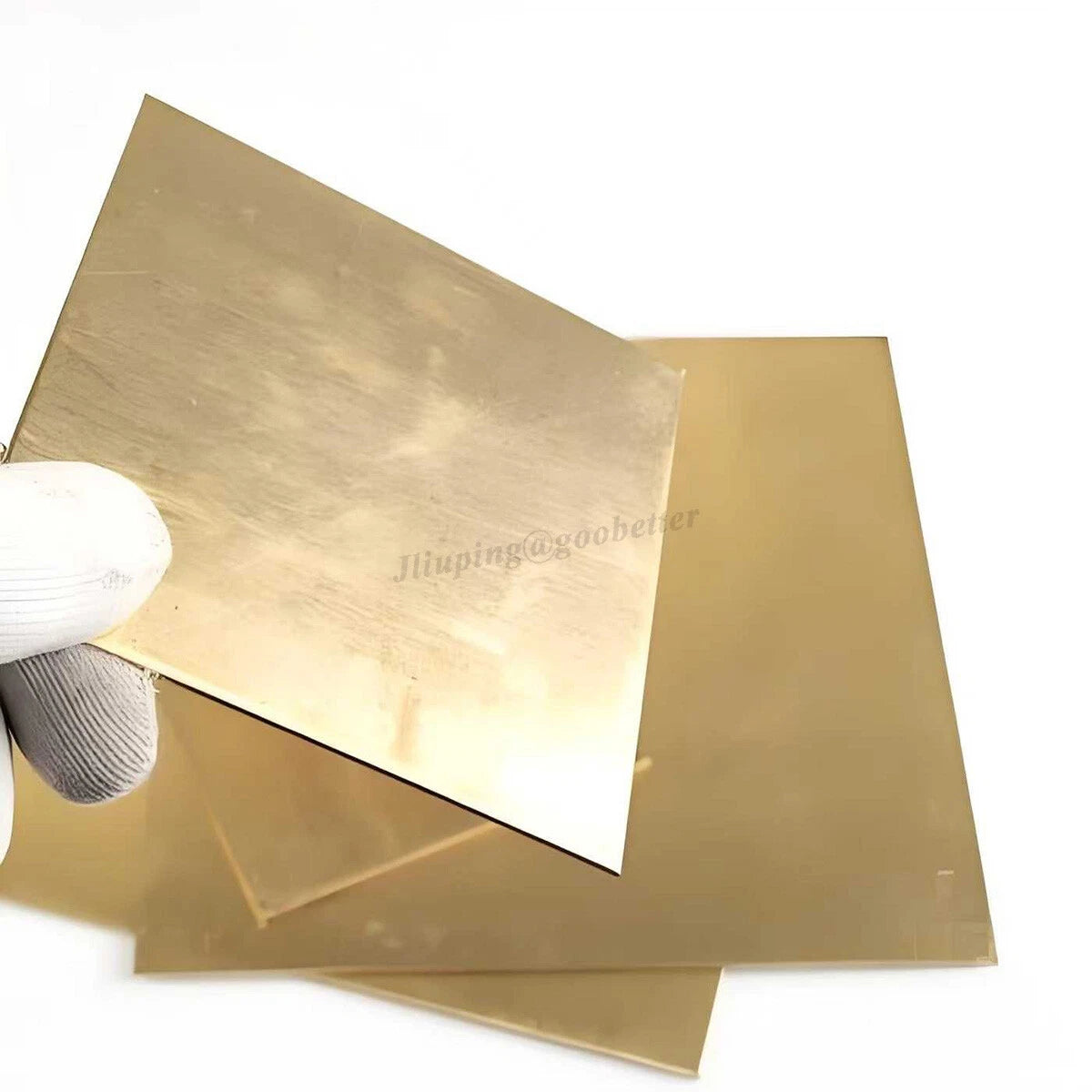
H62 Brass Sheet Plate Solid Metal Panel Board 50x50/100/200mm Thick 0.3mm-6mm

No reviews

Price:
Sale price$4.16 USD
Stock:
In stock (500 units), ready to be shipped

Payment & Security

Ach Direct Debit Amazon American Express Apple Pay Bancontact BLIK Diners Club Discover EPS Google Pay iDEAL Wero JCB Maestro Mastercard Multibanco MobilePay PayPal Przelewy24 Shop Pay Twint Union Pay USDC Visa

Your payment information is processed securely. We do not store credit card details nor have access to your credit card information.

Limited Offer — Spend More, Save More
Spend $55+
Save $5
Spend $100+
Save $10
Spend $200+
Save $25
HomeDIYer DIY Expert Support

DIY Expert Support

Get fitment advice & recommendations

Mon–Fri  8:30 AM – 8:00 PM
24-Hour Fast Ship
Arrives in 3–14 Days
Worldwide Shipping
30-Day Returns
1 tree planted with every purchase

Description

H62 Brass Sheet Plate — Precise Dimensions for DIY, Electrical & Fabrication Work

When your project demands a metal that machines cleanly, solders reliably, and resists corrosion without surface treatment, finding the right brass sheet in the exact thickness you need can be frustrating. This H62 brass sheet plate is stocked for makers, electricians, model builders, and repair technicians who need a ready-to-cut panel without ordering custom stock.

Each piece is cut from H62 brass alloy (approximately 62% copper, 38% zinc), delivering a balance of machinability and structural rigidity. Panels are available in three widths — 50×50mm (≈1.97×1.97 in), 50×100mm (≈1.97×3.94 in), and 50×200mm (≈1.97×7.87 in) — with thickness options spanning 0.3mm to 6mm (≈0.012–0.236 in). Packing quantities of 1, 2, or 4 pieces are available depending on the variant selected.

Typical applications for this H62 brass sheet plate include electrical bus bar blanks and terminal shims, scale model structural panels and decorative trim, gasket and spacer fabrication for mechanical assemblies, and craft or jewelry base stock where a warm gold tone is required.

⚙️ Compatibility Note: These panels are uncoated H62 brass. They are compatible with standard metalworking tools including tin snips, jeweler's saws, drill presses, and bench shears. Suitable for soft soldering, brazing, and MIG/TIG welding with appropriate brass filler rod.

✅ Key Features of These H62 Brass Sheet Plates

🔩 H62 Alloy Composition — Approximately 62% copper and 38% zinc for a reliable balance of ductility, machinability, and corrosion resistance in indoor and mildly humid environments.

📏 Multi-Size Selection — Three panel footprints (50×50 / 50×100 / 50×200mm) combined with 13 thickness steps from 0.3mm to 6mm let you match stock to your exact project requirement without excess waste.

✂️ Ready-to-Cut Flat Stock — Panels are supplied flat and deburr-ready, reducing bench prep time. Thin gauges (0.3–1mm) can be scored and snapped; thicker gauges (2–6mm) are suited to band saw or angle grinder cutting.

Electrically Conductive — H62 brass offers good electrical conductivity, making these sheets suitable for bus bar blanks, grounding straps, and terminal fabrication in low-voltage DC applications.

🎨 Natural Brass Finish — The warm golden surface is suitable for decorative applications as-is, or can be polished, lacquered, patinated, or plated to achieve a range of finishes.

📦 Flexible Pack Quantities — Order 1, 2, or 4 pieces per variant to match your project volume, minimizing leftover stock and keeping per-piece cost efficient for small-batch work.

📐 Technical Specifications — H62 Brass Sheet Plate

Material H62 Brass Alloy (Cu ~62%, Zn ~38%)
Available Widths × Lengths 50×50mm / 50×100mm / 50×200mm
Available Thickness 0.3 / 0.5 / 0.6 / 0.8 / 1 / 1.2 / 1.5 / 2 / 2.5 / 3 / 4 / 5 / 6 mm
Surface Finish Mill finish (uncoated, natural brass)
Hardness See variant options
Tensile Strength Typically 330–420 MPa (varies by thickness)
Electrical Conductivity Approximately 26–28% IACS
Corrosion Resistance Good in dry and mildly humid indoor environments
Machinability Rating ~60% (relative to free-cutting brass = 100%)
Packing Quantity 1 PCS / 2 PCS / 4 PCS (see variant options)
Weight per Piece See variant options

❓ Frequently Asked Questions

Which thickness should I choose for electrical bus bar or terminal work?

For low-current terminal shims and grounding straps, 0.5–1mm is typically sufficient. For bus bar blanks carrying higher current loads, 2–4mm provides the cross-sectional area needed to keep resistive heating within safe limits. If you are unsure, calculate the required cross-section based on your target amperage and consult your local electrical code.

Can I solder or braze these brass sheets?

Yes. H62 brass responds well to soft soldering with standard rosin-core or acid-core solder and a suitable flux. For higher-strength joints, silver brazing with a brass-compatible flux is recommended. Ensure the surface is clean and free of oxidation before applying heat for best results.

Will these panels corrode or tarnish over time?

H62 brass will develop a natural patina (darkening or greenish tinge) when exposed to moisture, salt air, or acidic environments over time. For indoor decorative or electrical use, this is typically not a structural concern. To preserve the original finish, apply a clear lacquer or wax coating after polishing. For outdoor or marine applications, consider a more corrosion-resistant alloy such as C260 or C464 naval brass.

What tools do I need to cut these sheets?

Thin gauges (0.3–1mm) can be cut with aviation tin snips, a jeweler's saw, or a rotary tool with a cutting disc. Gauges from 1.5–3mm work well with a band saw or jigsaw fitted with a metal-cutting blade. For 4–6mm stock, an angle grinder with a thin cutting disc or a cold saw is recommended. Always deburr cut edges with a file or deburring tool before handling.

Is H62 brass compatible with aluminum or stainless steel in my assembly?

Direct contact between brass and aluminum in the presence of moisture can cause galvanic corrosion on the aluminum. Use an insulating gasket or dielectric grease between dissimilar metals in wet environments. Brass and stainless steel have a smaller galvanic potential difference and are generally compatible for most indoor mechanical assemblies.

How do I choose between the 50×50, 50×100, and 50×200mm panel sizes?

Select the panel size closest to your finished part dimensions to minimize waste. The 50×50mm panels suit small brackets, spacers, and jewelry blanks. The 50×100mm panels are a good fit for terminal plates, model structural members, and medium gaskets. The 50×200mm panels are best for longer shims, decorative strips, or when you need to cut multiple smaller pieces from a single sheet.

Can I drill or tap these brass sheets?

Yes. H62 brass drills cleanly with standard HSS drill bits at moderate speeds with light cutting oil. For tapping, use a spiral-point tap with cutting fluid; brass is relatively soft and threads form cleanly. Sheets thinner than 1.5mm may not provide enough material for reliable threaded holes — consider using a nut or rivet nut on thin stock instead.

🛒 Select your Width × Length, Thickness, and Packing QTY above, then add to cart.


You may also like

Recently viewed