
The chain is fine...but I ordered the wrong size. Nine links of the chain I ordered equals six of the size I wanted. My error...
How can I straighten out the springs? I can't use them coil uo as is.
Your payment information is processed securely. We do not store credit card details nor have access to your credit card information.
Get fitment advice & recommendations
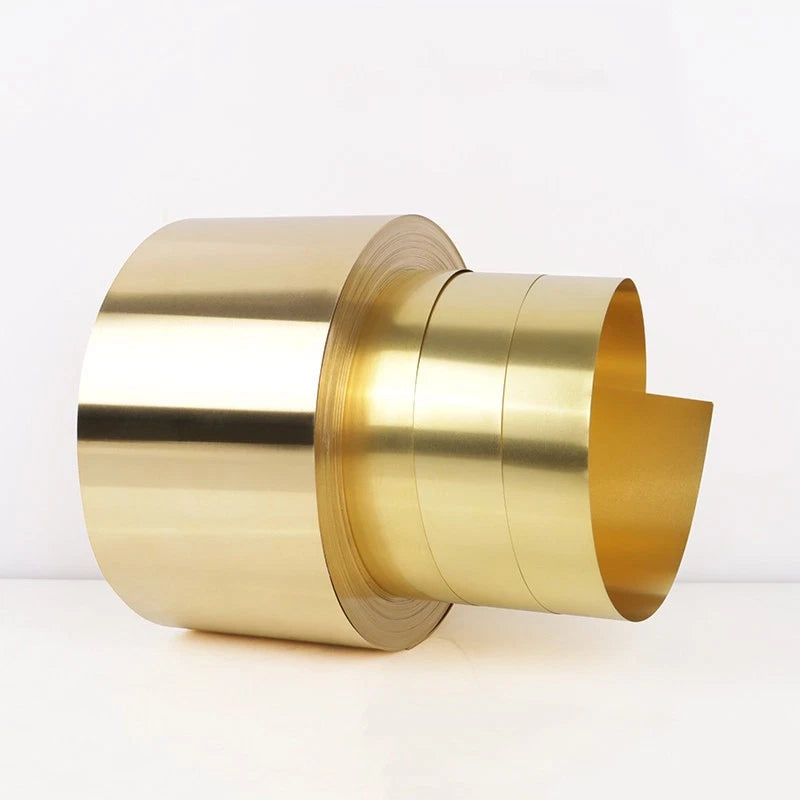
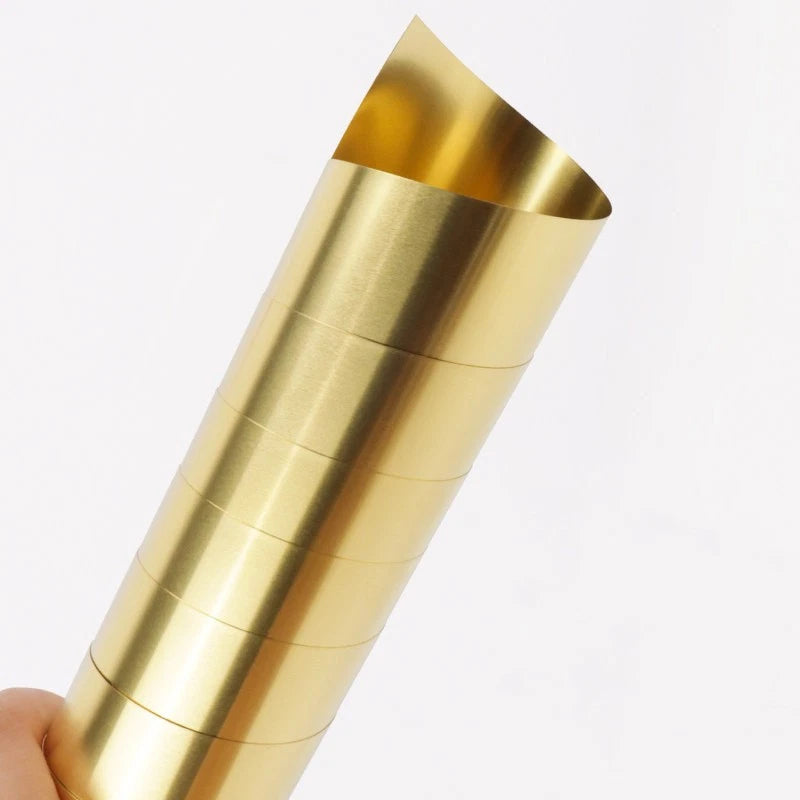
When your project demands a thin, workable metal that holds its shape without cracking or corroding, finding the right gauge and width in one place is rarely straightforward. Whether you are a scale modeler chasing razor-thin detail, a maker shimming a mechanical assembly, or a hobbyist crafting decorative inlays, the H62 brass strip sheet gives you the dimensional control you need without over-engineering the solution.
Each piece is made from H62 brass — a copper-zinc alloy known for its balance of ductility and strength — and supplied in a 1000 mm (39.4 in) length. Thickness options span 0.1 mm to 0.6 mm (0.004 in – 0.024 in), while width choices run from 10 mm to 300 mm (0.39 in – 11.81 in), giving you fine-grained control over material volume and weight per piece.
Typical applications include scale model framing and skin panels, mechanical shim stock for bearing and gear clearance adjustment, decorative inlay strips for woodworking and furniture, electrical grounding tabs and bus-bar prototypes, and craft projects requiring a formable, solderable metal foil.
| Material | H62 Brass (Copper-Zinc Alloy) |
|---|---|
| Thickness Range | 0.1 mm – 0.6 mm (0.004 in – 0.024 in) |
| Width Range | 10 mm – 300 mm (0.39 in – 11.81 in) |
| Length | 1000 mm (39.4 in) per piece |
| Finish | Mill finish (bright, uncoated) |
| Temper | See variant options |
| Tensile Strength | Typically 290–420 MPa (varies by thickness) |
| Elongation | Typically 15–35% (varies by thickness) |
| Solderability | Excellent with standard flux and tin-based solder |
| Machinability | Good; suitable for cutting, bending, and light forming |
| Weight per Piece | See variant options |
| Quantity per Order | 1 Pcs (multi-piece options available via variant selection) |
For decorative inlays, engraving blanks, and ultra-thin model skins, 0.1 mm – 0.2 mm is typically sufficient and easy to cut with scissors. For shim stock, structural model frames, or parts that need to hold a bend under load, 0.3 mm – 0.5 mm offers more rigidity. At 0.6 mm the strip behaves more like a thin plate and is better suited to mechanical applications where stiffness matters. When in doubt, order one step thinner than you think you need — brass is easier to stack than to thin down.
Select a width that matches or slightly exceeds your target dimension so you can trim to final size. Narrow strips (10 mm – 30 mm) suit edge banding, inlay lines, and shim rings. Mid-range widths (40 mm – 100 mm) work well for model fuselage panels and structural brackets. Wide strips (120 mm – 300 mm) are ideal for flat sheet work, large decorative panels, or cutting multiple narrower pieces from a single strip.
Yes. H62 brass has a tensile strength typically in the 290–420 MPa range and good compressive resistance, making it a reliable shim material for bearing housings, gear clearances, and machinery alignment. It will not compress or cold-flow under moderate clamping loads the way softer materials can. For very high-load or high-temperature environments, consult your application's engineering specifications before selecting a material.
H62 brass resists atmospheric oxidation well in typical indoor environments. Over time, exposure to air and humidity will cause the surface to develop a natural patina (darkening or slight yellowing), which many makers find desirable for aged or antique aesthetics. If you need to maintain a bright finish, apply a clear lacquer or metal wax after working the piece. For outdoor or marine environments, consider a protective coating, as prolonged moisture exposure can accelerate tarnishing.
Soldering is straightforward — H62 brass accepts standard tin-lead and lead-free solder with appropriate flux. Use a rosin or mild acid flux, clean the surface before soldering, and apply heat evenly to avoid warping thin gauges. Brazing is also possible with brass or silver brazing rod. Fusion welding (MIG/TIG) is technically feasible but not commonly used for thin foil gauges due to burn-through risk; soldering or brazing is recommended for most hobby and light-industrial joins.
Yes. Gauges of 0.1 mm – 0.2 mm cut cleanly with sharp scissors or a craft knife and steel rule. Gauges of 0.3 mm – 0.5 mm are best handled with tin snips or aviation shears for straight cuts, or a fine-tooth jeweler's saw for curves. At 0.6 mm, a metal-cutting blade in a jigsaw or a rotary tool with a cut-off disc gives the cleanest result. Always deburr cut edges with a fine file or sandpaper before handling.
Absolutely. H62 brass strip is a staple material in scale model construction — particularly for aircraft, ship, and architectural models — because it holds fine detail, accepts solder for joining, and can be chemically blackened or painted. The thinner gauges (0.1 mm – 0.2 mm) replicate sheet metal skins convincingly, while mid-range gauges work well for structural spars, railings, and fittings. The 1000 mm length provides ample material for most model-scale components.





