
The chain is fine...but I ordered the wrong size. Nine links of the chain I ordered equals six of the size I wanted. My error...
How can I straighten out the springs? I can't use them coil uo as is.
Your payment information is processed securely. We do not store credit card details nor have access to your credit card information.
Get fitment advice & recommendations
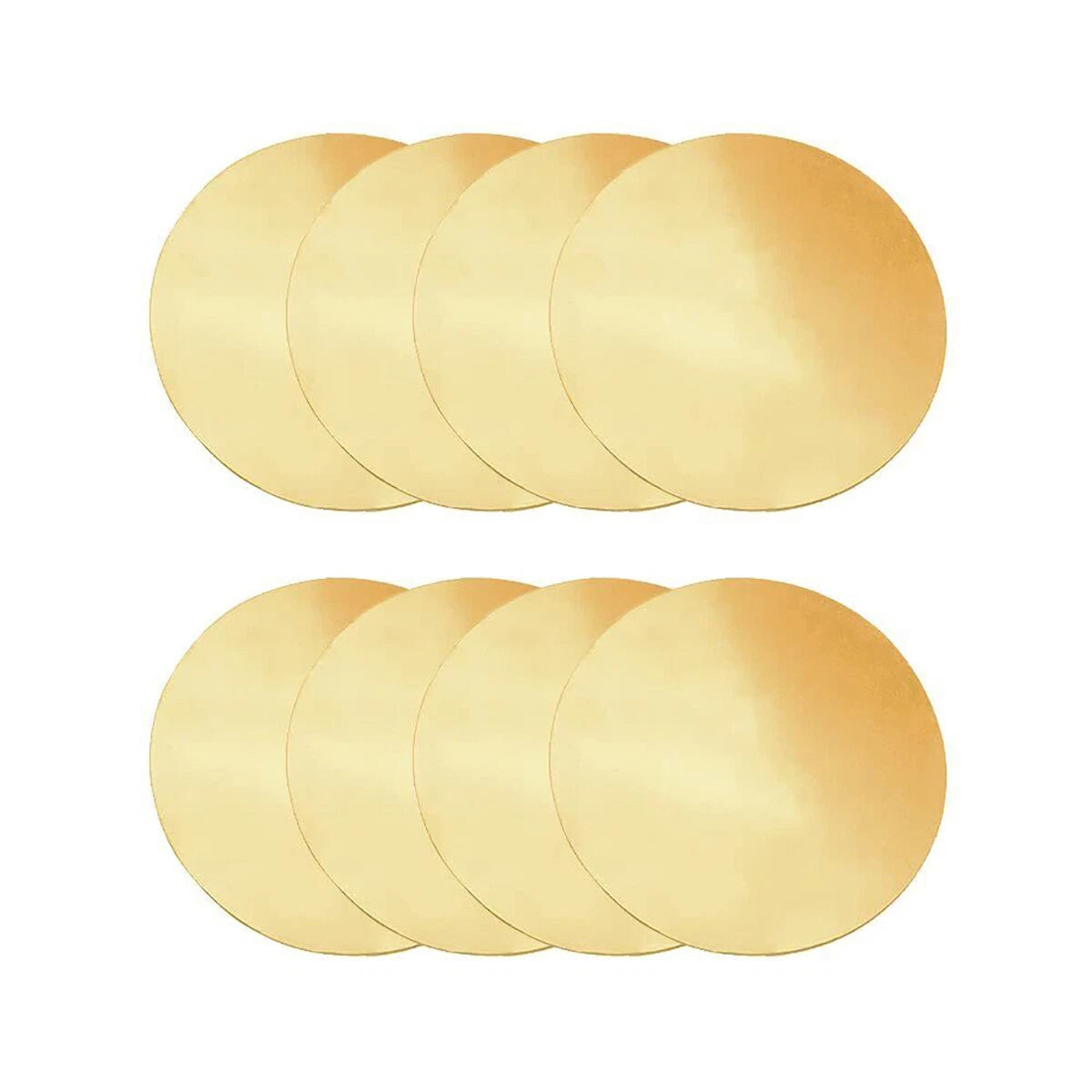
When your project demands a flat, true-round metal blank that holds detail and resists tarnish, finding the right disc in the right size can be a real challenge. Whether you are a maker, jeweler, engraver, or workshop hobbyist, these H62 solid brass disc blanks give you a reliable starting point without the hassle of cutting your own circles from sheet stock.
Each disc is cut from H62 brass alloy — a copper-zinc composition known for its machinability, warm golden tone, and moderate corrosion resistance. Thickness options range from 0.5 mm to 3.0 mm (approximately 0.020 in to 0.118 in), and diameters span 10 mm to 200 mm (approximately 0.39 in to 7.87 in), giving you a wide matrix of sizes to match your exact specification.
These brass round blanks are well suited for hand-stamped jewelry tags and pendants, custom engraved nameplates and signage, clock face blanks and decorative hardware accents, and precision spacer or shim applications in light mechanical assemblies. Long-tail use cases include DIY brass medallion crafting, steampunk prop fabrication, and educational metalworking practice stock.
| Material | H62 Brass (Copper-Zinc Alloy) |
|---|---|
| Finish | Mill finish (bare brass, uncoated) |
| Thickness Range | 0.5 mm – 3.0 mm (0.020 in – 0.118 in) |
| Diameter Range | 10 mm – 200 mm (0.39 in – 7.87 in) |
| Shape | Round disc / circle blank |
| Edge Type | Machine-cut |
| Hardness | See variant options |
| Tensile Strength | Typically 330–420 MPa (H62 grade) |
| Pack Quantity | 1 or 2 pieces (select above) |
| Application | Jewelry blanks, engraving, stamping, shims, decorative hardware |
For lightweight jewelry tags, pendants, or decorative discs, 0.5 mm to 1.0 mm is typically sufficient. For structural spacers, nameplates that need rigidity, or pieces that will be drilled and tapped, 1.5 mm to 3.0 mm provides better durability. When in doubt, go one step thicker — brass is easy to thin with a file or grinder but cannot be added back.
Common pendant sizes range from 20 mm to 40 mm (about 0.79 in to 1.57 in). Coin-style medallions are often 38 mm to 50 mm. For larger decorative pieces or clock faces, 80 mm to 150 mm discs are popular. Use the diameter selector above to match your design template exactly.
H62 brass has a tensile strength typically in the 330–420 MPa range, making it suitable for light-duty shim and spacer applications where steel is not required. It is not recommended for high-load structural applications or environments with strong acids or ammonia, which can cause stress corrosion cracking in brass.
Brass does not rust (rust is specific to iron-based metals), but it will naturally oxidize and develop a patina over time when exposed to air and moisture. For indoor decorative use this is often desirable. To maintain the bright golden finish, apply a clear lacquer or brass-specific sealant after cleaning. For outdoor use, a UV-resistant clear coat is recommended.
Yes. H62 brass is one of the most engraver-friendly metals available. It works well with rotary engravers, laser engravers (CO₂ and fiber), hand stamps, and chemical etching (ferric chloride). Thinner discs (0.5–1.0 mm) are ideal for hand stamping, while thicker discs (1.5 mm+) hold detail better for deep engraving or CNC routing.
Yes. H62 brass solders and brazes readily using standard silver solder, lead-free solder, or brass brazing rod with appropriate flux. Clean the surface with fine abrasive or flux before joining to ensure a strong bond. Avoid overheating, as prolonged high heat can cause zinc to volatilize from the alloy.
Standard HSS (high-speed steel) drill bits work well for brass. Use a center punch to mark your drill point, apply light cutting oil, and drill at moderate speed with steady pressure. For clean holes in thinner discs (0.5–1.0 mm), back the disc with a scrap wood block to prevent burring on the exit side. Carbide bits are not necessary but will extend bit life if you are drilling many pieces.





