
The chain is fine...but I ordered the wrong size. Nine links of the chain I ordered equals six of the size I wanted. My error...
How can I straighten out the springs? I can't use them coil uo as is.
Your payment information is processed securely. We do not store credit card details nor have access to your credit card information.
Get fitment advice & recommendations
When your project demands a flat, dimensionally accurate metal blank that machines cleanly and resists corrosion without coatings, finding the right brass disc in the right thickness can be frustrating. Whether you are a hobbyist jeweller, a model engineer, or a workshop professional, these H62 solid brass discs give you a reliable starting point for turning, stamping, engraving, or decorative inlay work.
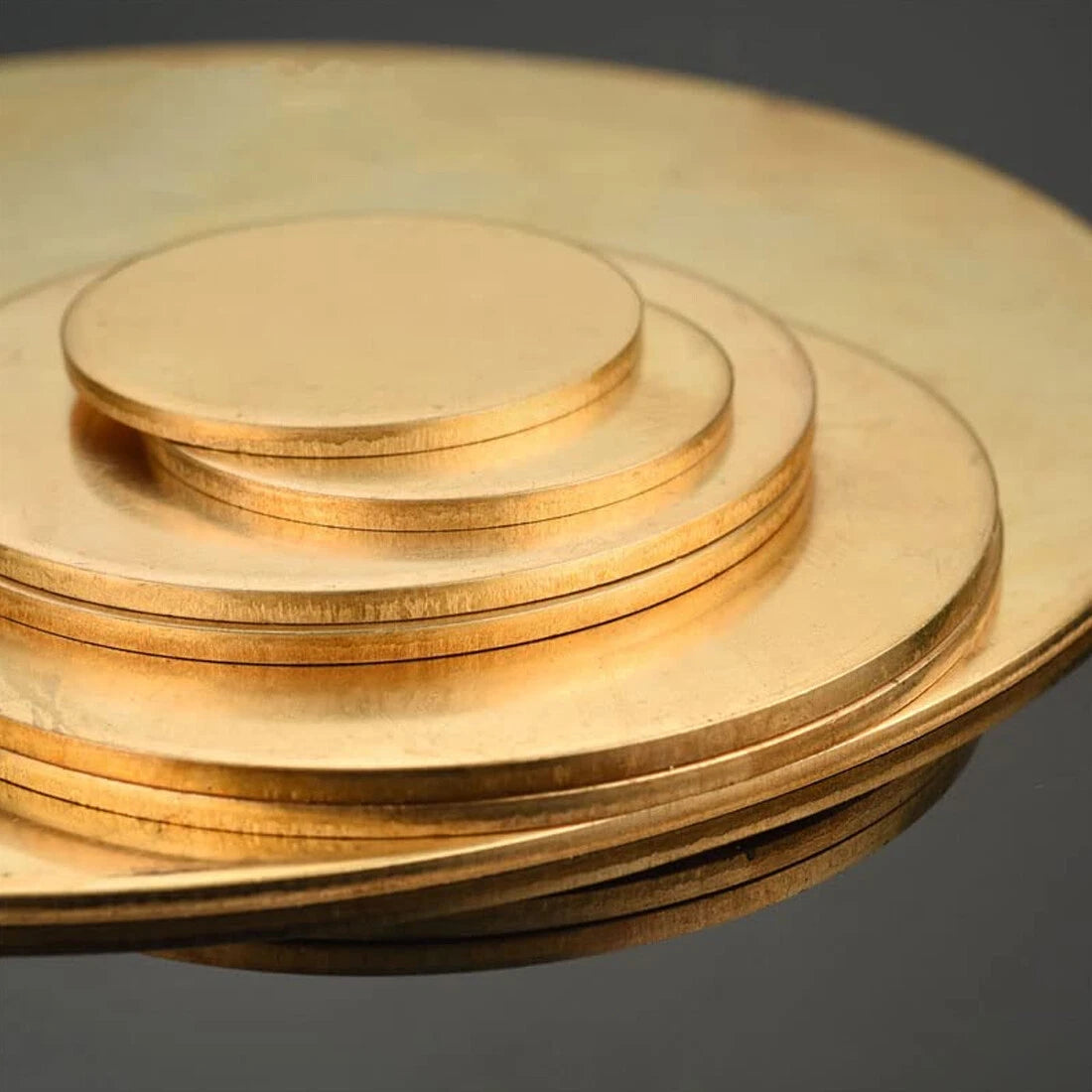
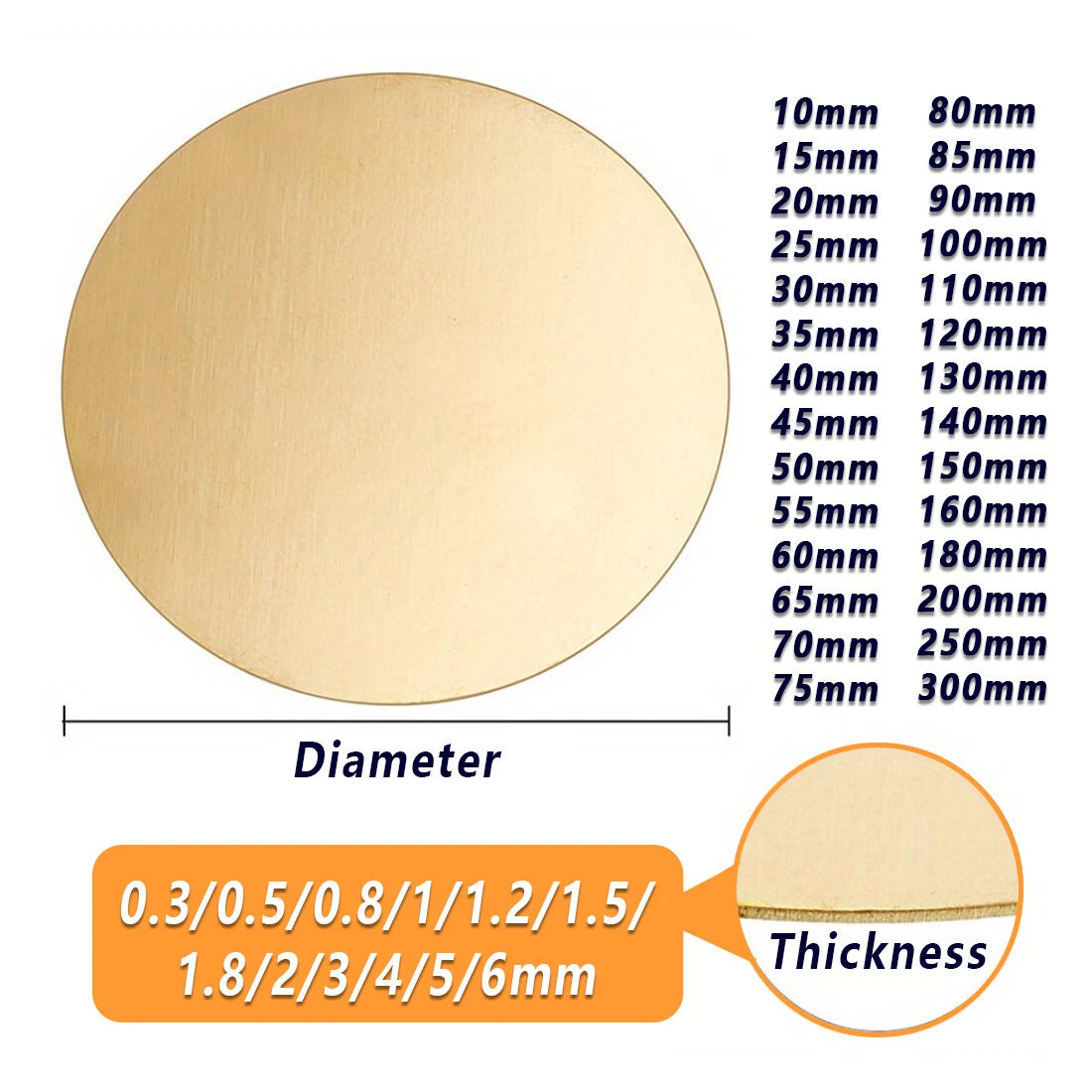
Each disc is cut from H62 brass alloy — a copper-zinc composition known for its balance of machinability and corrosion resistance. Diameters range from 20 mm (approx. 0.79 in) to 300 mm (approx. 11.81 in), and thickness options span 0.5 mm to 6 mm (approx. 0.02 in to 0.24 in). Edges are sheared or sawn to size; surfaces are mill-finished with a natural brass tone.
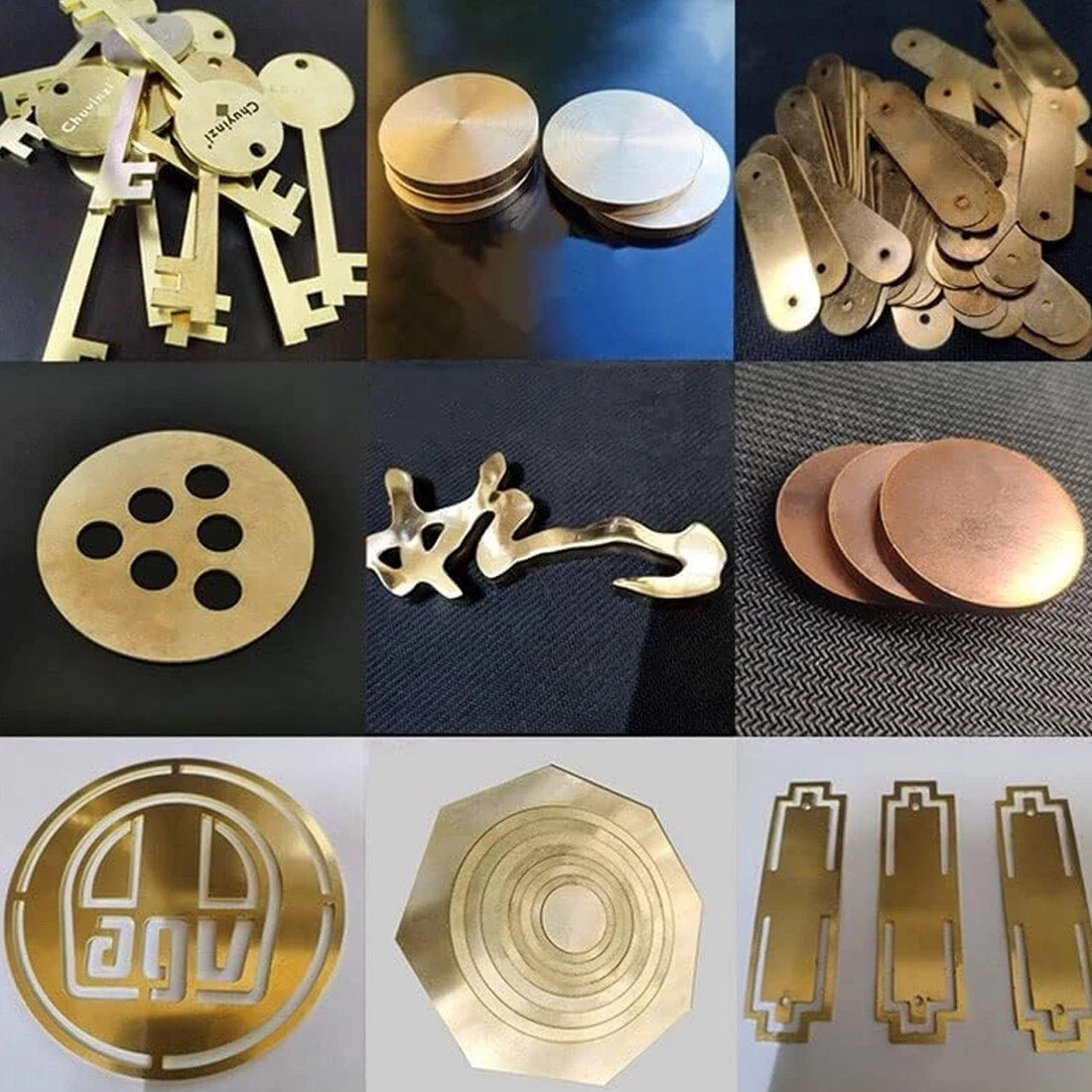
Typical applications include custom gaskets and shims for mechanical assemblies, decorative medallions and name-plate blanks for engraving, electrical contact pads and grounding discs in low-voltage circuits, and jewellery blanks for stamping or etching. The wide diameter-and-thickness matrix makes these discs equally suited to small craft runs and light industrial prototyping.
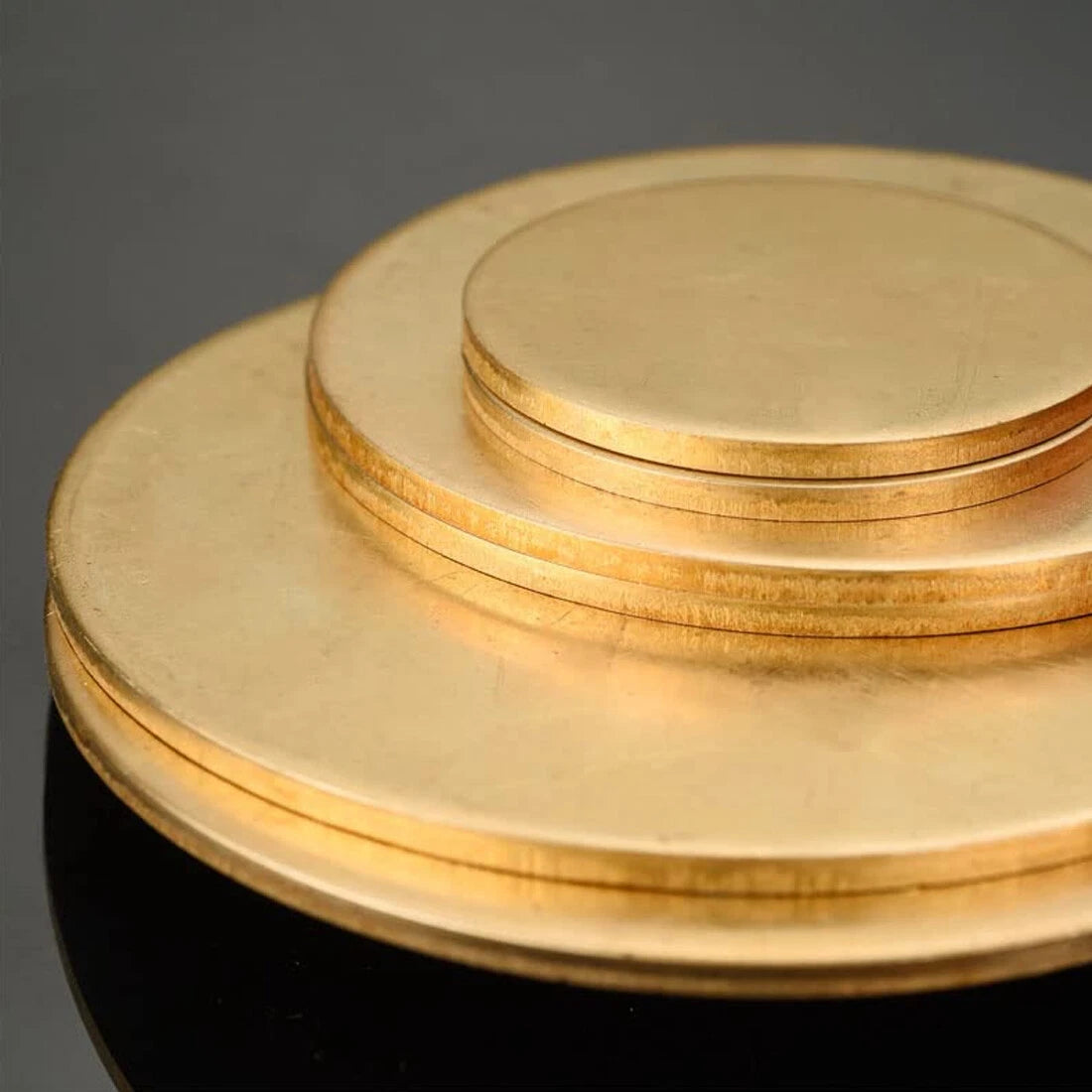
Made from H62 copper-zinc alloy, offering reliable machinability, natural corrosion resistance, and a warm golden finish without surface treatments.
Diameters from 20 mm to 300 mm (0.79–11.81 in) and thicknesses from 0.5 mm to 6 mm (0.02–0.24 in) cover a broad range of project requirements in a single listing.
H62 brass responds well to turning, drilling, milling, and soldering — making these discs a practical blank for both hand tools and CNC operations.
The copper-zinc composition provides inherent resistance to atmospheric corrosion, reducing the need for protective coatings in most indoor and light-outdoor applications.
The natural mill finish accepts polishing, patination, lacquering, and engraving without pre-treatment, saving preparation time in your workflow.
Available in 1, 2, or 5-piece packs — order a single disc to test fit or stock up in multiples for batch production runs.
| Material | H62 Brass (Copper-Zinc Alloy) |
|---|---|
| Diameter Range | 20 mm – 300 mm (0.79 in – 11.81 in) |
| Thickness Range | 0.5 mm – 6 mm (0.02 in – 0.24 in) |
| Available Thicknesses | 0.5 mm, 0.8 mm, 1 mm, 1.5 mm, 2 mm, 3 mm, 4 mm, 5 mm, 6 mm |
| Available Diameters | 20, 30, 50, 60, 80, 100, 150, 200, 250, 300 mm |
| Surface Finish | Mill finish (natural brass tone) |
| Shape | Flat round disc / plate |
| Pack Quantity | 1 Pcs / 2 Pcs / 5 Pcs (see variant options) |
| Weight (per piece) | See variant options |
| Tolerance | See variant options |
Select the diameter that matches or slightly exceeds your finished part size — you can always turn or file down to final dimension. For thickness, consider the load or depth of engraving required: 0.5–1 mm suits thin shims and decorative inlays, 1.5–3 mm covers most gasket and medallion work, and 4–6 mm is appropriate for structural blanks or deep-machined parts.
H62 is a Chinese standard designation for a copper-zinc alloy containing approximately 60–63% copper and the remainder zinc. It offers a good balance of strength, ductility, and machinability. Compared to higher-copper grades like H90, H62 is more cost-effective and machines more freely; compared to leaded free-cutting brass (C36000), it is lead-free and more suitable for food-contact or environmentally sensitive applications.
H62 brass has good resistance to atmospheric corrosion and will develop a natural patina over time when exposed to outdoor conditions. For prolonged outdoor or marine exposure, applying a clear lacquer or wax coating is recommended to slow patination and maintain appearance. These discs are not rated for immersion in salt water without additional protection.
Yes. H62 brass solders and brazes readily using standard silver solder, soft solder (tin-lead or lead-free), or brass brazing rod with appropriate flux. Clean the surface with fine abrasive or flux before joining to ensure a strong bond. Avoid overheating, which can cause zinc fuming — work in a ventilated area.
Thinner discs (0.5–1.5 mm) can be cut with aviation snips, a jeweller's saw, or a rotary tool with a cutting disc. Thicker discs (2 mm and above) are best handled on a metal lathe for turning to diameter, or with a bandsaw and file for rough shaping. Standard HSS or carbide tooling works well with H62 brass — use cutting fluid for cleaner finishes.
These discs are supplied with a mill finish — a natural, unpolished brass surface that may show minor tooling marks or oxidation from storage. If a mirror or satin finish is required, buff with progressively finer abrasive papers (400–2000 grit) followed by a brass polishing compound. The mill finish also accepts chemical patination (liver of sulphur, ammonia fuming) directly without stripping.
Order 1 piece to prototype or test fit before committing to a larger quantity. Choose 2 pieces if you need a spare or are making a matched pair (e.g., two gaskets or two decorative panels). The 5-piece pack offers a lower per-unit cost and is ideal for batch production, classroom projects, or keeping stock on hand for repeat repairs.





