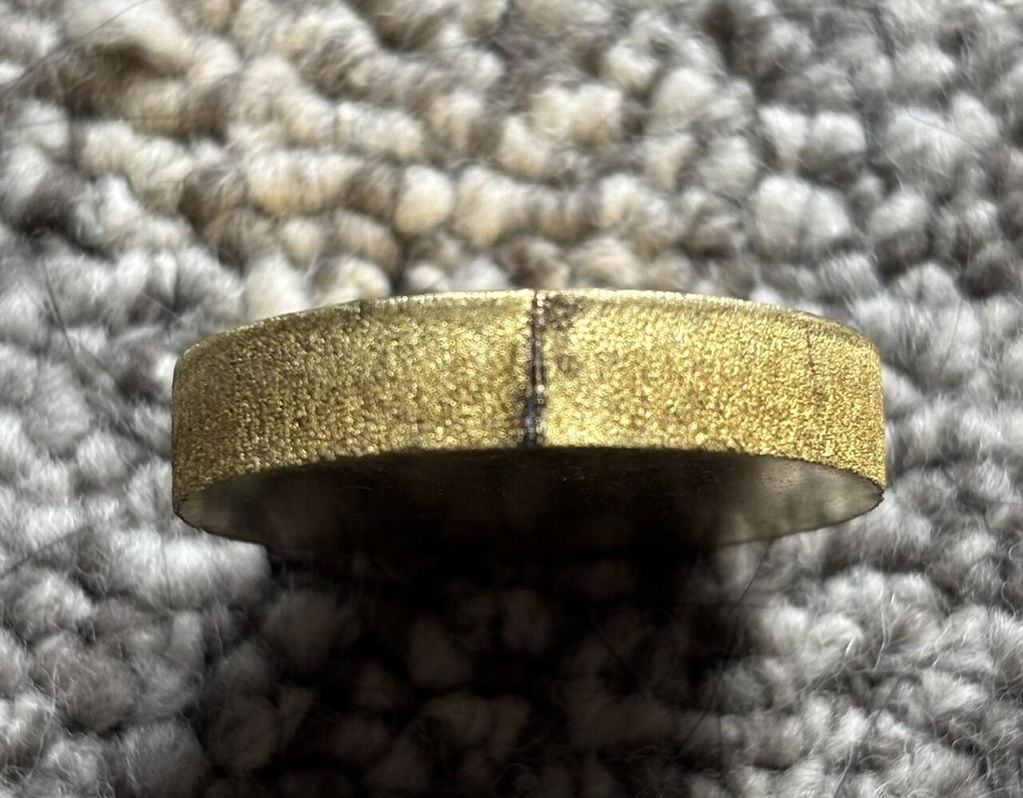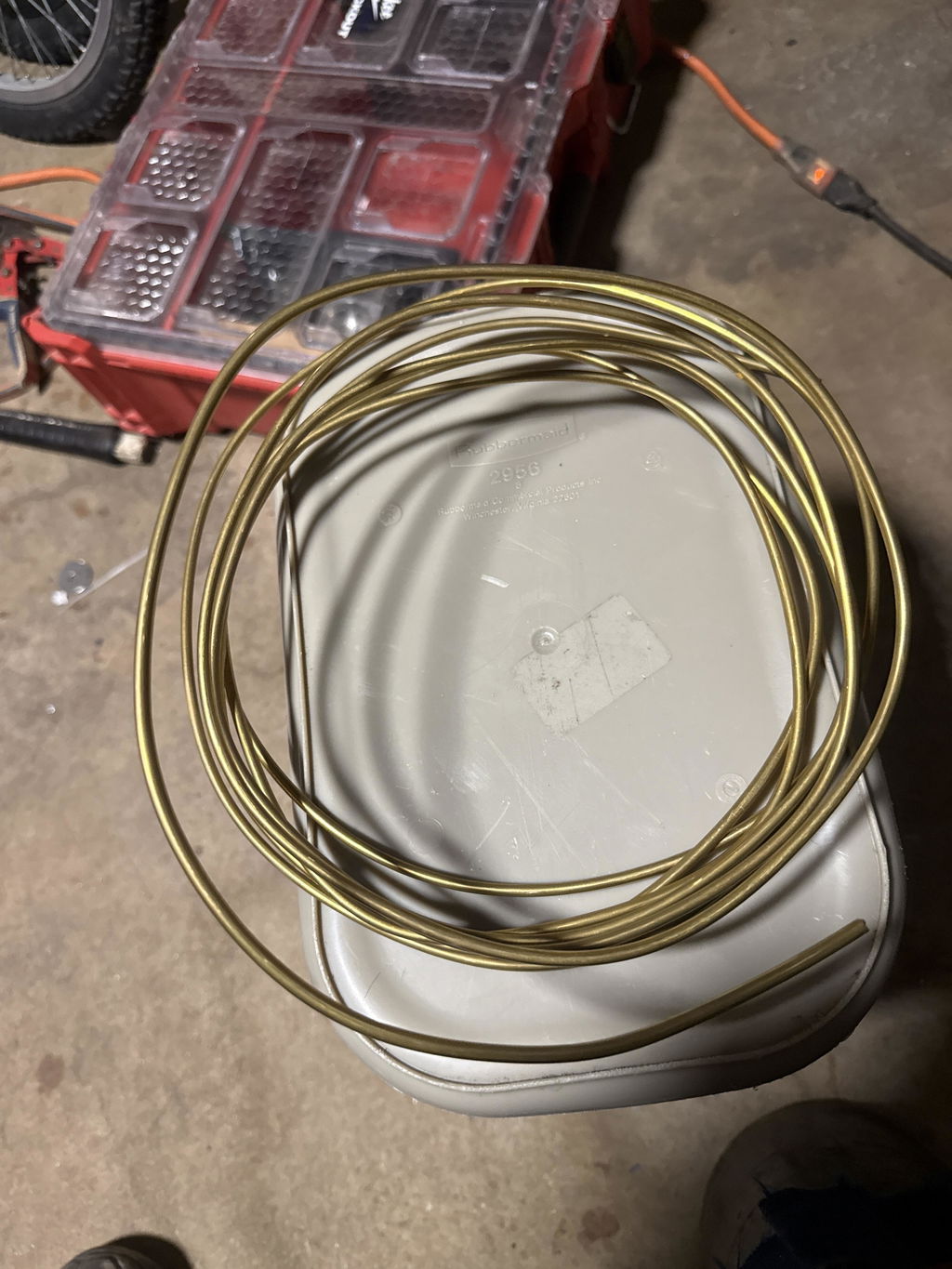
The chain is fine...but I ordered the wrong size. Nine links of the chain I ordered equals six of the size I wanted. My error...
How can I straighten out the springs? I can't use them coil uo as is.
Your payment information is processed securely. We do not store credit card details nor have access to your credit card information.
Get fitment advice & recommendations
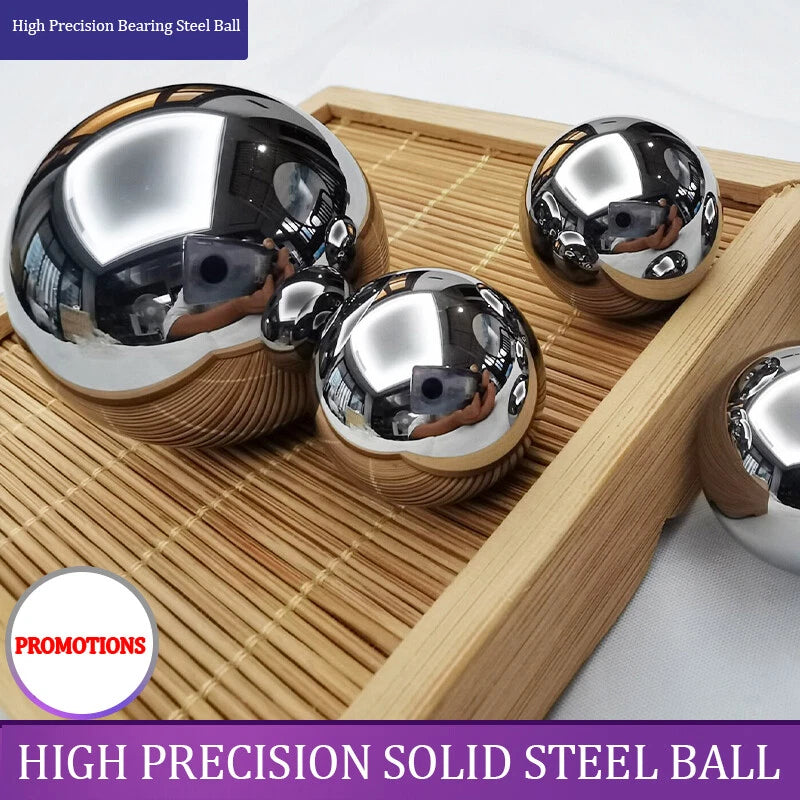
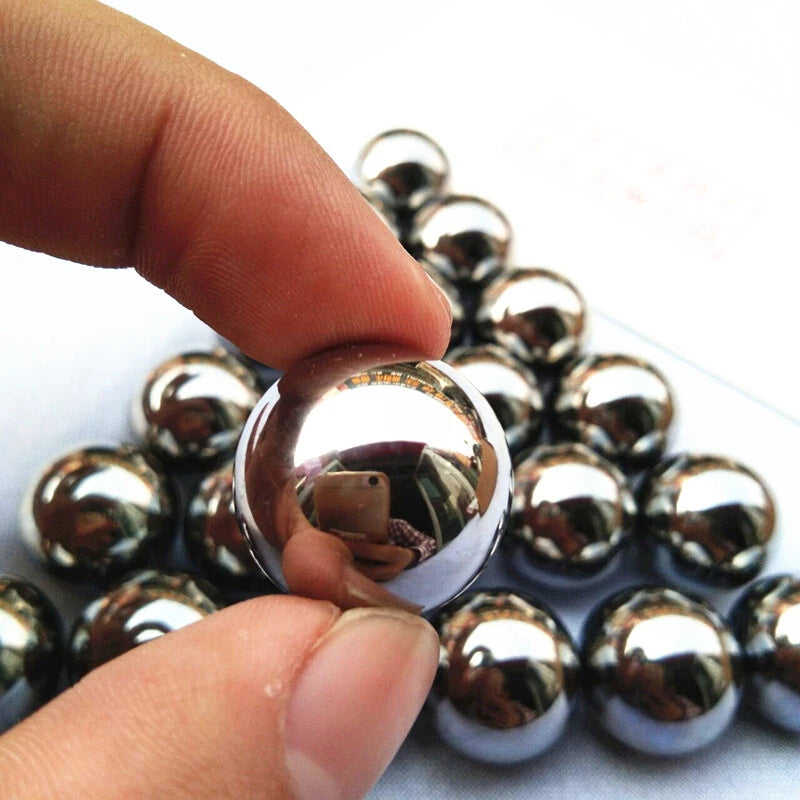
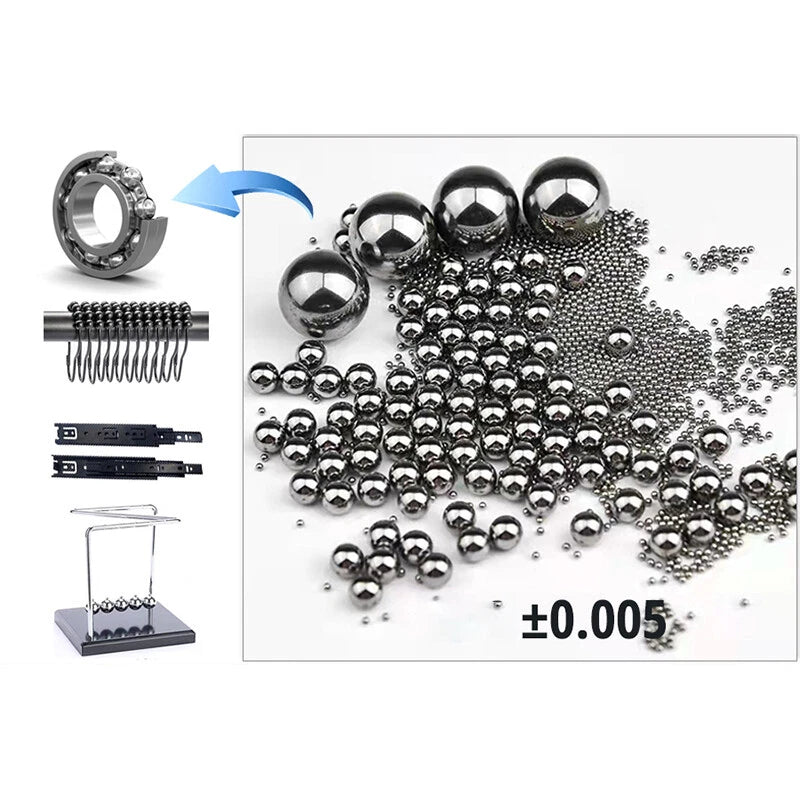
When a worn or undersized bearing ball causes vibration, noise, or premature failure in your machinery, finding the exact replacement diameter is the real challenge. These hardened carbon steel bearing balls are stocked across 88 precise diameter options — from φ30.163mm (≈1.187 in) to φ200mm (≈7.874 in) — so engineers, machinists, and serious DIYers can source the exact size without custom orders or long lead times.
Each ball is manufactured from hardened carbon steel (typically GCr15 / AISI 52100 equivalent grade), delivering a surface hardness in the range of 60–66 HRC. Diameters span φ30.163mm to φ200mm (approximately 1.19 in to 7.87 in), with many imperial-equivalent sizes included (e.g., φ31.75mm = 1-1/4 in, φ34.925mm = 1-3/8 in, φ38.1mm = 1-1/2 in, φ44.45mm = 1-3/4 in, φ47.625mm = 1-7/8 in, φ50.8mm = 2 in, φ57.15mm = 2-1/4 in, φ63.5mm = 2-1/2 in, φ76.2mm = 3 in, φ101.6mm = 4 in). Surface finish is typically G10–G40 grade depending on size.
Typical applications include replacement bearing balls for industrial ball bearings and linear motion systems, load-bearing balls in hydraulic valves and check valves, precision balls for jigs, fixtures, and ball transfer units, and heavy-duty pivot or caster assemblies requiring a specific bore-matched diameter. Whether you are rebuilding a lathe spindle, restoring a vintage machine, or sourcing balls for a custom ball screw assembly, the wide size range covers most standard and fractional requirements.
| Material | Hardened carbon steel (GCr15 / AISI 52100 equivalent) |
|---|---|
| Surface Hardness | Typically 60–66 HRC |
| Diameter Range | φ30.163mm – φ200mm (approx. 1.187 in – 7.874 in) |
| Number of Size Options | 88 variants |
| Precision Grade | G10–G40 (varies by diameter) |
| Surface Finish | Ground and lapped |
| Corrosion Resistance | See variant options (bare steel; recommend lubrication in service) |
| Sold As | Per ball (1 piece per order unit) |
| Product Type | Ball Bearings / Precision Bearing Balls |
| Weight | See variant options (varies by diameter) |
Measure the inner diameter of your bearing race or the seat bore using a micrometer or digital caliper. The ball diameter should match the original specification exactly. If replacing a ball in an existing bearing, refer to the bearing manufacturer's datasheet or measure a worn ball with a micrometer. Many imperial sizes are included in this listing — for example, φ31.75mm = 1-1/4 in, φ38.1mm = 1-1/2 in, φ50.8mm = 2 in, φ63.5mm = 2-1/2 in, and φ76.2mm = 3 in.
These balls are through-hardened carbon steel with a surface hardness typically in the range of 60–66 HRC. Higher hardness means the ball resists deformation under compressive load, which is essential for maintaining dimensional accuracy and extending service life in bearing and valve applications. Softer balls would deform over time, increasing play and causing noise or failure.
Carbon steel bearing balls are not inherently corrosion-resistant. In wet, humid, or outdoor environments, they should be used with appropriate lubrication (grease or oil) and ideally housed in a sealed bearing to prevent moisture contact. For applications requiring corrosion resistance, stainless steel bearing balls would be a more suitable choice. Contact us to confirm if you need an alternative material.
These balls are manufactured to G10–G40 grade depending on the diameter. Smaller diameters typically achieve tighter tolerances (G10–G16), while larger diameters are graded G25–G40. G-grade refers to the ABMA/ISO ball grade standard, where a lower number indicates tighter roundness and diameter variation tolerances. For most replacement and industrial applications, G25–G40 is fully adequate.
Yes, provided you select the correct ball diameter that matches the original bearing specification. Standard deep groove ball bearings use balls of a defined diameter determined by the bearing series and bore size. Always verify the ball diameter from the bearing manufacturer's datasheet before ordering. These balls are also suitable for angular contact bearings, thrust bearings, and custom assemblies where the ball diameter is specified.
Each order unit is priced and fulfilled as one (1) ball. If you need multiple balls — for example, to replace a full complement in a bearing — simply set the quantity accordingly at checkout. For bulk orders of 10 or more balls of the same size, contact us for volume pricing options.
Yes. Hardened carbon steel balls are widely used as valve balls in check valves, ball valves, and hydraulic circuits where a hard, dimensionally accurate ball is required to seat against a valve seat and create a reliable seal. Ensure the ball diameter matches the valve seat specification. For high-pressure hydraulic applications, verify the pressure rating with your valve manufacturer.