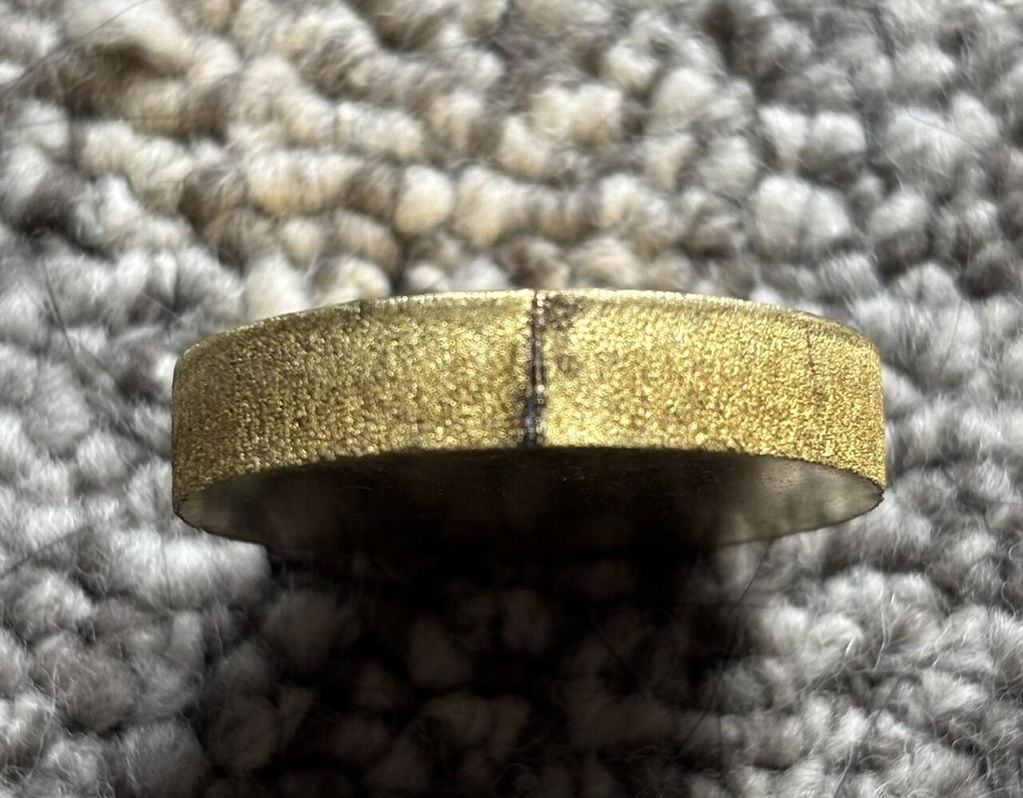
The chain is fine...but I ordered the wrong size. Nine links of the chain I ordered equals six of the size I wanted. My error...
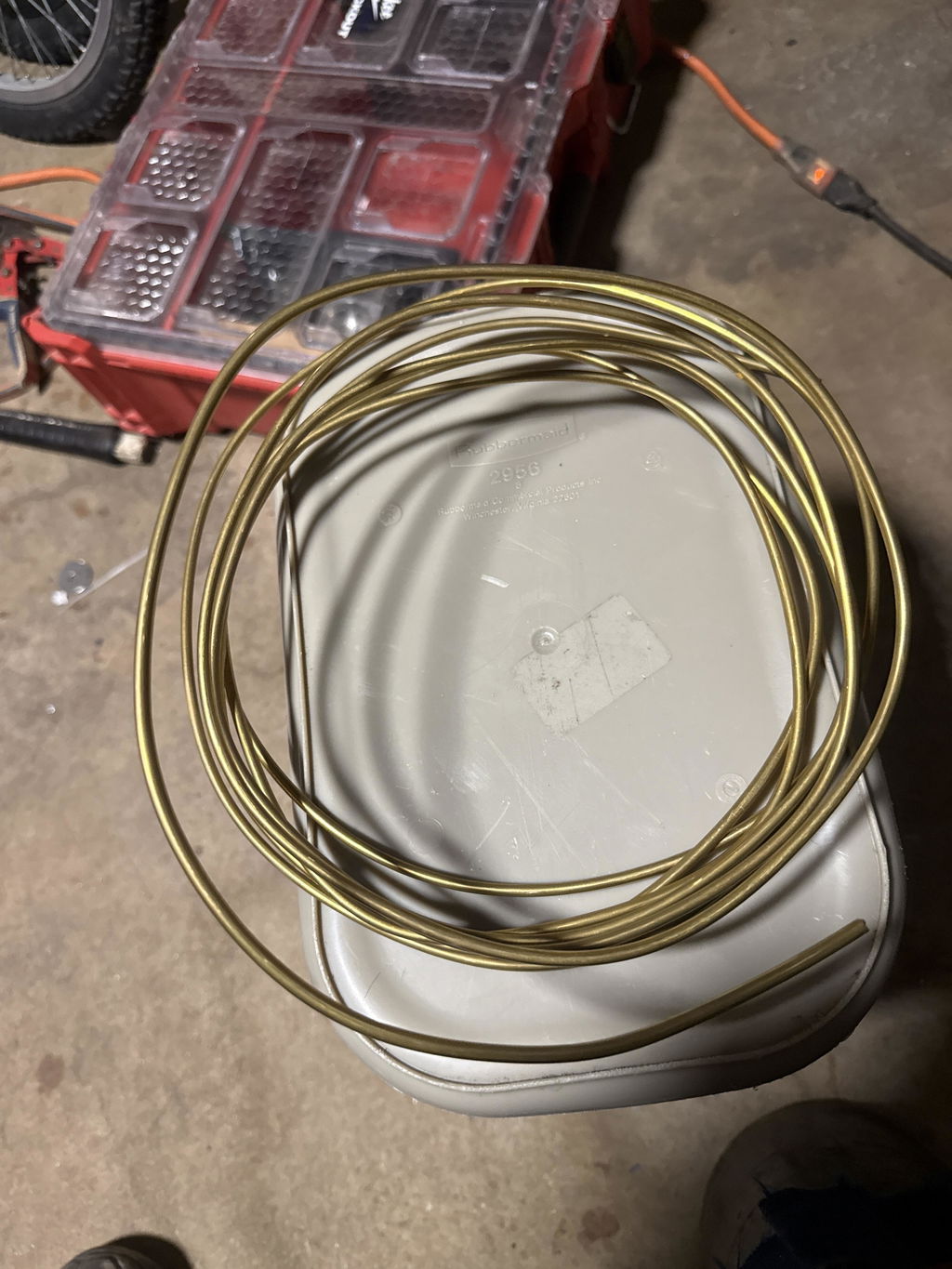
How can I straighten out the springs? I can't use them coil uo as is.
Your payment information is processed securely. We do not store credit card details nor have access to your credit card information.
Get fitment advice & recommendations
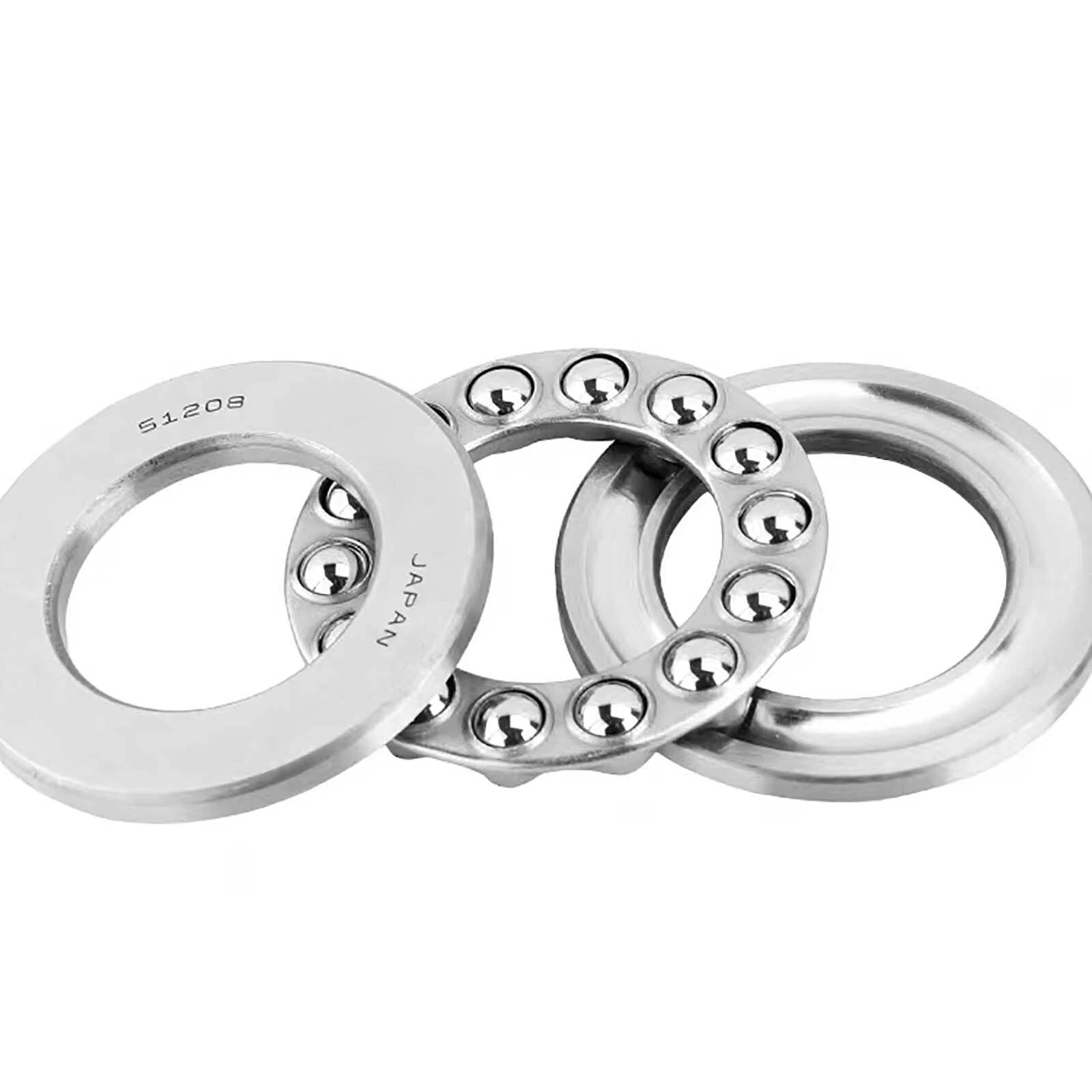
Engineers and maintenance technicians who work with rotating shafts, rotary tables, or vertical-load assemblies know the frustration of a radial bearing substituted into a pure-axial application: premature wear, misalignment, and unplanned downtime. These axial thrust ball bearings are designed specifically to carry unidirectional axial (thrust) loads, keeping your shaft and housing washers correctly separated under continuous pressure.
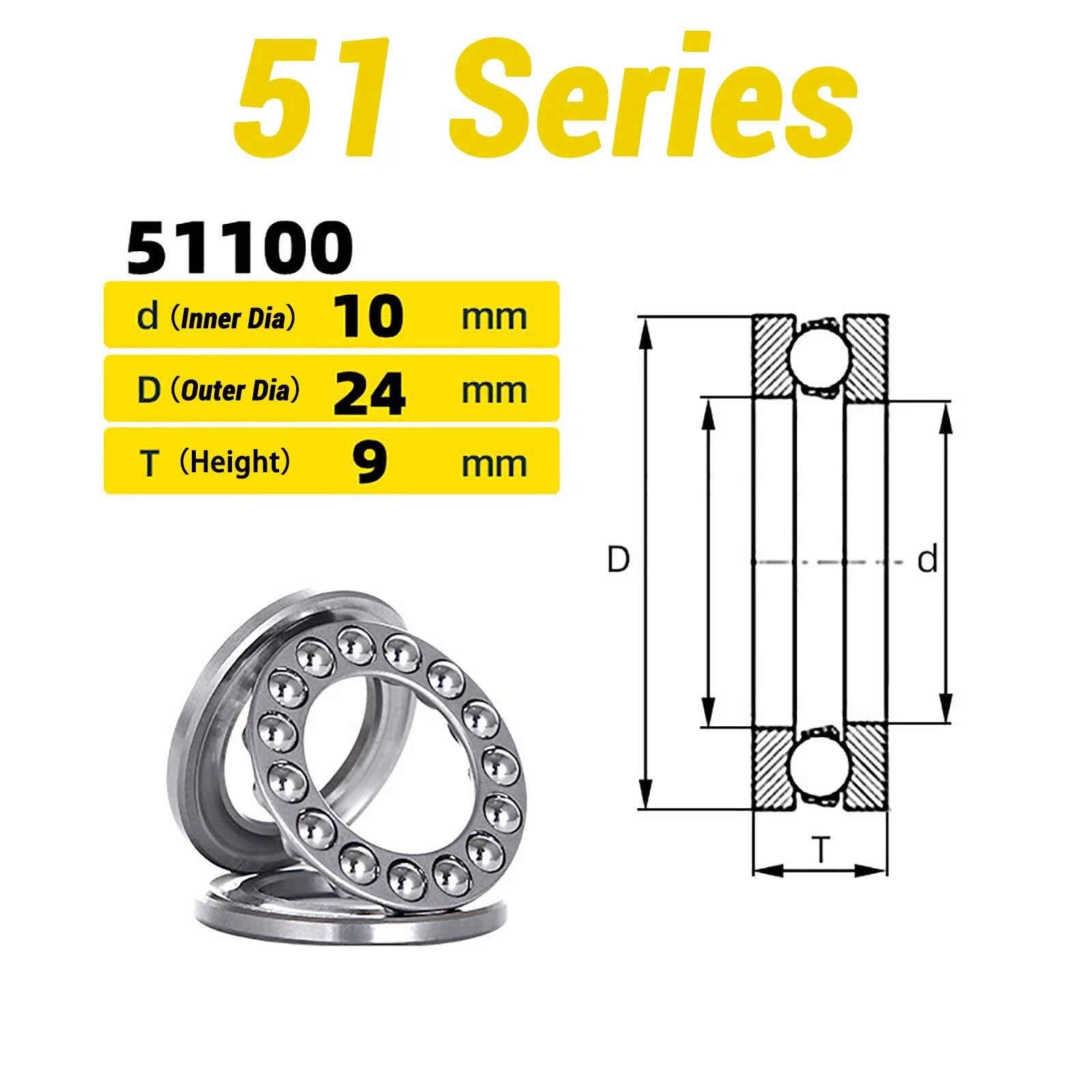
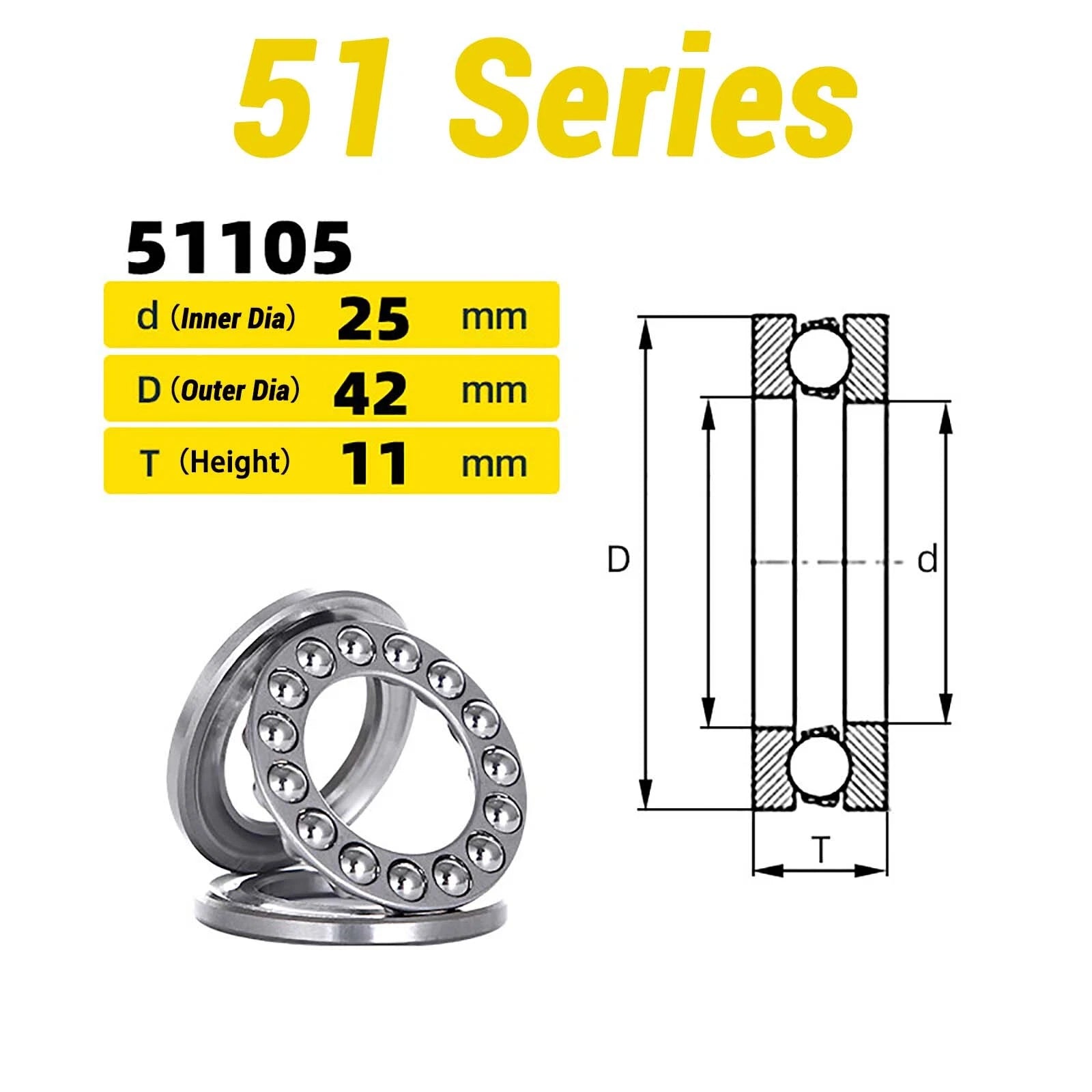
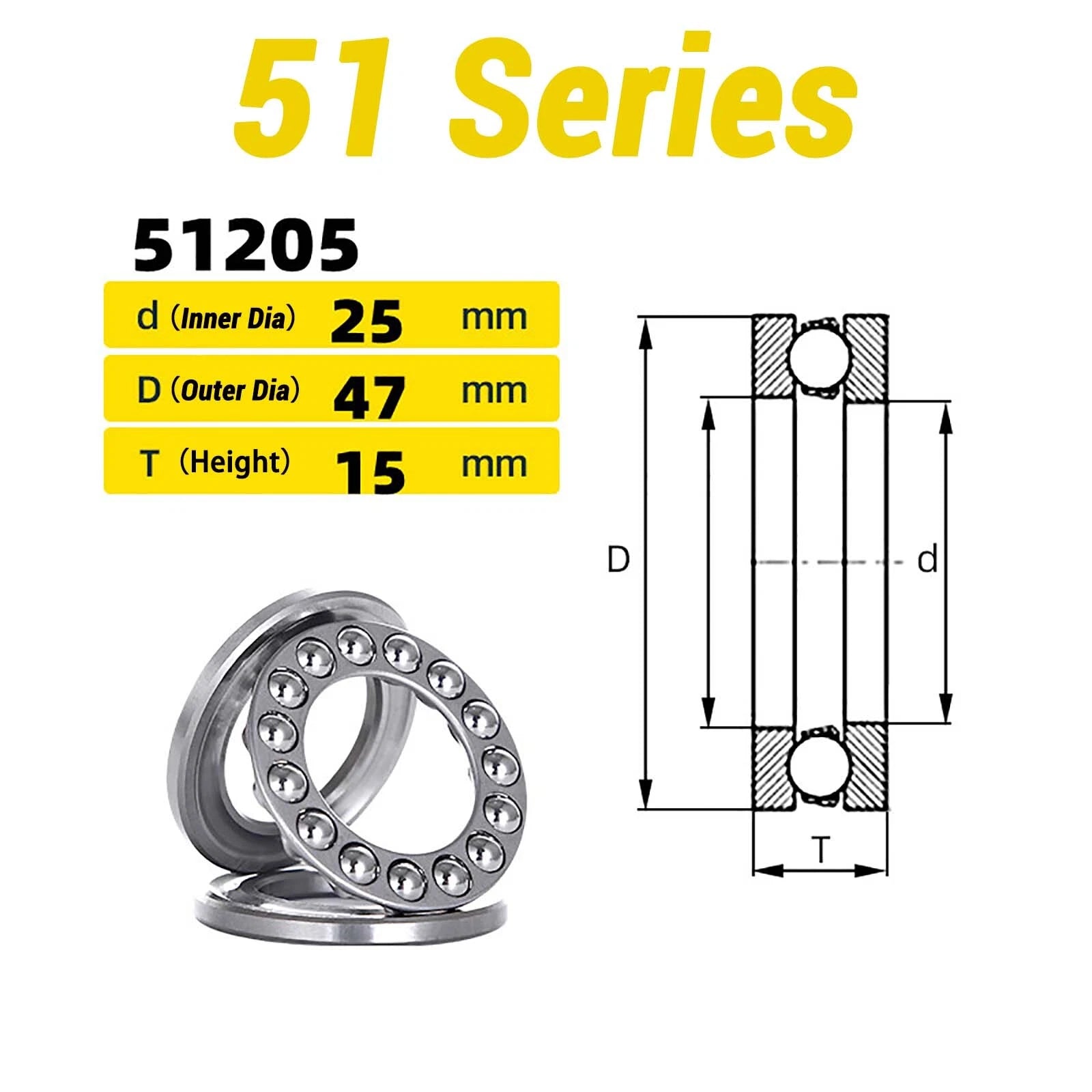
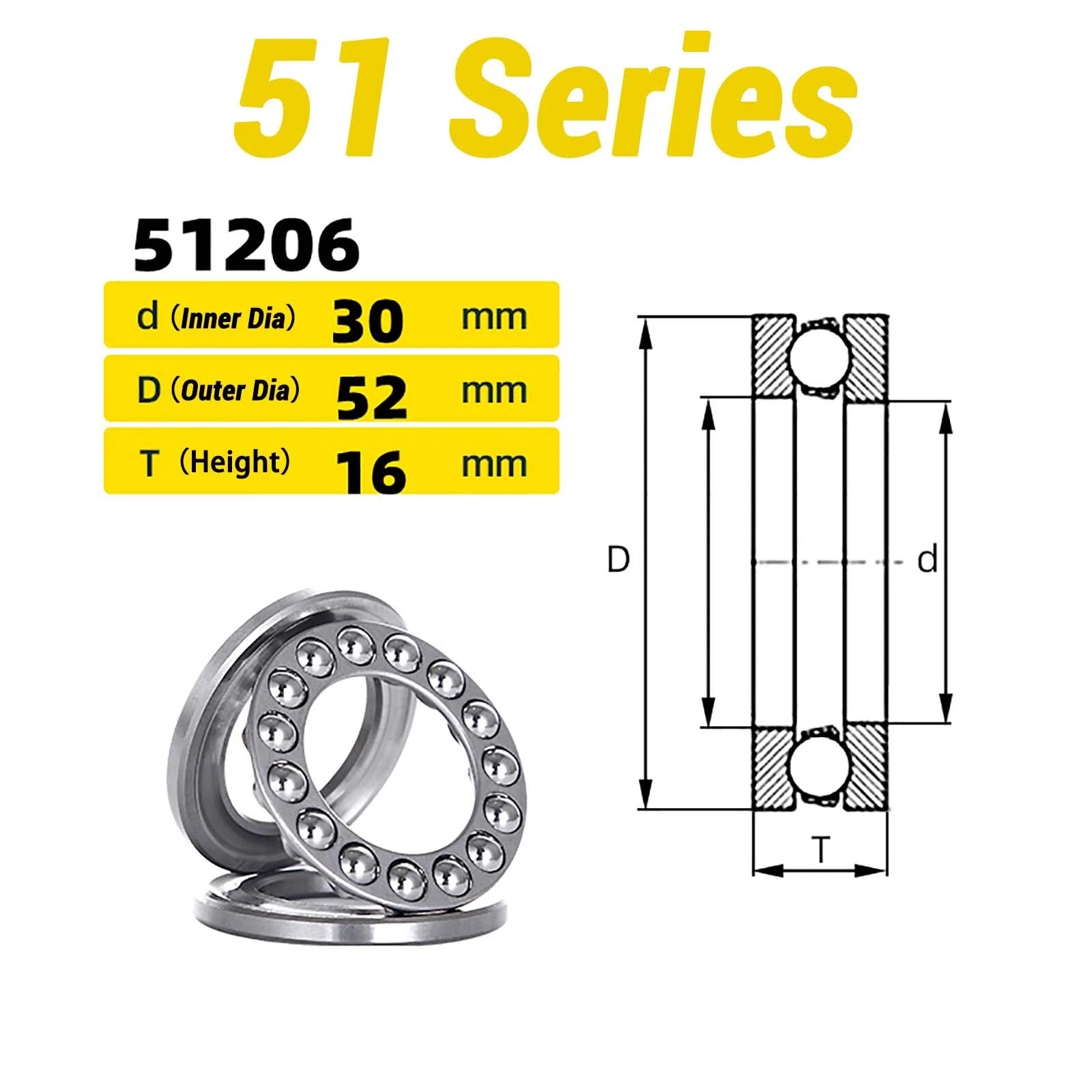
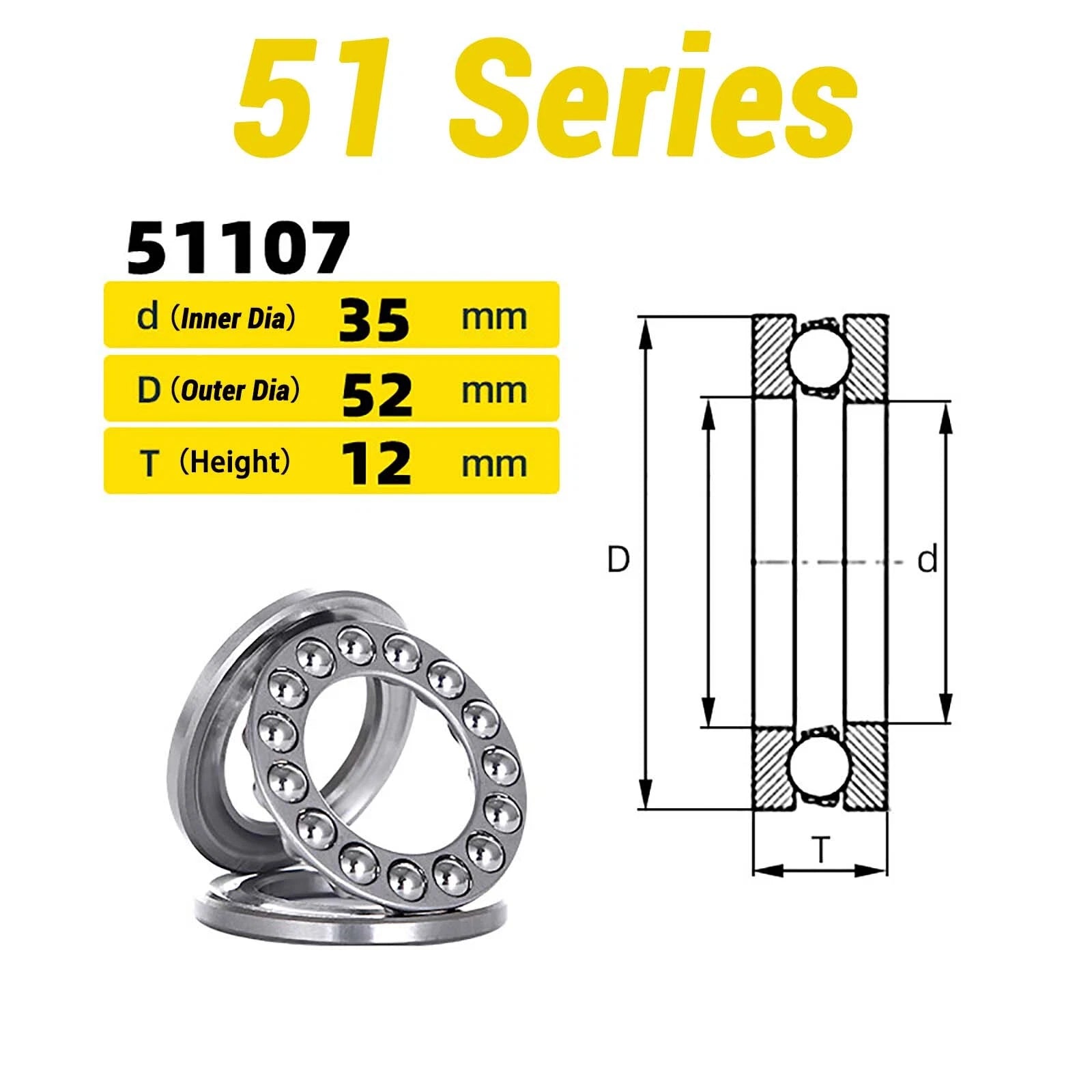
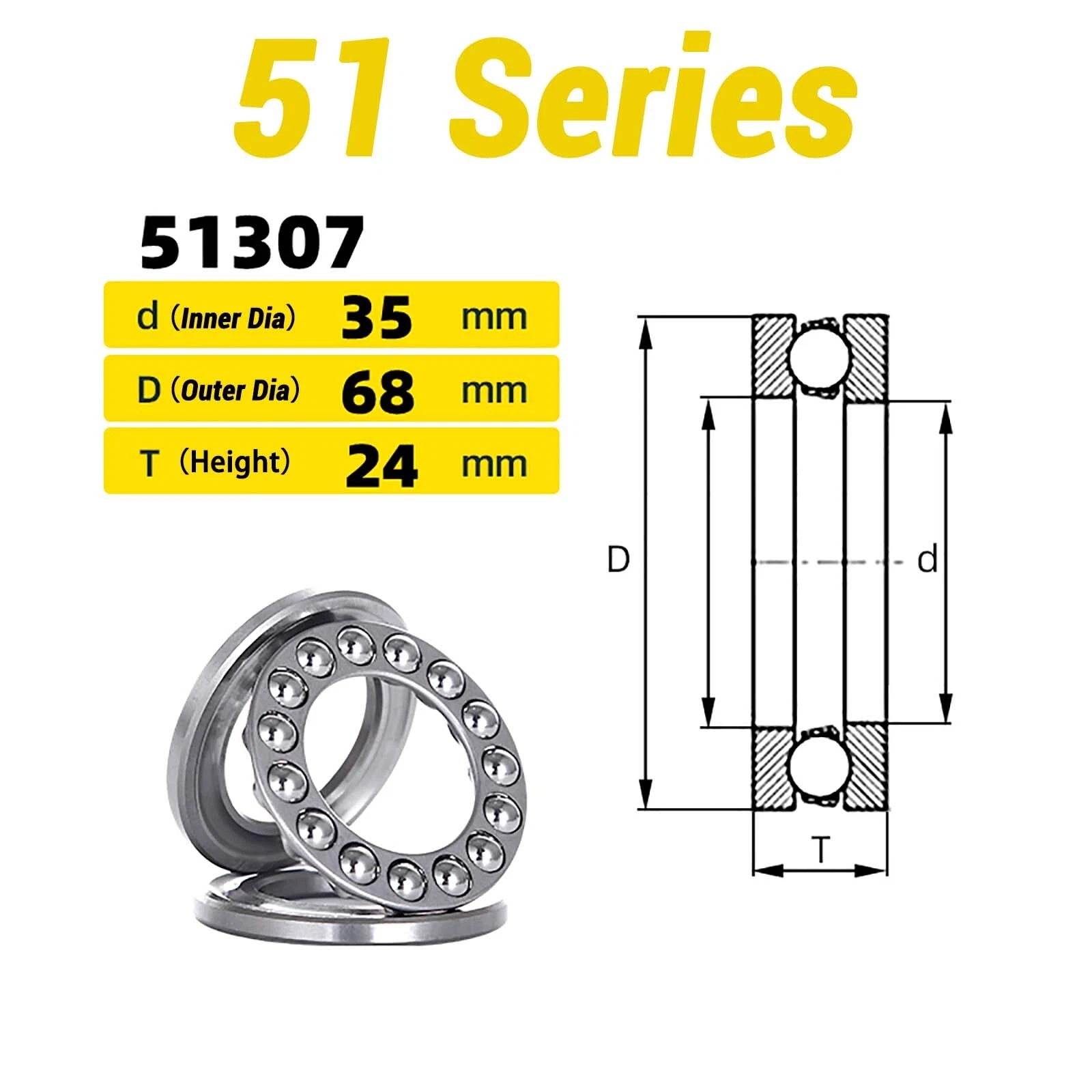
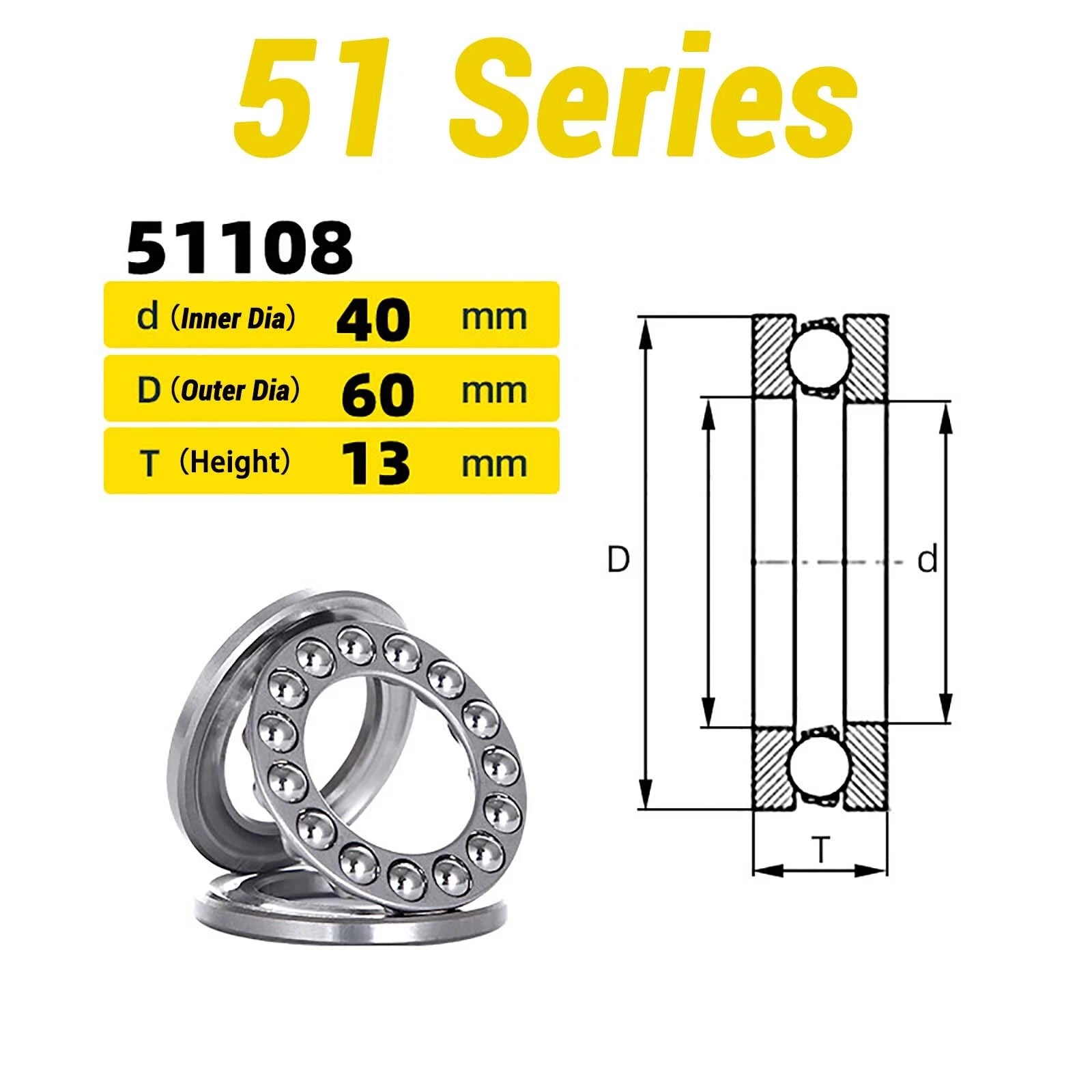
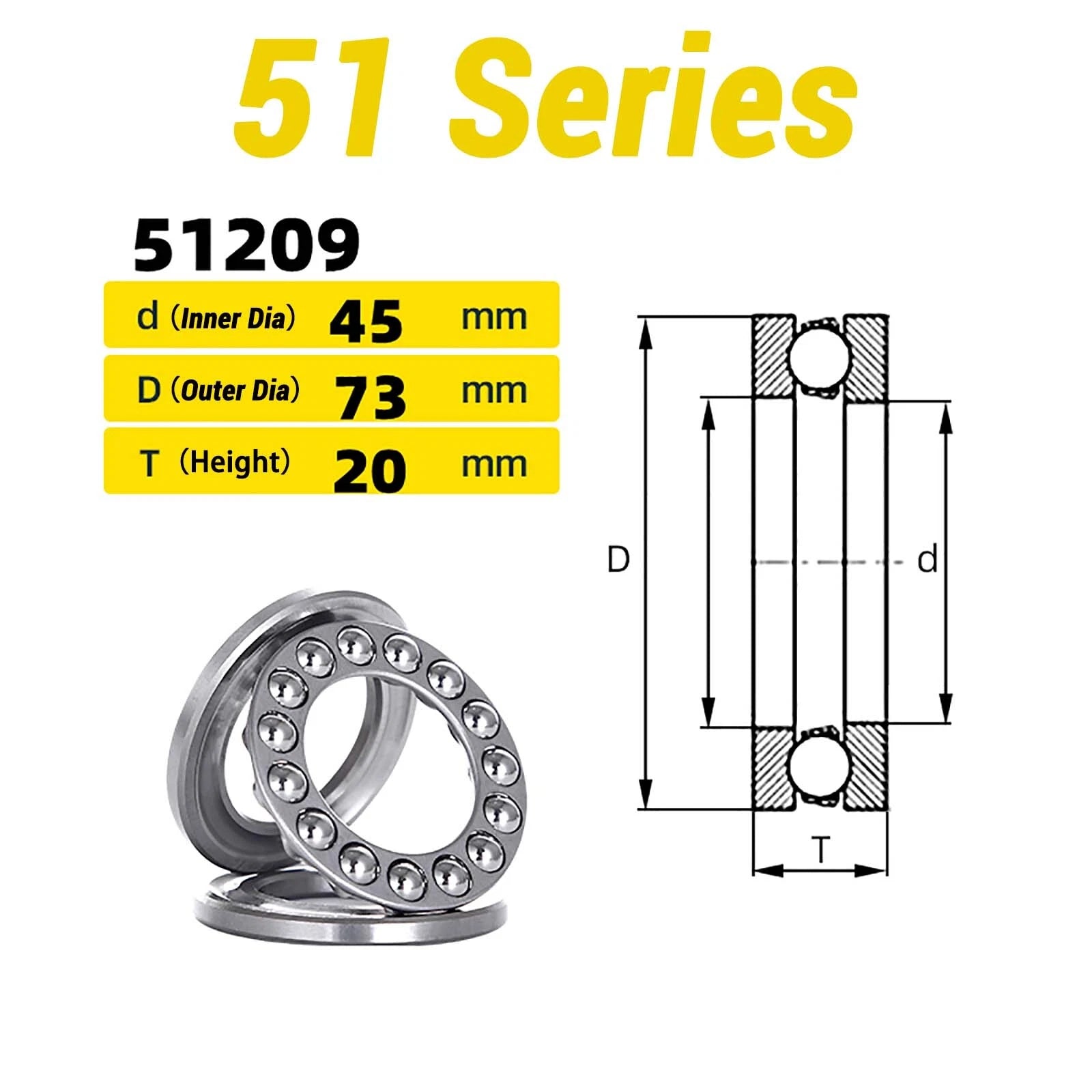
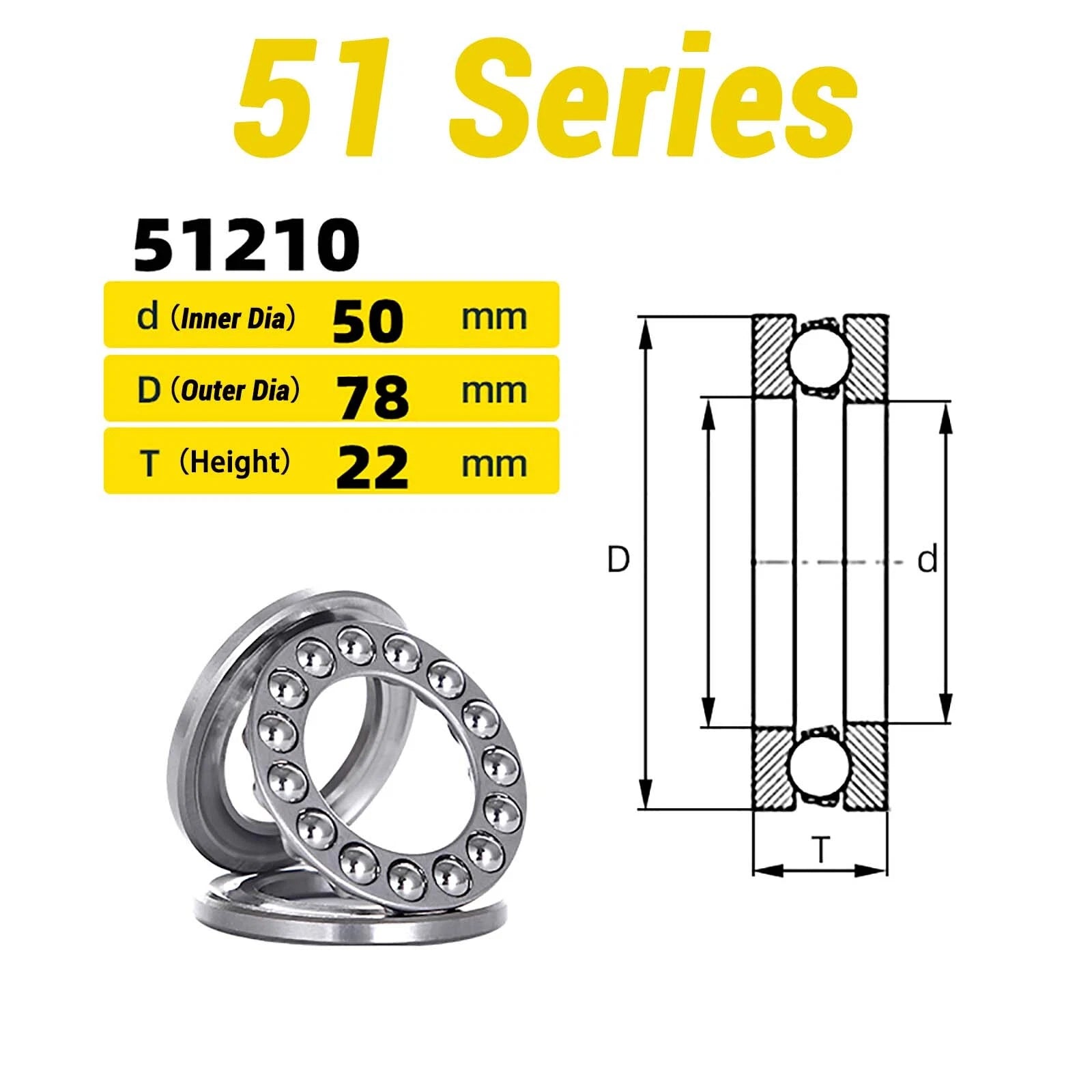
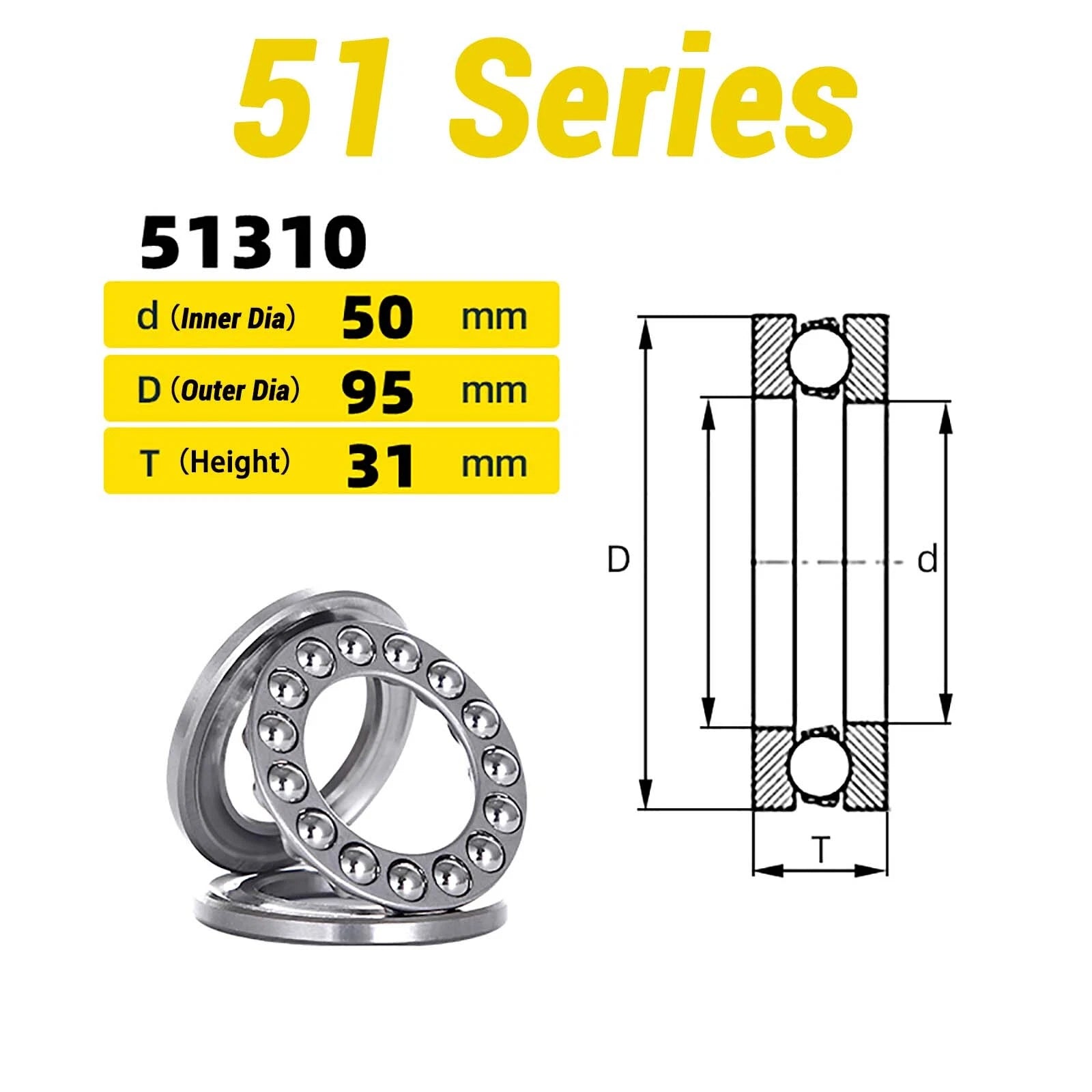
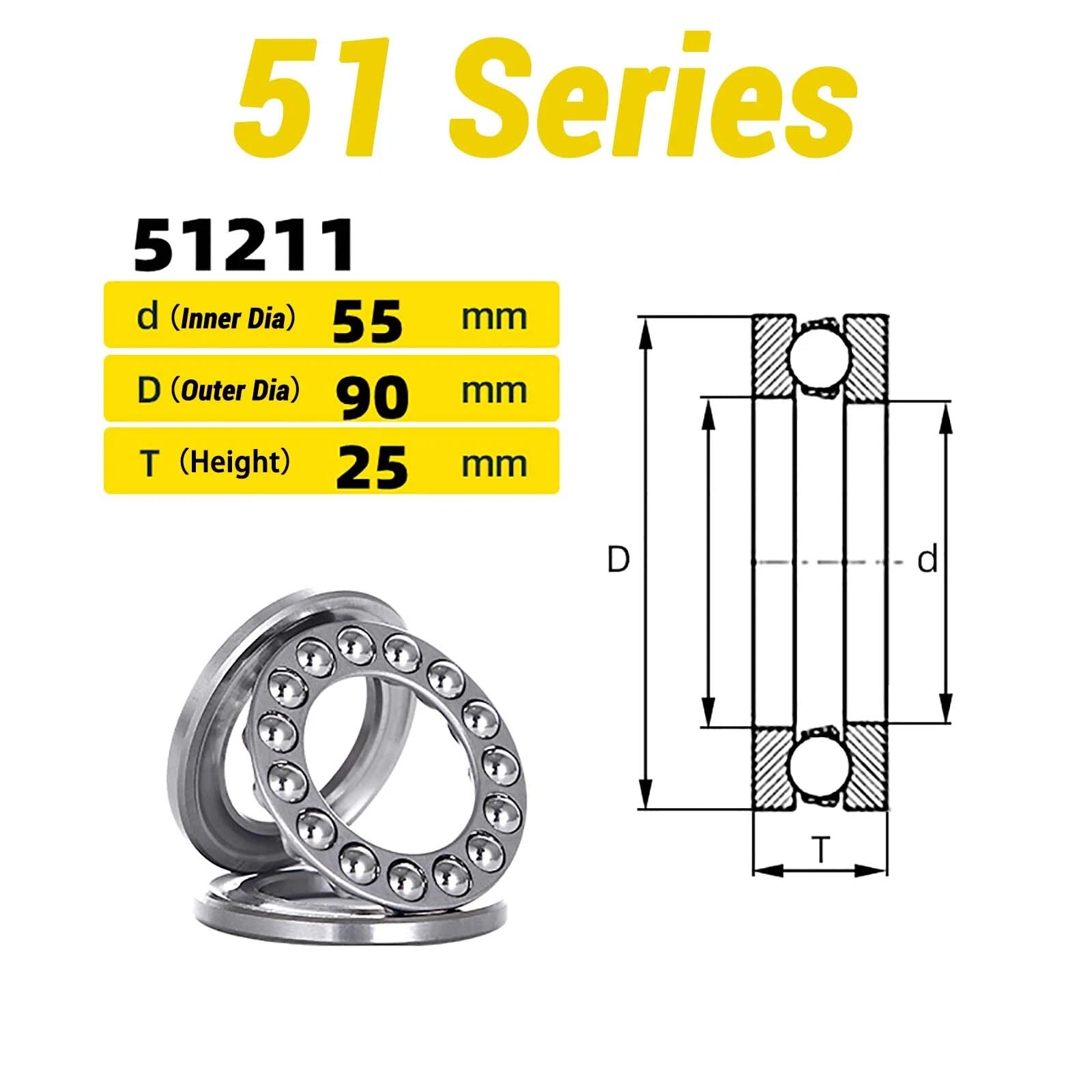
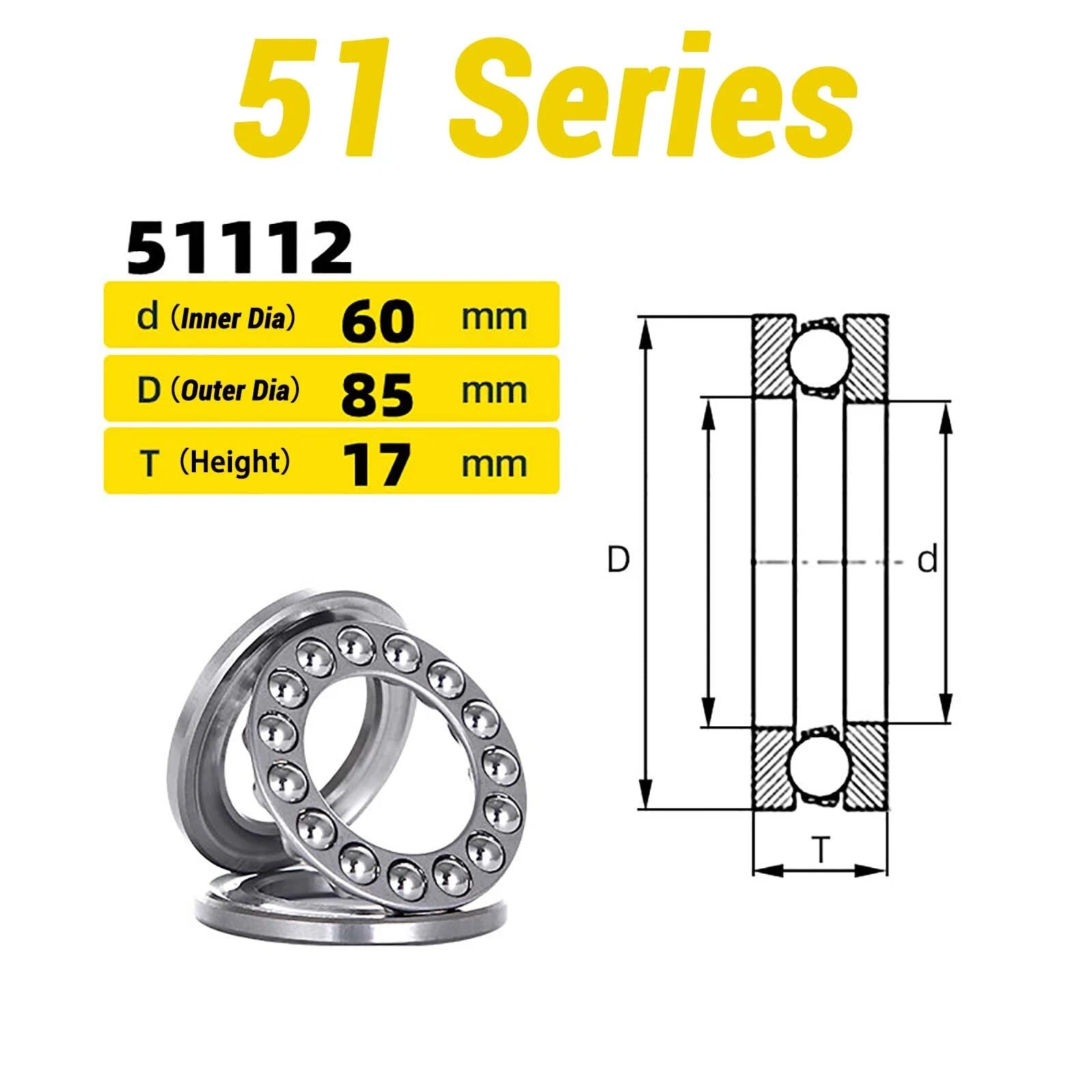
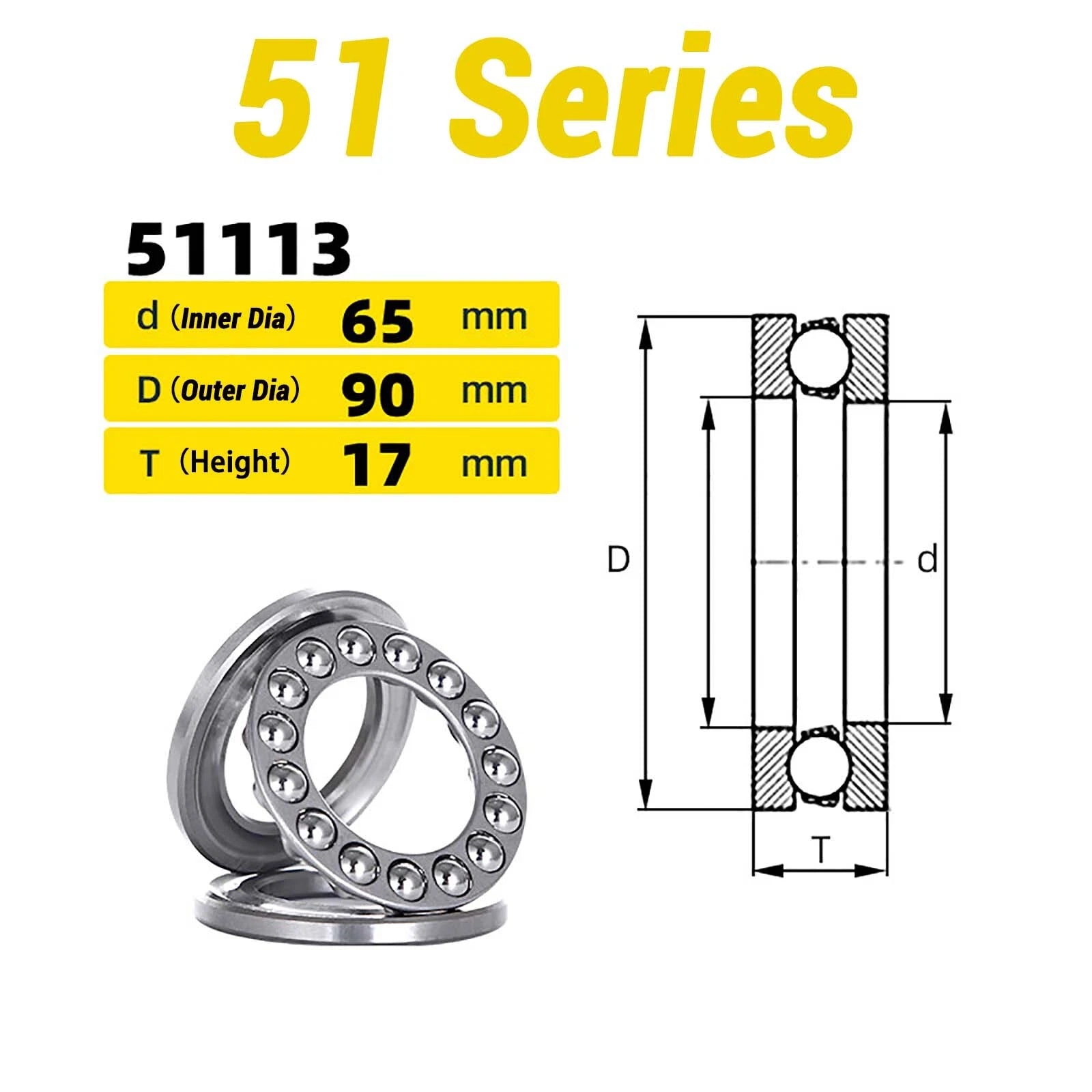
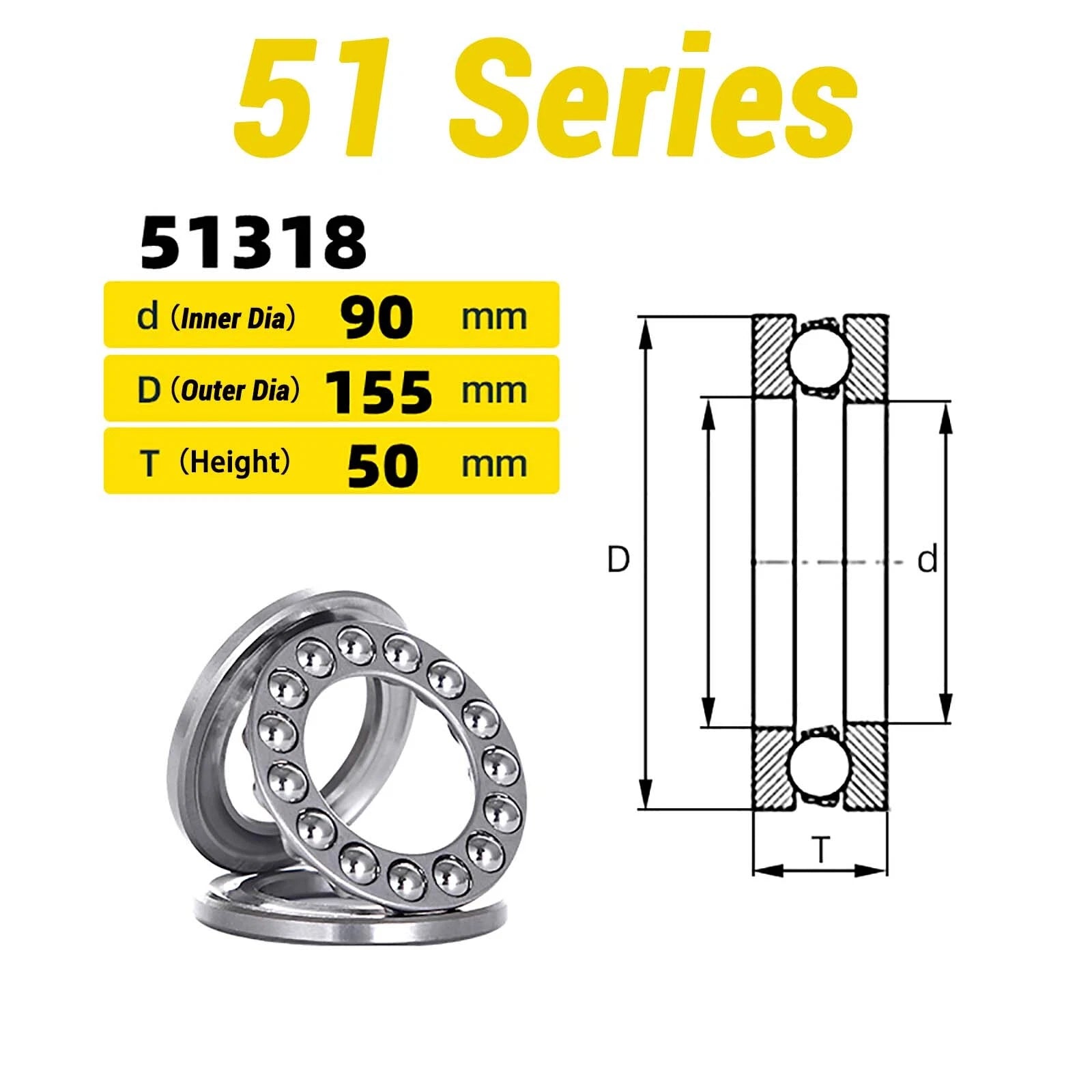
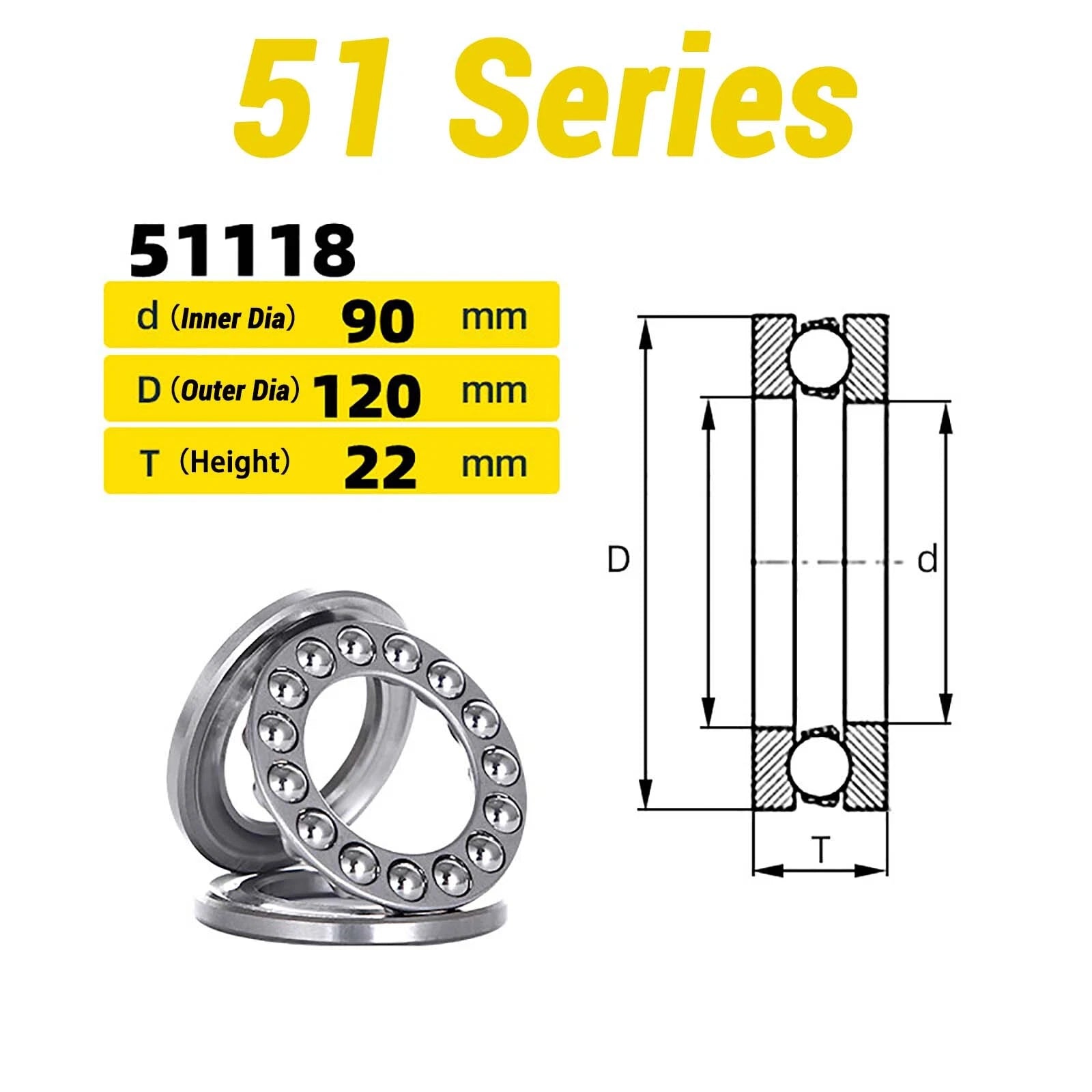
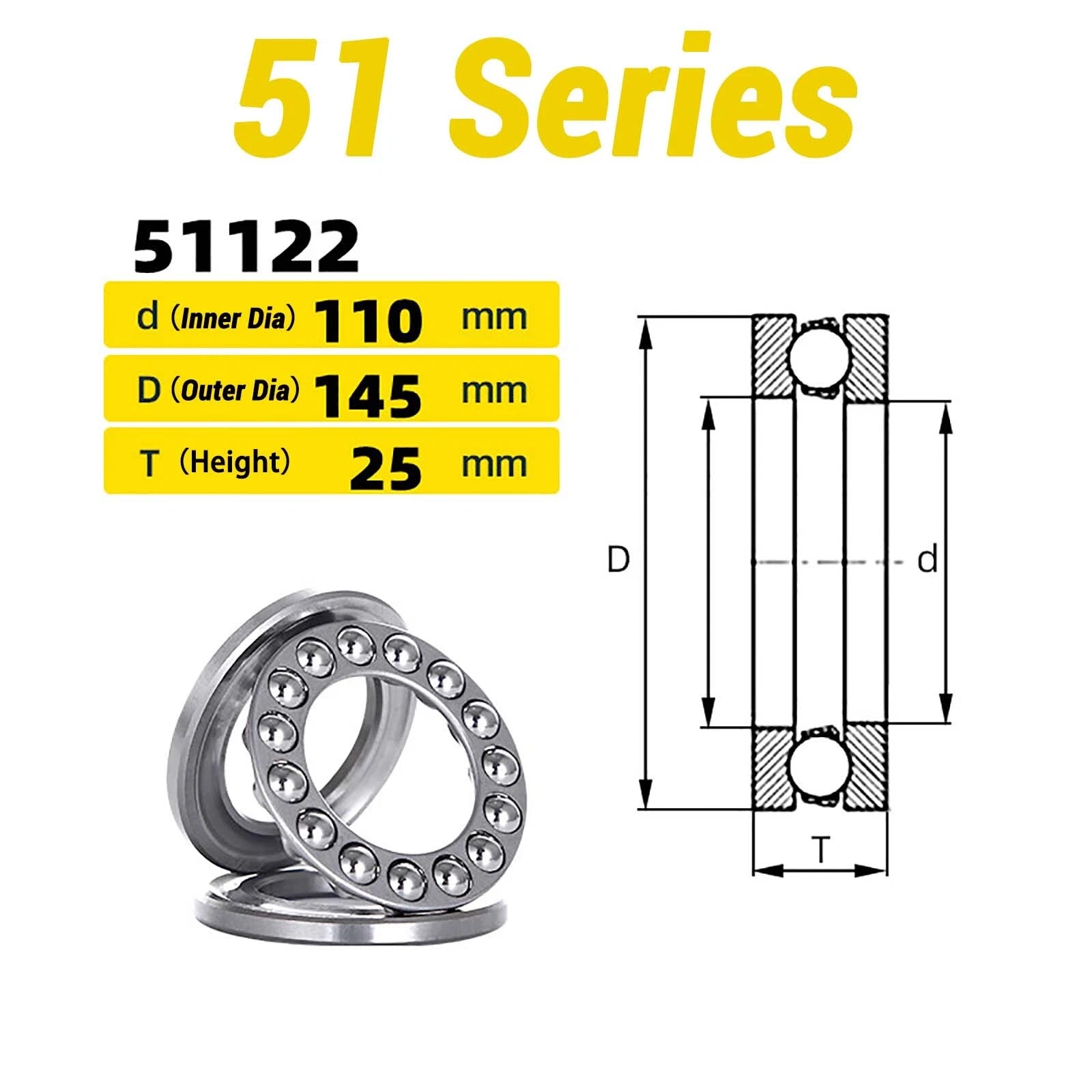
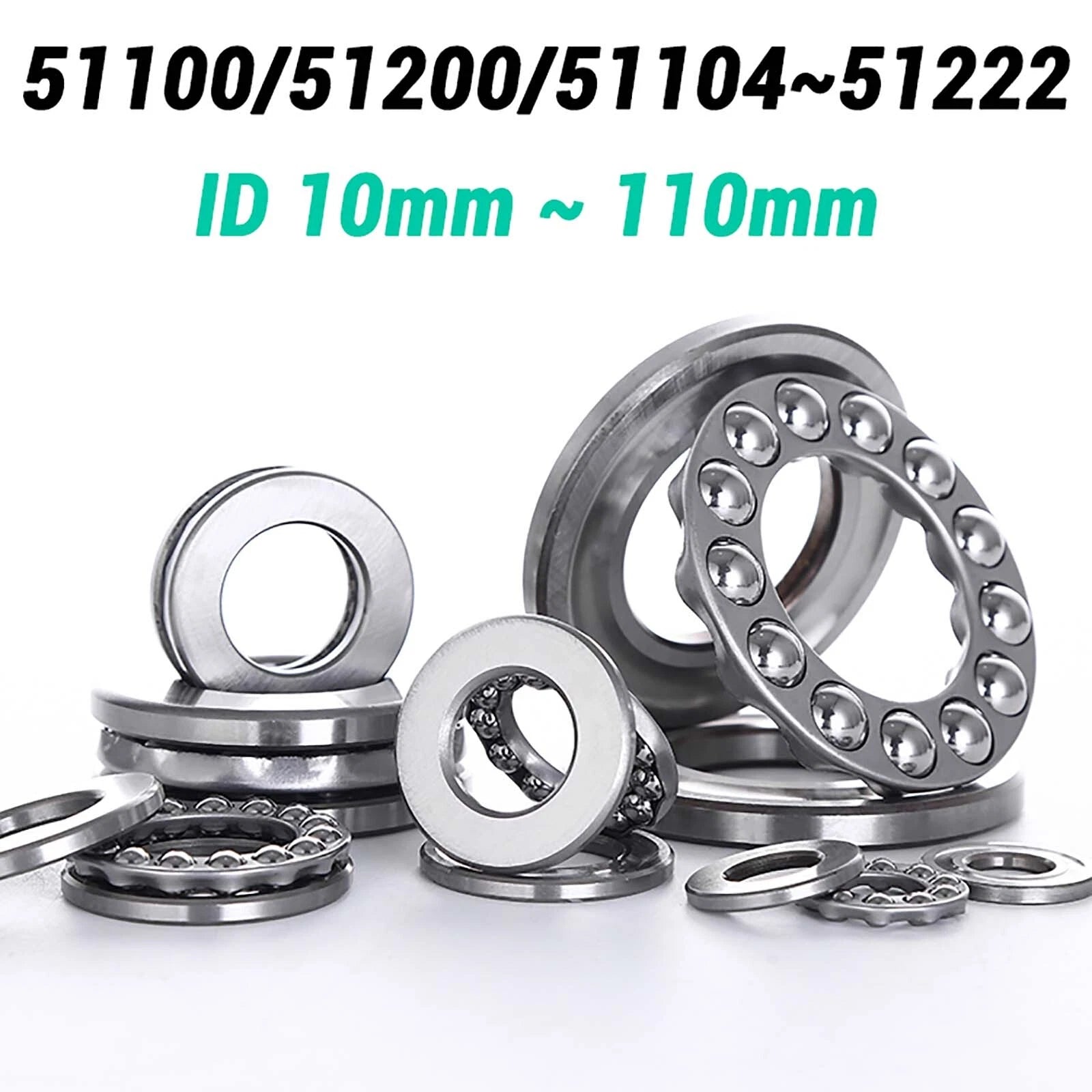
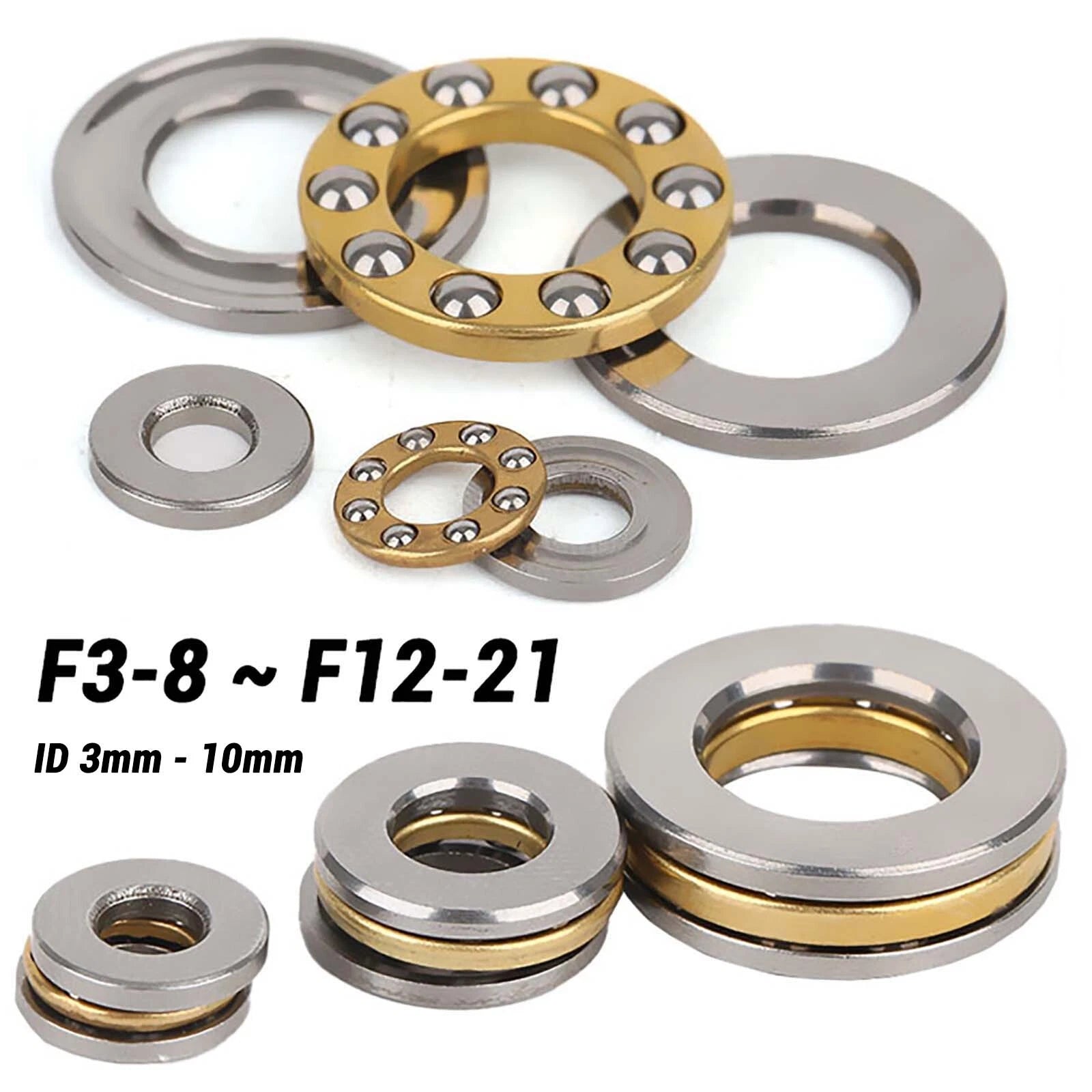
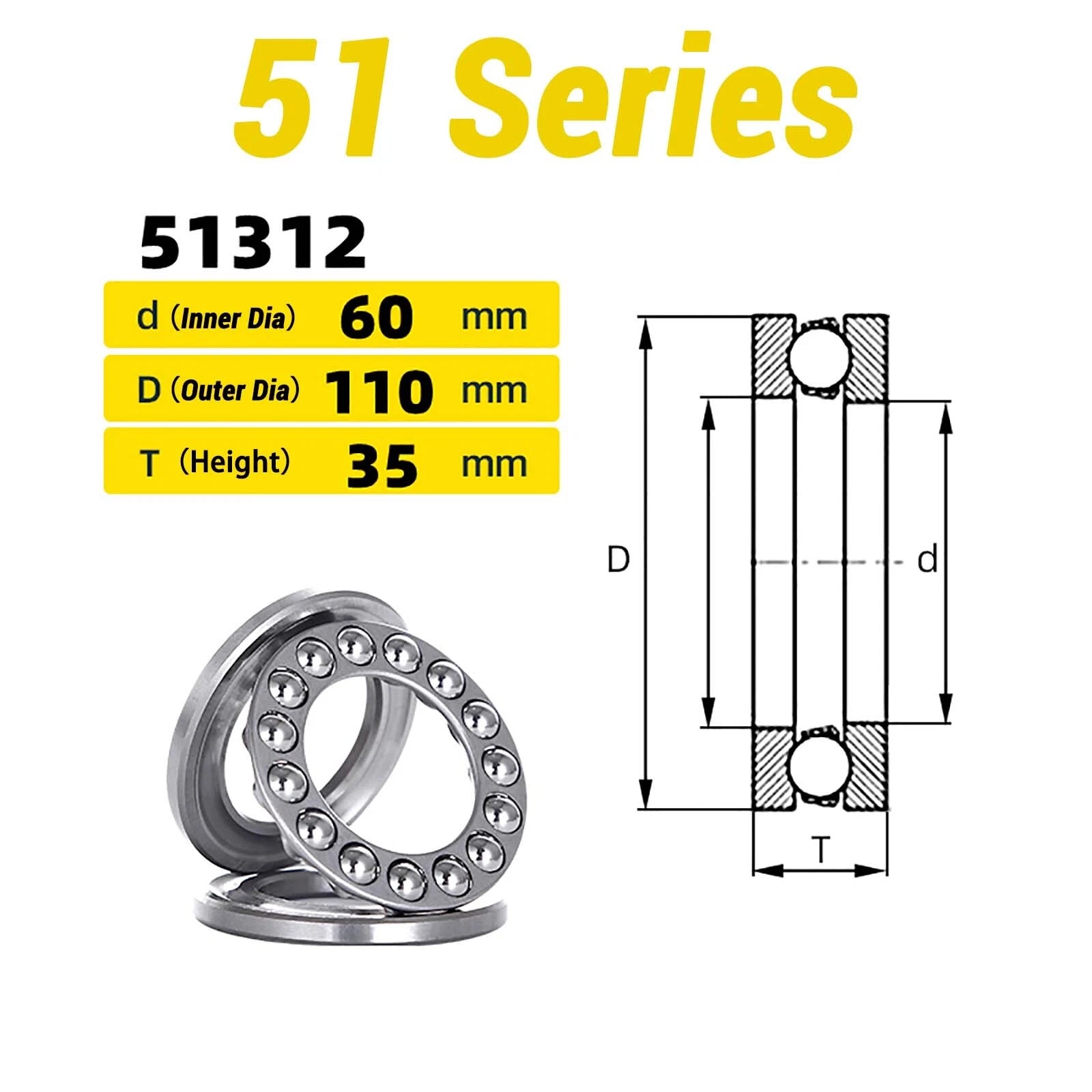
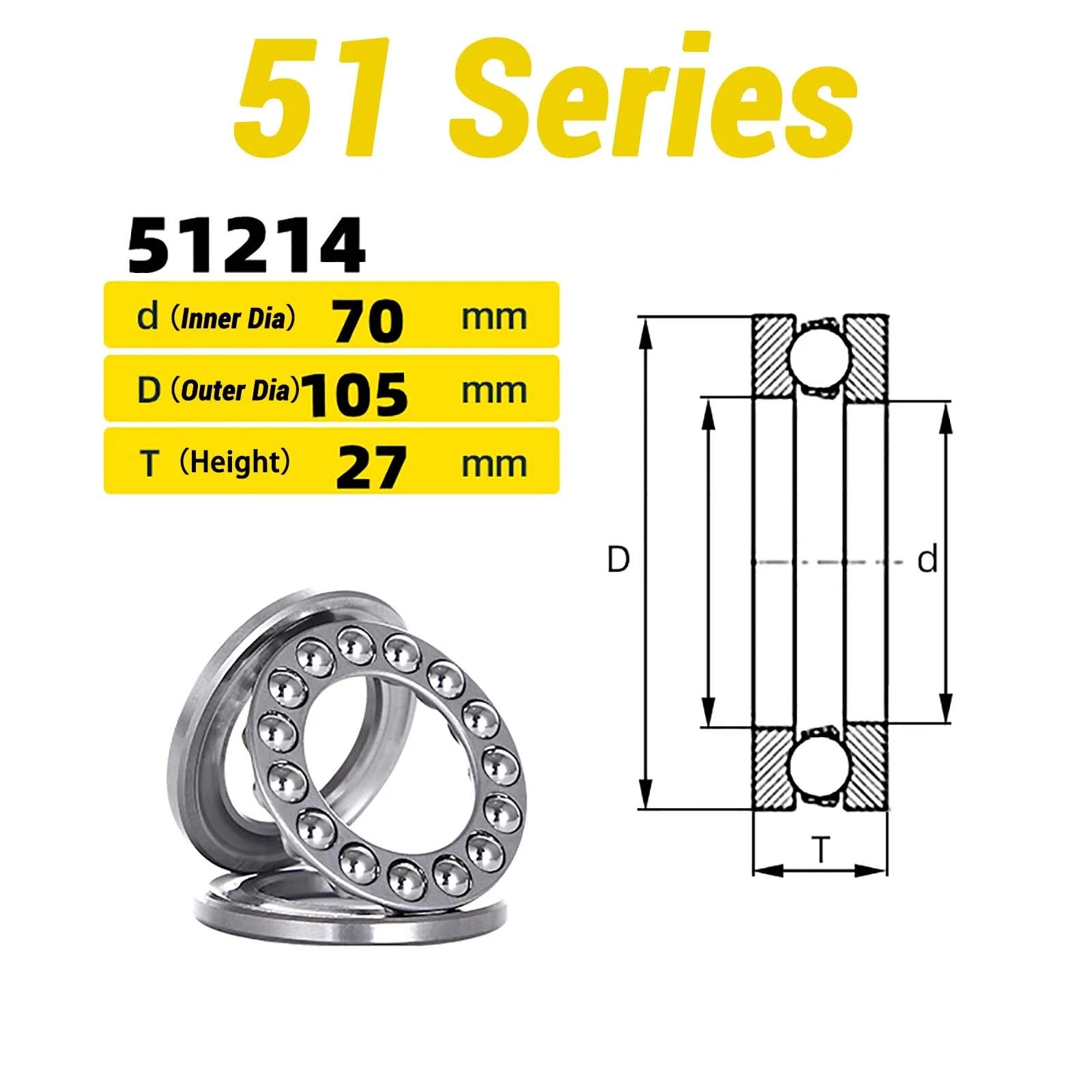
Each bearing is a three-part assembly consisting of a shaft washer (tight fit on the shaft), a housing washer (seated in the bore or housing), and a ball-and-cage assembly between them. Available in two series: the F-series thin-section plane bearings covering inner diameters from 3 mm (≈ 0.12 in) to 10 mm (≈ 0.39 in), and the standard 511xx / 512xx / 513xx / 514xx series spanning inner diameters from 10 mm (≈ 0.39 in) up to 110 mm (≈ 4.33 in), with overall thicknesses ranging from approximately 3.5 mm to 63 mm depending on the selected variant.
Typical use cases include vertical-shaft gearboxes and worm-drive reducers where axial forces dominate, precision rotary indexing tables and turntables in CNC fixtures, hydraulic pump thrust faces, agricultural equipment pivot points, and DIY lathe or milling machine spindle assemblies requiring controlled axial play. The standardized bore and OD dimensions make these bearings straightforward drop-in replacements for worn 511xx-series components across a wide range of industrial and workshop machinery.
Covers both miniature F-series thin-section bearings (ID 3–10 mm) and full-size 511xx / 512xx / 513xx / 514xx standard series (ID 10–110 mm), giving you a single source for small instrument pivots through heavy-duty industrial shafts.
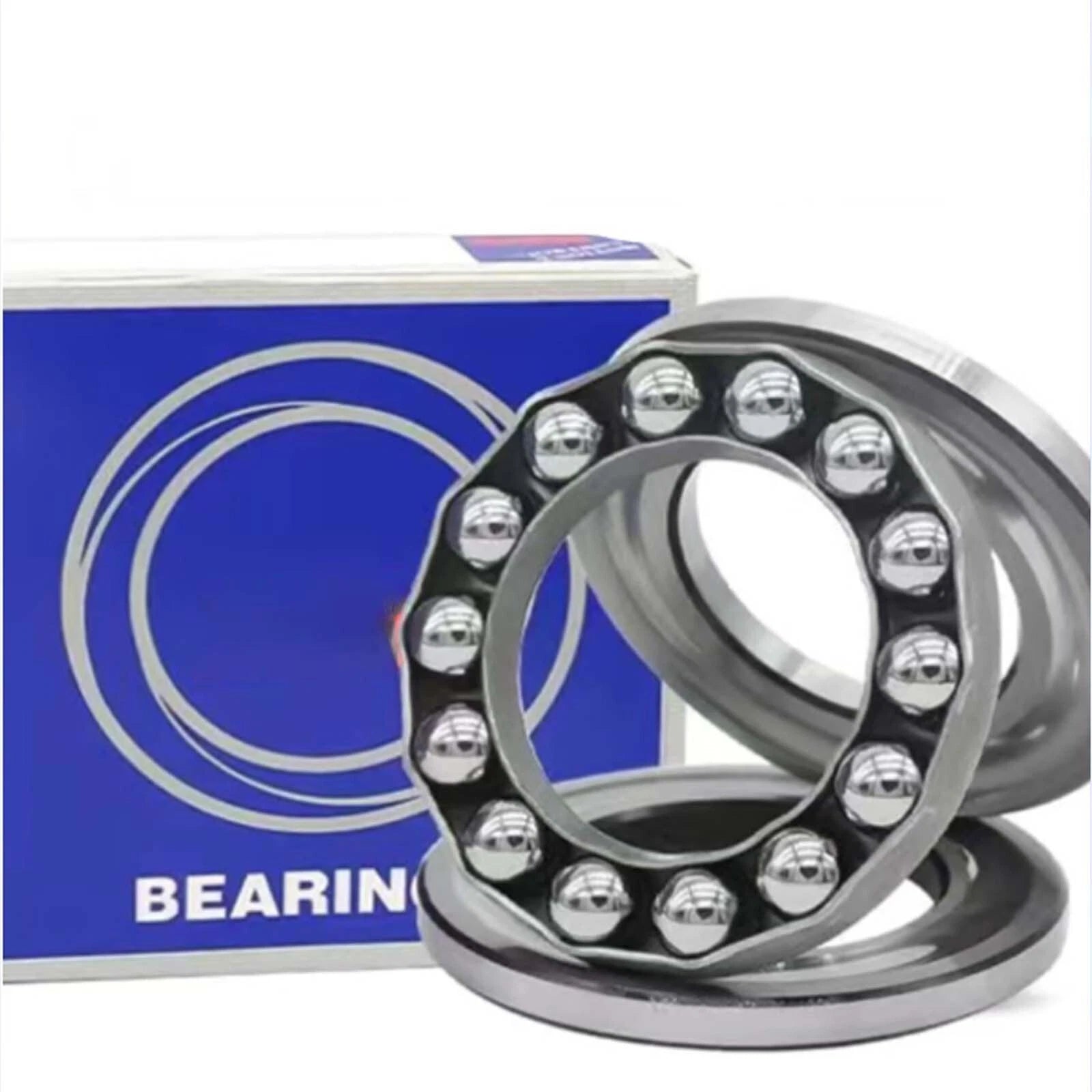
Shaft washer, housing washer, and ball-and-cage assembly are supplied as a matched set. The split design allows independent replacement of worn components and simplifies assembly in confined housings.
Flat raceway geometry channels thrust forces directly through the ball set perpendicular to the shaft axis, eliminating the edge-loading stress that occurs when radial bearings are pressed into axial service.
Bore, OD, and height conform to ISO / JIS standard 511xx, 512xx, 513xx, and 514xx dimensional series, ensuring interchangeability with OEM components and compatibility with standard bearing pullers and installation tools.
The flat-washer raceway design is optimized for applications where rotational speed is secondary to load capacity — such as screw jacks, press platens, rotary tables, and steering columns — rather than high-speed spindle work.
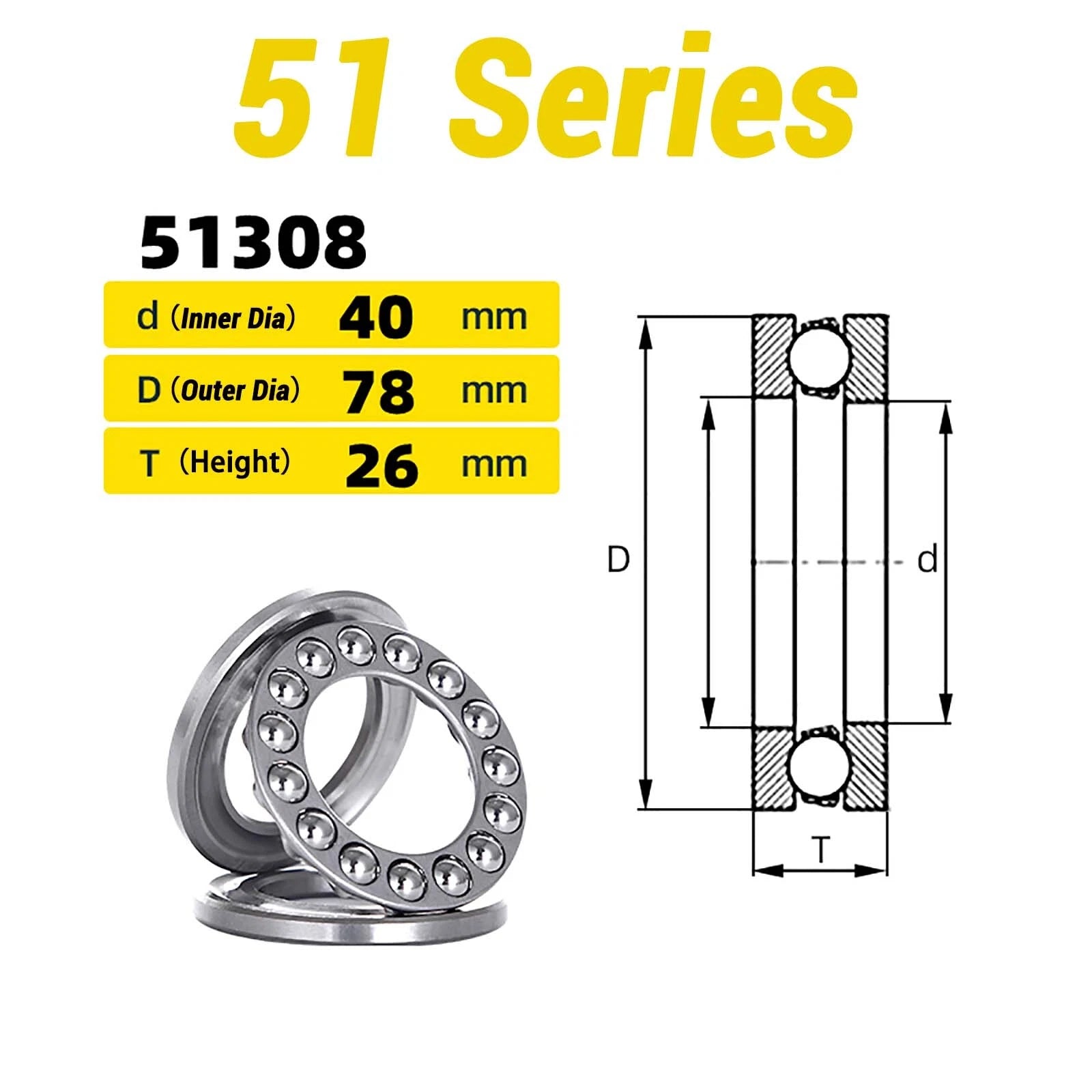
From the compact F3-8 (3 × 8 × 3.5 mm) to the heavy-duty 51222 (110 × 160 × 38 mm), all listed variants are held in inventory so you can match the exact bore and OD your assembly requires without waiting on special orders.
| Bearing Type | Single-direction axial thrust ball bearing (3-part plane bearing) |
|---|---|
| Series | F-series (thin section) / 511xx / 512xx / 513xx / 514xx (standard) |
| Inner Diameter (I.D.) Range | 3 mm – 110 mm (≈ 0.12 in – 4.33 in) |
| Outer Diameter (O.D.) Range | 8 mm – 190 mm (≈ 0.31 in – 7.48 in) — see variant options |
| Thickness Range | 3.5 mm – 63 mm (≈ 0.14 in – 2.48 in) — see variant options |
| Load Direction | Unidirectional axial (thrust) only |
| Number of Parts | 3 (shaft washer + housing washer + ball & cage assembly) |
| Dimensional Standard | ISO / JIS 511xx series (standard variants); F-series (thin section) |
| Cage Material | See variant options |
| Operating Temperature | See variant options / Contact us to confirm |
| Lubrication | See variant options |
| Quantity per Order | 1 piece per unit (select quantity at checkout) |
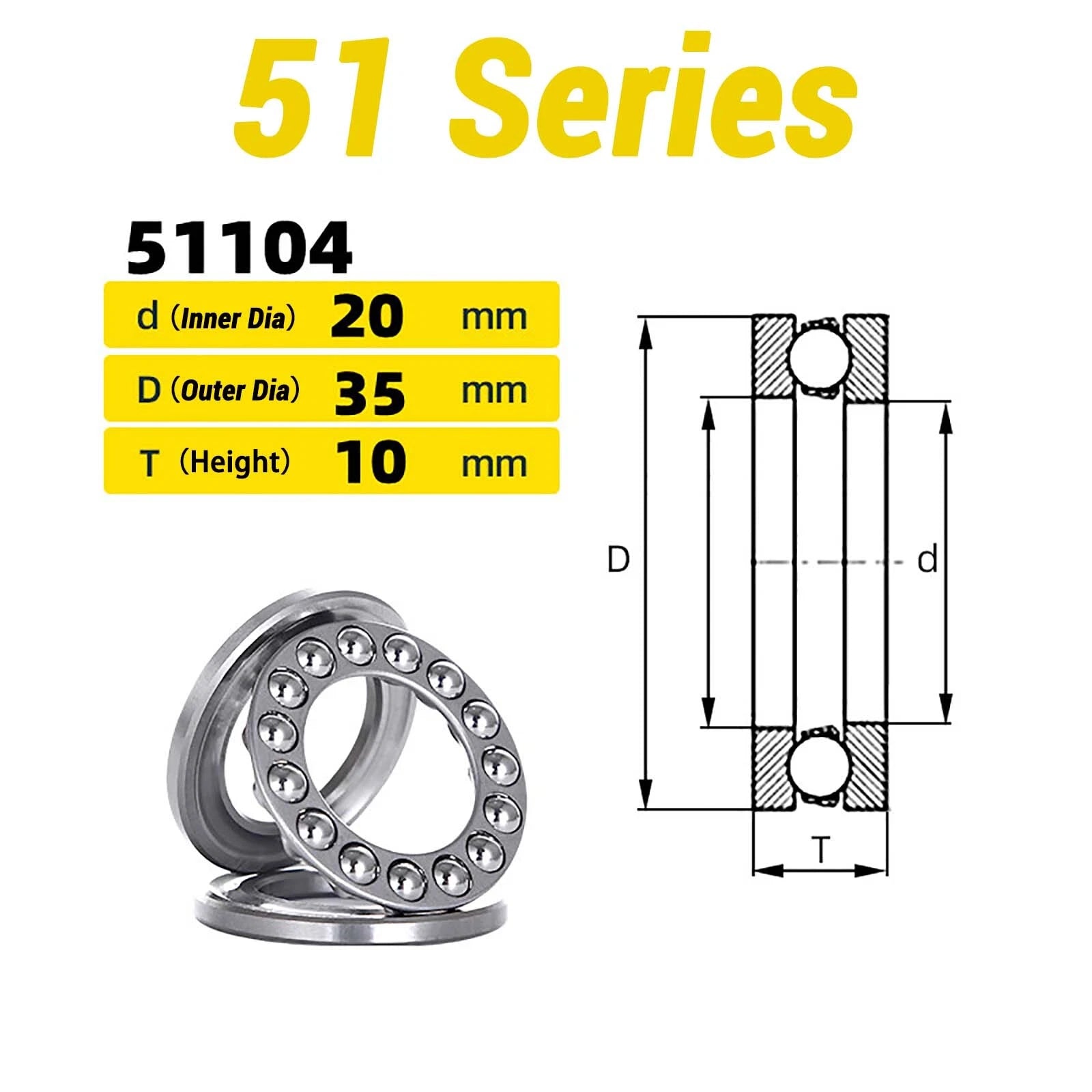
Match the inner diameter (I.D.) of the bearing to your shaft diameter — the shaft washer should be a snug sliding fit on the shaft, not loose. Then confirm the outer diameter (O.D.) fits within your housing bore and that the overall thickness (height) leaves adequate clearance for your assembly. Use the variant name format I.D × O.D × Thickness (e.g., 51205 | 25 × 47 × 15 mm) to cross-reference against your engineering drawing or the worn bearing's stamped designation.
No. Single-direction axial thrust ball bearings are designed exclusively for pure axial (thrust) loads acting perpendicular to the shaft. They cannot support radial loads and will fail prematurely if subjected to combined loading. For applications with simultaneous radial and axial forces, consider angular contact ball bearings or tapered roller bearings instead.
The F-series (e.g., F3-8, F6-14) are thin-section plane thrust bearings with a very low profile, typically used in miniature instruments, small motors, and compact mechanisms where axial space is limited. The 511xx / 512xx / 513xx / 514xx series follow ISO standard dimensional tables and are the most common industrial thrust ball bearing format — the higher the series number (511 → 514), the larger the OD and load capacity for the same bore size.
Lubrication state varies by variant. As a general practice for thrust ball bearings, apply a light coat of lithium-based grease (NLGI Grade 2) to the raceways and balls during installation if the bearing is supplied dry. Avoid over-packing, which can increase drag torque. Contact us to confirm the lubrication state of your specific variant before installation.
1. Slide the shaft washer (the washer with the tighter bore) onto the shaft — it rotates with the shaft. 2. Place the ball-and-cage assembly over the shaft washer. 3. Seat the housing washer (larger bore) against the stationary housing face — it does not rotate. 4. Apply axial preload through a nut, end cap, or spring as required by your design. Ensure the shaft washer and housing washer are not swapped; incorrect orientation causes rapid raceway wear.
Standard thrust ball bearings use carbon-chromium steel raceways and balls, which offer moderate corrosion resistance with proper lubrication but are not rated for continuous wet or chemically aggressive environments. For damp conditions, apply a corrosion-inhibiting grease and consider adding a protective seal or shield around the bearing housing. If your application involves water immersion or chemical exposure, contact us to discuss stainless-steel or coated alternatives.
Axial thrust ball bearings are optimized for low-to-moderate rotational speeds. As a conservative guideline, the limiting speed for standard 511xx-series bearings is typically in the range of 1,000–3,000 RPM depending on bore size and lubrication — larger bores have lower speed limits. F-series thin-section bearings may tolerate slightly higher speeds due to their lower mass. Always verify the speed rating against your specific variant; contact us if your application exceeds 2,000 RPM.