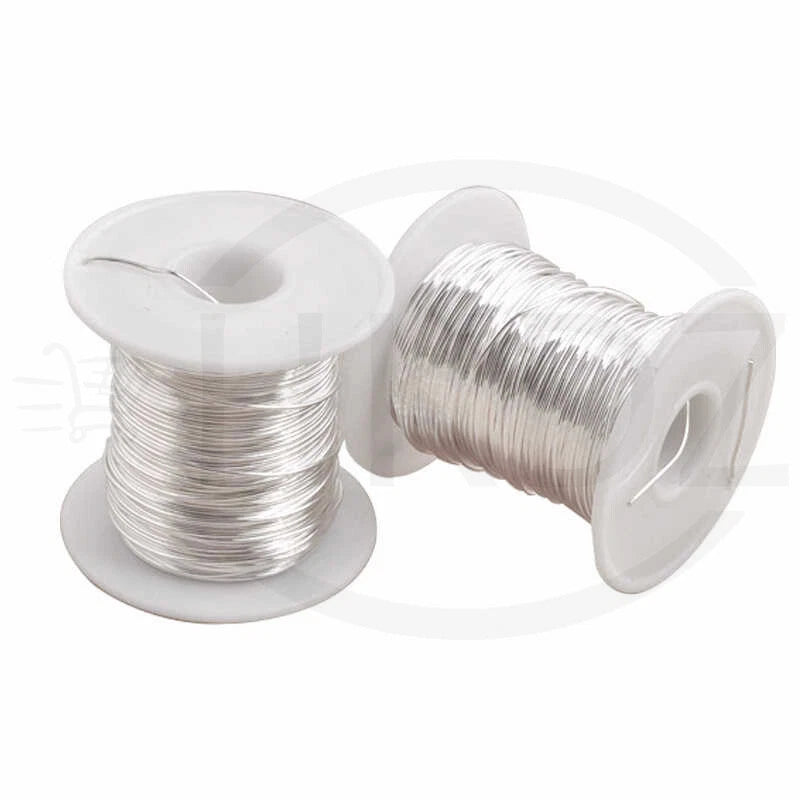
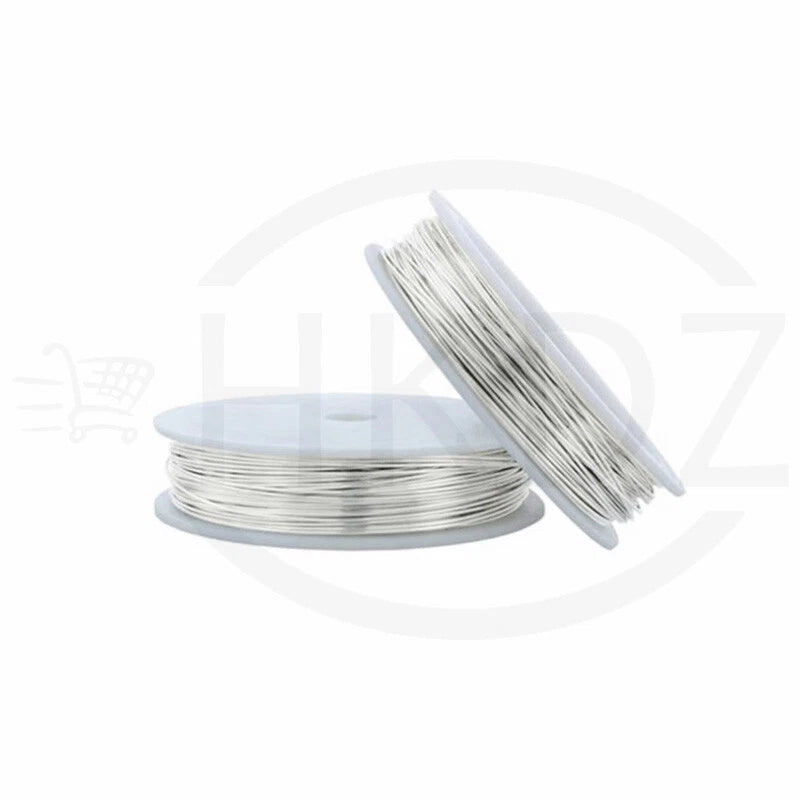
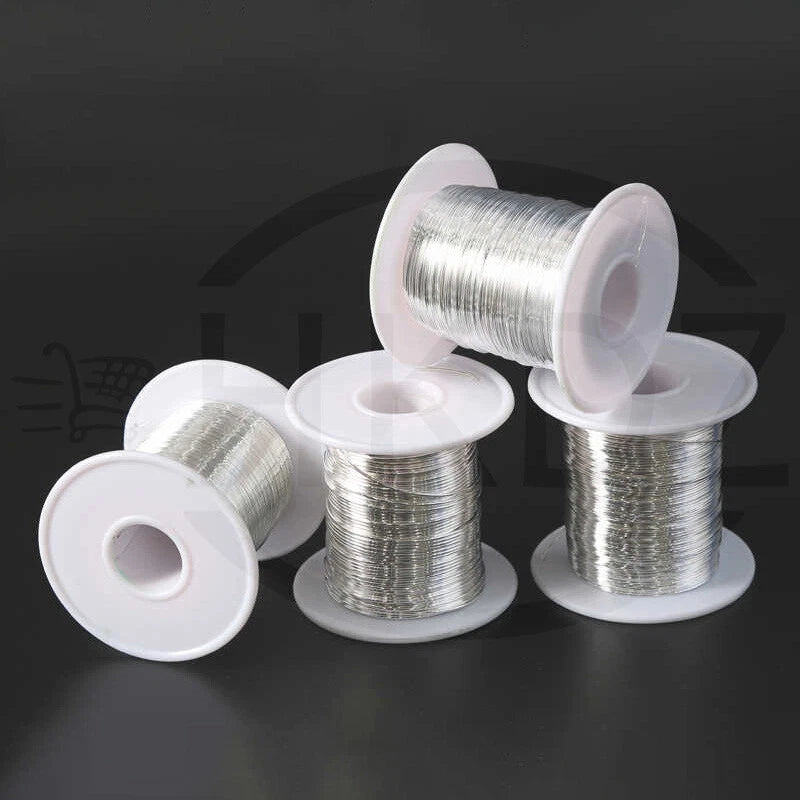
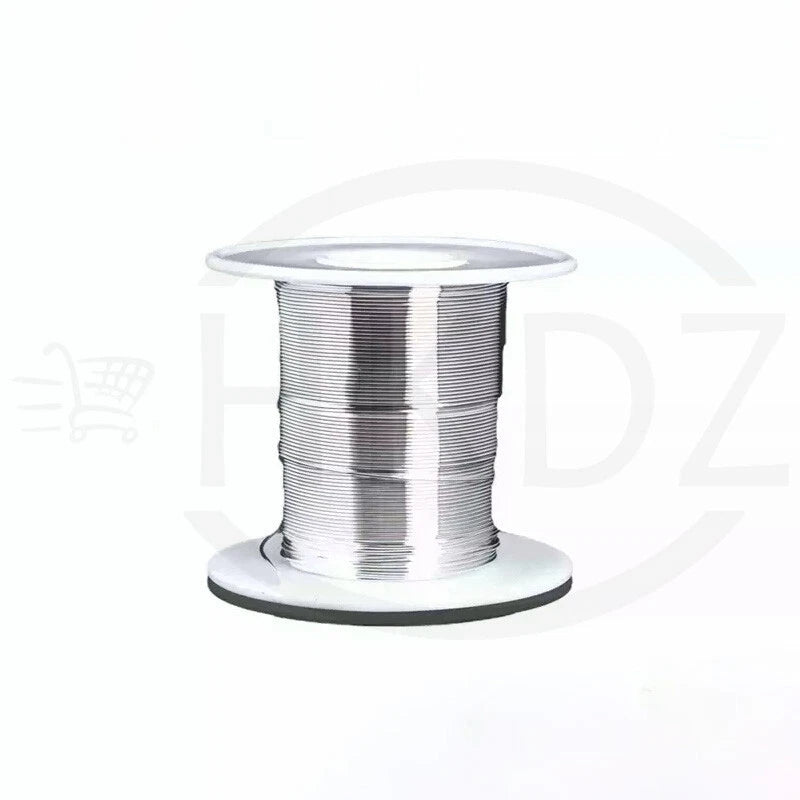
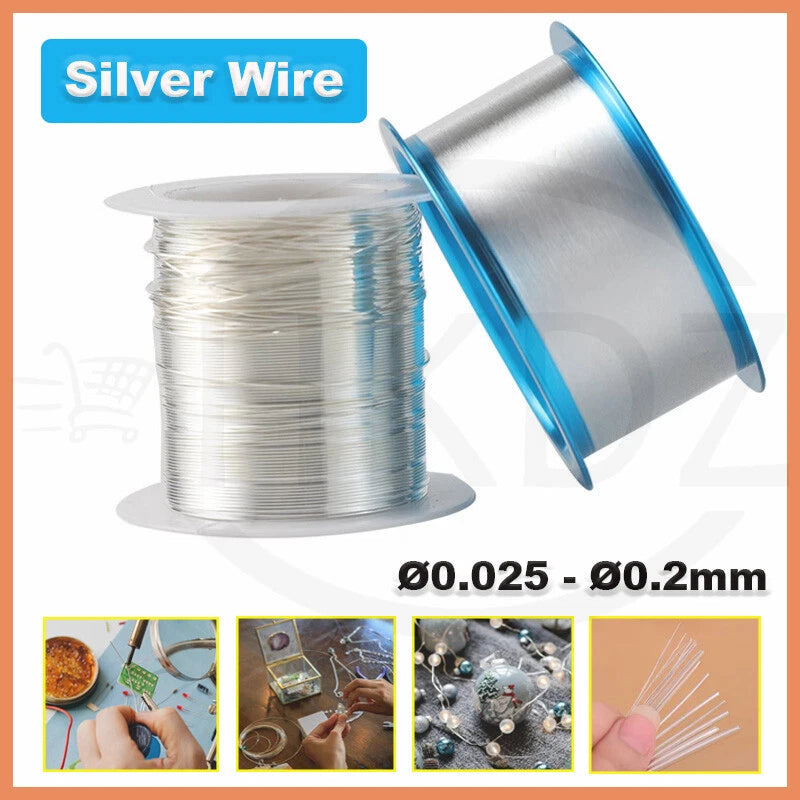
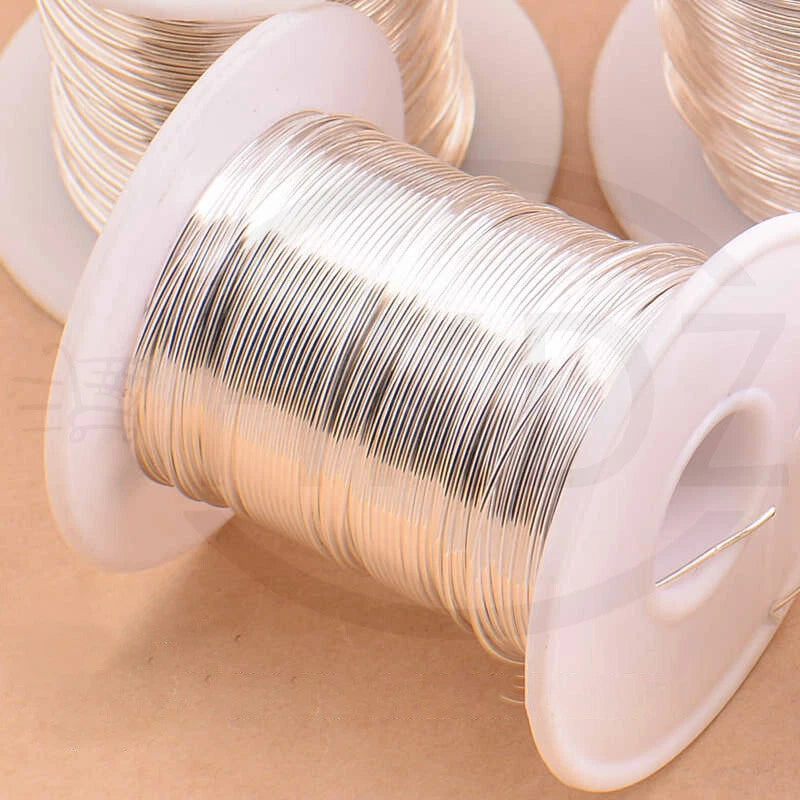
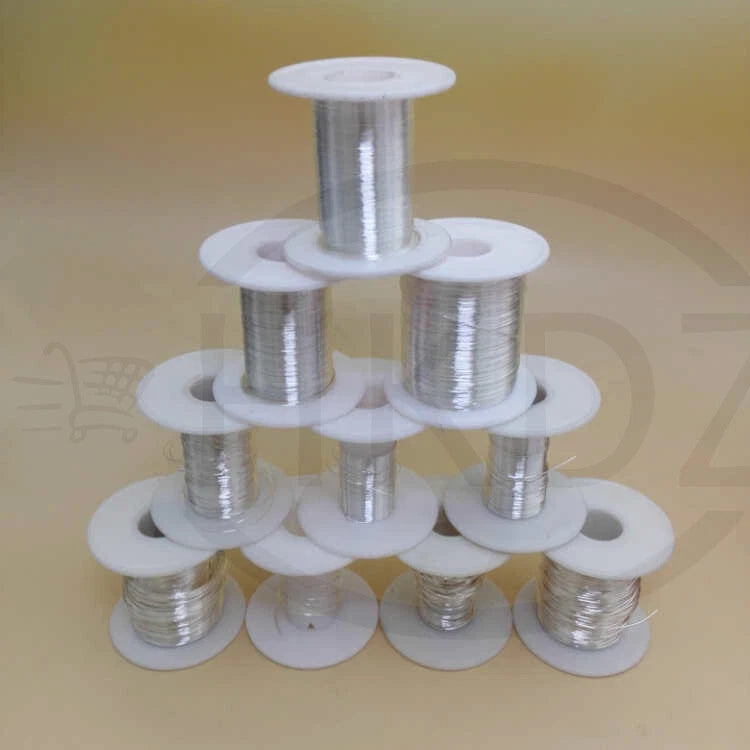
High Purity Silver Wire Ag99.99% Electrochemical Conductive Metal Wire 0.025-2mm

No reviews

Price:
Sale price$14.08 USD
Stock:
In stock (500 units), ready to be shipped

Payment & Security

Ach Direct Debit Amazon American Express Apple Pay Bancontact Diners Club Discover Google Pay iDEAL Wero Mastercard PayPal Shop Pay USDC Visa

Your payment information is processed securely. We do not store credit card details nor have access to your credit card information.

Quantity Discount Promotion
🎯 BULK DISCOUNT: Buy More, Save More!
Buy 2 Items
5% OFF
Buy 4 Items
10% OFF
Buy 6 Items
15% OFF
Expert

DIY Expert Support

Get fitment advice & recommendations

Mon-Fri, 8:30AM-8PM
24-Hour Fast Ship
🚚
Arrives in 3-14 days
🌍
Global Reach
↩️
30-Day Returns
🌱 1 tree planted with every purchase

Description

Ag99.99% Pure Silver Wire — Precision Electrochemical & Conductive Metal Wire, 0.025–2mm

When your electrochemical cell, sensor calibration rig, or fine jewelry project demands a conductor with zero tolerance for impurity, standard copper or silver-plated wire simply won't do. Researchers, electrochemists, jewelers, and electronics hobbyists who need a reliably inert, highly conductive reference electrode or interconnect turn to high purity silver wire Ag99.99% — because even trace contaminants shift electrode potential and compromise results.

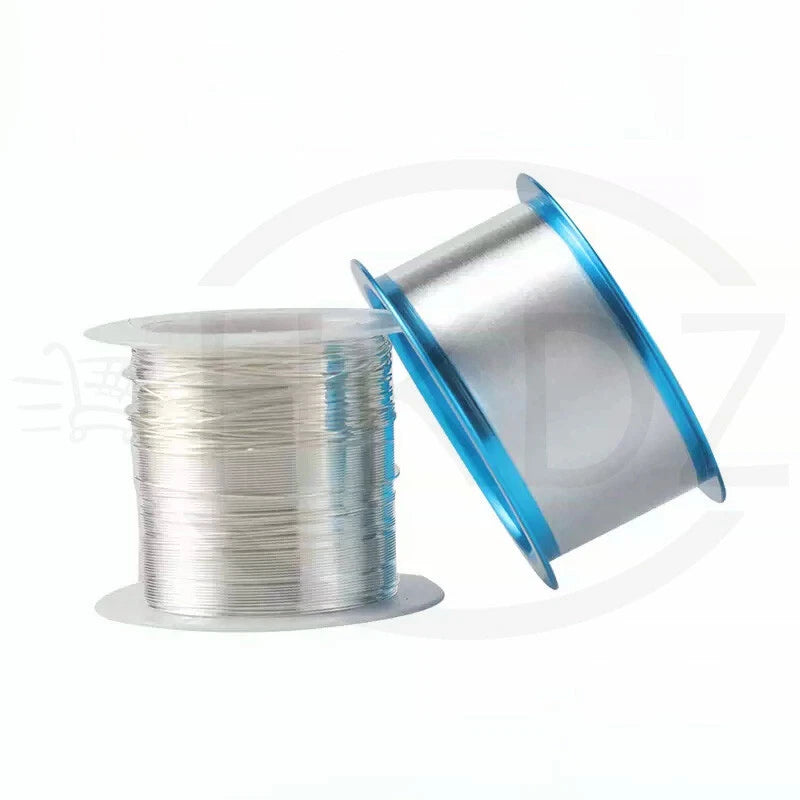
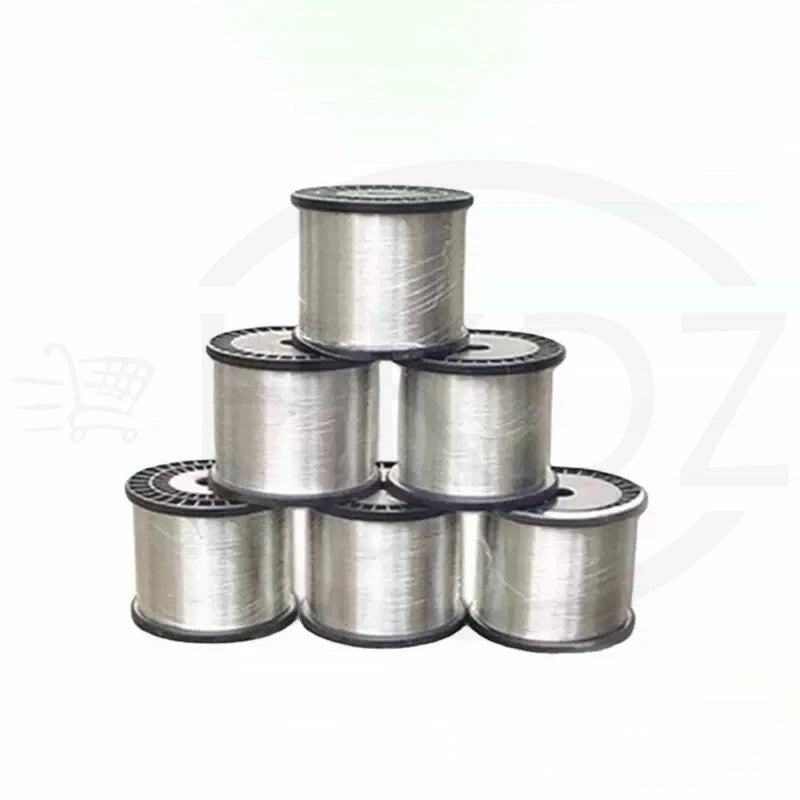
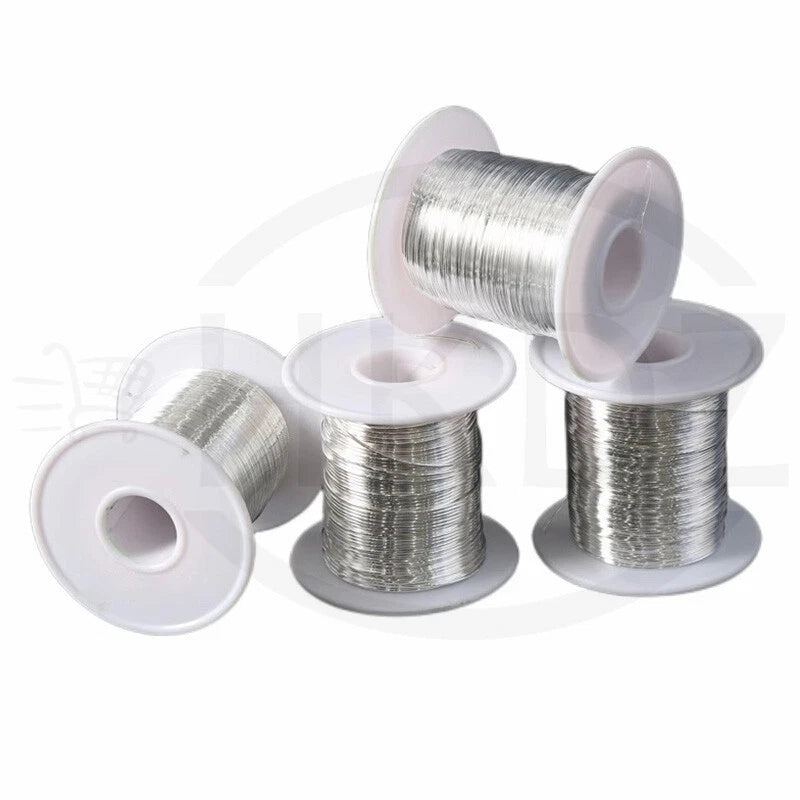
This silver wire is drawn from 99.99% pure silver (4N grade) and is available in diameters from Ø0.025 mm to Ø2 mm (approximately 0.001 in to 0.079 in) and in cut lengths of 20 cm, 1 m, 2 m, and 5 m. The wire ships on a straight-cut or coiled form depending on diameter, with a bright, uncoated surface finish that is ready for immediate use in electrochemical or conductive applications.

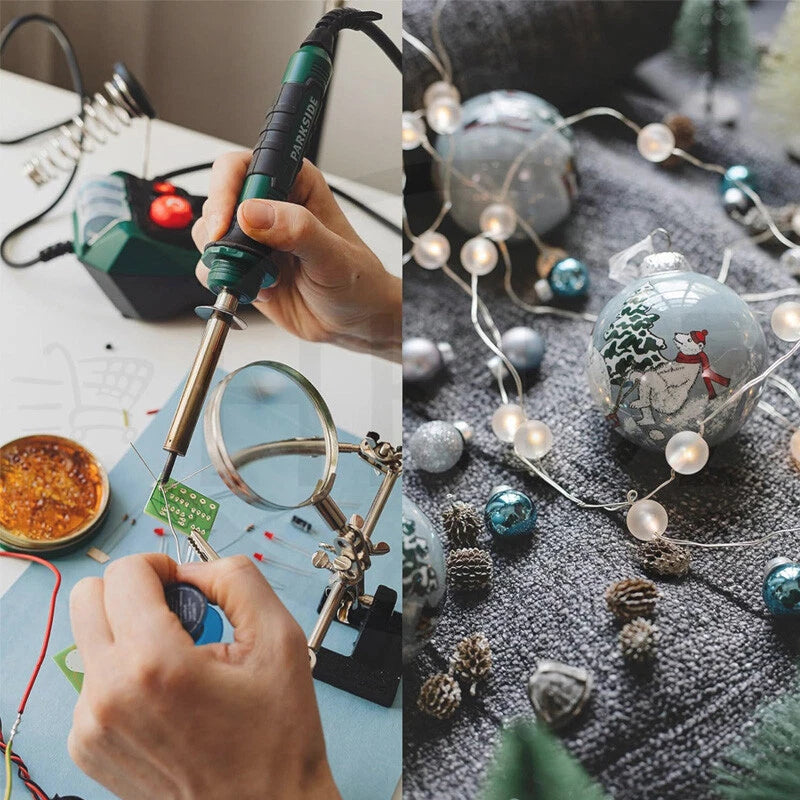
Typical use cases include: fabricating Ag/AgCl reference electrodes for potentiometry and pH measurement; winding resistance-heating elements in laboratory furnaces; creating fine conductive traces in DIY electronics and wearable circuits; and crafting delicate wire-wrapped jewelry or argentium-style art pieces where a pure silver surface is essential for tarnish behavior and solderability.

Compatibility note: This wire is uncoated bare silver. It is compatible with standard silver solders, conductive epoxies, and electrochemical chlorination processes (to form Ag/AgCl). It is not insulated — add your own PTFE or enamel sleeve if electrical isolation is required.

✅ Key Features of These High Purity Silver Wires

  • 🔬4N Grade Purity (Ag99.99%) — Verified 99.99% silver content minimizes electrode potential drift and galvanic interference in electrochemical cells, potentiostats, and reference electrode assemblies.
  • 📏Wide Diameter Range: 0.025–2 mm — From hair-thin Ø0.025 mm filaments for micro-sensor leads to robust Ø2 mm rods for heating elements, a single product line covers the full spectrum of lab and craft needs.
  • ⚙️Bright Uncoated Surface — The bare silver finish allows direct chlorination to Ag/AgCl, immediate soldering with silver-compatible fluxes, and reliable electrical contact without stripping insulation.
  • 🔗Solderable & Bondable — Bonds readily with standard silver solder (e.g., Sn96/Ag4 or Ag-bearing eutectic alloys) and conductive silver epoxy, making it straightforward to terminate into connectors or PCB pads.
  • 🧪Stable Electrode Potential — Pure silver exhibits a well-characterized, reproducible standard electrode potential (+0.80 V vs. SHE), making it a dependable material for reference electrode fabrication and electroanalytical work.
  • ✂️Flexible Length Options — Choose 20 cm for short sensor leads, 1 m or 2 m for bench work, or 5 m for winding coils and extended runs — no need to buy excess stock you won't use.

📐 Technical Specifications — Silver Metal Wire

Material Silver (Ag), 99.99% purity (4N grade)
Diameter Range Ø0.025 mm – Ø2 mm (approx. 0.001 in – 0.079 in)
Available Lengths 20 cm, 1 m, 2 m, 5 m
Surface Finish Bright, bare (uncoated, uninsulated)
Electrical Resistivity ~1.59 × 10⁻⁸ Ω·m at 20 °C (lowest of all metals)
Melting Point 961.8 °C (1763 °F)
Tensile Strength See variant options (varies by diameter)
Solderability Compatible with silver-bearing solders and conductive epoxy
Insulation None — bare wire
Packaging Straight cut or coiled (diameter-dependent)
Product Type Metal Wire

❓ Frequently Asked Questions

What does Ag99.99% mean, and why does purity matter for electrochemical use?

Ag99.99% (4N grade) means the wire is 99.99% silver by mass, with total impurities below 100 ppm. In electrochemical applications, even small amounts of copper, iron, or other metals shift the electrode potential away from the theoretical silver value (+0.80 V vs. SHE), introduce galvanic noise, and can contaminate your electrolyte. 4N purity ensures reproducible, stable electrode behavior across experiments.

Which diameter should I choose for making an Ag/AgCl reference electrode?

For most bench-scale reference electrodes, Ø0.5 mm to Ø1 mm is the practical range — thick enough to handle without kinking, thin enough to fit standard glass capillary housings. If you are building a micro-reference for scanning electrochemical microscopy (SECM), Ø0.025–0.1 mm filaments are appropriate. Select the 1 m length for a single electrode; the 5 m option is economical if you are fabricating multiple electrodes in a batch.

Can I solder this wire, and what flux or solder should I use?

Yes. Bare Ag99.99% wire solders readily. Use a silver-bearing solder such as Sn96Ag4 or a eutectic Sn63Pb37 with a mildly activated rosin flux (RMA type). Avoid aggressive acid fluxes, which can etch the silver surface. For no-heat bonding, a two-part conductive silver epoxy (e.g., MG Chemicals 8331) also bonds well to the bare silver surface.

Will this wire tarnish, and does tarnish affect conductivity?

Silver tarnishes (forms Ag₂S) when exposed to sulfur-containing compounds in air over time. The thin tarnish layer has higher resistivity than pure silver, which can matter for low-current sensor contacts. For electrochemical use, lightly abrade or electrochemically reduce the surface before use. For jewelry, tarnish is a cosmetic issue only and does not affect structural integrity. Store unused wire in a sealed, low-humidity bag to slow tarnishing.

Is this wire suitable for jewelry making and wire wrapping?

Yes, with a caveat on work-hardening. Fine silver (Ag99.99%) is softer and more ductile than sterling silver (Ag92.5%), which makes it easier to form tight wraps and coils without cracking, but it also means it work-hardens more slowly and may feel slightly less springy. Diameters of Ø0.2–0.5 mm are popular for wire wrapping; Ø1–2 mm is used for structural frames and bangles. Anneal by heating to a dull red and quenching in water if the wire becomes stiff during extended forming.

How do I select between the 20 cm, 1 m, 2 m, and 5 m length options?

The 20 cm option is designed for larger-diameter wire (Ø1–2 mm) where a short, rigid segment is all that is needed for a heating element or structural component. The 1 m and 2 m lengths suit most bench electrochemistry and jewelry projects. The 5 m option is the most cost-effective per meter for thinner diameters (Ø0.025–0.9 mm) and is ideal if you are winding coils, making multiple electrodes, or running extended conductive traces.

Can this wire be used as a resistance heating element in a laboratory furnace?

Silver wire can function as a low-temperature resistance heater up to approximately 700–800 °C in inert or reducing atmospheres. Above that range, silver oxidizes and its mechanical strength drops sharply. For furnace elements operating above 900 °C, platinum or Kanthal wire is more appropriate. For lower-temperature applications such as sample stage heaters or micro-hotplates, Ø0.5–1 mm silver wire is a viable and highly conductive option.

🛒 Select your Diameter and Length above, then add to cart.

You may also like

Recently viewed