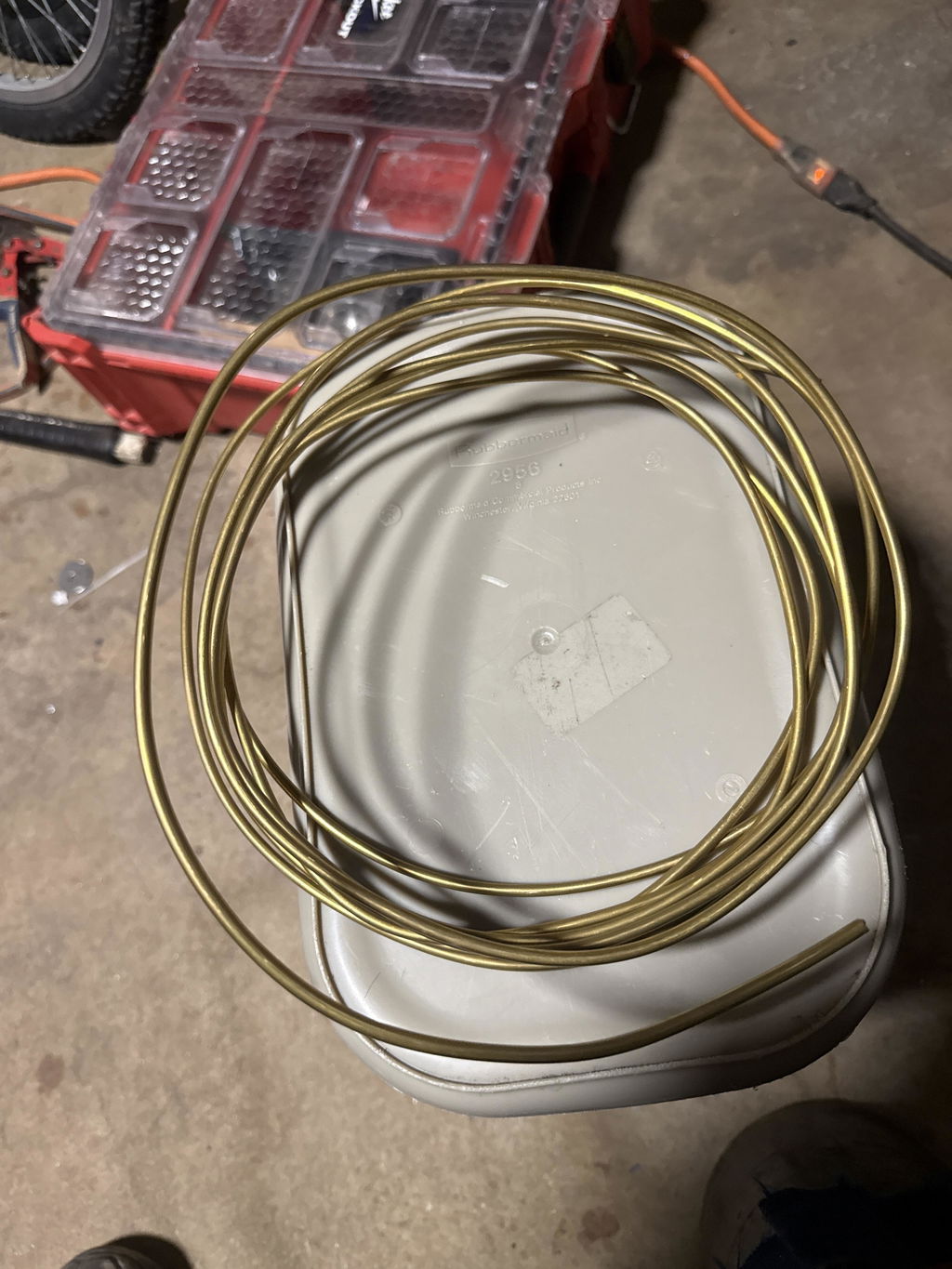
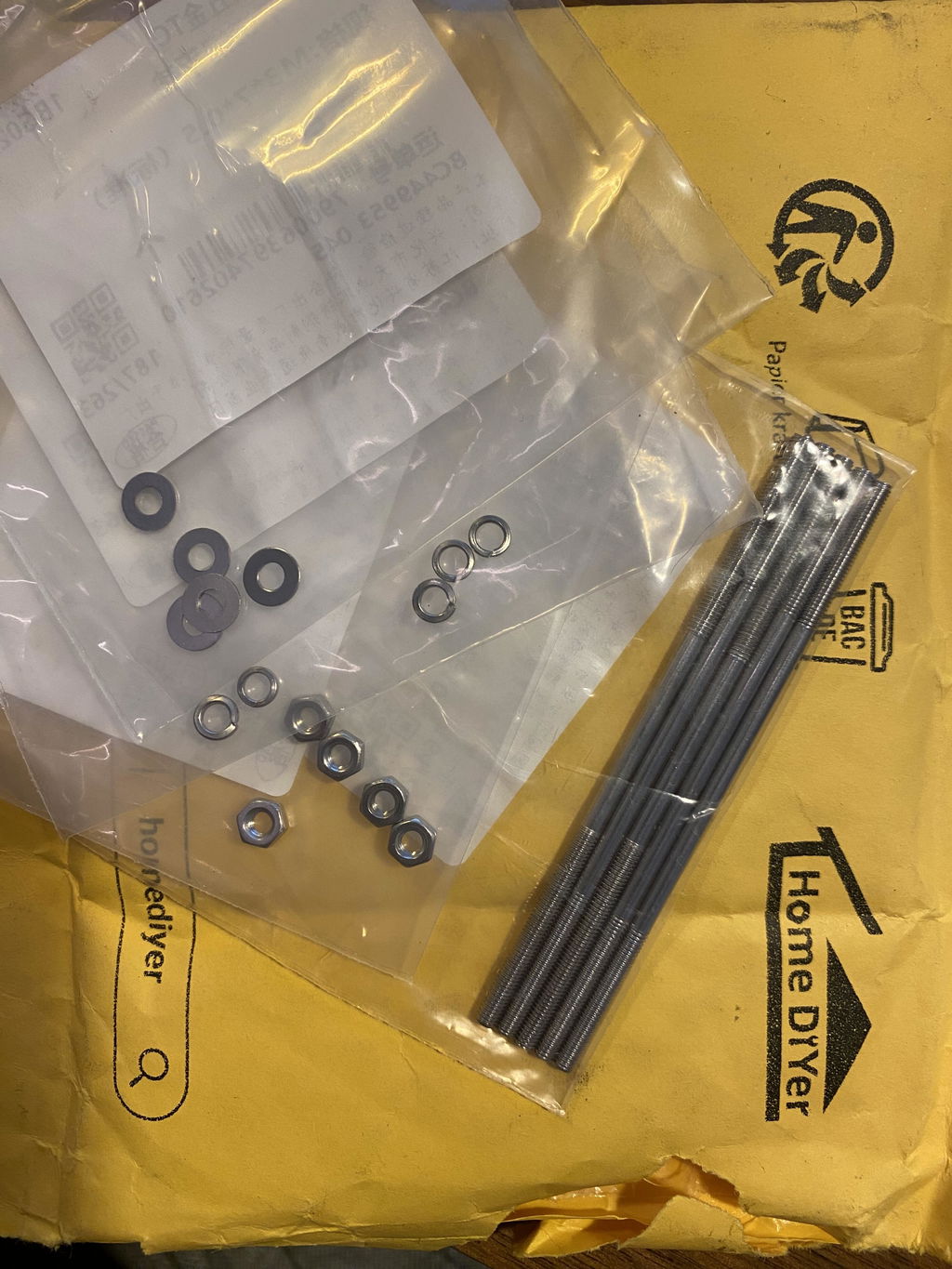
The chain is fine...but I ordered the wrong size. Nine links of the chain I ordered equals six of the size I wanted. My error...
How can I straighten out the springs? I can't use them coil uo as is.
Your payment information is processed securely. We do not store credit card details nor have access to your credit card information.
Get fitment advice & recommendations
When your project demands reliable conductivity and dimensional accuracy, generic metal stock simply won't cut it. Whether you're a maker building custom busbars, an electrician fabricating grounding straps, or a craftsperson shaping decorative inlays, you need copper that performs consistently across every cut. This highly pure copper strip flat bar is stocked in a 10mm thickness across widths from 20mm to 100mm (approximately 0.39" to 3.94"), giving you the flexibility to match the exact cross-section your application requires.
Each flat bar is produced from high-purity Cu copper, delivering excellent electrical and thermal conductivity. The 10mm thick profile is available in a 200mm (approx. 7.87") standard length, with width options spanning 10mm × 20mm through 12mm × 100mm cross-sections. The flat, mill-finished surface is ready for cutting, bending, soldering, or further machining without additional preparation.
Typical use cases include copper busbar fabrication for electrical panels and battery interconnects, heat-sink shims and thermal interface strips for electronics cooling, and decorative metalwork such as inlay banding, jewelry blanks, and architectural accent pieces. Long-tail applications like "10mm thick copper flat bar for busbar" and "pure copper strip for grounding strap" are well served by this versatile stock.
Manufactured from high-purity copper, ensuring superior electrical conductivity (typically ≥99.9% Cu) and consistent thermal performance across the full bar length.
Available in widths from 20mm to 100mm (0.79"–3.94"), all at a consistent 10mm thickness, letting you select the exact cross-sectional area for your current-carrying or structural requirement.
The flat, smooth mill finish is ready for immediate cutting, drilling, bending, or soldering — no surface prep required for most workshop and electrical applications.
Copper's inherent thermal properties make these strips ideal for heat-sink shims, thermal interface components, and any application where efficient heat dissipation is critical.
Copper develops a stable patina over time that slows further oxidation, making these flat bars suitable for both indoor electrical enclosures and semi-exposed decorative installations.
From precision busbar fabrication and grounding straps to jewelry blanks, inlay banding, and architectural metalwork — this copper flat bar adapts to a wide range of maker and industrial applications.
| Material | High-Purity Copper (Cu) |
|---|---|
| Thickness | 10mm (0.39") |
| Width Range | 20mm – 100mm (0.79" – 3.94") |
| Standard Length | 200mm (7.87") |
| Surface Finish | Mill Finish |
| Conductivity | See variant options |
| Temper / Hardness | See variant options |
| Color | Copper (natural) |
| Condition | New |
The width you need depends on the current-carrying capacity required. A wider cross-section (e.g., 10mm × 100mm) handles higher amperage with less resistance and heat buildup, while narrower strips (e.g., 10mm × 20mm) suit lower-current grounding straps or decorative uses. Consult your electrical design specifications or a licensed electrician to confirm the correct cross-sectional area for your load.
High-purity copper is naturally ductile, which means it bends without cracking when worked carefully. The 10mm thickness provides good structural rigidity for busbar and bracket applications. For tight-radius bends, use a proper bending brake or vise to avoid stress fractures. Annealing (gentle heating) can further improve formability if needed.
Copper naturally oxidizes to form a brownish or greenish patina (verdigris) when exposed to air and moisture. This patina is a stable oxide layer that actually slows further corrosion. For electrical connections, clean contact surfaces before installation and apply an anti-oxidant compound if required by your local electrical code. For decorative use, a clear lacquer coat can preserve the bright copper appearance.
Yes. High-purity copper is one of the most solderable and brazeable metals available. Use a rosin-core or no-clean flux solder for electrical joints, or silver-bearing brazing alloy for higher-temperature structural joints. Lightly sand or clean the surface with isopropyl alcohol before soldering to remove any surface oxidation for the best bond.
A metal-cutting bandsaw, angle grinder with a metal-cutting disc, or a cold saw all work well for cutting 10mm thick copper. Avoid high-speed abrasive cutting without cooling, as copper conducts heat rapidly and can work-harden at the cut edge. A fine-tooth hacksaw is also effective for shorter cuts. Always deburr cut edges with a file or deburring tool before handling.
Yes. Copper has one of the highest thermal conductivities of any common metal (approximately 385–400 W/m·K), making these flat bars excellent for heat-sink shims, thermal interface spreaders, and cold-plate components. The flat, consistent geometry simplifies integration into thermal management assemblies. For best thermal contact, lap or polish the mating surface to minimize interface resistance.
The 12mm thick variants (available in 40mm and 50mm widths) offer a larger cross-sectional area for the same width, which increases current-carrying capacity and mechanical stiffness. Choose 12mm if your design requires higher ampacity or greater rigidity. The 10mm variants cover a wider range of widths (20mm–100mm) and are more commonly used for standard busbar and decorative applications.