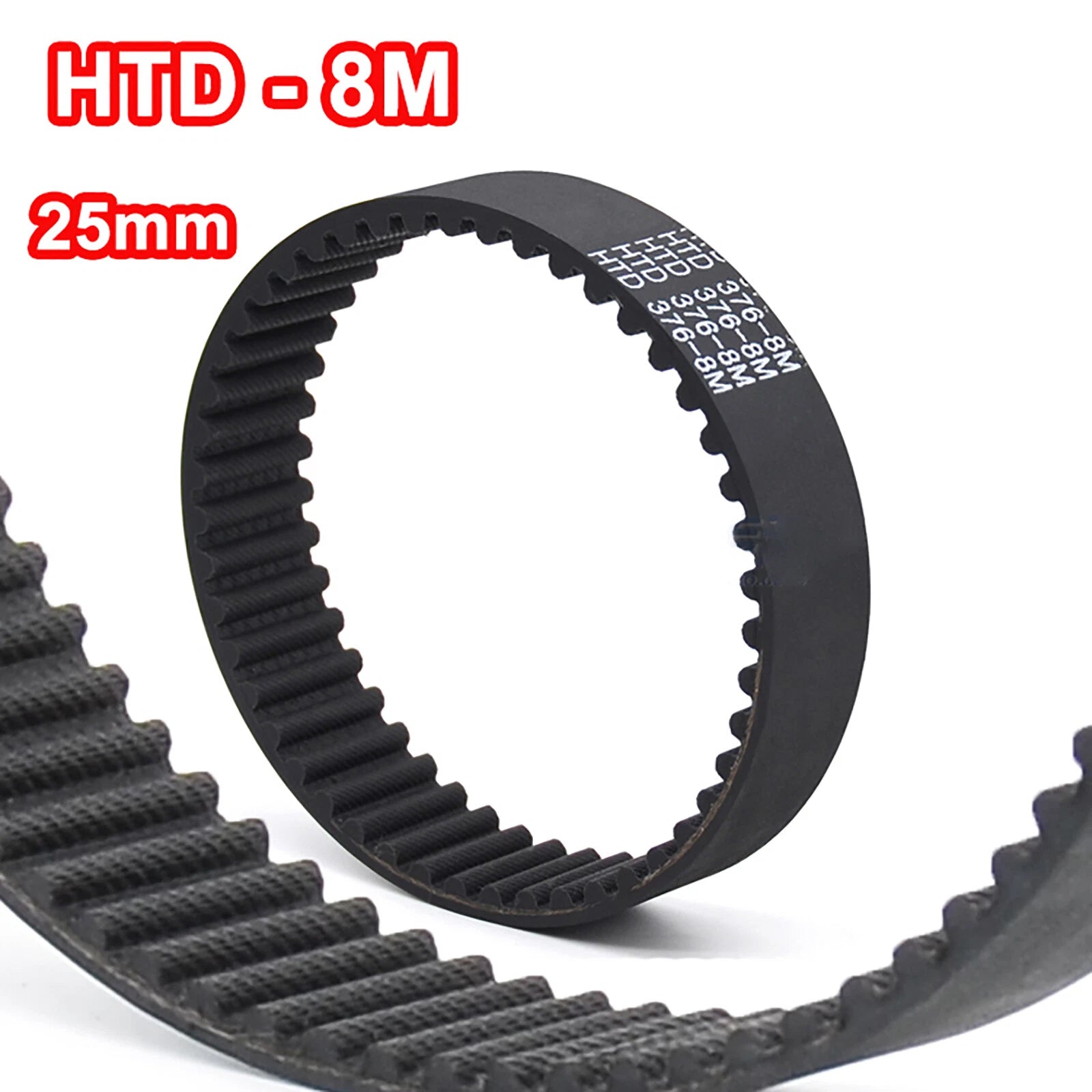
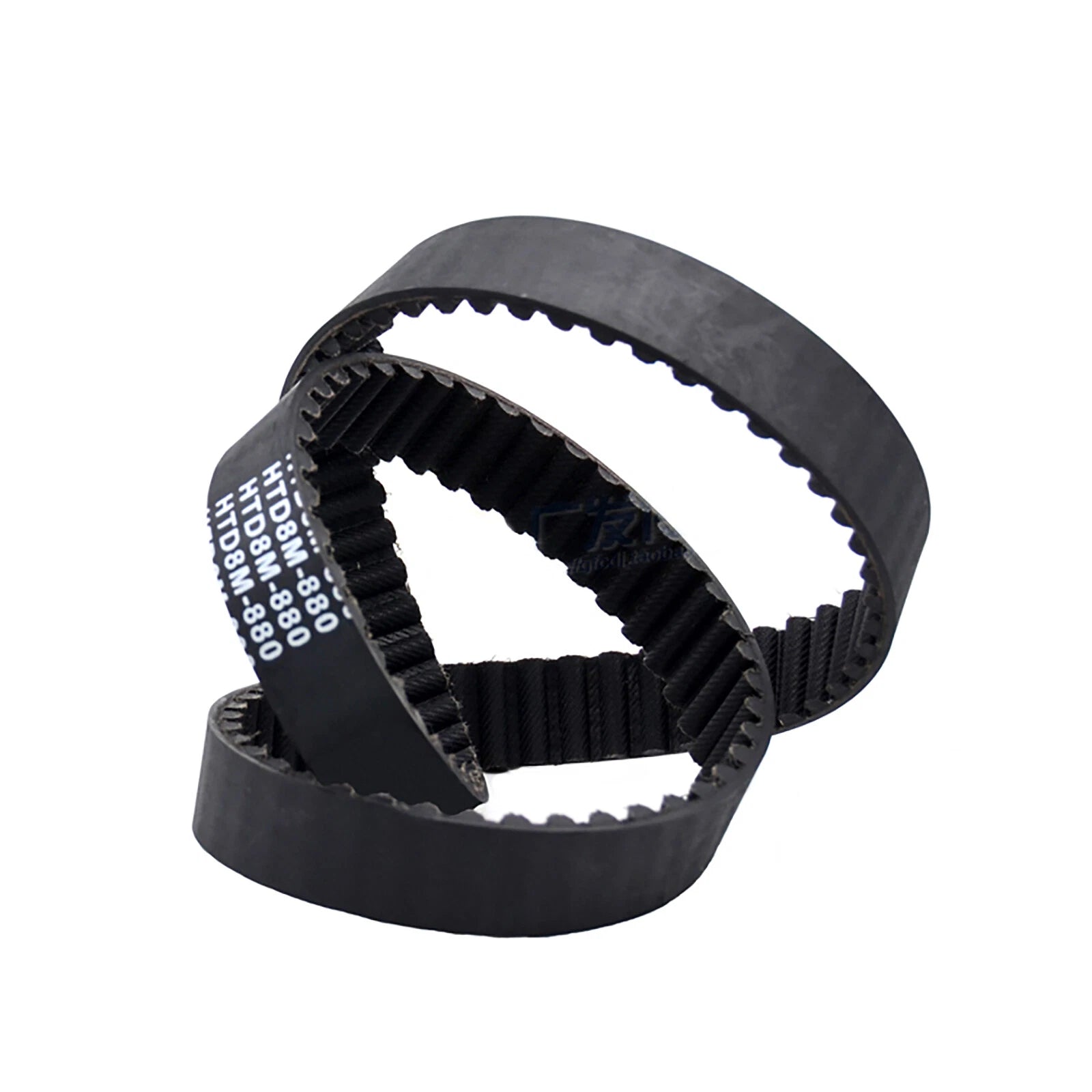
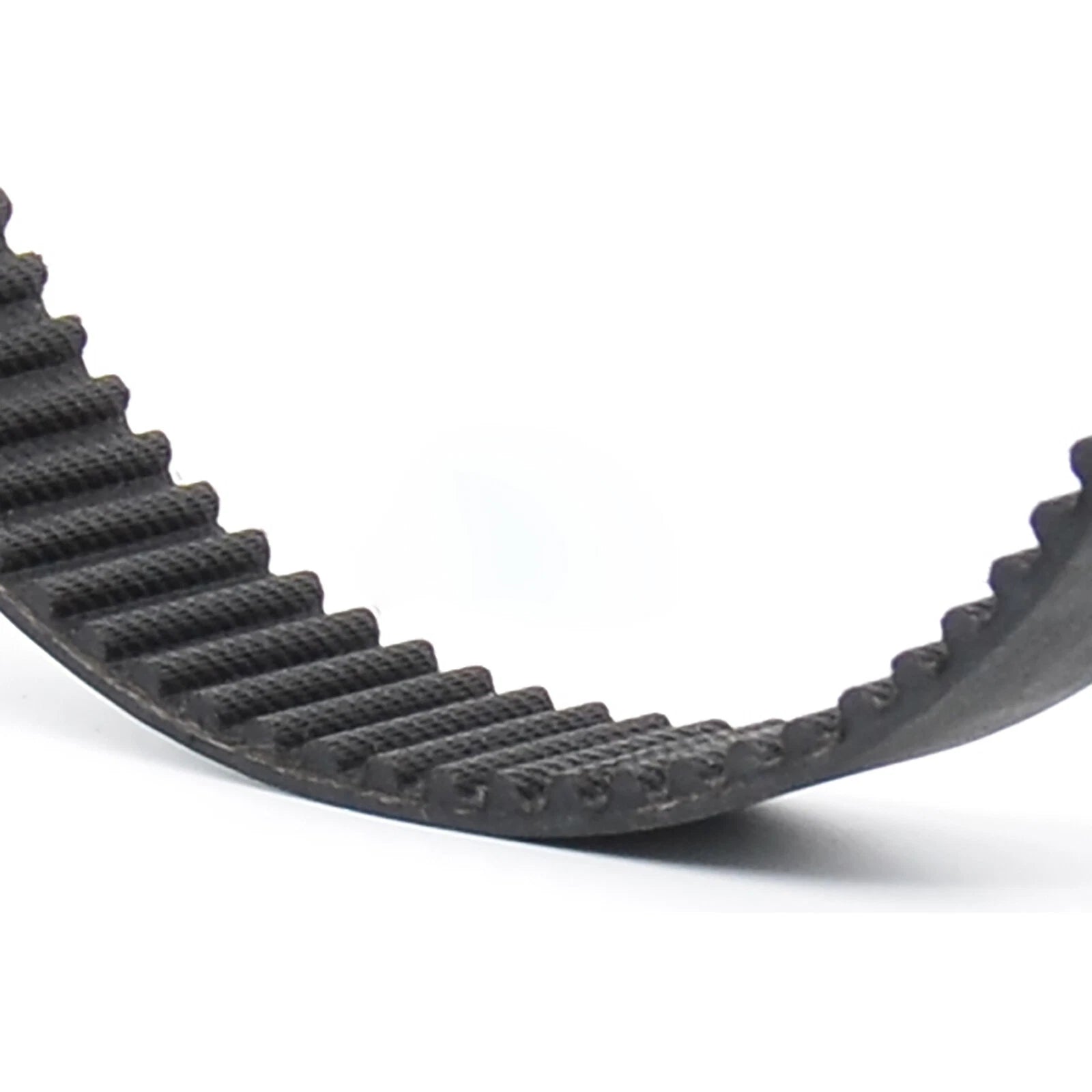
HTD 8M Timing Belt 25mm Width Closed Loop Rubber Drive Belts Transmission Belts

No reviews

Price:
Sale price$9.08 USD
Stock:
In stock (500 units), ready to be shipped

Payment & Security

Ach Direct Debit Amazon American Express Apple Pay Bancontact Diners Club Discover Google Pay iDEAL Wero Mastercard PayPal Shop Pay USDC Visa

Your payment information is processed securely. We do not store credit card details nor have access to your credit card information.

Quantity Discount Promotion
🎯 BULK DISCOUNT: Buy More, Save More!
Buy 2 Items
5% OFF
Buy 4 Items
10% OFF
Buy 6 Items
15% OFF
Expert

DIY Expert Support

Get fitment advice & recommendations

Mon-Fri, 8:30AM-8PM
24-Hour Fast Ship
🚚
Arrives in 3-14 days
🌍
Global Reach
↩️
30-Day Returns
🌱 1 tree planted with every purchase

Description

HTD 8M Closed-Loop Timing Belt — Synchronous Rubber Drive for Demanding Builds

When a slipping or misaligned drive belt derails your CNC router mid-cut or causes layer shifts in a large-format 3D printer, the cost is more than just wasted material — it's lost time and lost confidence. Engineers, makers, and machine builders who need repeatable, zero-slip power transmission rely on HTD 8M closed-loop timing belts to keep their builds running true.

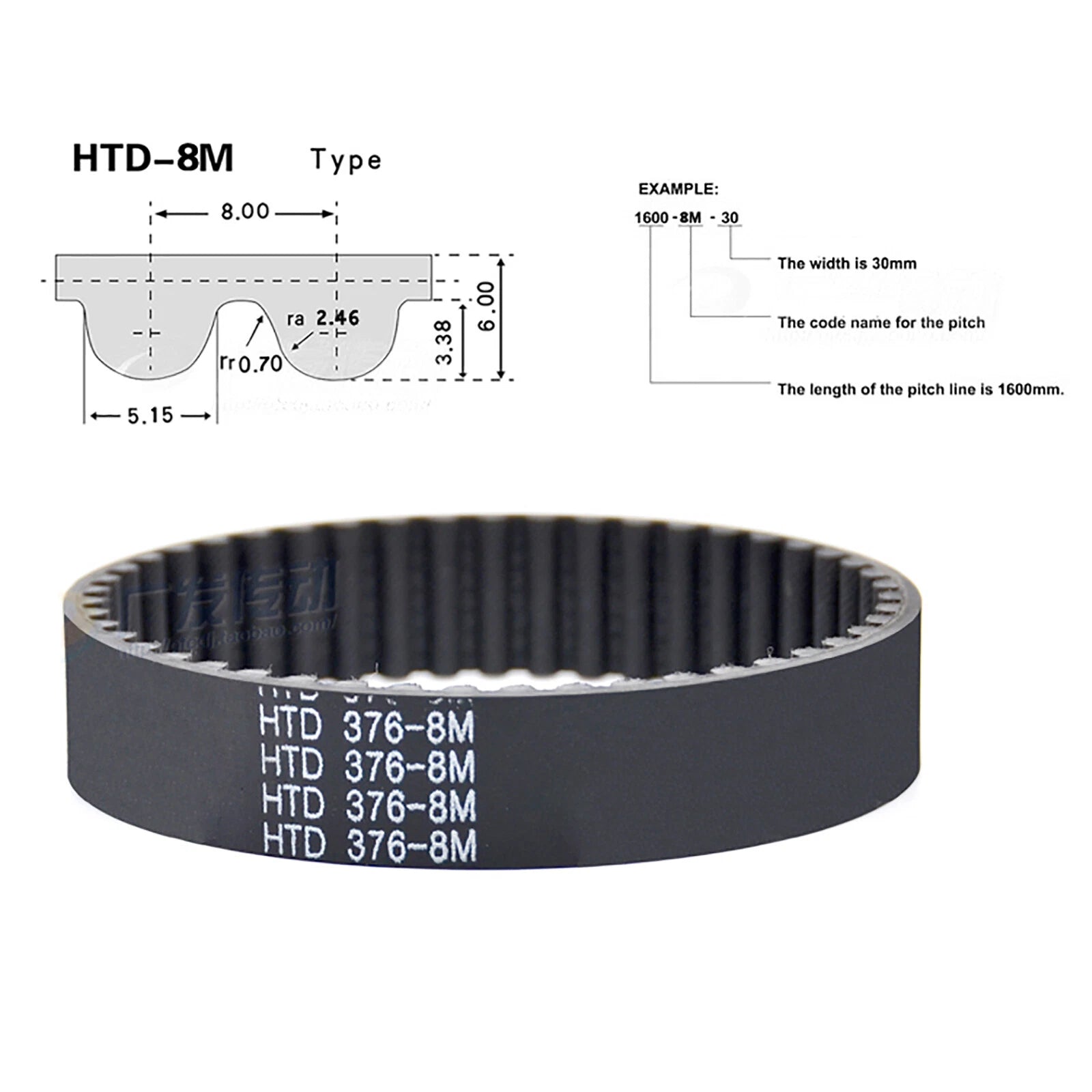
These HTD 8M timing belts feature a 25mm belt width and an 8mm HTD (High Torque Drive) tooth pitch. The closed-loop construction eliminates the need for joining hardware, and the rubber compound body is reinforced with tensile cords for dimensional stability under load. Available lengths range from 288mm (36 teeth) to 1584mm (198 teeth) — approximately 11.3 in to 62.4 in — covering a wide span of drive center distances.

Typical use cases include synchronous drive systems on CNC gantry machines, laser engravers, conveyor indexing systems, and large-scale 3D printers where consistent tooth engagement and low backlash are critical. The 8M profile is also well-suited for robotics joint drives and automated pick-and-place equipment where torque density matters more than belt speed.

⚙️ Compatibility: Designed for use with HTD 8M pulleys (8mm pitch, matching tooth profile). Verify your pulley tooth count and center distance before selecting belt length. Not interchangeable with GT2, T8, or other pitch profiles.

✅ Key Features of These HTD 8M Closed-Loop Timing Belts

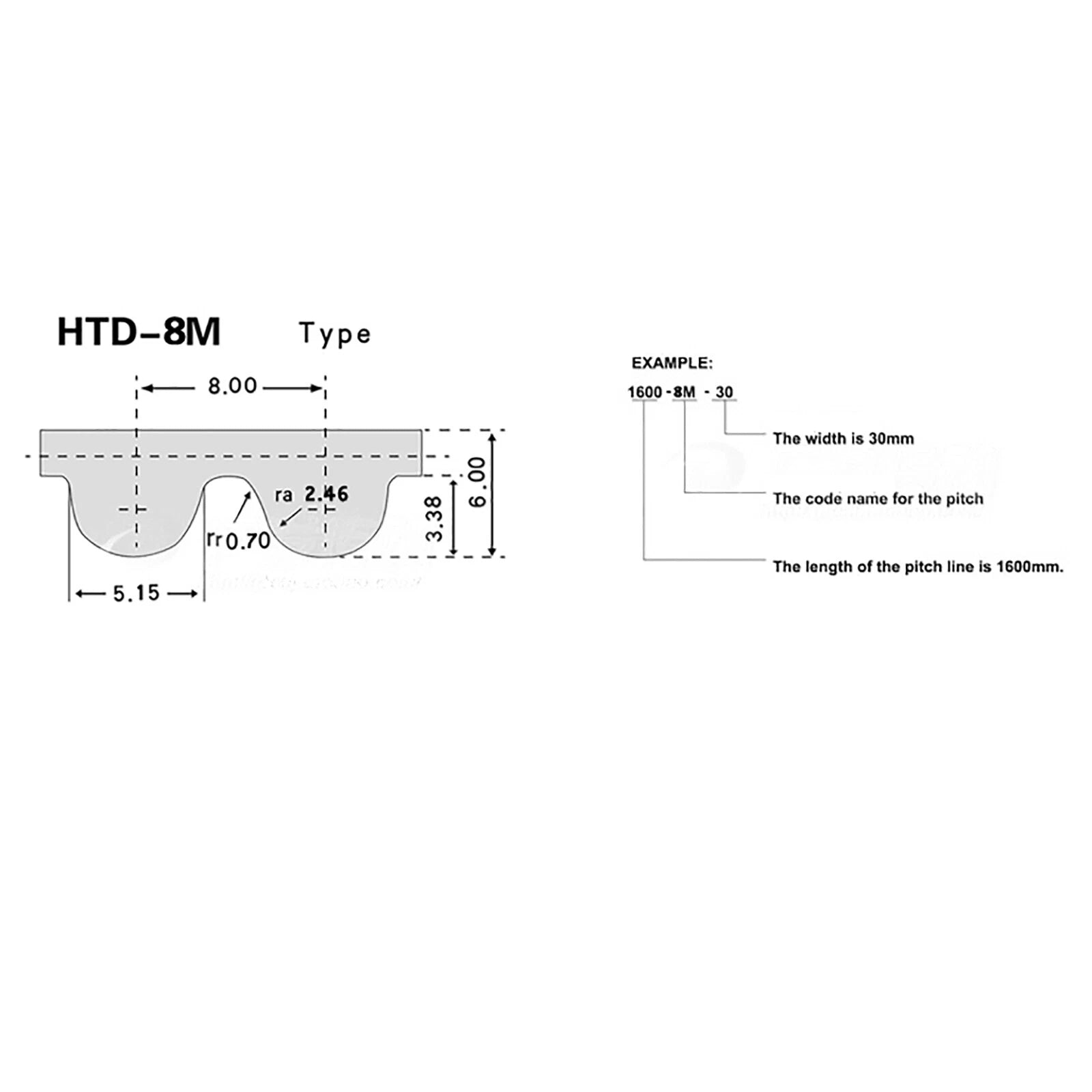
📐 8mm HTD Tooth Pitch — The HTD (High Torque Drive) curvilinear tooth profile distributes load across a larger contact area than trapezoidal profiles, reducing tooth shear stress at higher torque levels.
📏 25mm Belt Width — Wider than standard 15mm or 20mm variants, the 25mm width increases load capacity and lateral stability, making it suitable for heavier gantry and conveyor applications.
🔁 Closed-Loop Construction — Factory-formed endless loop with no mechanical joint, eliminating the weak point and thickness variation introduced by belt lacing or clamps.
🧱 Rubber Body with Tensile Cord Reinforcement — The rubber compound provides flexibility and damping while internal tensile cords resist elongation under sustained tension, maintaining consistent pitch length over time.
📦 Wide Length Selection — 157 length variants from 288mm to 1584mm (36 to 198 teeth) allow precise matching to your drive geometry without custom fabrication.
🔩 Drop-In Replacement Geometry — Standard HTD 8M tooth profile is compatible with any HTD 8M pulley, making these belts straightforward replacements in existing machine designs.

📐 Technical Specifications — HTD 8M Closed-Loop Timing Belt

Belt Profile HTD 8M (High Torque Drive, curvilinear tooth)
Tooth Pitch 8mm
Belt Width 25mm (~0.98 in)
Belt Length Range 288mm – 1584mm (approx. 11.3 in – 62.4 in)
Tooth Count Range 36 – 198 teeth (varies by selected length)
Construction Closed loop (endless, no joint)
Body Material Rubber with tensile cord reinforcement
Compatible Pulley Profile HTD 8M pulleys only
Drive Type Synchronous (positive engagement)
Backlash See variant options
Max Recommended Speed See variant options
Operating Temperature Range Contact us to confirm

❓ Frequently Asked Questions

How do I choose the correct belt length for my machine?

Calculate the required belt length using the center distance between your two pulleys and the pitch diameters of both pulleys. The standard formula is: Belt Length ≈ 2C + π(D₁ + D₂)/2 + (D₁ − D₂)²/(4C), where C is center distance and D₁/D₂ are pulley pitch diameters. Round up to the nearest available length and adjust your center distance accordingly. If your machine has a tensioner, you have more flexibility in length selection.

Is the HTD 8M profile compatible with GT2 or T8 pulleys?

No. HTD 8M belts use a curvilinear tooth profile with an 8mm pitch that is specific to HTD 8M pulleys. GT2 belts use a 2mm pitch with a different tooth geometry, and T8 belts use a trapezoidal profile. Mixing profiles will result in poor tooth engagement, accelerated wear, and potential belt skipping under load. Always match belt and pulley by both pitch (8mm) and profile (HTD).

Why choose an 8M pitch over a 5M or 3M pitch for my application?

The 8M pitch is designed for higher torque applications. Larger tooth pitch means a deeper, wider tooth that can transmit more force before shearing. If your drive involves significant load — such as a heavy CNC gantry, a conveyor with substantial payload, or a robotic joint — the 8M profile handles it more reliably than finer pitches. For light-duty or high-speed low-torque applications (like small 3D printer axes), a 2M or 3M pitch is typically more appropriate.

How does the closed-loop construction affect installation?

Closed-loop (endless) belts require that at least one pulley or shaft be removable or that the belt be slipped over the pulley before the shaft is installed. Unlike open-ended belts that can be cut to length and joined with a clip, these belts cannot be opened. Plan your assembly sequence accordingly — in most gantry or conveyor designs, the belt is looped around both pulleys before tensioning hardware is tightened.

What tension should I apply to the belt during installation?

Correct tension is critical: too loose causes tooth skipping and backlash; too tight accelerates bearing wear and can crack the belt body over time. A properly tensioned HTD 8M belt should deflect approximately 1–2mm per 100mm of free span under moderate finger pressure. For precision applications, use a frequency-based tension meter. Refer to your machine's design specification for the target tension value, as it varies with load and center distance.

How do I know when the belt needs to be replaced?

Inspect the belt periodically for these signs of wear: visible cracking or hardening of the rubber body (especially on the tooth flanks), fraying or exposure of the tensile cords, uneven tooth wear or missing tooth material, and any increase in backlash or positional error in your machine. Rubber timing belts in continuous-duty applications typically benefit from scheduled replacement intervals rather than run-to-failure maintenance, as a snapped belt can damage pulleys and other drive components.

Can this belt be used outdoors or in wet environments?

Rubber timing belts have moderate resistance to moisture and can tolerate occasional exposure to water or light oils. However, prolonged immersion, exposure to harsh chemicals (solvents, strong acids or bases), or sustained UV exposure will degrade the rubber compound and shorten belt life. For outdoor or wash-down environments, confirm the belt's chemical compatibility with your specific conditions before use, or contact us for guidance.

🛒 Select your Size & width and Length & Tooth No. above, then add to cart.

You may also like

Recently viewed