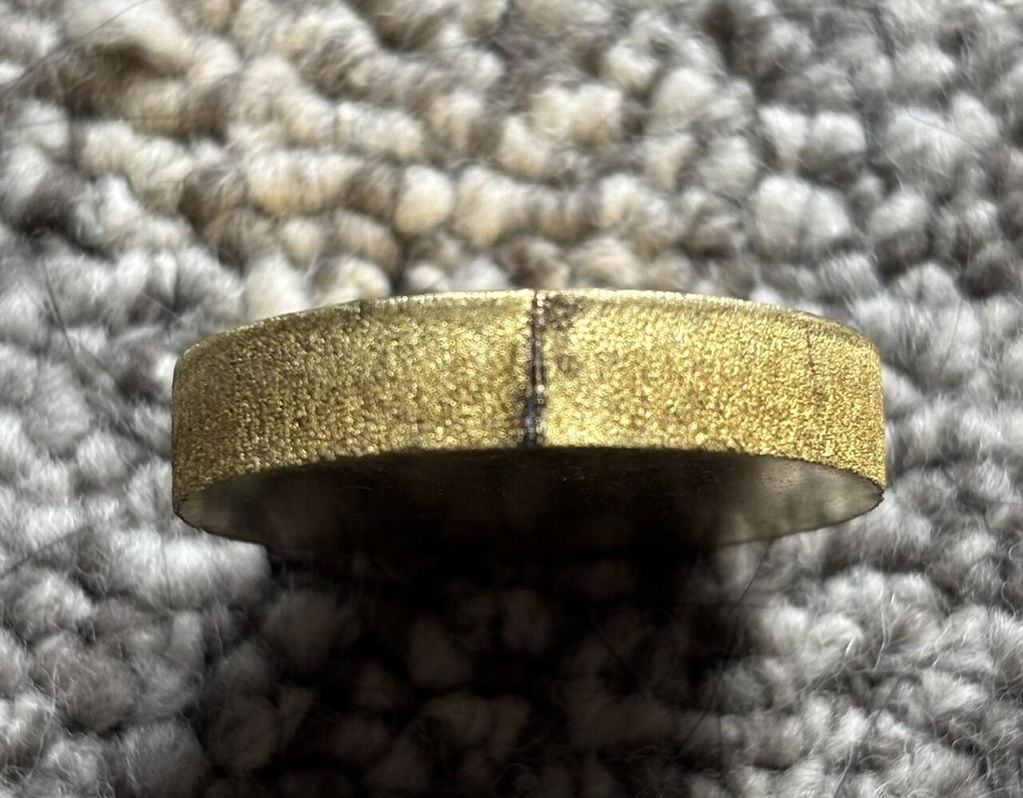
The chain is fine...but I ordered the wrong size. Nine links of the chain I ordered equals six of the size I wanted. My error...
How can I straighten out the springs? I can't use them coil uo as is.
Your payment information is processed securely. We do not store credit card details nor have access to your credit card information.
Get fitment advice & recommendations
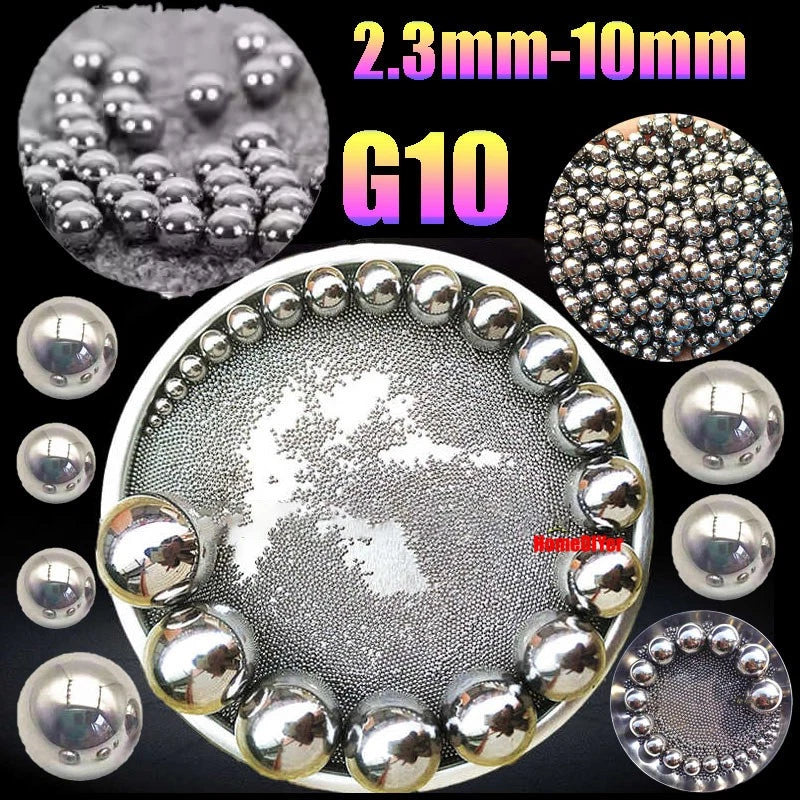
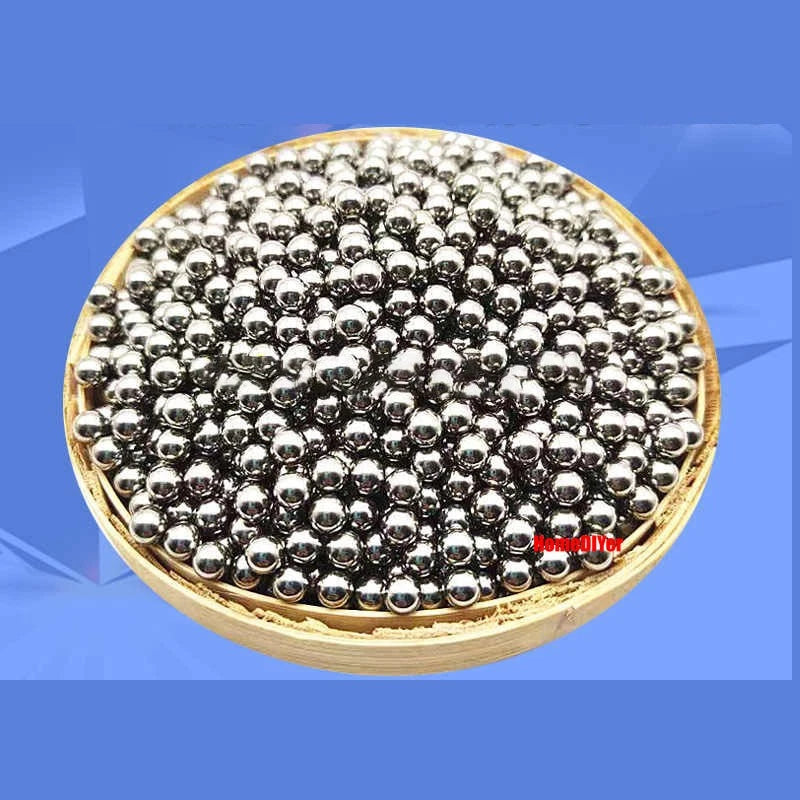
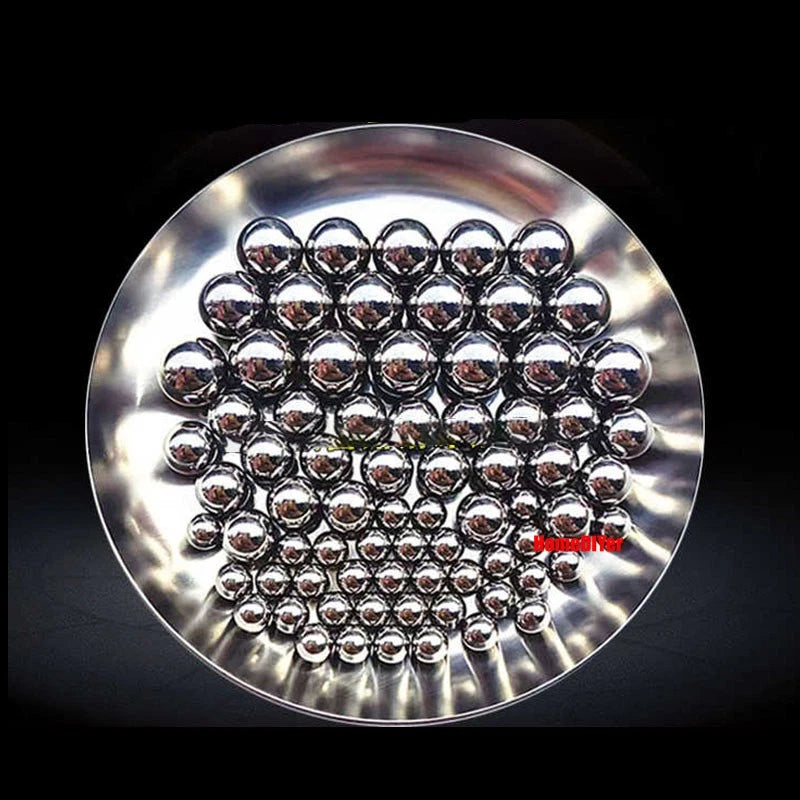
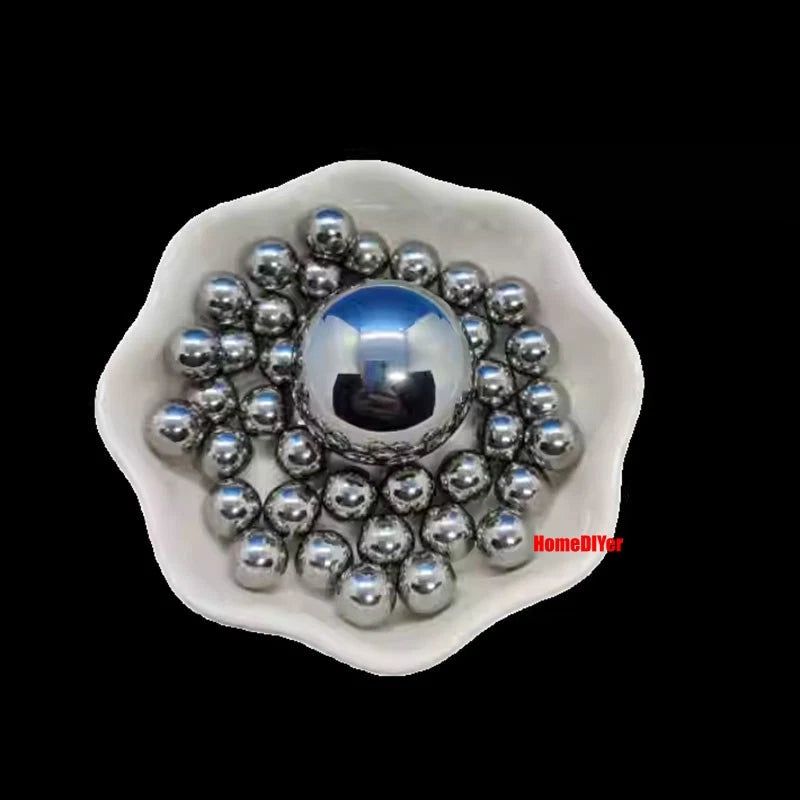
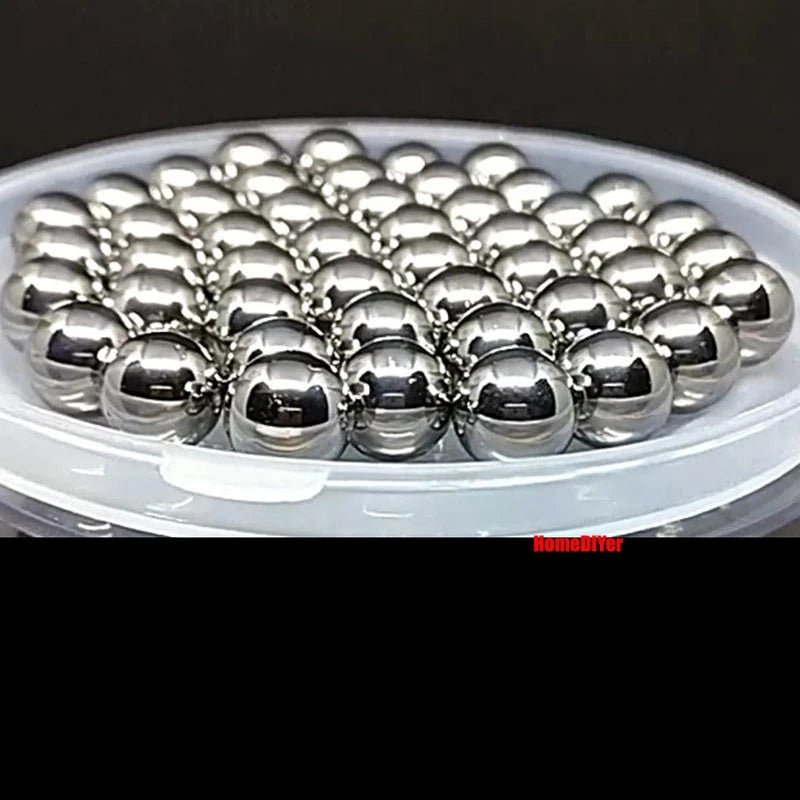
When a worn bearing seat, a custom linear slide, or a precision jig demands exact rolling elements, sourcing the right diameter steel ball becomes the bottleneck. Machinists, maintenance engineers, and serious DIYers who need G10 steel loose bearing balls in a specific size — not just a standard catalog size — know how frustrating it is to find a reliable source with a wide diameter range. These G10 precision steel loose bearing balls solve that problem directly.
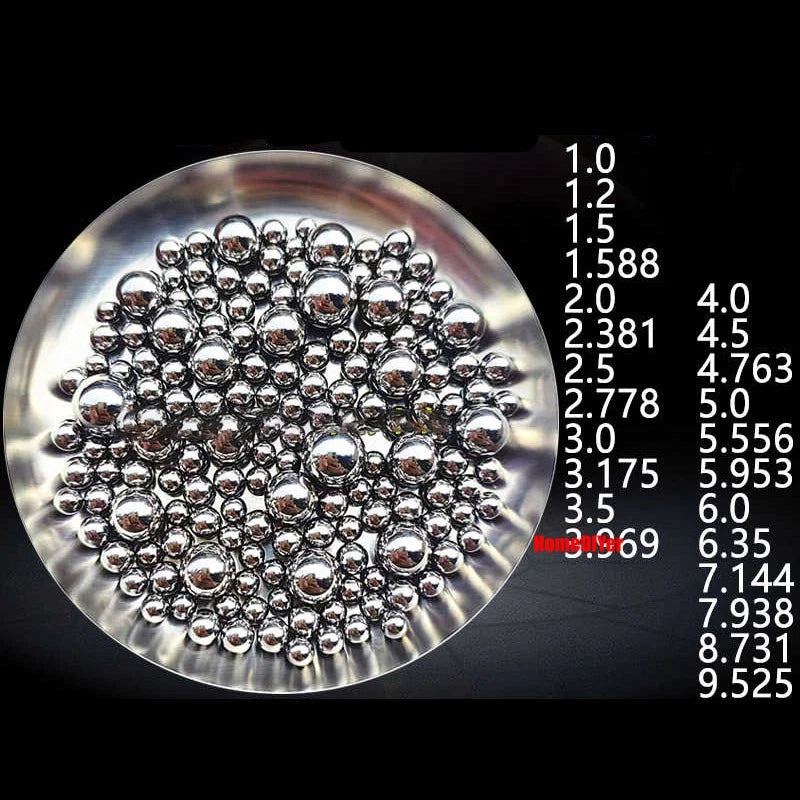
Each ball is manufactured to G10 grade tolerances from carbon steel, delivering a smooth, consistent spherical surface. Diameters span 2.3 mm to 10 mm (approximately 0.091 in to 0.394 in), covering both metric and inch-derived sizes such as 3.175 mm (1/8 in), 4.763 mm (3/16 in), 6.35 mm (1/4 in), 7.938 mm (5/16 in), and 9.525 mm (3/8 in). Surface finish is typically Ra ≤ 0.025 µm, and diameter tolerance is typically within ±0.001 mm for G10 grade.
Typical applications include replacement rolling elements in radial ball bearings, load-distributing balls in drawer slides and caster wheels, precision spacers in optical and measurement fixtures, and custom bearing assemblies in robotics or 3D-printer linear motion systems. Bulk quantity options (up to 500 PCS per order) make these suitable for production restocking as well as single-unit repair work.
| Grade | G10 (ISO 3290) |
|---|---|
| Material | Carbon Steel |
| Diameter Range | 2.3 mm – 10 mm (approx. 0.091 in – 0.394 in) |
| Diameter Tolerance | Typically ±0.001 mm (G10 grade) |
| Surface Roughness | Ra ≤ 0.025 µm (typical) |
| Sphericity | See variant options |
| Hardness | See variant options |
| Finish | Bright / polished |
| Available Diameters | 2.3, 2.31, 2.32, 2.33, 2.34, 2.351, 2.361–2.381, 3, 3.175, 3.177–3.195, 3.2, 3.5, 3.949–3.969, 4, 4.1, 4.5, 4.763, 4.8, 5, 5.2, 5.5, 5.556, 5.953, 6, 6.35, 6.5, 6.747, 7, 7.144, 7.5, 7.938, 8, 8.5, 8.731, 8.8, 9, 9.525, 10 mm |
| Quantity Options | 1, 5, 10, 30, 100, 200, 300, 500 PCS |
| Application | Radial ball bearings, linear guides, caster wheels, drawer slides, custom assemblies |
Measure the inner diameter of your bearing race groove or the bore of your bearing housing using a micrometer or digital caliper. The ball diameter should match the rolling element specification listed on your bearing's datasheet or stamped on the bearing shell. For standard bearings, common sizes include 3.175 mm (1/8 in), 4.763 mm (3/16 in), 6.35 mm (1/4 in), 7.938 mm (5/16 in), and 9.525 mm (3/8 in). If you are replacing worn balls, measure an undamaged ball from the same set for reference.
G10 is a precision grade defined by ISO 3290 for rolling bearing balls. It specifies maximum allowable deviations in diameter, sphericity, and surface roughness. G10 balls have a diameter tolerance typically within ±0.001 mm and surface roughness Ra ≤ 0.025 µm. This grade is suitable for most standard radial ball bearings, linear guides, and moderate-precision mechanical assemblies. Higher grades (G5, G3) offer tighter tolerances for ultra-precision applications.
These balls are made from carbon steel, which provides excellent hardness and load capacity but has limited corrosion resistance compared to stainless steel. For applications in humid environments, near water, or exposed to corrosive chemicals, we recommend applying a light machine oil or grease coating after installation, or considering stainless steel bearing balls instead. For dry indoor mechanical applications, carbon steel G10 balls perform reliably without additional treatment.
Yes, provided the diameter matches the original rolling element specification for that bearing. For example, a 608 bearing typically uses balls in the 4.763 mm (3/16 in) range, while 6200-series bearings use larger balls. Always verify the ball diameter from the bearing manufacturer's datasheet before ordering. Using an incorrect diameter will affect load distribution and bearing life.
For a single bearing repair, 1–10 PCS is typically sufficient, as most standard bearings contain 6–12 balls per row. For production restocking or assembling multiple bearings, the 100–500 PCS options offer a lower per-unit cost. If you are unsure how many balls your bearing contains, disassemble it carefully and count the rolling elements before ordering.
Load capacity depends on the ball diameter, the bearing design, and the number of balls in the assembly — not on the ball alone. Carbon steel G10 balls are suitable for moderate to heavy radial and thrust loads in standard bearing configurations. For specific load ratings, refer to the bearing manufacturer's datasheet for the complete bearing assembly. If you need balls for a custom assembly, contact us to confirm suitability for your load and speed requirements.
Yes. Several diameters in this listing correspond directly to fractional inch sizes: 3.175 mm = 1/8 in, 4.763 mm = 3/16 in, 6.35 mm = 1/4 in, 7.144 mm ≈ 9/32 in, 7.938 mm = 5/16 in, and 9.525 mm = 3/8 in. These are commonly used in inch-standard bearings found in North American and UK machinery. Select the diameter that matches your application's specification.