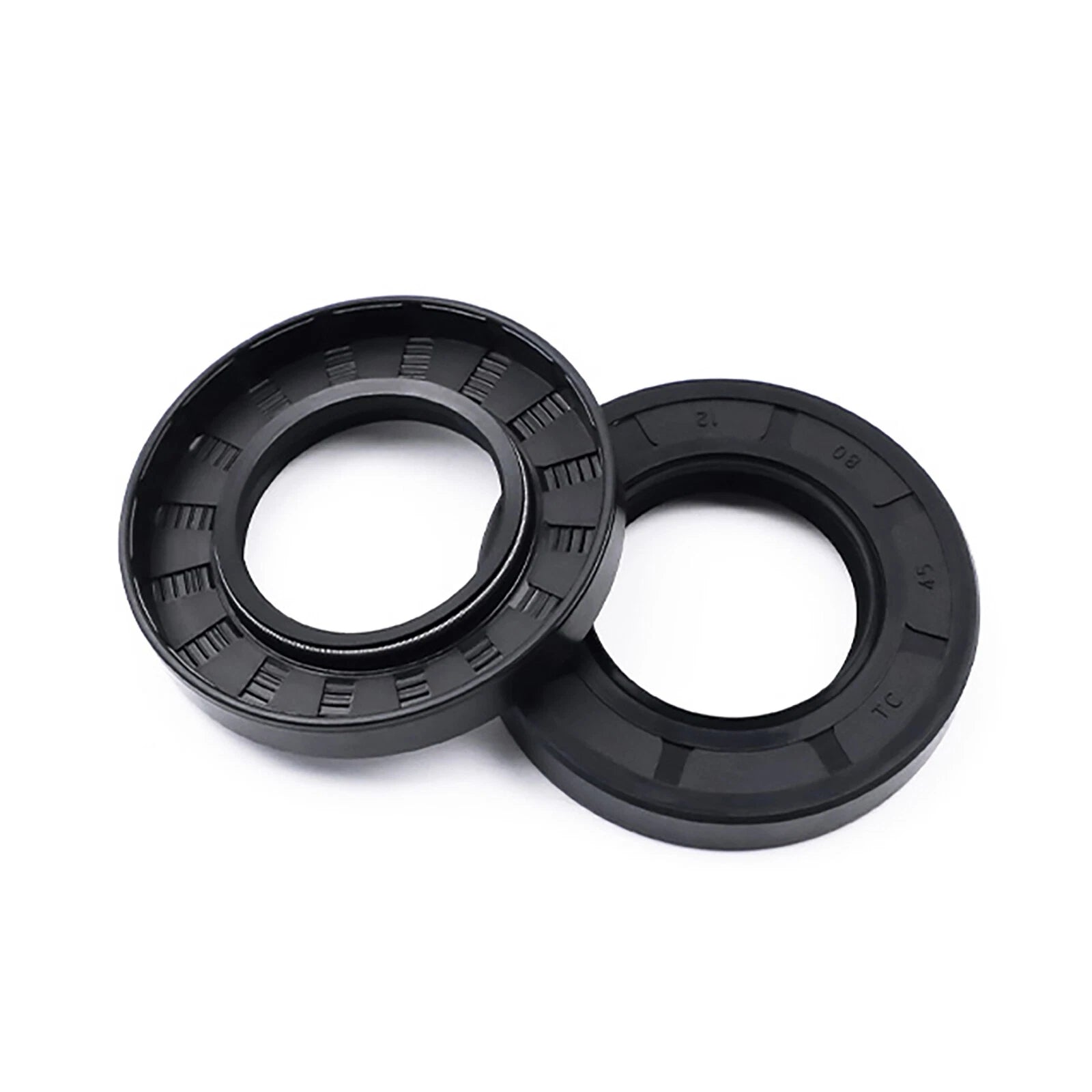
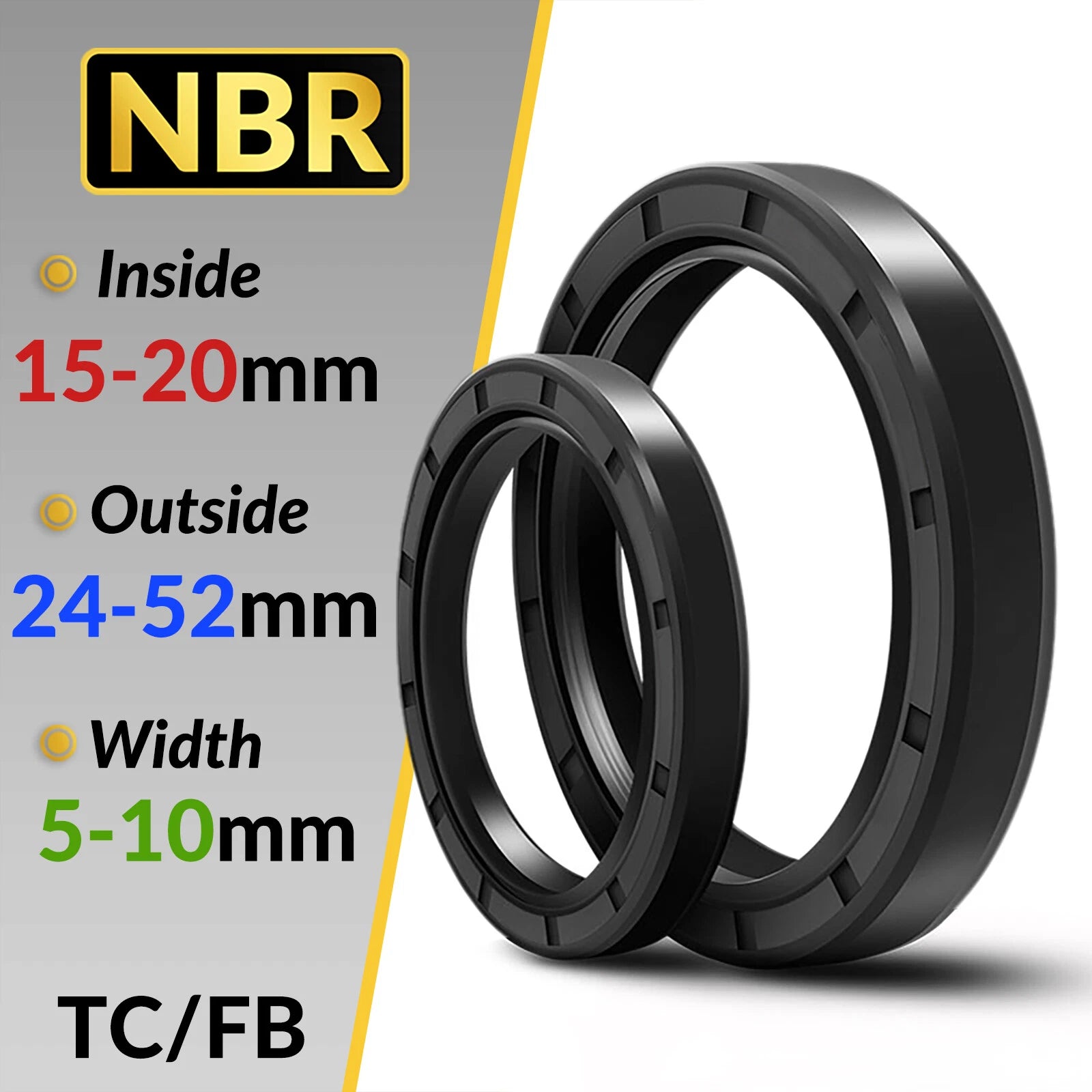
Metric NBR Oil Shaft Seal Dust Grease Seal TC Double Lip w Spring ID 15-20mm

No reviews

Price:
Sale price$6.09 USD
Stock:
In stock (500 units), ready to be shipped

Payment & Security

Ach Direct Debit Amazon American Express Apple Pay Bancontact Diners Club Discover Google Pay iDEAL Wero Mastercard PayPal Shop Pay USDC Visa

Your payment information is processed securely. We do not store credit card details nor have access to your credit card information.

Quantity Discount Promotion
🎯 BULK DISCOUNT: Buy More, Save More!
Buy 2 Items
5% OFF
Buy 4 Items
10% OFF
Buy 6 Items
15% OFF
Expert

DIY Expert Support

Get fitment advice & recommendations

Mon-Fri, 8:30AM-8PM
24-Hour Fast Ship
🚚
Arrives in 3-14 days
🌍
Global Reach
↩️
30-Day Returns
🌱 1 tree planted with every purchase

Description

Metric NBR TC Oil Shaft Seal — Double-Lip Grease & Dust Protection for Rotating Shafts

When a worn or missing shaft seal lets grease escape or contaminants enter a bearing cavity, the result is accelerated wear, overheating, and unplanned downtime. Mechanics, maintenance technicians, and serious DIYers who work on gearboxes, pumps, axles, and agricultural equipment need a metric NBR TC oil shaft seal they can trust to hold up across a wide range of operating conditions — without hunting through multiple suppliers for the right size.

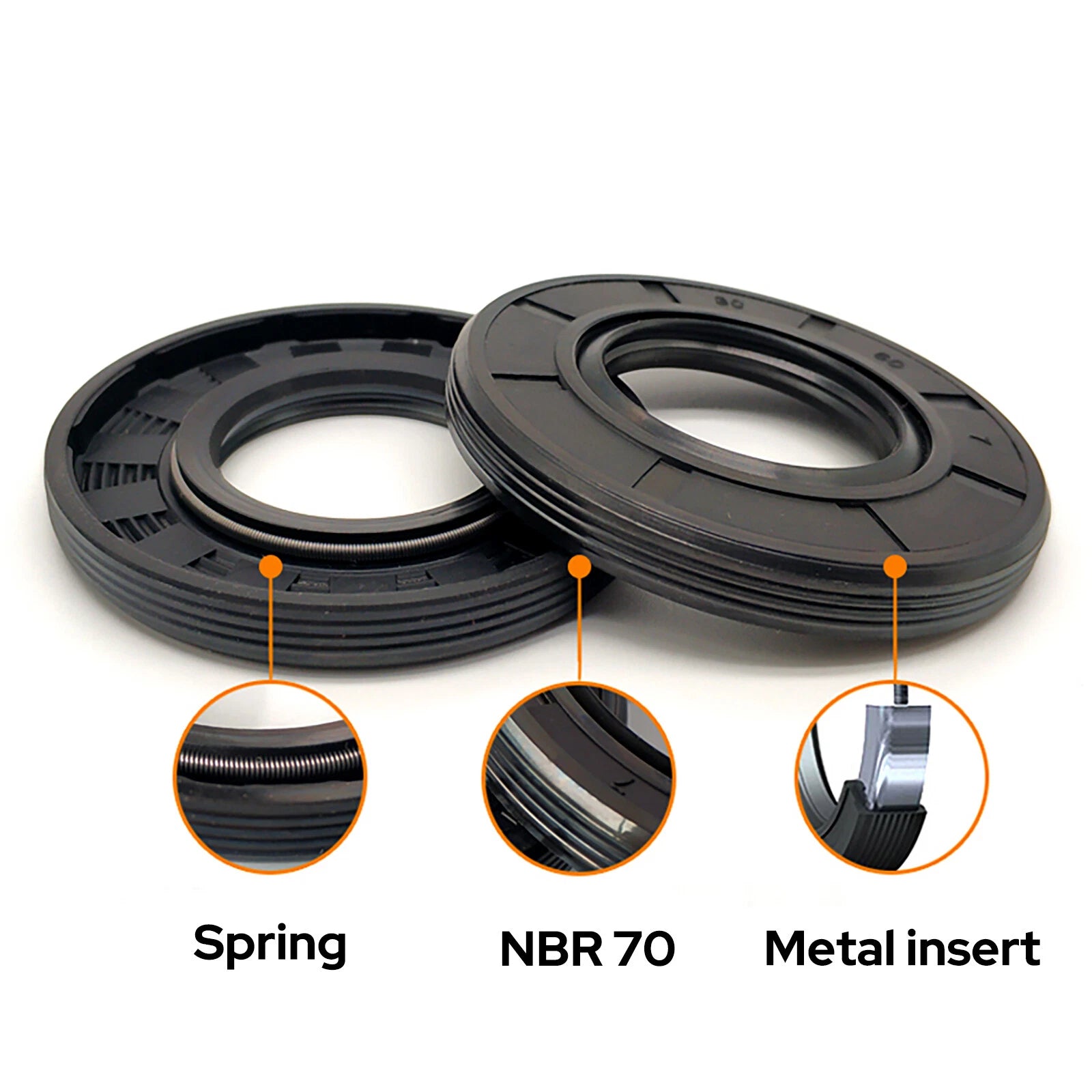
These TC double-lip oil seals are made from NBR (nitrile butadiene rubber) bonded to a steel case, with a garter spring that keeps the primary sealing lip in constant contact with the shaft. The inner diameter (ID) ranges from 15 mm to 20 mm (approximately 0.59 in to 0.79 in), the outer diameter (OD) ranges from 24 mm to 52 mm (approximately 0.94 in to 2.05 in), and the width ranges from 5 mm to 10 mm (approximately 0.20 in to 0.39 in) — with 63 distinct size combinations available as variants.

Typical applications include small gearbox output shafts where grease retention is critical, pump shaft sealing in light industrial and agricultural machinery, and wheel hub or axle seal replacement on compact equipment. The double-lip TC profile is the standard choice when both oil retention and dust/dirt exclusion are required on a rotating shaft — making these seals a direct fit for metric shaft seal replacement jobs across automotive, marine, and general machinery contexts.

⚙️ Compatibility note: These seals fit metric shafts with IDs of 15, 16, 17, 18, 19, or 20 mm. Always verify the shaft diameter, housing bore (OD), and seal width before ordering. Refer to the variant selector for the full size matrix.

✅ Key Features of These Metric NBR TC Oil Shaft Seals

🔩 TC Double-Lip Design — The outer dust lip excludes dirt and debris while the inner primary lip retains oil or grease, with a garter spring maintaining consistent radial load on the shaft surface.
🧪 NBR Rubber Compound — Nitrile butadiene rubber provides resistance to petroleum-based oils, greases, hydraulic fluids, and moderate fuel exposure across a typical operating temperature range of −40 °C to +120 °C (−40 °F to +248 °F).
🏗️ Steel-Reinforced Case — The rigid steel outer shell maintains dimensional stability during press-fit installation into the housing bore, reducing the risk of distortion that can cause early leakage.
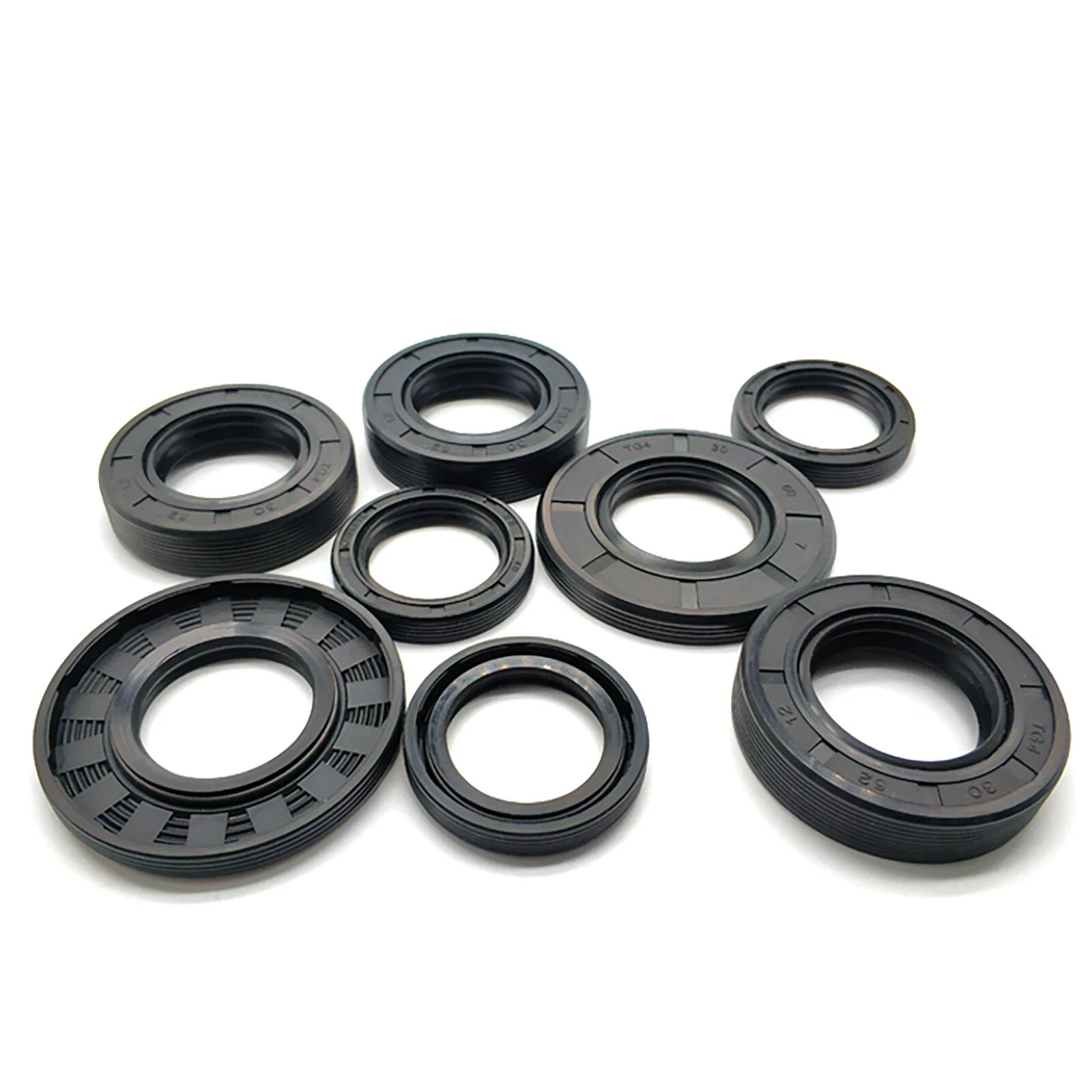
📐 63 Size Combinations — ID 15–20 mm paired with OD 24–52 mm and widths of 5, 7, 8, or 10 mm covers a broad range of metric shaft seal applications without needing to source from multiple suppliers.
📦 Flexible Pack Quantities — Available in packs of 1, 2, 4, or 10 seals per order, allowing single-unit replacement or stocking up for fleet or workshop use at a lower per-unit cost.
🔄 Direct Metric Replacement — Dimensioned to metric standards, these seals are a straightforward drop-in replacement for worn TC-type seals in gearboxes, pumps, axles, and agricultural machinery where the shaft and bore dimensions are known.

📐 Technical Specifications — TC Oil Shaft Seals

Seal Type TC (Double Lip with Garter Spring)
Material NBR (Nitrile Butadiene Rubber) with steel case
Inner Diameter (ID) 15 mm, 16 mm, 17 mm, 18 mm, 19 mm, 20 mm
Outer Diameter (OD) 24 mm – 52 mm (see variant options)
Width 5 mm, 7 mm, 8 mm, 10 mm (see variant options)
Operating Temperature Typically −40 °C to +120 °C (−40 °F to +248 °F)
Compatible Fluids Petroleum-based oils, greases, hydraulic fluids
Spring Type Garter spring (maintains lip contact)
Installation Method Press-fit into housing bore
Pack Size Options 1, 2, 4, or 10 seals per pack
Size Combinations Available 63 variants (see variant selector)
Dimensional Standard Metric

❓ Frequently Asked Questions

How do I choose the correct seal size?

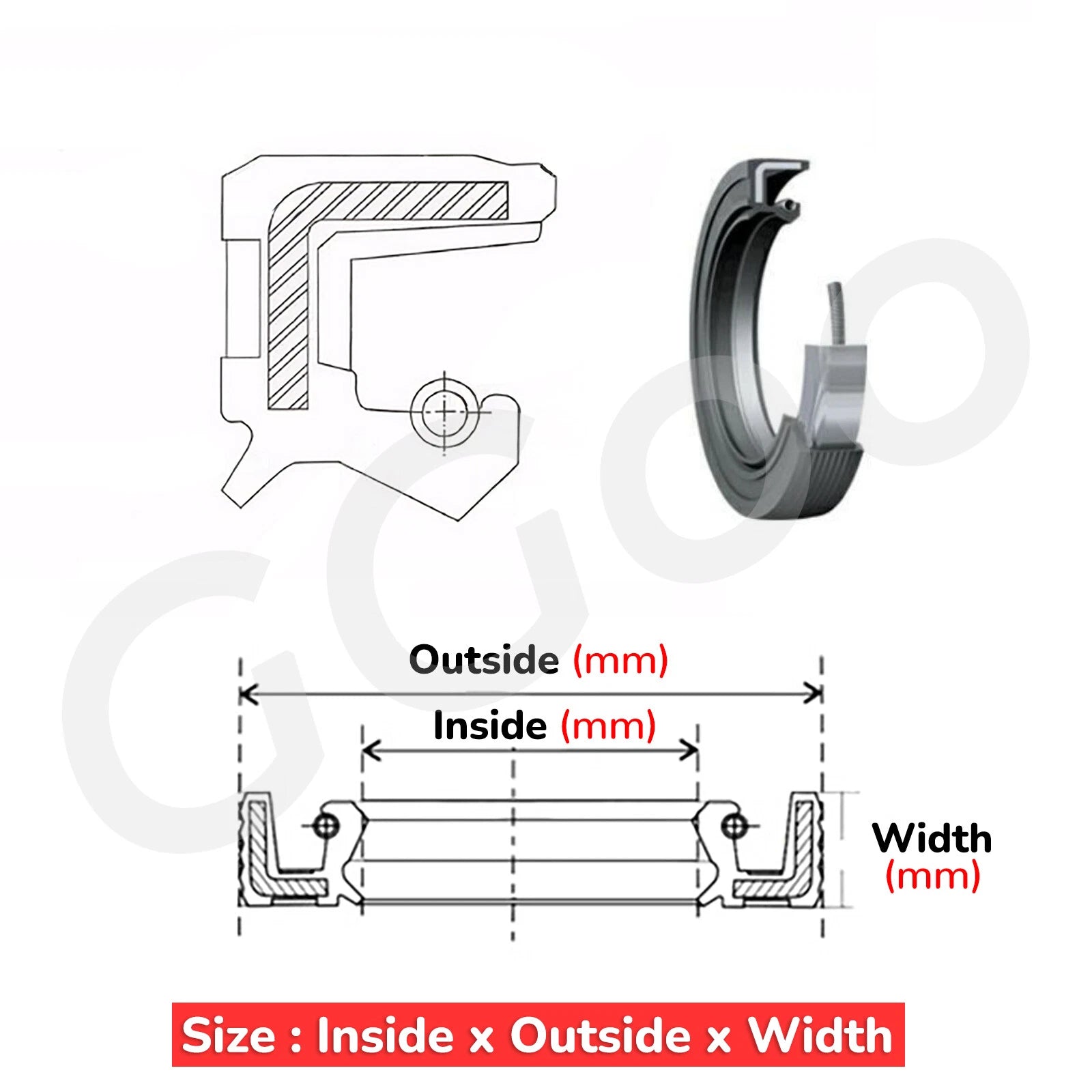
Measure three dimensions on the existing seal or the shaft/housing: the inner diameter (ID) of the seal, which must match the shaft diameter; the outer diameter (OD), which must match the housing bore; and the width (thickness), which must fit the available depth in the housing. All three dimensions are listed in the variant name in the format ID × OD × Width (e.g., 17x30x7mm). If the old seal is still in place, measure it directly with calipers before ordering.

What does "TC" mean on an oil seal?

TC is a standard designation for a double-lip oil seal with a garter spring. The primary inner lip retains lubricant (oil or grease) and is held against the shaft by the spring. The secondary outer lip acts as a dust and dirt excluder. This two-lip configuration makes TC seals the standard choice when both fluid retention and contamination exclusion are needed on a rotating shaft.

Is NBR rubber suitable for my application?

NBR (nitrile butadiene rubber) is compatible with petroleum-based oils, greases, hydraulic fluids, and moderate fuel exposure. It performs reliably across a typical temperature range of −40 °C to +120 °C. NBR is not recommended for use with synthetic esters, phosphate-ester hydraulic fluids, or ketone-based solvents. If your application involves these fluids, a Viton (FKM) seal would be more appropriate.

Can I reuse an oil seal after removal?

Oil seals are generally not reusable. The sealing lip deforms slightly to conform to the shaft surface during use, and removal typically damages the lip geometry. Reinstalling a used seal — even one that appears undamaged — significantly increases the risk of early leakage. Always fit a new seal when reassembling a component.

How do I install a TC oil seal without damaging it?

Apply a thin film of clean grease or oil to the sealing lip and the shaft surface before installation. Press the seal squarely into the housing bore using a seal driver or a flat piece of material that contacts the outer steel case evenly — never strike the rubber lip directly. Drive the seal in until it is flush with or just below the housing face. Avoid cocking the seal during installation, as this can permanently distort the lip.

What shaft surface finish is required for a good seal?

For reliable sealing, the shaft surface in the contact zone should have a finish of approximately Ra 0.2–0.8 µm (8–32 µin). A surface that is too rough will accelerate lip wear; a surface that is too smooth may not retain the thin oil film needed to lubricate the lip. Spiral machining marks on the shaft can pump fluid past the seal and should be avoided. If the shaft shows a wear groove from the old seal, the new seal should be positioned slightly offset from the groove, or a shaft repair sleeve should be used.

Why are there so many size variants, and how do I find mine quickly?

Metric shaft seals are manufactured in a large number of standardized size combinations because different equipment manufacturers specify different shaft and bore dimensions. The variant selector on this page lists all 63 available size combinations in the format ID × OD × Width. Use calipers to measure your existing seal or the shaft/housing, then select the matching size from the dropdown. If you are unsure, contact us to confirm before ordering.

🛒 Select your Size (ID x OD x Width) and Pack Size above, then add to cart.

You may also like

Recently viewed