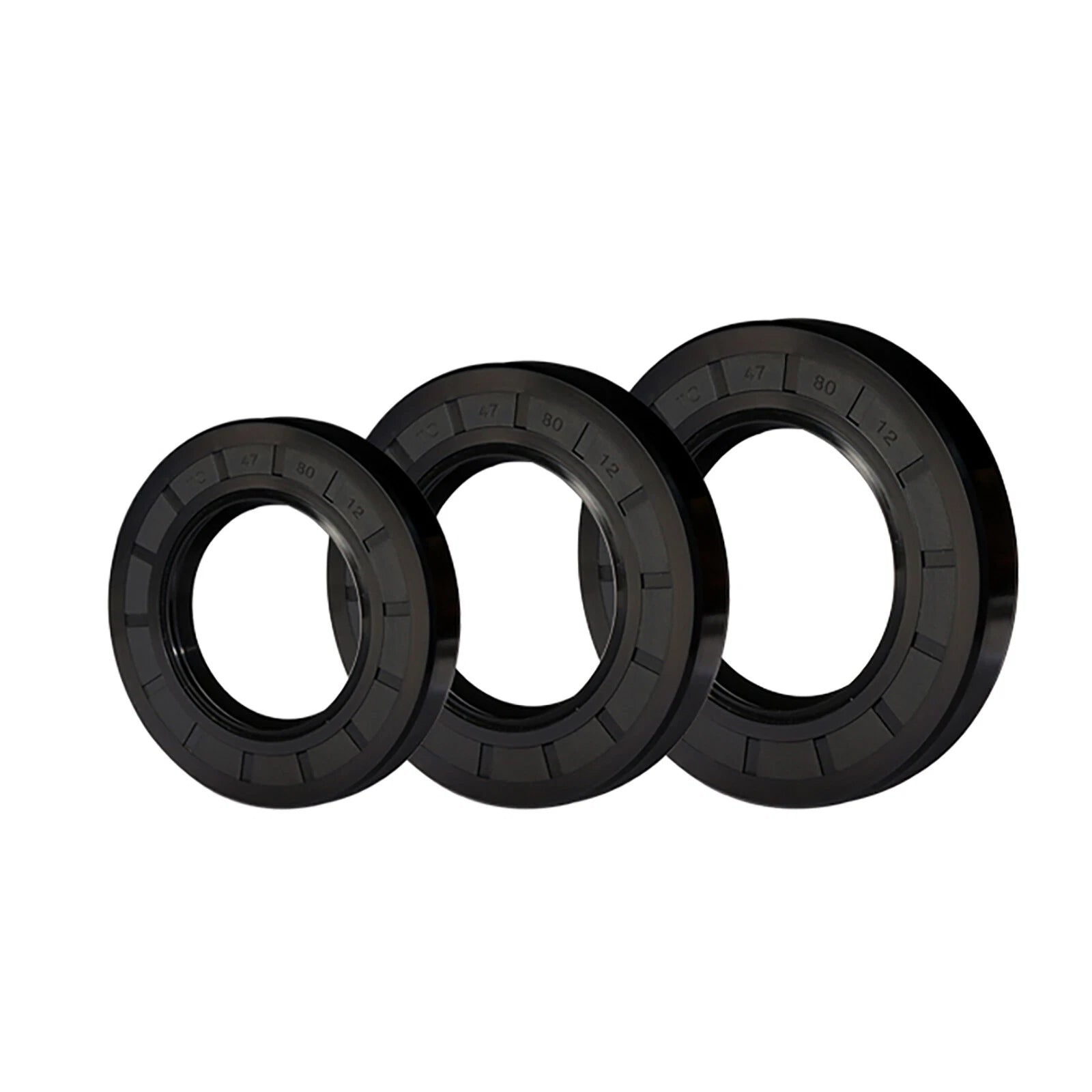
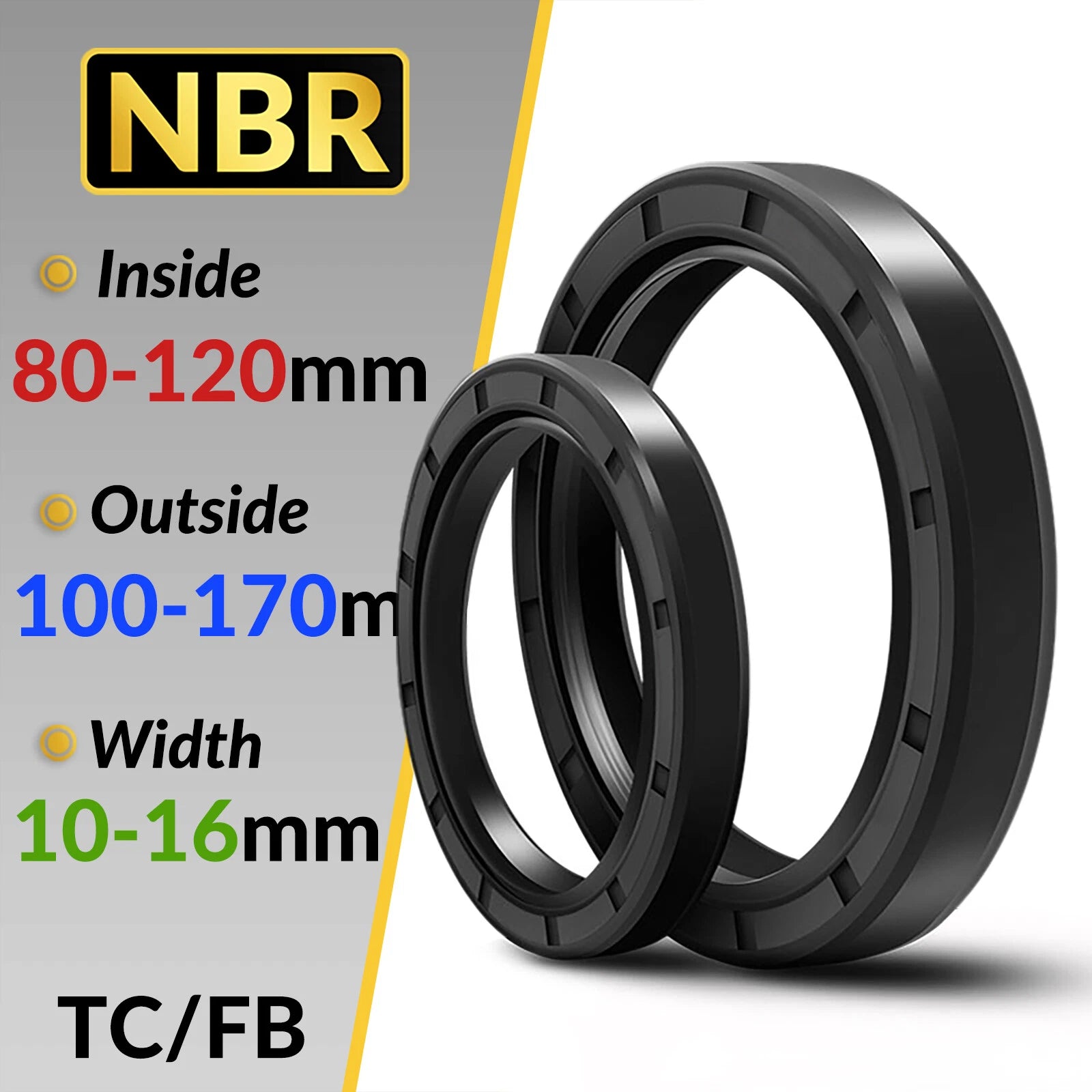
Metric NBR Oil Shaft Seal Dust Grease Seal TC Double Lip w Spring ID 80-120mm

No reviews

Price:
Sale price$9.83 USD
Stock:
In stock (500 units), ready to be shipped

Payment & Security

Ach Direct Debit Amazon American Express Apple Pay Bancontact Diners Club Discover Google Pay iDEAL Wero Mastercard PayPal Shop Pay USDC Visa

Your payment information is processed securely. We do not store credit card details nor have access to your credit card information.

Quantity Discount Promotion
🎯 BULK DISCOUNT: Buy More, Save More!
Buy 2 Items
5% OFF
Buy 4 Items
10% OFF
Buy 6 Items
15% OFF
Expert

DIY Expert Support

Get fitment advice & recommendations

Mon-Fri, 8:30AM-8PM
24-Hour Fast Ship
🚚
Arrives in 3-14 days
🌍
Global Reach
↩️
30-Day Returns
🌱 1 tree planted with every purchase

Description

Metric NBR TC Double-Lip Oil Shaft Seals — Reliable Fluid & Dust Retention for ID 80–120mm Shafts

When a leaking gearbox, worn axle seal, or contaminated bearing housing brings a machine to a halt, the right replacement seal makes all the difference. These metric TC double-lip oil shaft seals are designed for engineers, mechanics, and serious DIYers who need a dimensionally accurate, chemically compatible seal that installs correctly the first time and holds under continuous rotation.

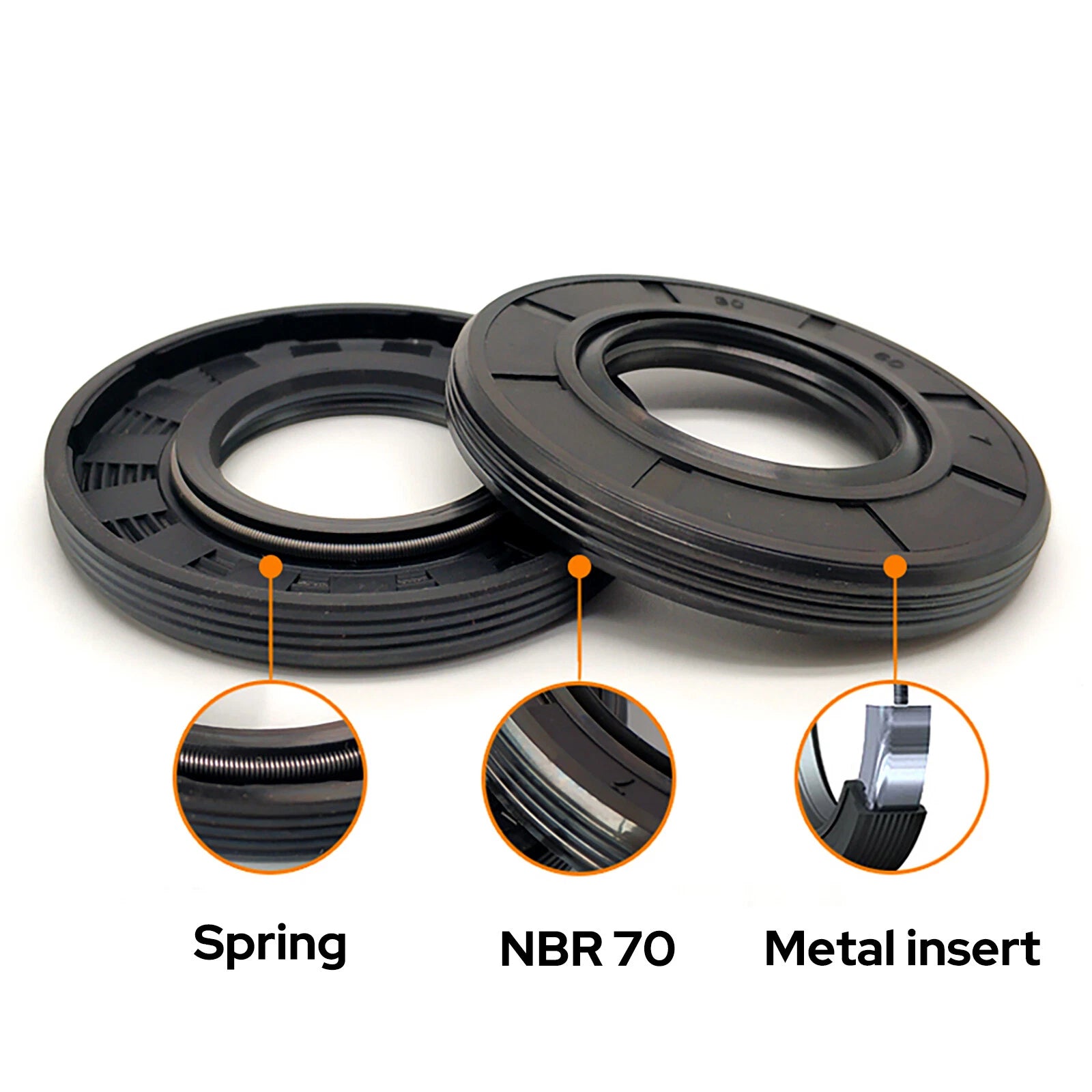
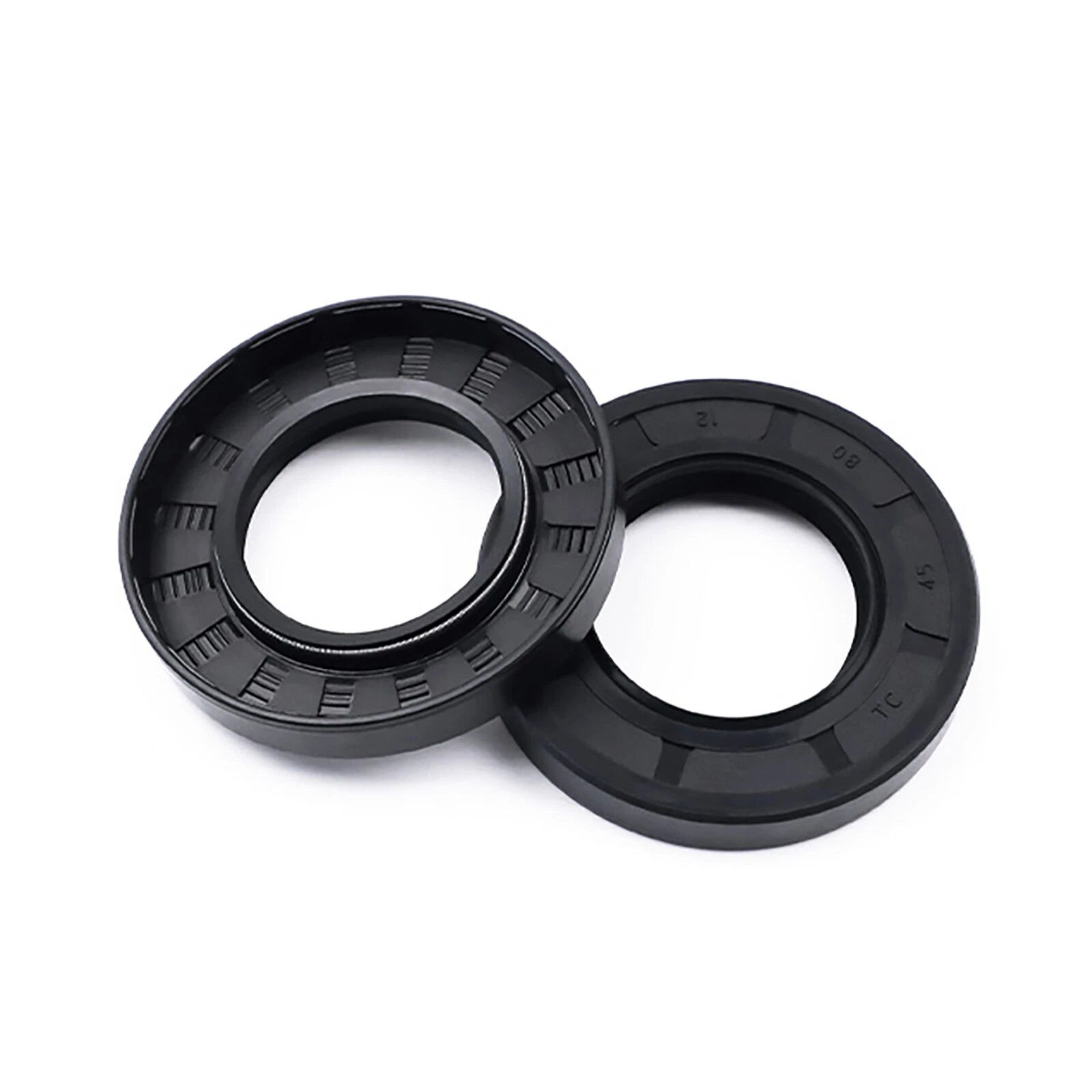
Each seal is manufactured from NBR (nitrile butadiene rubber) bonded to a steel shell, with a garter spring that maintains consistent radial lip pressure against the shaft. The TC profile features two sealing lips: the primary lip retains oil and grease, while the secondary dust lip blocks contaminants from entering the bearing cavity. Inner diameters span 80–120mm, outer diameters and widths vary by variant (see Size option), with widths typically ranging 10–16mm.

Typical applications include industrial gearbox output shafts, agricultural equipment axle housings, hydraulic pump shaft entries, electric motor end shields, and conveyor drive units — anywhere a rotating shaft passes through a housing bore and fluid or contamination control is required.

⚙️ Compatibility: Suitable for mineral oils, greases, and mild hydraulic fluids. NBR compound is rated for continuous service up to approximately 100 °C (212 °F). Not recommended for phosphate-ester fluids or concentrated ketones. Verify shaft surface finish (Ra 0.2–0.8 µm recommended) and housing bore tolerance before installation.

✅ Key Features of These Metric NBR TC Oil Shaft Seals

🔵
TC Double-Lip Design
Primary oil-retention lip plus secondary dust-exclusion lip in a single seal body — eliminates the need for a separate dust cover in most applications.
🔵
Garter Spring-Loaded Primary Lip
An internal garter spring maintains consistent radial contact force as the lip wears, extending service life and reducing the risk of early leakage.
🔵
NBR Rubber Compound
Nitrile butadiene rubber provides broad compatibility with mineral oils, gear oils, and greases across a continuous operating range up to ~100 °C (212 °F).
🔵
Steel-Reinforced Shell
A rigid steel outer case ensures the seal presses squarely into the housing bore and resists distortion under press-fit installation loads.
🔵
Wide Size Range — ID 80–120mm
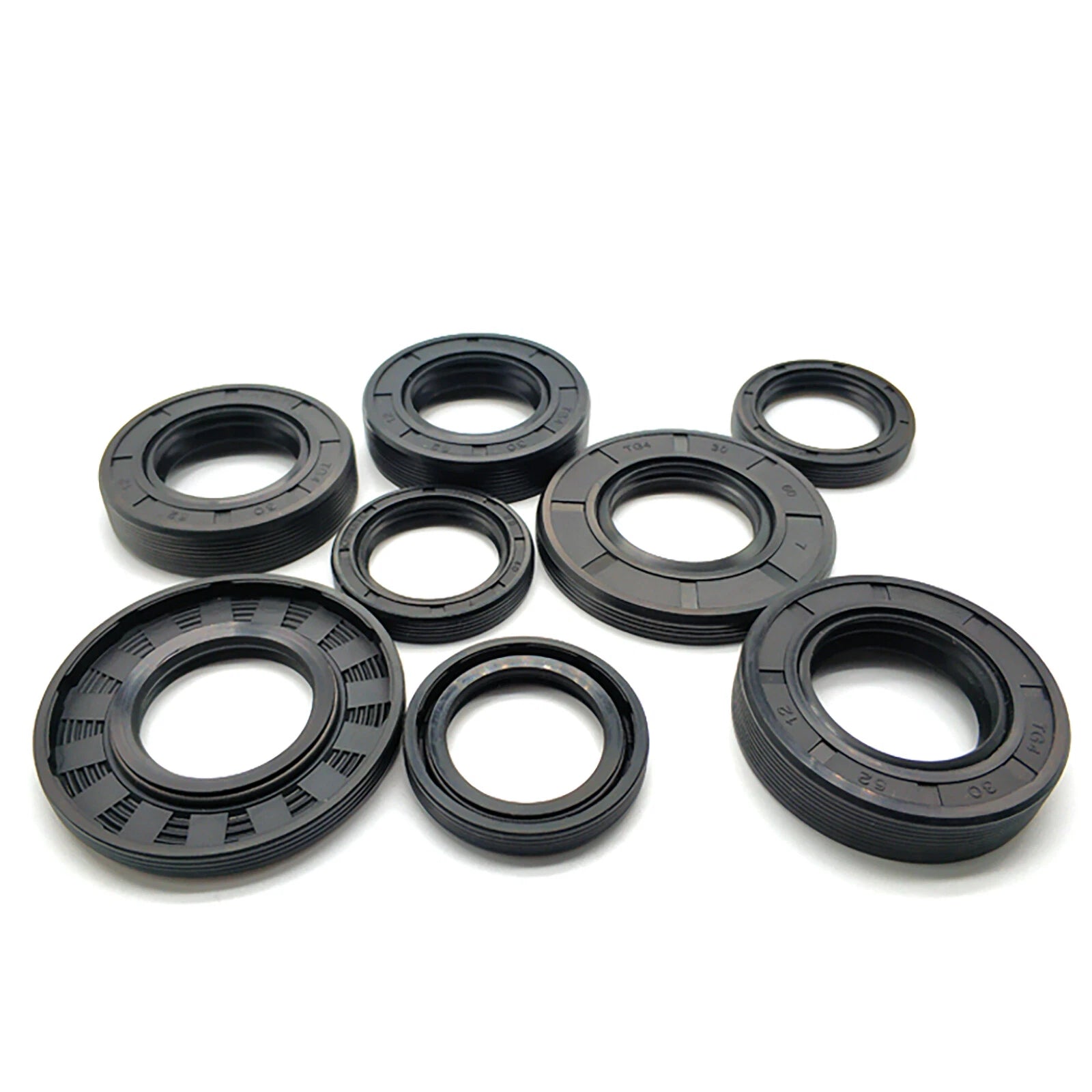
56 distinct size combinations (ID × OD × Width) cover a broad range of metric shaft and bore dimensions, reducing the need to source seals from multiple suppliers.
🔵
Flexible Pack Quantities
Available in packs of 1, 2, 4, or 10 — order a single replacement seal or stock up for fleet maintenance and production line use.

📐 Technical Specifications — Metric TC Oil Shaft Seal

Seal Type TC (Double Lip with Garter Spring)
Material NBR (Nitrile Butadiene Rubber) with steel shell
Inner Diameter (ID) Range 80–120mm (3.15–4.72 in)
Outer Diameter (OD) Range See variant options
Width Range Typically 10–16mm — see variant options
Spring Type Garter spring (internal, primary lip)
Lip Configuration Primary sealing lip + secondary dust lip
Max Continuous Temperature Approx. 100 °C (212 °F)
Fluid Compatibility Mineral oils, gear oils, greases, mild hydraulic fluids
Shaft Surface Finish (Recommended) Ra 0.2–0.8 µm
Pack Size Options 1, 2, 4, or 10 pieces
Standard Metric dimensional series

❓ Frequently Asked Questions

How do I choose the correct seal size for my application?

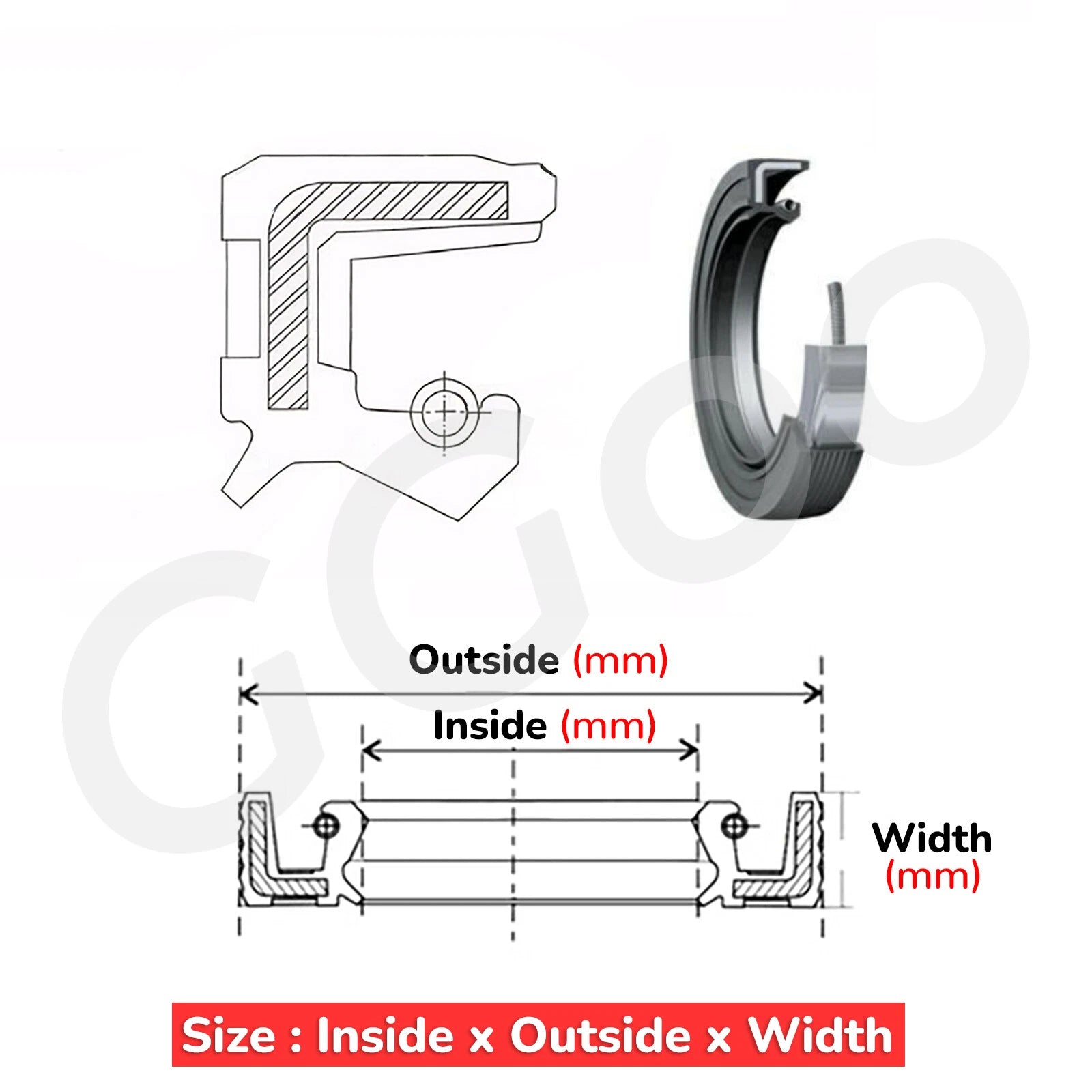
Measure three dimensions: the shaft outer diameter (this becomes the seal ID), the housing bore inner diameter (this becomes the seal OD), and the housing bore depth available for the seal (this determines the width). Cross-reference all three against the Size (ID × OD × Width) options listed above. If your housing bore depth is shallower than the seal width, select a narrower variant.

What does "TC" mean, and why does it matter?

"TC" designates a double-lip seal with a garter spring behind the primary lip. The first lip retains lubricant; the second lip (dust lip) faces outward and blocks dirt, water, and debris. The garter spring keeps the primary lip in contact with the shaft as the rubber wears, maintaining a reliable seal over a longer service interval compared to a single-lip (SC) design.

Is NBR the right material for my fluid and temperature?

NBR performs well with mineral-based engine oils, gear oils, ATF, greases, and mild hydraulic fluids at continuous temperatures up to approximately 100 °C (212 °F) with short excursions to around 120 °C. It is not suitable for phosphate-ester hydraulic fluids, concentrated ketones, or aromatic fuels. For those media, consider FKM (Viton) seals instead.

What shaft surface finish and tolerance are required for a good seal?

The shaft surface in the sealing zone should have a finish of Ra 0.2–0.8 µm (8–32 µin). Surfaces that are too smooth can prevent the lip from forming a hydrodynamic film; surfaces that are too rough accelerate lip wear. Avoid longitudinal machining marks — a plunge-ground or superfinished finish is ideal. The housing bore should be machined to an H8 tolerance for a reliable interference fit.

How do I install a TC oil seal without damaging it?

Clean the housing bore and lightly lubricate the seal OD with the same oil the seal will retain. Apply a thin film of oil to the primary lip. Use a flat press plate or a seal driver sized to the OD to press the seal in squarely — never hammer directly on the seal face. Press until the seal face is flush with or just below the housing face. Protect the dust lip from sharp shaft keyways or threads during installation using a sleeve or tape.

Can these seals handle dynamic shaft runout or misalignment?

TC lip seals tolerate a small degree of dynamic runout — typically up to 0.2–0.5mm TIR at moderate shaft speeds. Excessive runout or angular misalignment accelerates lip wear and can cause early leakage. If your application involves significant shaft deflection, consider a seal with a wider lip contact zone or address the root cause of misalignment before replacing the seal.

What pack size should I order?

For a single repair, the Pack Size 1 option is the most economical choice. If you maintain a fleet of machines with the same seal size, Pack Size 4 or 10 reduces the per-unit cost and ensures you have spares on hand for unplanned breakdowns. Pack Size 2 suits workshops that prefer to keep one installed and one in reserve.

🛒 Select your Size (ID × OD × Width) and Pack Size above, then add to cart.

You may also like

Recently viewed