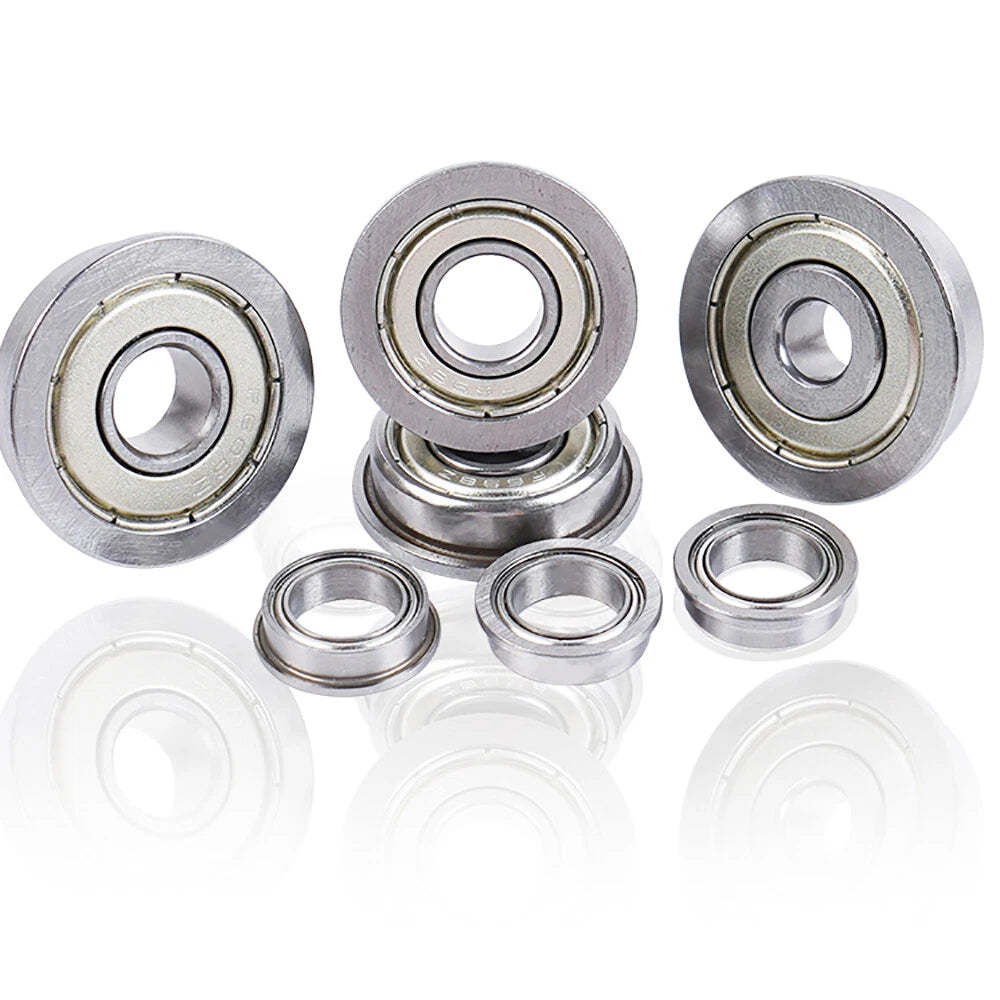
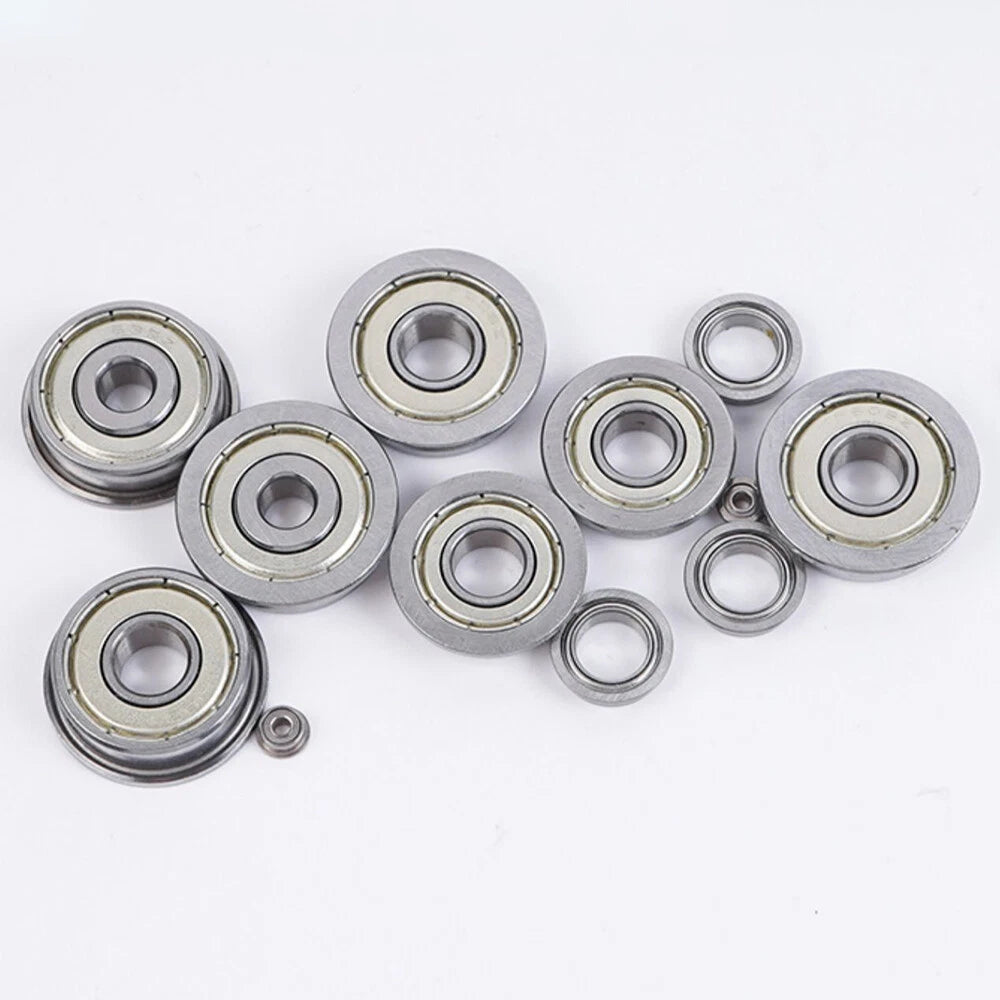
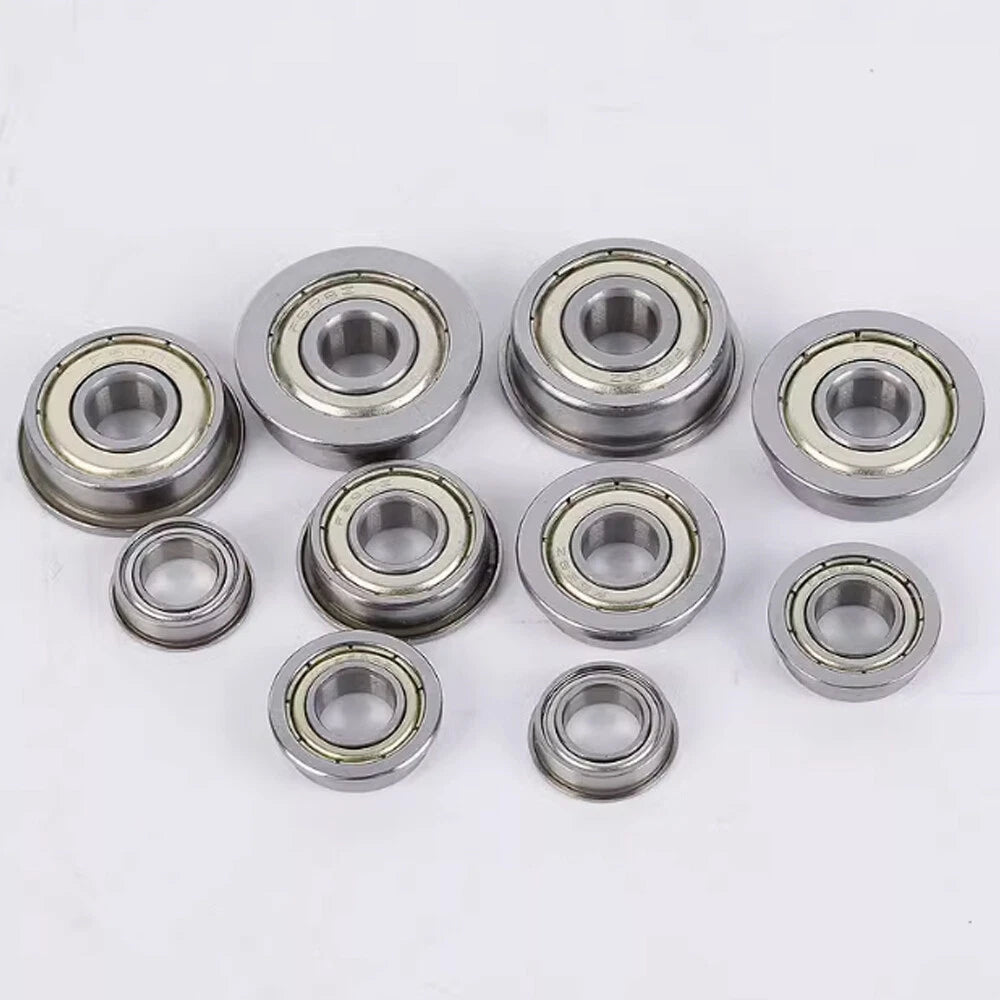
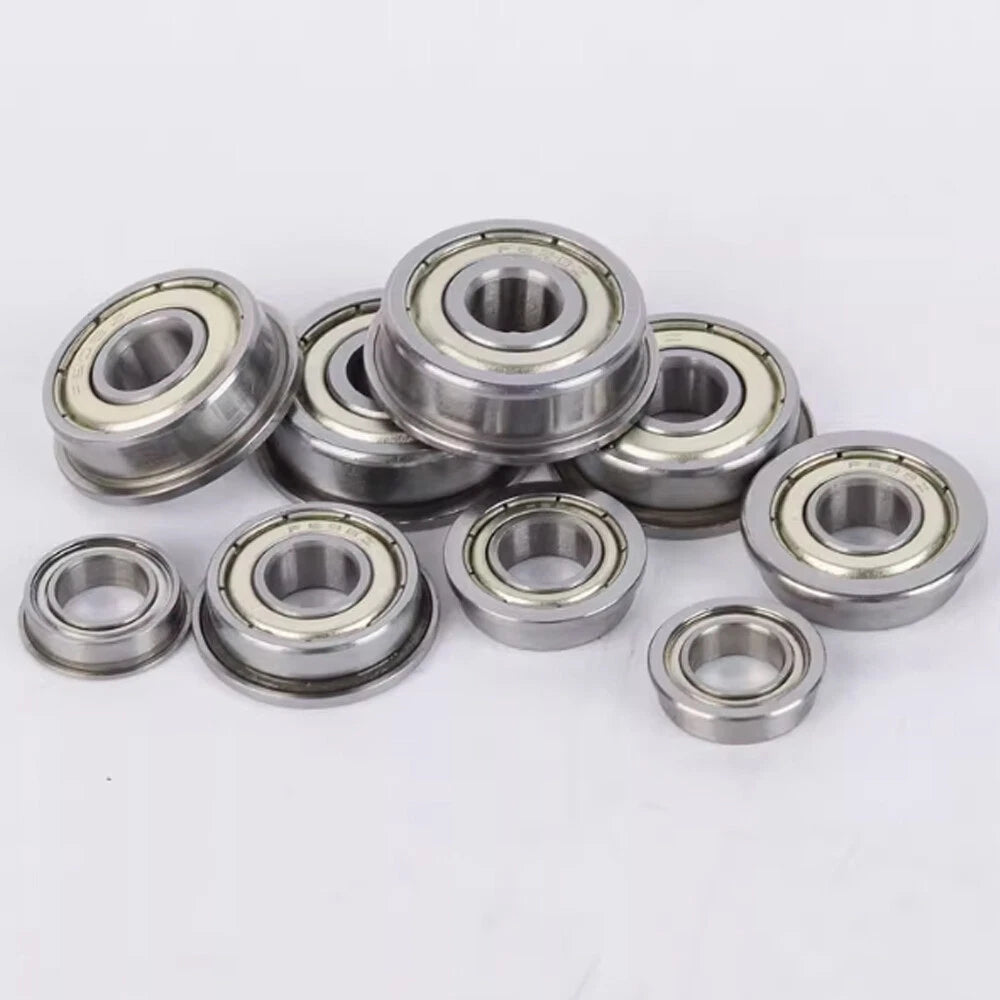
Mini Metal Shielded Flanged Ball Bearings - Model Complete Inner Diameter 2-50mm

No reviews

Price:
Sale price$3.11 USD
Stock:
In stock (500 units), ready to be shipped

Payment & Security

Ach Direct Debit Amazon American Express Apple Pay Bancontact BLIK Diners Club Discover EPS Google Pay iDEAL Wero JCB Maestro Mastercard Multibanco MobilePay PayPal Przelewy24 Shop Pay Twint Union Pay USDC Visa

Your payment information is processed securely. We do not store credit card details nor have access to your credit card information.

Limited Offer — Spend More, Save More
Spend $55+
Save $5
Spend $100+
Save $10
Spend $200+
Save $25
HomeDIYer DIY Expert Support

DIY Expert Support

Get fitment advice & recommendations

Mon–Fri  8:30 AM – 8:00 PM
24-Hour Fast Ship
Arrives in 3–14 Days
Worldwide Shipping
30-Day Returns
1 tree planted with every purchase

Description

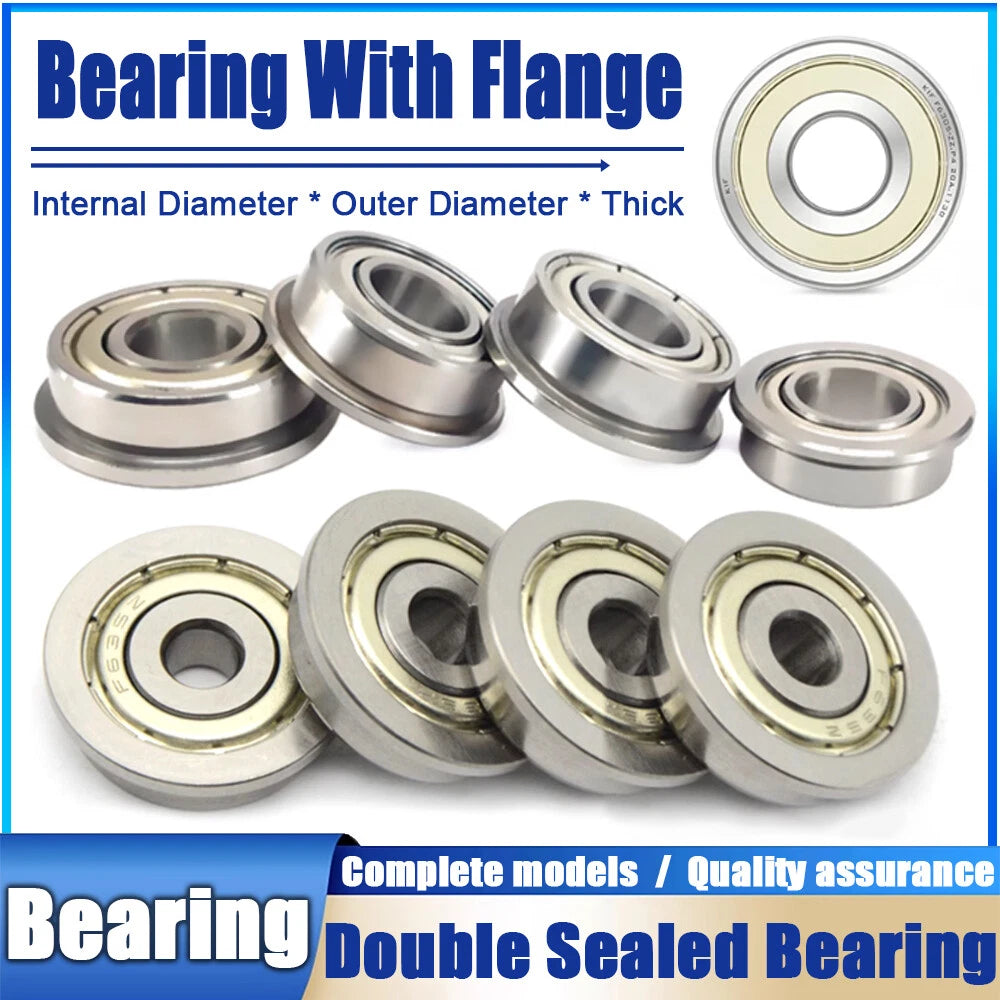
Flanged Ball Bearings ZZ — Precision-Shielded F & MF Series, Inner Diameter 2–50mm

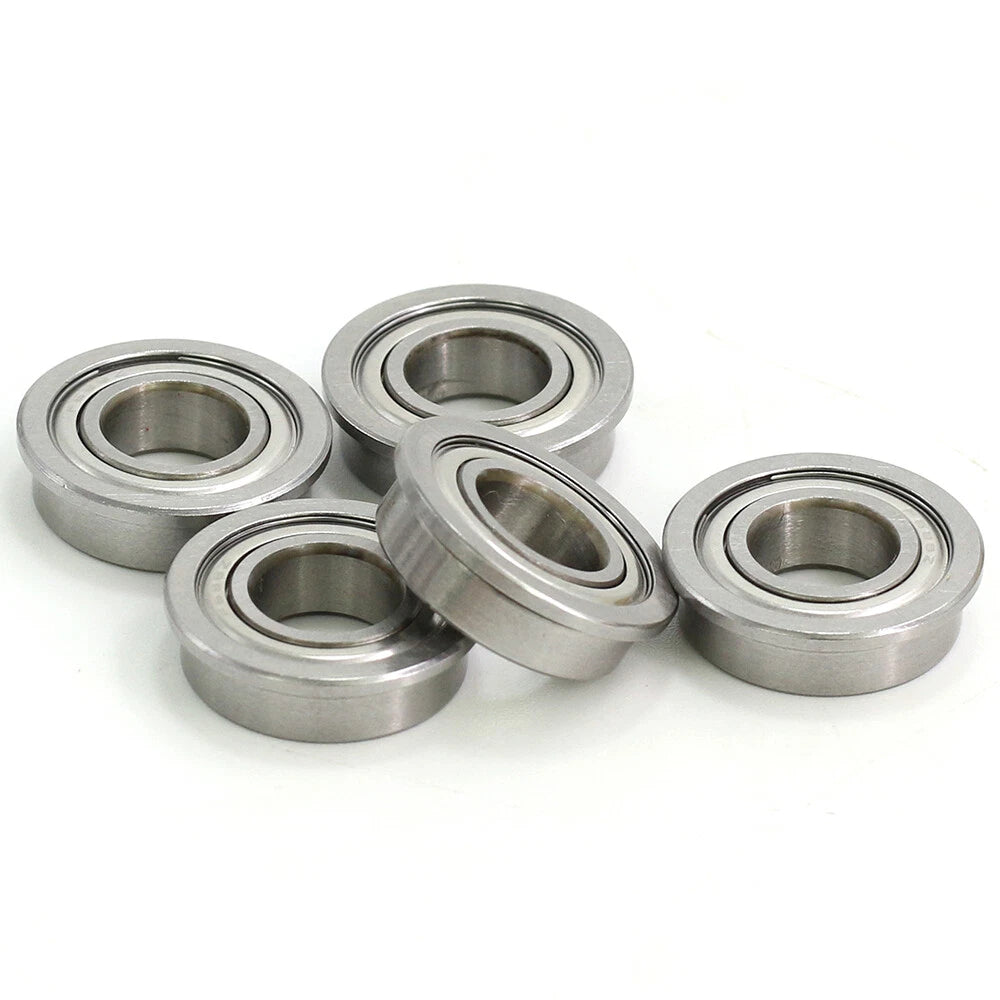
When a standard bearing slips out of its housing under axial load, or when your compact mechanism has no room for a retaining clip, a flanged ball bearing is the engineered answer. Hobbyists building RC cars, engineers designing 3D printer extruder carriages, and technicians maintaining small motors all face the same challenge: keeping a bearing seated without adding bulk. These ZZ double-shielded flanged ball bearings solve that problem with a machined flange that registers against the housing face, eliminating axial migration without additional hardware.

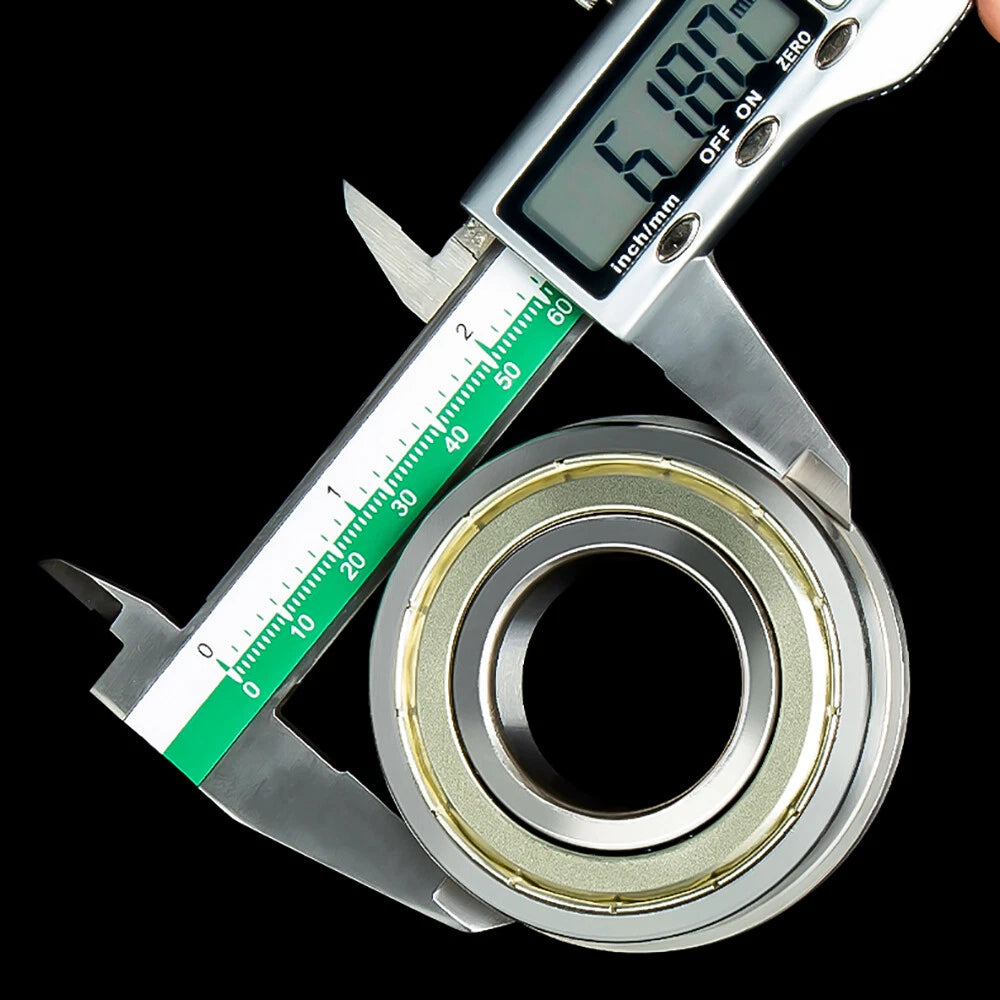
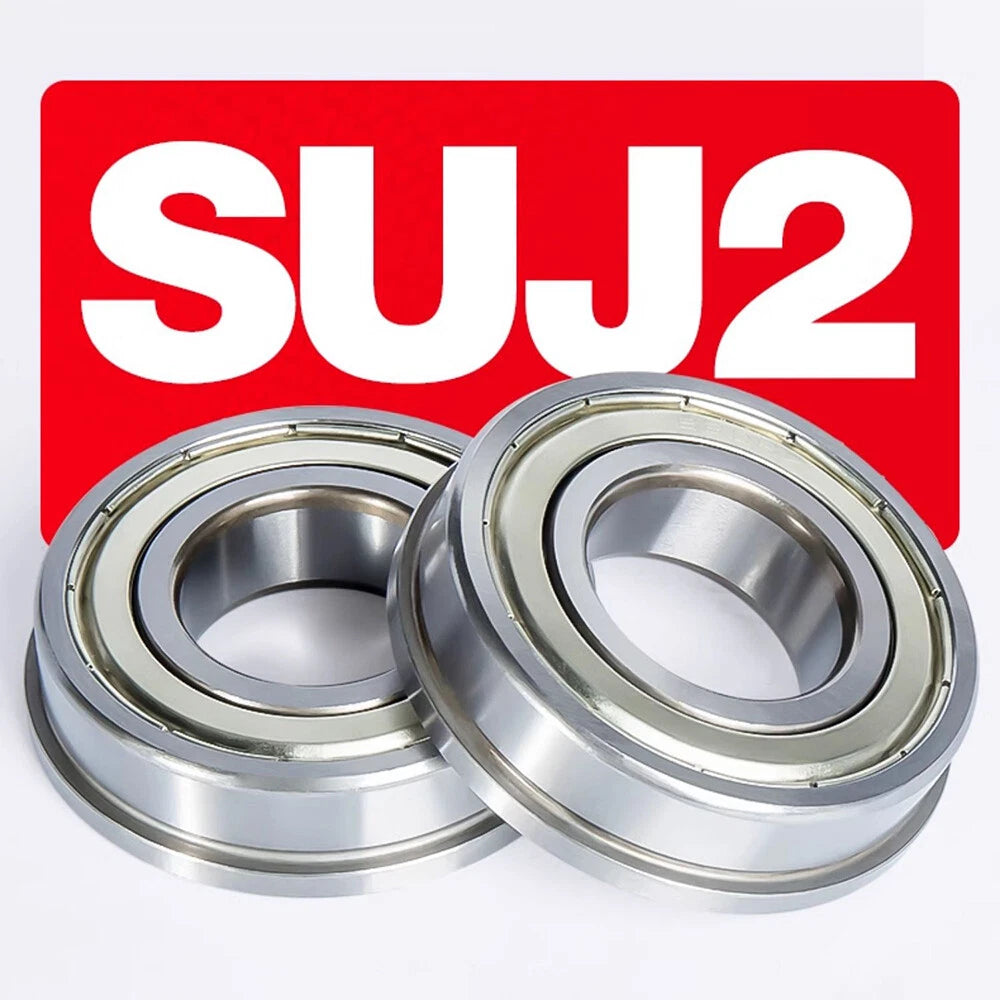
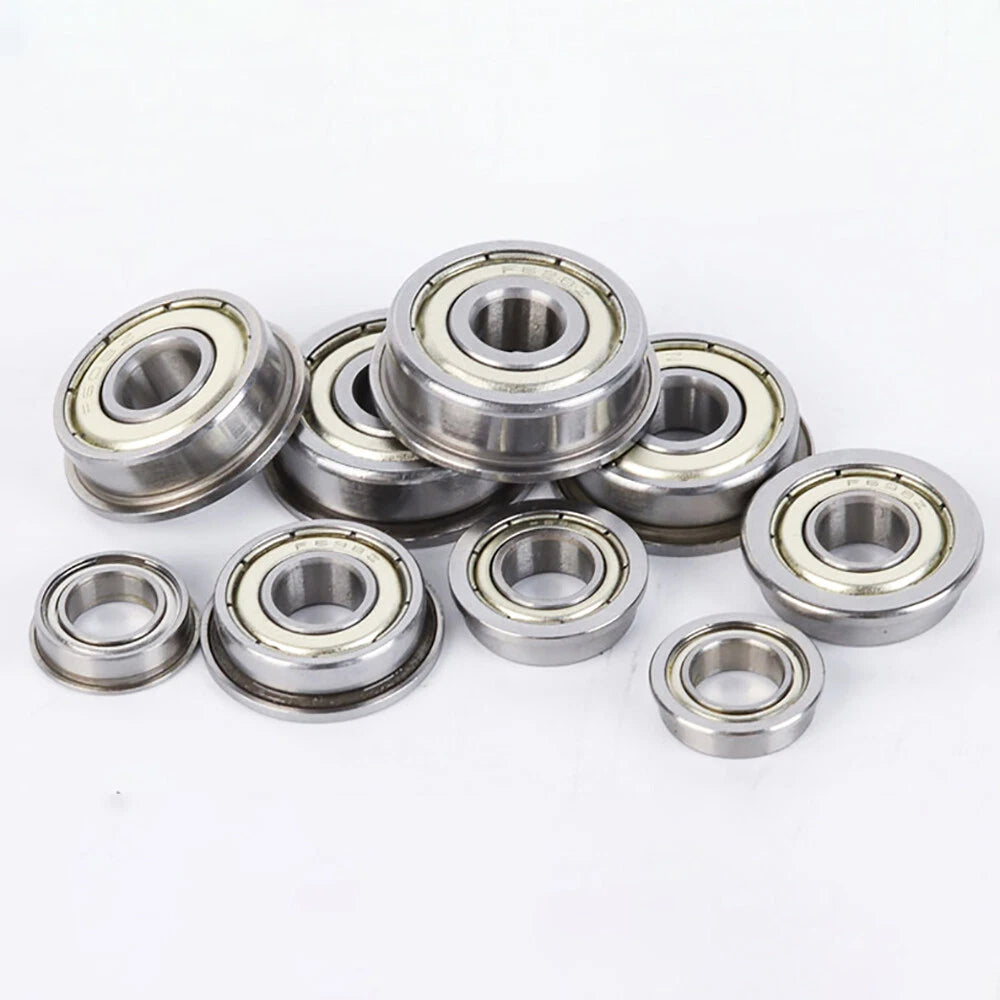
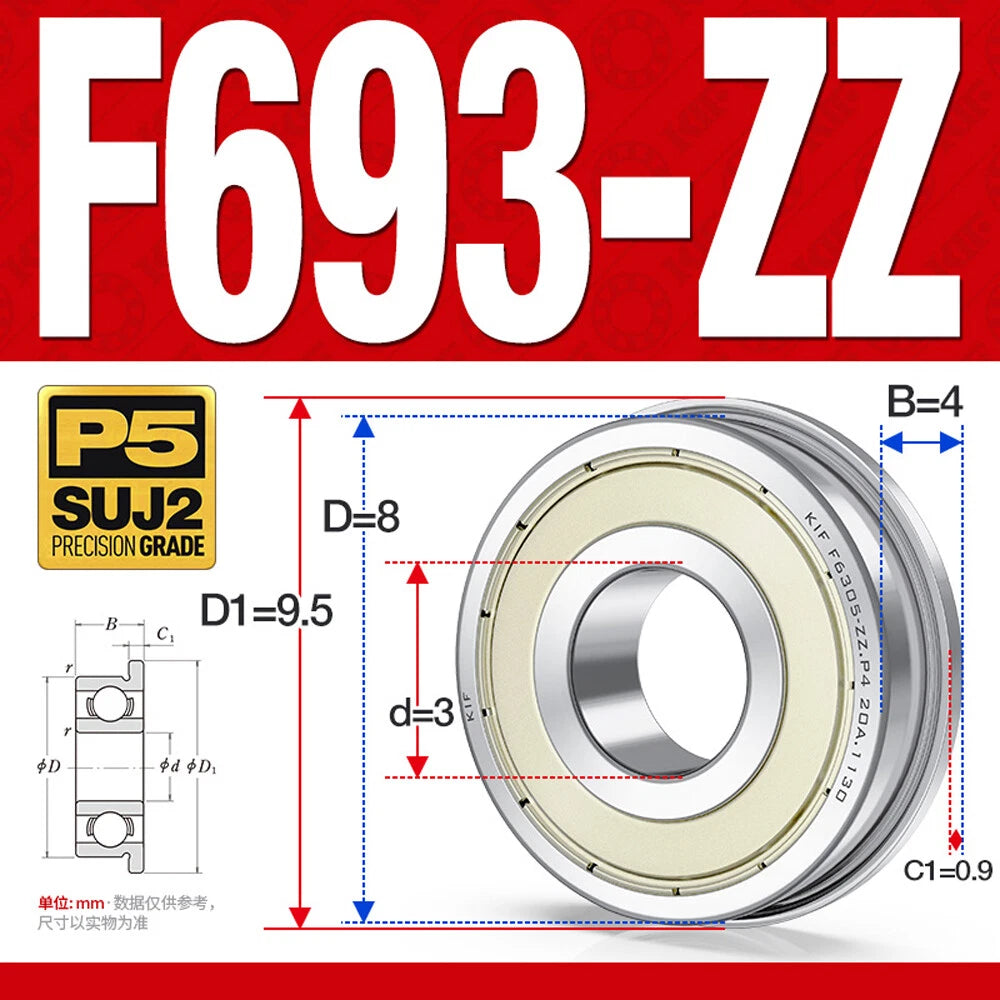
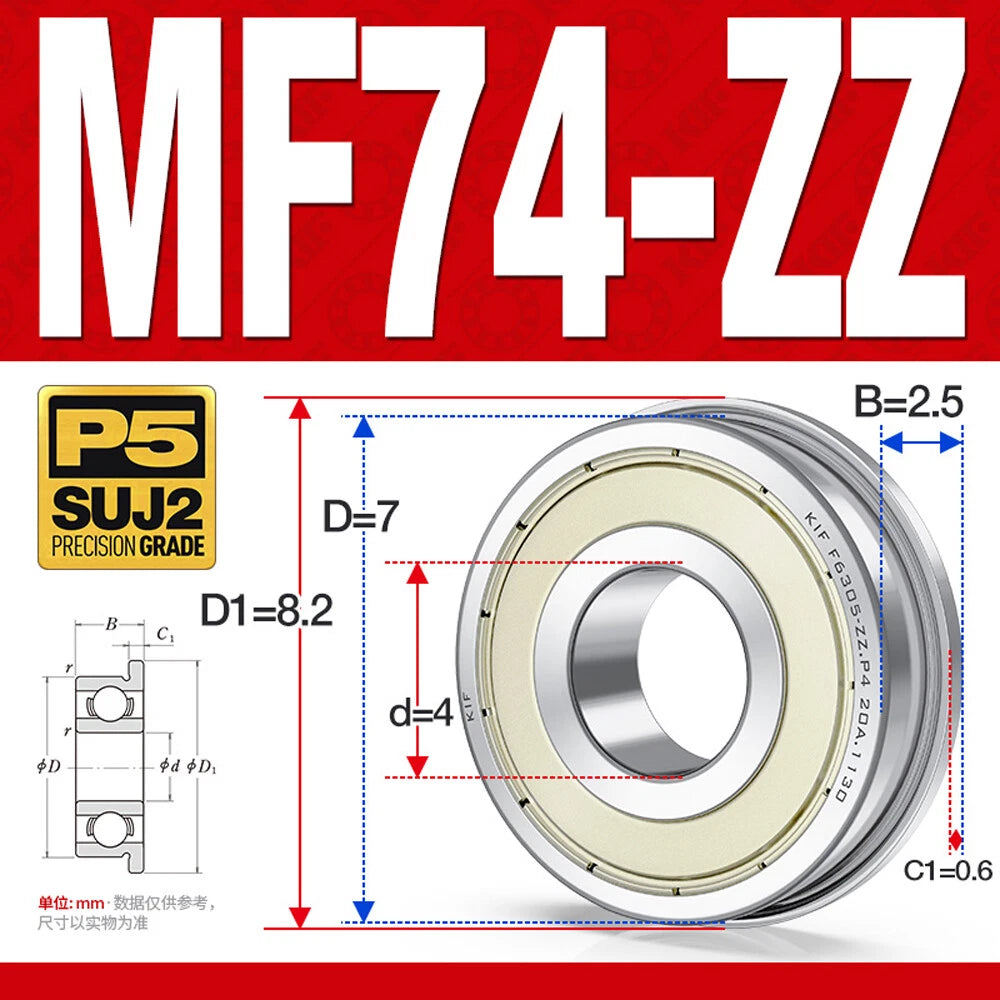
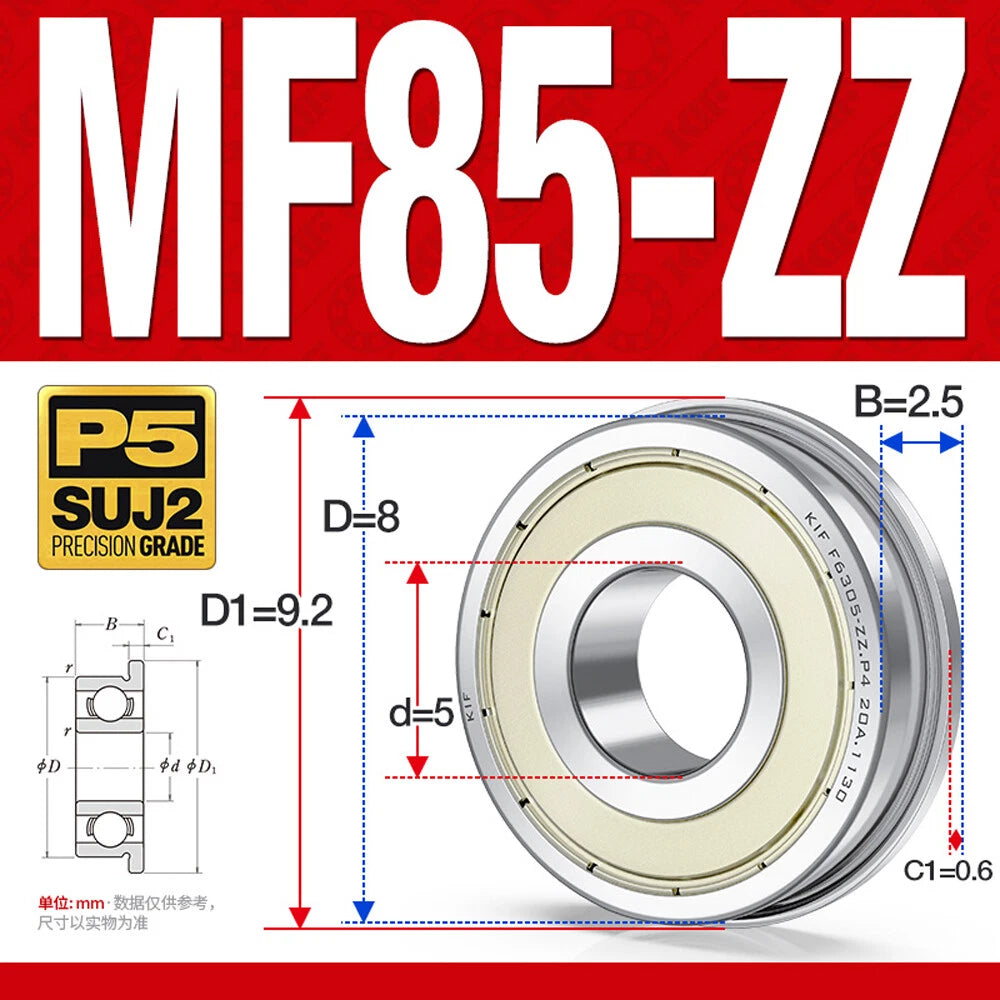
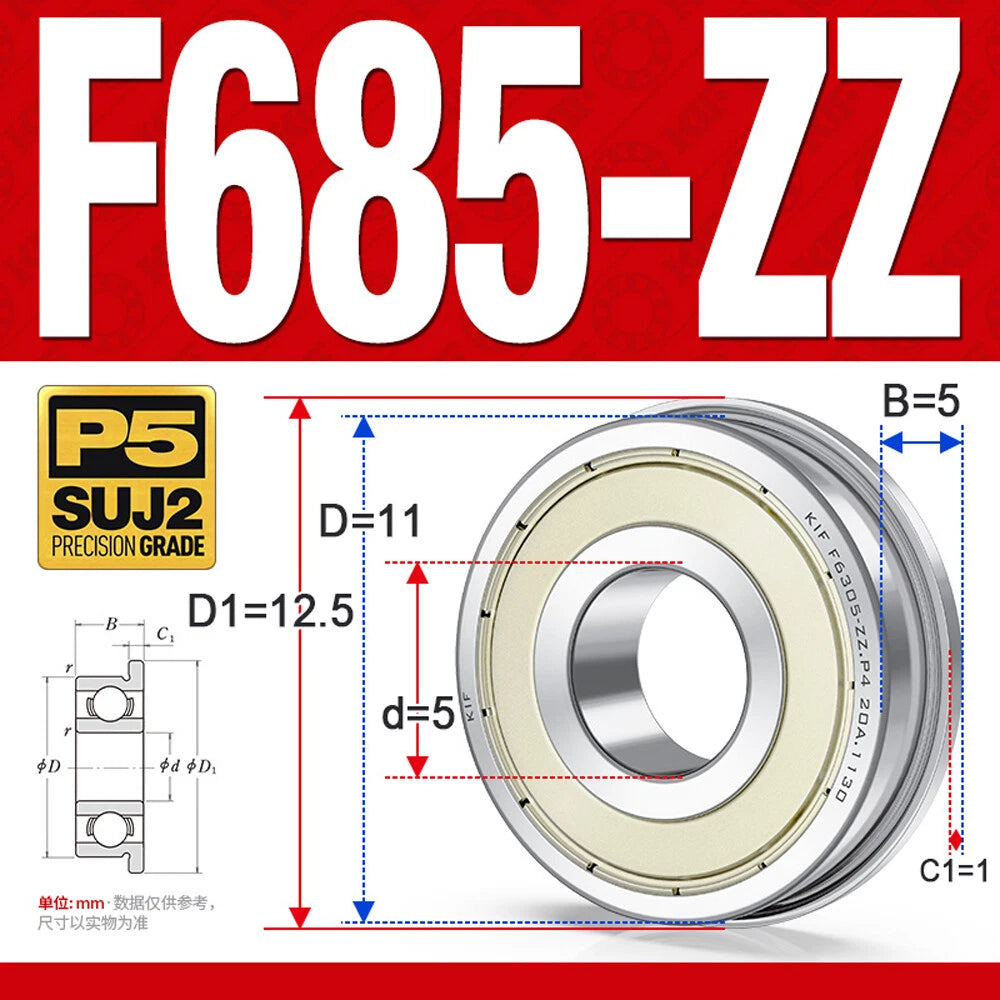
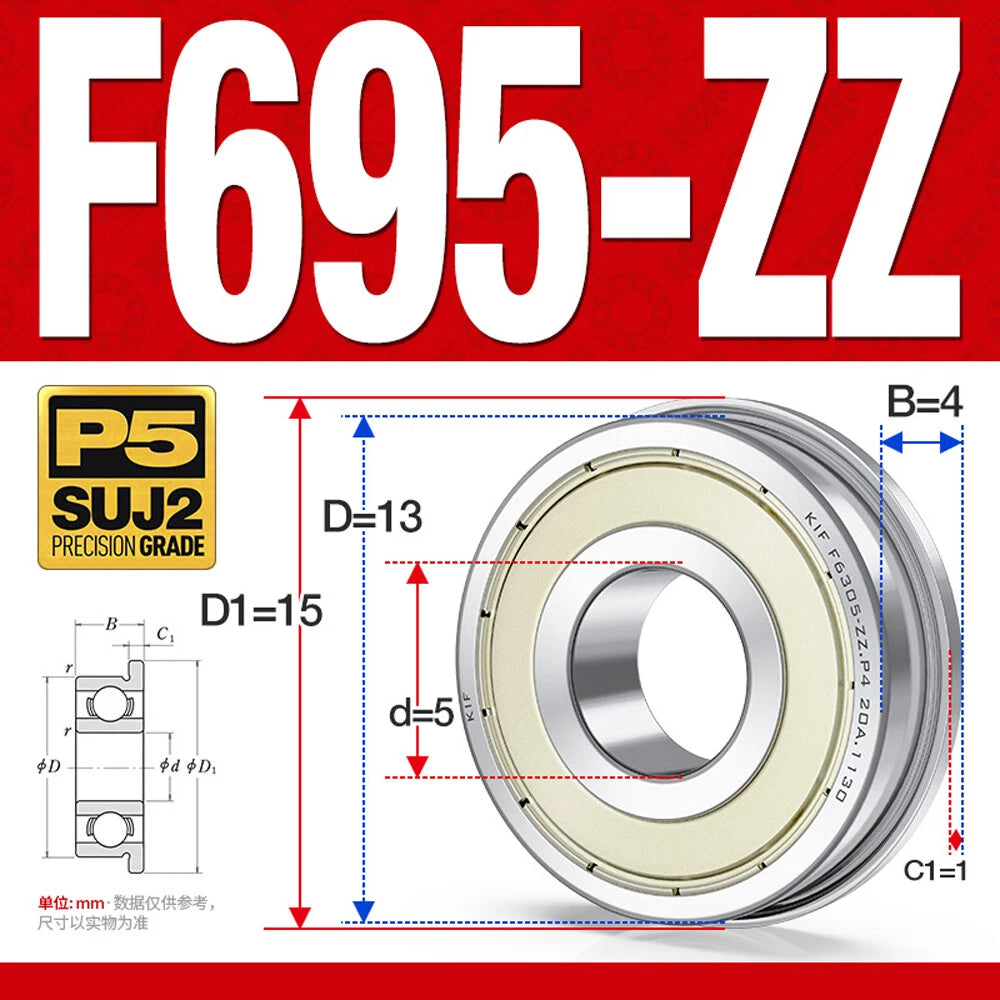
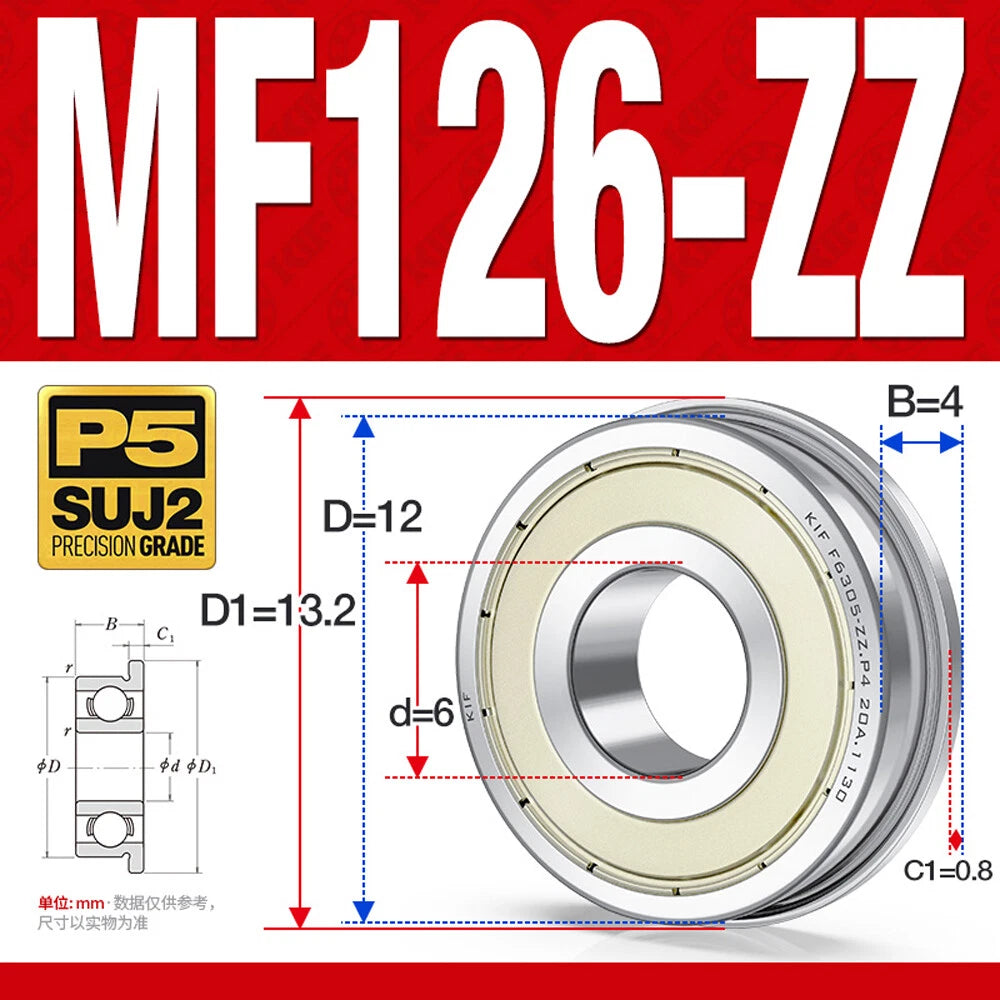
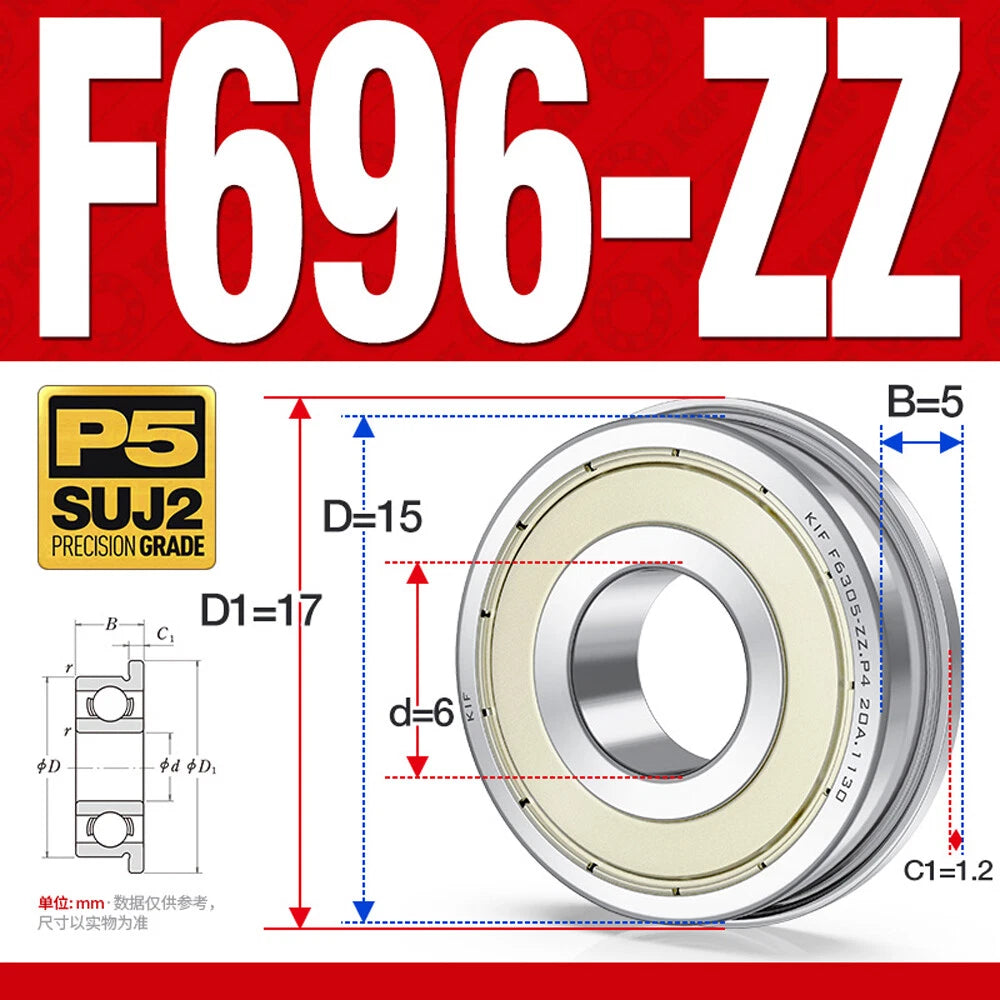
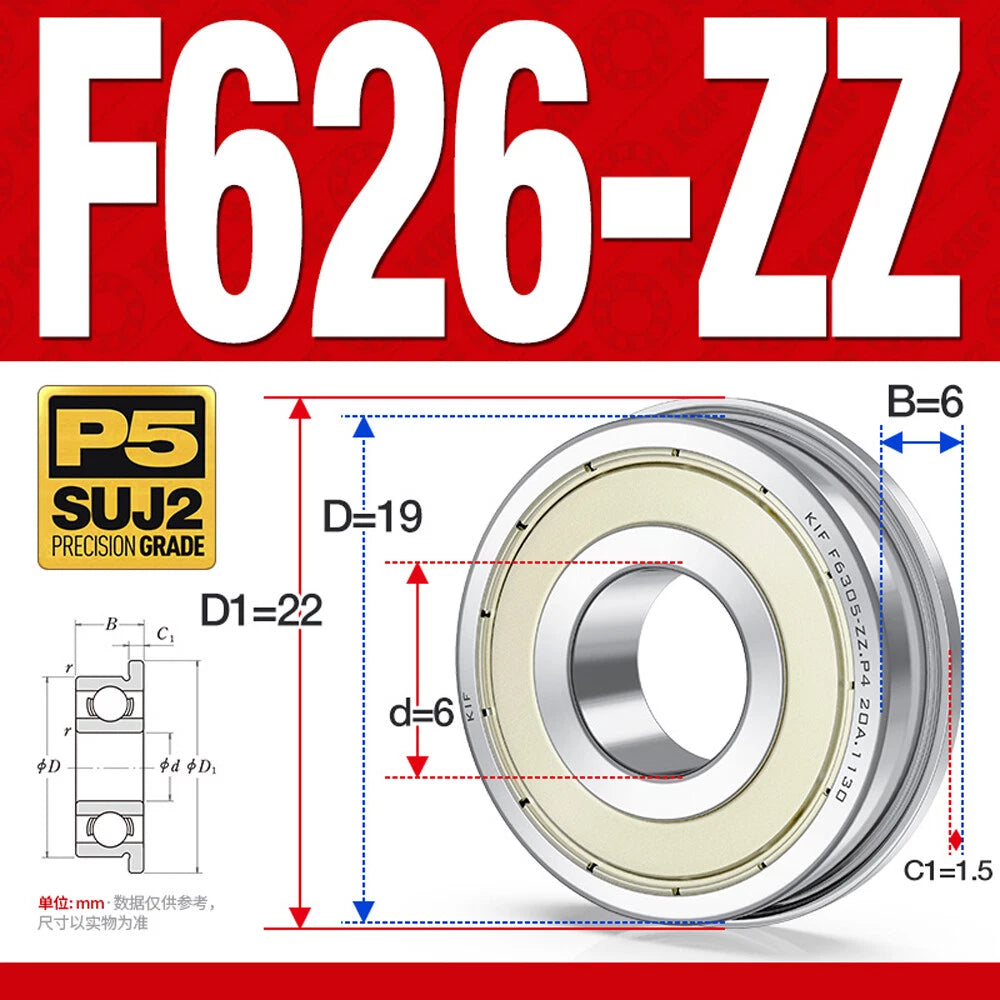
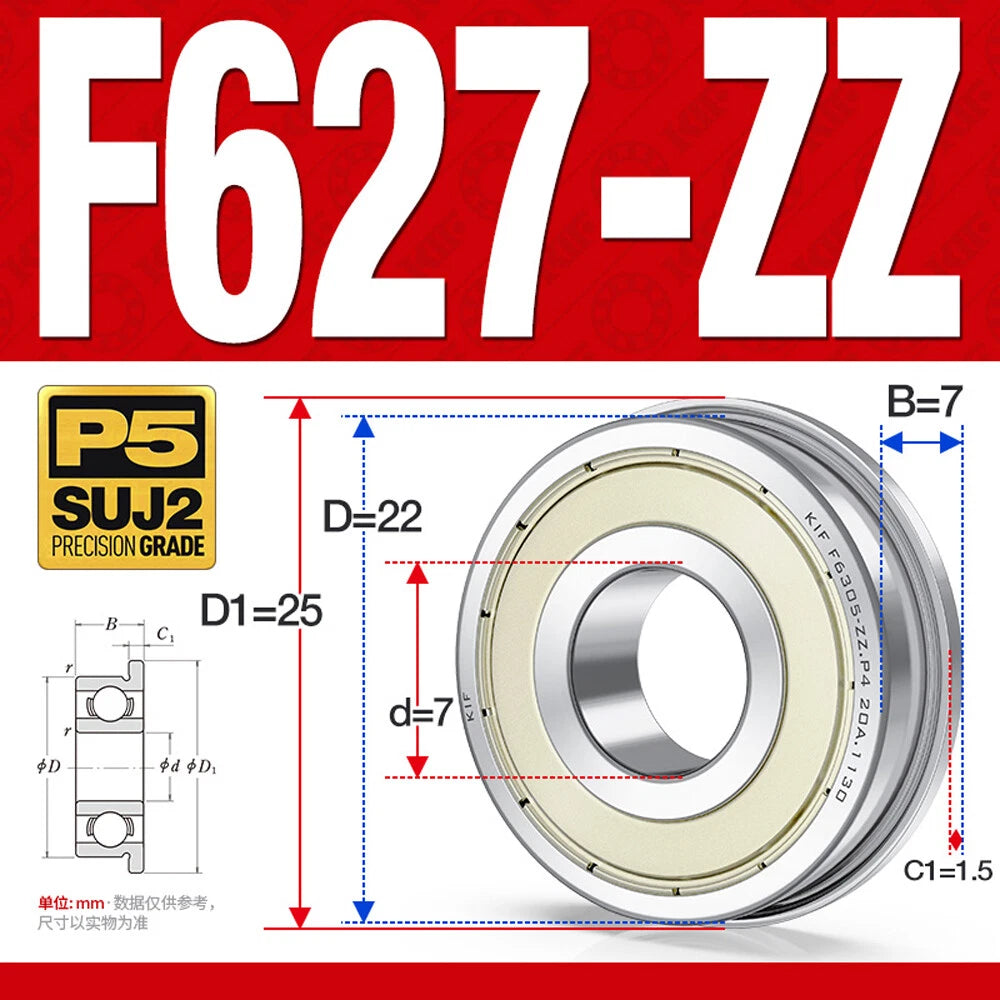
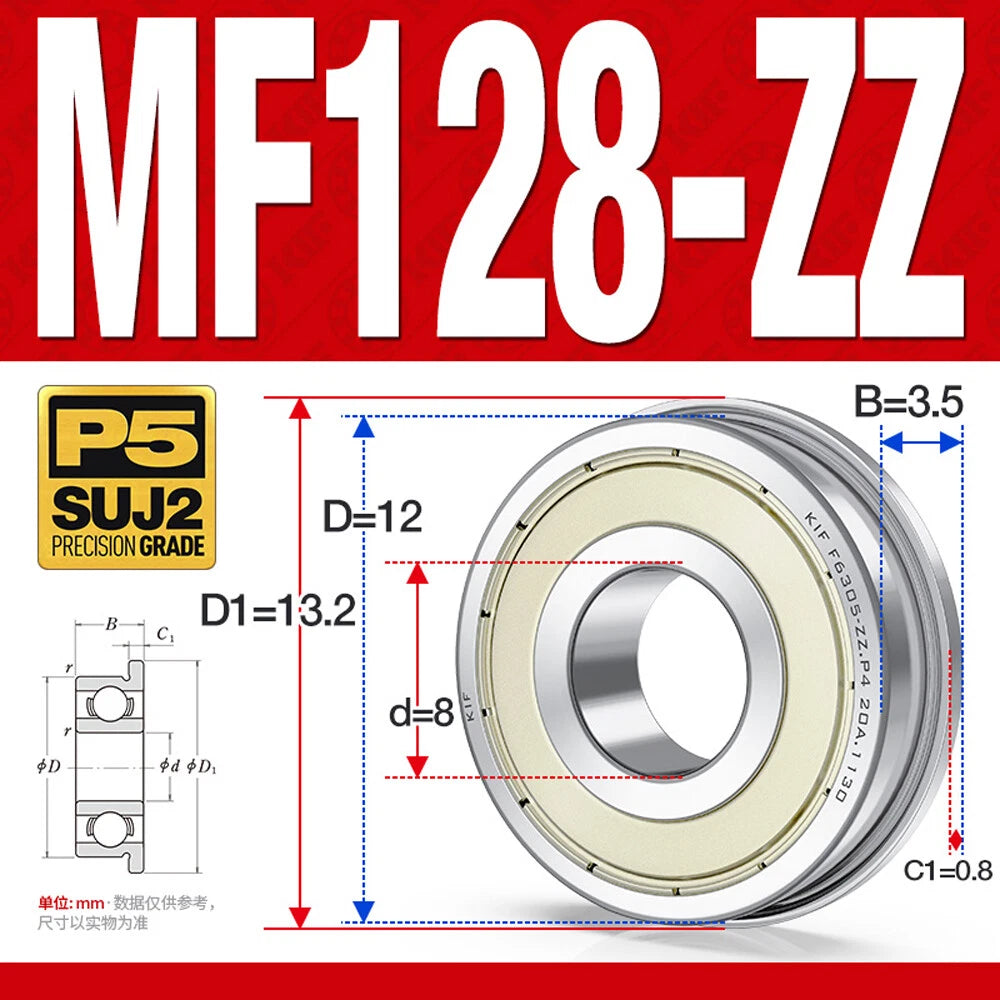
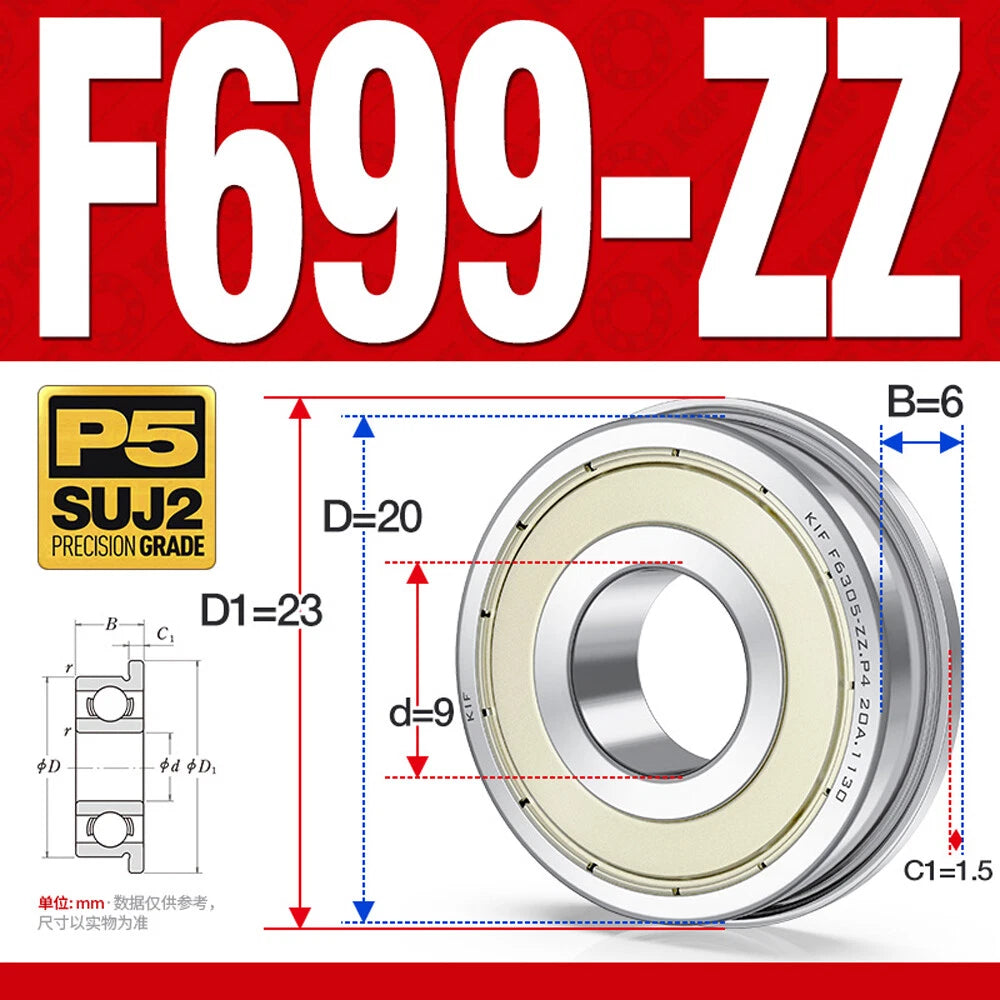
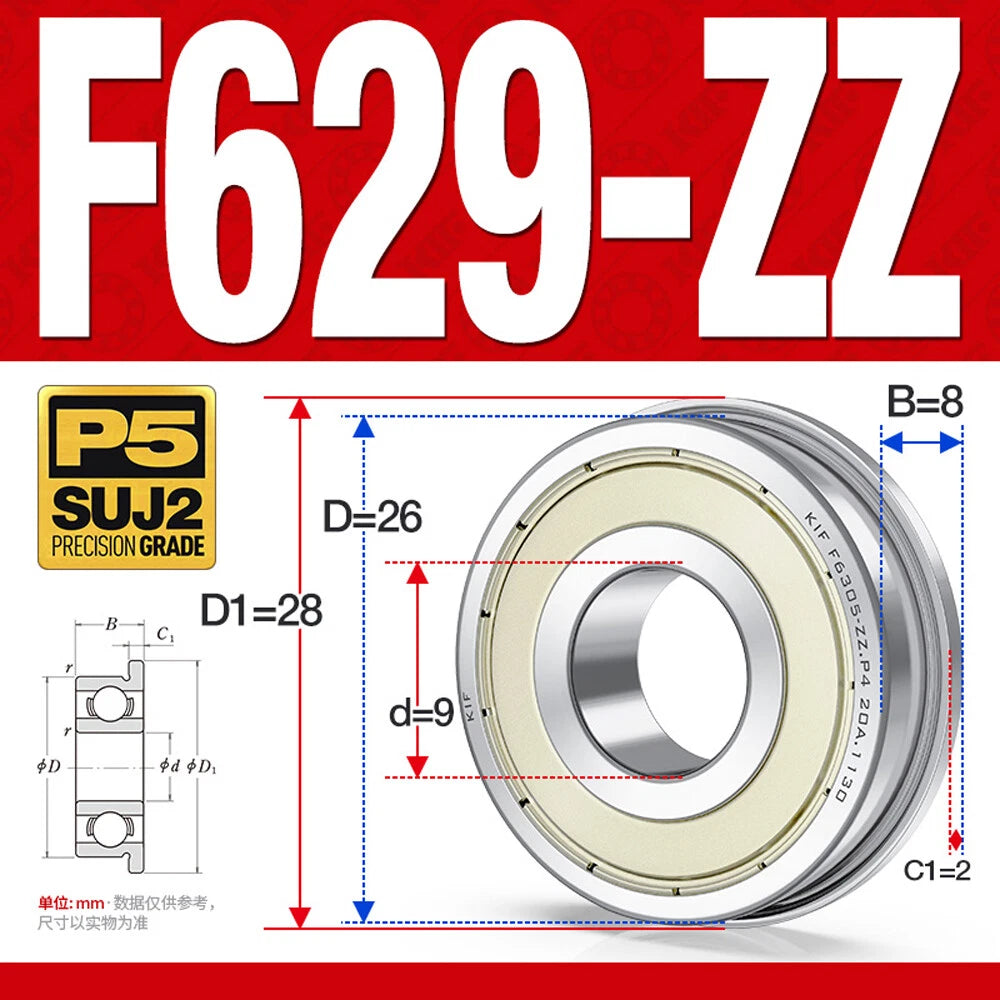
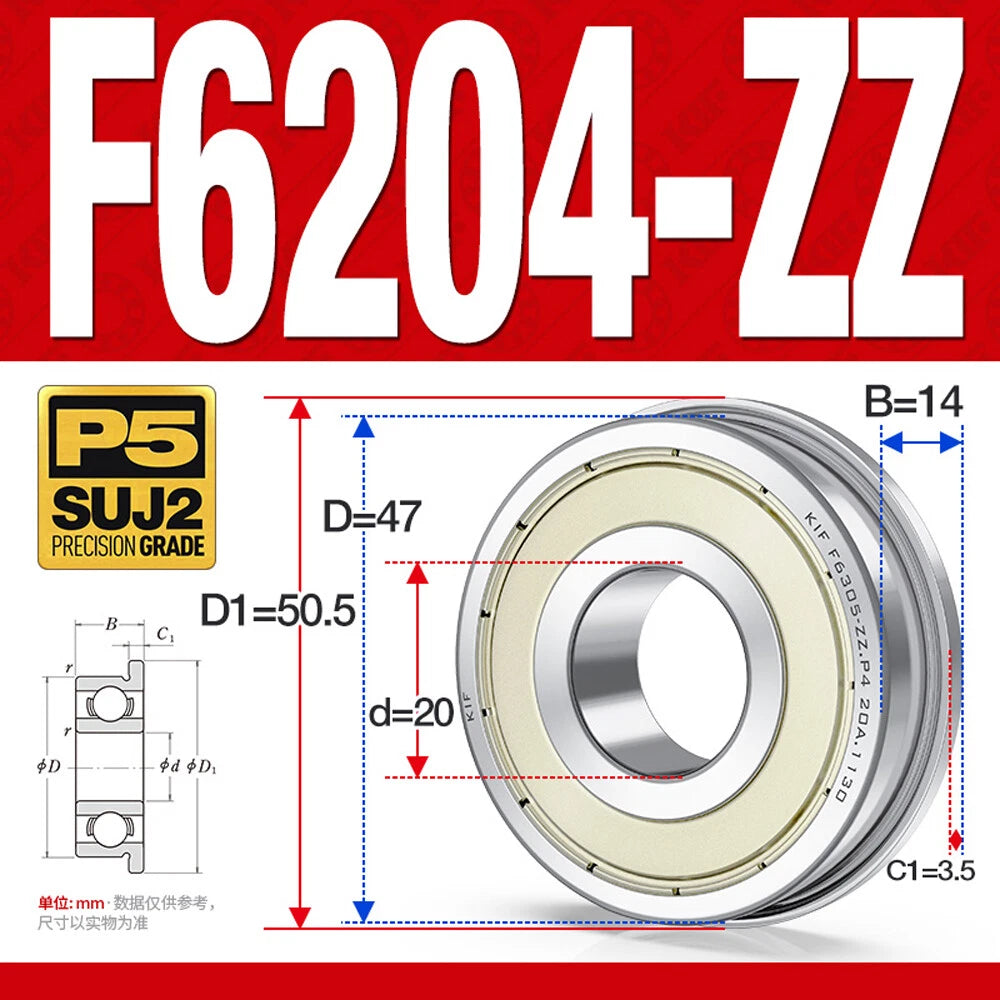
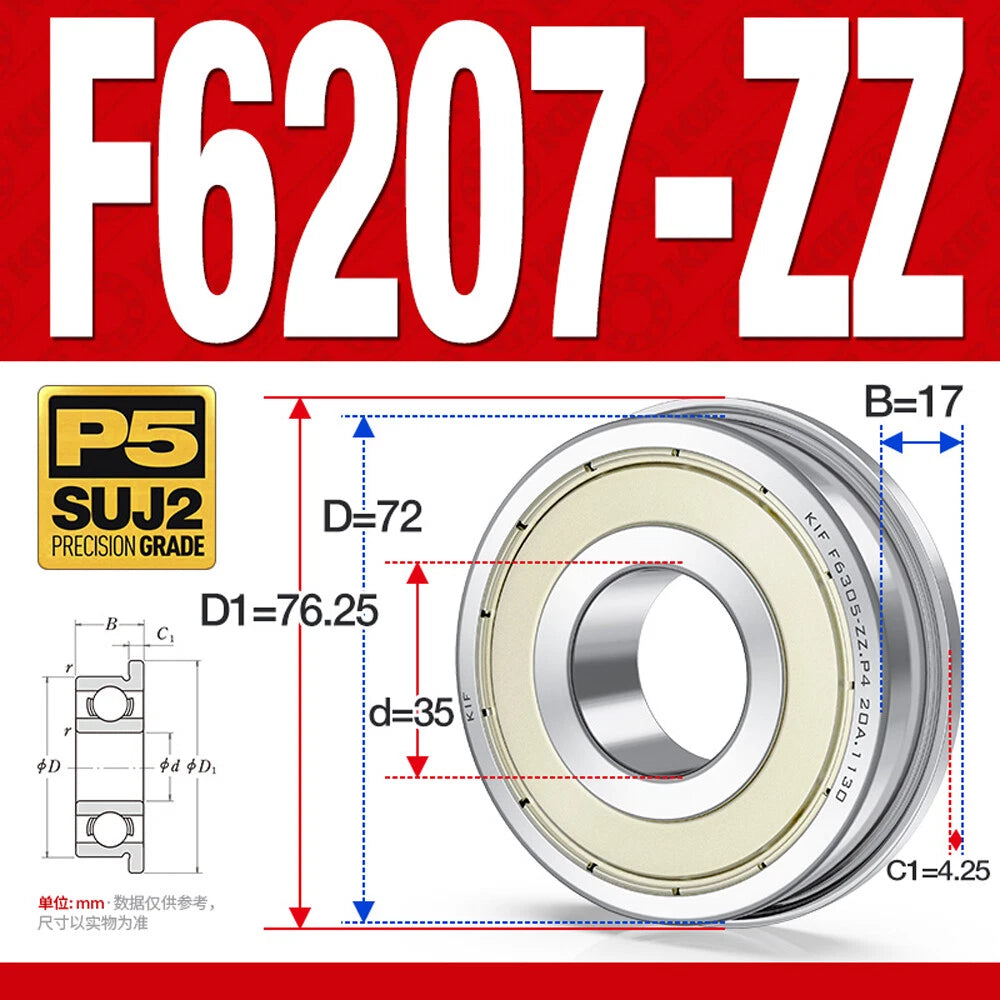
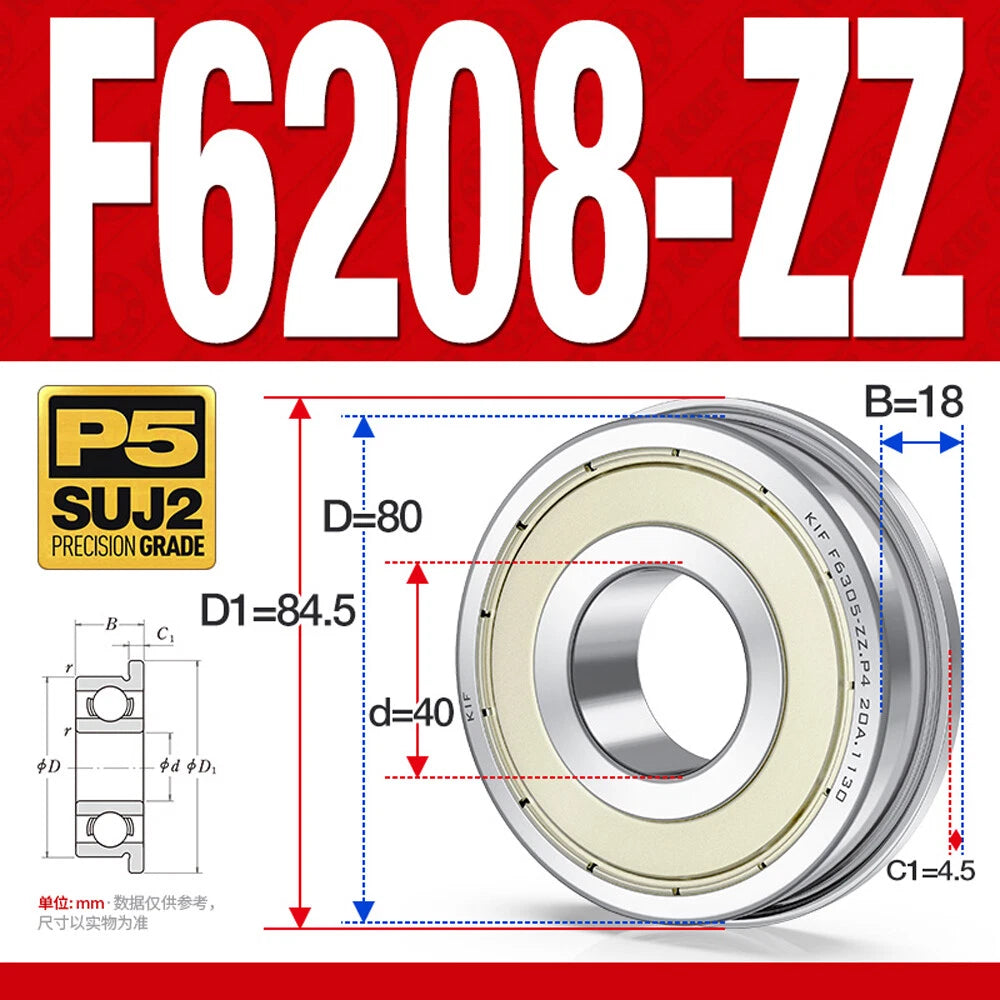
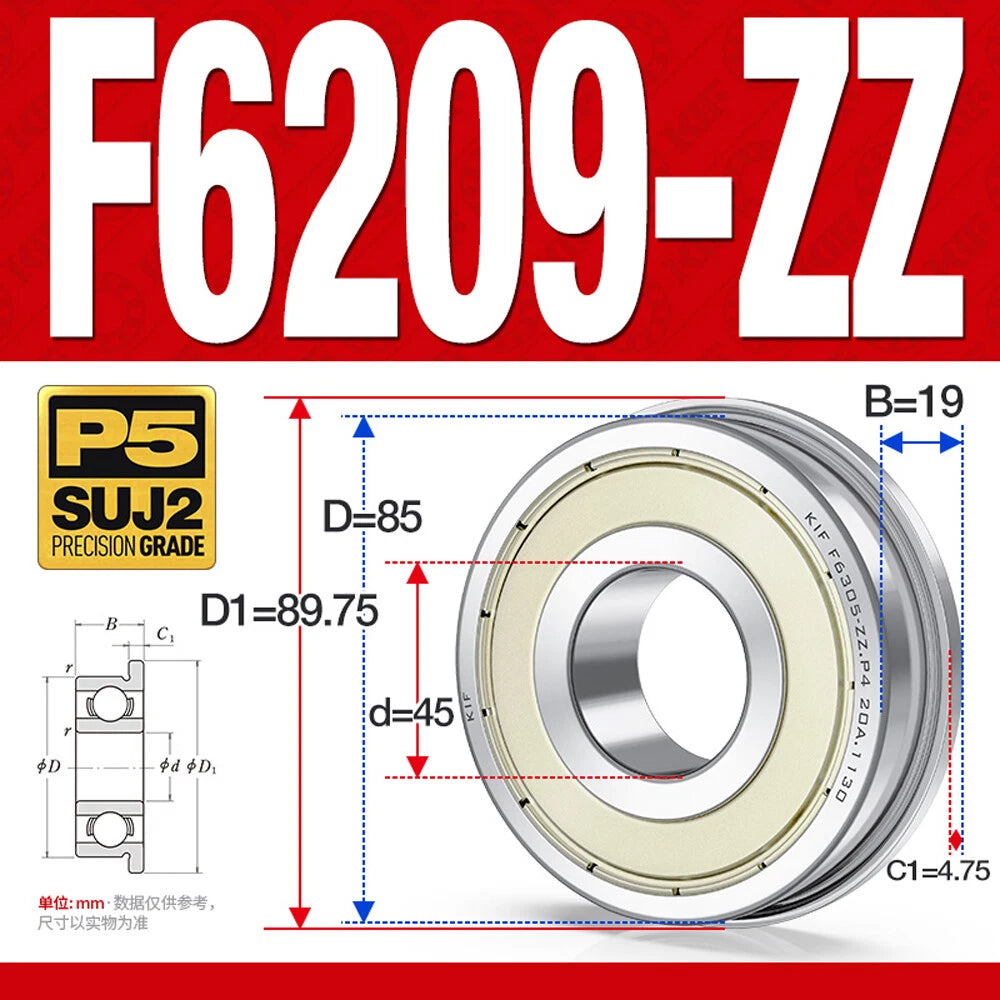
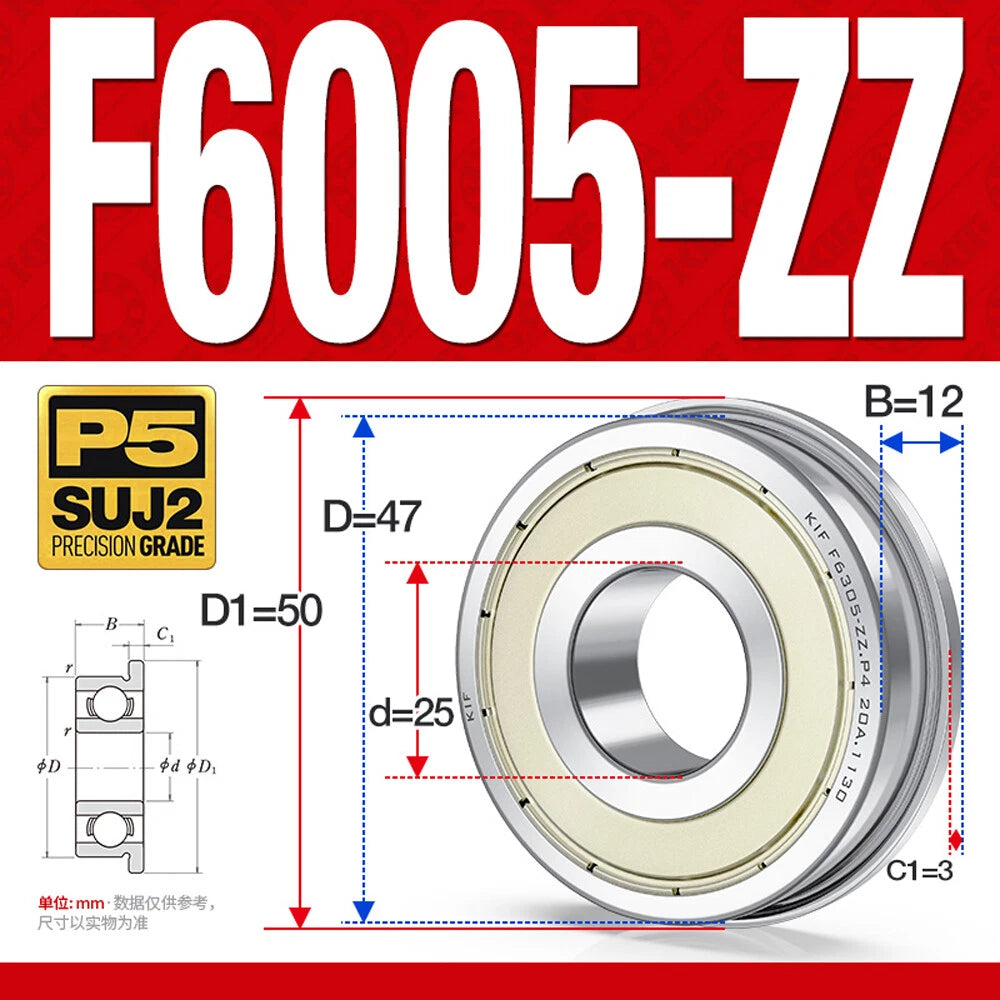
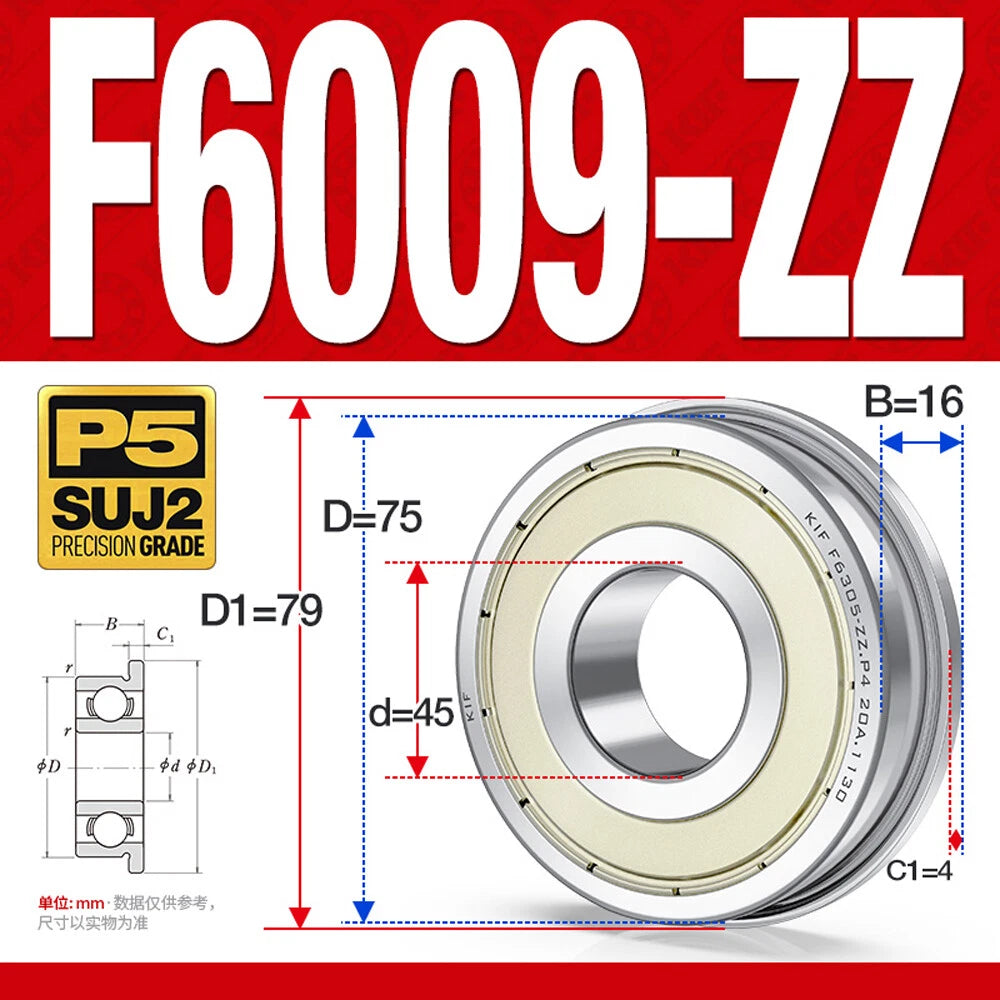
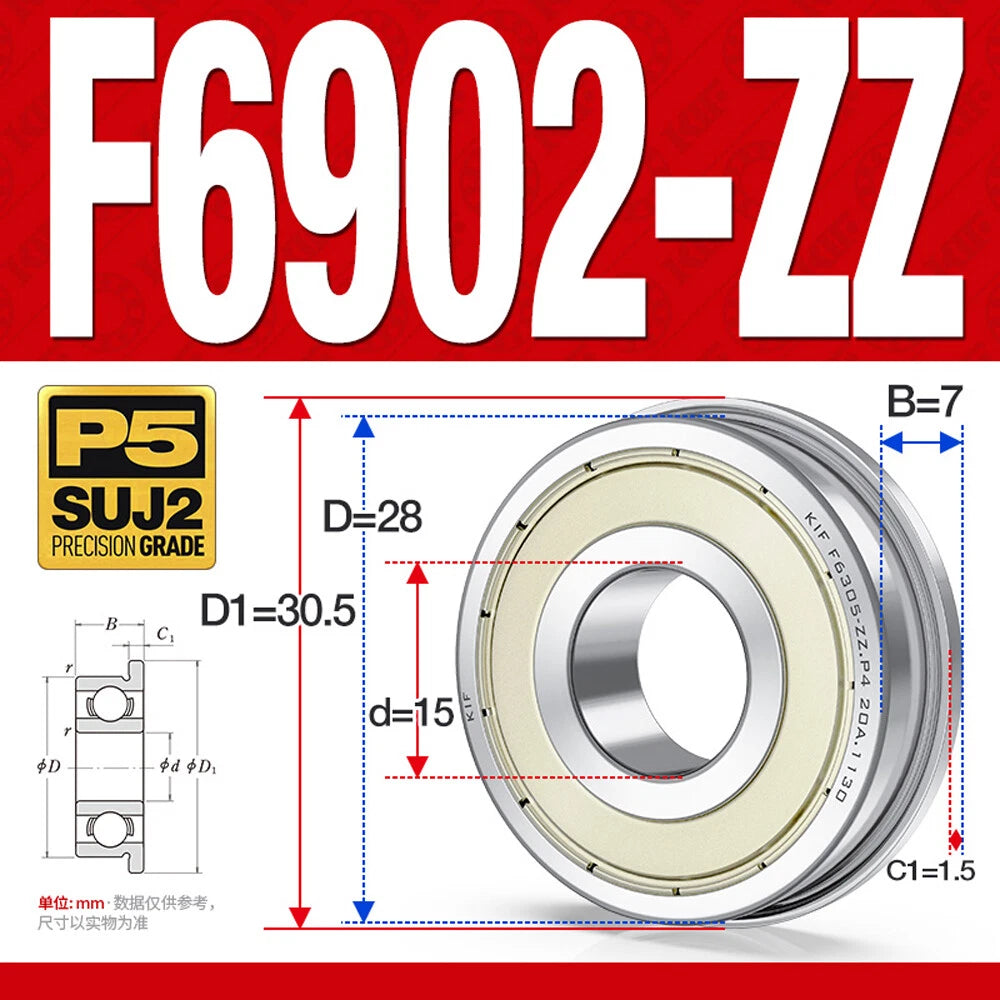
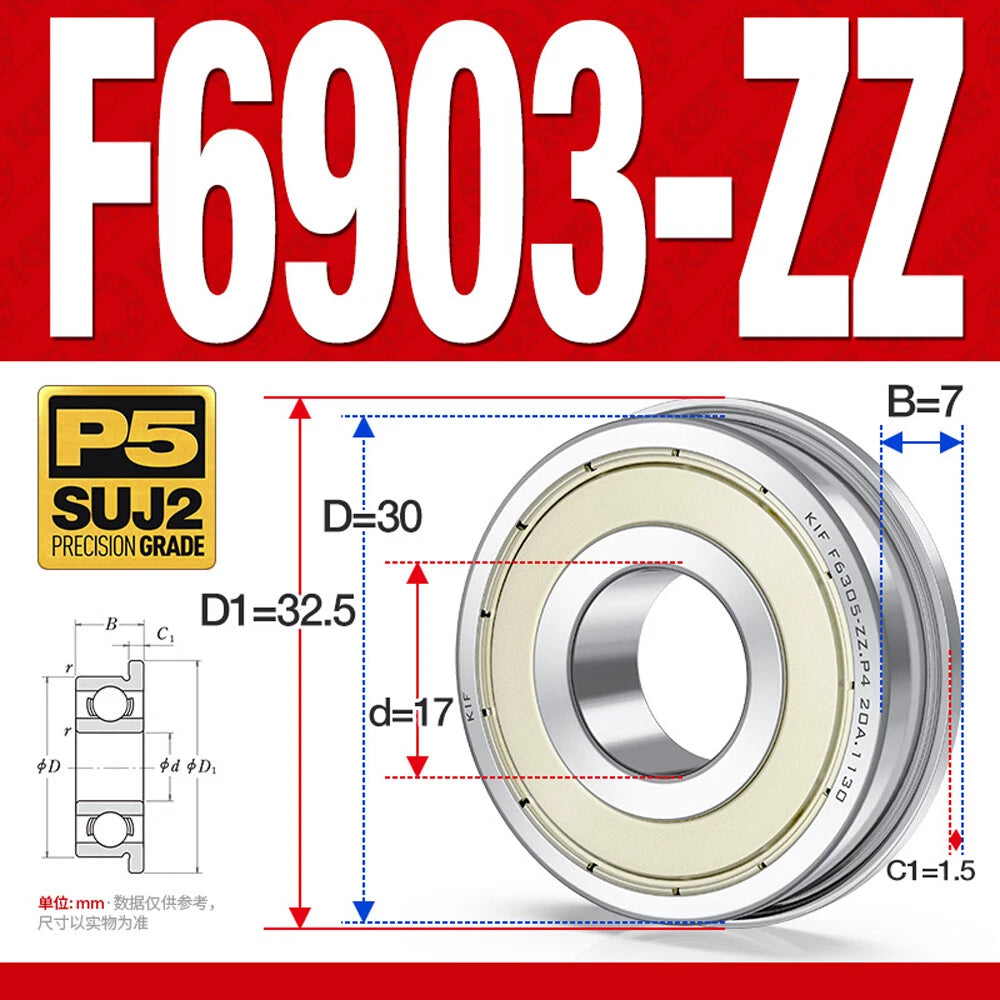
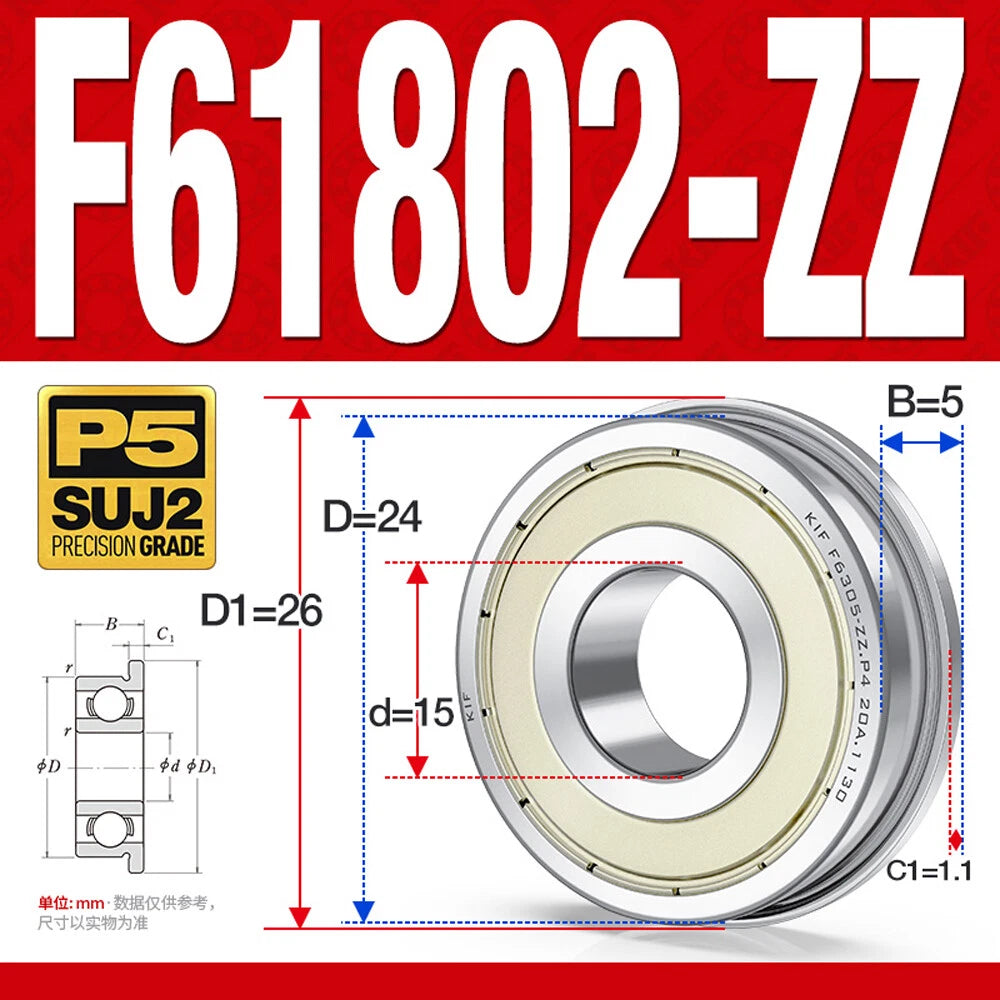
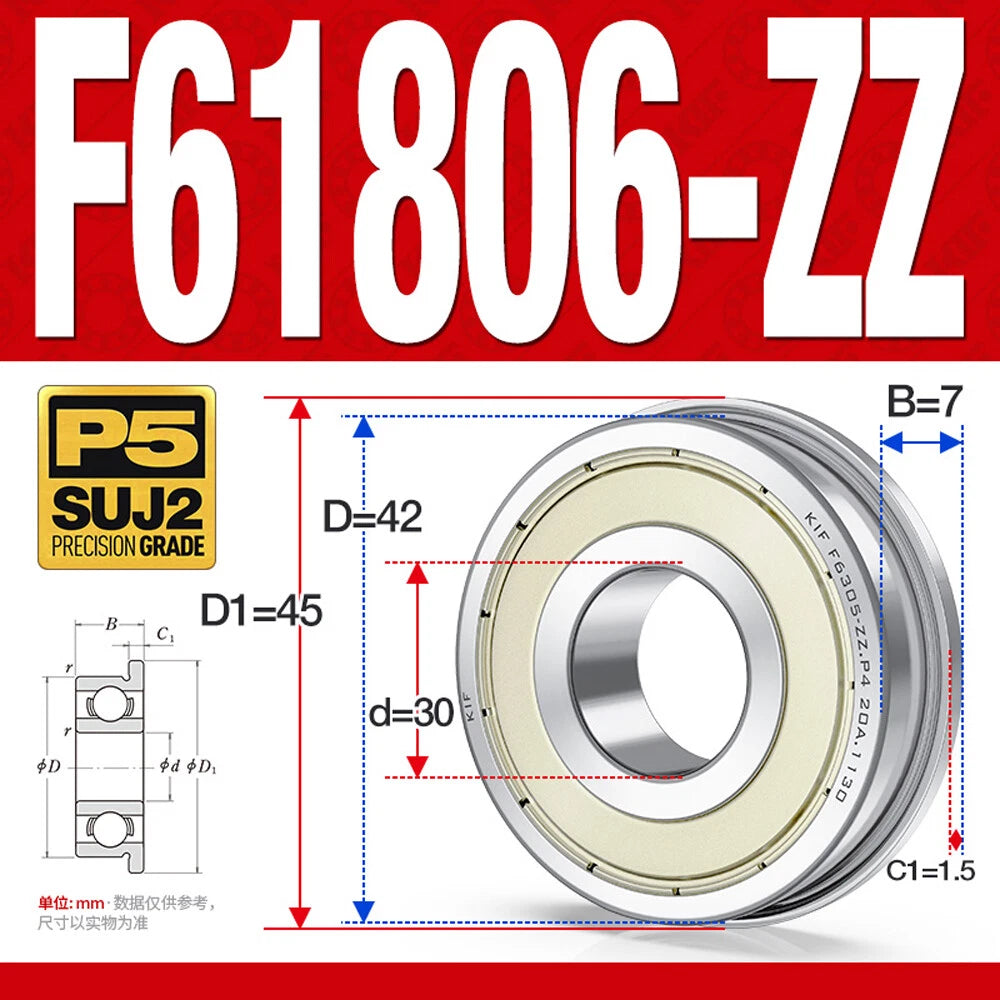
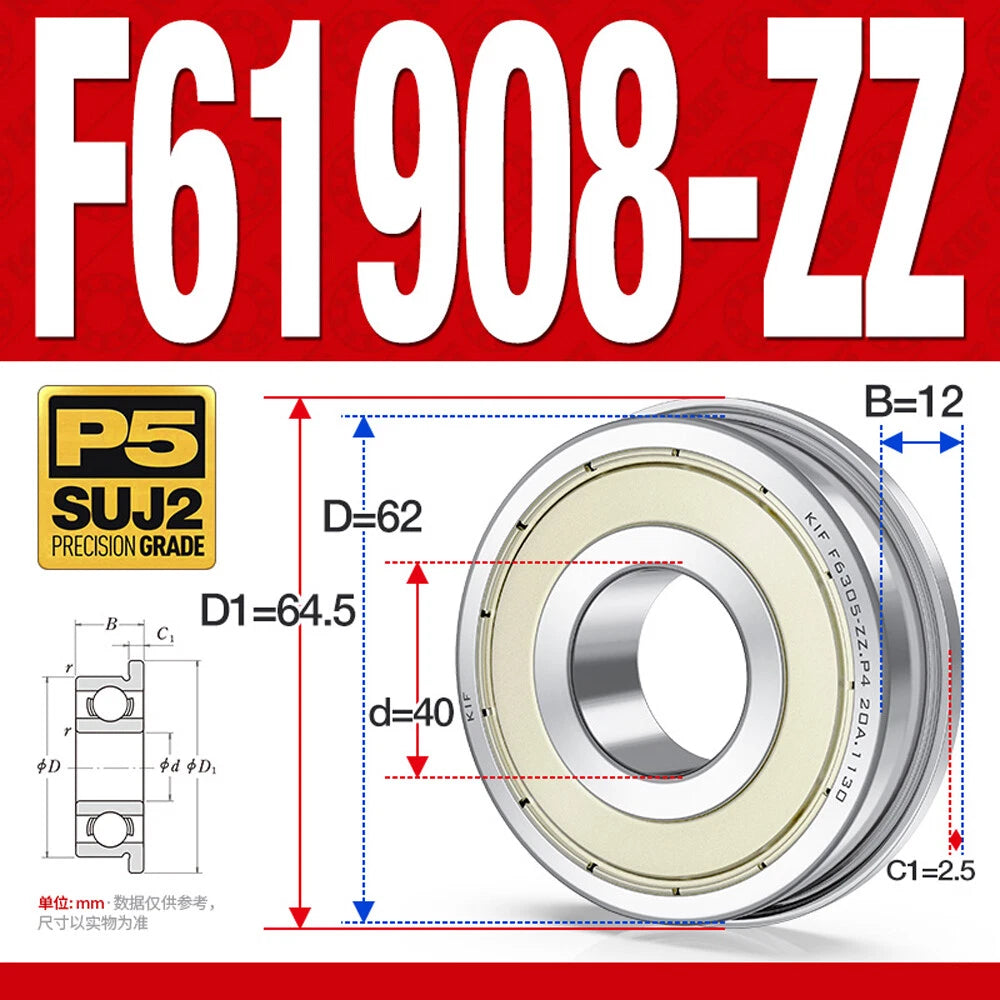
Each bearing consists of an inner ring, outer ring with integrated flange, a full complement of chrome steel or stainless steel balls (depending on series), and two metal shields (ZZ designation) pressed into the outer ring grooves. The F-series (e.g., F682-ZZ, F683-ZZ, F6200-ZZ) follows the standard flanged deep-groove geometry; the MF-series (e.g., MF52-ZZ, MF63-ZZ, MF74-ZZ) uses a metric flanged format with a slightly larger flange OD relative to bore. Inner diameters span 2 mm (≈0.079 in) to 50 mm (≈1.969 in); outer diameters range from 5 mm to 90 mm; widths from 2.3 mm to 20 mm — see variant options for exact d×D×B dimensions.

Typical deployment scenarios include 3D printer Z-axis lead-screw supports, RC car differential housings, brushless motor end caps, CNC router spindle pre-load stacks, and small robotic joint pivots where axial retention and low-profile installation are both required. The ZZ shields keep grease in and particulate contamination out, making these flanged ball bearings suitable for dusty workshop environments and enclosed gearboxes alike.

⚙️ Compatibility: Fits any housing bored to the bearing's outer diameter (D) with a flange recess matching the flange OD. Verify d×D×B dimensions against your design before ordering. Available in quantities of 1 or 3 pieces per order.

✅ Key Features of These Flanged Ball Bearings

  • 🔩Integrated Flange for Axial Retention — The machined flange seats flush against the housing face, preventing axial displacement without snap rings or adhesive, reducing assembly steps in tight-tolerance builds.
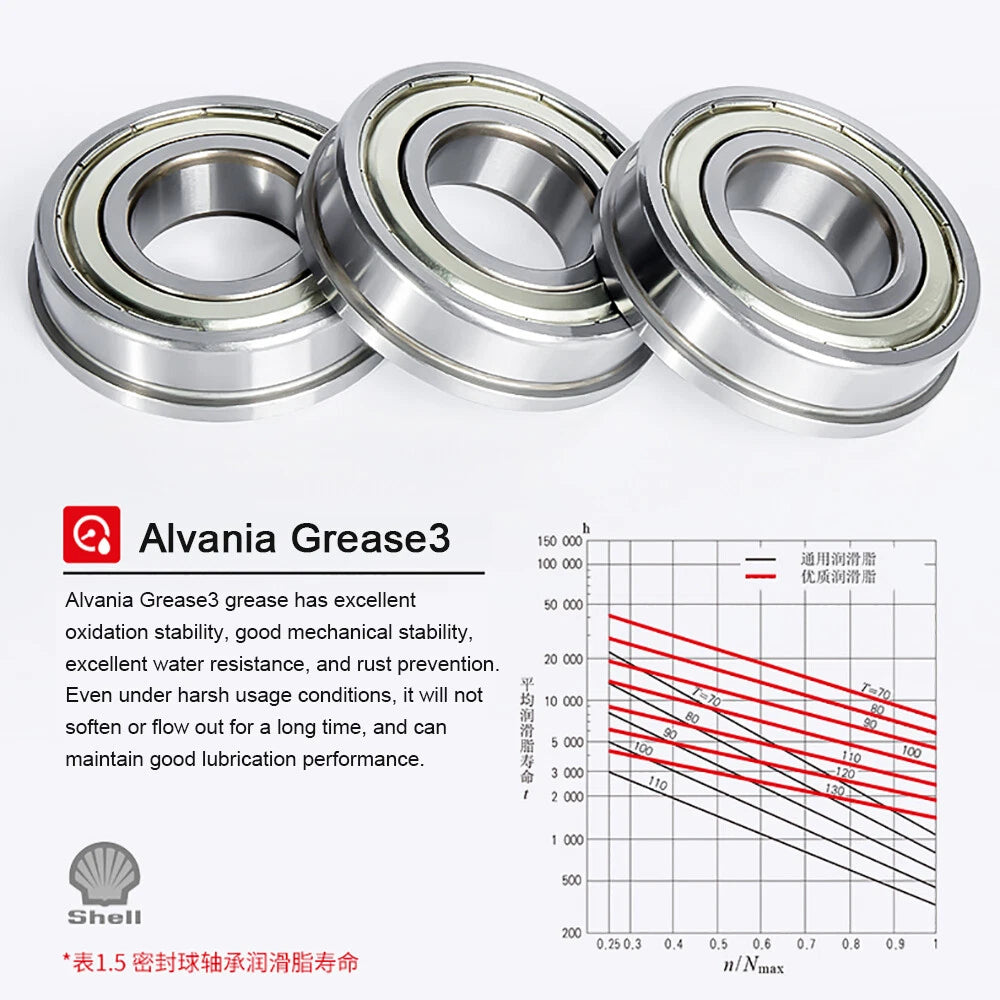
  • 🛡️ZZ Double Metal Shields — Two pressed-steel shields on both sides of the raceway retain factory-applied grease and block ingress of metal chips, dust, and debris common in workshop and mechanical environments.
  • 📐Wide Size Range: 2–50mm Bore — A single product line covers miniature applications (F682-ZZ at 2×5×2.3mm) through medium-load applications (F6210-ZZ at 50×90×20mm), reducing the number of suppliers needed for a multi-stage drivetrain.
  • F-Series & MF-Series Both Available — F-series bearings follow standard flanged deep-groove geometry; MF-series provides a proportionally larger flange OD, useful when housing wall thickness is limited and a wider bearing shoulder is needed.
  • 🔄Low Torque, Smooth Rotation — Deep-groove raceway geometry and precision ball complement deliver low starting torque and consistent running torque, critical for battery-powered RC vehicles and servo-driven robotics where efficiency matters.
  • 📦Flexible Pack Quantities — Order 1 piece for prototyping or a single replacement, or select 3 pieces for a complete axis set or spare inventory — both options available for every model in the range.

📐 Technical Specifications — Flanged Ball Bearings ZZ

Bearing Type Flanged Deep-Groove Ball Bearing
Shield Type ZZ (double metal shield, both sides)
Series F-series (F682–F6210, F6000–F6010, F6800–F6808, F6900–F6908) & MF-series (MF52–MF148)
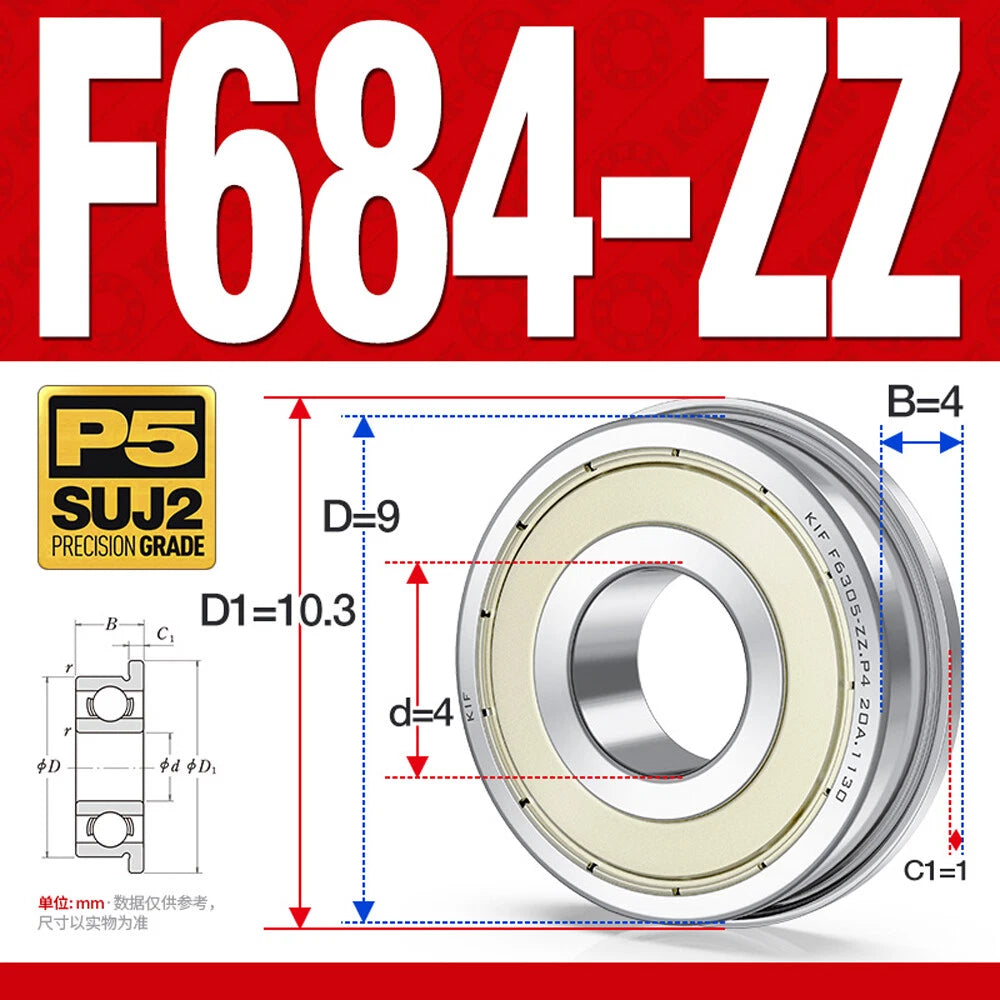
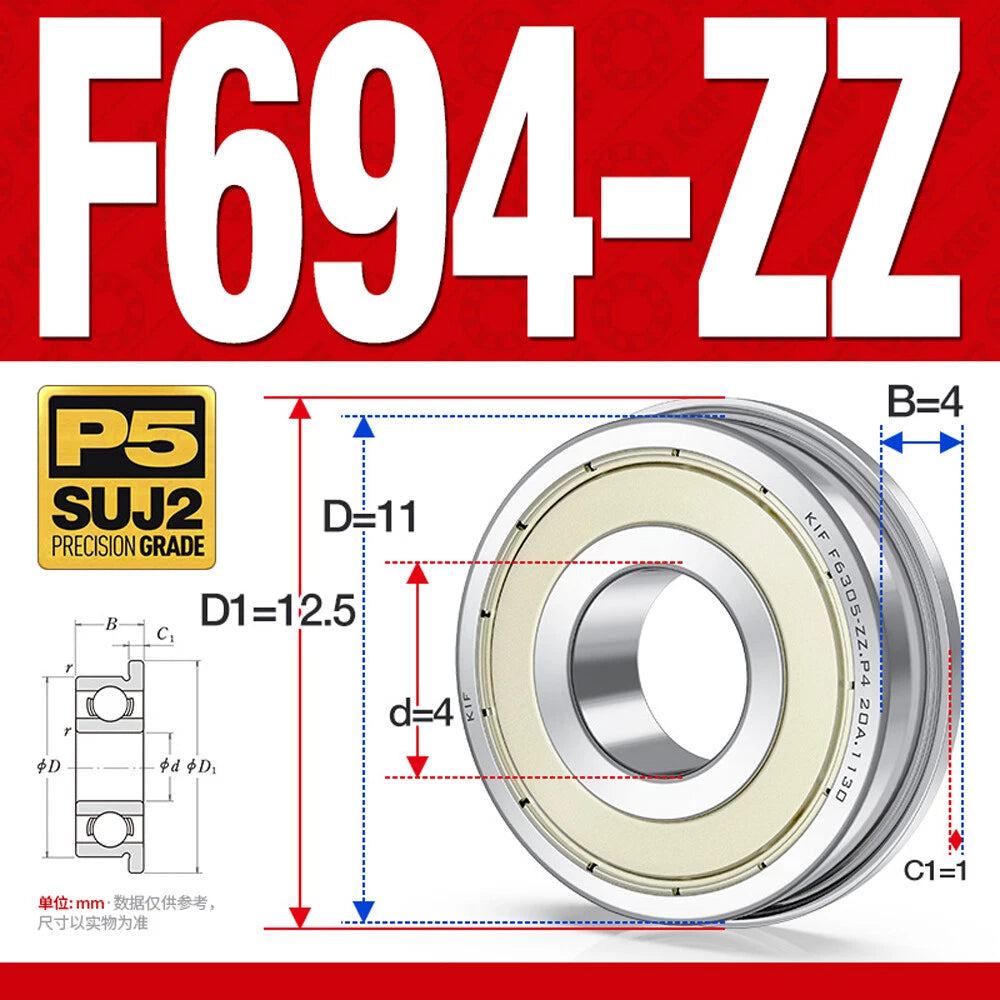
Inner Diameter (d) 2 mm – 50 mm (see variant options)
Outer Diameter (D) 5 mm – 90 mm (see variant options)
Width (B) 2.3 mm – 20 mm (see variant options)
Dimension Format d × D × B (mm), listed in each variant name
Lubrication Factory-greased (sealed by ZZ shields)
Material See variant options
Operating Temperature See variant options
Pack Quantity 1 pc or 3 pcs (select via Units option)
Flange Feature Integrated outer-ring flange for axial location

❓ Frequently Asked Questions

What is the difference between F-series and MF-series flanged bearings?

Both series are flanged deep-groove ball bearings with ZZ double shields. The F-series (e.g., F682-ZZ, F683-ZZ) follows a standard flanged geometry where the flange OD is a modest step above the outer diameter. The MF-series (e.g., MF52-ZZ, MF63-ZZ) uses a metric flanged format that typically provides a proportionally larger flange OD relative to the bore, which is useful when you need a wider bearing shoulder against a thin housing wall. Check the d×D×B dimensions in each variant name to confirm which fits your housing.

How do I select the correct bearing size for my application?

You need three measurements: the shaft diameter (matches the inner diameter d), the housing bore diameter (matches the outer diameter D), and the available axial depth (must be ≥ width B). Additionally, confirm that your housing has a flange recess or counterbore to accept the flange OD. All three dimensions are listed in the variant name in the format d×D×B (mm). If you are replacing an existing bearing, read the model number stamped on the shield — it maps directly to the variant names listed here.

Are these bearings suitable for 3D printers and RC cars?

Yes. Flanged ball bearings are widely used in 3D printer extruder carriages, Z-axis lead-screw supports, and idler pulley mounts because the flange eliminates the need for retaining clips in printed or machined housings. In RC cars, they are common in differential housings and motor end caps. The ZZ shields retain grease and resist the fine plastic dust and debris generated during printing or off-road driving. Select the variant whose d×D×B matches your printer or car's bearing seat dimensions.

What does the ZZ designation mean, and does it affect lubrication?

ZZ indicates that both sides of the bearing are fitted with pressed-steel (metal) shields. These shields are non-contact or lightly contacting, which means they retain the factory-applied grease inside the raceway while blocking external contamination. Because the shields are not removable without damage, these bearings are not designed for re-lubrication in the field — they are intended to run for their service life on the factory grease. For applications requiring periodic re-greasing, a 2RS (rubber-sealed, removable) variant would be more appropriate.

Can I use these bearings in a corrosive or wet environment?

Standard ZZ-shielded bearings with chrome steel rings and balls are not recommended for prolonged exposure to water, salt spray, or corrosive chemicals, as the metal shields and rings can rust. For wet or mildly corrosive environments, look for stainless steel variants (typically designated with an "A5" or "SS" suffix). If your application involves occasional moisture — such as an outdoor RC car on damp terrain — the ZZ shields provide a reasonable barrier, but periodic inspection is advisable. Contact us to confirm material options for your specific model.

What load types are these flanged ball bearings designed to handle?

Deep-groove ball bearings handle both radial loads (perpendicular to the shaft axis) and moderate axial (thrust) loads in either direction. The flanged design adds axial location — it prevents the bearing from moving along the shaft axis within the housing — but the flange itself is not a load-bearing surface for heavy thrust. For applications with dominant axial loads, a dedicated thrust bearing or angular contact bearing is more appropriate. For the mixed radial-plus-light-axial loads typical of RC drivetrains, 3D printer carriages, and small motors, these flanged deep-groove bearings are well-suited.

How do I install a flanged ball bearing correctly?

Press or slide the bearing into the housing bore until the flange seats flush against the housing face. Apply force only to the outer ring when pressing into the housing, and only to the inner ring when pressing onto a shaft — never apply force through the balls, as this damages the raceway. For miniature bearings (bore ≤ 10 mm), a bearing press tool or a correctly sized socket and arbor press is recommended. Avoid hammering directly on the shield face. Once seated, the flange should be flush and the bearing should spin freely with no binding.

🛒 Select your Model (d×D×B) and Units above, then add to cart.


You may also like

Recently viewed