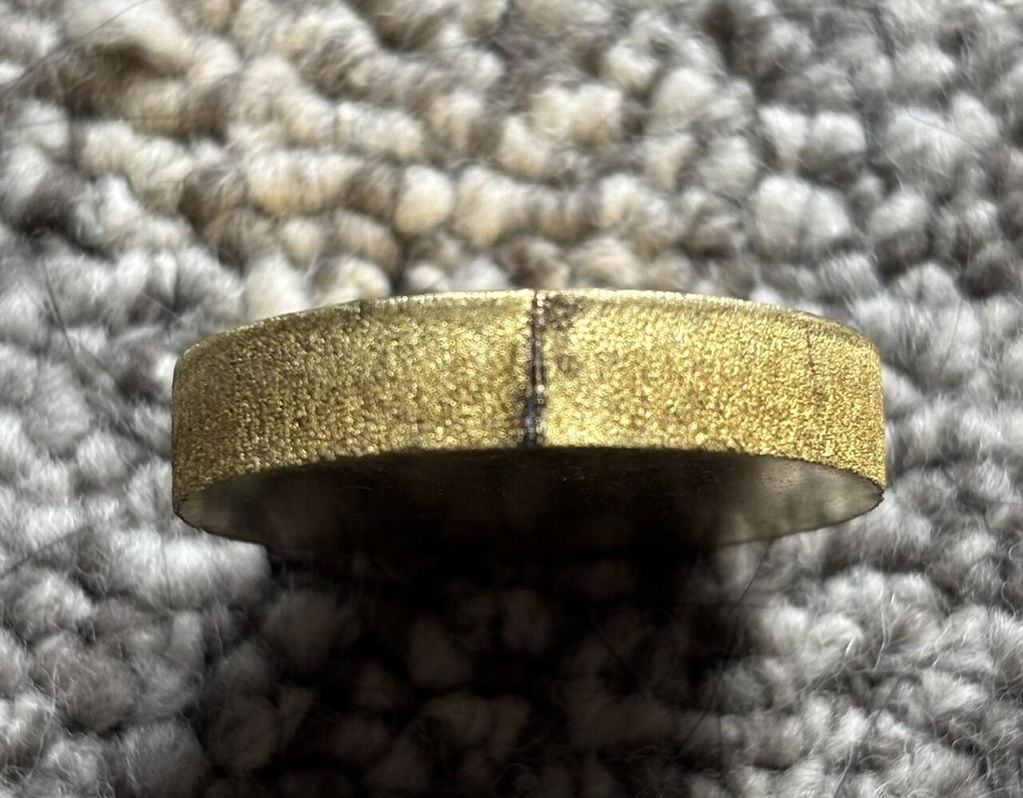
The chain is fine...but I ordered the wrong size. Nine links of the chain I ordered equals six of the size I wanted. My error...
How can I straighten out the springs? I can't use them coil uo as is.
Your payment information is processed securely. We do not store credit card details nor have access to your credit card information.
Get fitment advice & recommendations
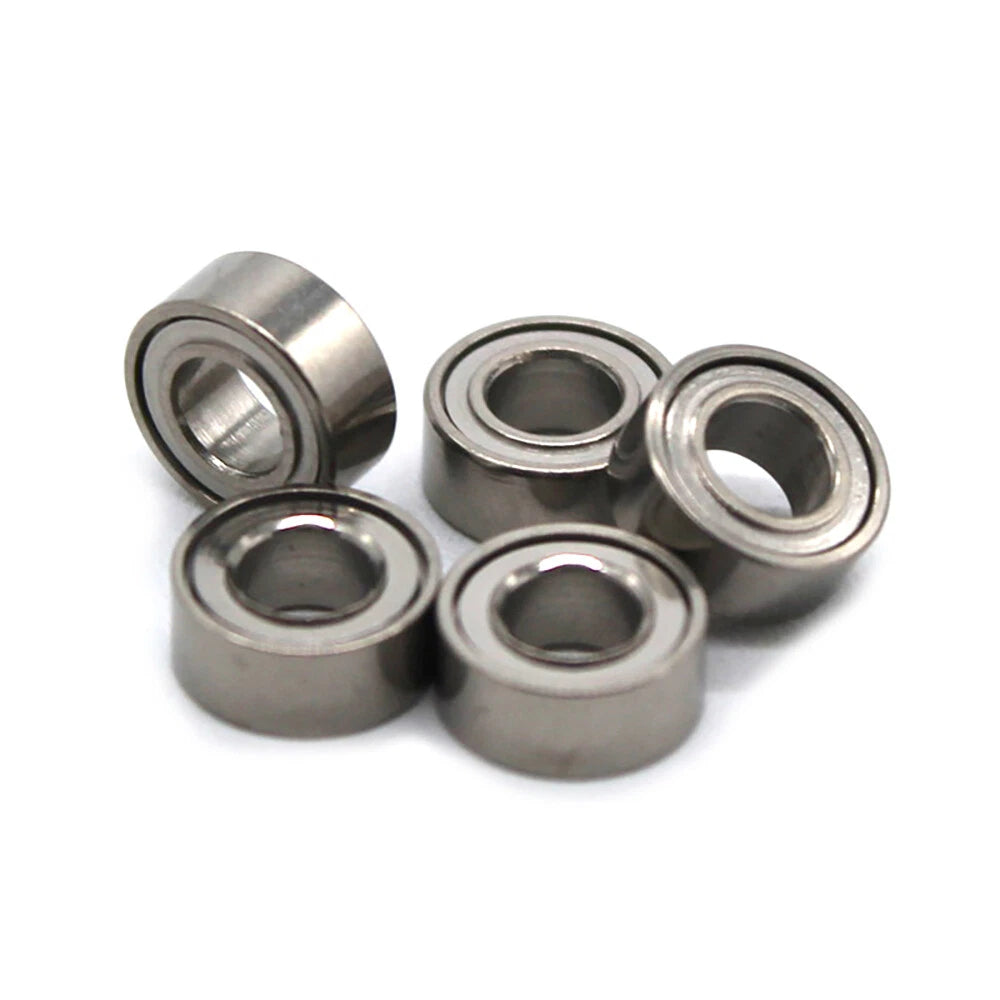
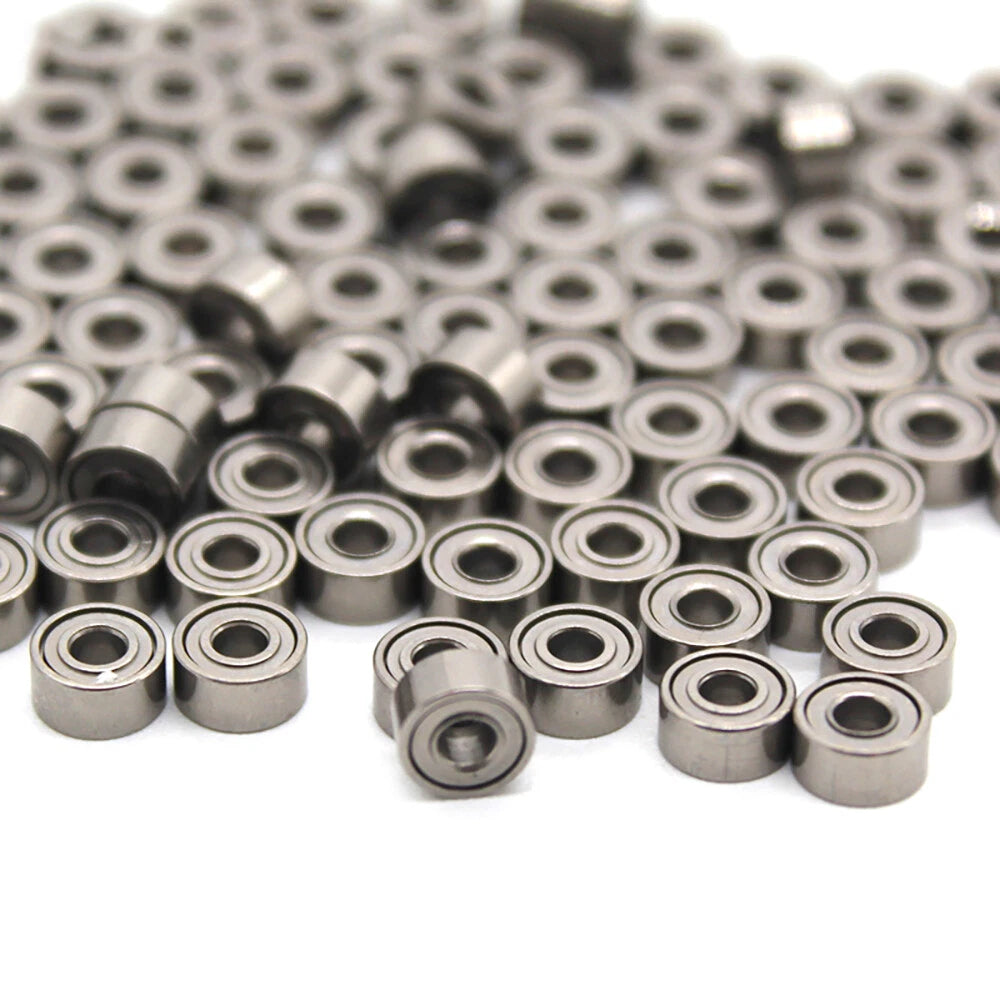
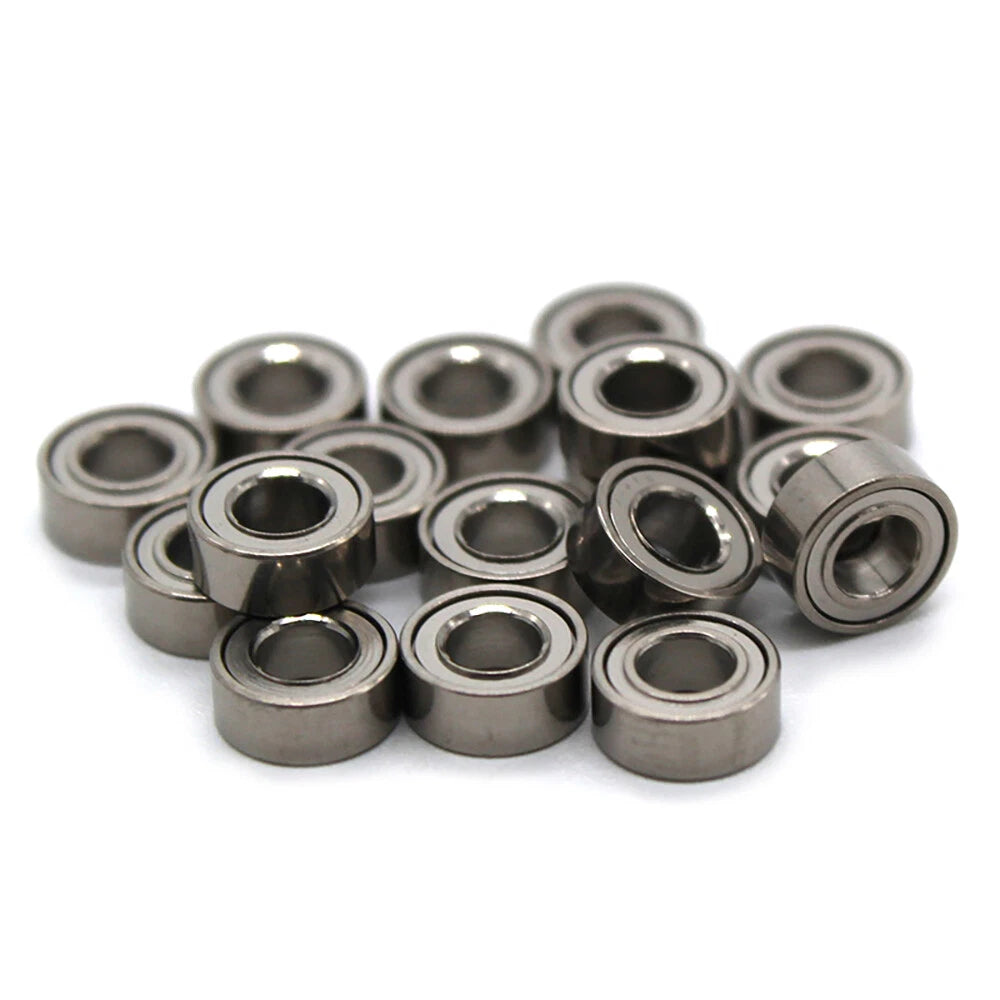
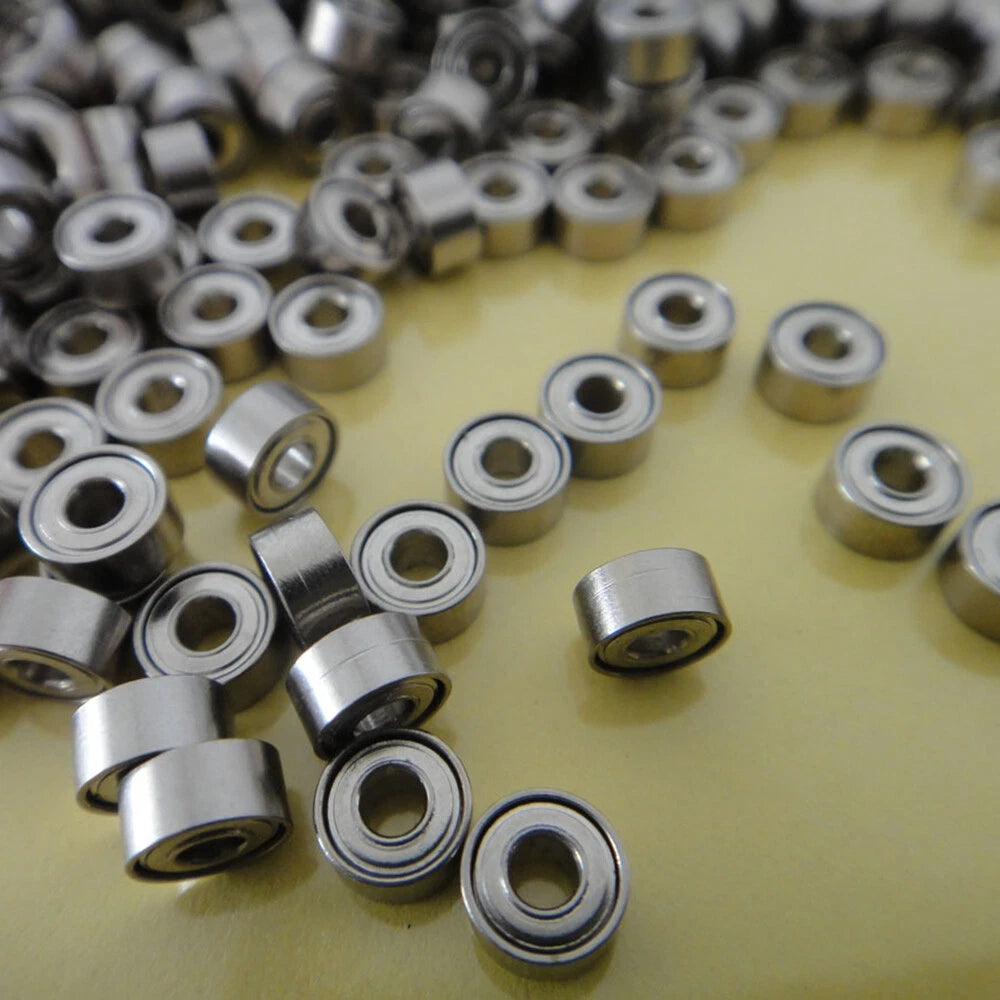
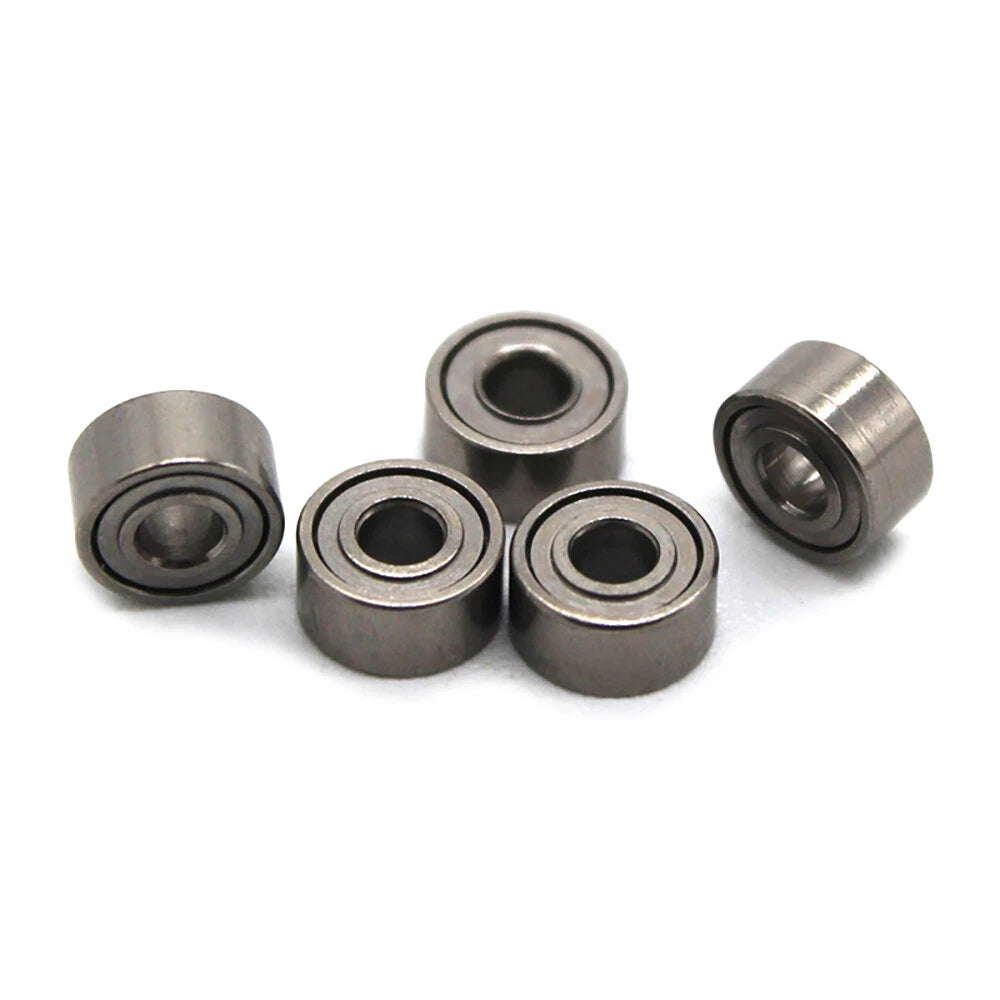
When a standard bearing simply won't fit, engineers, hobbyists, and repair technicians reach for miniature ball bearings that match exact shaft and housing dimensions. Whether you're rebuilding a brushless motor, upgrading a 3D printer axis, or replacing a worn bearing in a precision instrument, finding the right inner diameter, outer diameter, and thickness in one place saves hours of sourcing time.
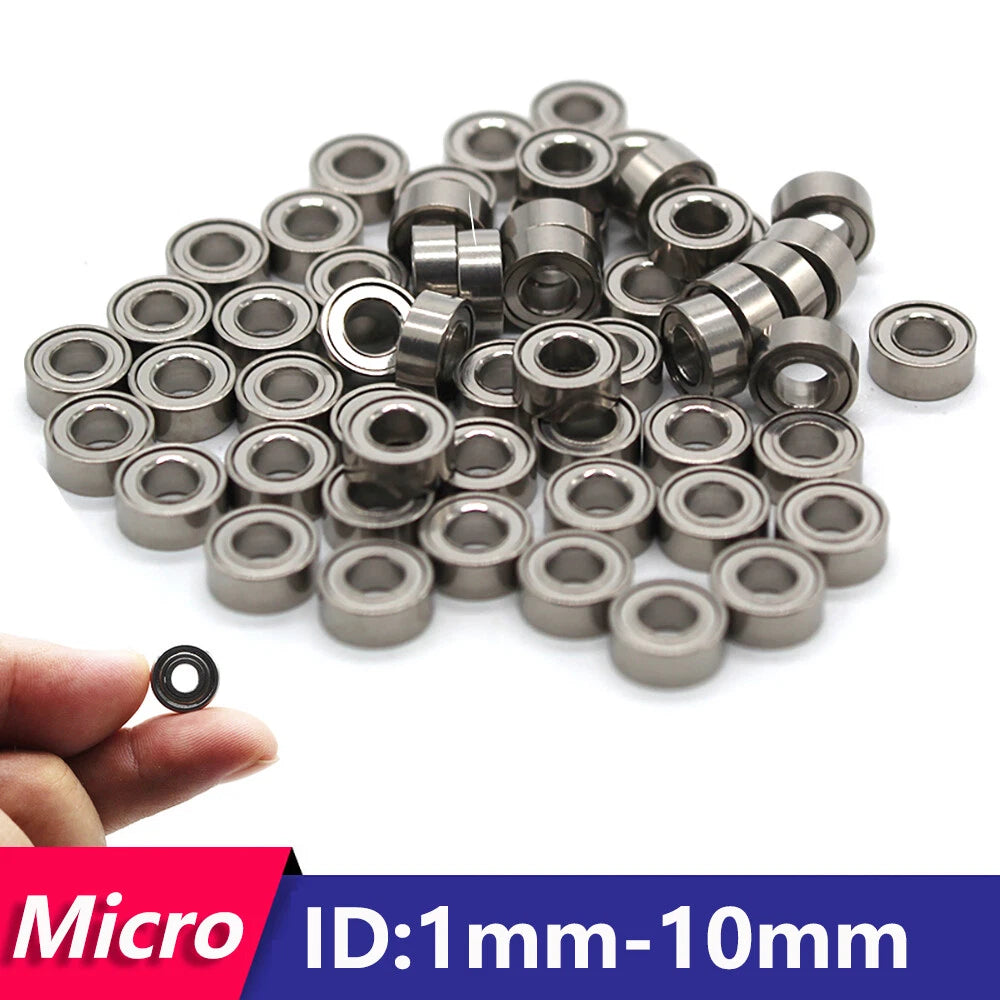
These miniature ball bearings feature a steel raceway construction with a smooth-running ball complement. Inner diameters span 1 mm to 12 mm (approx. 0.039" to 0.472"), outer diameters range from 3 mm to 37 mm (approx. 0.118" to 1.457"), and thickness options run from 1 mm to 12 mm (approx. 0.039" to 0.472"). Each variant is identified by its ID × OD × Thickness in millimeters for straightforward spec matching.
Typical use cases include RC car wheel hubs and motor shafts, FDM 3D printer idler pulleys and lead-screw supports, small drone motor mounts, laboratory instrument spindles, and DIY CNC router axis assemblies — all applications where miniature ball bearings with tight dimensional tolerances are required to maintain alignment and reduce friction.
Inner diameters from 1 mm to 12 mm across 69 distinct ID × OD × Thick combinations, covering the most common micro and mini bearing sizes used in hobby and precision engineering.
Hardened steel inner and outer races with a full ball complement deliver consistent radial load capacity and low rotational friction across the supported speed range.
All sizes are specified in millimeters (ID × OD × Thickness) for direct compatibility with metric shafts and housings — no conversion guesswork required.
Precision-ground raceways and uniform ball sizing minimize vibration and audible noise, making these bearings suitable for spindles, encoders, and other noise-sensitive assemblies.
Available in 1, 5, 10, or 50-piece quantities per size, allowing single-unit prototyping or bulk stocking for production runs and repair inventories.
Standardized metric dimensions mean these bearings serve as direct replacements in RC vehicles, 3D printers, drones, and small appliances without custom machining.
| Bearing Type | Single-row deep groove ball bearing |
|---|---|
| Inner Diameter (ID) | 1 – 12 mm (0.039" – 0.472") |
| Outer Diameter (OD) | 3 – 37 mm (0.118" – 1.457") |
| Thickness | 1 – 12 mm (0.039" – 0.472") |
| Material | Hardened steel (raceway & balls) |
| Lubrication | See variant options |
| Seal / Shield Type | See variant options |
| Dynamic Load Rating | See variant options |
| Max Operating Speed | See variant options |
| Available Quantities | 1 Pcs / 5 Pcs / 10 Pcs / 50 Pcs |
| Dimension Standard | Metric (mm) |
Measure your shaft's outer diameter — this becomes the bearing's Inner Diameter (ID). Then measure the housing bore — this is the Outer Diameter (OD). Finally, measure the available axial depth for the bearing — this is the Thickness. Match all three values to the variant label (ID × OD × Thick in mm) before ordering.
Single-row deep groove ball bearings support primarily radial loads and moderate axial (thrust) loads in both directions. They are not designed for heavy axial-only applications. For combined radial and axial loads in small assemblies — such as 3D printer idlers or RC motor shafts — they perform well within their rated capacity.
Standard steel miniature ball bearings offer limited corrosion resistance. For environments with moisture, mild chemicals, or humidity, consider applying a compatible bearing grease after installation, or contact us to confirm whether a stainless-steel variant is available for your required size.
These bearings are dimensionally compatible with any application that uses standard metric bearing sizes. Common 3D printer sizes such as 5×10×4 mm (for idler pulleys) and 8×22×7 mm are included in the variant list. Cross-reference your machine's bearing specification with the ID × OD × Thick variant label to confirm fitment.
All quantity options contain the identical bearing in the same size. The 1 Pcs option is ideal for prototyping or single repairs. The 5 Pcs and 10 Pcs packs suit small production runs or keeping spares on hand. The 50 Pcs bulk option offers the lowest per-unit cost for higher-volume assembly or resale needs.
Always apply installation force to the bearing race that matches the interference fit surface. Press on the inner race when fitting to a shaft, and press on the outer race when fitting into a housing. Never strike the bearing directly with a hammer — use a bearing press, a correctly sized socket, or a stepped installation tool to apply even, axial force. Avoid pressing through the balls, as this damages the raceways.
Miniature deep groove ball bearings are capable of relatively high speeds for their size. Actual maximum speed depends on the specific ID × OD × Thick combination, lubrication type, and operating temperature. For speed-critical applications such as brushless motors or spindles, contact us to confirm the speed rating for your selected variant.