The chain is fine...but I ordered the wrong size. Nine links of the chain I ordered equals six of the size I wanted. My error...
How can I straighten out the springs? I can't use them coil uo as is.
Your payment information is processed securely. We do not store credit card details nor have access to your credit card information.
Get fitment advice & recommendations
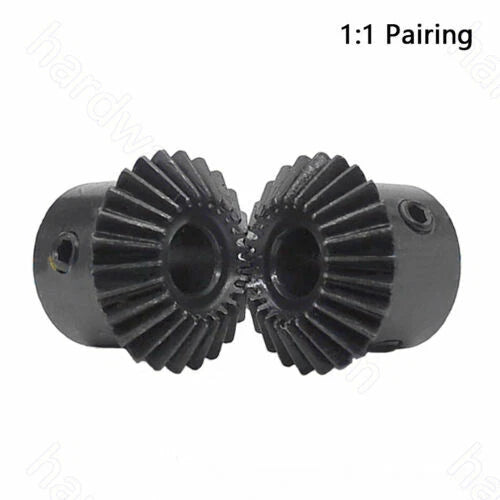
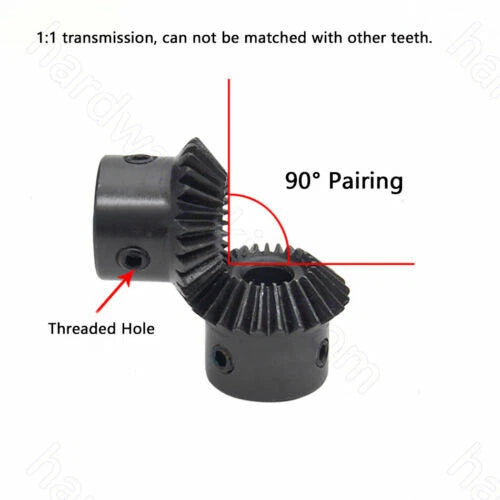
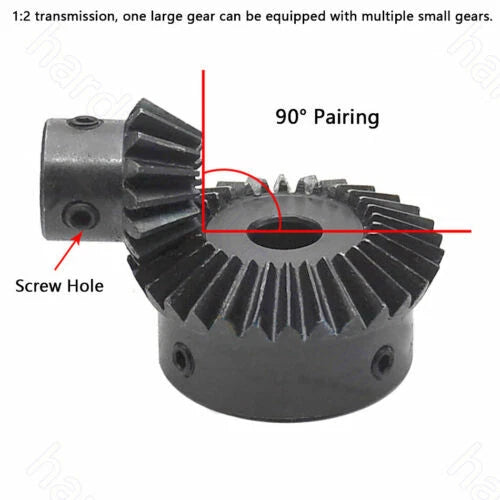
When your drivetrain needs to turn a corner without losing torque, a mismatched or worn bevel gear becomes the weakest link in the entire mechanism. Makers, robotics builders, and CNC hobbyists who demand repeatable, low-backlash right-angle drives will find these 90° miter bevel gears a reliable foundation for any shaft-to-shaft power transfer project.
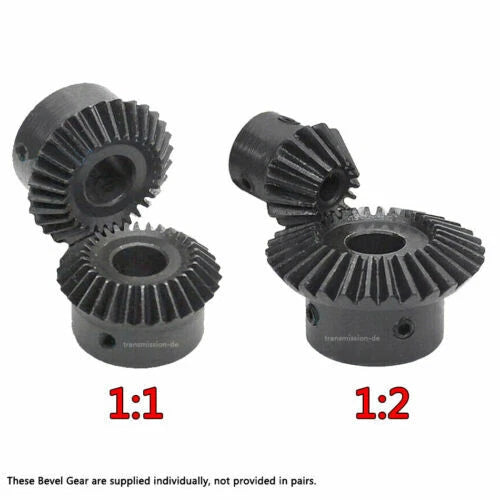
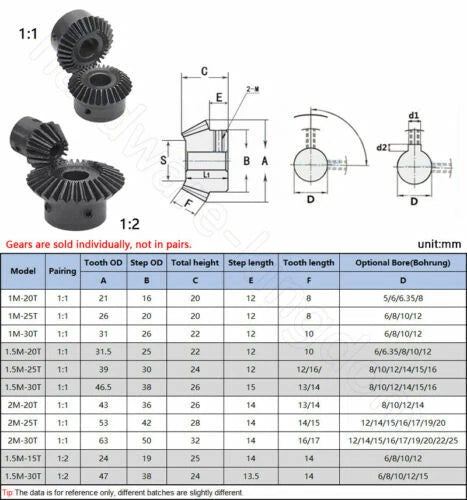
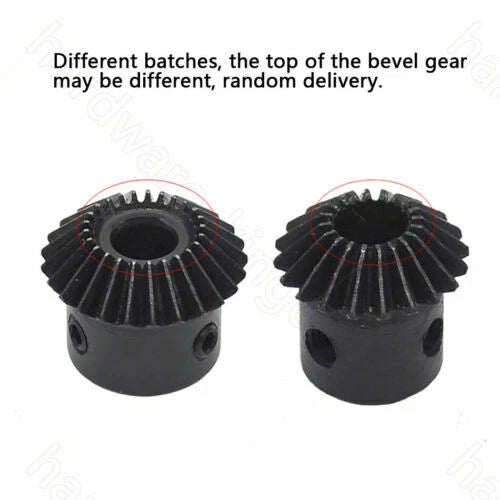
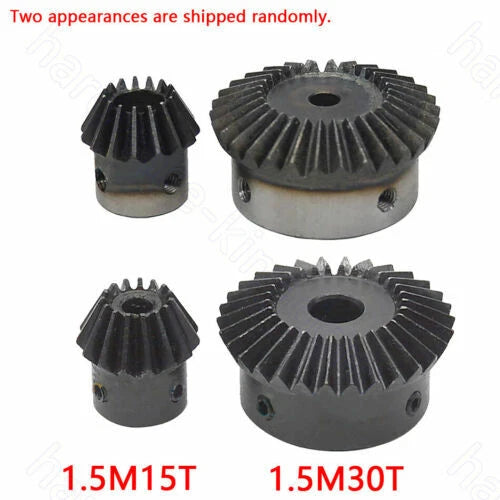
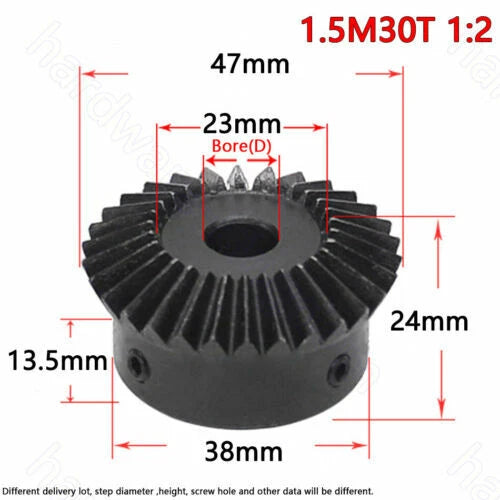
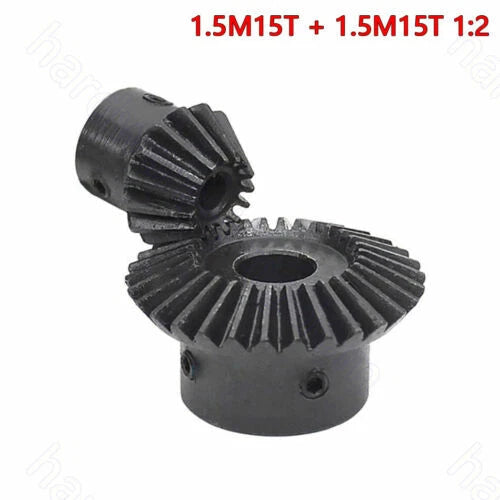
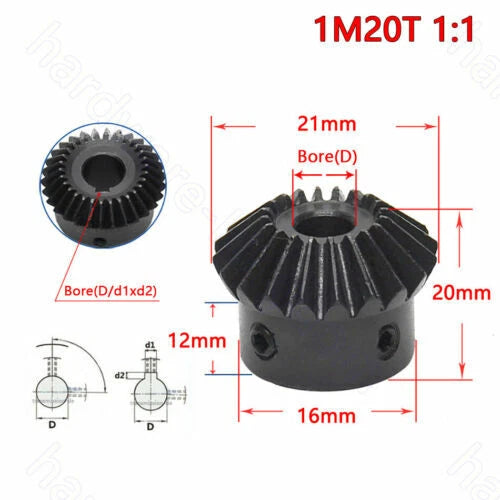
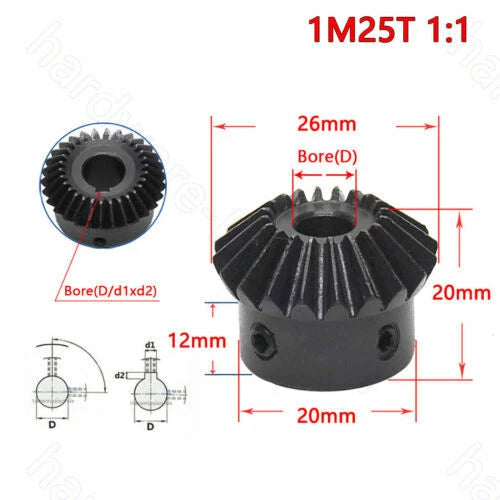
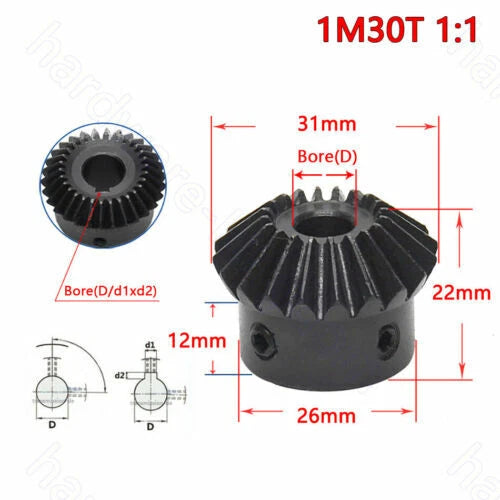
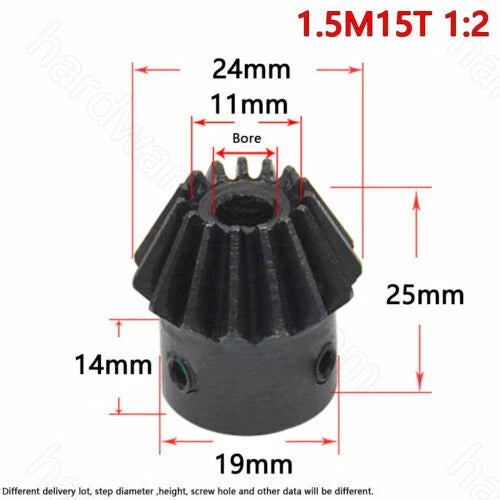
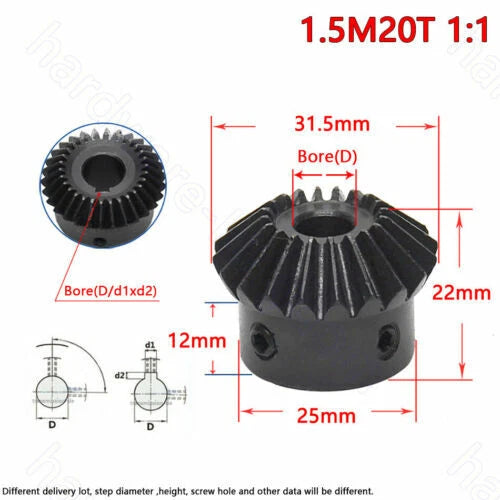
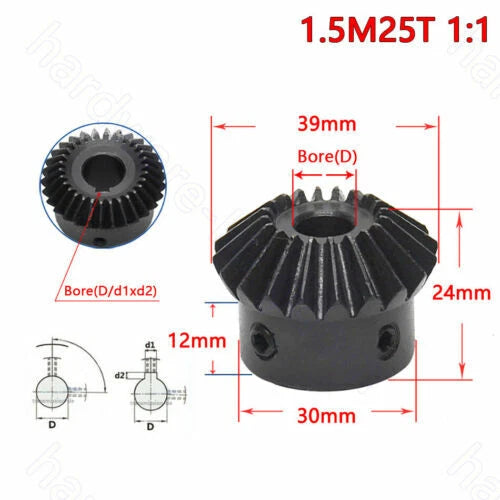
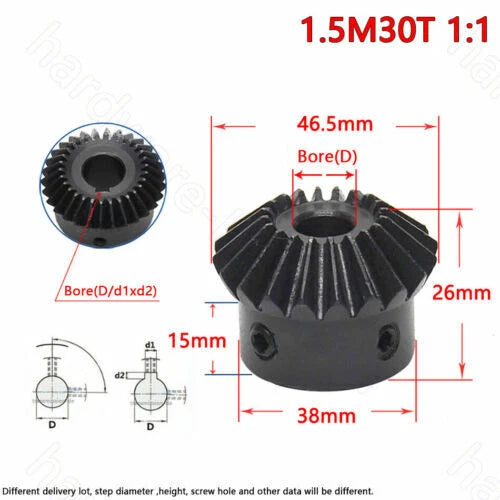
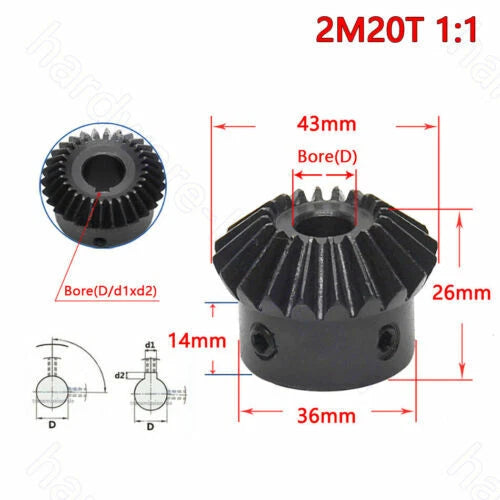
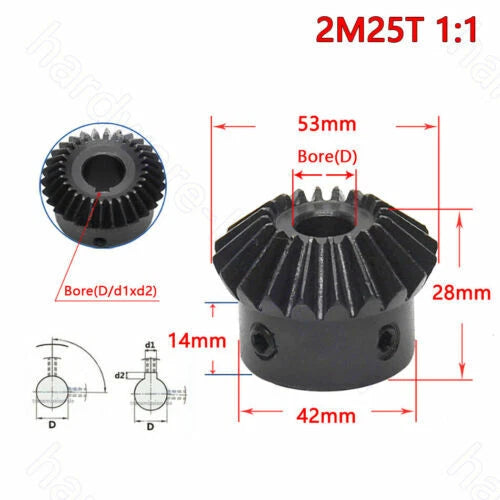
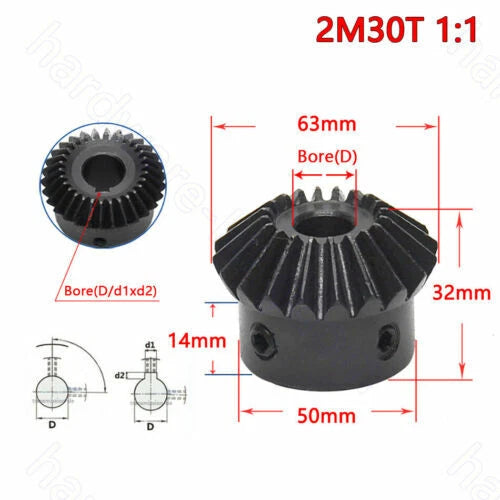
Each gear is machined from carbon steel with a natural metallic finish, available in three module sizes — Mod 1, Mod 1.5, and Mod 2 — and tooth counts ranging from 15T to 30T. Bore diameters span 5 mm (≈0.197 in) through 25 mm (≈0.984 in), covering the most common shaft sizes used in hobby and light-industrial applications. Pairing options include 1:1 (same-tooth matched sets) and 1:02 (2:1 reduction sets), sold individually so you can mix and match to your exact ratio requirement.
Typical use cases include right-angle gearbox builds for 3D-printed robotics arms, stepper-motor driven CNC axis redirects, RC vehicle differential assemblies, and custom conveyor corner drives — all scenarios where a compact 90° bevel gear pair replaces bulky belt or chain routing.
Available in Mod 1, Mod 1.5, and Mod 2 to match your existing gear train pitch and load requirements without custom machining.
Bore options from 5 mm to 25 mm (≈0.197–0.984 in) accommodate the most common hobby and light-industrial shaft diameters in a single product family.
Precision-cut 90° bevel tooth geometry ensures smooth, low-vibration right-angle power transfer with minimal backlash at rated loads.
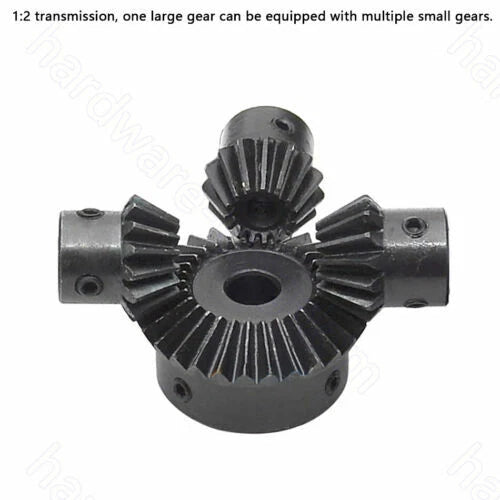
Choose matched 1:1 pairs for direction change at constant speed, or 1:02 reduction sets to step down RPM and multiply output torque in a single stage.
Machined from carbon steel for the strength and wear resistance needed in continuous-duty hobby drives, robotics joints, and light CNC applications.
15T through 30T options let you fine-tune gear diameter and contact ratio to balance torque capacity, rotational speed, and physical envelope constraints.
| Module (Mod) | 1 / 1.5 / 2 (see variant options) |
|---|---|
| Tooth Count | 15T, 20T, 25T, 30T (see variant options) |
| Bore Diameter | 5 / 6 / 6.35 / 8 / 10 / 12 / 14 / 15 / 16 / 17 / 19 / 20 / 22 / 25 mm (see variant options) |
| Pressure Angle | 20° |
| Shaft Angle | 90° |
| Gear Ratio | 1:1 or 1:2 (see variant options) |
| Material | Carbon Steel |
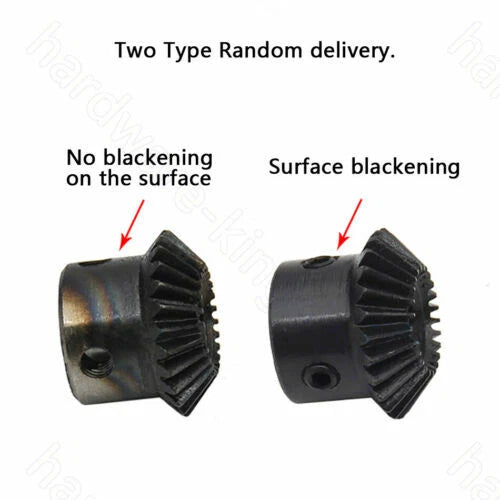
| Surface Finish | Natural metallic (uncoated) |
| Tooth Form | Straight bevel |
| Pitch Diameter (Mod 1, 20T) | 20 mm (≈0.787 in) |
| Pitch Diameter (Mod 1.5, 20T) | 30 mm (≈1.181 in) |
| Pitch Diameter (Mod 2, 20T) | 40 mm (≈1.575 in) |
| Sold As | Single gear (pair two for a complete set) |
Module (Mod) is the fundamental pitch unit of a gear. Two meshing bevel gears must share the same module. Mod 1 suits lighter loads and compact builds (e.g., small robotics); Mod 1.5 is a mid-range choice for moderate torque; Mod 2 handles heavier loads and larger shaft diameters. Match the module to your existing gear train or select based on the torque and space envelope your design allows.
Yes. Each listing is for a single bevel gear. To complete a right-angle drive you need two gears — a driver and a driven gear. For a 1:1 ratio, order two gears of the same type (same module and tooth count). For a 1:2 reduction, order one gear from the driver type and one from the corresponding driven type as indicated in the variant options.
Measure your shaft's outer diameter (OD) with a caliper before ordering. The bore must match the shaft OD exactly for a secure fit. Common shaft sizes this product covers include 5 mm, 6 mm, 6.35 mm (1/4 in), 8 mm, 10 mm, 12 mm, 14 mm, 15 mm, 16 mm, 17 mm, 19 mm, 20 mm, 22 mm, and 25 mm. If your shaft falls between sizes, a keyway or set-screw bore with a slight interference fit is recommended — contact us to confirm availability.
These gears are machined from carbon steel, which provides solid strength for hobby, maker, and light-industrial duty cycles. Exact load ratings depend on module size, tooth count, operating speed, and lubrication. Mod 2 gears with higher tooth counts (25T–30T) offer the greatest torque capacity in this range. For heavy-duty or high-cycle industrial applications, consult a mechanical engineer to verify the gear's rated load against your application requirements.
The gears are carbon steel with a natural metallic finish and are not coated or plated. They are suitable for dry or lightly lubricated indoor environments. For applications exposed to moisture, chemicals, or outdoor conditions, apply a compatible gear lubricant or grease to the tooth surfaces and consider periodic maintenance to prevent surface oxidation.
The 1:1 pairing uses two gears with the same tooth count, so the output shaft rotates at the same speed as the input shaft — only the direction changes by 90°. The 1:2 pairing combines a smaller driver gear with a larger driven gear (e.g., 15T driving 30T), halving the output RPM and doubling the output torque relative to the input. Choose 1:1 for pure direction change and 1:2 when you need a single-stage speed reduction in a compact right-angle package.
Yes, provided the bore matches your motor's output shaft diameter. Stepper motors commonly use 5 mm, 6.35 mm, or 8 mm shafts, all of which are available bore options. Servo output shafts vary widely — confirm the shaft OD before selecting a bore. A set screw or keyway (if machined into the bore) is recommended to prevent slipping under load.