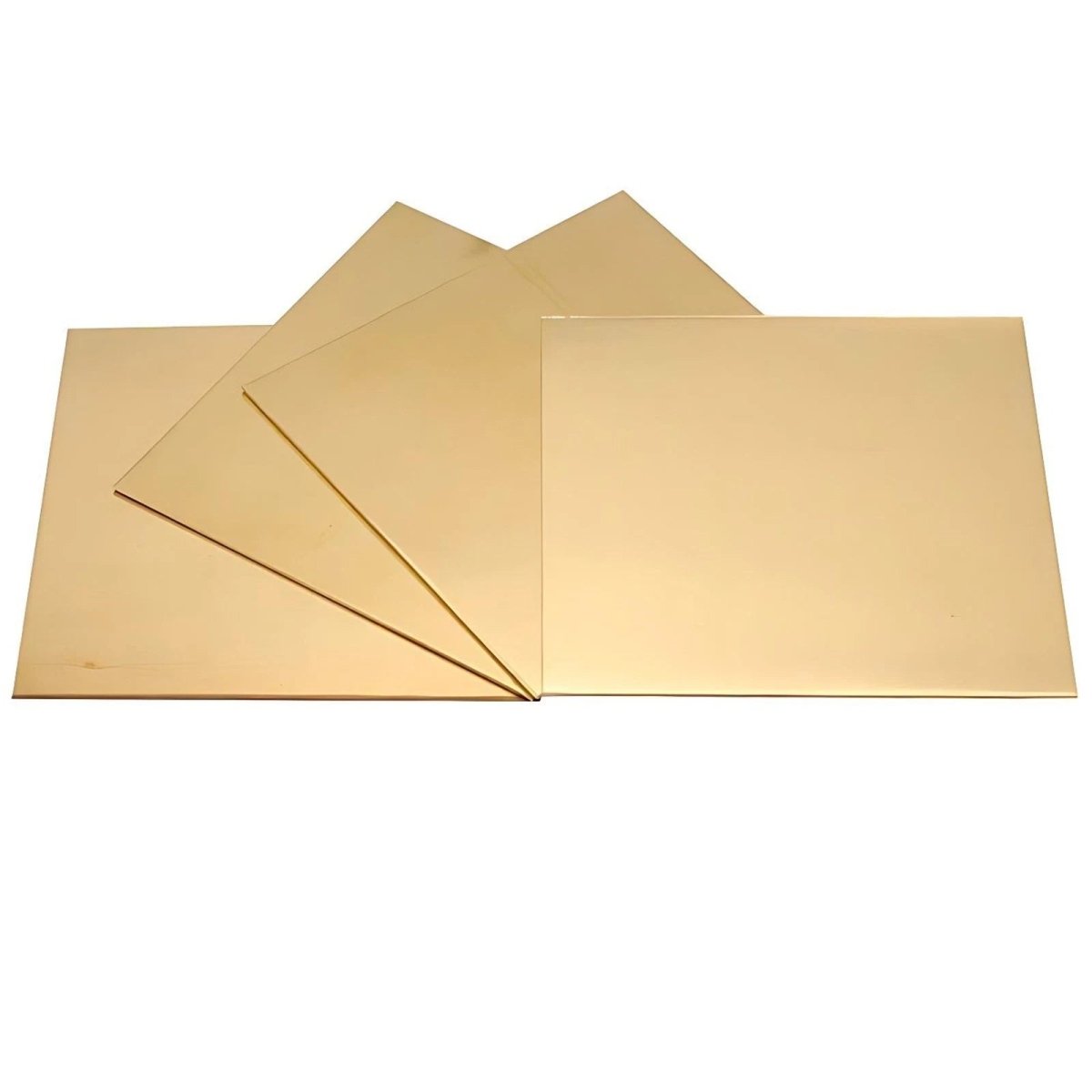
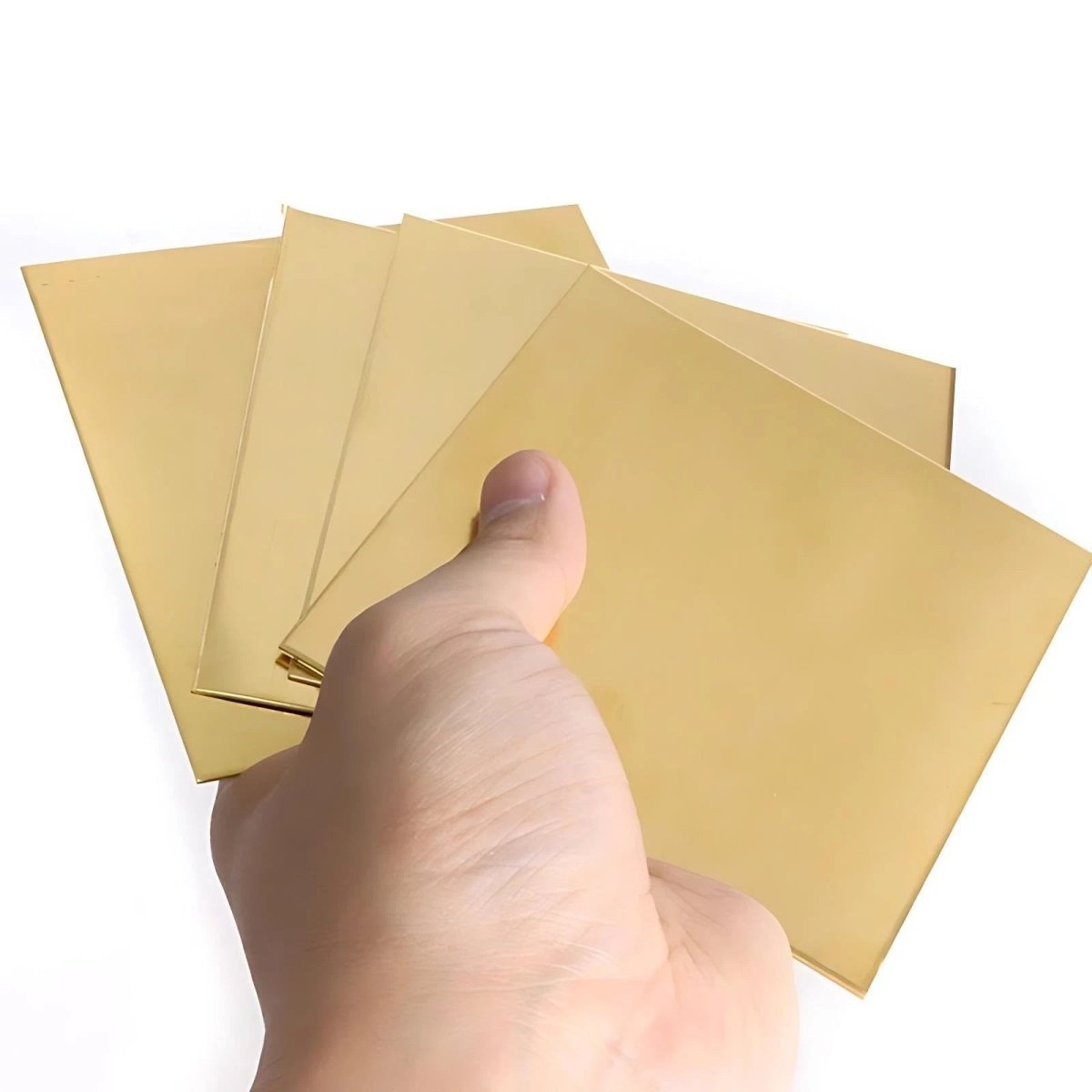
Natural Brass Sheet Metal guillotine cut - 0.5/0.8/1mm to 6mm - Multiple Sizes

No reviews

Price:
Sale price$2.48 USD
Stock:
In stock (500 units), ready to be shipped

Payment & Security

Ach Direct Debit Amazon American Express Apple Pay Bancontact BLIK Diners Club Discover EPS Google Pay iDEAL Wero JCB Maestro Mastercard Multibanco MobilePay PayPal Przelewy24 Shop Pay Twint Union Pay USDC Visa

Your payment information is processed securely. We do not store credit card details nor have access to your credit card information.

Limited Offer — Spend More, Save More
Spend $55+
Save $5
Spend $100+
Save $10
Spend $200+
Save $25
HomeDIYer DIY Expert Support

DIY Expert Support

Get fitment advice & recommendations

Mon–Fri  8:30 AM – 8:00 PM
24-Hour Fast Ship
Arrives in 3–14 Days
Worldwide Shipping
30-Day Returns
1 tree planted with every purchase

Description

Natural Brass Sheet Metal — Guillotine-Cut Precision for Every DIY Project

When your project demands a metal that combines workability with a warm, distinctive finish, finding a sheet cut to a consistent, burr-minimized edge can be a real challenge. Whether you are a hobbyist building decorative inlays, a maker fabricating custom brackets, or a small workshop producing shims and spacers, inconsistent cuts waste time and material. These natural brass sheet metal pieces are guillotine-cut for clean, straight edges that go straight to work.

Each piece is made from C260 cartridge brass (70% copper / 30% zinc), offering a balance of formability and structural integrity. Thickness options range from 0.5 mm (~0.020 in) up to 6 mm (~0.236 in), and sheet dimensions span from a compact 50 × 50 mm (~2 × 2 in) up to 300 × 300 mm (~11.8 × 11.8 in). Available in quantities of 1, 2, or 4 pieces per order to match your exact needs.

Typical applications include custom shim stock for machinery alignment, decorative metalwork and etching blanks, electrical contact strips and bus bar prototyping, and architectural accent panels for furniture and cabinetry. Long-tail use cases such as "thin brass sheet for laser engraving", "small brass plate for jewelry making", and "flat brass stock for CNC routing" are all well-served by this range.

🔧 Compatible with hand shears, bench shears, CNC routers, laser engravers, and standard metalworking tools. Suitable for soldering, brazing, and light forming operations.

✅ Key Features of These Natural Brass Sheet Metal Pieces

  • ✂️Guillotine-Cut Edges — Straight, clean cuts with minimal burr, reducing prep time before use in your project.
  • 📐Wide Thickness Range — Choose from 0.5 mm, 0.8 mm, 1 mm, 1.2 mm, 1.5 mm, 2 mm, 2.5 mm, 3 mm, 4 mm, 5 mm, or 6 mm to match your structural or decorative requirement.
  • 📏Multiple Sheet Sizes — From 50 × 50 mm up to 300 × 300 mm, covering small detail work through medium panel applications without unnecessary waste.
  • ⚗️C260 Cartridge Brass Alloy — 70/30 copper-zinc composition delivers good corrosion resistance, excellent machinability, and a warm golden tone that ages gracefully.
  • 🔩Versatile Workability — Suitable for bending, drilling, soldering, brazing, etching, and light CNC or laser operations without special tooling.
  • 📦Flexible Quantity Options — Order 1, 2, or 4 pieces per variant to prototype efficiently or stock up for production runs.

📐 Technical Specifications — Brass Sheet Metal

Material C260 Cartridge Brass (Cu 70% / Zn 30%)
Finish Natural / Mill finish (uncoated)
Cut Method Guillotine shear cut
Thickness Range 0.5 mm – 6 mm (0.020 in – 0.236 in)
Sheet Size Range 50 × 50 mm – 300 × 300 mm (2 × 2 in – 11.8 × 11.8 in)
Thickness Tolerance See variant options
Flatness See variant options
Hardness Typically half-hard (H02) — See variant options to confirm
Tensile Strength Typically 340–470 MPa (varies by thickness)
Corrosion Resistance Good — suitable for indoor and sheltered outdoor use
Quantity per Order 1, 2, or 4 pieces (select above)

❓ Frequently Asked Questions

How do I choose the right thickness for my project?

For decorative inlays, etching, and shim stock, 0.5 mm–1 mm is typically sufficient. For structural brackets, spacers, and light load-bearing applications, 1.5 mm–3 mm offers a good balance of rigidity and workability. Thicknesses of 4 mm–6 mm are suited to heavier-duty parts where stiffness is critical. If you are unsure, start with a thinner gauge — brass is easy to stack or laminate if more thickness is needed.

Is this brass sheet strong enough for mechanical parts?

C260 cartridge brass has a tensile strength of approximately 340–470 MPa depending on temper and thickness, making it suitable for light mechanical components such as spacers, shims, contact strips, and small brackets. It is not intended for high-stress structural applications where steel or thicker alloys would be more appropriate.

Will this brass sheet corrode or tarnish over time?

Brass naturally develops a patina over time when exposed to air and moisture. For indoor decorative use, this patina is often desirable. For applications requiring a bright finish, a clear lacquer or wax coating applied after purchase will slow tarnishing. Brass is not recommended for prolonged direct contact with salt water or harsh chemicals without a protective coating.

Can I cut, drill, or bend this sheet with standard tools?

Yes. Thinner gauges (0.5 mm–1.5 mm) can be cut with aviation snips or a guillotine shear and bent by hand or with a sheet metal brake. Thicker gauges (2 mm–6 mm) are best cut with a band saw, jigsaw with a metal blade, or CNC router, and bent with a press brake or vise. Drilling is straightforward with standard HSS drill bits — use a slow speed and cutting fluid for cleaner holes.

Is this sheet compatible with laser engraving or CNC routing?

Brass is an excellent material for CNC routing and mechanical engraving. For fiber laser engraving, brass works well with appropriate power settings. CO₂ lasers generally require a marking compound (such as Cermark) on bare brass to achieve visible marks. Always verify your machine's compatibility with non-ferrous metals before processing.

How do I decide between ordering 1, 2, or 4 pieces?

Order 1 piece for prototyping or one-off projects. Choose 2 pieces if you need a spare or are making a mirrored pair. Select 4 pieces for small production runs, classroom projects, or when you want to practice cuts and bends before committing to your final piece. Multi-piece orders offer a lower per-piece cost compared to single-piece orders of the same size.

What size should I choose if I need a specific finished dimension?

Always select a sheet size larger than your finished part to allow for cutting margins and any clamping or fixturing allowance. For example, if your finished part is 80 × 80 mm, the 100 × 100 mm sheet gives you comfortable working room. If your part is close to a listed size, go one size up to avoid running short.

🛒 Select your Thickness × Length × Width and Quantity above, then add to cart.

You may also like

Recently viewed