
The chain is fine...but I ordered the wrong size. Nine links of the chain I ordered equals six of the size I wanted. My error...
How can I straighten out the springs? I can't use them coil uo as is.
Your payment information is processed securely. We do not store credit card details nor have access to your credit card information.
Get fitment advice & recommendations
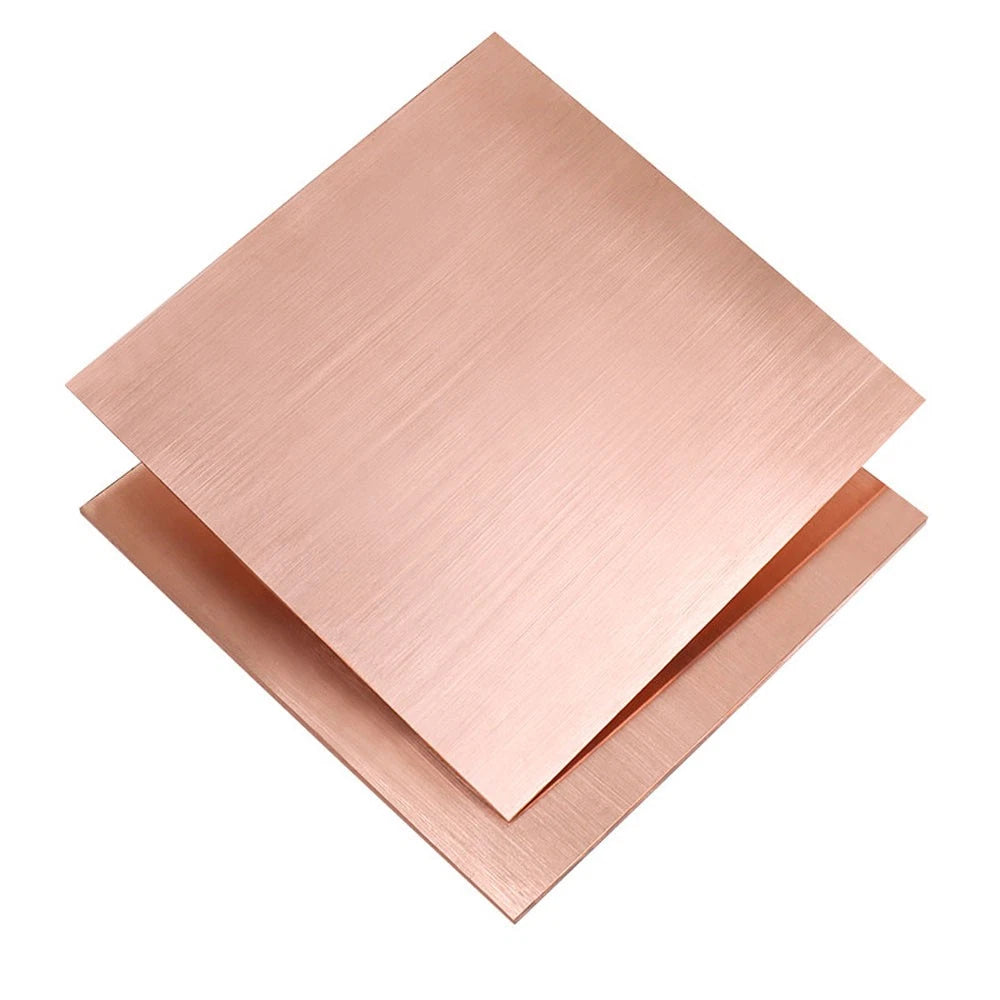
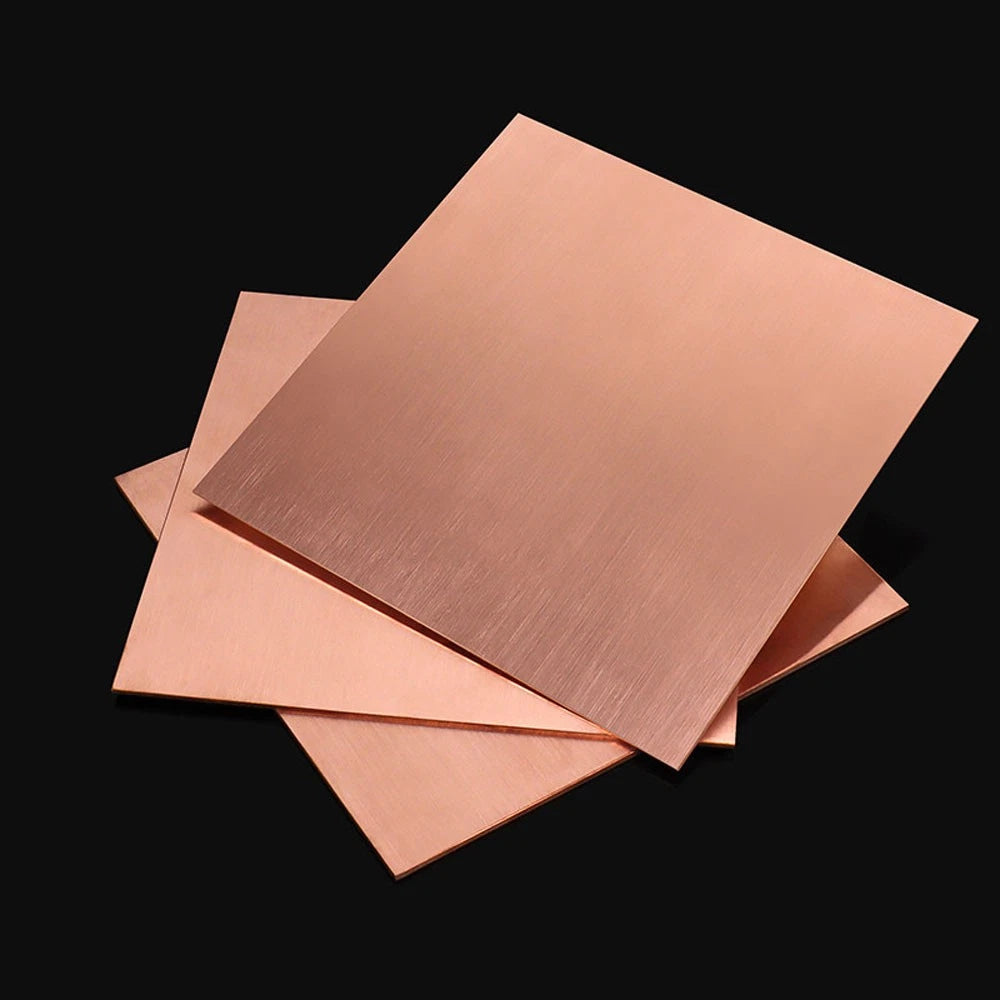
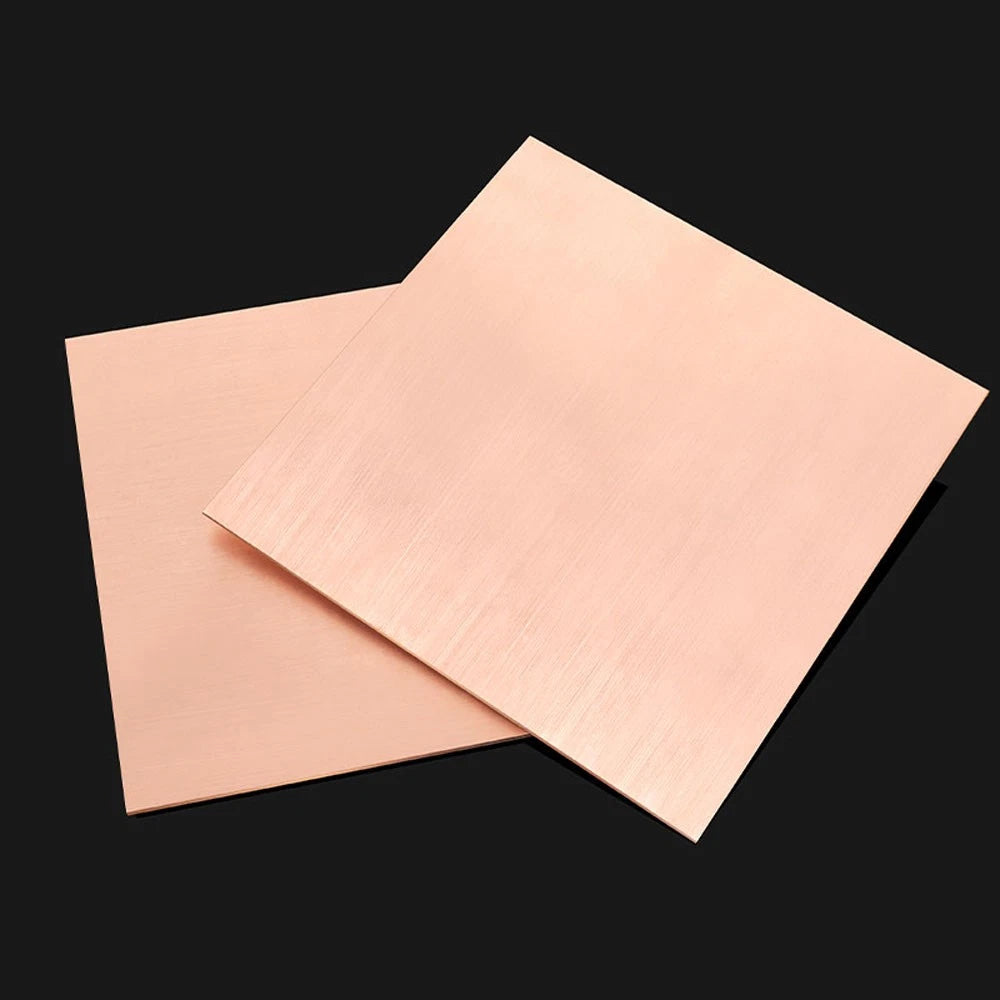
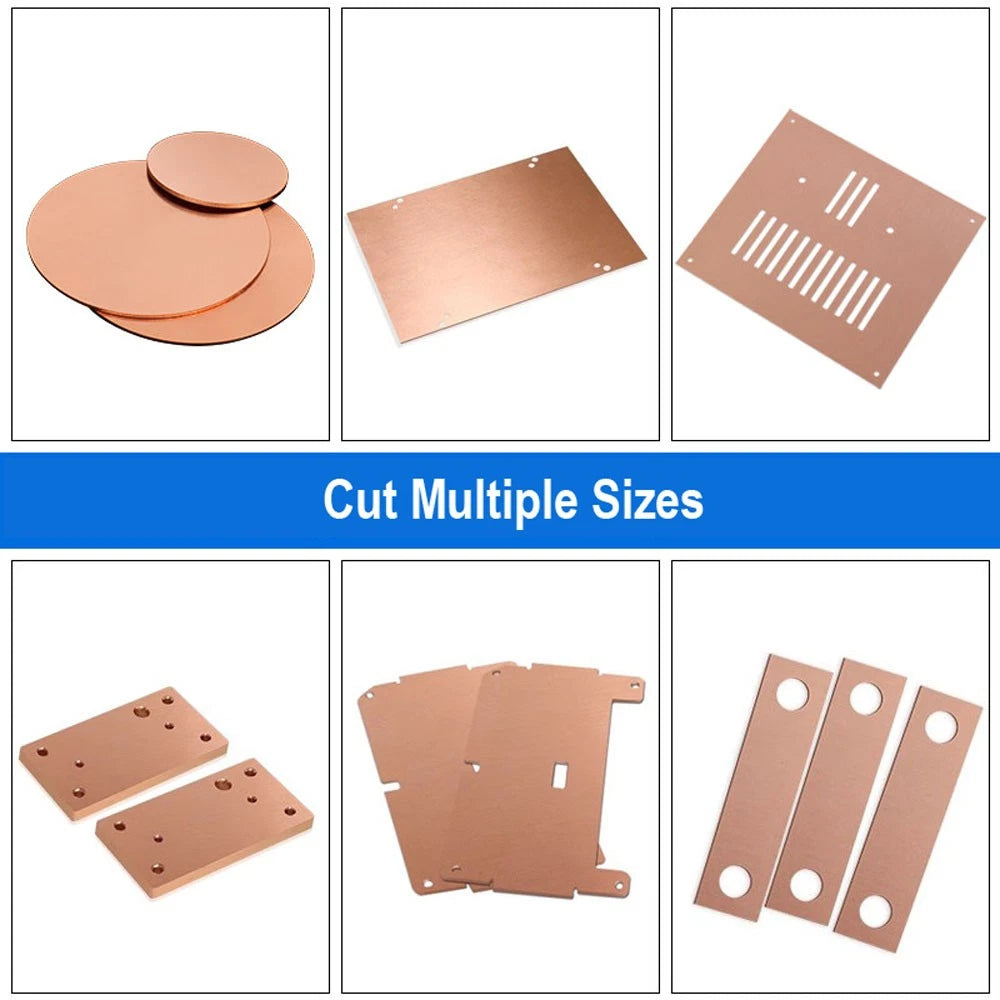
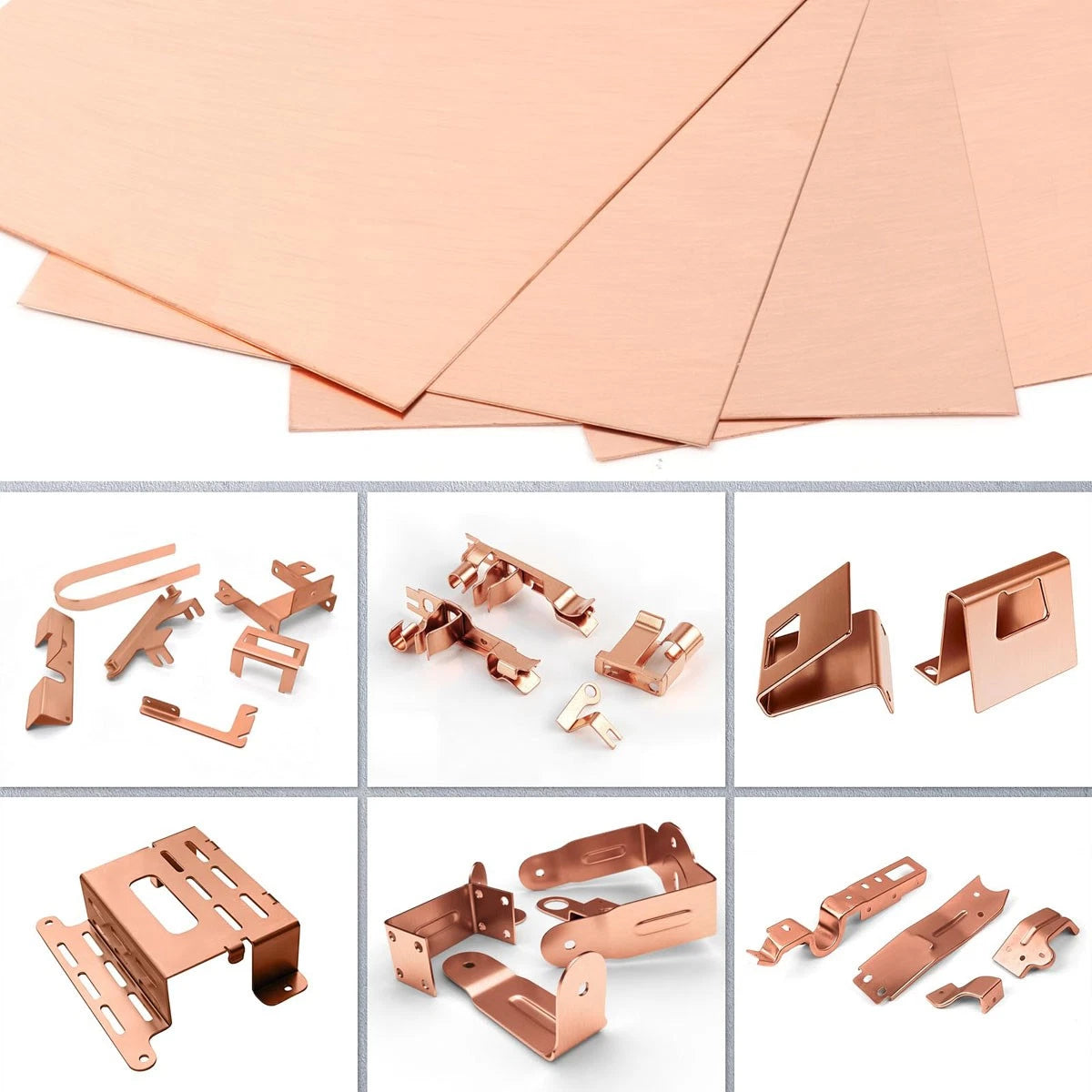
When your project demands a material that conducts reliably, solders cleanly, and ages with character, finding the right copper sheet in the exact size you need can be a frustrating hunt. Whether you are a hobbyist building custom electronics, a craftsperson working on decorative metalwork, or a small workshop fabricating shims and gaskets, this natural copper plate/sheet metal is cut to order across a wide range of sizes and thicknesses — so you get exactly what you need without waste.
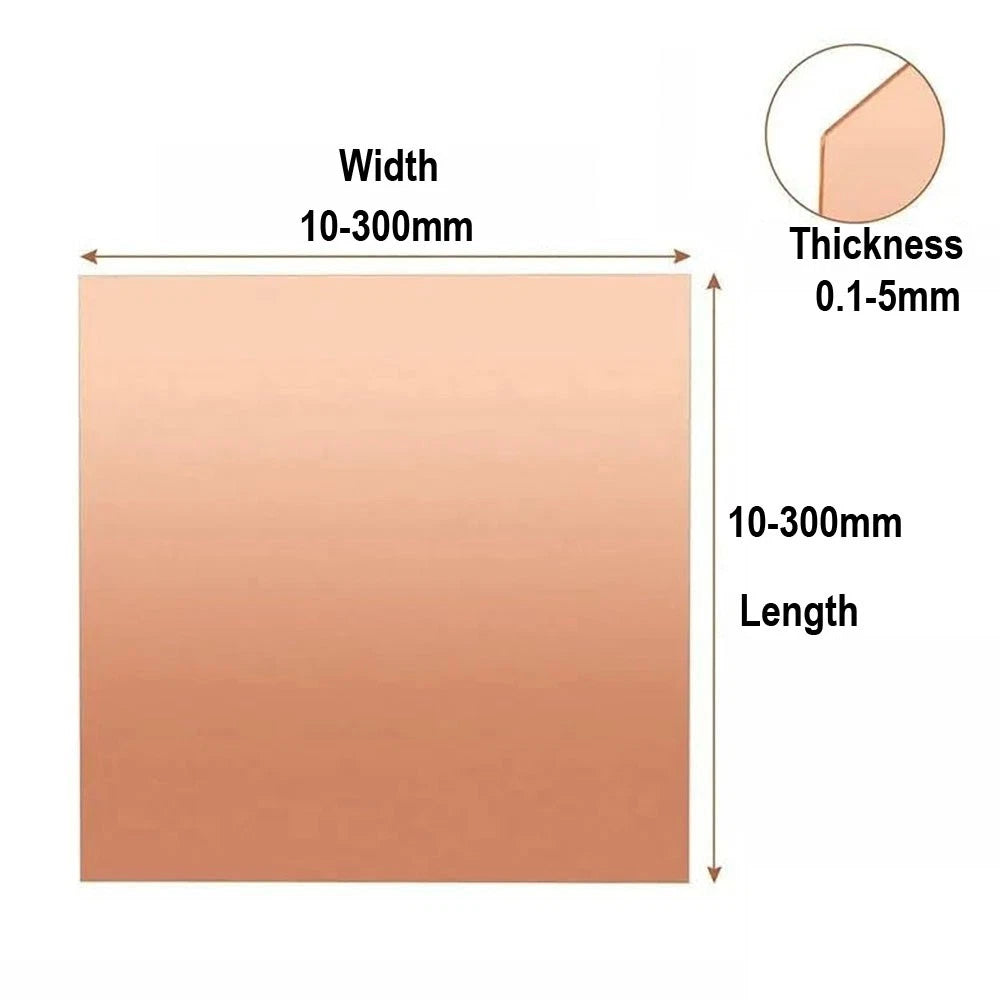
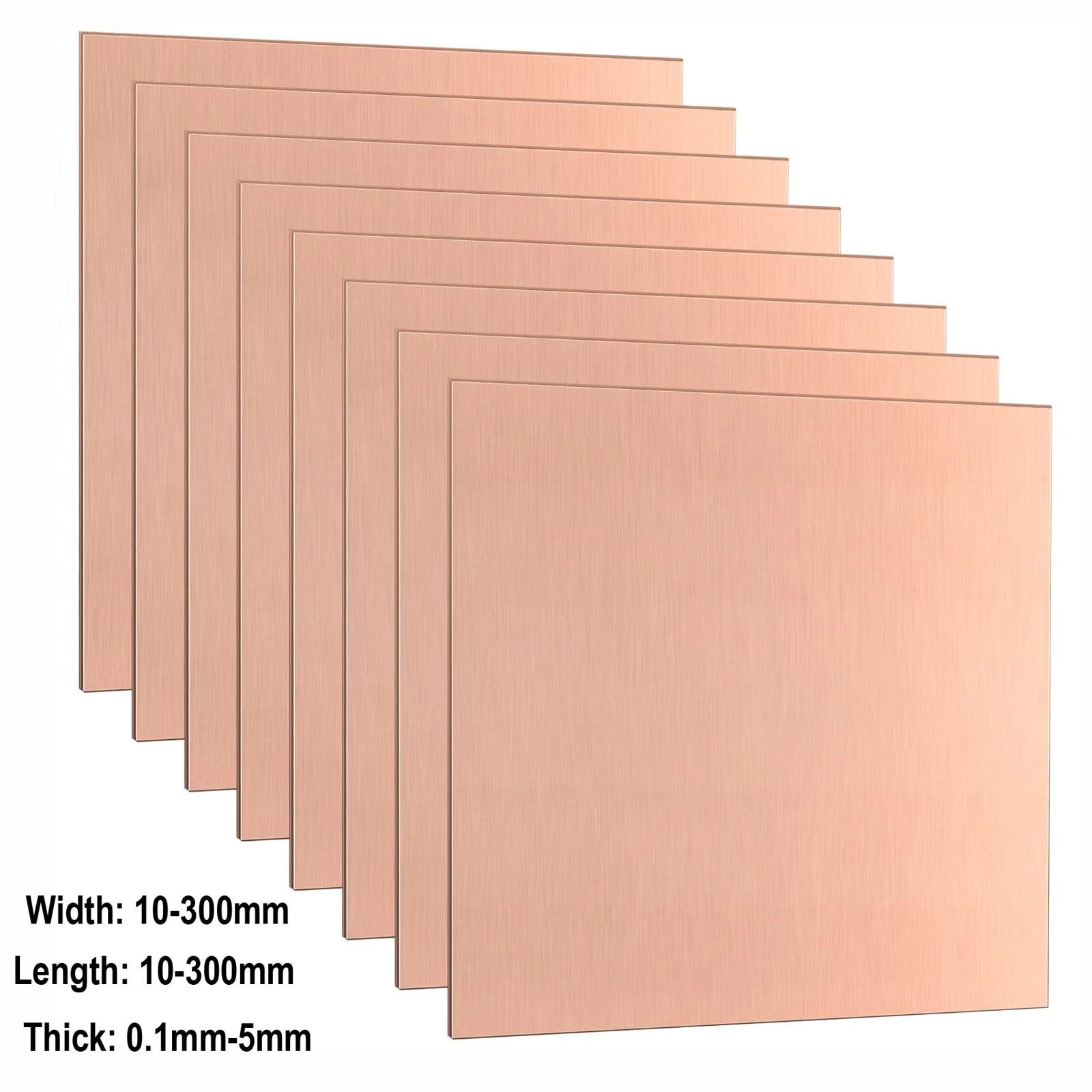
Each piece is made from natural (unalloyed) copper and guillotine-cut to clean, straight edges. Sizes range from 10×10mm (approx. 0.39×0.39 in) up to 300×300mm (approx. 11.8×11.8 in), with rectangular options up to 200×300mm (approx. 7.9×11.8 in). Thickness options span 0.3mm to 5.0mm (approx. 0.012 in to 0.197 in), covering everything from ultra-thin foil-weight sheets to solid structural plate. Packs are available in 1, 2, 4, 5, or 10 pieces depending on the size and thickness selected.
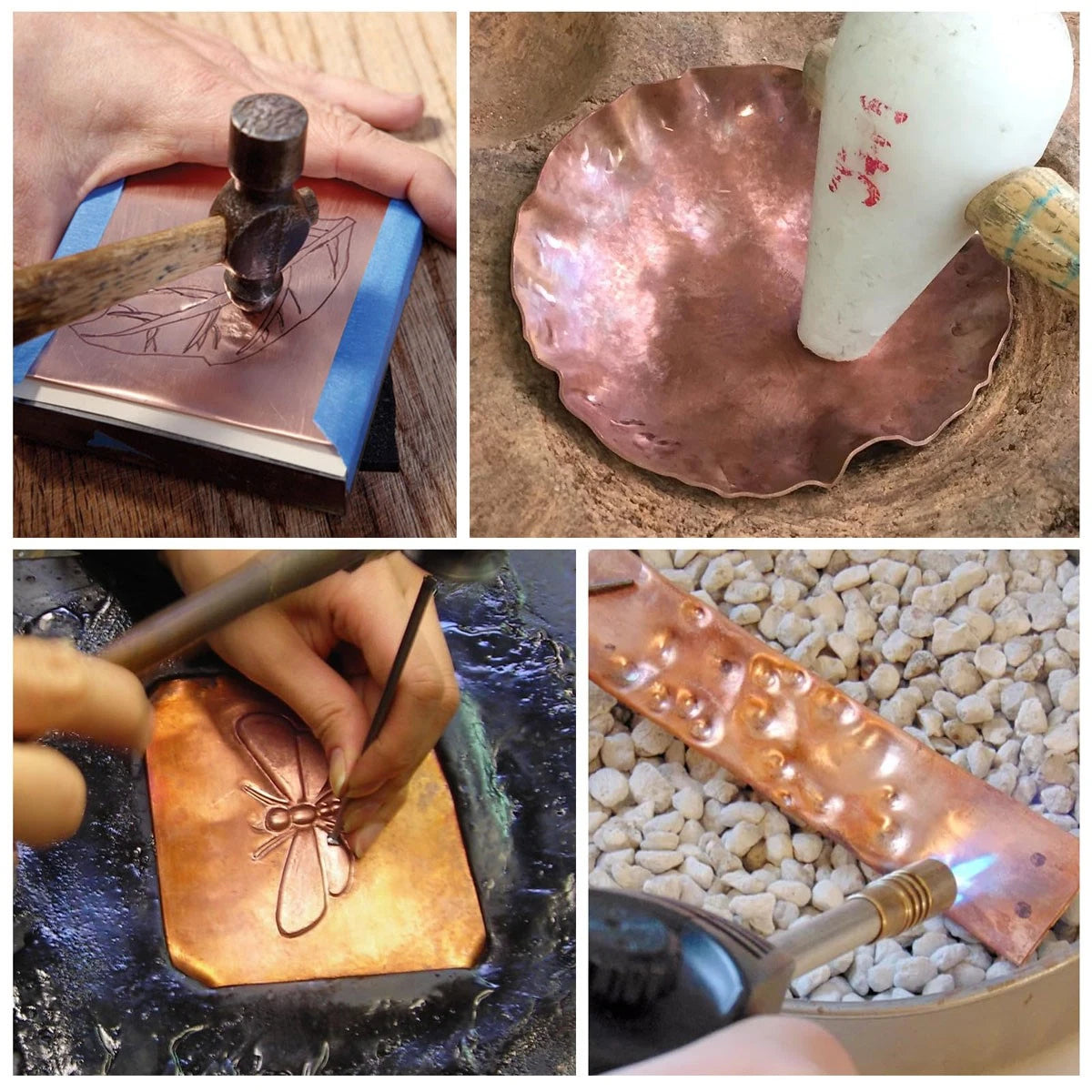
Typical use cases include copper shim stock for precision machinery alignment, RF shielding panels in electronics enclosures, decorative inlay and art metalwork, heat-spreader blanks for DIY thermal management, and grounding straps in electrical installations. The guillotine-cut edge finish makes these sheets ready to use or easy to further cut, drill, and form without additional deburring on the flat faces.
| Material | Natural (unalloyed) copper |
|---|---|
| Item Type | Flat sheet / plate, guillotine-cut |
| Size Range | 10×10mm to 300×300mm; rectangular up to 200×300mm (see variant options) |
| Thickness Range | 0.3mm – 5.0mm (see variant options) |
| Edge Finish | Guillotine-sheared, straight edges |
| Surface Finish | Mill finish (natural copper colour) |
| Electrical Conductivity | Typically ≥58 MS/m (IACS ≥100%) |
| Thermal Conductivity | Typically ~385–400 W/(m·K) |
| Tensile Strength | See variant options |
| Pack Quantity | 1 / 2 / 4 / 5 / 10 pcs (see variant options) |
| Applications | Shims, gaskets, RF shielding, heat spreaders, decorative metalwork, grounding straps |
For shim stock and precision alignment, 0.3mm–0.5mm is typical. For RF shielding panels and enclosure lids, 0.5mm–1mm provides good rigidity. For heat spreaders and structural brackets, 1mm–3mm is common. For heavy-duty gaskets or decorative plate work, 3mm–5mm offers solid material. If you are unsure, start with a single piece at your target thickness to test fit and formability before ordering a larger quantity.
Natural (pure) copper has the highest electrical and thermal conductivity of any common engineering metal. Brass (copper + zinc) and bronze (copper + tin) are harder and more machinable but conduct electricity less efficiently. For grounding straps, bus bars, and heat spreaders where conductivity is the priority, natural copper is the correct choice. For structural parts that need to be threaded or machined to tight tolerances, a copper alloy may be preferable.
Copper naturally oxidises to form a reddish-brown then dark brown patina, and eventually a green verdigris in humid or outdoor environments. This patina is stable and actually slows further corrosion. For applications where appearance matters, the surface can be lacquered or sealed after cleaning. For electrical contacts, keep mating surfaces clean and use appropriate contact grease to maintain conductivity.
Yes. Natural copper is one of the most solderable metals available. It accepts standard tin-lead and lead-free solder with rosin or water-soluble flux, as well as silver braze alloys for higher-temperature joints. Clean the surface with fine abrasive or flux before soldering to remove any oxide layer. Thicker sheets (3mm+) may require pre-heating with a torch to bring the thermal mass up to soldering temperature.
Guillotine-cut edges are straight and relatively clean, but like all sheared metal edges they can be sharp. Handle with gloves, especially on thinner sheets where the edge can be quite keen. For applications where the edge will be touched regularly or where a smooth finish is needed, a quick pass with a fine file or deburring tool will remove any residual sharpness. The flat faces are mill-finished and do not require deburring.
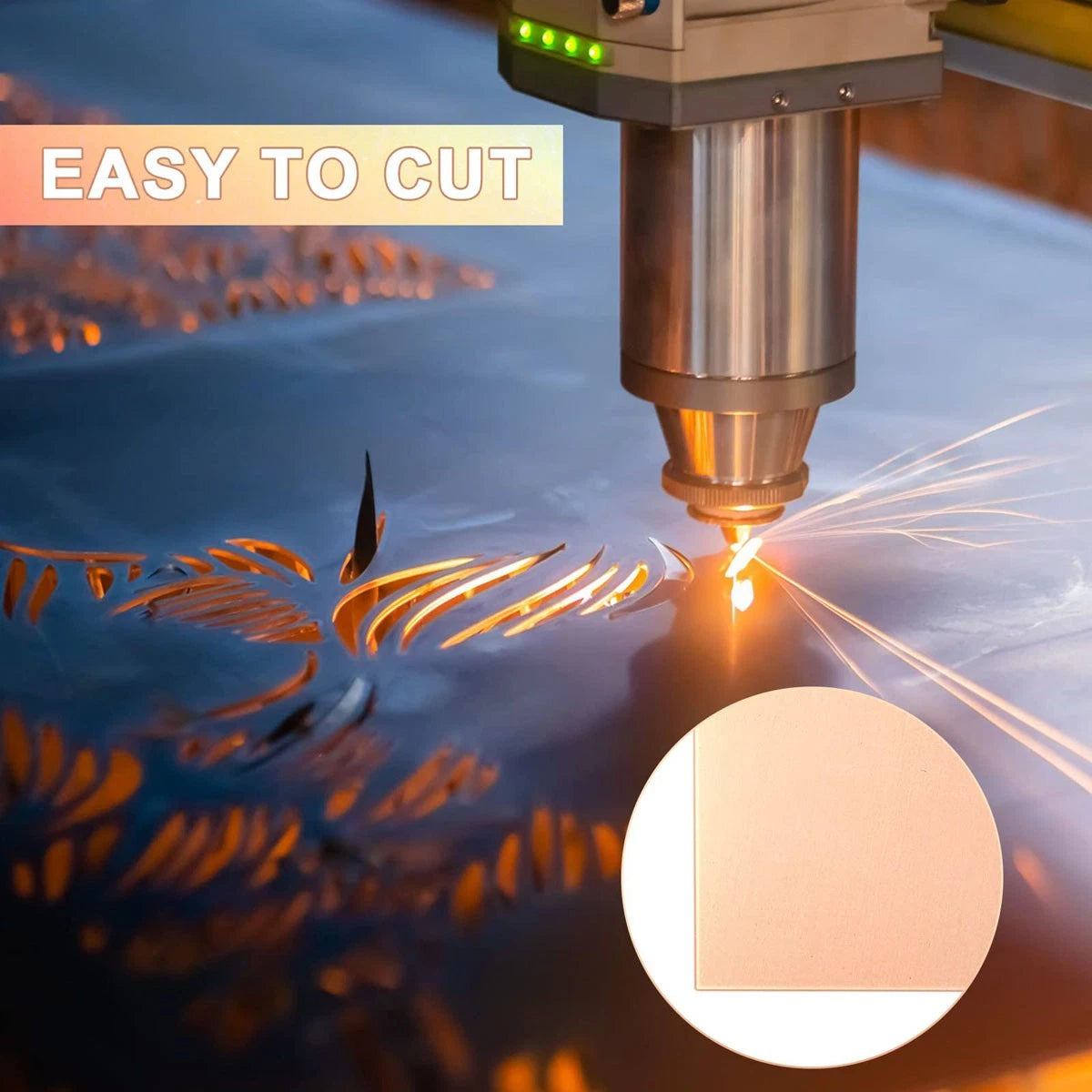
Yes. Sheets up to about 1mm thick can be cut with heavy-duty tin snips or aviation shears. Thicker sheets (1mm–3mm) are best cut with a jigsaw fitted with a metal-cutting blade, an angle grinder with a thin cutting disc, or a bench-mounted guillotine. Sheets 3mm and above should be cut with power tools or taken to a metal fabrication shop. Always clamp the sheet securely and wear eye protection and gloves.
Use the Size dropdown to select your required sheet dimensions (width × length in mm), then select your Thickness from the available options for that size. Finally, choose the pack quantity (Amount) that suits your needs. Note that not all size/thickness/quantity combinations are available — the variant selector will show only valid combinations. If you need a size not listed, contact us to discuss custom cutting options.