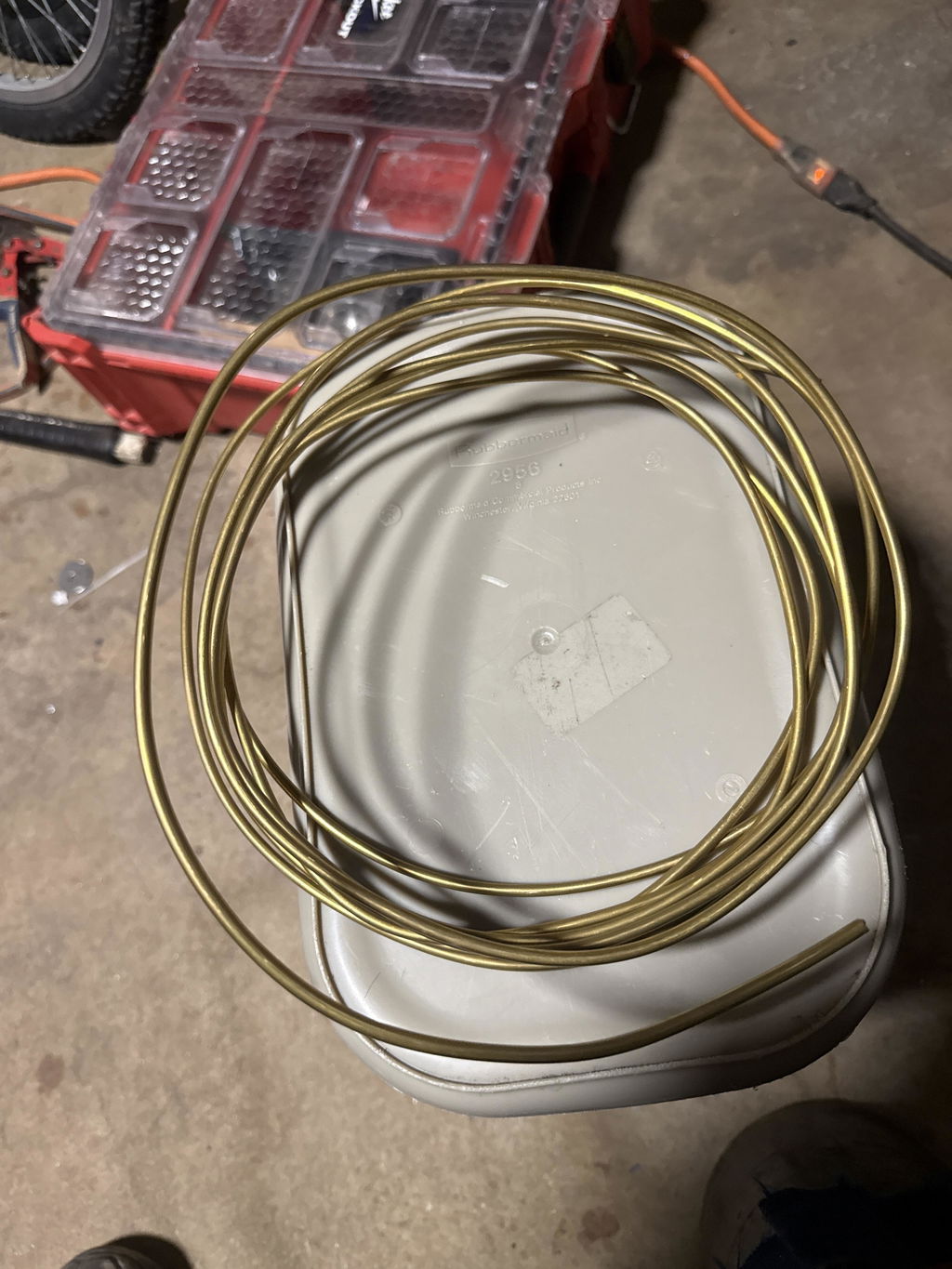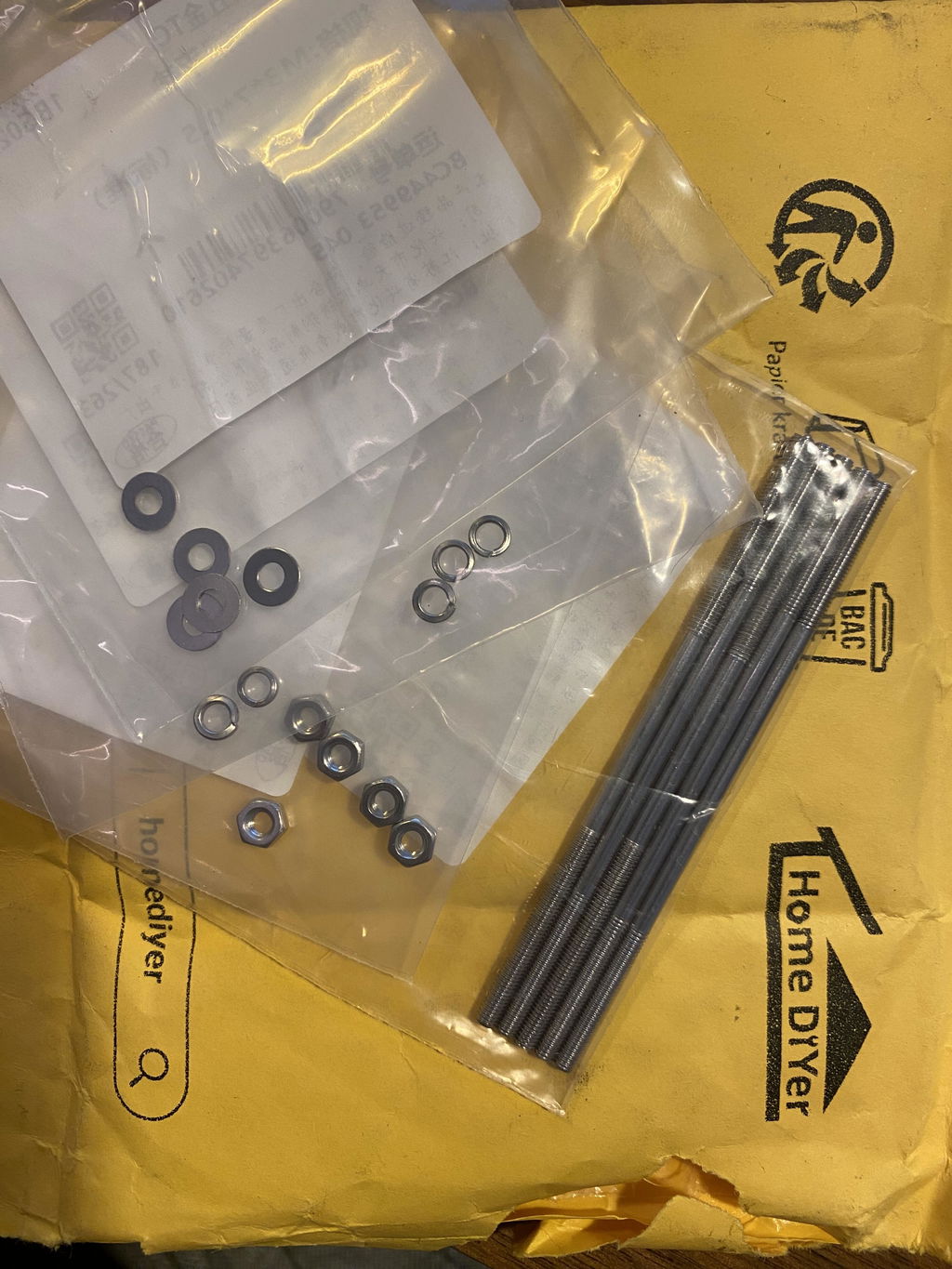
The chain is fine...but I ordered the wrong size. Nine links of the chain I ordered equals six of the size I wanted. My error...
How can I straighten out the springs? I can't use them coil uo as is.
Your payment information is processed securely. We do not store credit card details nor have access to your credit card information.
Get fitment advice & recommendations
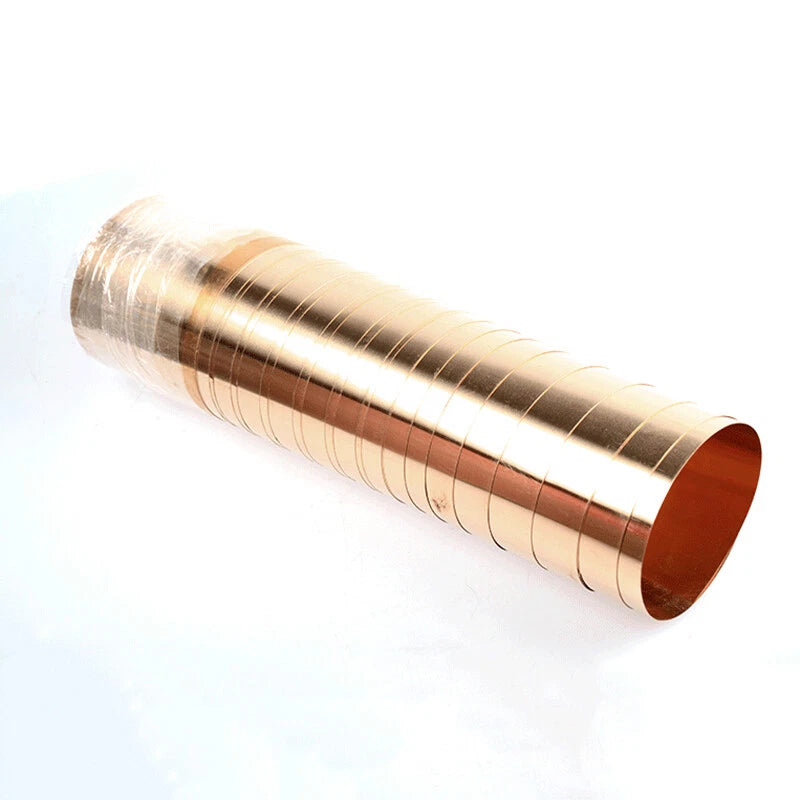
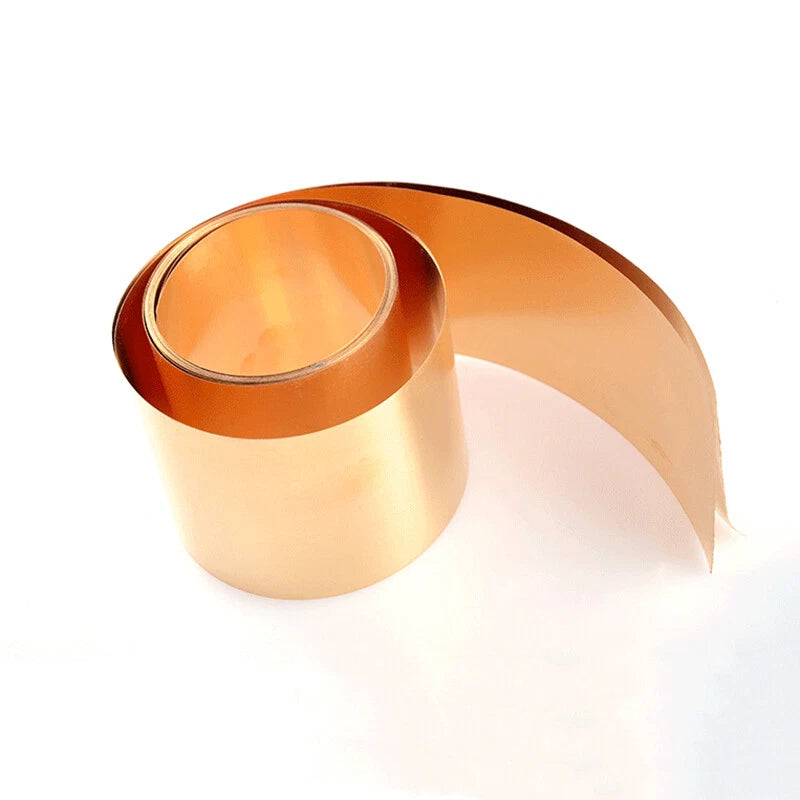
When your project demands a thin, conductive, and corrosion-resistant metal sheet that holds tight tolerances, standard copper foil often falls short. Makers, electronics hobbyists, and small workshop operators working on shims, gaskets, electrical contacts, and heat spreaders need a material that combines reliable conductivity with mechanical resilience — that's exactly where phosphorous copper sheet delivers.
These copper alloy plates are composed of phosphor bronze (copper-tin-phosphorus alloy), available in thicknesses ranging from 0.1 mm to 0.8 mm (~0.004" to ~0.031") and sheet widths of 100 mm, 200 mm, or 300 mm (~3.94", ~7.87", or ~11.81"), with a uniform 100 mm length (~3.94"). Each piece is cut to consistent dimensions, offering a flat, smooth surface suitable for precision work.
Typical use cases include DIY electrical contact shims for battery packs and PCB assemblies, thin gasket material for plumbing and mechanical seals, and precision shimming in small engine or instrument repair — all scenarios where a phosphorous copper alloy plate outperforms standard sheet stock.
| Material | Phosphor Bronze (Copper-Tin-Phosphorus Alloy) |
|---|---|
| Thickness Range | 0.1 mm – 0.8 mm (0.004" – 0.031") |
| Sheet Width Options | 100 mm / 200 mm / 300 mm (3.94" / 7.87" / 11.81") |
| Sheet Length | 100 mm (3.94") |
| Surface Finish | Smooth, mill finish |
| Conductivity | Good electrical and thermal conductivity |
| Corrosion Resistance | Good — phosphorus oxide layer provides protection |
| Formability | Suitable for bending, cutting, and light forming |
| Pack Quantity | See variant options |
| Weight per Piece | See variant options |
For electrical contact shims and spring contacts, 0.1–0.3 mm is typically sufficient. For gaskets and mechanical shims requiring more rigidity, 0.4–0.8 mm is recommended. If you're unsure, start with a mid-range thickness like 0.3–0.5 mm and test fit before committing to a larger quantity.
No. Phosphor bronze (phosphorous copper) is an alloy of copper, tin, and phosphorus. Compared to pure copper, it offers better spring-back, higher fatigue strength, and improved corrosion resistance, making it preferable for contacts, springs, and gaskets. Pure copper has slightly higher conductivity but less mechanical resilience.
Yes. Phosphor bronze is solderable with standard rosin-core or no-clean flux solder. For brazing, use a silver-bearing brazing alloy and appropriate flux. Clean the surface with isopropyl alcohol before soldering for best adhesion.
Phosphor bronze has good corrosion resistance due to the protective oxide layer formed by the phosphorus content. It performs well in humid indoor environments and light outdoor exposure. For highly corrosive environments (salt spray, acids), additional protective coating is recommended.
For thinner gauges (0.1–0.3 mm), standard tin snips, scissors, or a craft knife with a metal ruler work well. For thicker gauges (0.4–0.8 mm), aviation snips or a metal shear will give cleaner cuts. Always deburr edges after cutting with a fine file or sandpaper.
Select the width (100 mm, 200 mm, or 300 mm) closest to your required piece size to minimize waste. For one-off prototypes, a 1–2 piece pack is sufficient. For batch production or repeated repairs, a 5–10 piece pack offers better value per sheet.
Yes. The 0.1–0.2 mm thickness options are commonly used for battery contact strips, PCB shims, and flexible connector tabs. The alloy's conductivity and spring properties make it a practical choice for low-voltage electronics applications.