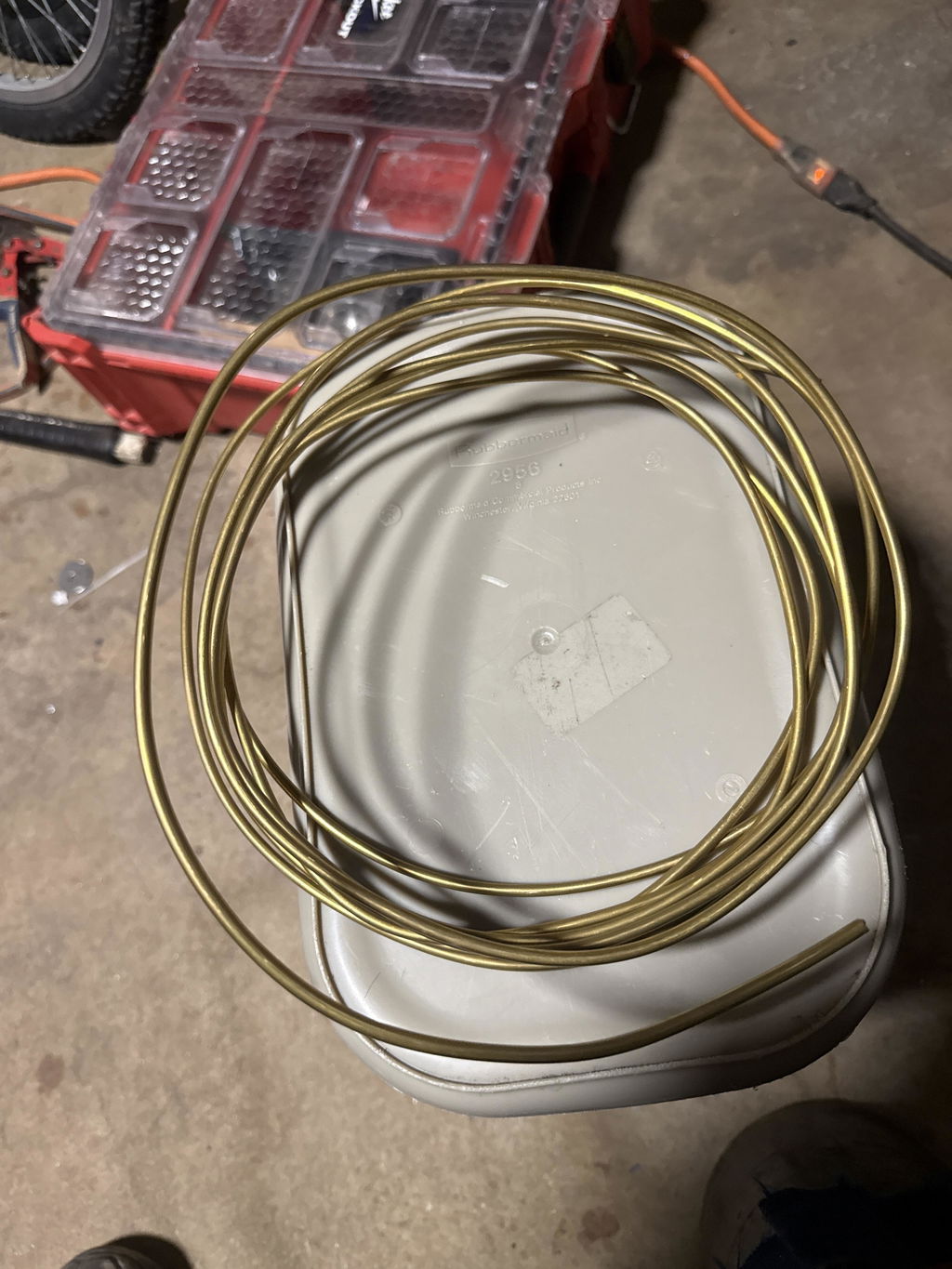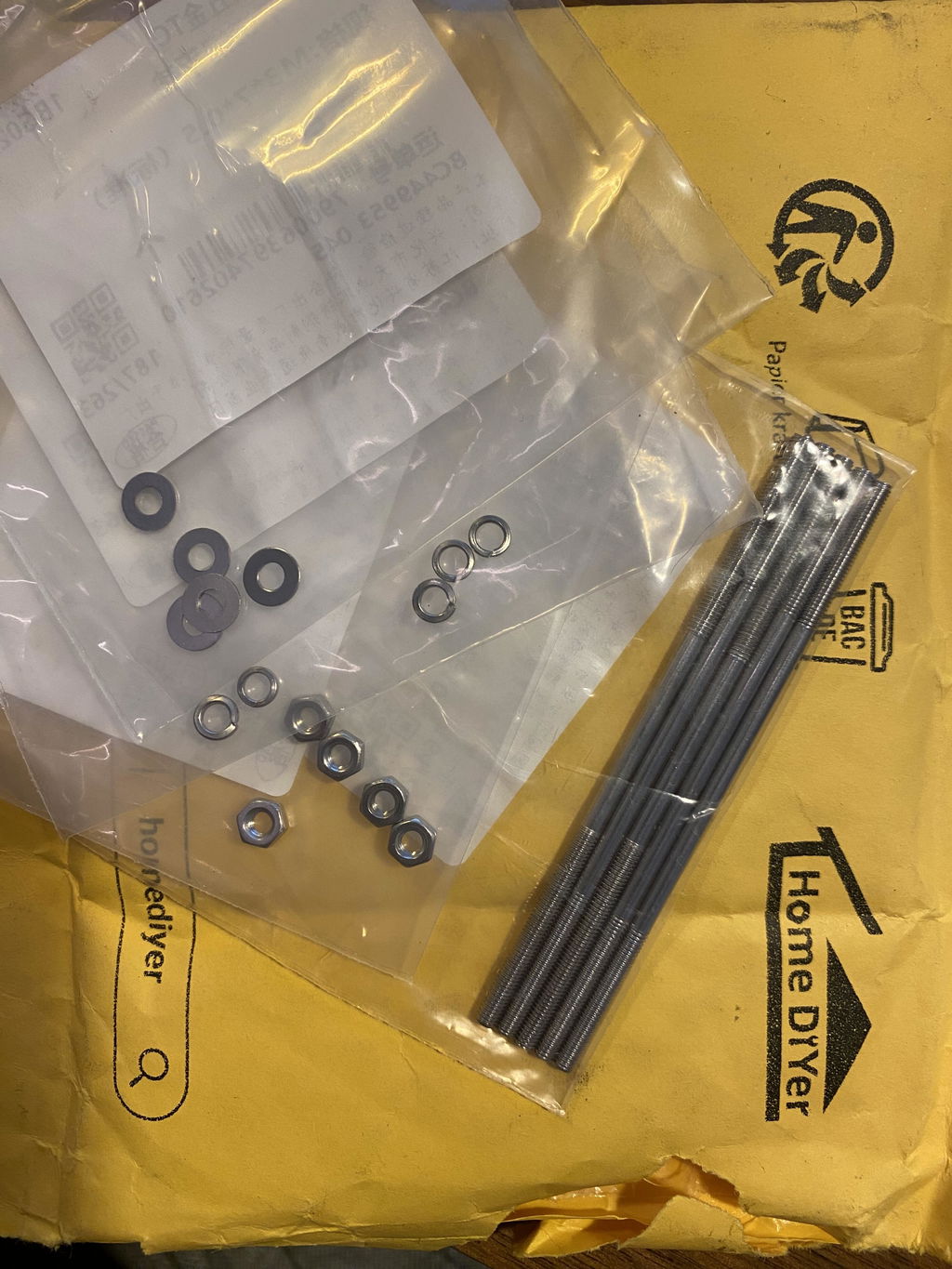
The chain is fine...but I ordered the wrong size. Nine links of the chain I ordered equals six of the size I wanted. My error...
How can I straighten out the springs? I can't use them coil uo as is.
Your payment information is processed securely. We do not store credit card details nor have access to your credit card information.
Get fitment advice & recommendations
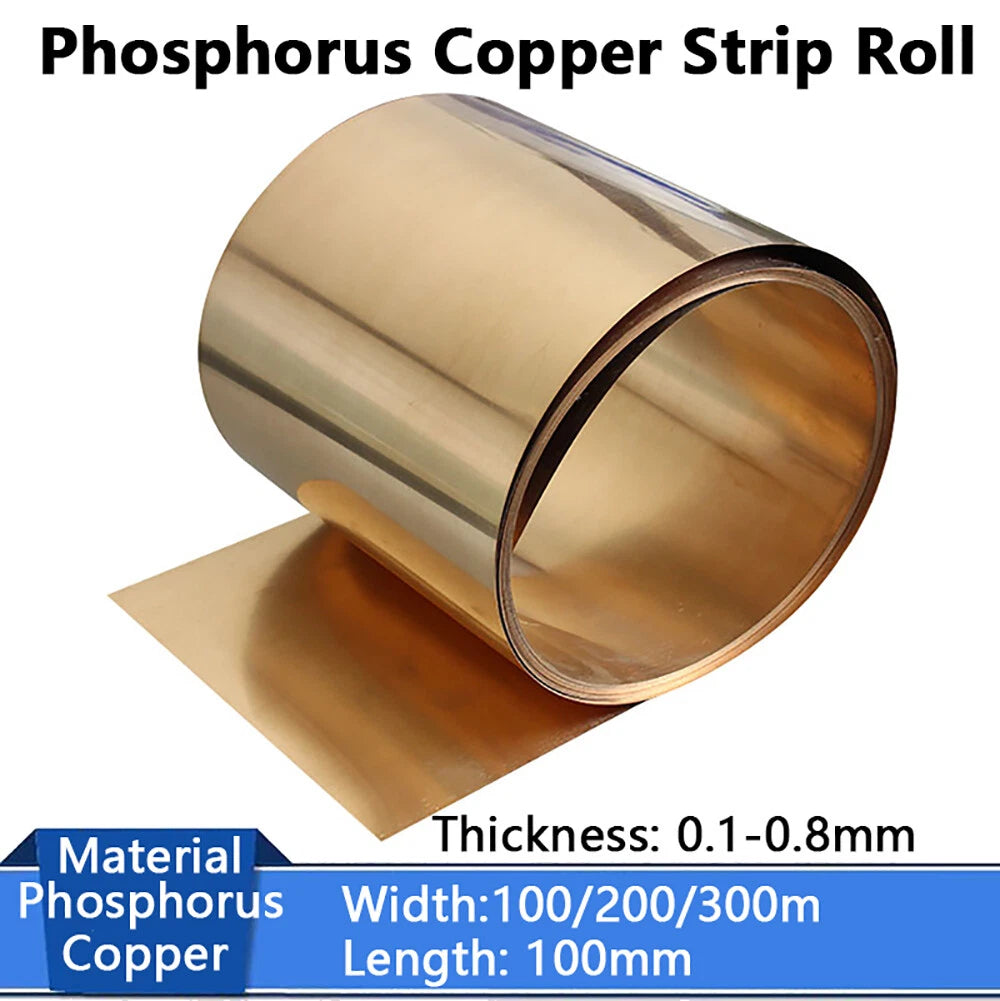
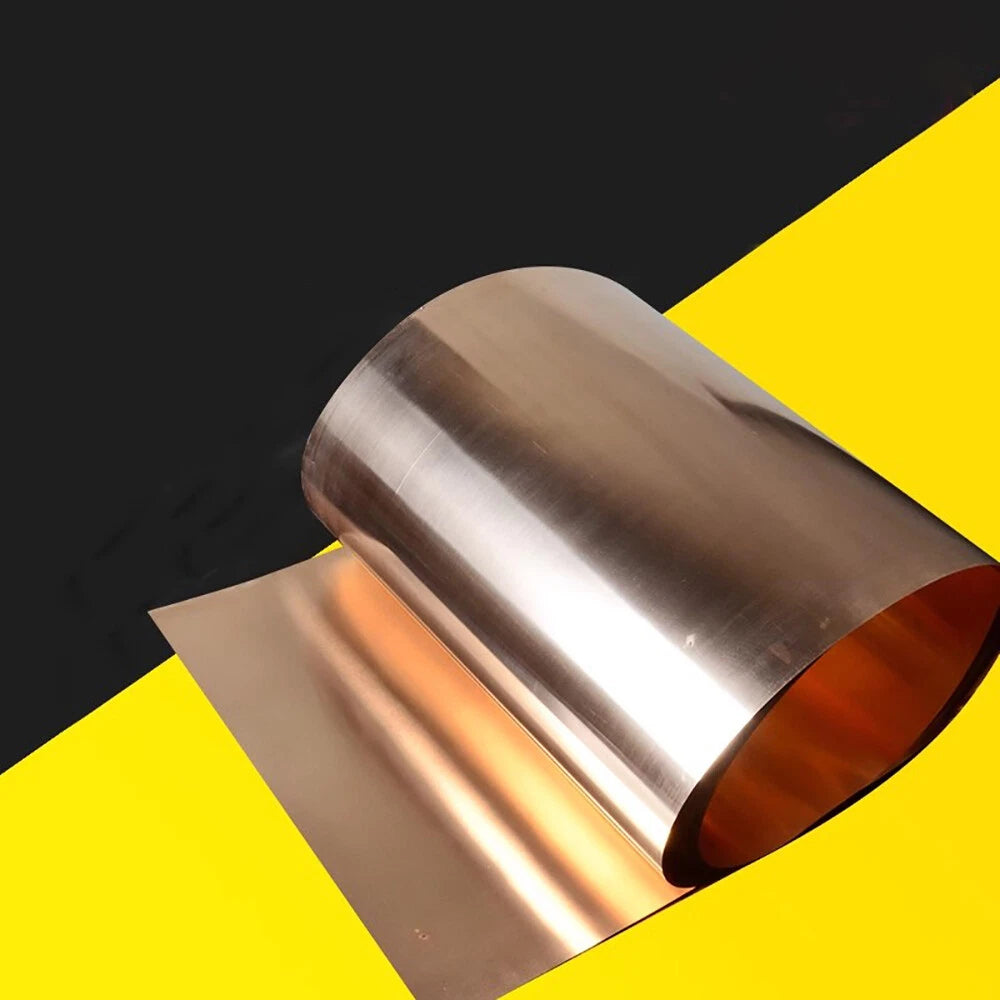
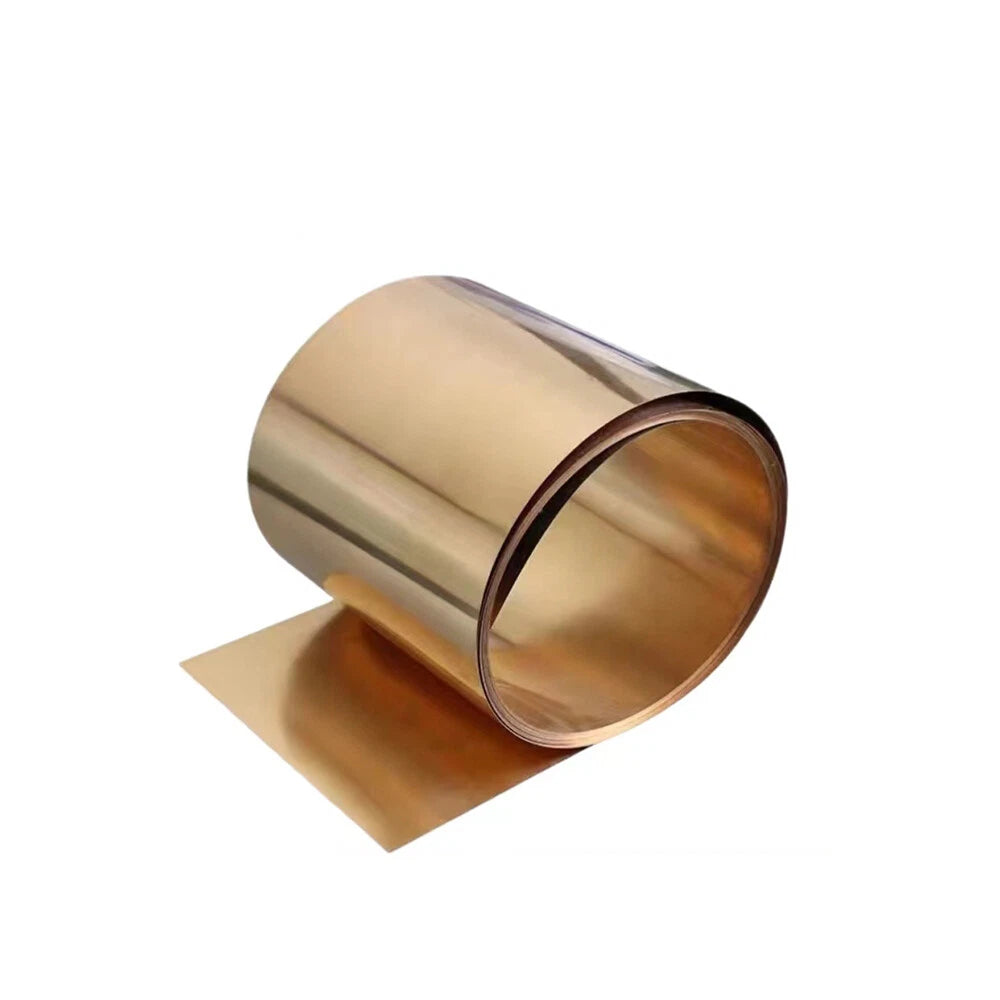
When your project demands tight tolerances and reliable conductivity, standard sheet metal often falls short. Makers, engineers, and hobbyists who work on precision mechanisms, electrical contacts, or custom shim stacks need a material that holds its shape under repeated stress without corroding. This phosphor bronze strip is stocked in eight carefully graded thicknesses — from ultra-thin 0.1mm foil to a sturdy 0.8mm plate — so you can match the exact gauge your application requires.
Each piece is cut from phosphor bronze (CuSn alloy with phosphorus deoxidation), a copper-tin alloy known for its spring-like resilience, low friction, and excellent corrosion resistance. Available in three sheet sizes — 100 × 100mm (3.94" × 3.94"), 200 × 100mm (7.87" × 3.94"), and 300 × 100mm (11.81" × 3.94") — with thicknesses spanning 0.1mm (0.004") to 0.8mm (0.031"). Pieces are supplied in multi-pack quantities scaled to each thickness so you always have spares on hand.
Typical use cases include custom shim stock for bearing preload adjustment, leaf spring blanks for small mechanisms, electrical contact strips for DIY electronics, and wear-resistant bearing liners in light-duty machinery. Long-tail applications such as phosphor bronze shim sheet for CNC fixtures, thin copper spring strip for model engineering, and precision bronze foil for watchmaking repairs are all well served by this range.
Choose from 0.1, 0.15, 0.2, 0.3, 0.4, 0.5, 0.6, or 0.8mm to match your exact tolerance requirement without secondary grinding.
Phosphor bronze conducts electricity reliably, making these strips suitable for switch contacts, bus bars, and grounding straps in low-voltage DIY electronics.
The tin and phosphorus content forms a stable oxide layer that resists moisture, mild acids, and atmospheric corrosion — extending service life in humid or outdoor environments.
Phosphor bronze retains its shape after repeated flexing, making it ideal for leaf springs, snap-fit clips, and contact fingers that must cycle thousands of times.
Thinner gauges (0.1–0.3mm) can be scored and snapped or cut with heavy-duty scissors; thicker gauges (0.4–0.8mm) respond well to tin snips, angle grinders, or laser cutters.
Packs range from 1 to 10 pieces depending on size and thickness, giving you backup material for prototyping iterations without ordering again.
| Material | Phosphor Bronze (CuSn alloy, phosphorus deoxidized) |
|---|---|
| Thickness Range | 0.1mm – 0.8mm (0.004" – 0.031") |
| Available Sizes | 100 × 100mm / 200 × 100mm / 300 × 100mm |
| Surface Finish | Mill finish, smooth rolled |
| Temper | Spring temper (work-hardened) |
| Electrical Conductivity | Approx. 15–20% IACS (typical for phosphor bronze) |
| Tensile Strength | See variant options |
| Hardness | See variant options |
| Pack Quantity | 1–10 pcs (varies by thickness and size — see variant options) |
| Applications | Shims, springs, electrical contacts, bearing liners, precision metalwork |
For shim stock and gap-filling applications, match the thickness to your measured gap — thinner sheets (0.1–0.2mm) suit fine adjustments, while 0.3–0.8mm works for structural shimming. For spring applications, thinner gauges (0.1–0.3mm) give more flex; thicker gauges (0.4–0.8mm) provide greater load capacity. If you are unsure, order two adjacent thicknesses and test both.
Yes. Phosphor bronze in spring temper has a tensile strength typically in the range of 500–800 MPa depending on thickness and cold-work level. It is widely used for leaf springs, contact fingers, and snap-fit clips in precision instruments. For heavy structural springs, consult a materials engineer to confirm the specific grade meets your load requirements.
Phosphor bronze forms a stable, adherent oxide layer that provides good resistance to atmospheric corrosion, moisture, and mild chemical exposure. It performs well in marine-adjacent environments and is far more corrosion-resistant than plain copper or mild steel. For highly aggressive chemical environments, consider additional protective coating.
Yes. Phosphor bronze solders readily with standard tin-lead or lead-free solder using a rosin flux. It can also be silver-brazed for higher-strength joints. Clean the surface with fine abrasive or flux before soldering to remove any surface oxide for best adhesion.
Thinner gauges (0.1–0.3mm) cut cleanly with fiber laser cutters. Thicker gauges (0.4–0.8mm) can be CNC milled or routed with carbide tooling. Hand tools such as tin snips and jeweler's saws also work well for small-batch cutting. Always use appropriate eye protection and ventilation when cutting copper alloys.
Choose the size that minimizes waste for your part layout. The 100×100mm square is ideal for small shims, contact blanks, and test coupons. The 200×100mm strip suits longer spring blanks or multiple smaller parts nested side by side. The 300×100mm sheet is best for larger single-piece parts or when you need to cut several identical strips in one pass.
Regular copper sheet is softer and more ductile but lacks spring-back. Brass (CuZn) is harder than copper but has lower fatigue life than phosphor bronze. Phosphor bronze (CuSn + P) offers the best combination of spring resilience, fatigue resistance, and corrosion resistance among common copper alloys, making it the preferred choice for contact springs and precision shims.