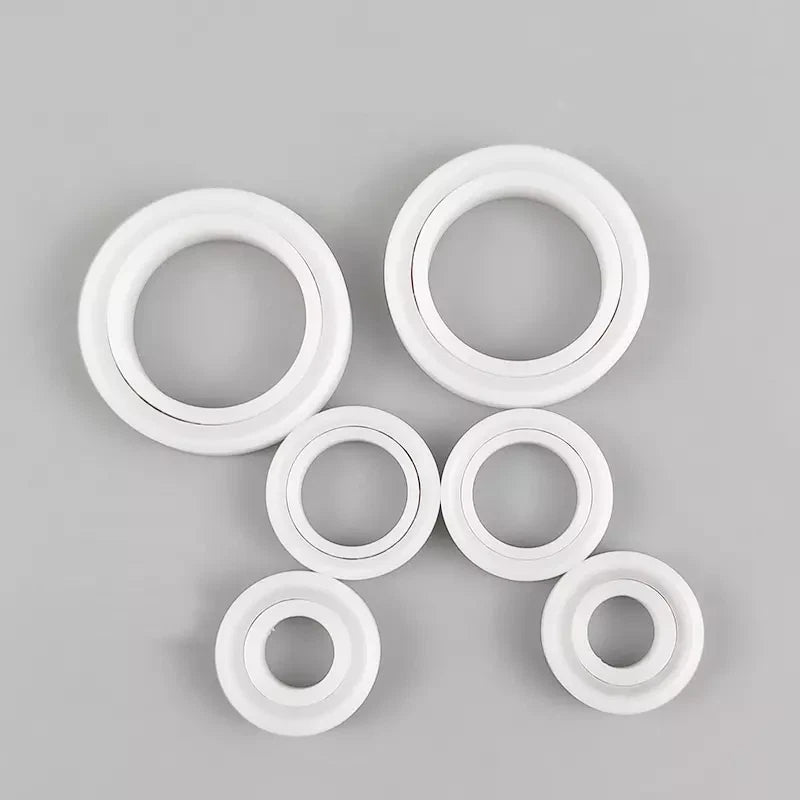
POM Plastic Bearing Deep Groove Ball Bearings RS/2RS Single/Double Sided Seal

No reviews

Price:
Sale price$6.60 USD
Stock:
In stock (500 units), ready to be shipped

Payment & Security

Ach Direct Debit Amazon American Express Apple Pay Bancontact BLIK Diners Club Discover EPS Google Pay iDEAL Wero JCB Maestro Mastercard Multibanco MobilePay PayPal Przelewy24 Shop Pay Twint Union Pay USDC Visa

Your payment information is processed securely. We do not store credit card details nor have access to your credit card information.

Limited Offer — Spend More, Save More
Spend $55+
Save $5
Spend $100+
Save $10
Spend $200+
Save $25
HomeDIYer DIY Expert Support

DIY Expert Support

Get fitment advice & recommendations

Mon–Fri  8:30 AM – 8:00 PM
24-Hour Fast Ship
Arrives in 3–14 Days
Worldwide Shipping
30-Day Returns
1 tree planted with every purchase

Description

POM Plastic Deep Groove Ball Bearings — Corrosion-Resistant Sealed Bearings for Demanding Environments

When metal bearings corrode, seize, or add unnecessary weight to your build, engineers and DIY builders turn to POM plastic deep groove ball bearings. These sealed bearings are designed for applications where moisture exposure, chemical contact, or electrical isolation rules out standard steel options — making them a reliable choice for food-processing equipment, water pumps, RC vehicles, 3D printers, and light-duty automation rigs.

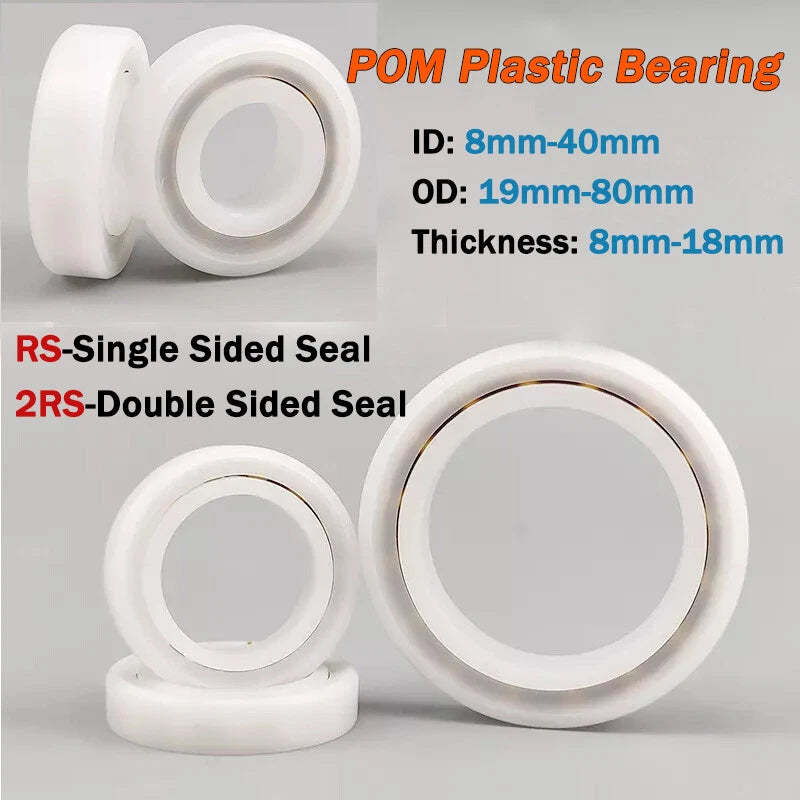
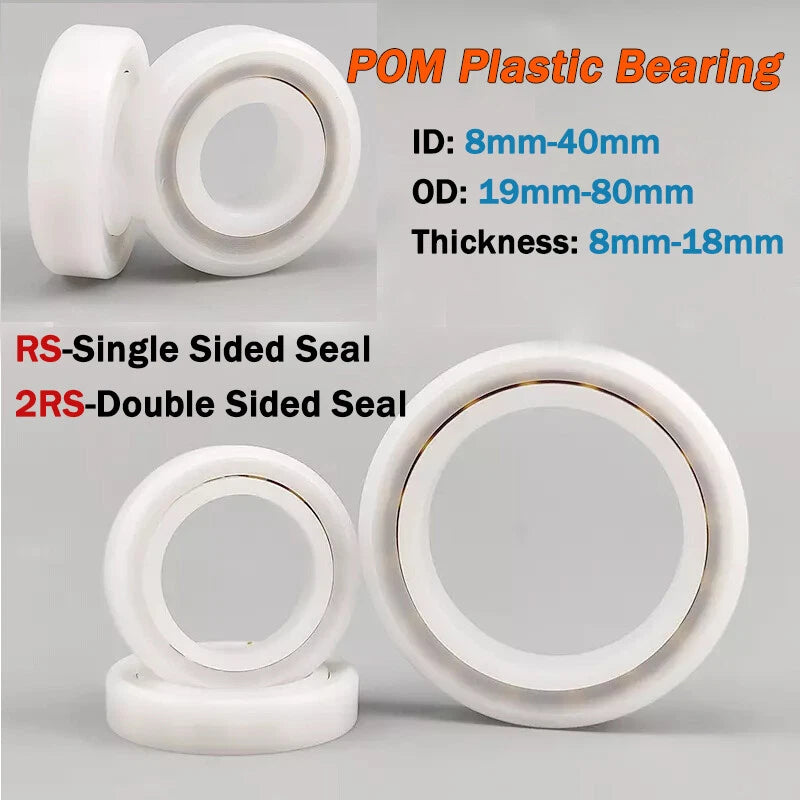
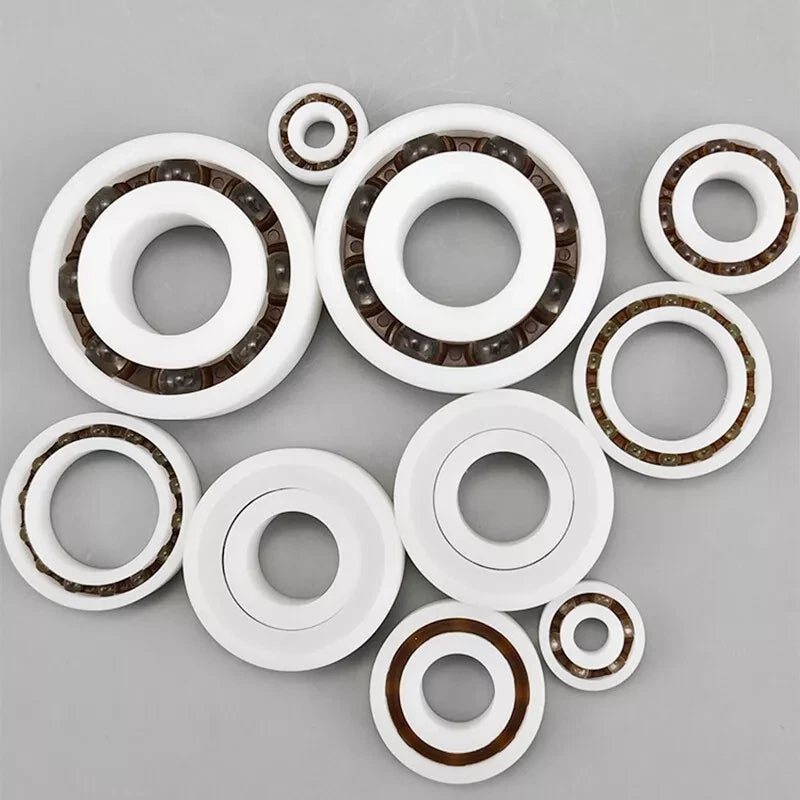
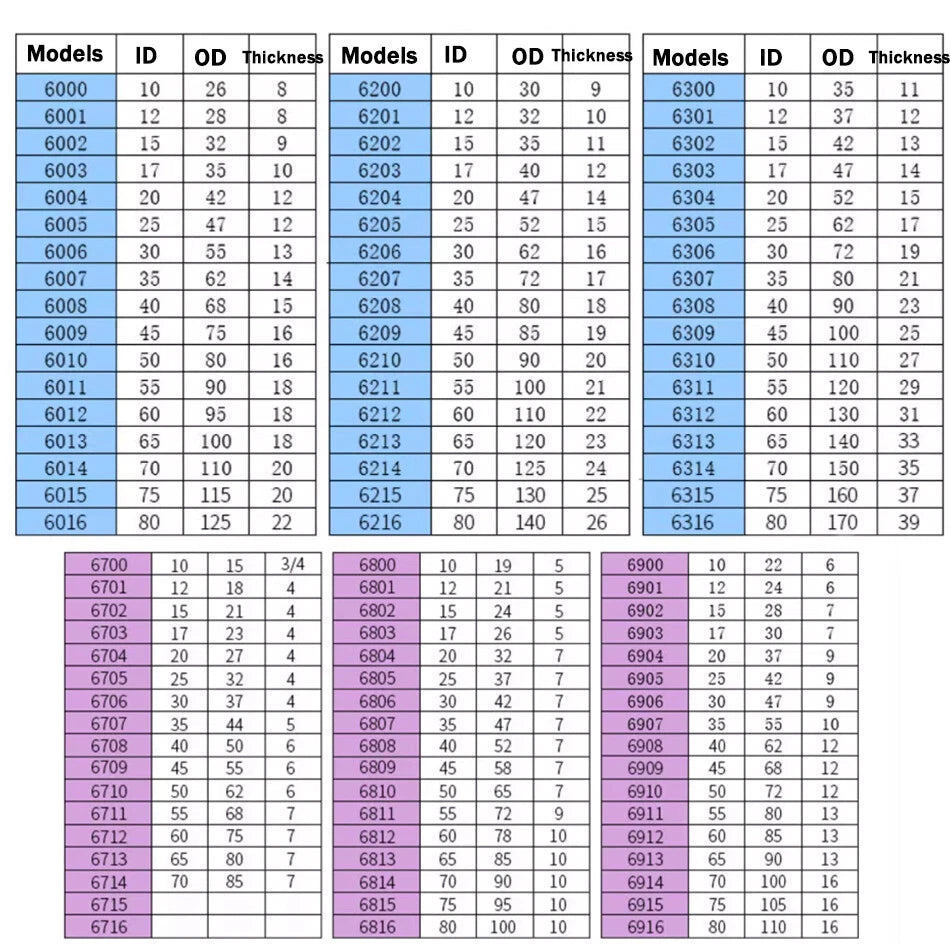
Each bearing is constructed from POM (polyoxymethylene / acetal) with a matching plastic cage and races, available in RS single-sided seal or 2RS double-sided seal configurations. Inner diameters span 8–40 mm (0.31–1.57 in) and outer diameters range from 19–80 mm (0.75–3.15 in), covering popular series including 608, 6000–6006, 6200–6208, 6800–6806, and 6900–6906.

Typical use cases include skateboard and inline skate wheels requiring corrosion resistance, aquatic robotics and underwater housings where steel would rust, conveyor rollers in wet or washdown environments, and 3D printer idler pulleys where low noise and electrical non-conductivity are priorities.

⚙️ Compatibility: Fits standard metric bearing seats. Verify your shaft diameter and housing bore against the selected ID × OD × Thickness variant before ordering.

✅ Key Features of These POM Plastic Deep Groove Ball Bearings

  • 🧪 Corrosion-Resistant POM Construction — Polyoxymethylene material resists moisture, mild acids, and alkalis where steel bearings would corrode and fail.
  • Electrically Non-Conductive — Full plastic construction provides electrical isolation, suitable for applications where grounding through the bearing must be avoided.
  • 🔇 Low Noise & Vibration — POM's inherent damping properties reduce operational noise compared to steel, beneficial in precision instruments and quiet-running machinery.
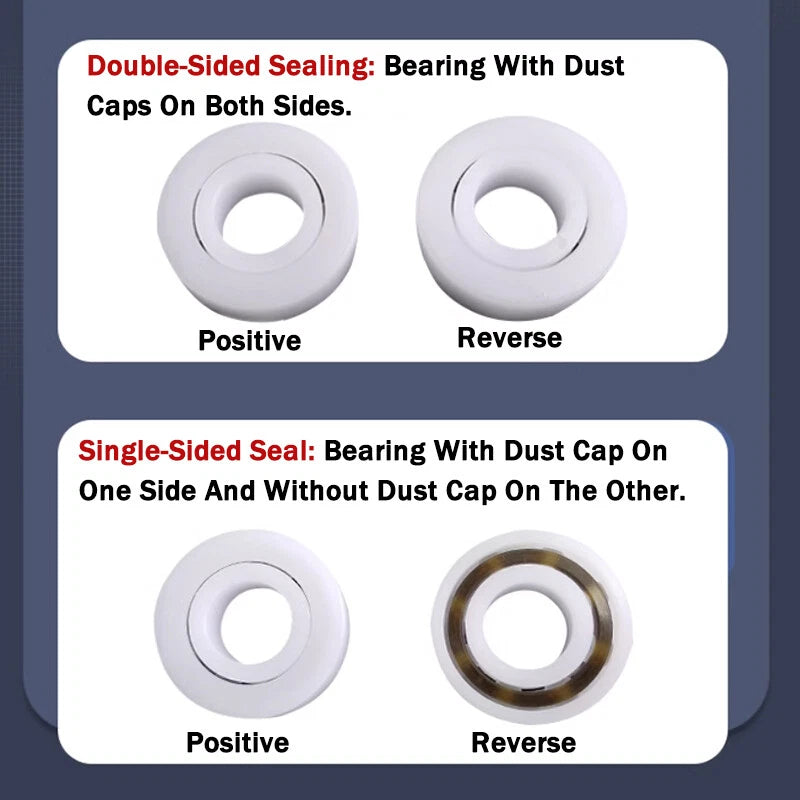
  • 🛡️ RS / 2RS Sealed Options — RS single-sided seal protects one face; 2RS double-sided seal encloses the bearing on both sides for full contamination exclusion in dusty or wet conditions.
  • 📐 Wide Size Range — 608 to 6906 Series — Covers ID 8–40 mm and OD 19–80 mm across multiple series, enabling direct replacement or new-design fitment without custom machining.
  • ⚖️ Lightweight Design — Significantly lighter than equivalent steel bearings, reducing rotating mass in weight-sensitive assemblies such as drones, RC cars, and portable equipment.

📐 Technical Specifications — POM Plastic Deep Groove Ball Bearings

Bearing Type Deep Groove Ball Bearing
Material POM (Polyoxymethylene / Acetal)
Seal Type RS (Single Sided) / 2RS (Double Sided)
Inner Diameter (ID) 8–40 mm (0.31–1.57 in) — See variant options
Outer Diameter (OD) 19–80 mm (0.75–3.15 in) — See variant options
Thickness 5–18 mm (0.20–0.71 in) — See variant options
Bearing Series 608, 6000–6006, 6200–6208, 6800–6806, 6900–6906
Operating Temperature Typically −40°C to +100°C (−40°F to +212°F)
Lubrication Grease pre-lubricated (sealed)
Conductivity Electrically non-conductive
Quantity per Order See variant options

❓ Frequently Asked Questions

How do I choose between RS (single seal) and 2RS (double seal)?

Choose RS if only one face of the bearing is exposed to contamination or moisture — for example, when one side faces a sealed housing. Choose 2RS when both sides are exposed to dust, water, or debris, such as in outdoor equipment or washdown environments. 2RS provides more complete protection but may have marginally higher drag.

What is the load capacity of these POM plastic bearings compared to steel?

POM plastic bearings have lower dynamic and static load ratings than equivalent steel bearings. They are suited for light-to-moderate radial loads in low-to-medium speed applications. For heavy-load or high-speed industrial use, steel bearings are recommended. Contact us to confirm suitability for your specific load requirements.

Are these bearings suitable for use in water or wet environments?

Yes. POM is inherently resistant to water absorption and does not rust, making these bearings well-suited for aquatic robotics, water pumps, marine equipment, and food-processing machinery where moisture contact is unavoidable. The sealed design further limits water ingress into the raceway.

Can I use these bearings as a direct replacement for standard steel deep groove ball bearings?

In most cases, yes — provided the ID, OD, and thickness match your existing bearing. POM bearings follow the same dimensional standards as steel equivalents in the 608, 6000, 6200, 6800, and 6900 series. Verify the variant dimensions against your housing bore and shaft diameter before ordering.

What is the maximum operating speed for these bearings?

POM plastic bearings are best suited for low-to-moderate rotational speeds, typically up to a few thousand RPM depending on size and load. At very high speeds, heat generation from friction can soften the POM material. For high-speed applications, contact us to confirm the specific speed limit for your chosen size.

Are these bearings compatible with chemical or solvent exposure?

POM offers good resistance to mild acids, alkalis, fuels, and many organic solvents. However, it is not recommended for prolonged exposure to strong oxidizing acids or concentrated chlorine solutions. If your application involves specific chemicals, contact us to confirm compatibility before ordering.

How do I identify the correct bearing size for my application?

Measure your shaft diameter (this equals the bearing ID), your housing bore (this equals the bearing OD), and the available axial space (this equals the bearing thickness). Match these three dimensions to the ID × OD × Thickness listed in the variant options. For example, a 608 bearing fits an 8 mm shaft in a 22 mm bore with 7 mm of axial space.

🛒 Select your seal type and bearing size above, then add to cart.


You may also like

Recently viewed