
The chain is fine...but I ordered the wrong size. Nine links of the chain I ordered equals six of the size I wanted. My error...
How can I straighten out the springs? I can't use them coil uo as is.
Your payment information is processed securely. We do not store credit card details nor have access to your credit card information.
Get fitment advice & recommendations
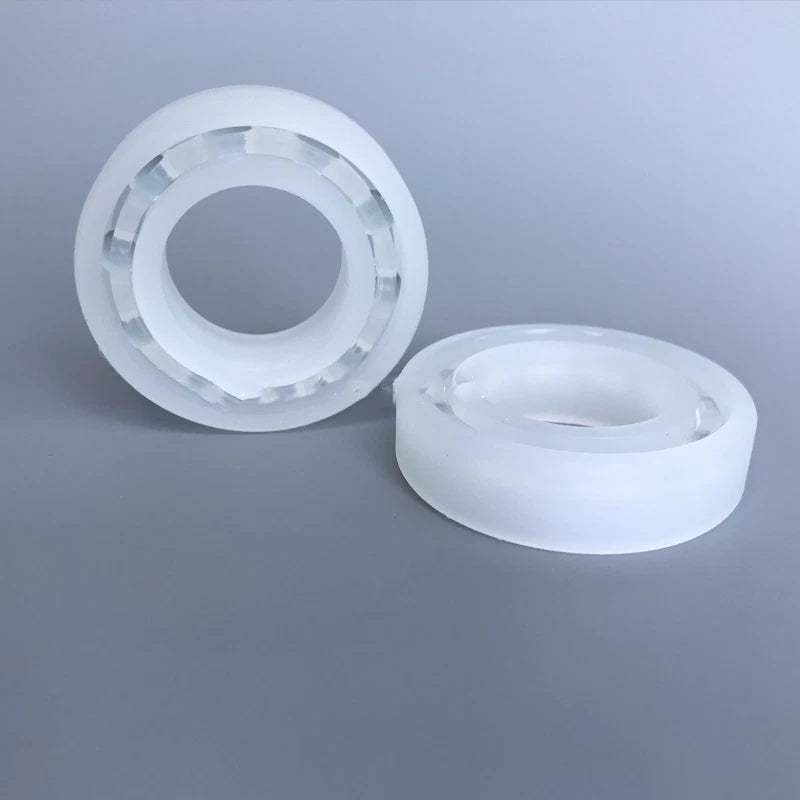
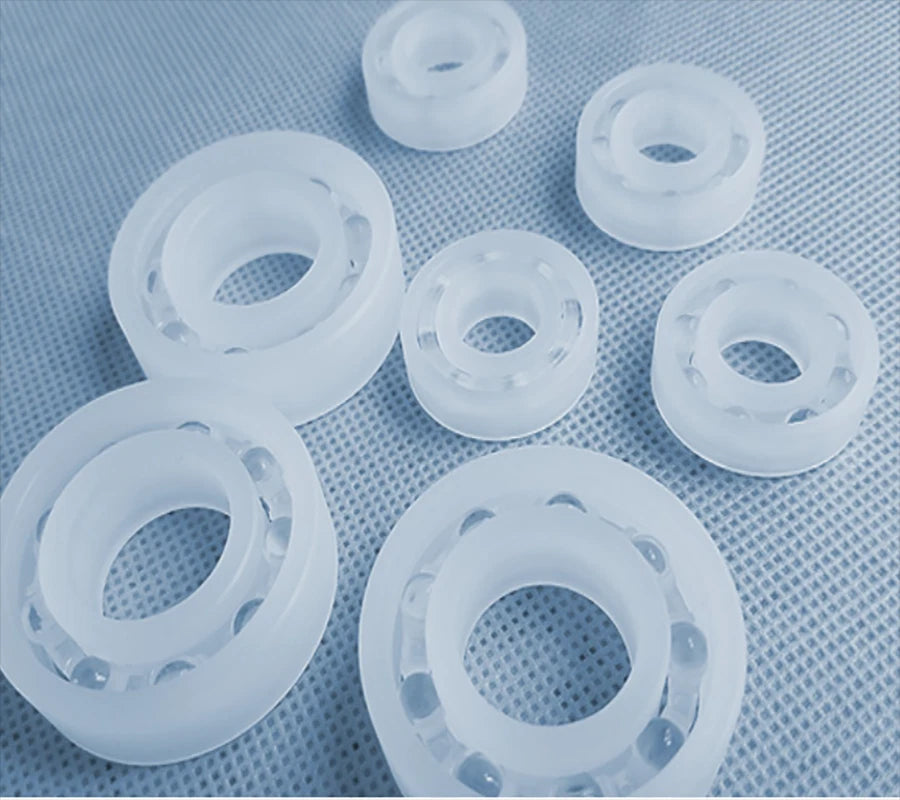
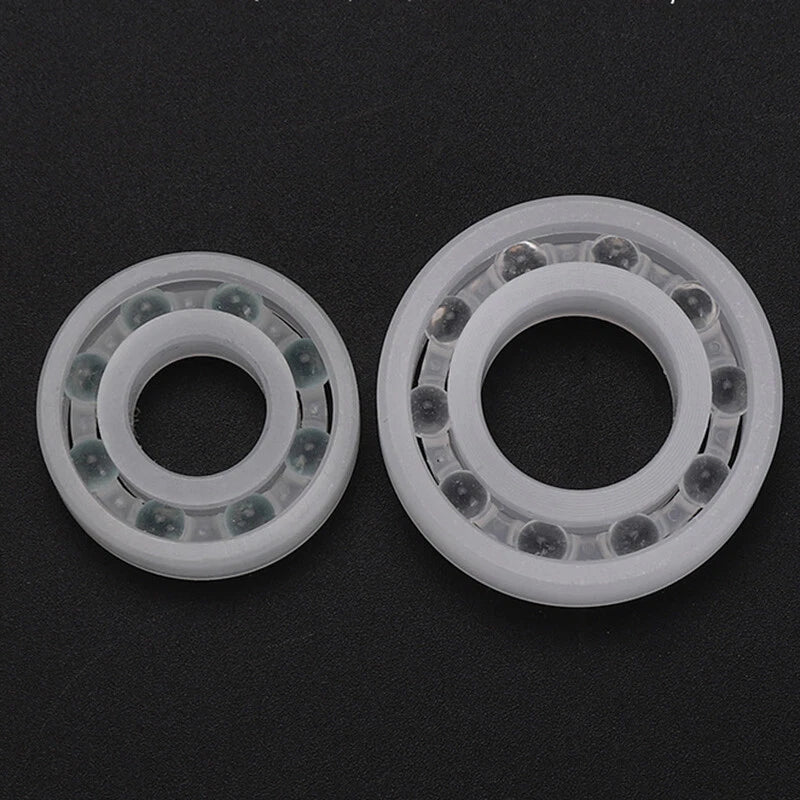
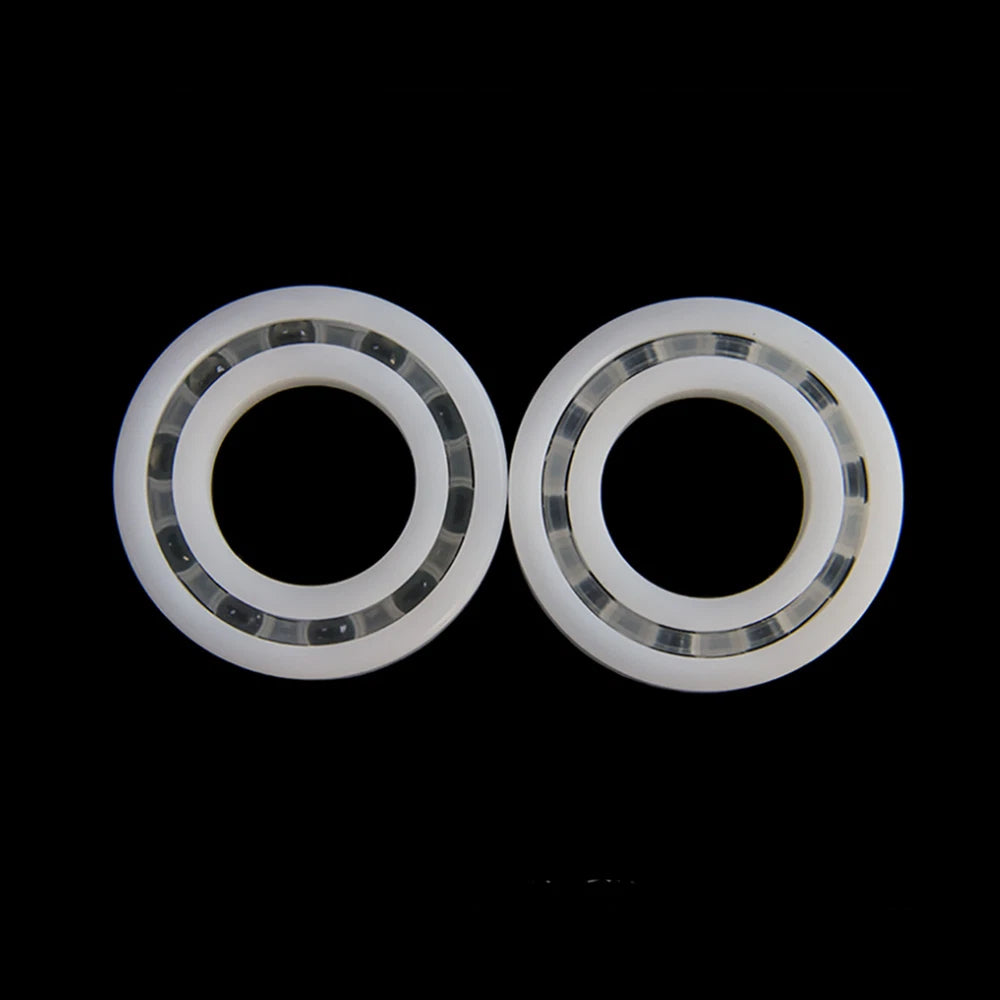
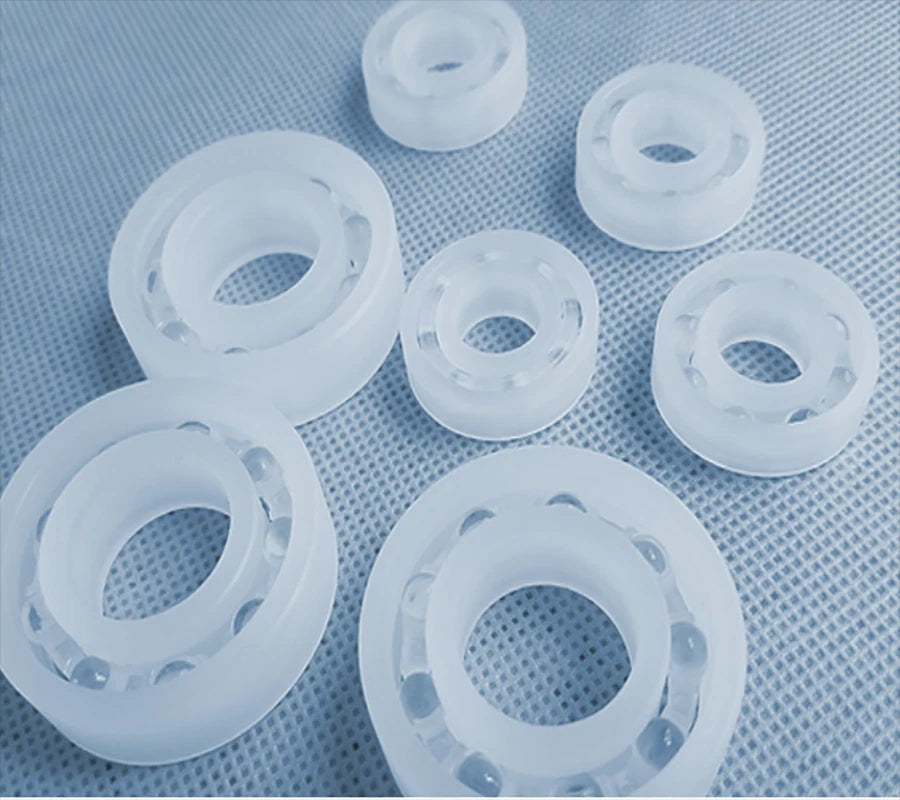
When metal bearings corrode, seize, or contaminate sensitive processes, engineers and DIY builders turn to PP plastic deep groove ball bearings as a reliable alternative. These bearings are designed for applications where moisture, chemicals, or temperature cycling would degrade standard steel components — making them a go-to choice for food processing equipment, laboratory instruments, marine hardware, and light-duty automation.
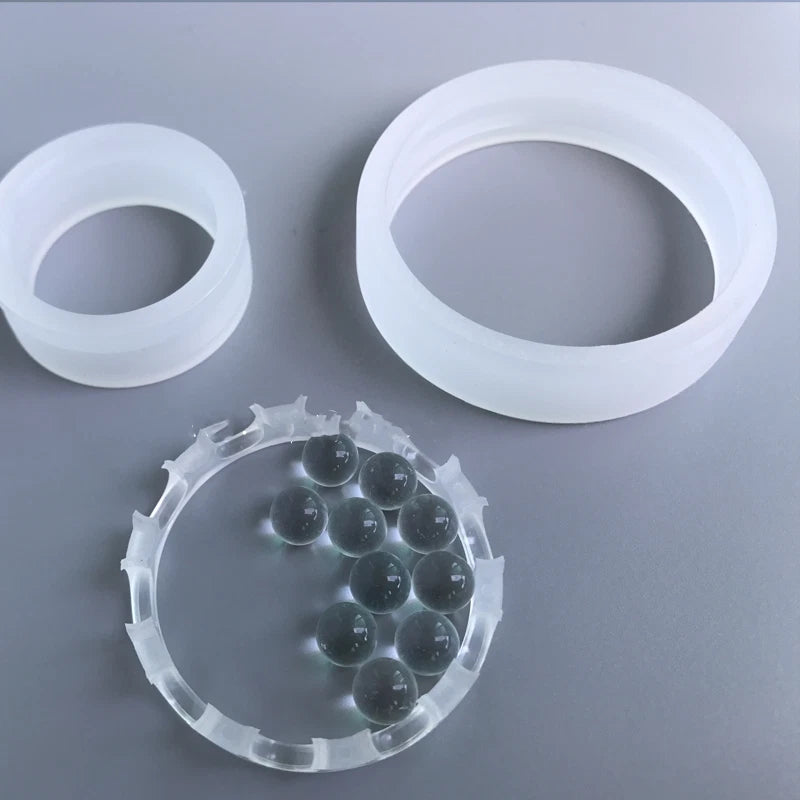
Each bearing features a polypropylene (PP) outer ring, inner ring, and cage, with a full complement of rolling elements suited to the series. Available sizes span from the compact 603 (3×9×3 mm / 0.12"×0.35"×0.12") up to the 6815 (75×95×10 mm / 2.95"×3.74"×0.39"), covering inner diameters of 3–75 mm and outer diameters of 7–100 mm. Operating temperature range is -30°C to 140°C (-22°F to 284°F).
Typical use cases include corrosion-resistant conveyor rollers in wet food-processing lines, replacement bearings in aquarium pump impellers and marine deck hardware, and lightweight bearing seats in 3D printer carriages or RC vehicle wheel hubs where reduced rotating mass matters. The non-magnetic, electrically non-conductive PP construction also suits MRI-adjacent equipment and PCB handling fixtures.
| Material | Polypropylene (PP) — rings, cage, and retainer |
|---|---|
| Bearing Type | Deep Groove Ball Bearing (open, no seal) |
| Series Available | 6xx, 60xx, 68xx, 69xx (603 through 6815) |
| Inner Diameter (ID) Range | 3 mm – 75 mm (0.12" – 2.95") |
| Outer Diameter (OD) Range | 7 mm – 100 mm (0.28" – 3.94") |
| Width Range | 2 mm – 21 mm (0.08" – 0.83") |
| Operating Temperature | -30°C to 140°C (-22°F to 284°F) |
| Corrosion Resistance | Resistant to water, mild acids, alkalis, and most organic solvents |
| Electrical Conductivity | Non-conductive |
| Magnetic Properties | Non-magnetic |
| Lubrication | See variant options (dry-running capable for many applications) |
| Load Rating | See variant options |
| Pack Quantity Options | 1 pc / 5 pcs / 10 pcs |
| Specific Size Dimensions | See variant options (ID × OD × Width listed per variant) |
Match the bearing's inner diameter (ID) to your shaft diameter, the outer diameter (OD) to your housing bore, and the width to your available axial space. Each variant lists dimensions in the format ID × OD × Width (mm). For example, "6204 20×47×14mm" means a 20 mm shaft, 47 mm housing bore, and 14 mm seat depth. Always measure your existing bearing or housing with calipers before ordering.
PP plastic bearings have lower dynamic and static load ratings than equivalent steel bearings. They are suited for light-to-moderate radial loads in applications where corrosion resistance, weight reduction, or electrical isolation outweigh the need for maximum load capacity. For heavy-load or high-speed industrial applications, consult the load rating for your specific size or consider stainless steel alternatives.
PP (polypropylene) is widely used in food-contact and laboratory environments due to its chemical inertness and resistance to moisture. These bearings do not rust and do not require grease that could contaminate food or samples. However, confirm compliance with any specific regulatory standards (e.g., FDA, EU 10/2011) required for your application before use in certified food or medical equipment.
The rated operating range is -30°C to 140°C (-22°F to 284°F). Standard autoclaving at 121°C (250°F) falls within this range, making these bearings potentially suitable for sterilizable instrument components. Repeated autoclaving cycles may cause dimensional changes over time; verify dimensional stability for your specific cycle count and pressure requirements.
PP plastic bearings can run dry in many light-duty applications because the polymer material has inherent low-friction properties. For higher speeds or loads, a compatible lubricant (such as a PTFE-based or silicone grease) can extend service life. Avoid petroleum-based greases that may degrade PP over time. Check chemical compatibility before applying any lubricant.
PP plastic bearings offer broader chemical resistance than 304 or 316 stainless steel, particularly against chlorides, dilute acids, and alkalis that can pit even stainless surfaces. However, stainless steel bearings handle higher loads, speeds, and temperatures. Choose PP when chemical exposure or weight is the primary concern; choose stainless when mechanical performance is the priority.
These designations refer to standard bearing series with different OD-to-ID ratios and width profiles. The 6xx series (e.g., 603, 625) are miniature bearings with small bores. The 60xx series (e.g., 6004, 6007) are standard medium-duty bearings. The 68xx series (e.g., 6804, 6807) have a thinner cross-section (smaller OD relative to ID) for space-constrained designs. The 69xx series (e.g., 6904, 6907) are extra-thin section bearings. Select based on your shaft size and available housing space.





