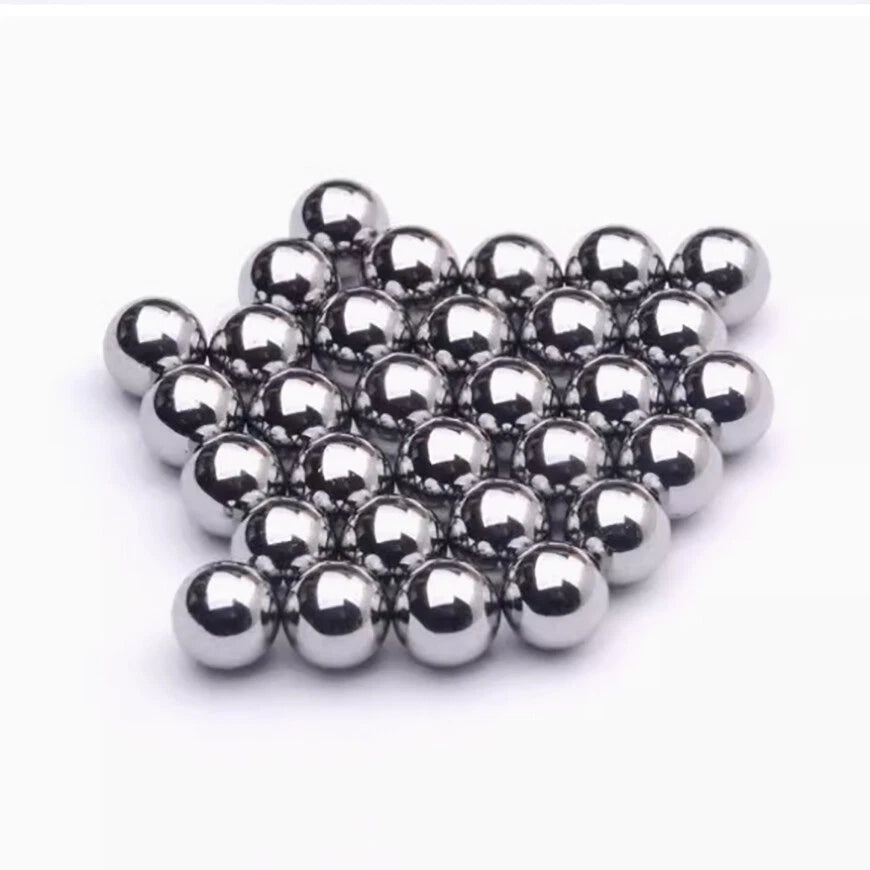
Precision 304 Stainless Steel Ball Bearing Bikes Replacement Bearings 6.35-25mm

No reviews

Price:
Sale price$5.62 USD
Stock:
In stock (500 units), ready to be shipped

Payment & Security

Ach Direct Debit Amazon American Express Apple Pay Bancontact BLIK Diners Club Discover EPS Google Pay iDEAL Wero JCB Maestro Mastercard Multibanco MobilePay PayPal Przelewy24 Shop Pay Twint Union Pay USDC Visa

Your payment information is processed securely. We do not store credit card details nor have access to your credit card information.

Limited Offer — Spend More, Save More
Spend $55+
Save $5
Spend $100+
Save $10
Spend $200+
Save $25
HomeDIYer DIY Expert Support

DIY Expert Support

Get fitment advice & recommendations

Mon–Fri  8:30 AM – 8:00 PM
24-Hour Fast Ship
Arrives in 3–14 Days
Worldwide Shipping
30-Day Returns
1 tree planted with every purchase

Description

304 Stainless Steel Loose Ball Bearings — Precision Replacement for Bikes, Skates & Machinery

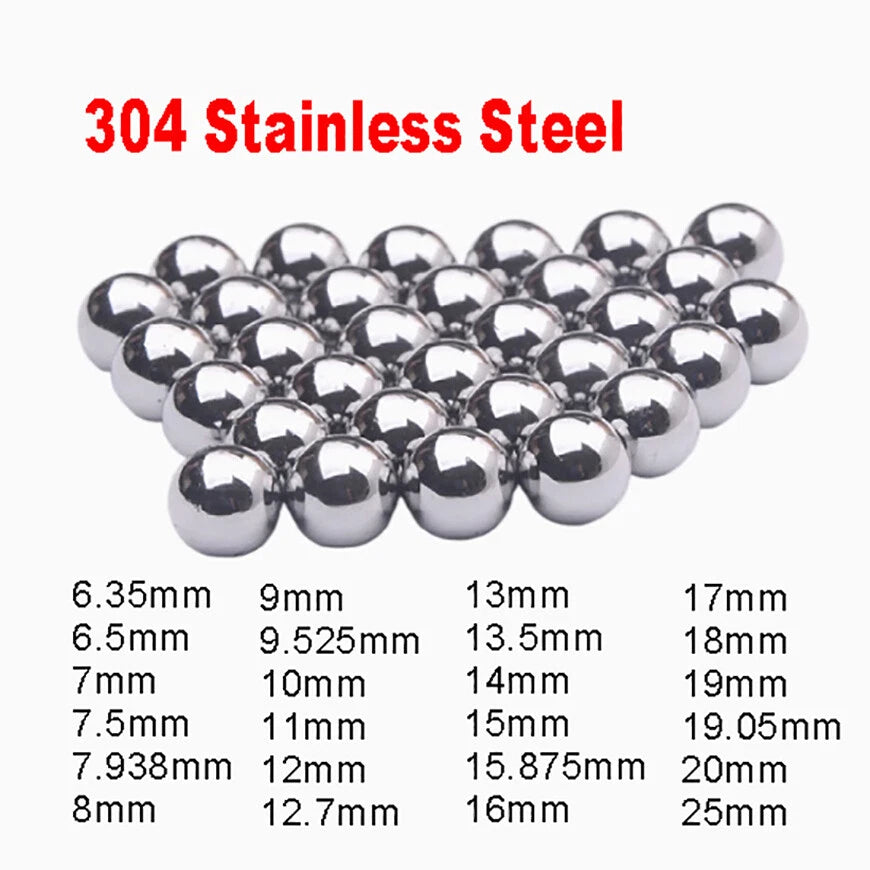
When a worn or corroded ball bearing causes play in a headset, bottom bracket, or wheel hub, finding the exact replacement diameter is the difference between a smooth ride and a failed repair. These 304 stainless steel loose ball bearings are stocked in 24 diameters from 6.35 mm (¼ in) to 25 mm (about 1 in), so DIY mechanics, cyclists, and workshop technicians can match the original spec without compromise.

Each ball is machined from 304 stainless steel — an austenitic alloy with a chromium content of approximately 18% — and ground to a consistent spherical tolerance. Diameters span 6.35 mm through 25 mm (roughly 0.25 in to 0.98 in), covering both metric and fractional imperial sizes including 6.35 mm (¼ in), 7.938 mm (5/16 in), 9.525 mm (3/8 in), 12.7 mm (½ in), 15.875 mm (5/8 in), 19.05 mm (¾ in). Packing options of 1, 5, or 10 pieces let you order exactly what the job requires.

Typical applications include bicycle headset and hub bearing replacement, inline skate and skateboard wheel bearings, light industrial conveyor and pivot assemblies, and marine or wet-environment mechanisms where corrosion resistance is critical. Searching for stainless steel loose ball bearings for bikes, 304 SS replacement bearing balls, or metric loose ball bearings DIY — these cover all three use cases.

⚙️ Compatibility note: Match the diameter to your existing bearing race or retainer. Refer to your component manufacturer's service manual or measure the worn ball with calipers before ordering.

✅ Key Features of These 304 Stainless Steel Ball Bearings

  • 🔩 304 Stainless Steel Construction — 18% chromium alloy resists rust, salt spray, and moisture without surface coating that could flake into bearing races.
  • 📏 24 Diameters in One Listing — 6.35 mm to 25 mm, covering metric and fractional imperial sizes for bikes, skates, and light machinery in a single source.
  • 🎯 Precision-Ground Spherical Surface — Consistent roundness reduces vibration and uneven race wear, extending the service life of the surrounding bearing cup and cone.
  • 🌊 Corrosion-Resistant for Wet Environments — Suitable for marine hardware, outdoor equipment, and food-adjacent machinery where carbon steel balls would oxidise rapidly.
  • 📦 Flexible Pack Sizes (1 / 5 / 10 pcs) — Order a single ball for a one-off repair, a 5-pack for a full hub rebuild, or a 10-pack for workshop stock — priced per pack, not per ball.
  • 🔄 Direct Drop-In Replacement — Loose balls seat directly into open bearing races; no press tools required. Compatible with standard cup-and-cone and loose-ball retainer designs.

📐 Technical Specifications — Loose Ball Bearings

Material 304 Stainless Steel (18/8 austenitic alloy)
Diameter Range 6.35 mm – 25 mm (approx. ¼ in – 1 in)
Available Diameters 6.35, 6.5, 7, 7.5, 7.938, 8, 9, 9.525, 10, 11, 12, 12.7, 13, 13.5, 14, 15, 15.875, 16, 17, 18, 19, 19.05, 20, 25 mm
Packing Quantity See variant options (1 pcs / 5 pcs / 10 pcs)
Surface Finish Precision-ground, bright
Corrosion Resistance Suitable for wet and marine environments
Ball Type Loose (unretained)
Typical Applications Bicycle headsets, hubs, inline skates, light industrial pivots
Weight (per ball) See variant options

❓ Frequently Asked Questions

How do I find the correct ball diameter for my bicycle hub or headset?

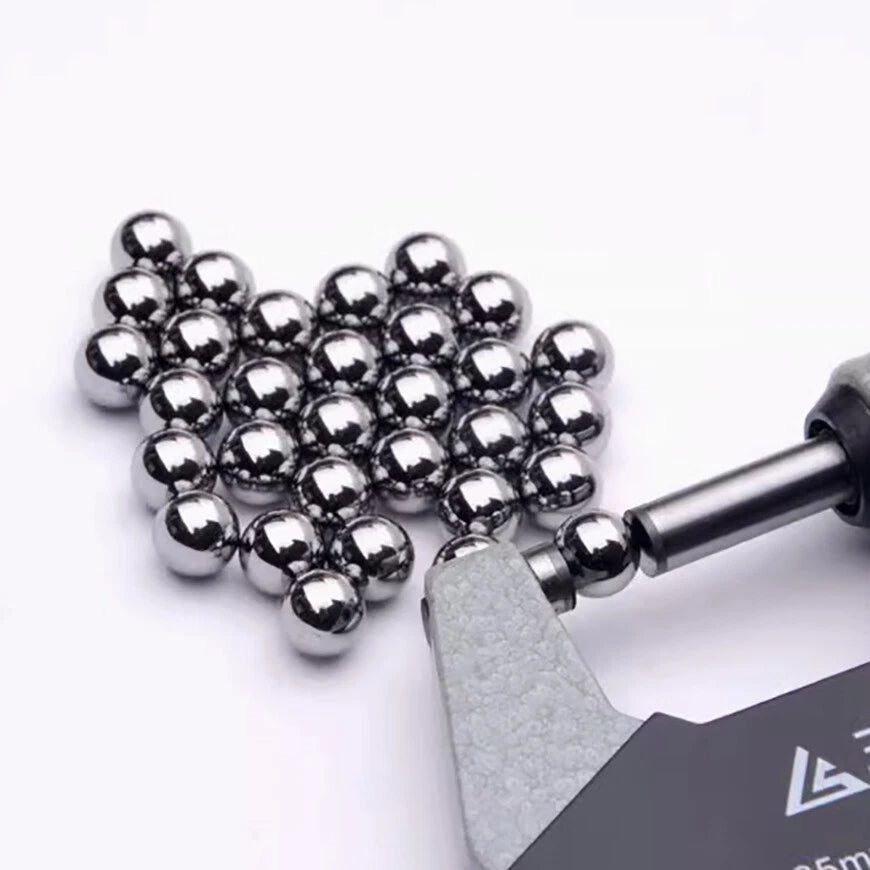
Remove one worn ball from the bearing race and measure its diameter with a digital caliper. Match that measurement to the closest size in the variant list. Common bicycle sizes include 3/16 in (4.76 mm — not in this range), ¼ in (6.35 mm), 5/16 in (7.938 mm), and 3/8 in (9.525 mm) for hubs, and up to ½ in (12.7 mm) for some headsets. If you are unsure, consult your component manufacturer's service documentation.

Are these balls strong enough for load-bearing applications?

304 stainless steel has a tensile strength of approximately 515 MPa and a hardness of around 70–90 HRB. These balls are suited to light-to-medium radial loads typical of bicycle bearings, skate wheels, and small industrial pivots. For heavy-load or high-speed industrial applications requiring hardened chrome steel (52100) or ceramic balls, contact us to confirm suitability before ordering.

Will 304 stainless steel balls rust in a wet or marine environment?

304 stainless steel forms a passive chromium-oxide layer that resists rust in fresh water, light salt spray, and humid conditions. It is not fully immune to pitting in prolonged exposure to concentrated chloride solutions (e.g., seawater immersion). For continuous saltwater immersion, 316 stainless steel would offer greater resistance. For most cycling, outdoor, and light marine uses, 304 performs reliably without surface treatment.

Can I mix these balls with my existing carbon steel or chrome steel balls?

It is not recommended to mix ball materials within a single bearing race. Differences in hardness and surface finish between 304 stainless and hardened chrome steel (52100) can cause uneven wear on the race and accelerate failure. When replacing balls, replace the full complement in that bearing position with balls of the same material and diameter.

What is the difference between the 1 pcs, 5 pcs, and 10 pcs packing options?

All three options contain the same 304 stainless steel balls at the selected diameter. The packing quantity determines how many balls are included per order. A single ball (1 pcs) suits a spot replacement; 5 pcs covers a typical full hub rebuild (most cup-and-cone hubs use 9–11 balls per side); 10 pcs is suited for workshop stock or rebuilding multiple bearing positions at once. Price per ball decreases with larger pack sizes.

Do I need any special tools to install loose ball bearings?

No press tools are required. Loose balls are placed by hand directly into the bearing cup or retainer. For bicycle headsets and hubs, a thin layer of grease applied to the cup holds the balls in position during assembly. A cone wrench and lockring spanner are needed to adjust preload after installation, but the ball placement itself requires only clean hands and grease.

How do I decide between metric and fractional imperial sizes?

Older European and Japanese bicycle components typically use metric ball sizes (6, 7, 8, 10 mm, etc.), while many North American and British components use fractional imperial sizes (¼ in = 6.35 mm, 5/16 in = 7.938 mm, 3/8 in = 9.525 mm, ½ in = 12.7 mm, 5/8 in = 15.875 mm, ¾ in = 19.05 mm). Always measure the existing ball rather than relying on nominal component labelling, as tolerances can vary between manufacturers.

🛒 Select your Material, Diameter, and Packing Qty above, then add to cart.


You may also like

Recently viewed