The chain is fine...but I ordered the wrong size. Nine links of the chain I ordered equals six of the size I wanted. My error...
How can I straighten out the springs? I can't use them coil uo as is.
Your payment information is processed securely. We do not store credit card details nor have access to your credit card information.
Get fitment advice & recommendations
When metal corrosion, magnetic interference, or excessive weight rules out steel balls, engineers and DIY builders reach for POM plastic balls. Whether you are retrofitting a valve seat, building a custom linear slide, or replacing worn rolling elements in a low-load bearing assembly, finding the right diameter in a reliable material is the first obstacle — and the most frustrating one when suppliers only stock a handful of sizes.
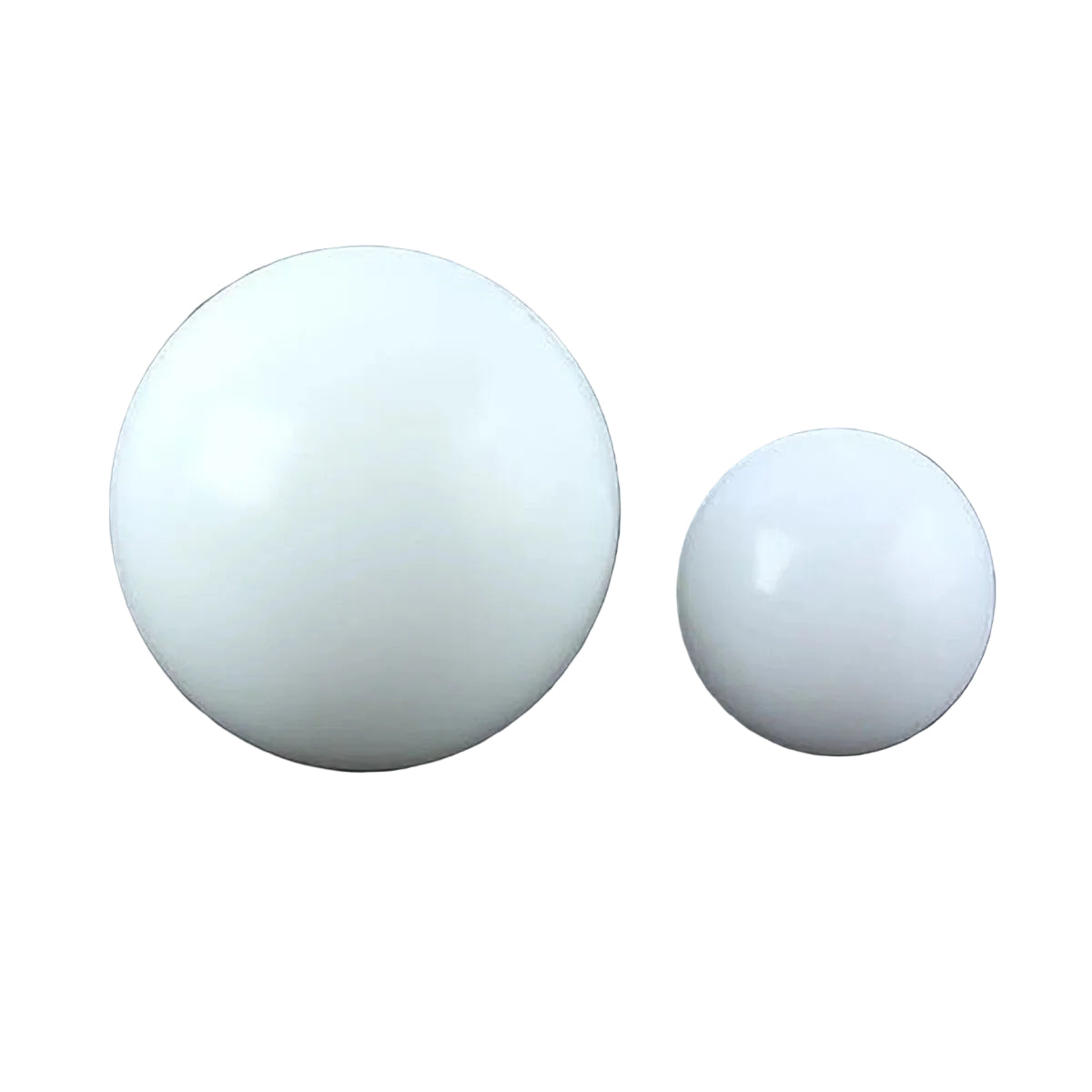
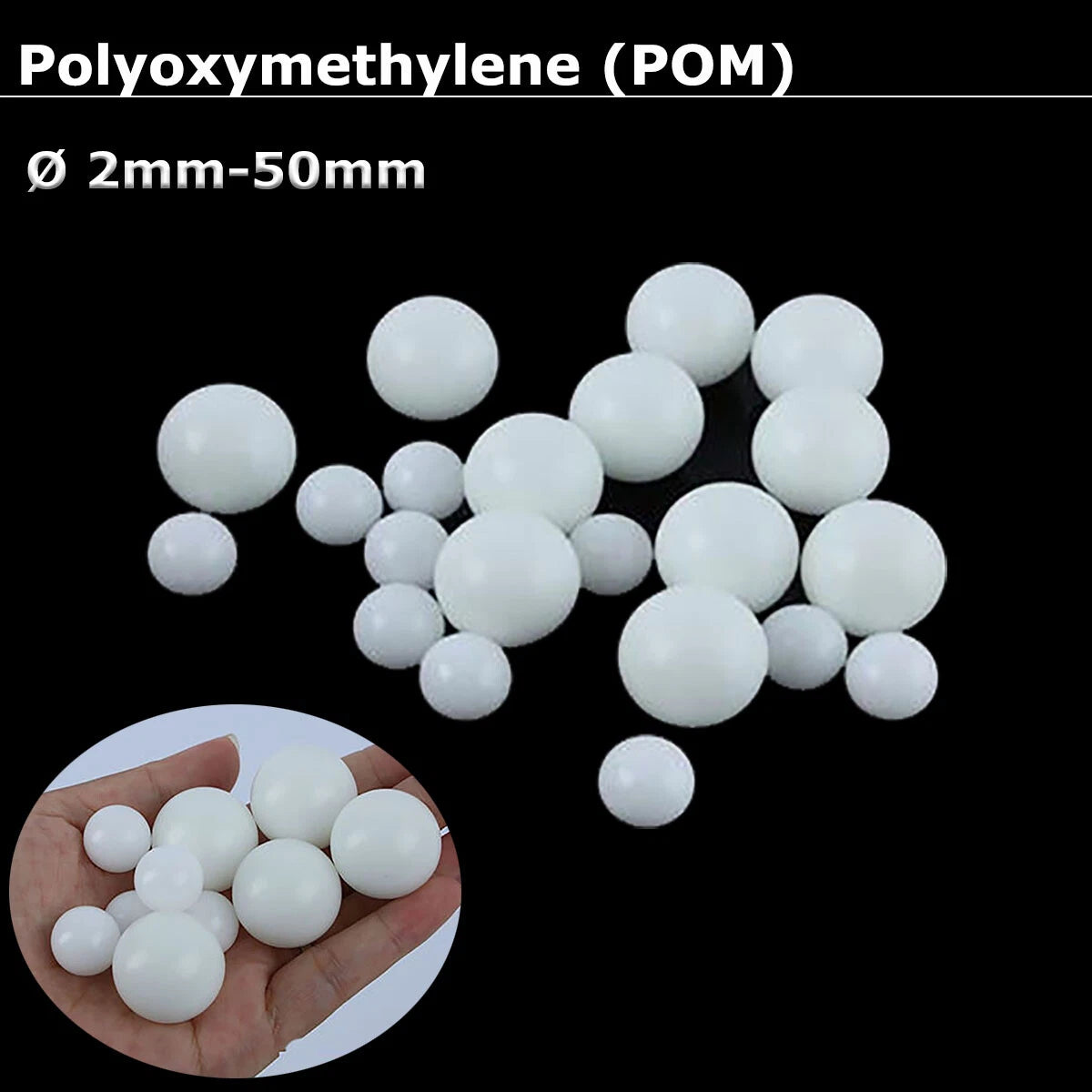
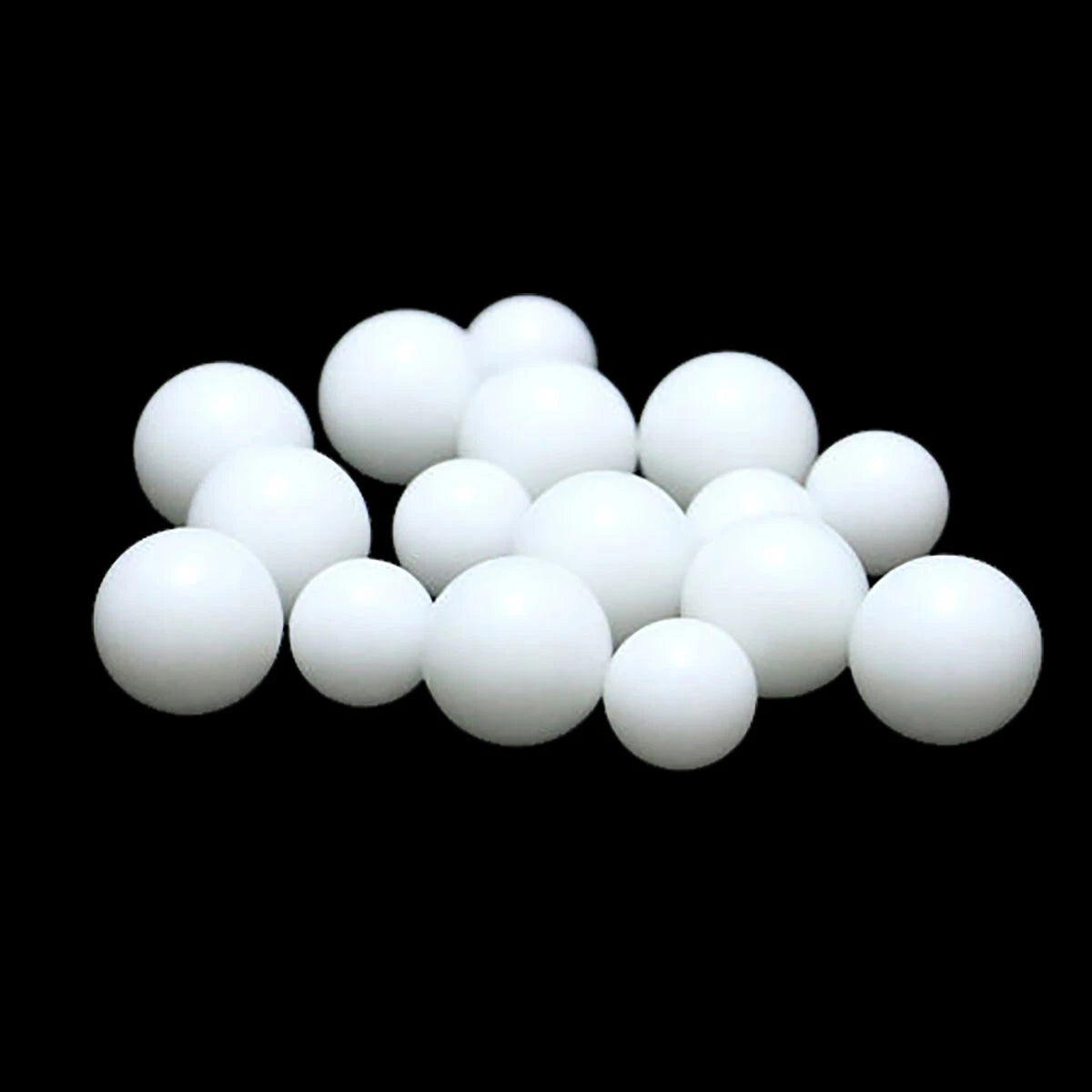
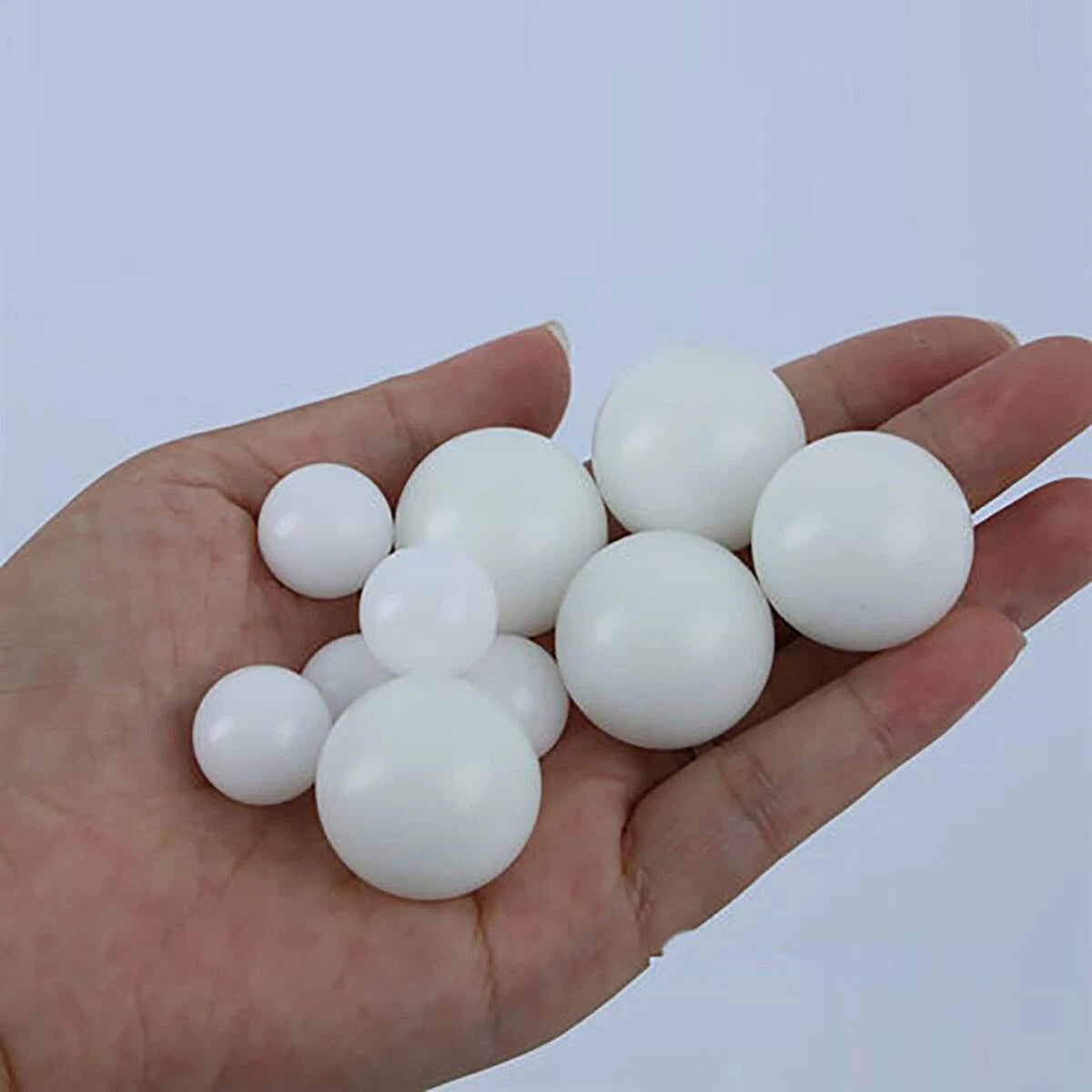
These solid polyoxymethylene (POM) balls are machined from natural white acetal resin, offering a smooth, hard surface with tight dimensional tolerances. Available in diameters from 2 mm (0.079 in) up to 50.8 mm (2.000 in), covering both metric and inch-series sizes, with packing quantities from 1 piece up to 500 pieces per order to suit prototyping and production runs alike.
Typical use cases include corrosion-resistant check valves in fluid handling systems, low-friction rolling elements in drawer slides and conveyor guides, spacing beads in DIY jewelry and craft projects requiring dimensional consistency, and replacement balls in plastic-safe bearing housings where steel would cause galvanic issues.
| Material | Polyoxymethylene (POM / Acetal Resin) |
|---|---|
| Color | Natural white / off-white |
| Diameter Range | 2 mm – 50.8 mm (0.079 in – 2.000 in) |
| Available Diameters | See variant options |
| Packing Quantity | 1 / 2 / 5 / 10 / 20 / 50 / 100 / 500 PCS (see variant options) |
| Density | Approx. 1.41 g/cm³ |
| Shore D Hardness | Approx. 80 |
| Max. Continuous Service Temp. | Approx. 90 °C (194 °F) |
| Moisture Absorption | < 0.25% |
| Surface Finish | Smooth, machined spherical surface |
| Chemical Resistance | Oils, fuels, alcohols, weak acids; not suitable for strong oxidizers |
| Magnetic Properties | Non-magnetic |
| Conductivity | Non-conductive (electrical insulator) |
Measure the bore or seat diameter of your housing with calipers. For a rolling bearing, the ball diameter should match the groove radius — typically the ball OD equals the groove radius × 2. For a check valve seat, the ball diameter should be 5–15% larger than the seat orifice to ensure a positive seal. If you are replacing existing balls, measure the worn ball or consult the original equipment specification sheet.
POM balls are suited for light to moderate loads. As a general guide, small-diameter balls (2–6 mm) are appropriate for loads up to a few Newtons in rolling contact; larger balls (20–50 mm) can handle higher static loads in valve or check-ball applications. POM is not recommended as a direct replacement for steel balls in high-load radial or thrust bearings. For heavy-duty bearing applications, consult a mechanical engineer.
Yes. POM does not rust and has very low moisture absorption (typically <0.25%). It performs well in humid environments, water systems, and light chemical exposure including oils, fuels, and alcohols. It is not suitable for prolonged contact with strong acids (e.g., concentrated sulfuric acid), strong bases, or oxidizing agents such as hydrogen peroxide at elevated concentrations.
In many low-load, corrosion-sensitive, or electrically insulating applications, yes. POM balls are a common substitute in check valves, drawer slides, and light-duty bearing cages. However, POM has lower hardness and compressive strength than steel, so it is not interchangeable in high-speed precision bearings or heavy radial-load applications. Always verify the mechanical requirements of your specific assembly before substituting materials.
POM maintains its mechanical properties from approximately −40 °C (−40 °F) up to around 90 °C (194 °F) for continuous service. Short-term exposure up to approximately 120 °C may be tolerated, but prolonged high-temperature use will cause dimensional creep and reduced hardness. For applications above 90 °C, consider PEEK or ceramic balls instead.
POM has inherent low-friction properties and can run dry in many applications. Light lubrication with a compatible grease or oil (mineral or synthetic, non-oxidizing) can extend service life in continuous rolling contact. Avoid lubricants containing strong solvents or oxidizing additives, which may degrade the POM surface over time.
For prototyping or single-unit repairs, the 1–5 PCS options minimize upfront cost. For maintenance stock or small production runs, 50–100 PCS offers a better per-unit price. The 500 PCS pack is intended for production environments or resellers requiring bulk inventory. Larger diameters (≥30 mm) are available in smaller pack sizes (1–5 PCS) due to the higher per-unit weight and cost.