The chain is fine...but I ordered the wrong size. Nine links of the chain I ordered equals six of the size I wanted. My error...
How can I straighten out the springs? I can't use them coil uo as is.
Your payment information is processed securely. We do not store credit card details nor have access to your credit card information.
Get fitment advice & recommendations
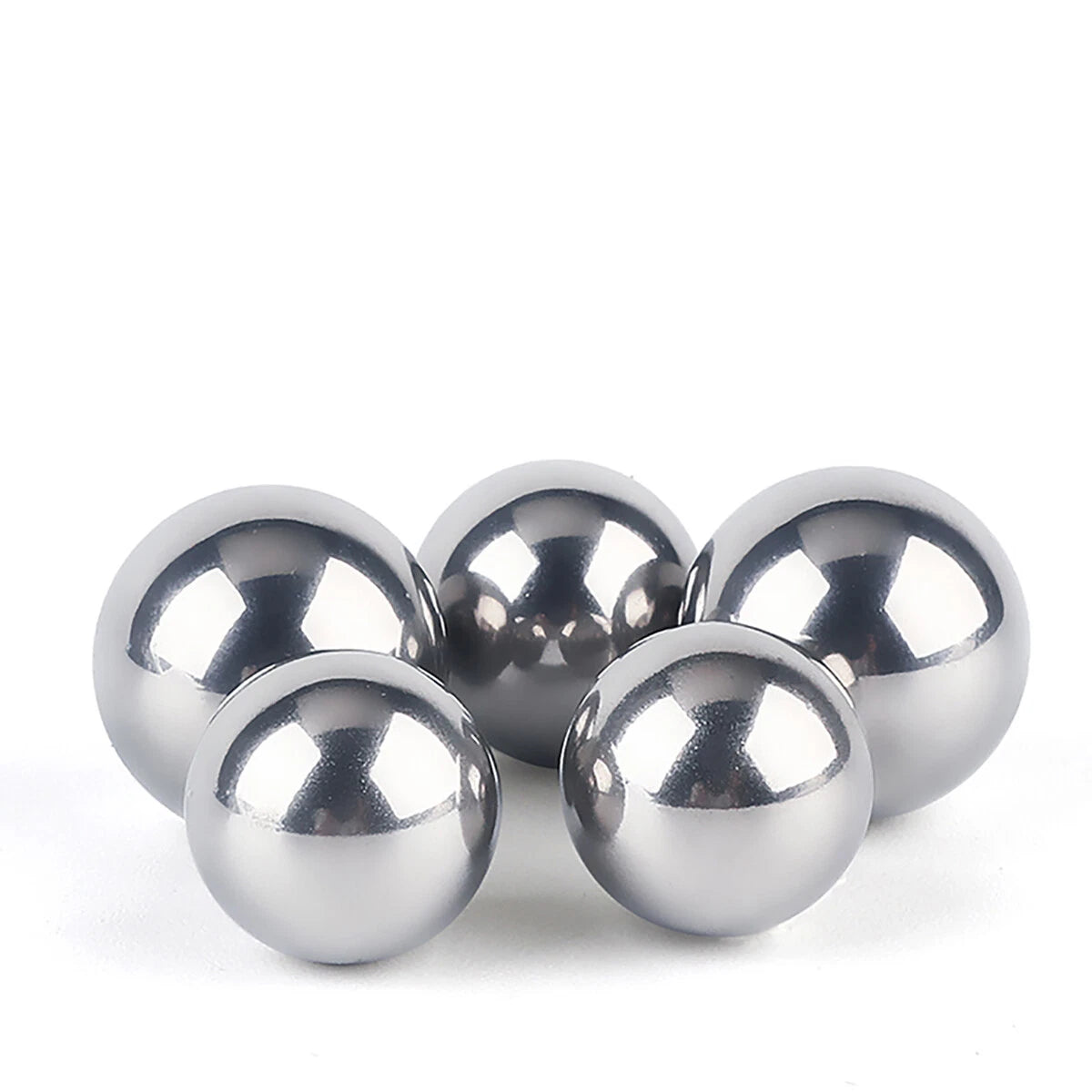
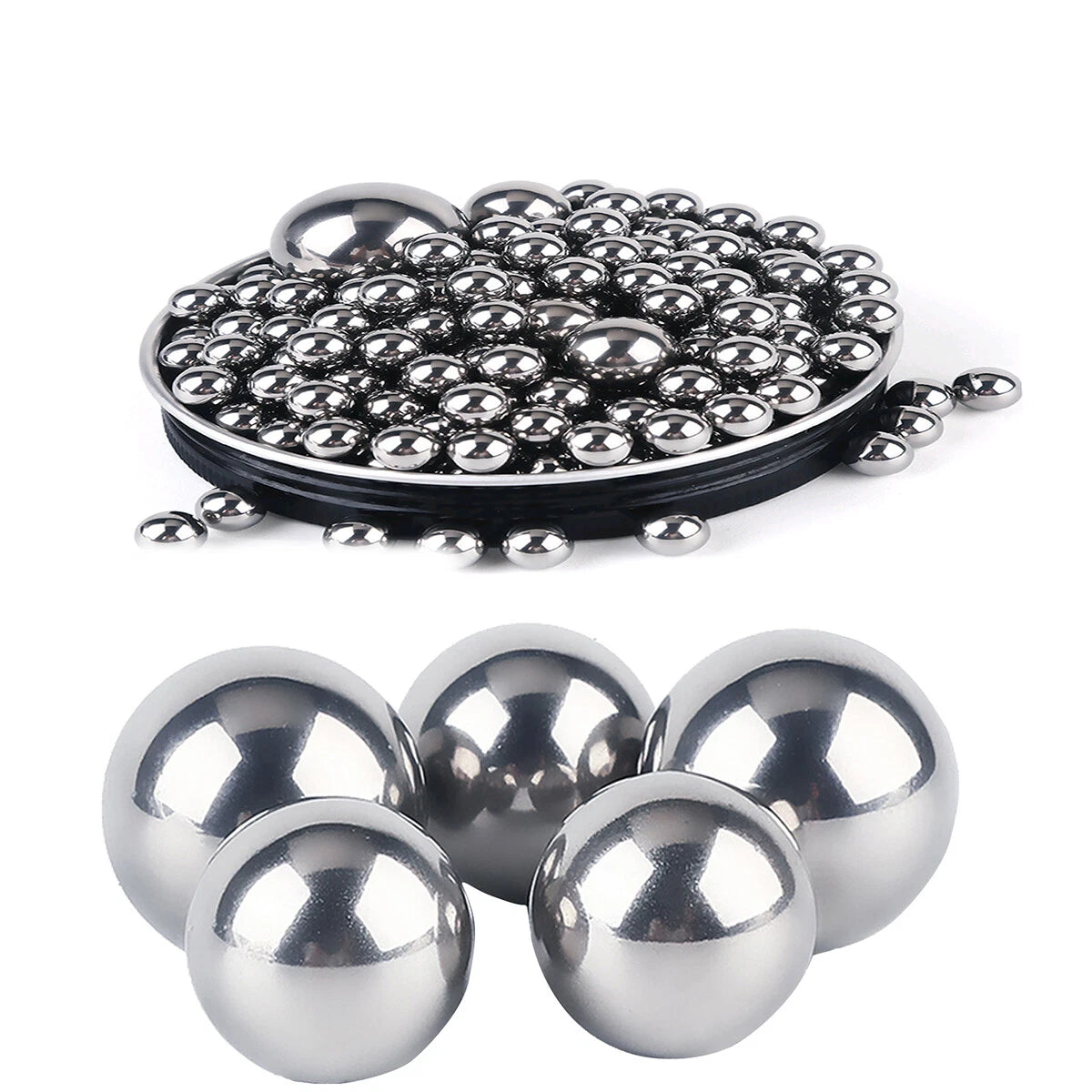
Finding the right solid steel bearing ball in a specific diameter — without ordering a full bearing assembly or waiting on a specialty supplier — is a recurring challenge for bearing rebuilders, machine shop technicians, and precision DIY builders. These precision solid steel bearing balls cover diameters from φ1 mm to φ14 mm (~0.039 in to ~0.551 in) and are available in flexible pack quantities of 20, 50, 100, 200, or 500 pieces, making it practical to order exactly what a job requires.
Each ball is manufactured from chrome steel (GCr15 equivalent) and ground to tight spherical tolerances consistent with standard bearing-grade specifications. The diameter range spans φ1 mm through φ14 mm, with each size available in five quantity tiers. Surface finish is smooth and consistent across the lot, supporting low-friction rolling contact in both radial and thrust load orientations across a wide range of housing and race geometries.
Typical use cases include replacement rolling elements in open cup-and-cone bicycle bearings, drawer slides, and linear guide channels; anti-friction inserts in custom jig fixtures and precision measurement instruments; load-distribution balls in valve seats and check-valve assemblies; and bulk stock for machine shops and bearing service centers that rebuild or recondition bearing assemblies across multiple diameter specifications.
Ground to bearing-grade spherical tolerances, delivering consistent diameter accuracy from φ1 mm through φ14 mm for reliable rolling contact and minimal vibration in precision races and custom housings.
Through-hardened chrome steel provides a surface hardness of approximately 60–66 HRC, resisting deformation under cyclic radial and thrust loads in bearing replacement and custom assembly applications.
A single listing covers the most commonly specified loose ball diameters for bicycle bearings, linear slides, valve seats, and precision instruments — eliminating the need to source from multiple suppliers.
Five quantity tiers (20, 50, 100, 200, 500 pcs) let you order the exact count needed for a single repair job, a full bearing rebuild, or a bulk stock replenishment without over-ordering.
Consistent surface finish across the lot minimizes friction, noise, and vibration in bearing races, guide channels, and valve seats — extending the service life of the surrounding housing and race surfaces.
Dimensionally matched to standard bearing ball specifications, these solid balls are compatible with cup-and-cone bicycle hubs, drawer slide tracks, check valves, and custom linear guide assemblies without modification.
| Material | Chrome steel (GCr15 equivalent) |
|---|---|
| Surface Hardness | Approximately 60–66 HRC |
| Diameter Range | φ1 mm – φ14 mm (0.039 in – 0.551 in) |
| Spherical Tolerance | Bearing-grade (tight tolerance; see variant options for specific grade) |
| Surface Finish | Smooth ground, consistent lot-to-lot |
| Load Direction | Radial and thrust |
| Pack Quantity Options | 20, 50, 100, 200, or 500 pieces |
| Corrosion Resistance | Moderate (dry or lightly oiled conditions recommended) |
| Weight (per pack) | See variant options |
| Applicable Standard | ISO 3290 bearing ball grade equivalent |
Remove one existing ball from the bearing race or housing and measure it with a micrometer or digital caliper. The replacement ball diameter must match the original exactly — a difference of even 0.05 mm can cause excessive play or binding. If you cannot remove a ball, consult the bearing or component manufacturer's service documentation for the specified ball diameter.
Chrome steel (GCr15) offers higher hardness (approximately 60–66 HRC) and better fatigue resistance under cyclic loads, making it the standard choice for most bearing replacement and precision assembly applications. Stainless steel balls (typically AISI 440C) offer superior corrosion resistance for wet, marine, or chemical environments but have slightly lower hardness. For dry or lightly oiled indoor applications, chrome steel is the appropriate choice.
Chrome steel offers moderate corrosion resistance under dry or lightly greased conditions. For outdoor, marine, or washdown environments with continuous moisture exposure, apply a corrosion-inhibiting grease or oil to the balls and housing. For applications with prolonged water or chemical contact, stainless steel balls (AISI 440C) are generally more appropriate. Contact us to confirm stainless availability in your required diameter.
Ball count varies by component. A typical cup-and-cone front hub uses 9–10 balls per side (18–20 total), a rear hub uses 9 balls per side (18 total), and a threaded headset uses 11–22 balls depending on cup diameter. Always count the original balls before disassembly or refer to the component manufacturer's service manual. The 50-piece or 100-piece pack is sufficient for most full hub or headset replacements.
Yes. Precision chrome steel balls are commonly used in check valves, ball valves, and flow-control assemblies where a hard, dimensionally accurate seating surface is required. Confirm that the fluid media is compatible with chrome steel — avoid use with strong acids, chlorinated solutions, or highly oxidizing media without additional corrosion protection or a stainless steel alternative.
For a single bearing replacement or one-off repair, the 20-piece or 50-piece pack is typically sufficient. For a full hub or headset rebuild, the 50-piece or 100-piece pack covers most configurations. Machine shops and bearing service centers that work across multiple diameter specifications regularly will find the 200-piece or 500-piece pack more cost-effective for maintaining working stock. Select the diameter and quantity combination that matches your immediate need and anticipated reorder frequency.
No. These are loose solid balls intended for open bearing systems — cup-and-cone hubs, open races, custom housings, and valve seats. Sealed cartridge bearings are self-contained units and cannot be repacked with individual loose balls. If you are working with a sealed cartridge bearing, the entire cartridge unit must be replaced rather than the individual rolling elements.