The chain is fine...but I ordered the wrong size. Nine links of the chain I ordered equals six of the size I wanted. My error...
How can I straighten out the springs? I can't use them coil uo as is.
Your payment information is processed securely. We do not store credit card details nor have access to your credit card information.
Get fitment advice & recommendations
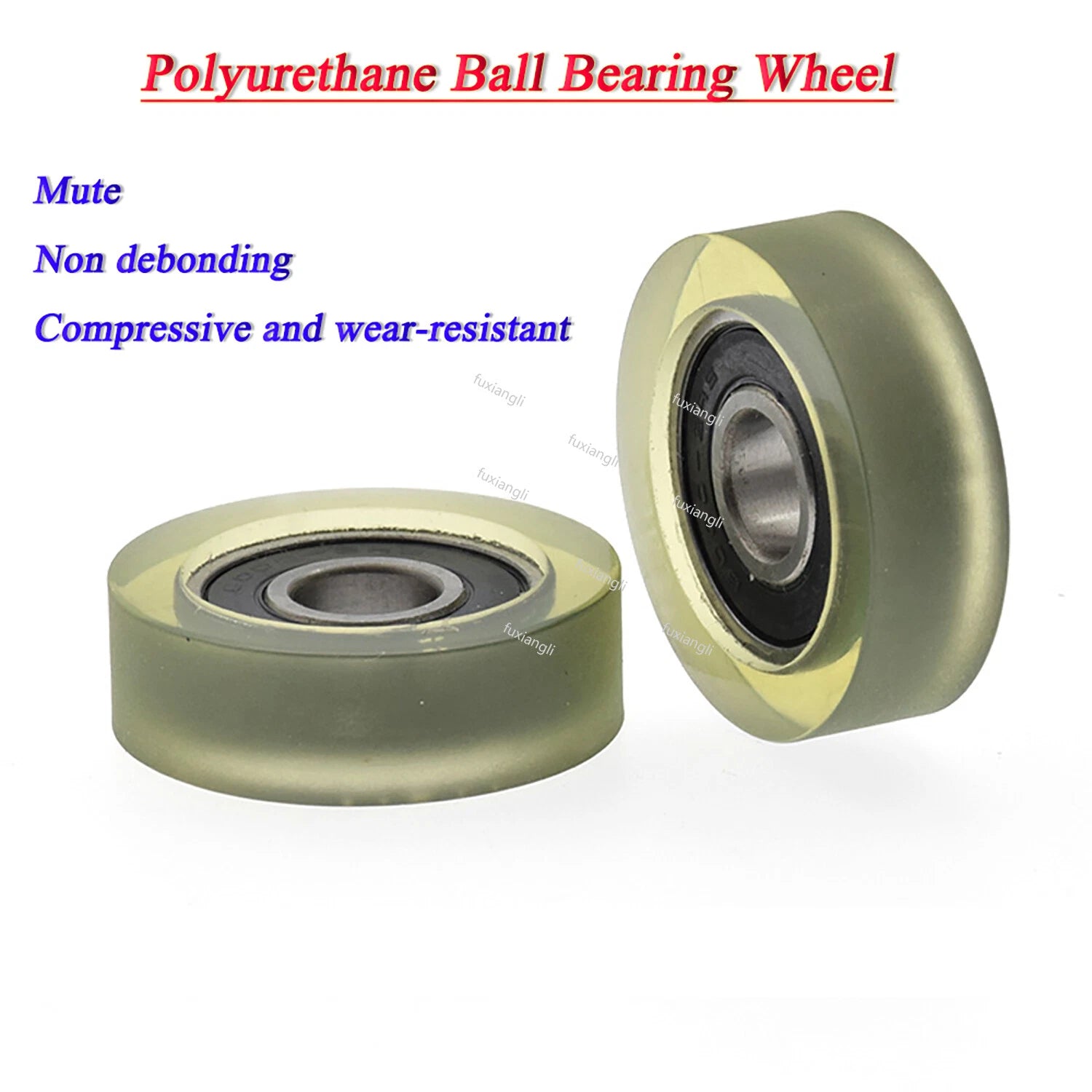
When standard metal or plastic rollers leave marks on rails, generate excessive noise, or wear out prematurely under lateral load, engineers and DIY builders turn to polyurethane coated roller pulley guiding wheels. Whether you are building a sliding door system, a conveyor line, or a custom linear motion rig, the wrong roller can cause misalignment, vibration, and costly downtime.
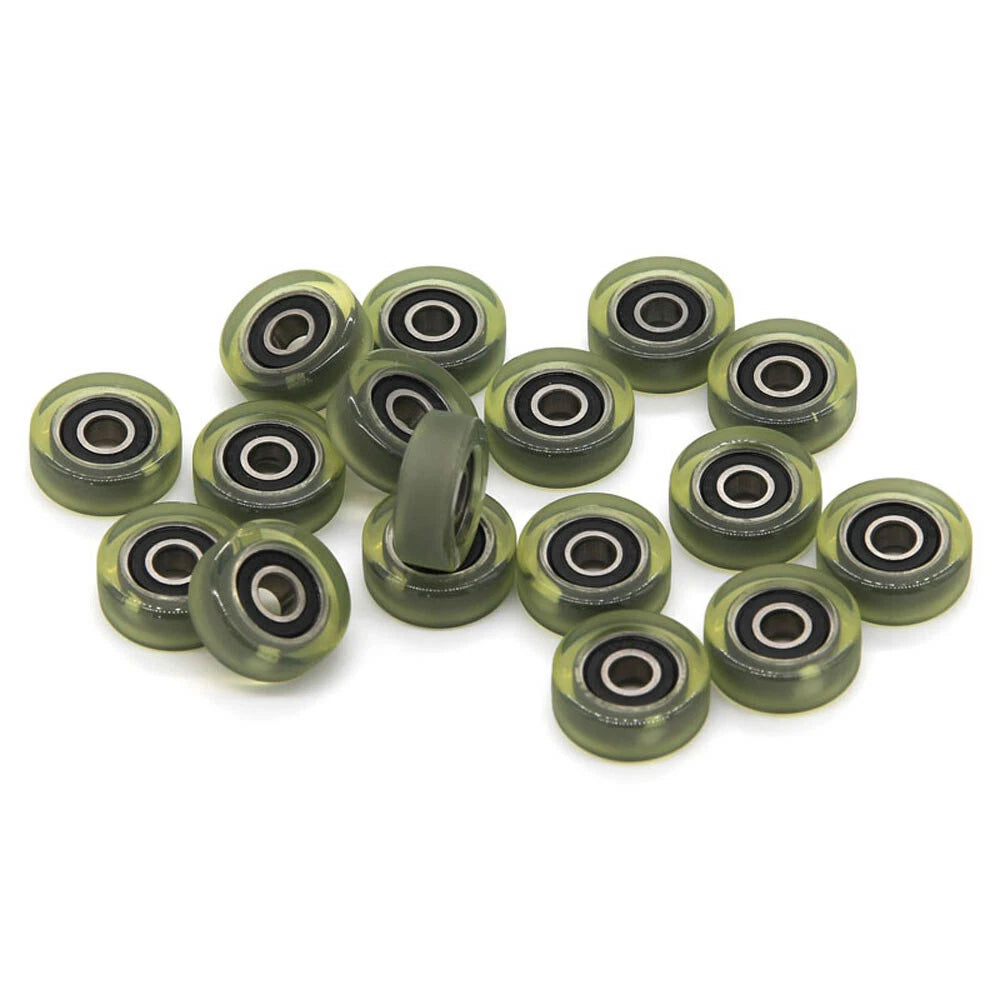
Each wheel in this range consists of a precision steel ball bearing core encased in a molded polyurethane (PU) rubber outer layer. Inner diameters span 5 mm to 10 mm (approx. 0.20"–0.39"), outer diameters from 16 mm to 40 mm (approx. 0.63"–1.57"), and thickness from 5 mm to 15 mm (approx. 0.20"–0.59"). Available in Black, Transparent, and Blue finishes to suit both functional and aesthetic requirements.
Typical applications include V-slot aluminum extrusion linear rails, 3D printer gantry systems, sliding cabinet and barn door hardware, light-duty conveyor guide tracks, and CNC router axis assemblies — anywhere a polyurethane roller pulley guiding wheel must protect the rail surface while maintaining precise tracking.
| Outer Layer Material | Polyurethane (PU) rubber |
|---|---|
| Bearing Type | Deep groove ball bearing (steel) |
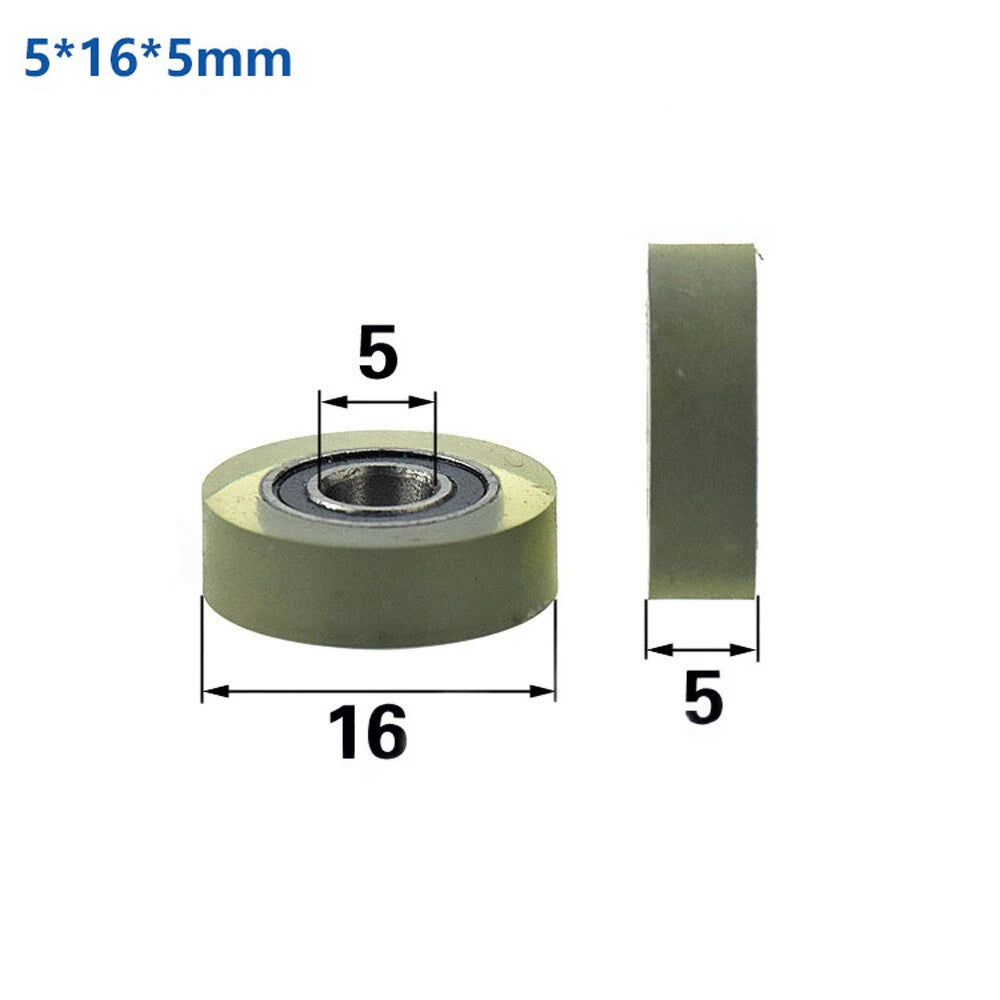
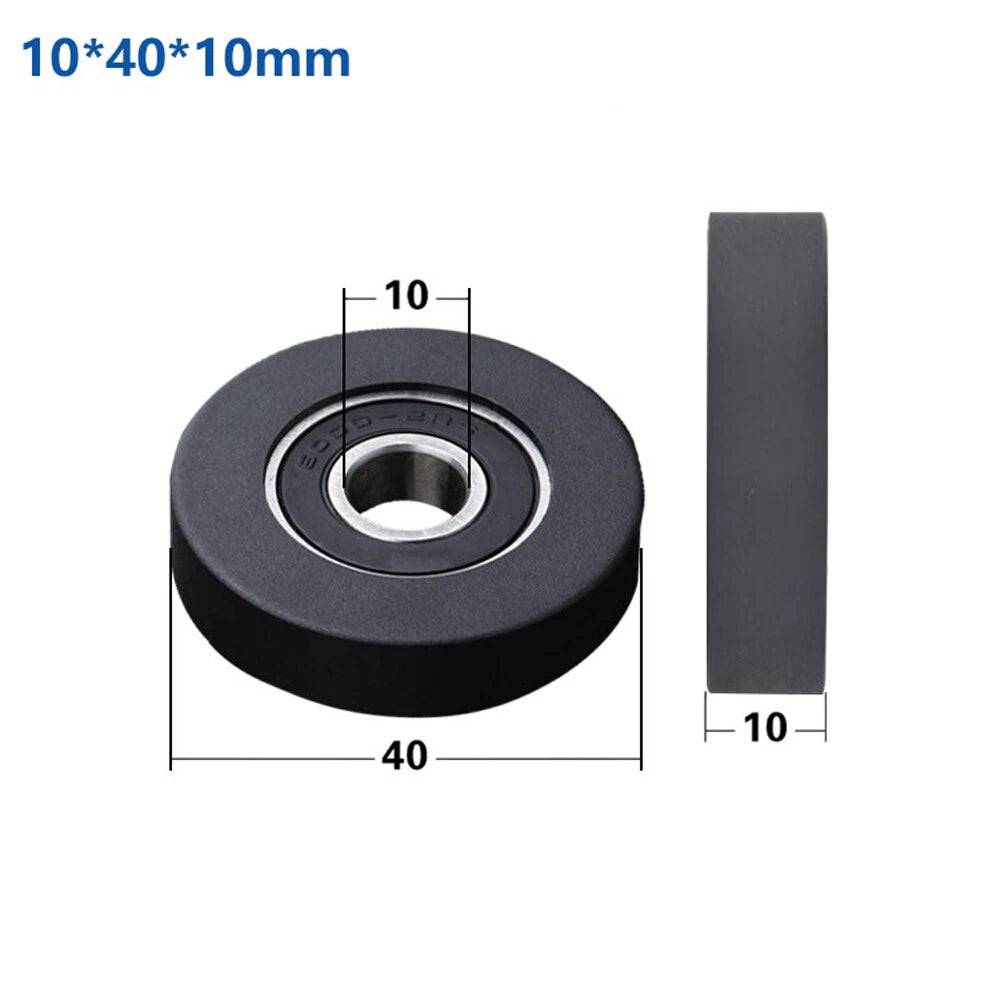
| Available ID × OD × Thickness | 5×16×5 mm, 5×18×5 mm, 6×20×5 mm, 8×22×5 mm, 8×35×15 mm, 10×40×10 mm |
| Inner Diameter (ID) Range | 5–10 mm (approx. 0.20"–0.39") |
| Outer Diameter (OD) Range | 16–40 mm (approx. 0.63"–1.57") |
| Thickness Range | 5–15 mm (approx. 0.20"–0.59") |
| Available Colors | Black, Transparent, Blue |
| Bore Compatibility | M5, M6, M8, M10 shoulder bolts / eccentric spacers |
| Radial Load Capacity | See variant options |
| Operating Temperature | Typically −20°C to +80°C (−4°F to +176°F) |
| Unit Quantity | 1 pc per listing |
Match the inner diameter (ID) to your bolt or shaft diameter, and the outer diameter (OD) to the groove width of your rail profile. For standard V-slot 2020 extrusion, the 5×16×5 mm or 5×18×5 mm wheels are commonly used with M5 bolts. For heavier 4040 or 4080 profiles, the 8×22×5 mm or 10×40×10 mm options provide a better fit. Always measure your groove depth and flange width before ordering.
Polyurethane is inherently more moisture-resistant than standard rubber, making these wheels suitable for moderately humid indoor environments. For prolonged outdoor exposure or washdown applications, consider adding a light bearing grease to the bore and inspect periodically for UV degradation of the PU layer, which can occur over extended outdoor use.
Load capacity varies by size — larger OD and wider thickness variants carry higher radial loads. As a conservative guideline, the smaller 5×16×5 mm wheels are suited for light-duty applications (typically up to a few kilograms per wheel), while the 10×40×10 mm wheels can support moderate structural loads. Contact us to confirm rated load for your specific application.
Yes. The bore diameters (5, 6, 8, 10 mm) are sized to accept standard eccentric spacers and shoulder bolts used in open-build and V-slot linear motion systems. This allows straightforward preload adjustment by rotating the eccentric spacer to eliminate rail play.
The color differences reflect different PU formulations. Black PU typically offers slightly higher abrasion resistance and is preferred for high-cycle applications. Transparent PU allows visual inspection of the bearing core and is common in light-duty or aesthetic builds. Blue PU is often used for axis identification in multi-axis CNC or 3D printer assemblies. Hardness and load ratings are similar across colors; contact us if your application requires specific Shore hardness data.
Thread an M5 (or appropriate size) shoulder bolt through the wheel bore, add an eccentric or standard spacer on the back side, then insert into the V-slot channel and secure with a T-nut and hex nut. Rotate the eccentric spacer to adjust preload until the wheel rolls smoothly with no lateral play. Repeat for all wheels on the carriage plate, then check for even contact across the rail before tightening fully.